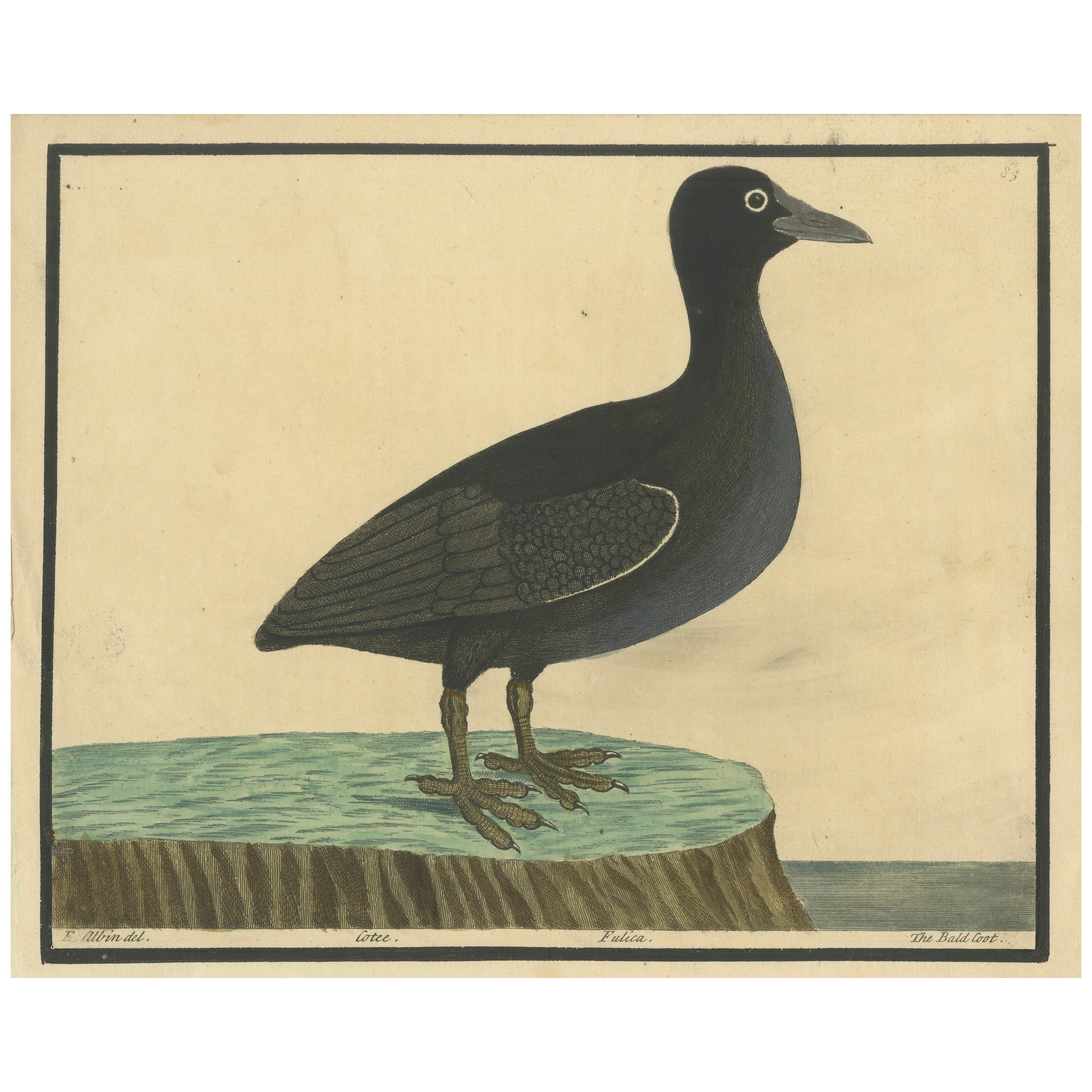
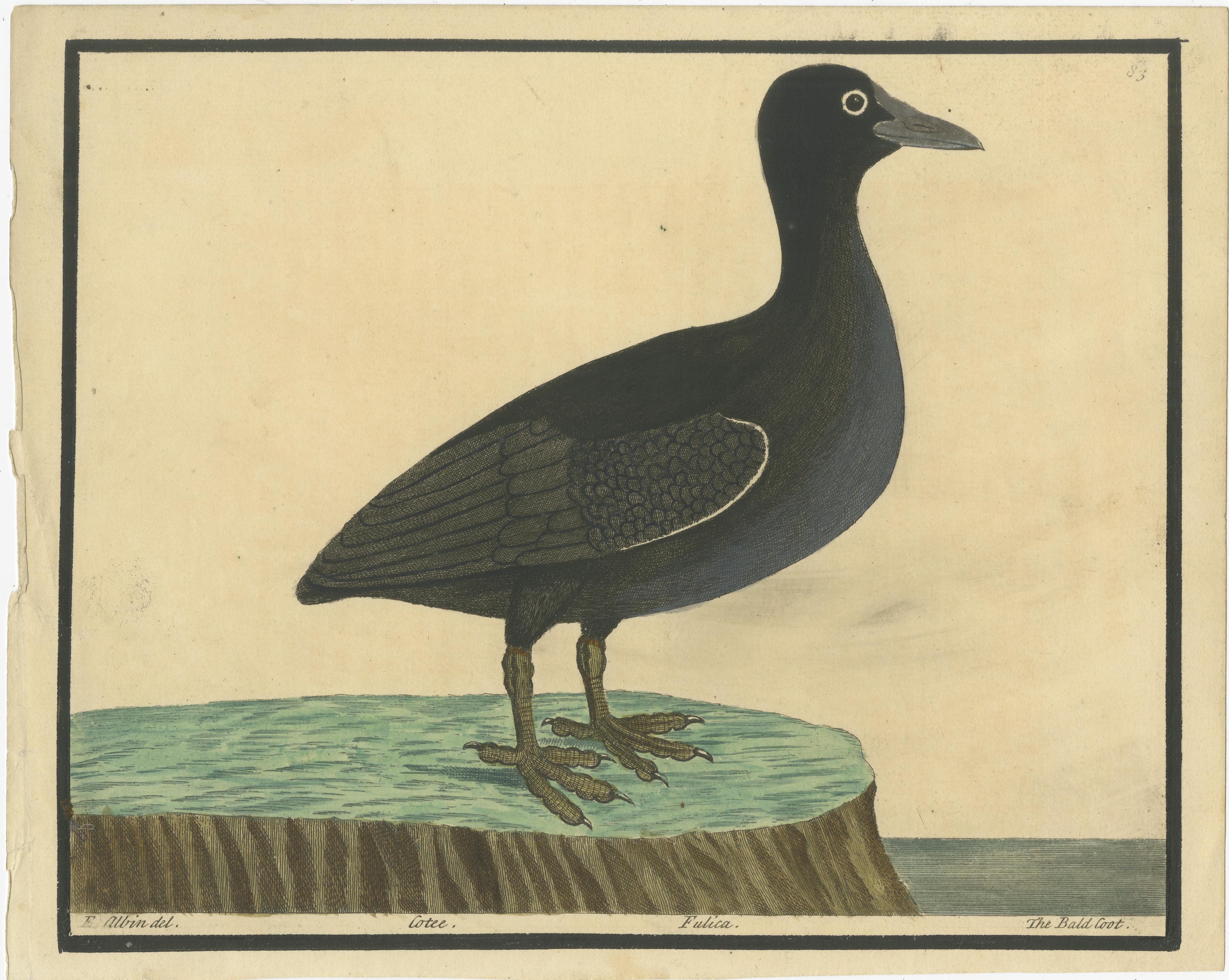
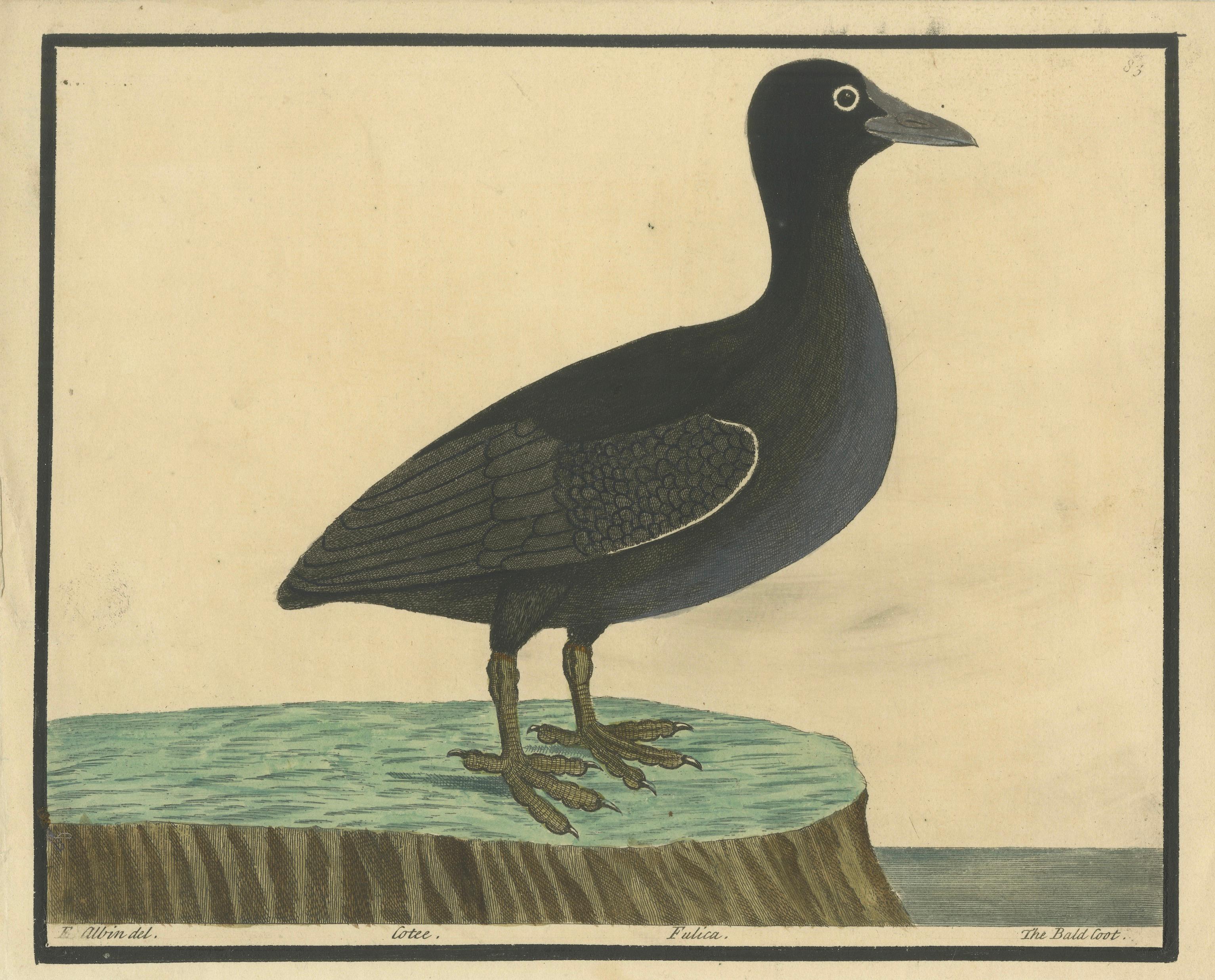
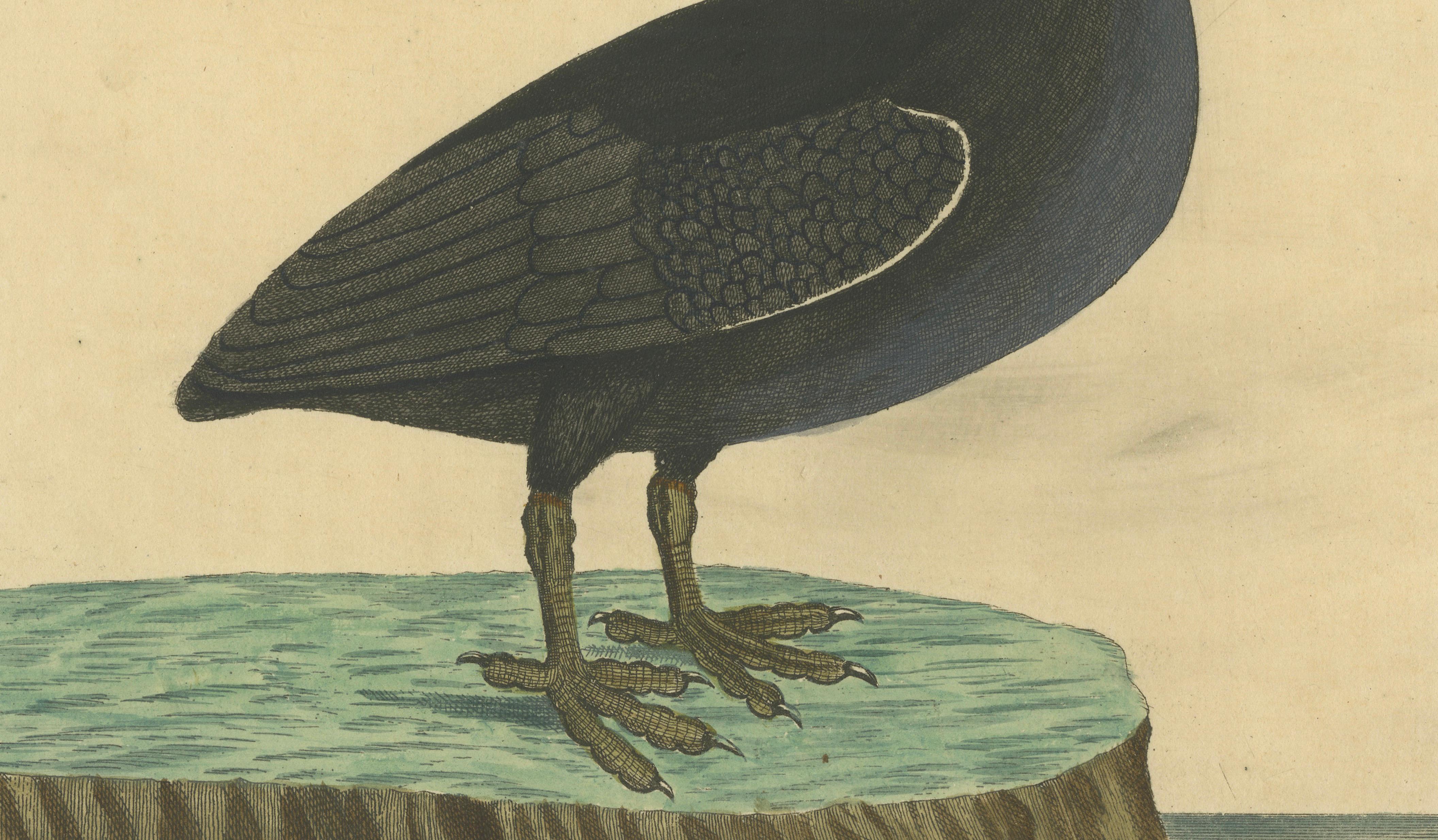
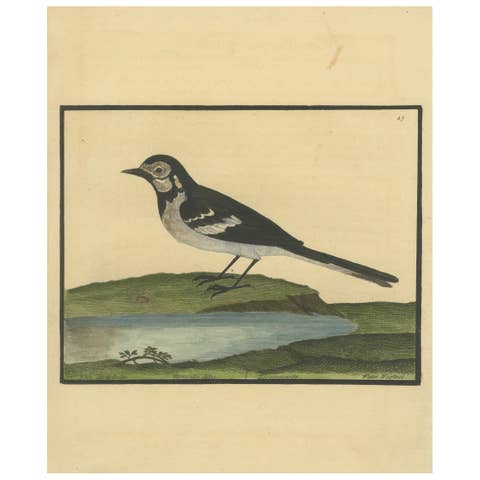
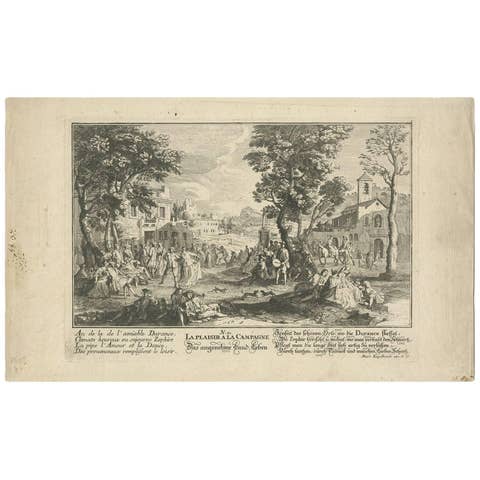
Antique Hand-Colored Engraving of the Bald Coot by E. Albin, circa 1730
€ 430
One of a kind: this is the sheet in the photographs. Ships from Langweer, the Netherlands.
Date
1730
Sheet size
22.8 × 28 cm (9.0 × 11.0 in)
Condition
Good
Reference
BG-10642
Condition
General age-related toning. Minor wear and foxing. Some defects in lower margin. Blank verso. Please study image carefully.
About this sheet
This striking antique hand-colored engraving depicts the Bald Coot, titled Fulica, from the early 18th-century ornithological work by Eleazar Albin. The print shows the bird standing on a grassy rock ledge beside a body of water, rendered in rich tones of black, grey, and muted green. The engraving is captioned with the Latin name Fulica and the English common name The Bald Coot. The lower left bears the artist’s name, E. Albin del., confirming it as part of Albin’s important series on birds.
Eleazar Albin (circa 1690–1742) was a notable natural history illustrator and author, known for his publications including A Natural History of Birds. His works were among the earliest English ornithological publications to include detailed hand-colored engravings drawn directly from nature, admired for both their scientific accuracy and their artistic style.
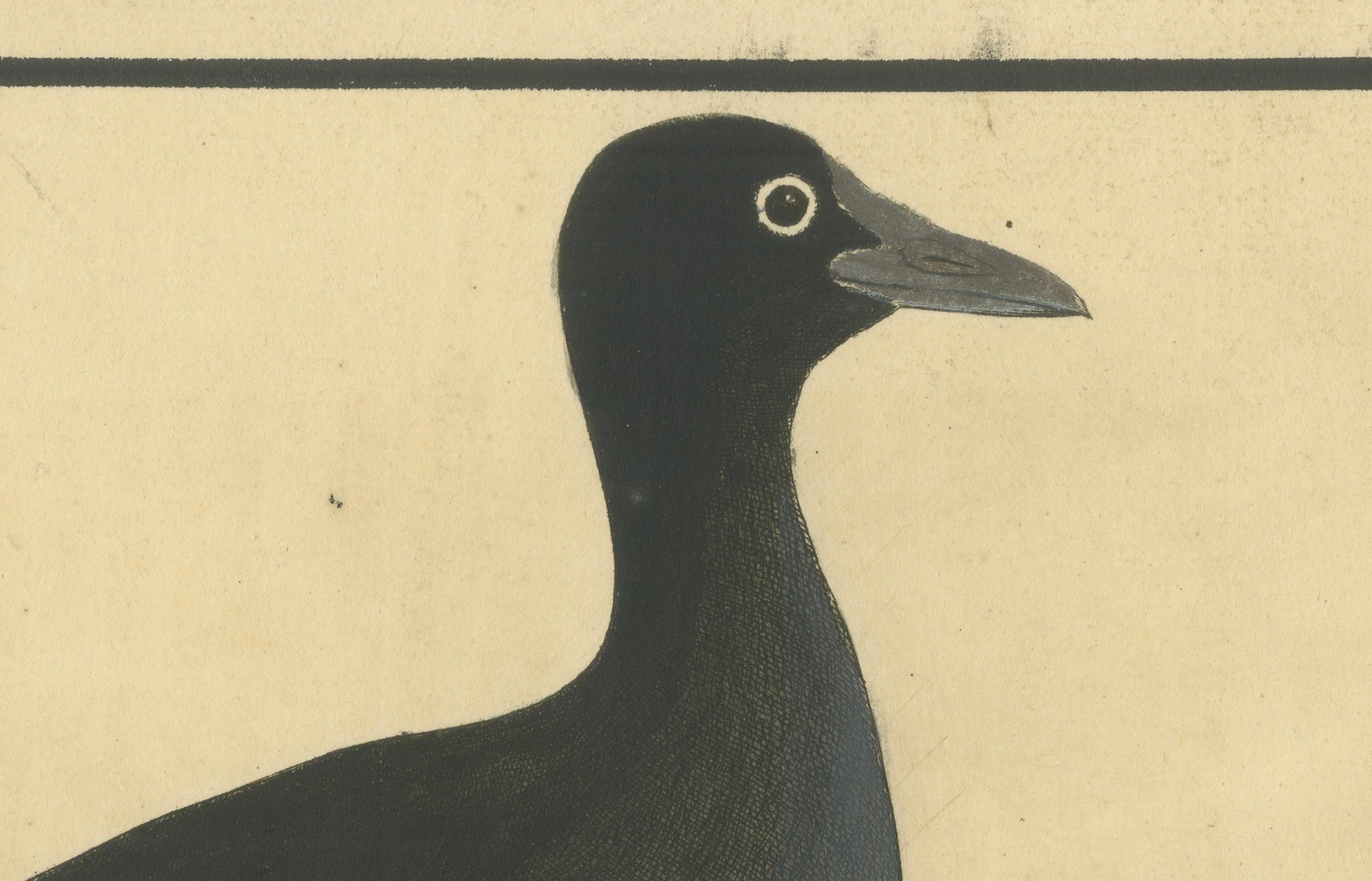
The coot is depicted with naturalistic attention to plumage texture, webbed feet, and its characteristic white facial shield. The clear linear border surrounding the composition is typical of early 18th-century English natural history prints. Such engravings were made primarily for educated collectors, early ornithologists, and wealthy patrons with an interest in natural sciences.
Today, prints by Eleazar Albin remain highly sought after for their historical value, rarity, and their role in the development of ornithological illustration. They provide insight into early scientific study as well as aesthetic traditions of the Enlightenment period.
Condition report: The print is in good condition considering its age. There is some toning and light foxing in the margins. The engraved image remains strong with vivid hand coloring. There are minor edge nicks and a faint fold in the left margin, not affecting the image area.
Framing tips: This engraving would look elegant in a classic black or dark wood frame with a gold inner edge to echo the print’s historical nature. Use a light cream or antique white mat to highlight the detailed coloring and maintain a refined, museum-quality presentation suitable for a library, study, or natural history collection display.