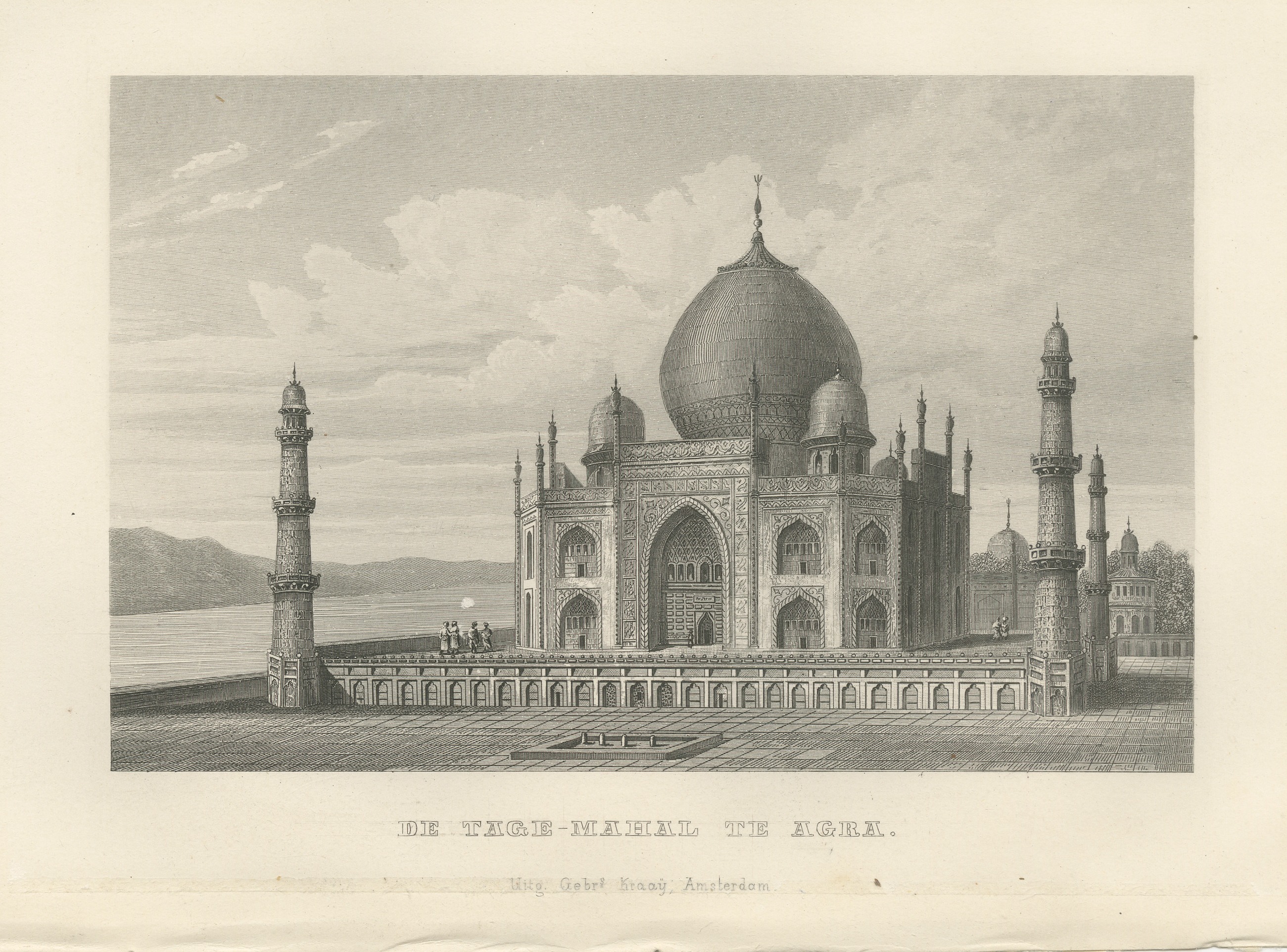
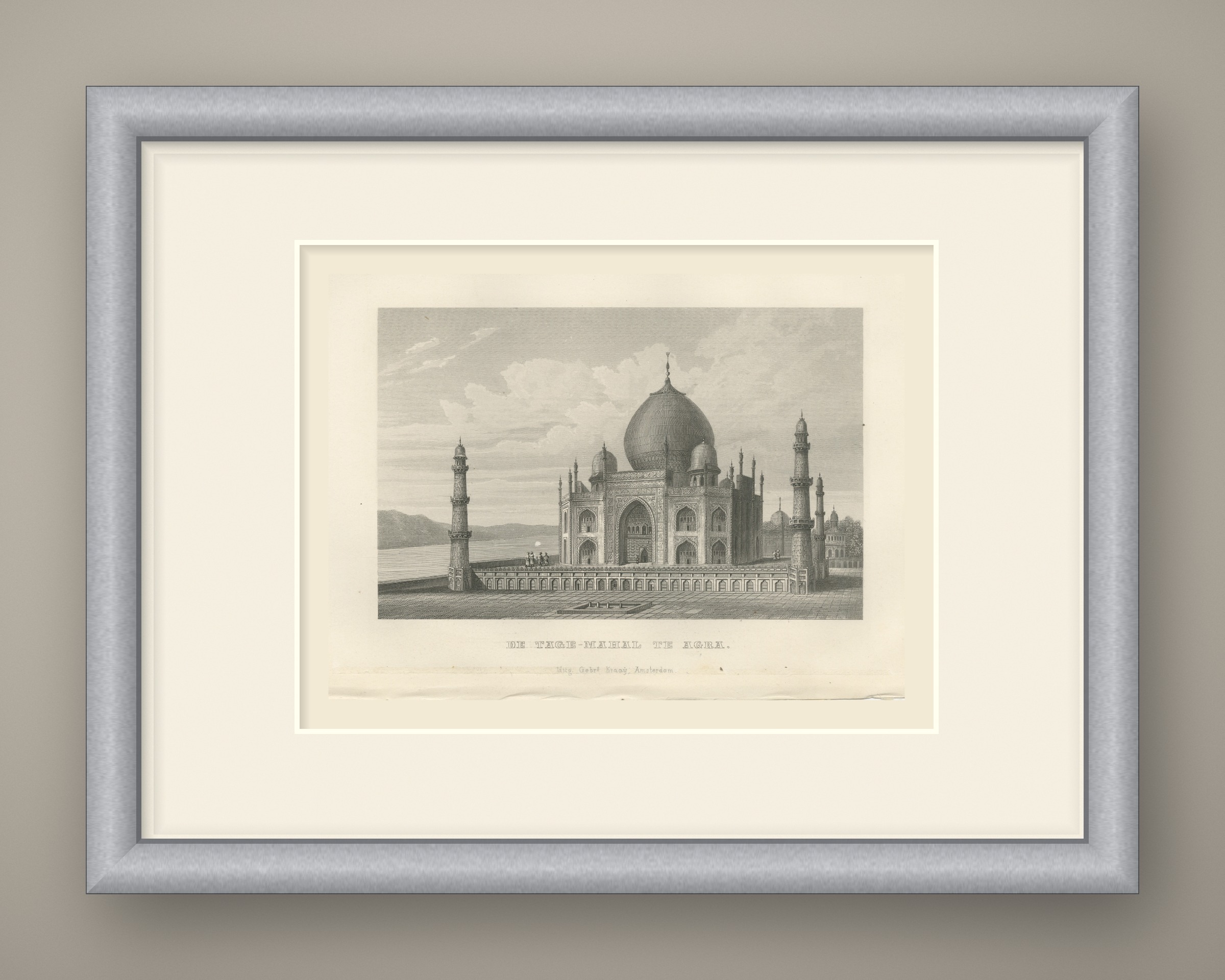
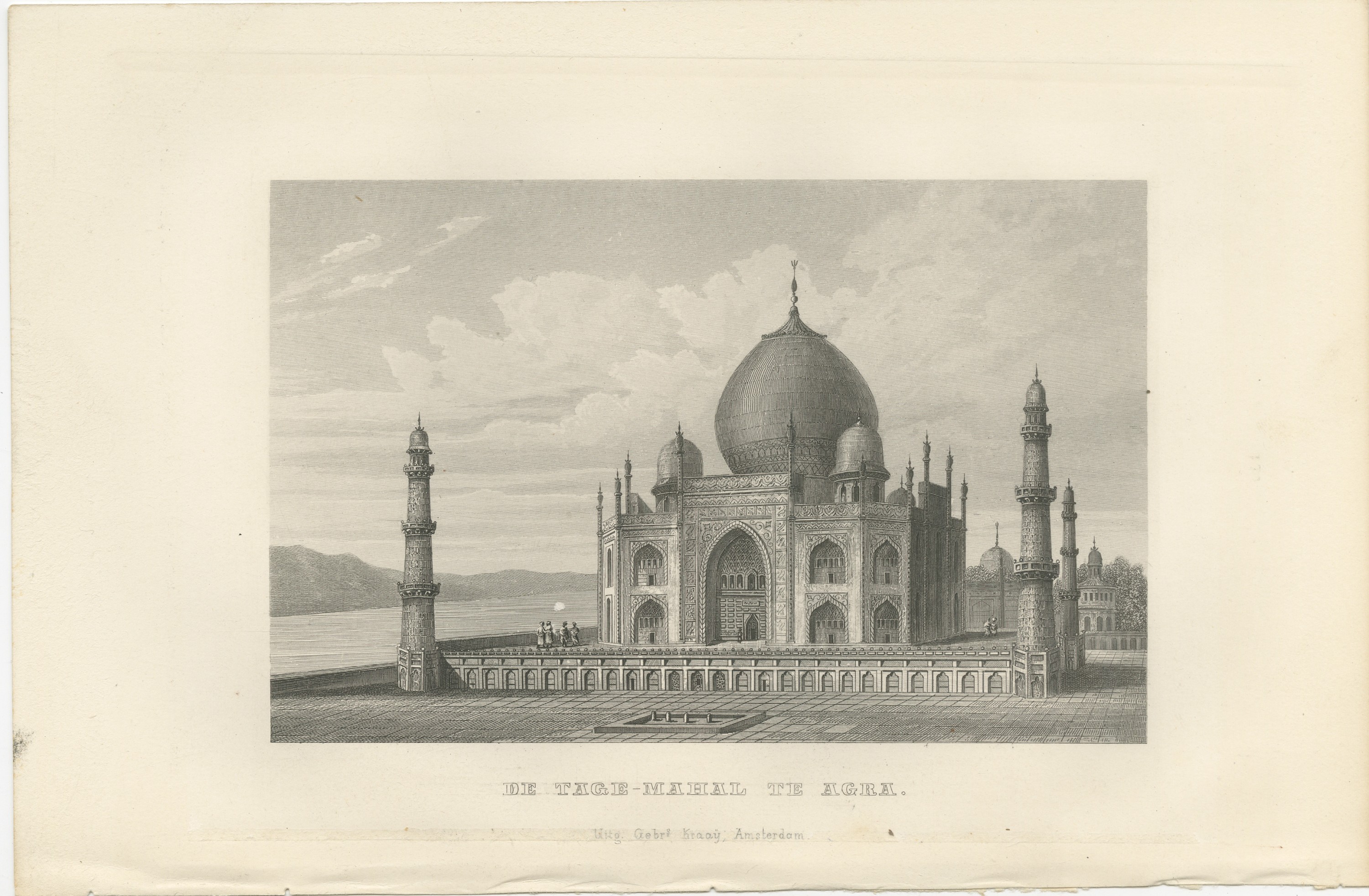
The Taj Mahal at Agra, Antique Steel Engraving, 1859
€ 320
Original antique · The actual sheet photographed · Certificate of authenticity on request · Sold unframed · Worldwide shipping from € 15 (rates)
Date
1859
Mapmaker / artist
Published by Gebroeders Kraay
Publisher
Gebroeders Kraay, Amsterdam
Technique
Steel Engraving
Coloring
Uncolored
Condition
Good
Reference
BG-00114-13
What the condition grades mean
Excellent
Bright and clean, with no faults worth mentioning.
Very good
Only light signs of age, such as faint toning.
Good
Normal signs of age for a sheet of this period: toning, some foxing, small marks or neat old repairs.
Fair
Clear faults such as staining, tears or repairs, priced to match.
Every fault we see is written in the condition note, and the whole sheet is shown uncropped in the photos.
Condition
Light handling wear to the bottom right corner; minor nicks along the bottom edge. Even age toning, lightly soiled along the bottom and right edges. No foxing noted in the margins.
About this sheet
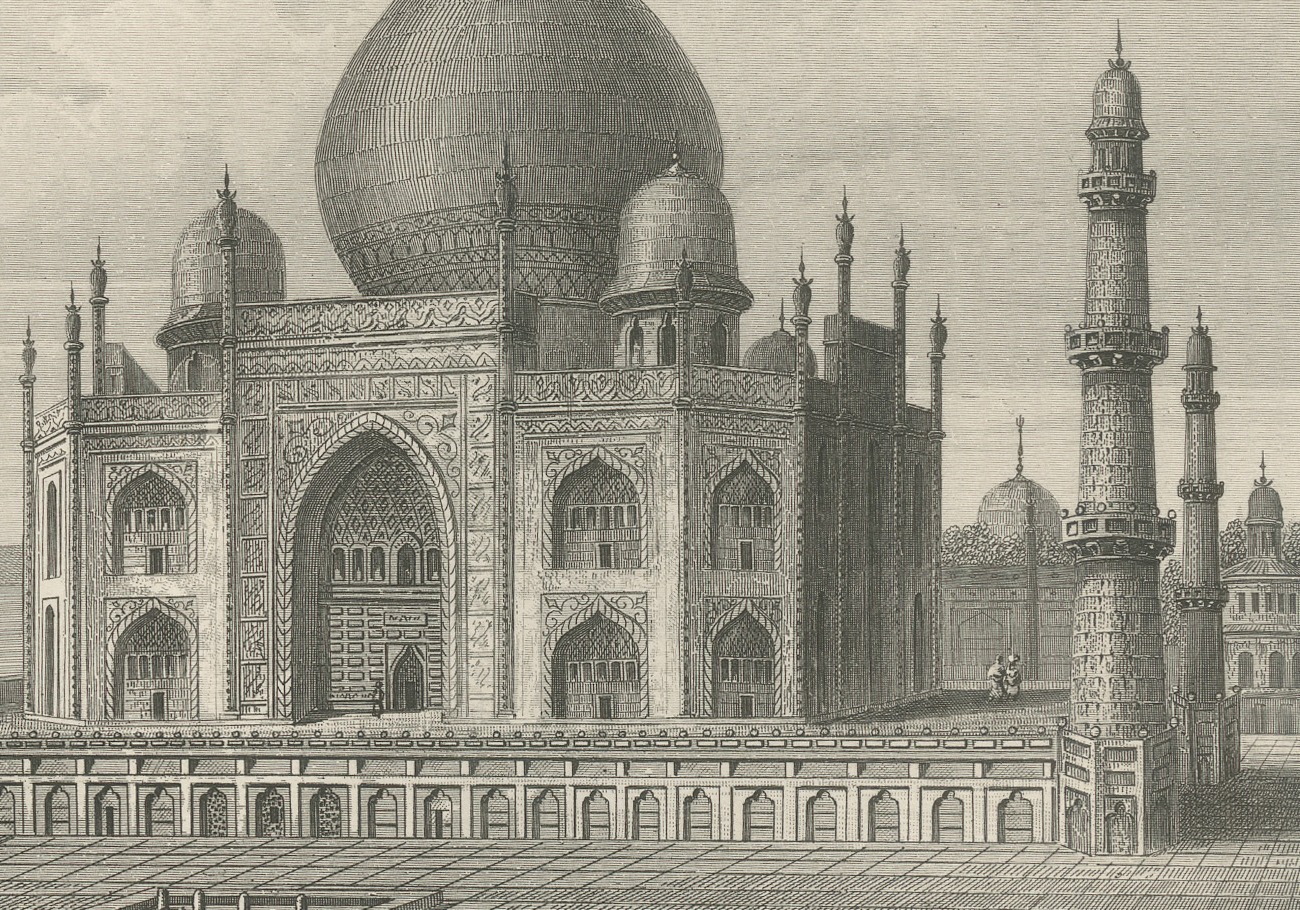
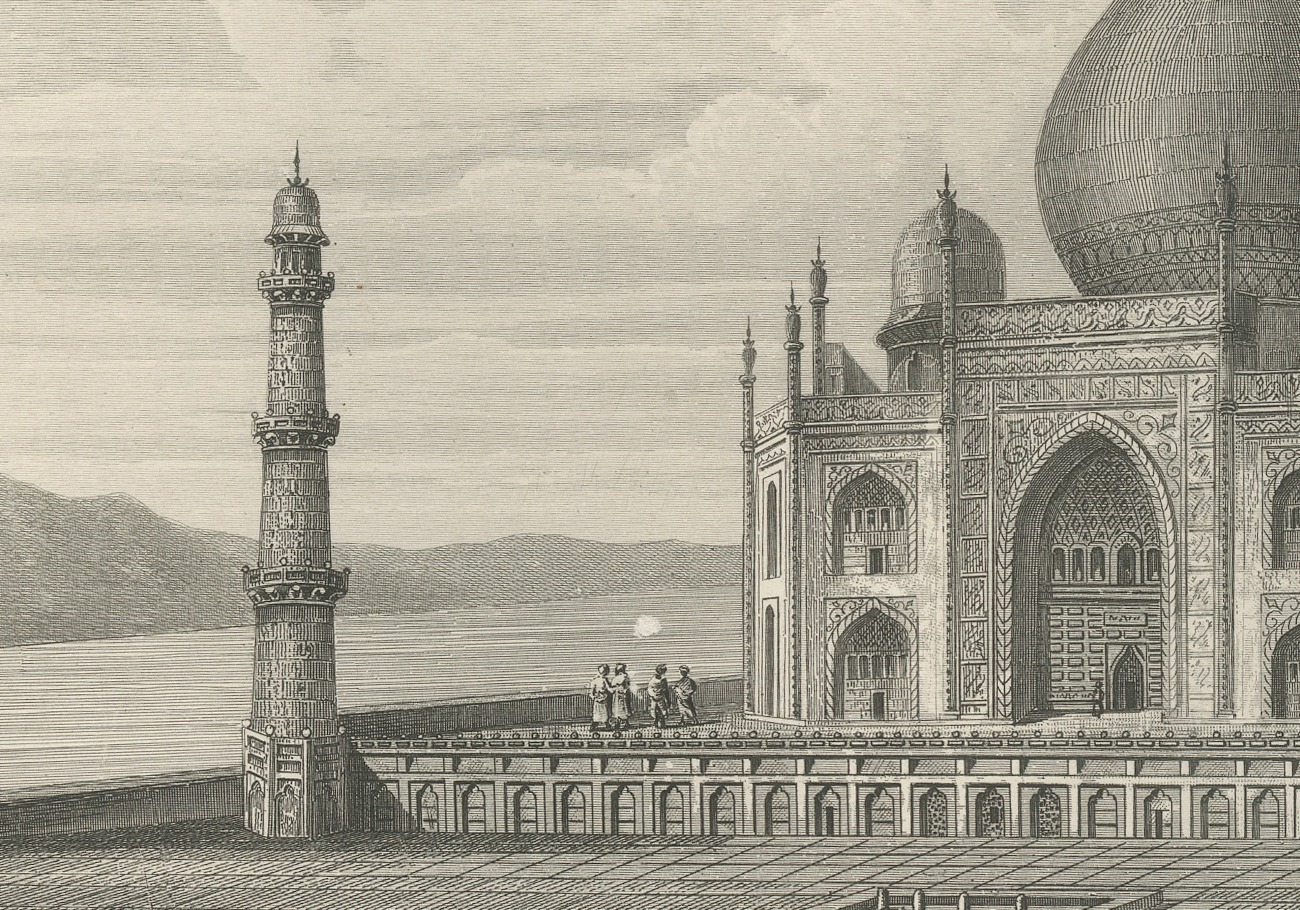
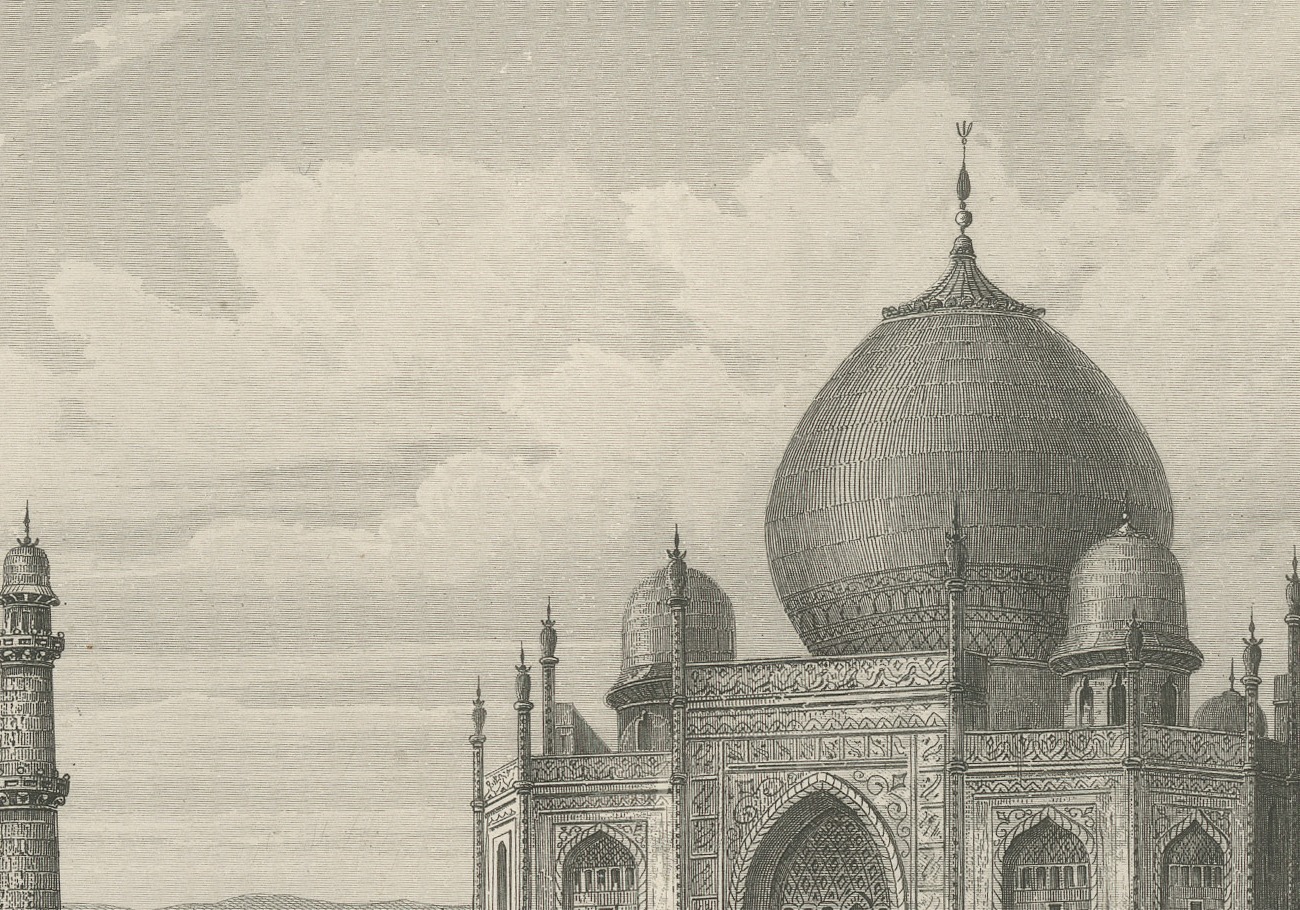
An original antique steel engraving, uncolored, titled "DE TAGE-MAHAL TE AGRA." The mausoleum stands on its raised, arcaded terrace in the center, its great bulbous dome crowned by a finial and flanked by smaller domed kiosks and slender pinnacles, the facade cut by a deep pointed arch and carved panels. Two tall minarets rise at the left and right corners of the terrace, with a third behind at the right beside a domed building and trees. At the left the river stretches away to a range of low hills, where a bright spot of light glints on the water. A few figures stand on the terrace, and a rectangular basin is set into the paved court in the foreground.
The plate is lettered below the image in Dutch: "DE TAGE-MAHAL TE AGRA.", which translates as "The Taj Mahal at Agra". Beneath the caption, in a small script, is the publisher's imprint "Uitg. Gebrs Kraaÿ, Amsterdam.", short for uitgegeven (published) by the Kraay brothers of Amsterdam. No artist or engraver is named on the plate.
The plate comes from Britsch-Indië, beschreven naar de nieuwste bronnen (British India, described from the newest sources) by A. van Otterloo, published in Amsterdam by Gebroeders Kraay in 1859. The book is the first part, or Eerste Deel, of the publisher's series Vreemde Landen en Volken (Foreign Lands and Peoples), and its title page announces twenty-four steel engravings and a map. Steel plates held fine, even lines through long print runs, which suited illustrated books of this kind.
The Taj Mahal was built by Shah Jahan in the seventeenth century as the tomb of his wife Mumtaz Mahal. This is a clear, well-balanced view of the most celebrated building in India, suited to a bedroom, hall or reading room.
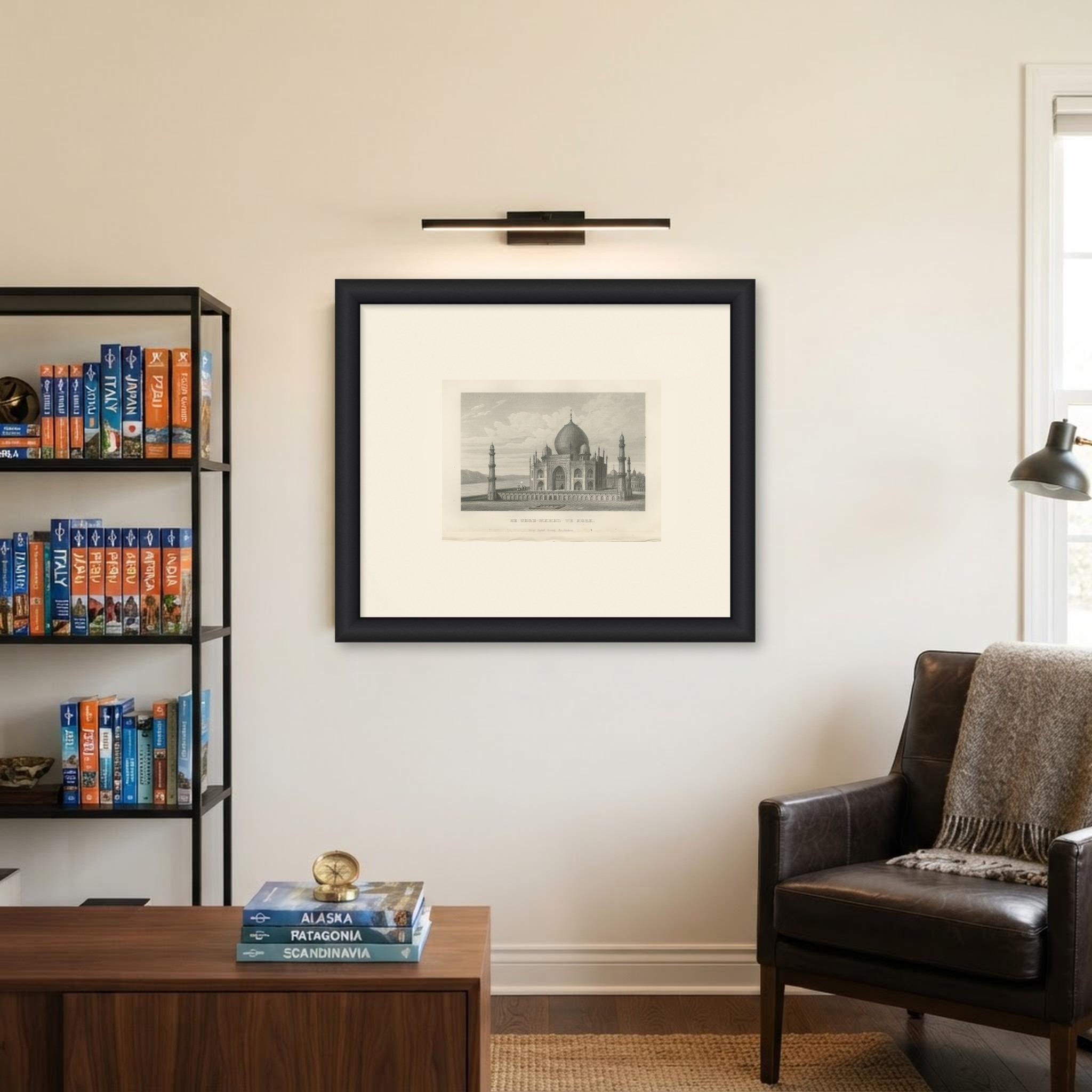
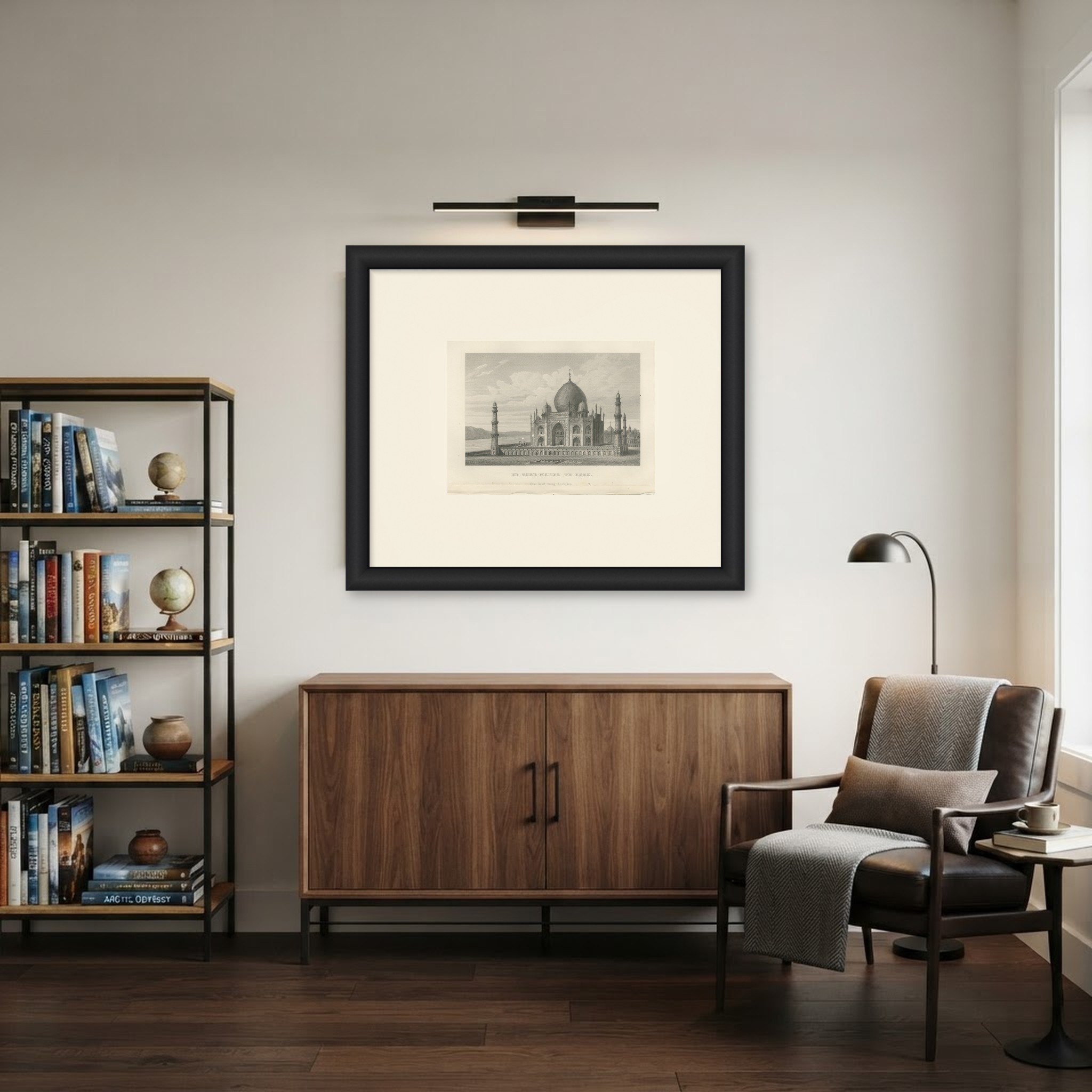
This is an original antique print, not a modern reproduction. This item is sold unframed. Any framed or interior images are shown for presentation and inspiration only, unless the listing explicitly states that the item is sold framed.