About this sheet
Three Antique Hawaii Engravings – Hula Dance, Native Ceremony & Lamentation, 1836
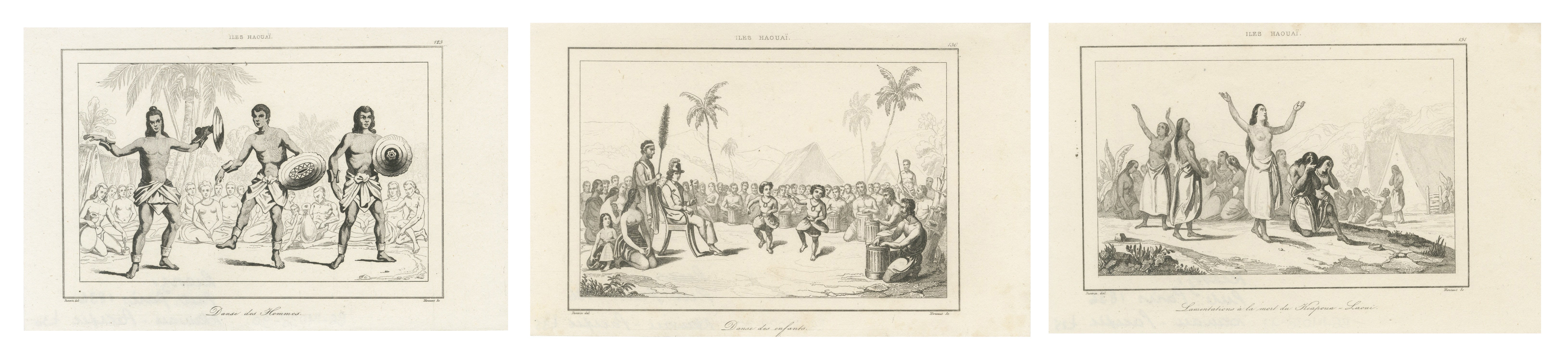
This set of three original 19th-century engravings illustrates scenes of traditional life and ceremonial culture in the Hawaiian Islands, historically referred to in European publications as the “Îles Haouaï” or Sandwich Islands. The prints were published in the important French ethnographic work Océanie ou la Cinquième Partie du Monde by the explorer and writer Grégoire Louis Domeny de Rienzi, issued in Paris in 1836. The book aimed to provide one of the earliest comprehensive European visual surveys of the cultures of Oceania, including Polynesia, Micronesia, and Melanesia.
The plates were designed by the French artist Victor Marie Félix Danvin and engraved by professional printmakers working for the publication. Many of the illustrations in the work were inspired by earlier voyage drawings, including those produced during Pacific expeditions in the early nineteenth century, such as the sketches made by Louis Choris during the Romanzoff expedition.
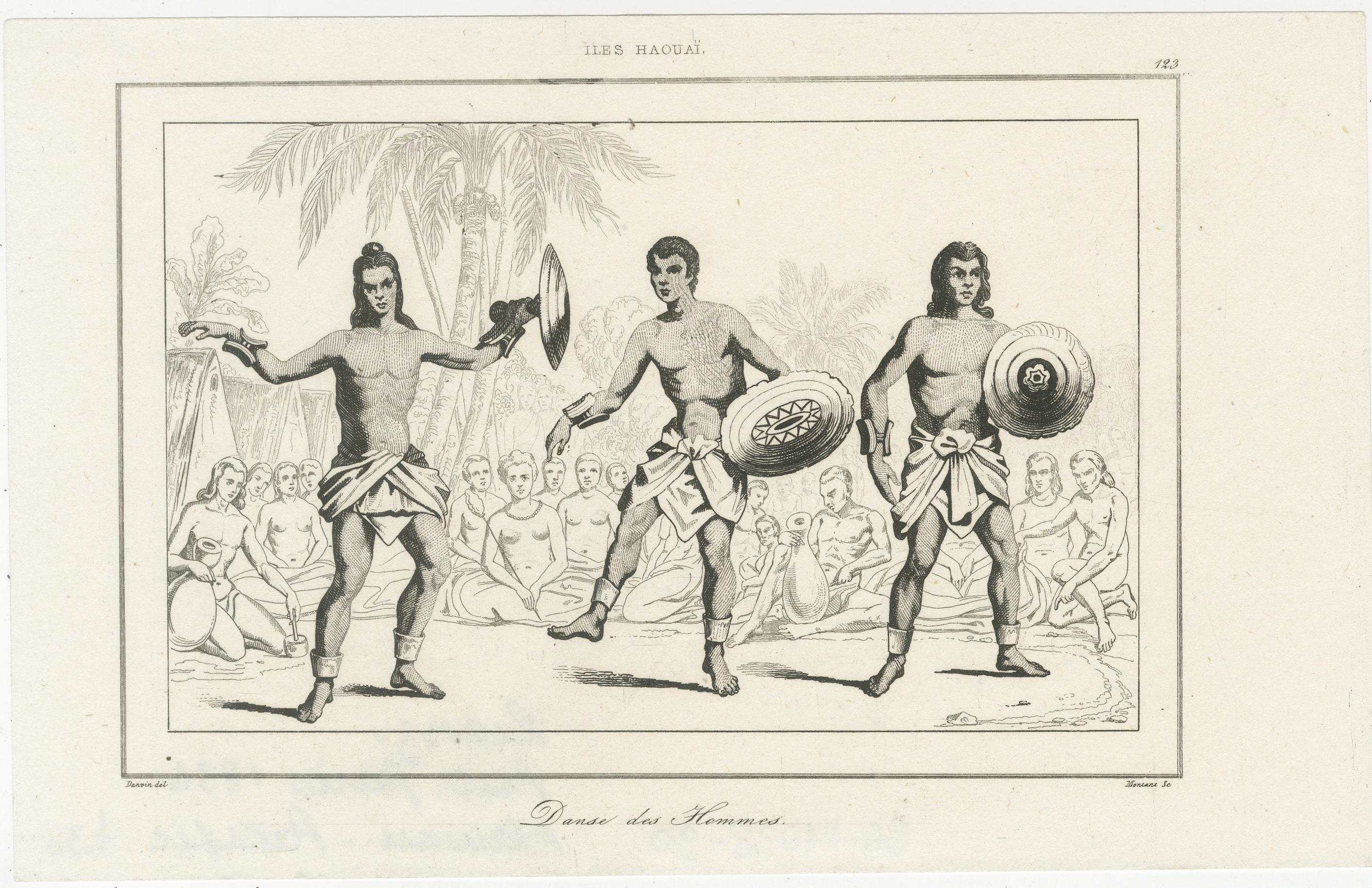
One of the engravings depicts a traditional Hawaiian dance performance, often interpreted as an early representation of *hula kahiko*, the ancient ceremonial form of hula. Male dancers perform rhythmic movements accompanied by percussion instruments while spectators gather under coconut palms near traditional thatched houses. The detailed rendering of posture, costume, and ritual implements reflects the fascination of European audiences with Polynesian performance culture during the age of exploration.
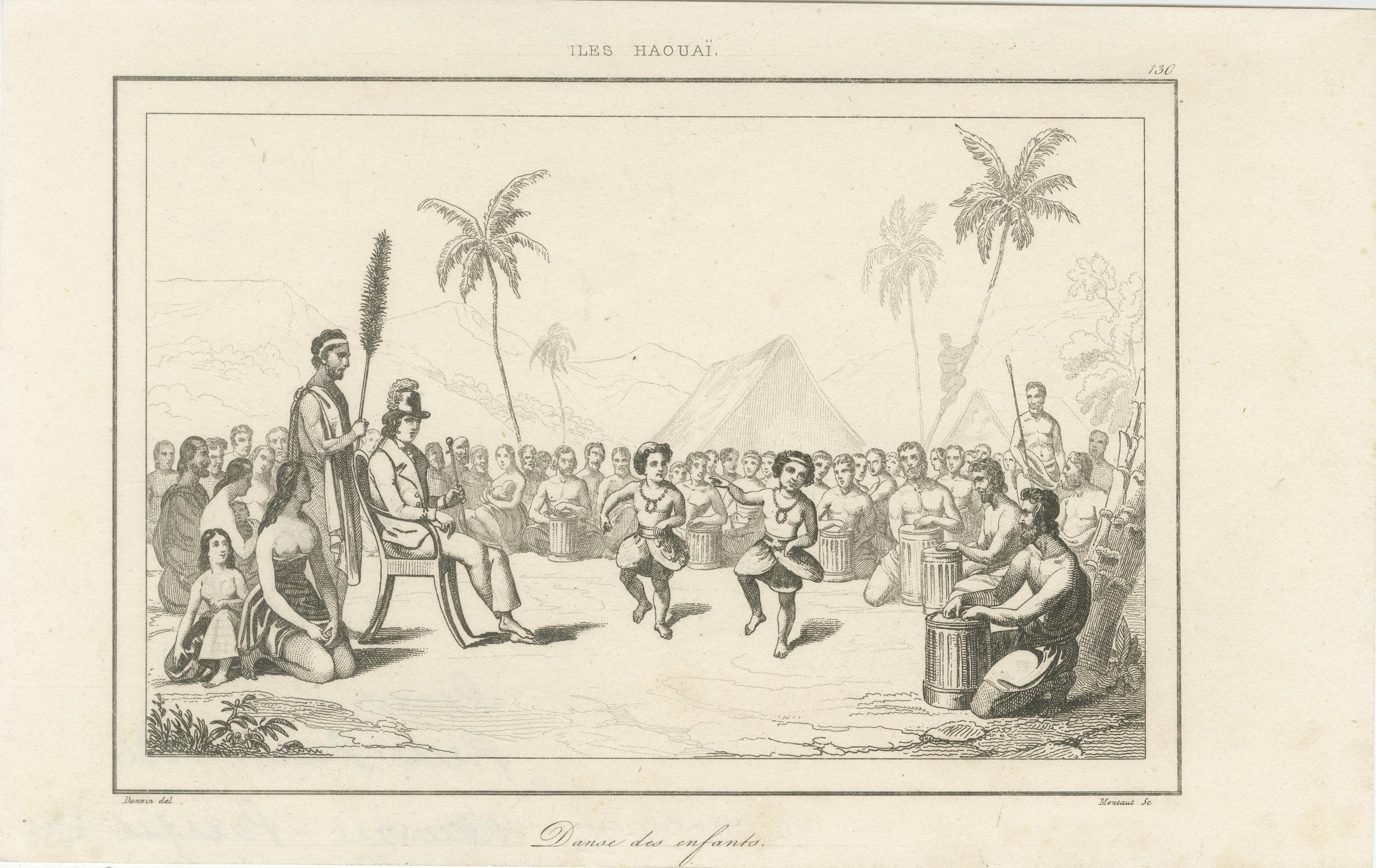
Another plate represents a ceremonial dance or public performance associated with a local governor or leader, showing dancers performing before a group of observers. Drummers accompany the dancers, emphasizing the central role of rhythm and chant in Hawaiian cultural expression. Scenes such as this reflect the important social function of dance in storytelling, celebration, and ritual within Hawaiian society.
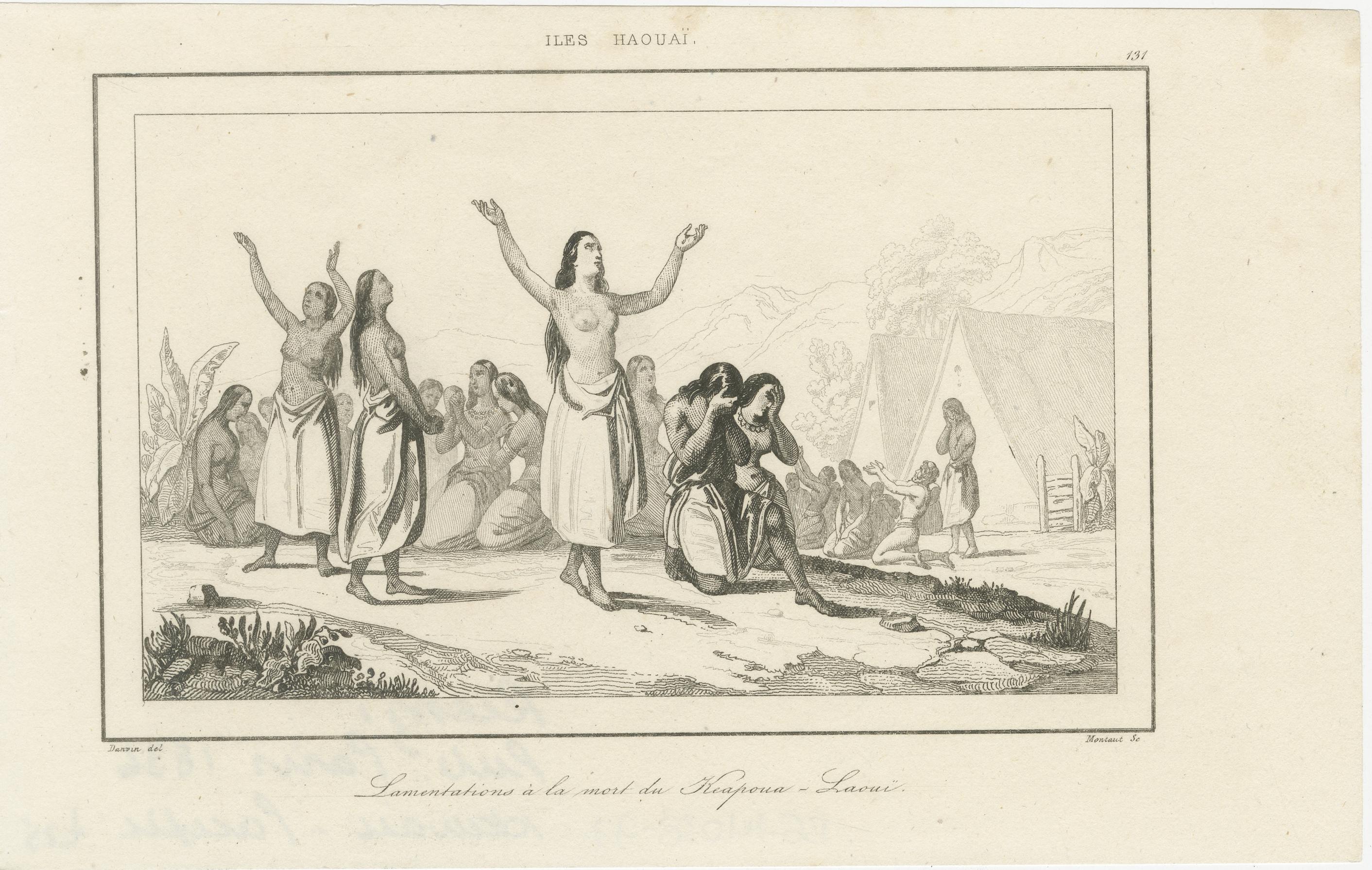
The third engraving portrays a mourning ceremony titled “Lamentations à la mort du Keapoua-Laoui.” The composition depicts mourners expressing grief following the death of a prominent figure. Individuals are shown kneeling, gesturing toward the sky, or covering their faces in sorrow. The scene provides a rare early European visual interpretation of Hawaiian funerary customs and communal mourning practices.
Together these engravings offer a fascinating nineteenth-century European interpretation of Hawaiian society prior to widespread cultural transformation during the later nineteenth century. The plates combine ethnographic curiosity with refined steel engraving technique, producing clear, finely detailed compositions that remain visually compelling today.
Sets such as this are particularly appealing for collectors of Pacific exploration material, early ethnographic prints, and decorative travel imagery. Displayed together they create a striking visual narrative of Hawaiian cultural life as perceived by early European observers.
Condition:
Good antique condition with light age toning and minor handling marks. Wide margins. Occasional small spots consistent with age.
Framing tips:
These prints work particularly well framed as a horizontal group of three. A dark walnut or ebonized frame with a warm ivory mat enhances the fine engraving lines and gives a refined gallery appearance suitable for interior designer installations.
Technique: steel engraving
Maker: Victor Marie Félix Danvin, France, 1836
Keywords:
Hawaii, Hawaiian Islands, Sandwich Islands, Polynesia, Pacific Islands, hula dance, Hawaiian ceremony, Hawaiian mourning ritual, Oceania exploration, Domeny de Rienzi, Danvin, 19th century engraving, ethnographic print, Pacific culture, Polynesian life, early travel illustration, Hawaii history, Pacific exploration prints