Native American Camp Scene – Trapper and Buffalo Hunters, c.1845
€ 260
Original antique · The actual sheet photographed · Certificate of authenticity on request · Sold unframed · Worldwide shipping from € 15 (rates)
Date
1845
Sheet size
23 × 30 cm (9.1 × 11.8 in)
Condition
Good
Reference
BG-13682-19
What the condition grades mean
Excellent
Bright and clean, with no faults worth mentioning.
Very good
Only light signs of age, such as faint toning.
Good
Normal signs of age for a sheet of this period: toning, some foxing, small marks or neat old repairs.
Fair
Clear faults such as staining, tears or repairs, priced to match.
Every fault we see is written in the condition note, and the whole sheet is shown uncropped in the photos.
Condition
Condition report: Very good impression with fresh, well-preserved coloring. Minor foxing in margins; image area clean and bright. Wide borders intact.
About this sheet
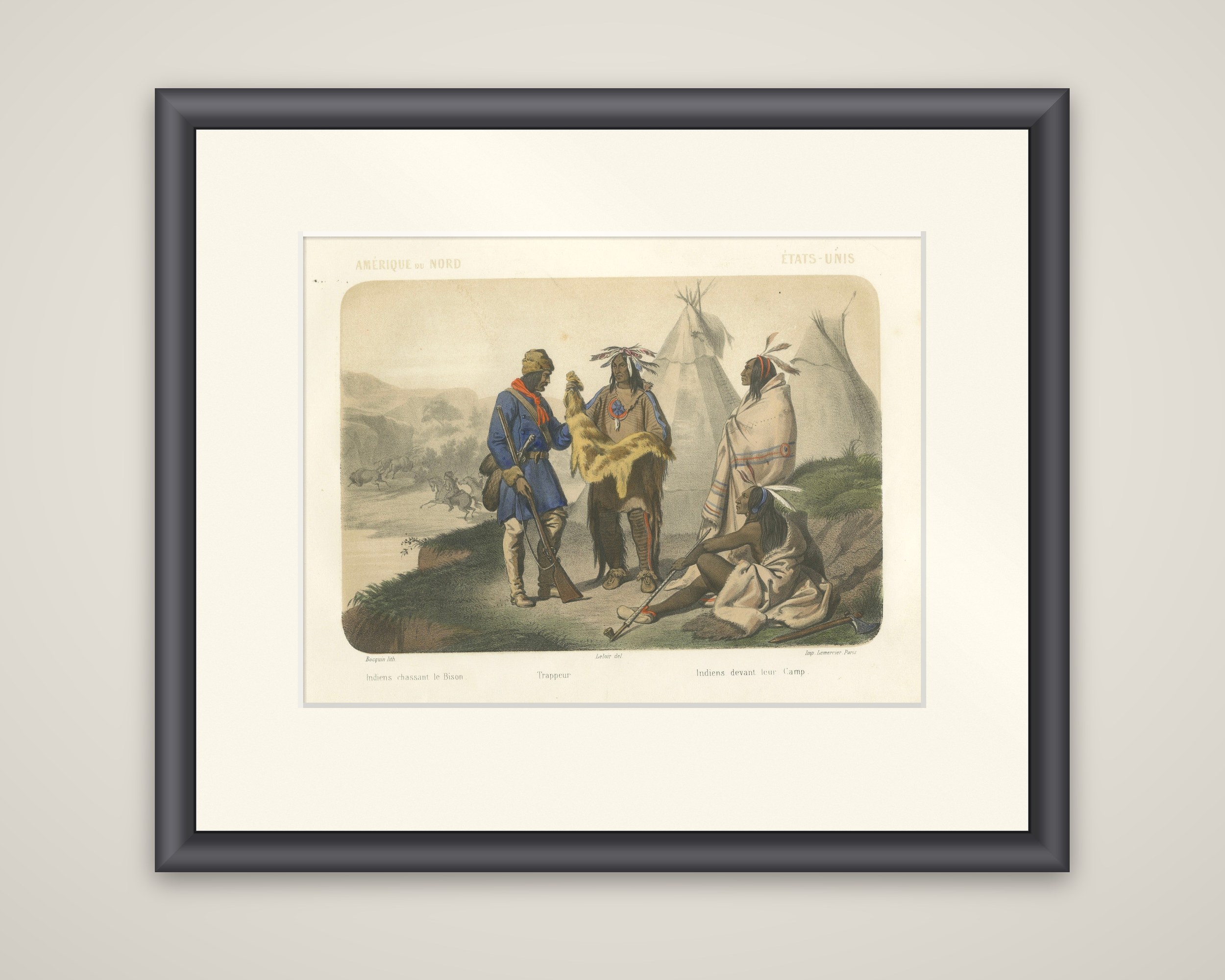
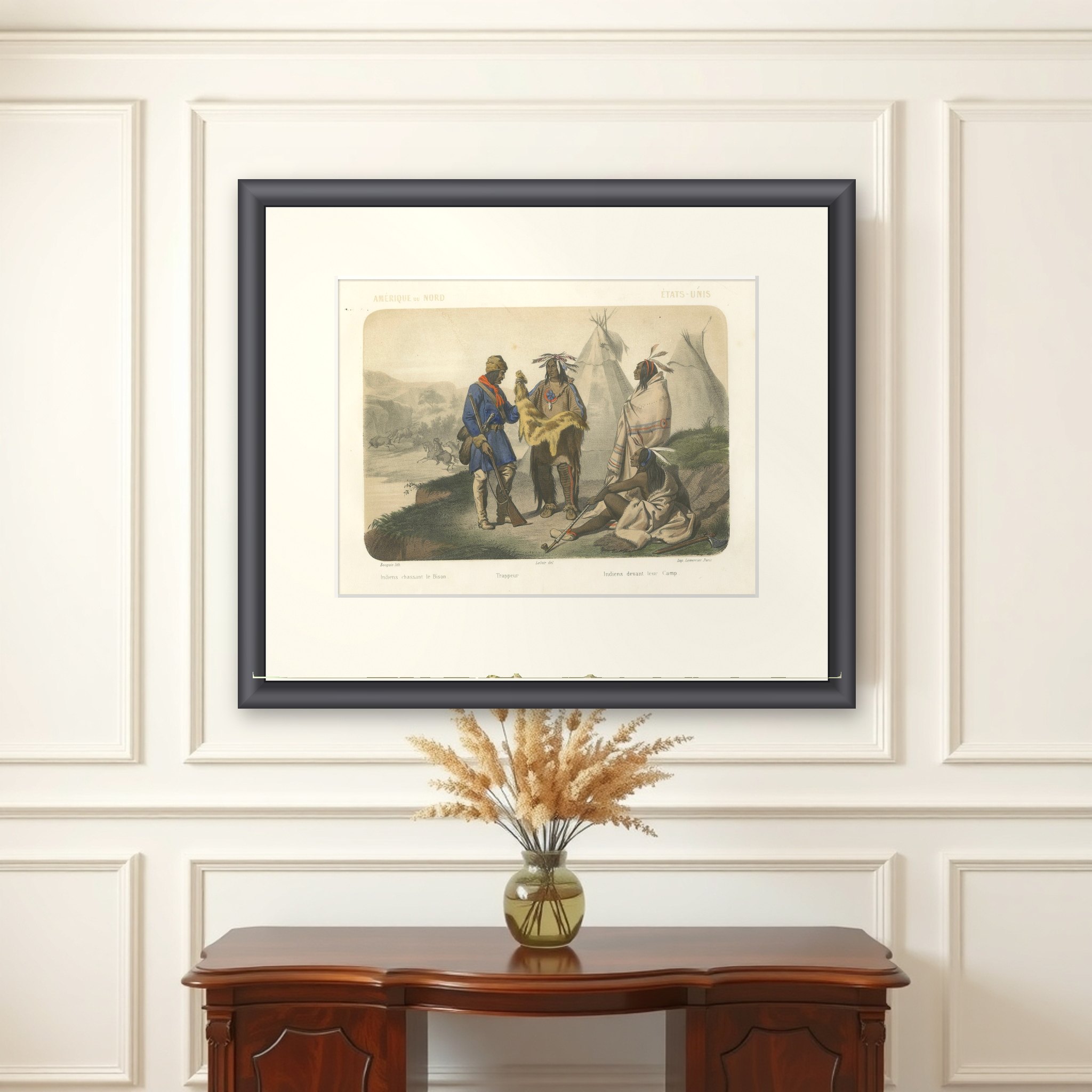
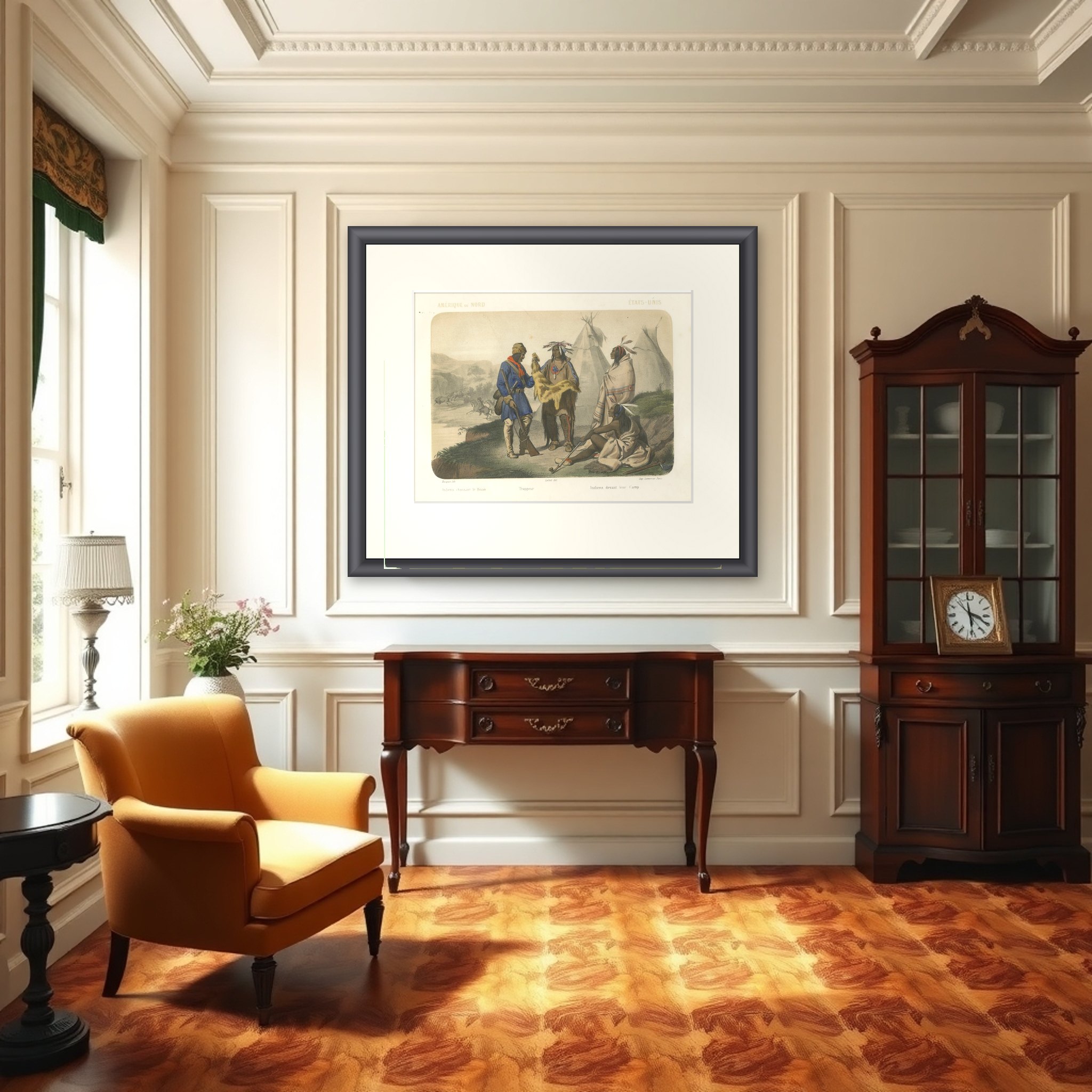
A trapper and Plains Indians before their camp, an original hand-colored lithograph titled "Amerique du Nord, Etats-Unis", from Le Monde en Estampes: Types et Costumes des Principaux Peuples de l'Univers, published in Paris around 1845-1850 by Amedee Bedelet. The sheet is lettered "Leloir del." and "Bocquin lith.", with the printer's imprint "Imp. Lemercier Paris".
Three captions run beneath the image: "Indiens chassant le Bison", "Trappeur" and "Indiens devant leur Camp". In the center, the trapper, in a blue hunting coat, fur cap and red neckerchief, with a long rifle, faces a chief in a feathered headdress who holds out a buffalo robe. At the right, a standing man wrapped in a striped blanket and a seated man with a tomahawk and a long pipe sit before conical tipis. In the left background, mounted hunters pursue a herd of bison across a river plain below low hills. The coloring is in ochre, blue and brown tones over a tinted lithographic ground.
The plate belongs to a series of costume and ethnographic types arranged by continent and country, and it shows the fur trade and bison hunt of the American plains as French audiences of the 1840s pictured them.