Original antique · The actual sheet photographed · Certificate of authenticity on request · Sold unframed · Worldwide shipping from € 15 (rates)
Date
1805
Mapmaker / artist
Jaques Kuyper (del.), engraved by Portman
Publisher
Johannes Allart, Amsterdam, c.1805
Technique
Hand-colored copper engraving
Sheet size
22.5 × 13 cm (8.9 × 5.1 in)
Condition
Good
Reference
BG-13696-7
What the condition grades mean
Excellent
Bright and clean, with no faults worth mentioning.
Very good
Only light signs of age, such as faint toning.
Good
Normal signs of age for a sheet of this period: toning, some foxing, small marks or neat old repairs.
Fair
Clear faults such as staining, tears or repairs, priced to match.
Every fault we see is written in the condition note, and the whole sheet is shown uncropped in the photos.
Condition
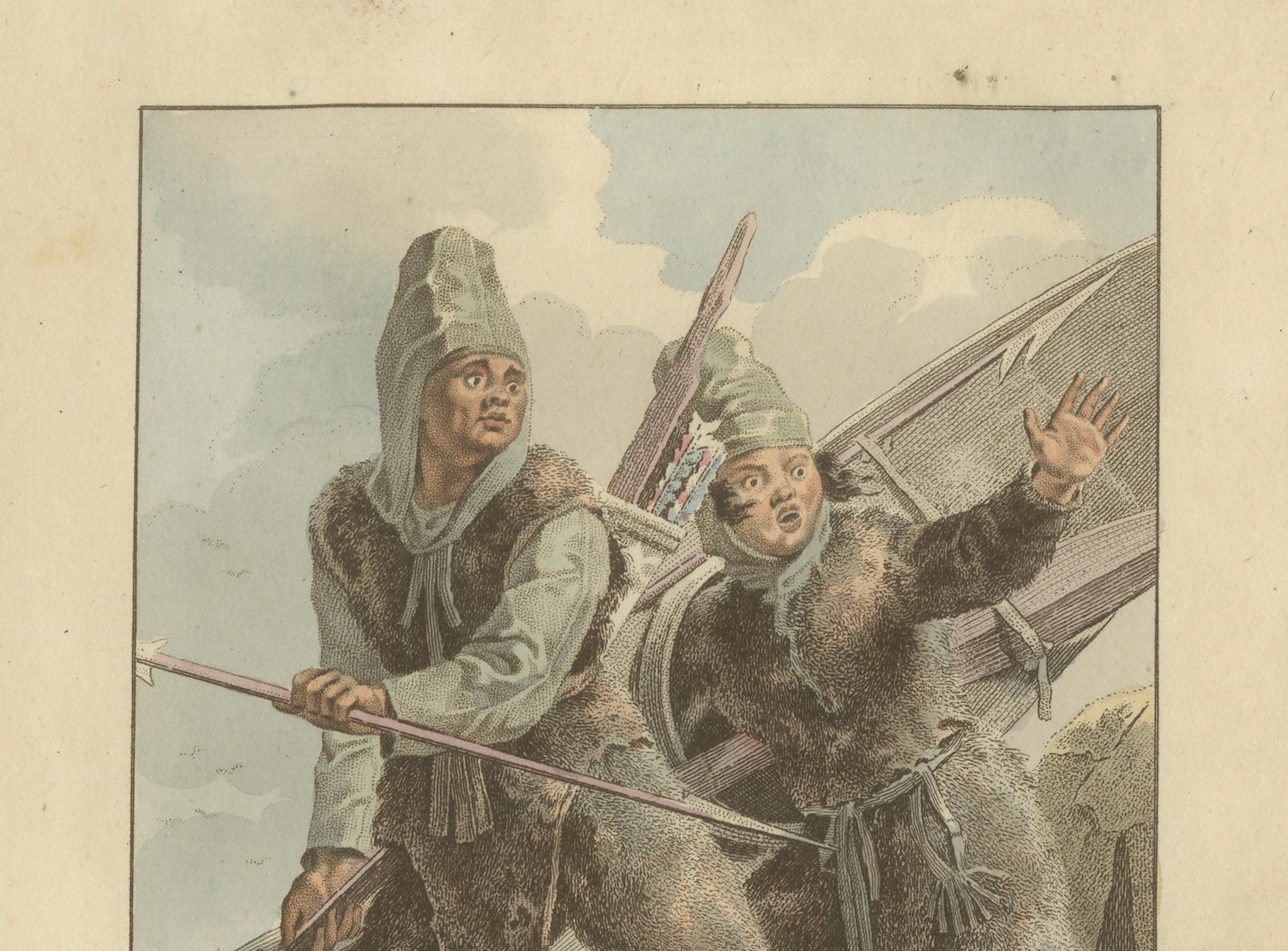
Very good for age. Wide margins present. Minor age toning and a few small margin spots not affecting the image. Strong impression with original hand-coloring.
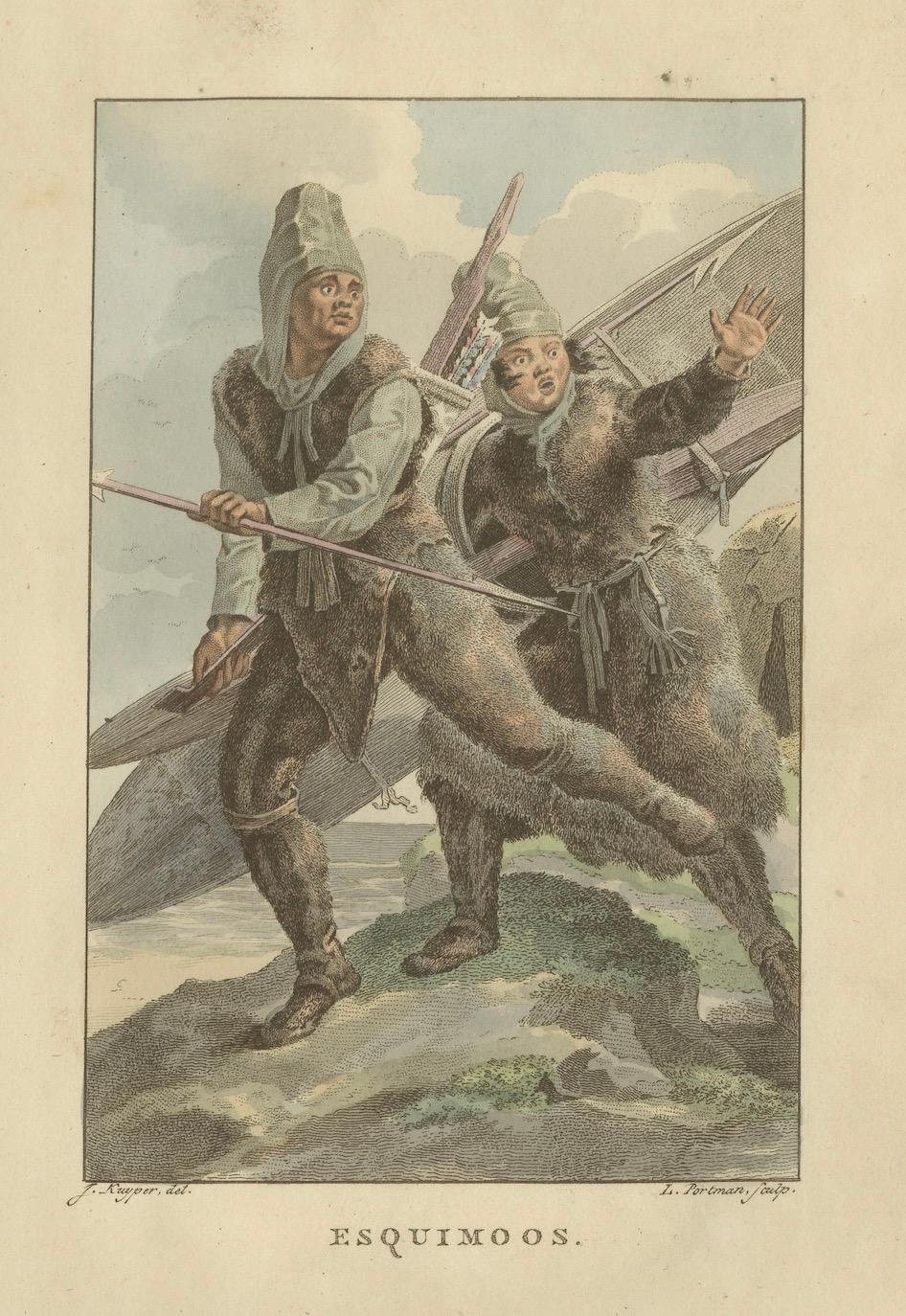
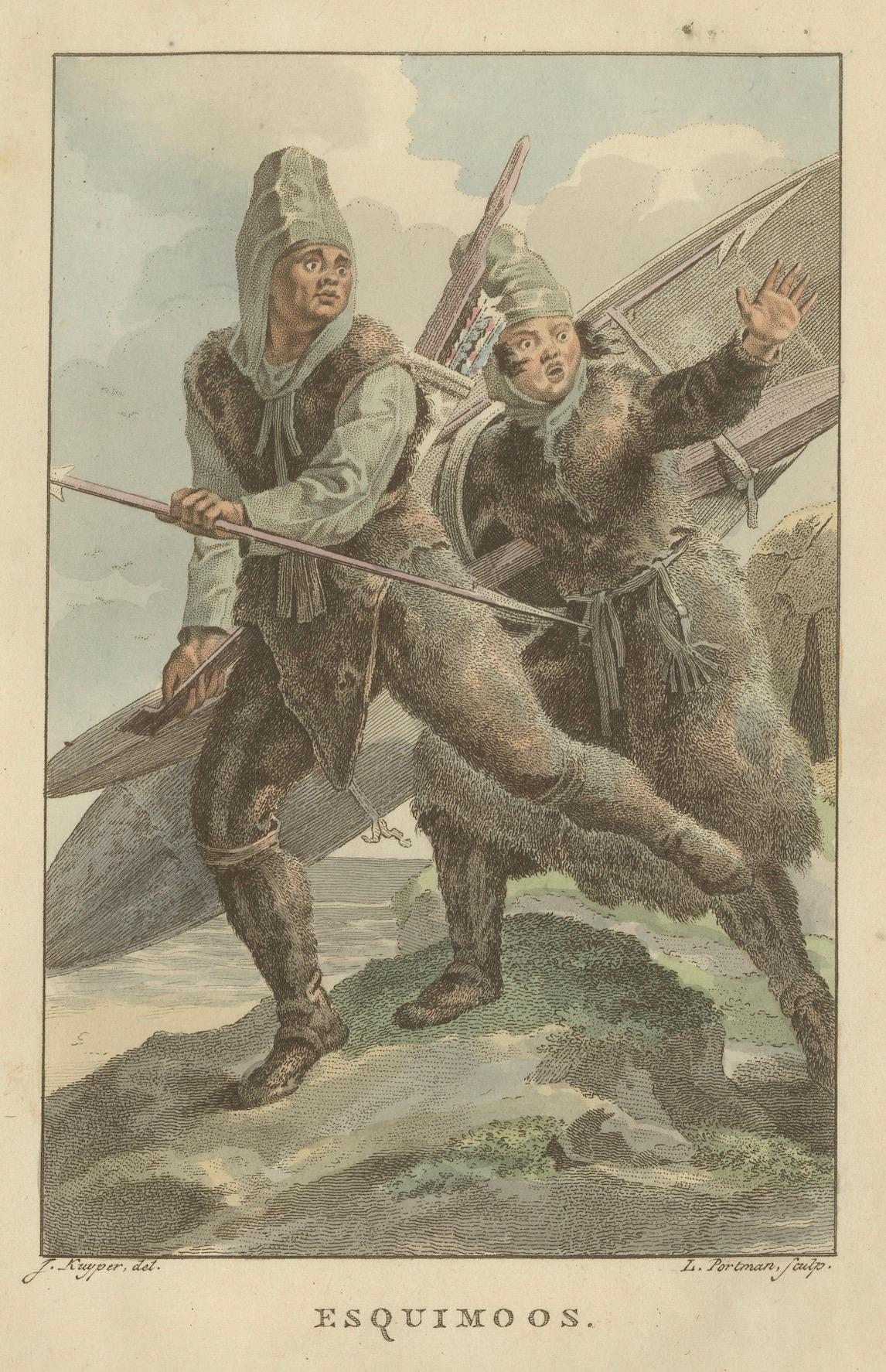
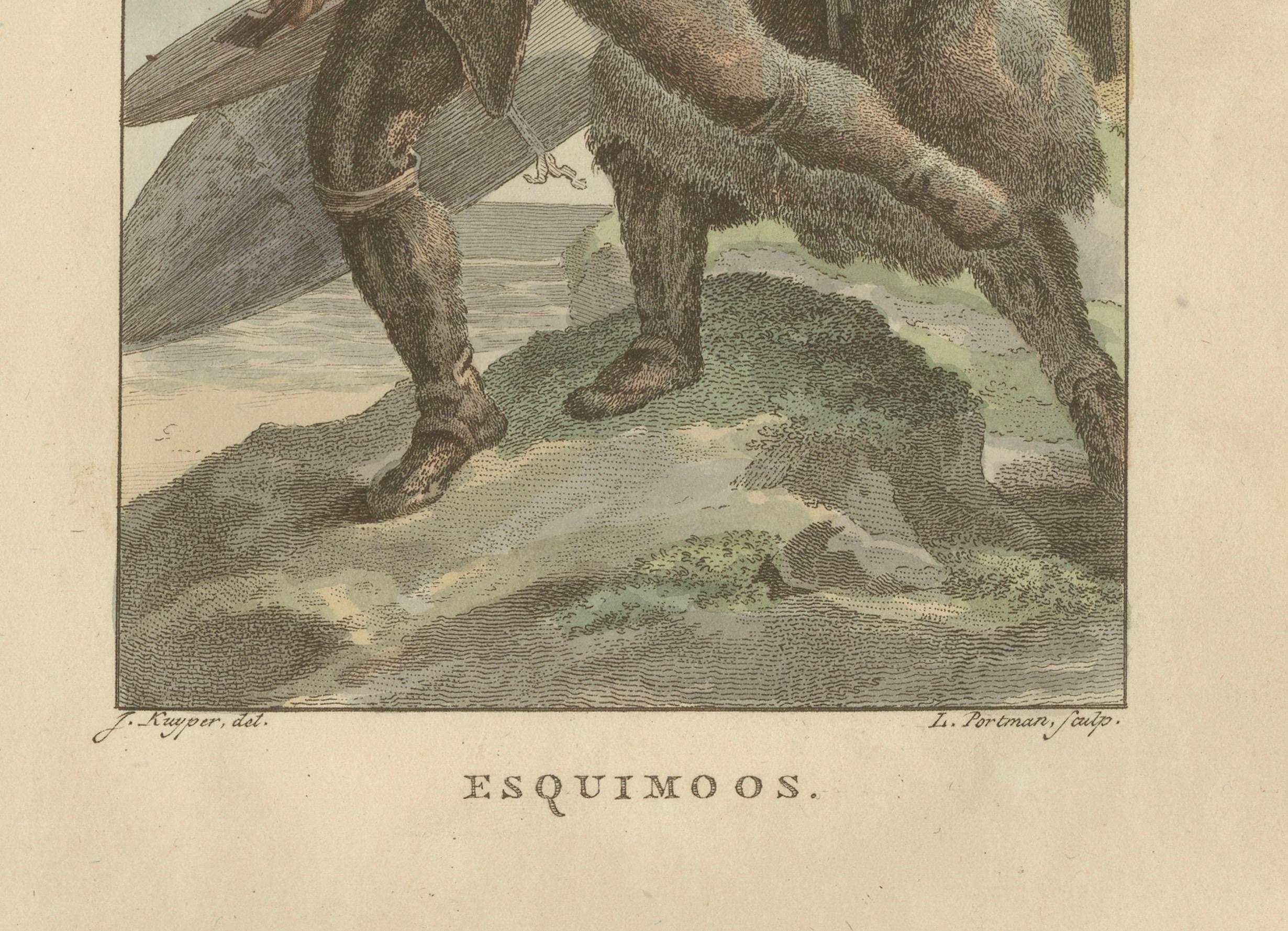
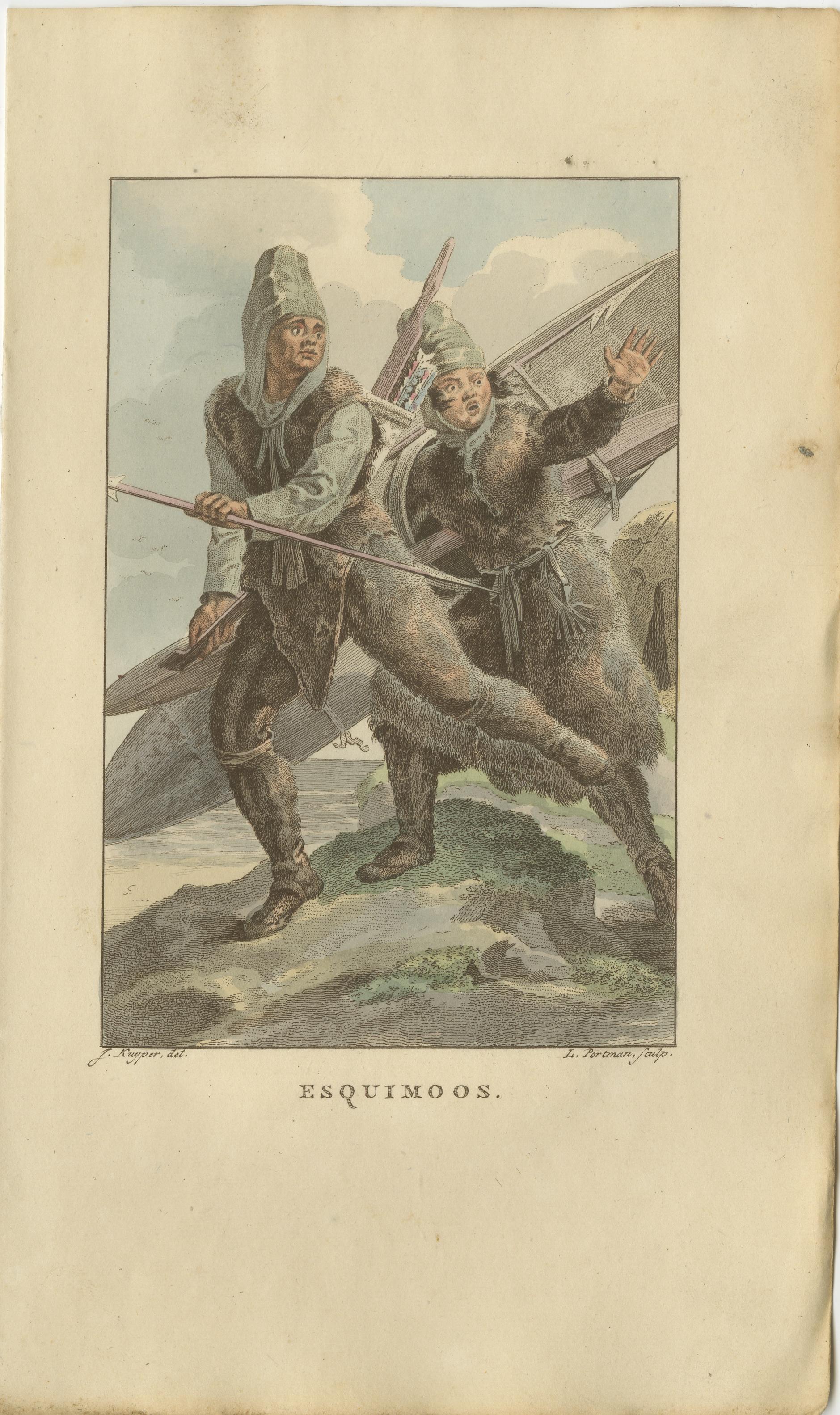
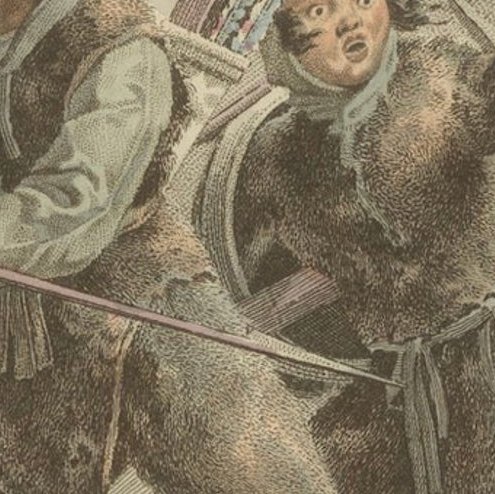
This dramatic and finely hand-colored ethnographic print titled “Esquimoos” depicts Inuit (historically called “Esquimaux”) hunters in the Arctic region. It was published in Amsterdam around 1805 as part of the landmark Dutch anthropological series “De Mensch, zoo als hij voorkomt op den bekenden aardbol” (“Humankind as Found on the Known Globe”), written by Martinus Stuart and illustrated by Jaques Kuyper.
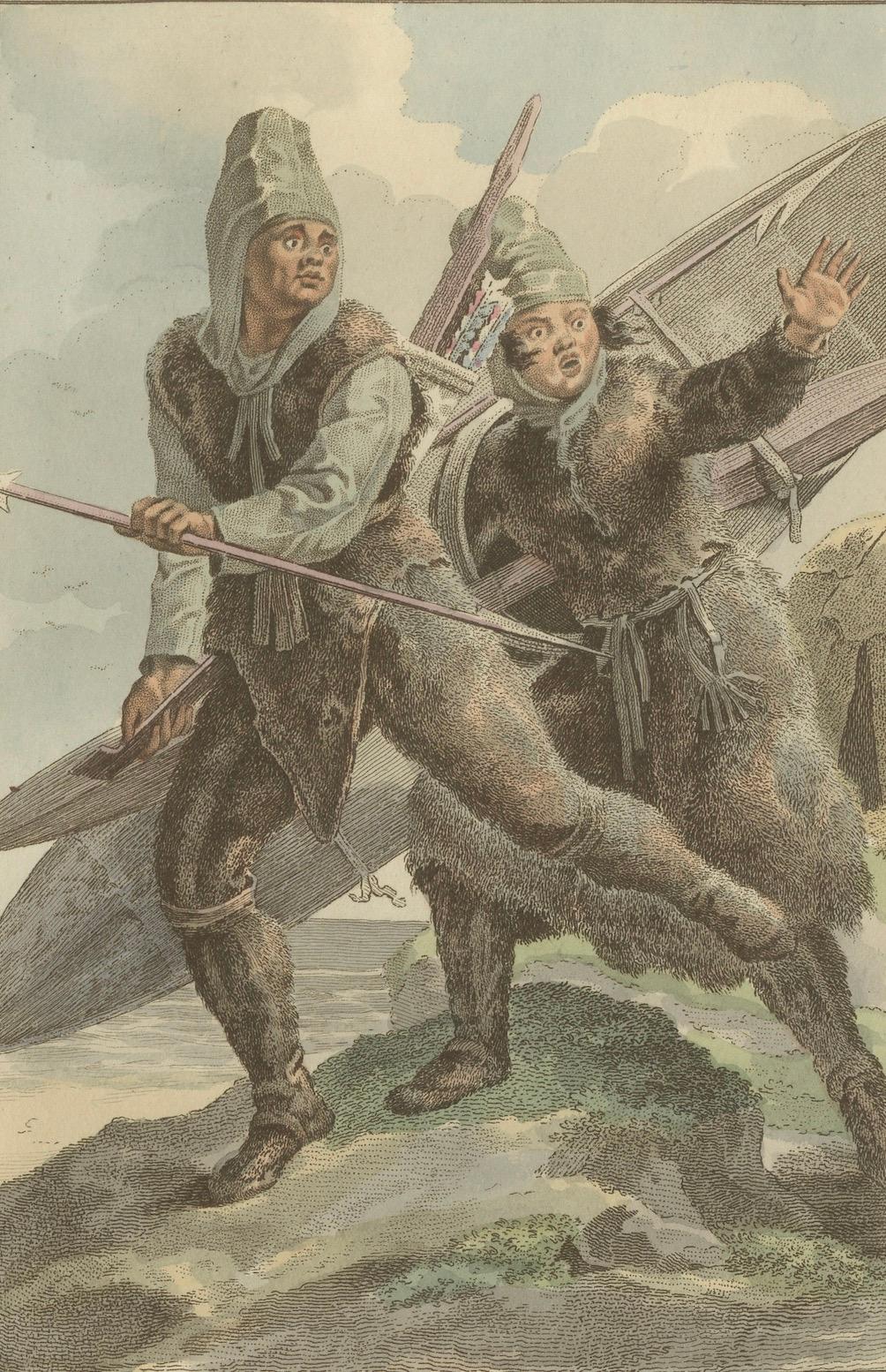
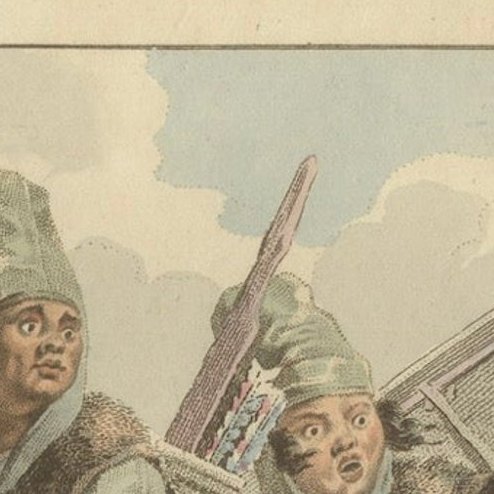
The scene portrays two hunters clad in fur clothing, equipped with spears and paddles, standing on a rocky Arctic shoreline. One gestures forward with urgency, while the other braces himself, suggesting a moment of search or alertness. The distinctive garments and gear reflect adaptation to an extreme environment defined by hunting, ice, and coastal survival. The original hand-coloring remains clear and atmospheric, particularly in the cool sky tones and detailed fur textures.
Stuart & Kuyper’s extensive publication was among the earliest Dutch efforts to depict global Indigenous cultures based on exploration accounts and emerging anthropological interest. Today, these images serve as valuable historical records of traditional lifestyles before major cultural changes of the 19th and 20th centuries.
This print is especially appealing for collectors interested in polar exploration history, Inuit culture, and early ethnographic illustration. A visually engaging and historically significant artwork.
Very good for age. Wide margins present. Minor age toning and a few small margin spots not affecting the image. Strong impression with original hand-coloring.
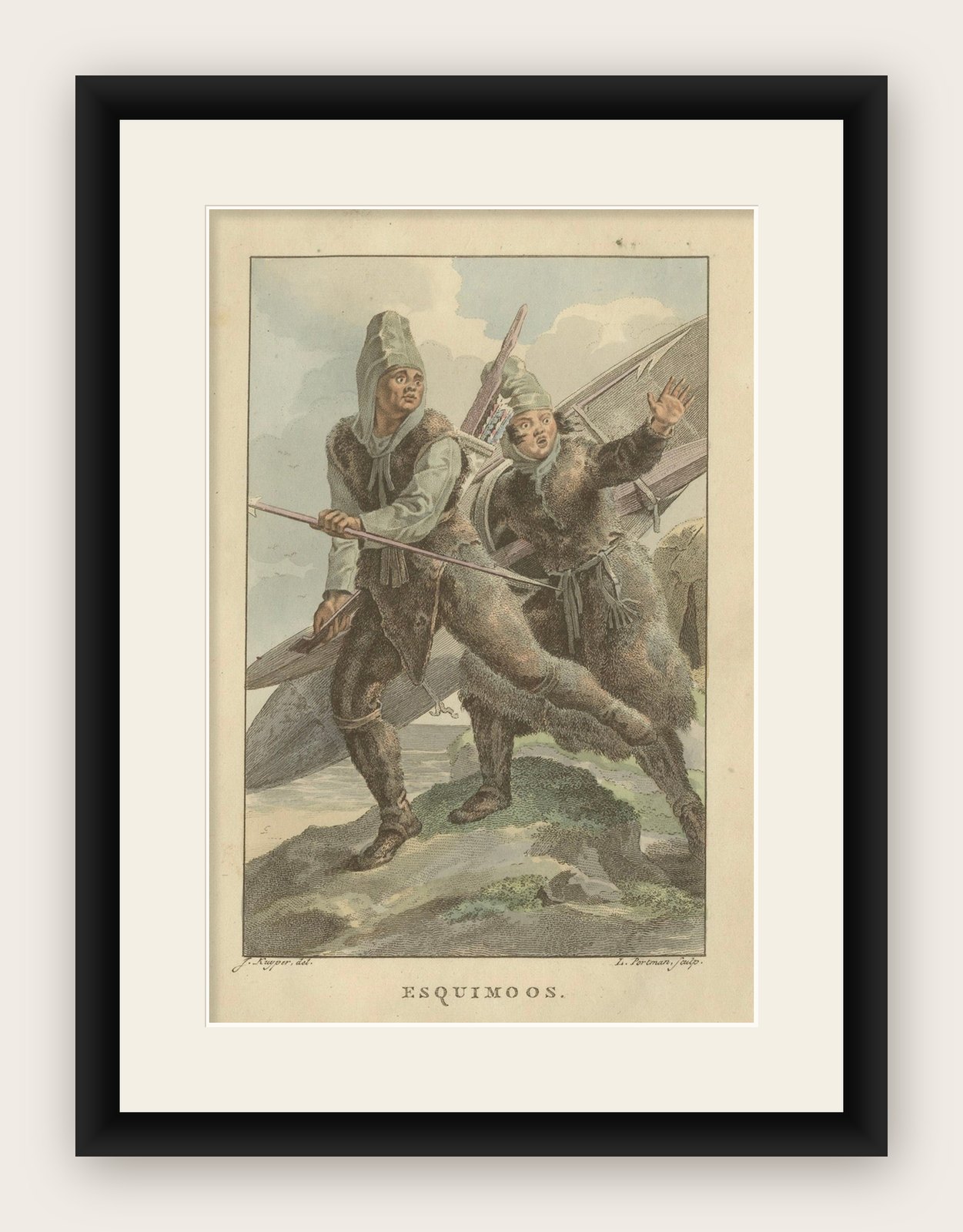
Framing Tips: A cool-toned mat (light gray or soft cream) with a dark wood or black frame will enhance the Arctic subject. A float mount to show plate mark and margins is recommended.