About this sheet
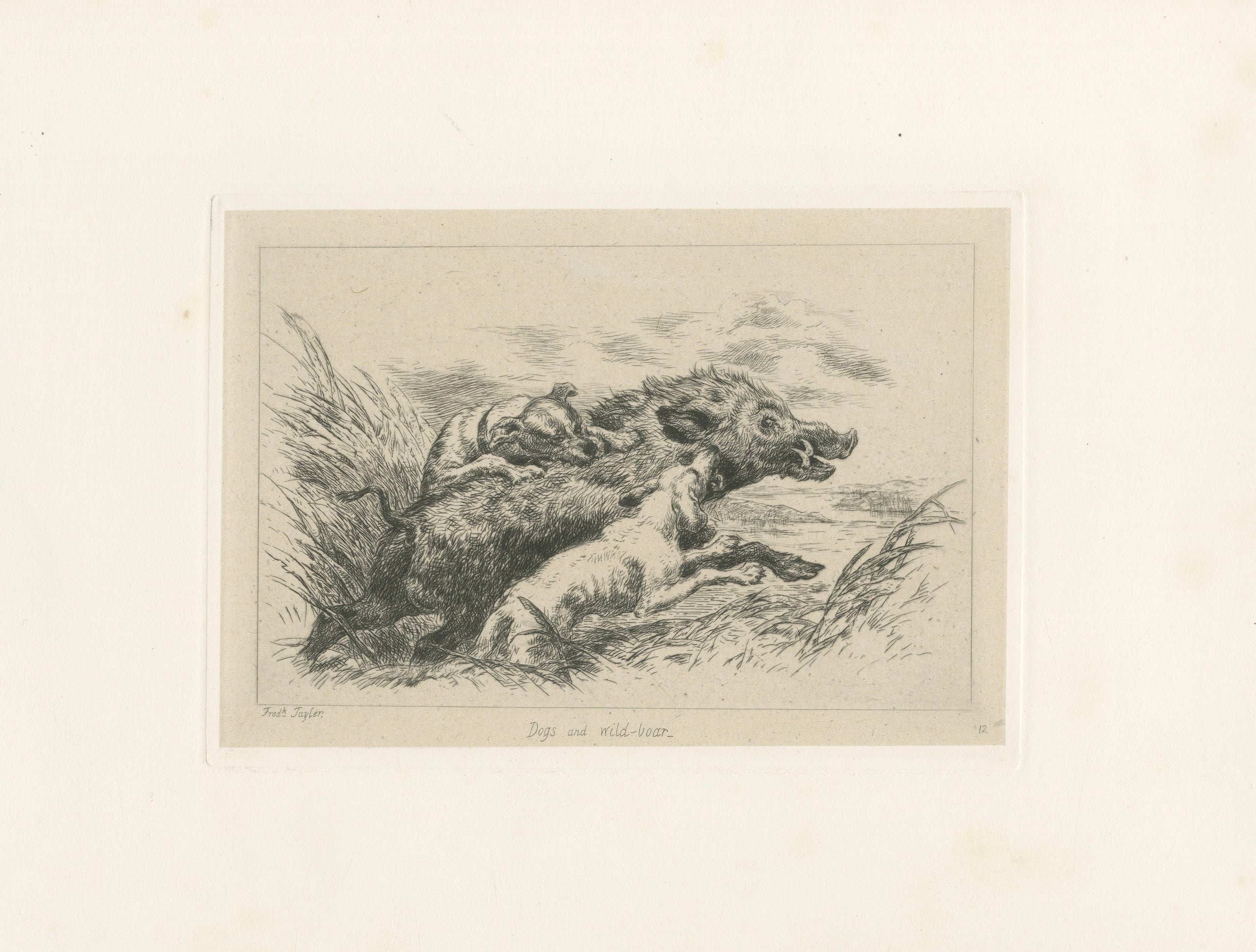
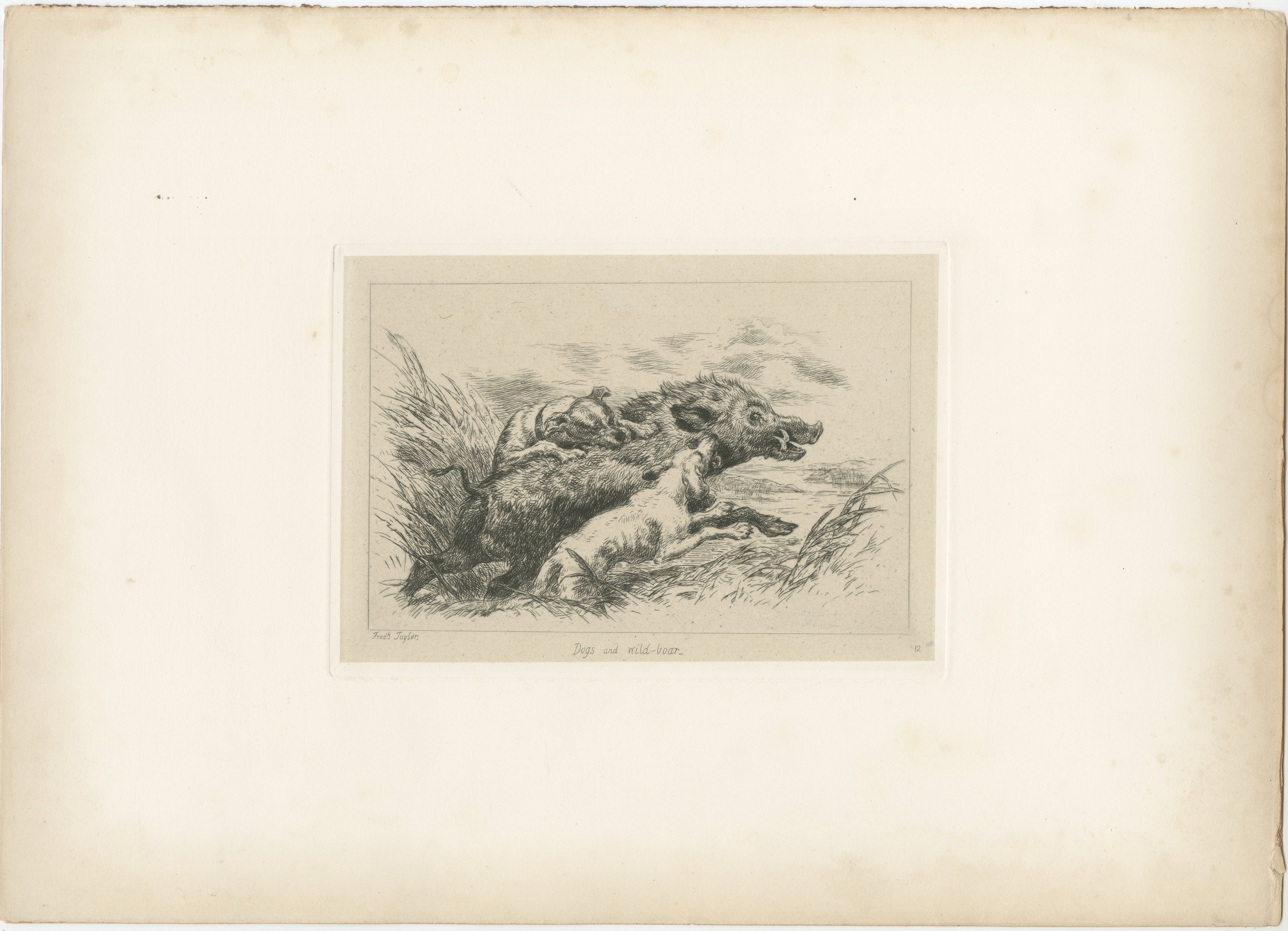
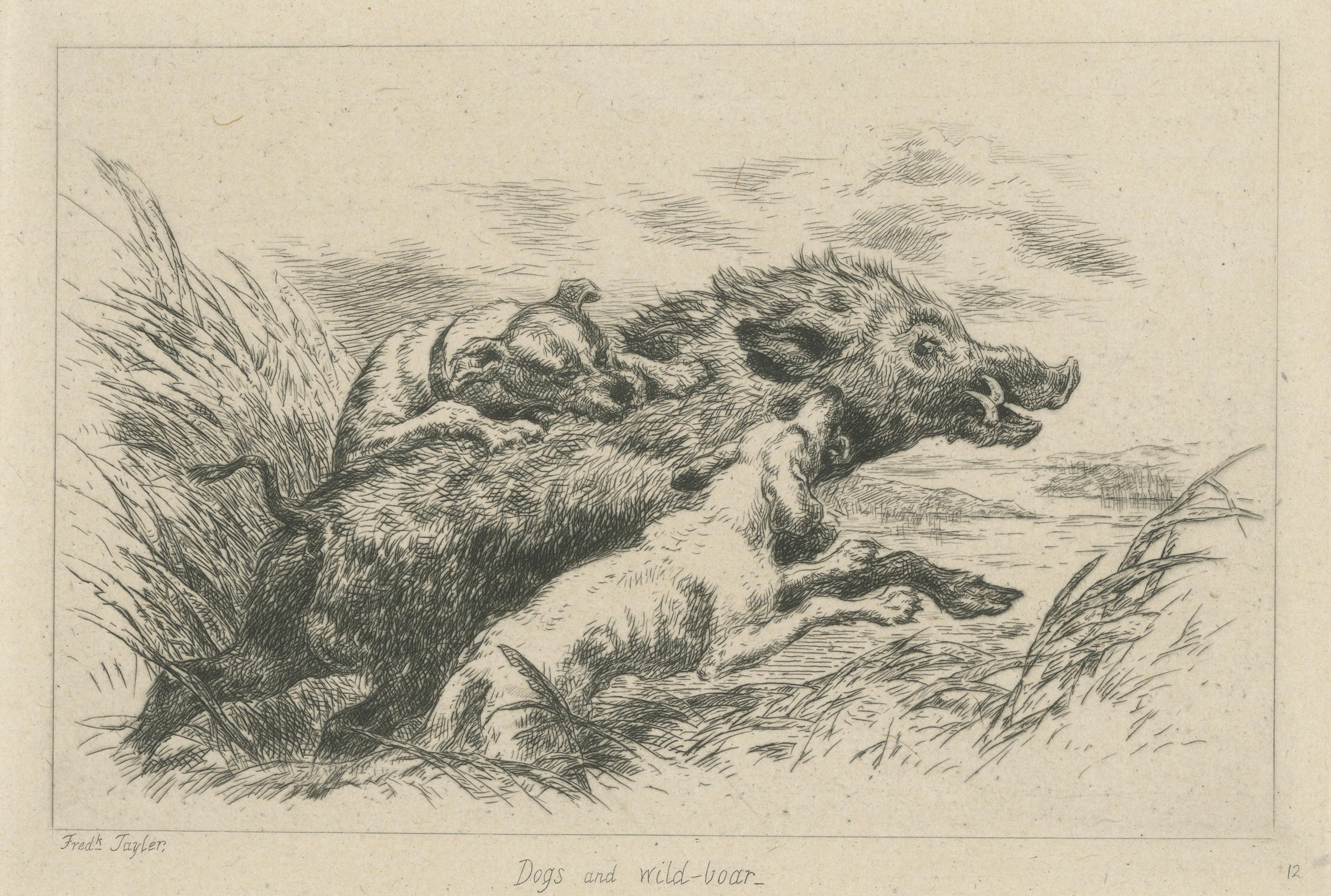
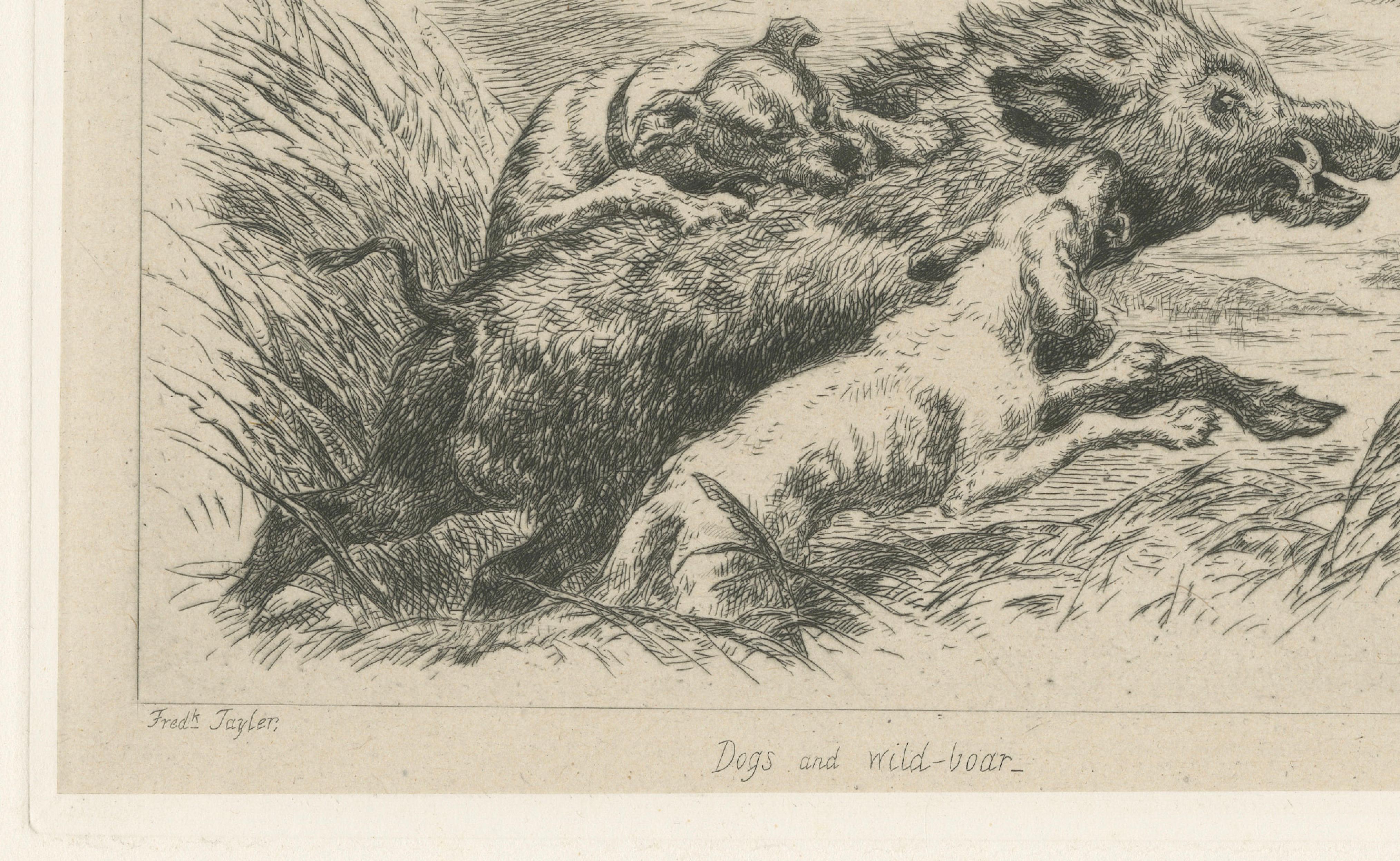
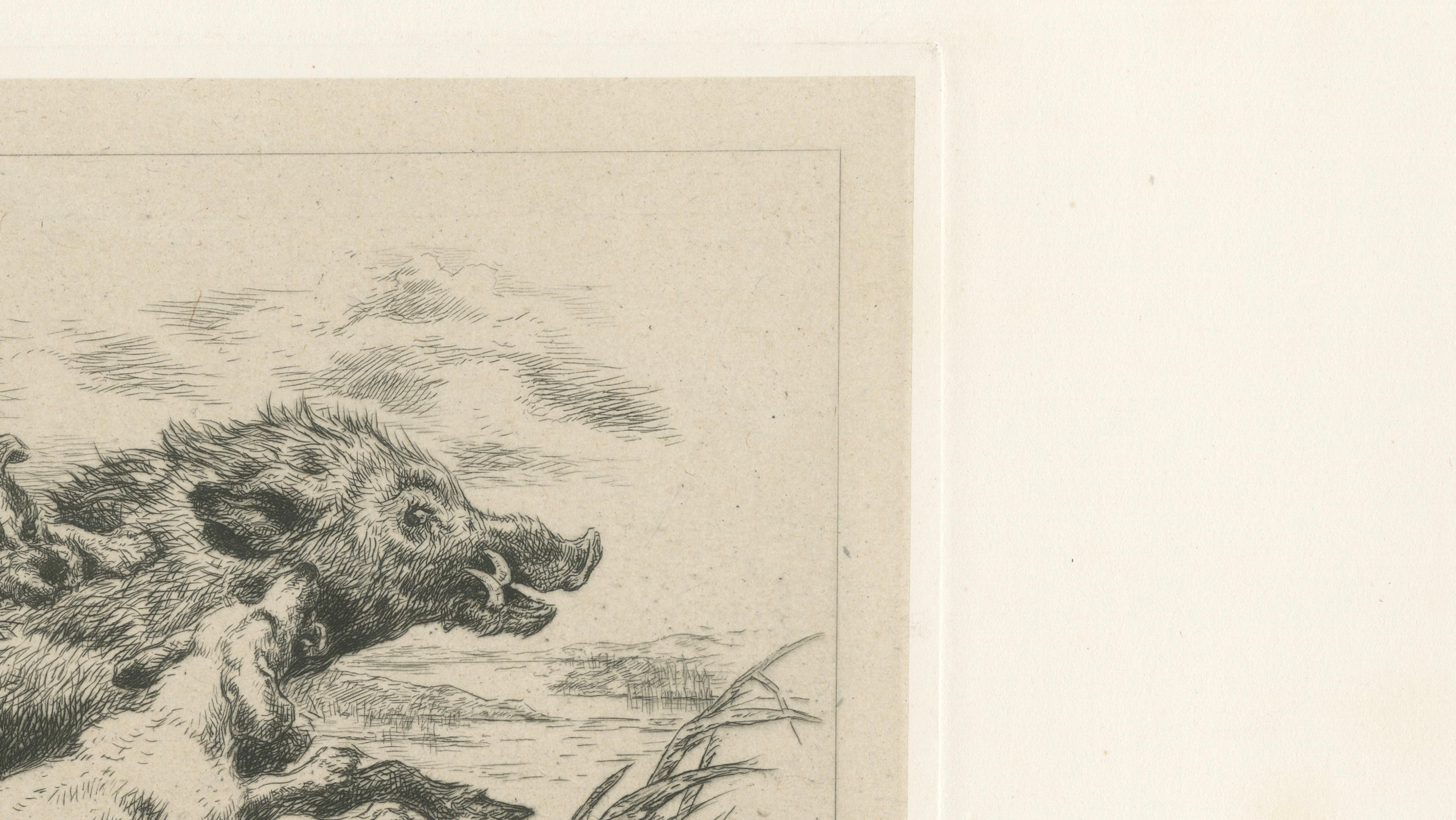
Dogs Attacking a Wild Boar, Victorian Sporting Etching by J.F. Tayler, 1872
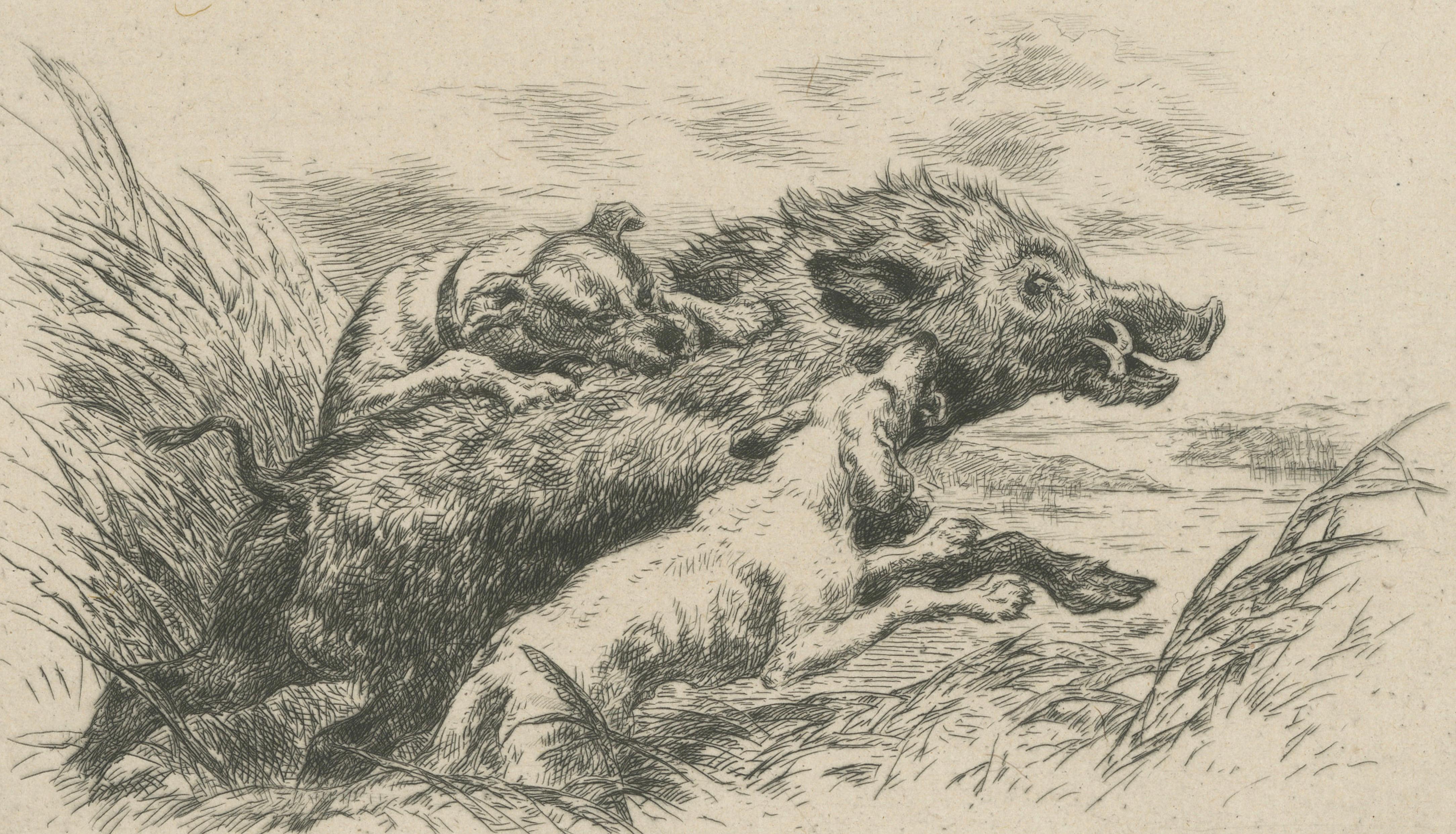
This lively nineteenth-century sporting print titled “Dogs and Wild-Boar” was created by the British artist John Frederick Tayler (1802–1889) and published in 1872. The small but dramatic etching captures an intense hunting moment as hounds confront a powerful wild boar, a subject that reflects the Victorian fascination with sporting life and animal action.
John Frederick Tayler, often signing his work “Fred Tayler,” was a respected British painter, watercolorist, and printmaker. He served as President of the Royal Watercolour Society from 1858 to 1871 and was widely admired for his energetic depictions of rural life, landscapes, and hunting scenes. His work frequently portrays moments of movement and tension in nature, rendered with expressive line and strong observational skill.
The composition focuses on the dramatic clash between the animals. The wild boar charges forward with its mouth open and tusks exposed, while two hunting dogs attack from either side. Tayler uses quick, confident etched lines to convey motion and struggle, capturing the moment when the animals collide in the chase. Despite the small size of the plate, the scene has remarkable energy and visual impact.
Sporting subjects were extremely popular in Victorian Britain, reflecting the cultural importance of hunting within country life. Artists often illustrated scenes of hounds pursuing deer, boar, or foxes, celebrating both the excitement of the hunt and the power of animals in motion. Tayler was particularly skilled at depicting these dramatic encounters, combining careful observation with a lively sketch-like style.
The number “12” printed on the plate indicates that this image formed part of a larger published series of etchings. Tayler was associated with the Etching Club, a group of prominent British artists who helped revive original etching as an artistic medium during the nineteenth century. Their collaborative publications became popular among collectors and helped establish etching as an important form of fine art printmaking in Britain.
Tayler’s works were widely admired during his lifetime and were even collected by Queen Victoria. His prints remain appealing today for their vitality, their connection to Victorian sporting culture, and their expressive etched line work.
This original antique print is offered unframed, allowing the buyer full freedom of framing choice.
Condition report:
Good condition with light age toning and scattered foxing mainly visible in the margins, typical for prints of this age. The etched image remains crisp and well defined with a visible plate mark.
Framing tips:
This print displays beautifully in a dark walnut or ebonized frame with a generous ivory or warm cream mat. The wide margins and visible plate mark allow for a refined museum-style presentation that highlights the energetic etched line work.
Technique: Etching
Maker: John Frederick Tayler, England, 1872
Keywords:
antique sporting etching, John Frederick Tayler print, dogs and wild boar scene, Victorian hunting print, British sporting art, Tayler animal etching, 19th century hunting scene, wild boar hunt artwork, Etching Club print, Victorian animal action scene, antique hunting engraving, collectible sporting print, British wildlife etching