Bright and clean, with no faults worth mentioning.
Very good
Only light signs of age, such as faint toning.
Good
Normal signs of age for a sheet of this period: toning, some foxing, small marks or neat old repairs.
Fair
Clear faults such as staining, tears or repairs, priced to match.
Every fault we see is written in the condition note, and the whole sheet is shown uncropped in the photos.
Condition
Impression with light age toning and slight offset from backing text. Minor edge wear and faint creases; no tears or losses. Left margin trimmed short. Image and text remain crisp and well-defined.
About this sheet
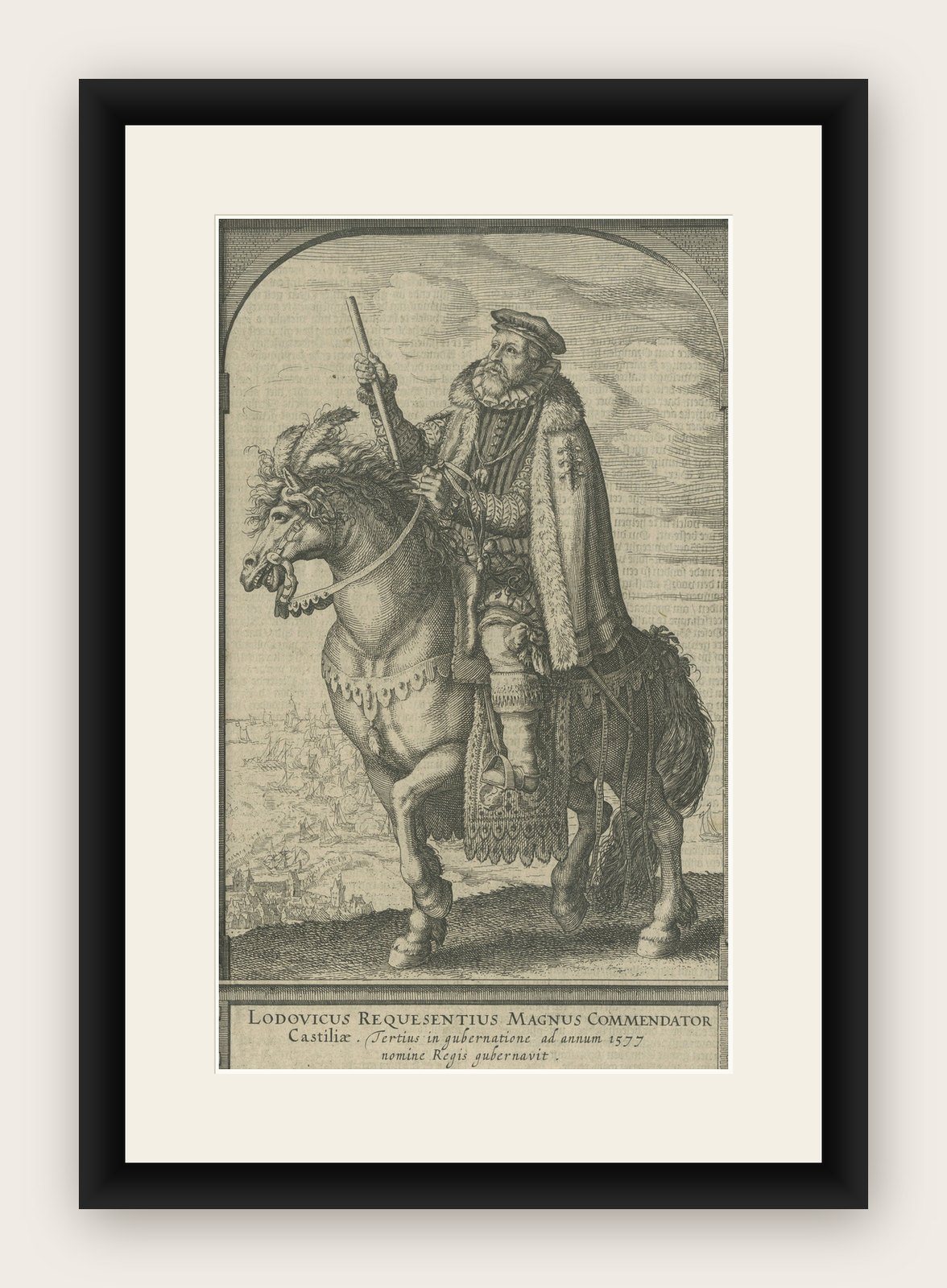
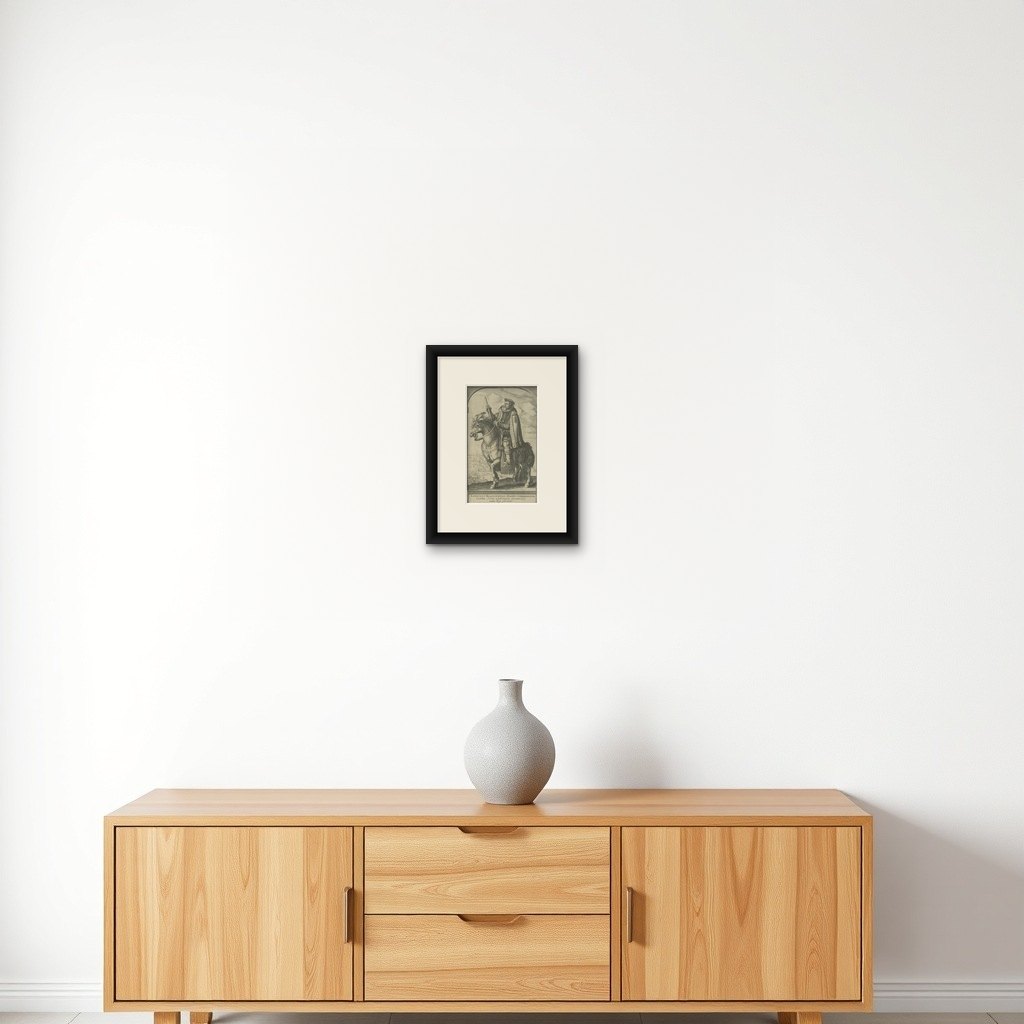
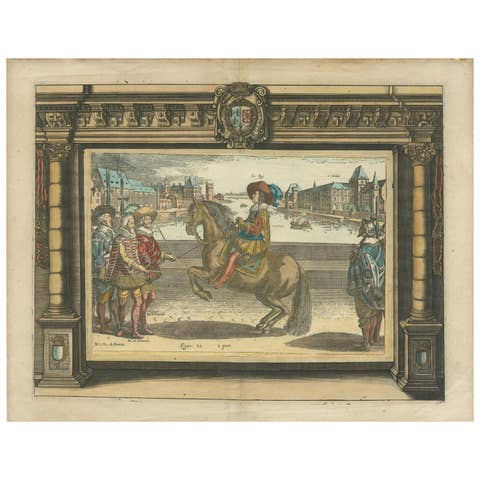
Antique Equestrian Portrait of Luis de Requeséns, Etching c.1620
This striking equestrian portrait depicts Luis de Requeséns y Zúñiga (1528–1576), a prominent Spanish diplomat, soldier, and statesman who served as Governor of the Duchy of Milan and later of the Spanish Netherlands. Shown in full regalia and fur-lined cloak, he sits atop a richly adorned horse, his marshal's baton raised in a gesture of command. The background reveals a bustling harbor scene filled with ships, alluding to his maritime and military authority.
This etching and engraving was executed around 1620 by the Dutch cartographer and artist Hessel Gerritsz (1581–1632), based on an earlier anonymous source. Gerritsz is best known for his cartographic work but also produced detailed historical portraits. The Latin inscription below the image reads: "Lodovicus Requesentius Magnus Commendator Castiliae. Tertius in gubernatione ad annum 1577 nomine Regis gubernavit," identifying Requeséns as Grand Commander of Castile and the third governor ruling on behalf of the king until 1577.
The print commemorates his leadership during a particularly turbulent time in Spanish and Netherlandish history, especially in the aftermath of the Duke of Alva’s harsh rule and during the Eighty Years' War. Requeséns attempted a more conciliatory approach during his governorship, which is captured here through the dignified pose and symbolic elements.
Collectors of early 17th-century prints, military history, or Spanish and Flemish political iconography will find this a powerful representation of one of Spain’s most notable 16th-century figures.
Framing tips: A dark wood frame with gilt lining would enhance the historical gravitas of the print. Consider a neutral or parchment-toned mat to emphasize the fine engraving.