About this sheet
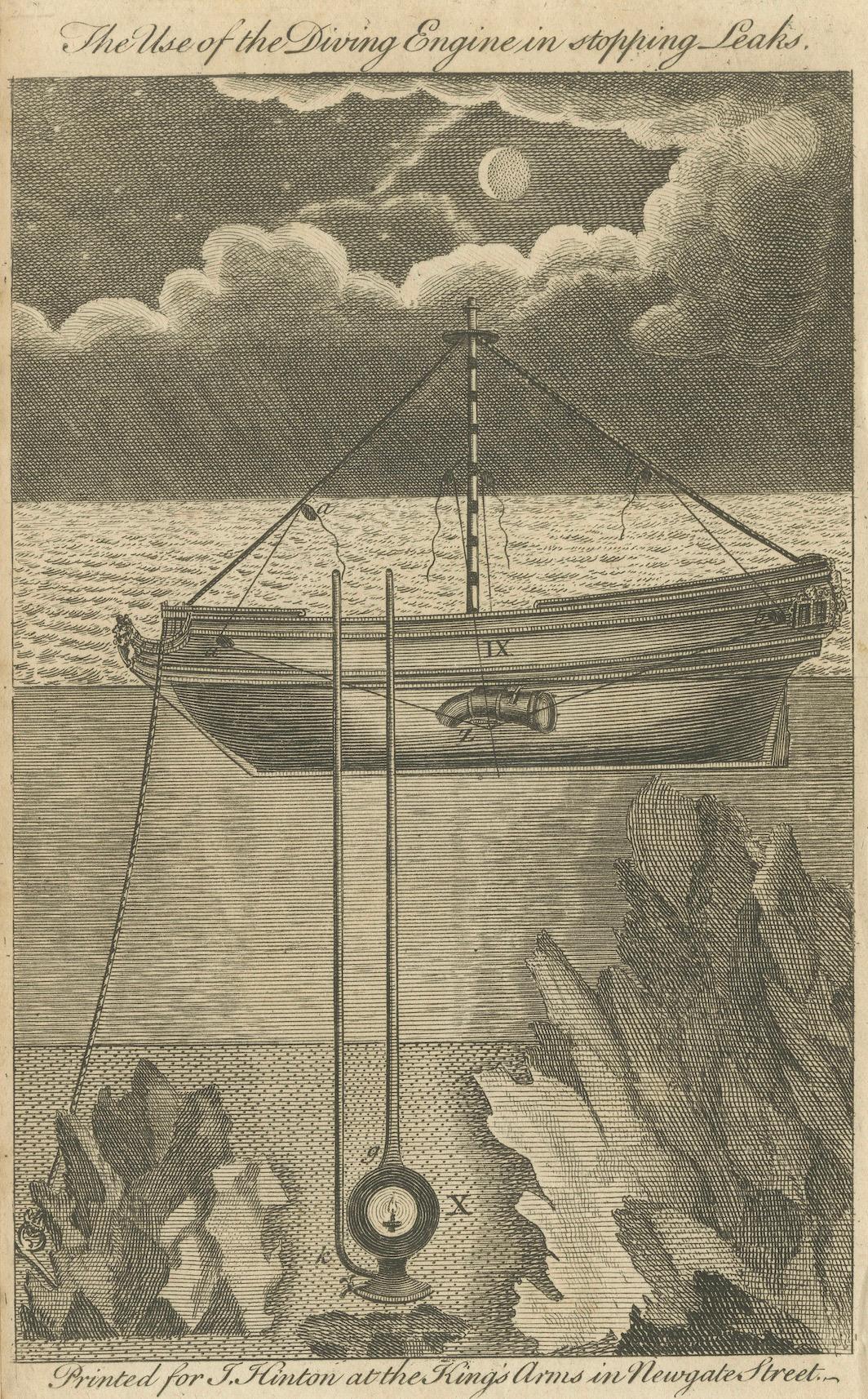
The Use of the Diving Engine in Stopping Leaks - 18th-Century Engraving by J. Hinton
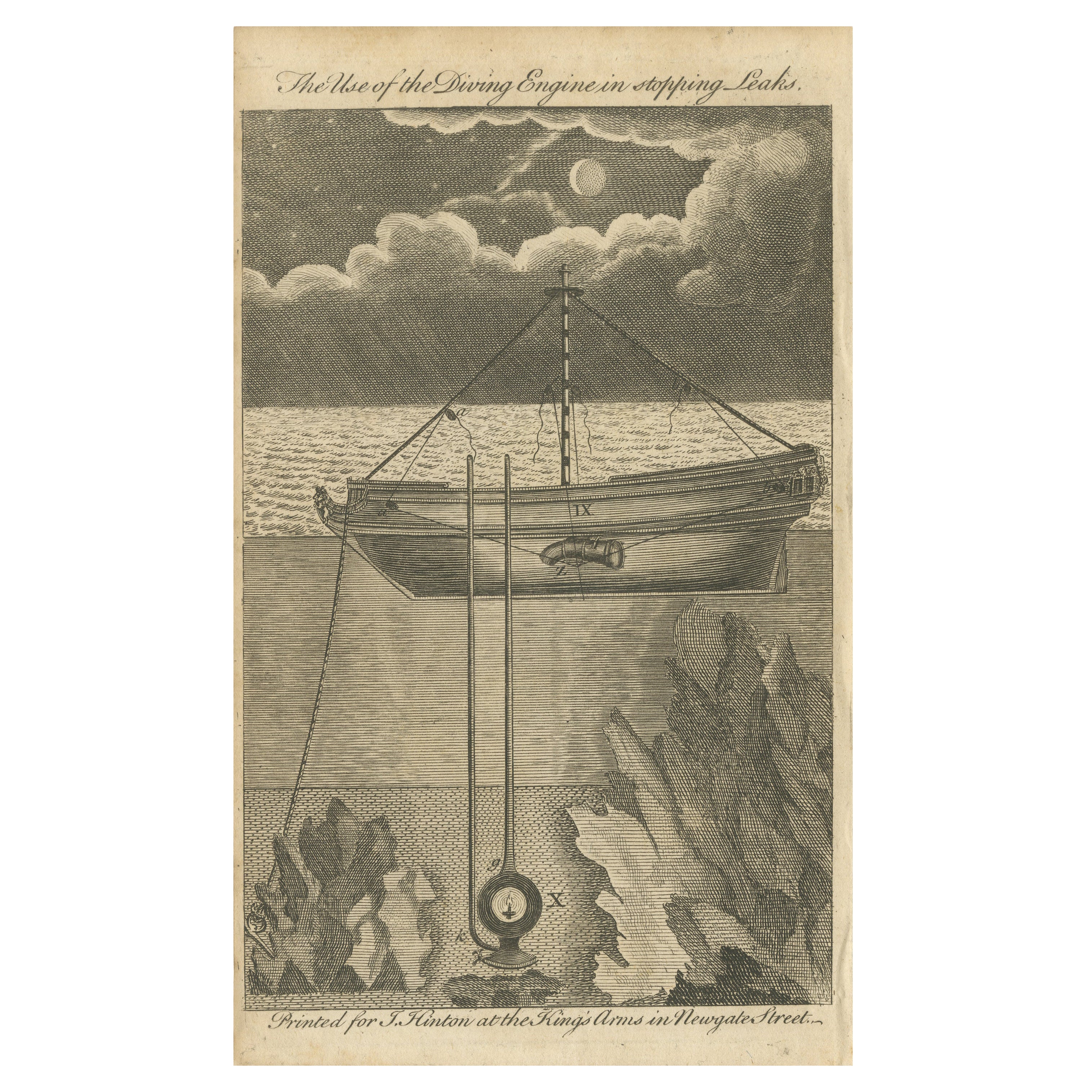
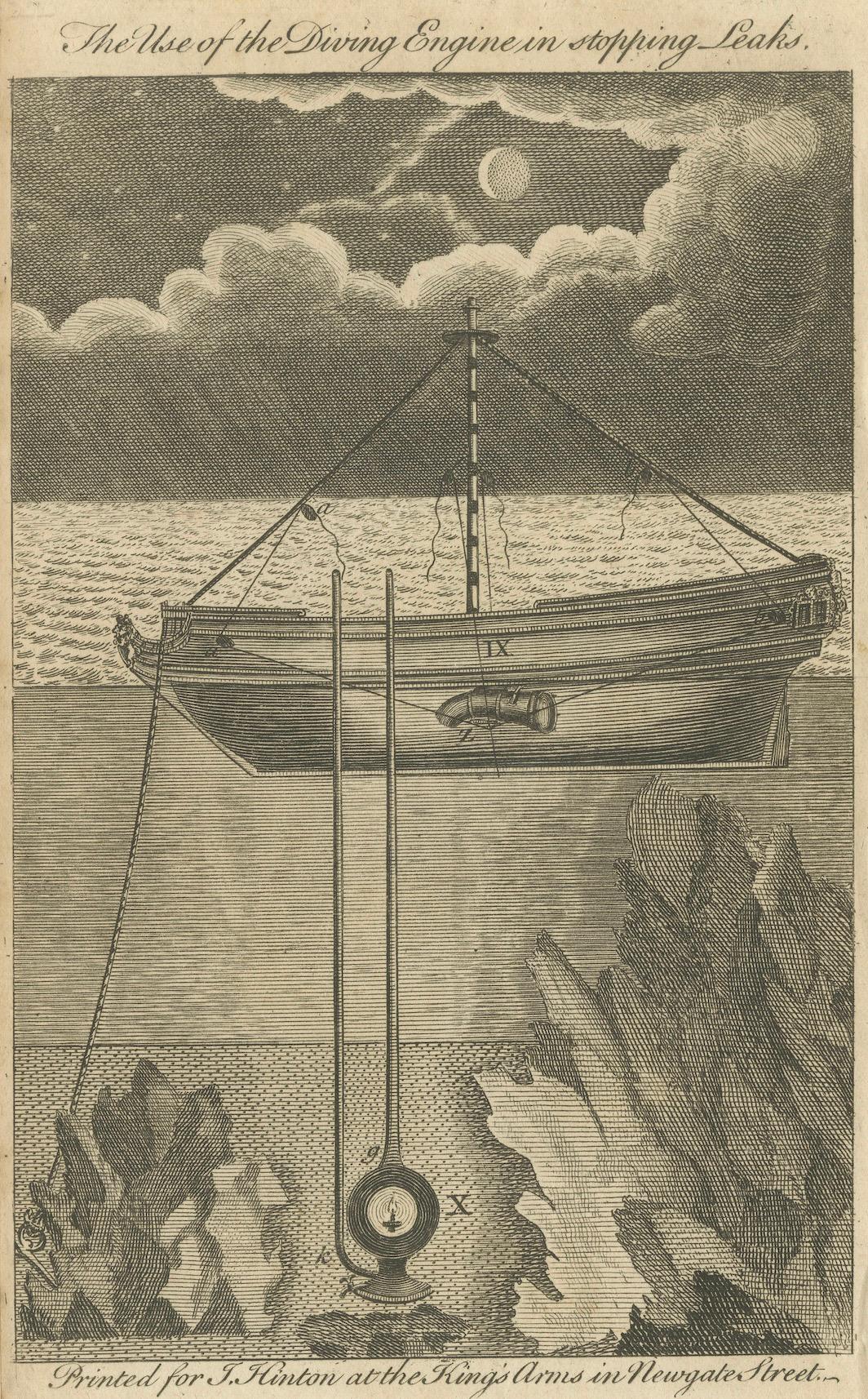
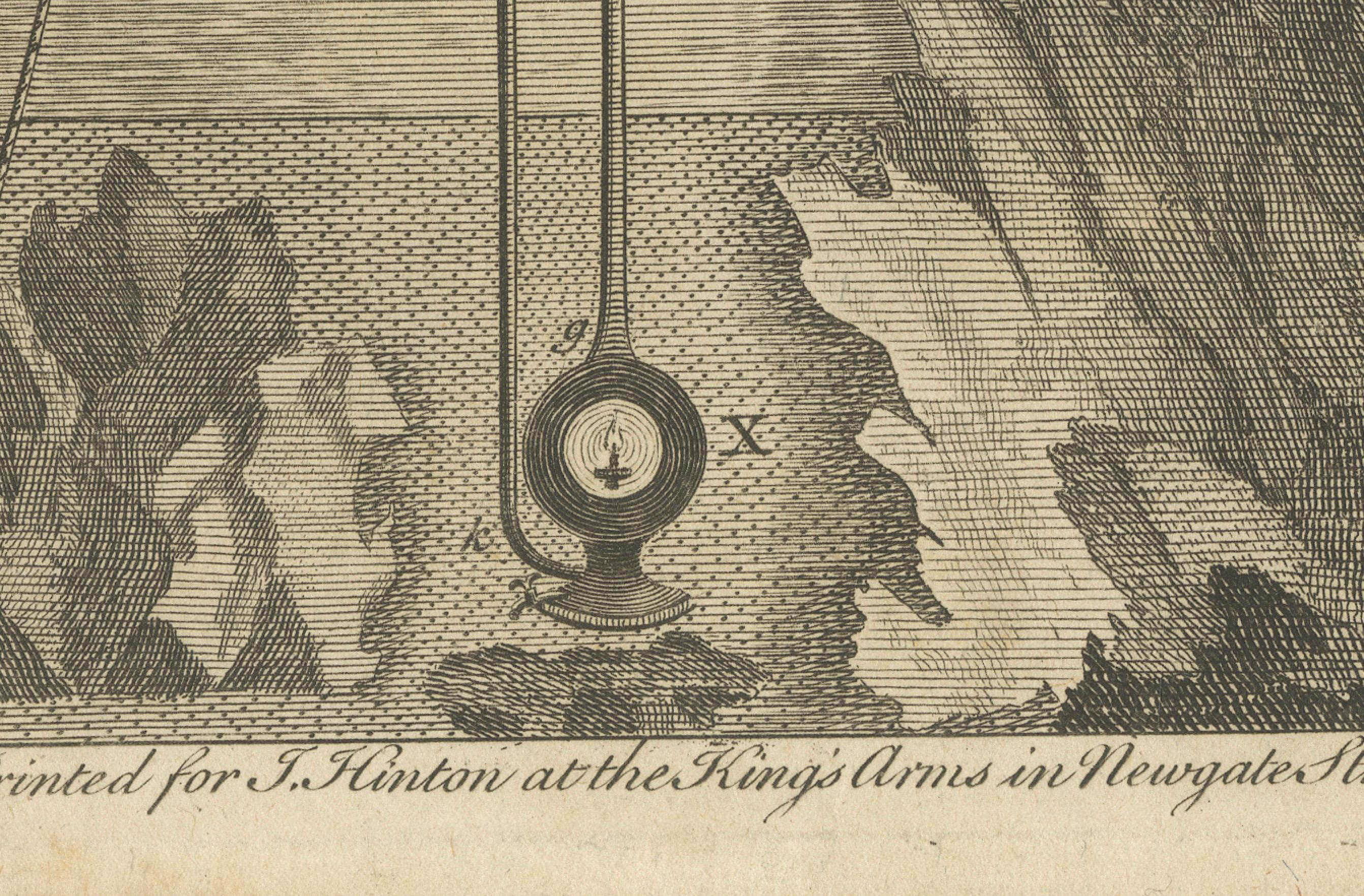
This intriguing 18th-century engraving, titled The Use of the Diving Engine in Stopping Leaks, showcases an early depiction of underwater repair techniques using a diving engine. The print was published for J. Hinton at the King's Arms in Newgate Street, London, indicating it was likely part of a nautical or technical manual from the period.
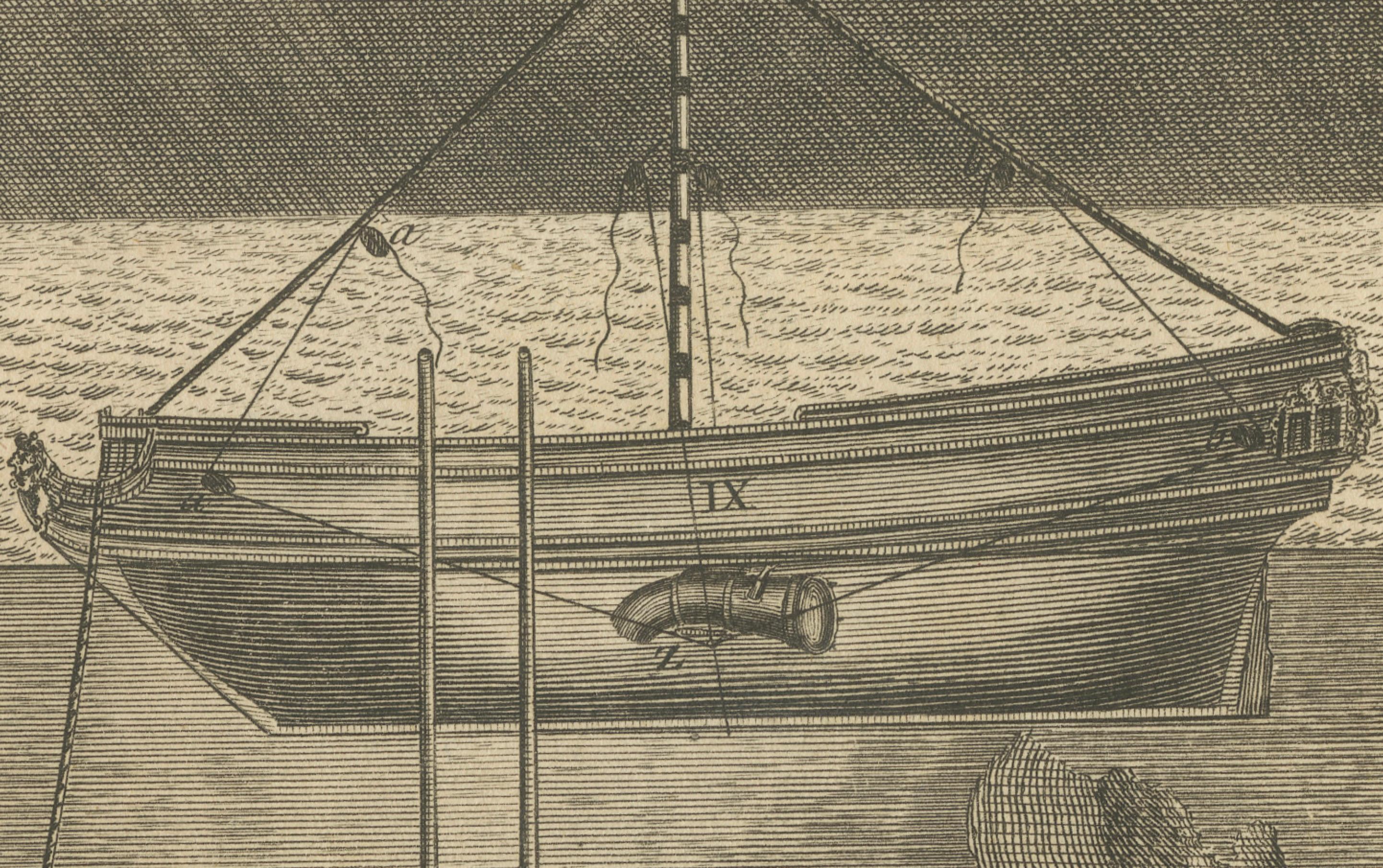
The scene captures a ship with the designation "IX" on its hull, anchored at sea under a moonlit sky. The vessel is equipped with a complex system of ropes and pulleys, which hold a specialized diving engine suspended below the waterline. The engraving vividly illustrates how the diving bell or similar apparatus is lowered to the ocean floor, where it is used to seal leaks or conduct repairs on the submerged portions of the hull.
The diving engine itself consists of a weighted chamber designed to maintain an air pocket for divers or workers to perform repairs underwater. The intricate line work highlights the technical details, including the hoses and the shape of the bell, as well as the rocky seabed and marine flora. The illumination of the scene by a moonlit sky and clouds adds a dramatic touch, emphasizing the hazardous and arduous nature of underwater repairs.
Historical Context:
During the 18th century, diving engines and bells were innovative technologies developed to aid in ship maintenance and salvage operations. Early diving bells, often shaped like large open-bottomed containers, trapped air inside and were weighted down to stay submerged. Inventors and engineers experimented with various designs to increase safety and efficiency, making it possible to perform underwater work without full immersion.
James Hinton, the publisher, was active in the mid-18th century, known for producing prints, manuals, and technical illustrations. Newgate Street in London was a hub for print sellers and book publishers, catering to the growing demand for technical knowledge and practical guides among the seafaring community and tradesmen.
Condition:
The engraving is well-preserved with strong impressions and minimal signs of age. Some light toning and minor creasing at the edges are present, typical of prints from this period. The engraving lines remain crisp and detailed, maintaining the visual impact of the scene.
Framing tips; To best showcase this remarkable historical piece, consider framing it with a dark wood or black frame and a neutral, light-colored mat that complements its maritime theme.