Decorative Scientific Print – Large Folding Engraving of Louse, c.1770
€ 330
One of a kind: this is the sheet in the photographs. Ships from Langweer, the Netherlands.
Date
1770
Sheet size
39 × 65 cm (15.4 × 25.6 in)
Condition
Good
Reference
BG-13494-34
Condition
Condition report: Good condition for a folding plate of this size. Strong platemark visible. Vertical folds as issued, with some wear along the folds and light toning consistent with age. Minor marginal spotting, not affecting the image. Offered as a.
About this sheet
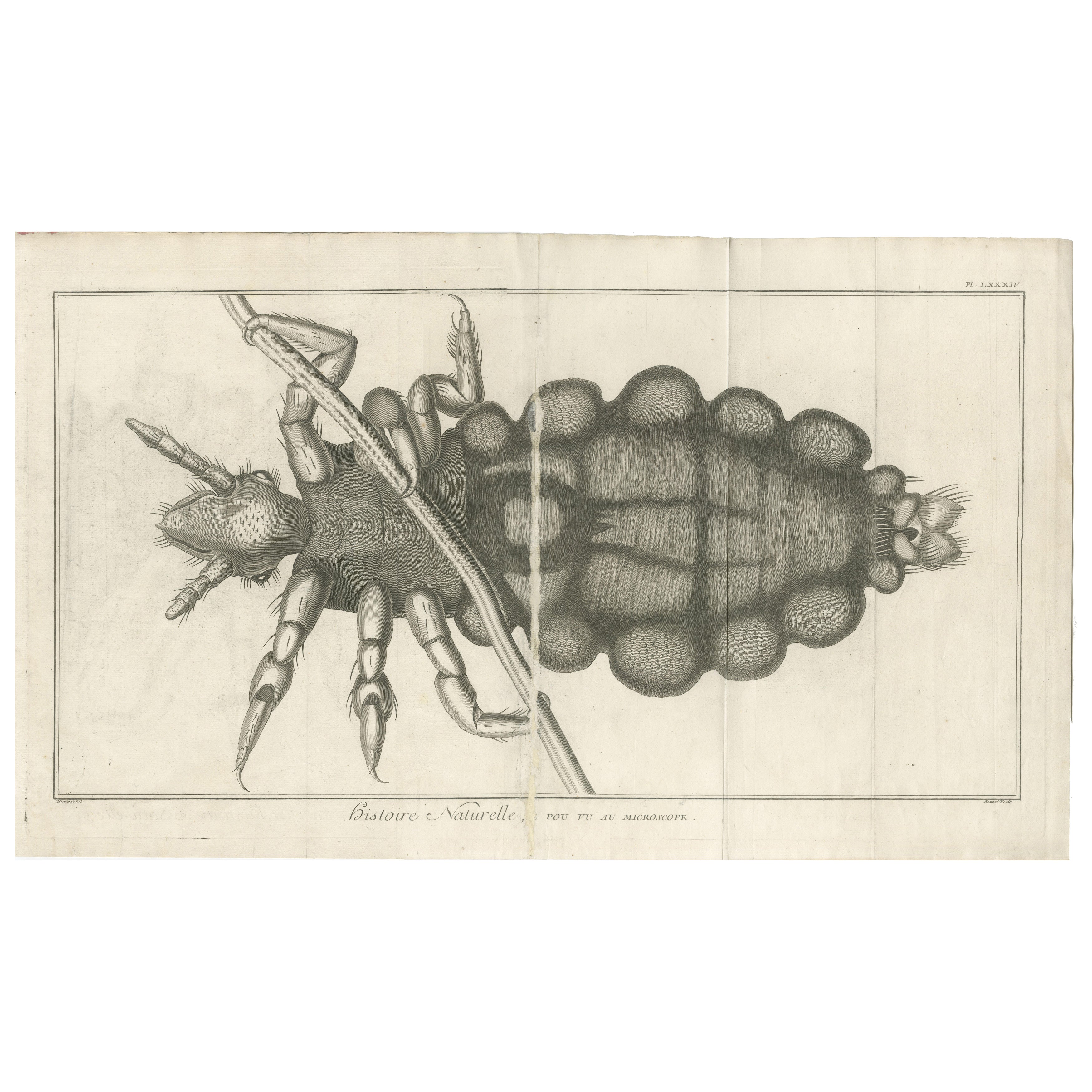
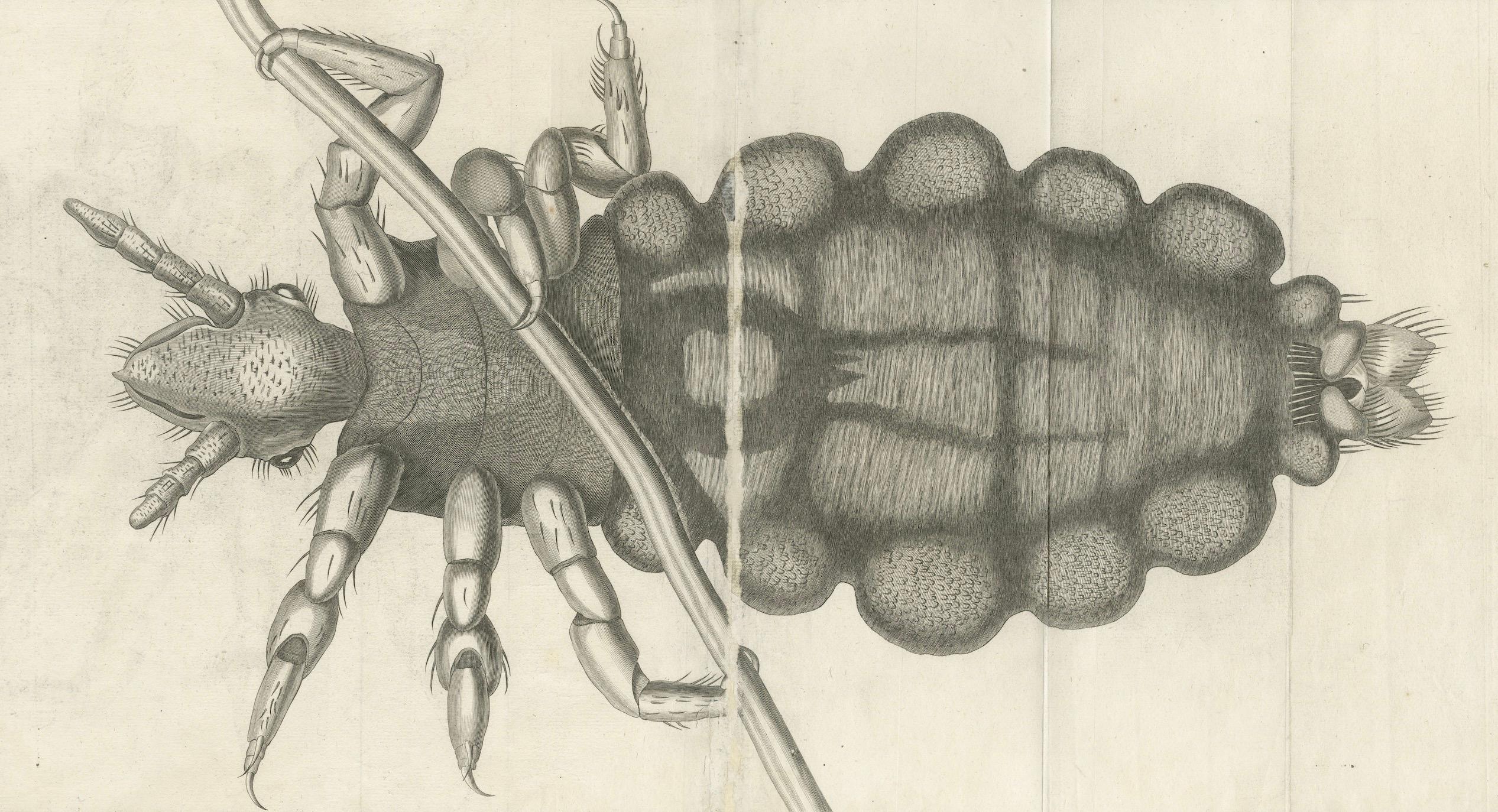
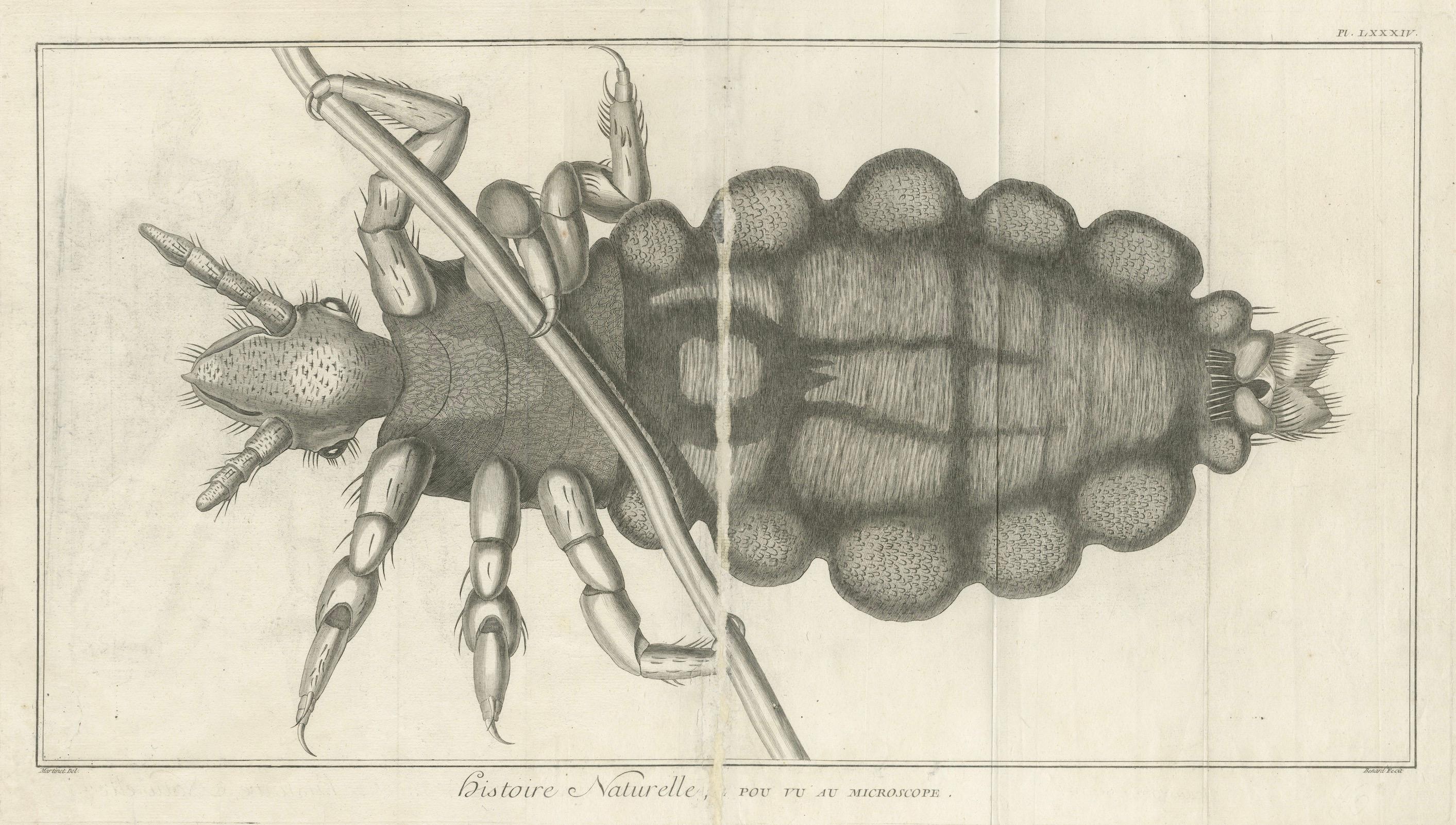
Large Folding Engraving of a Louse Seen Under the Microscope, Diderot’s Encyclopédie, ca. 1770
A remarkable and highly detailed folding copperplate engraving from Denis Diderot and Jean le Rond d’Alembert’s monumental Encyclopédie ou Dictionnaire raisonné des sciences, des arts et des métiers, Paris, circa 1770. This striking plate, titled Pou vu au microscope (“Louse seen under the microscope”), exemplifies the encyclopedists’ ambition to explore nature in both its grand and minute forms.
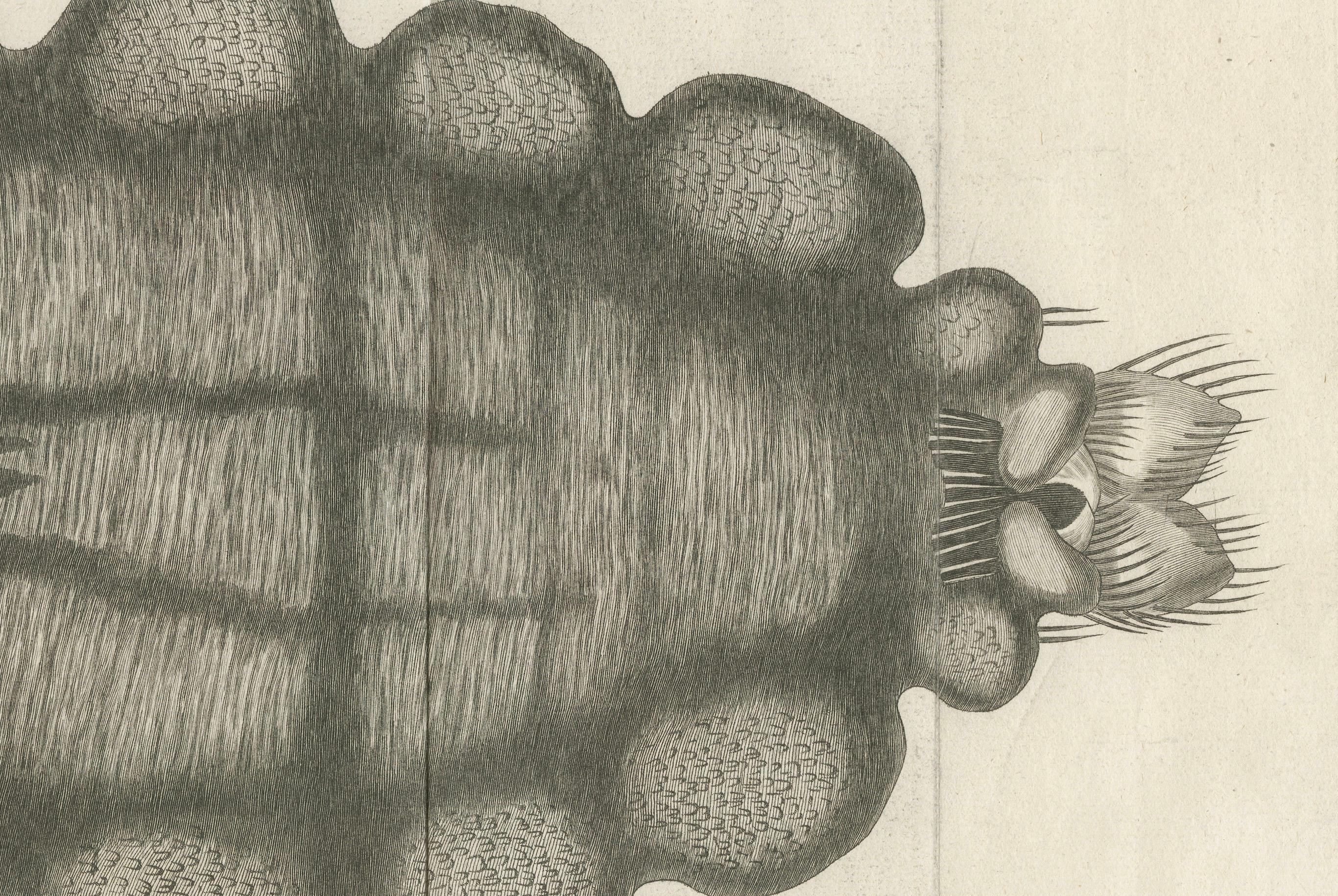
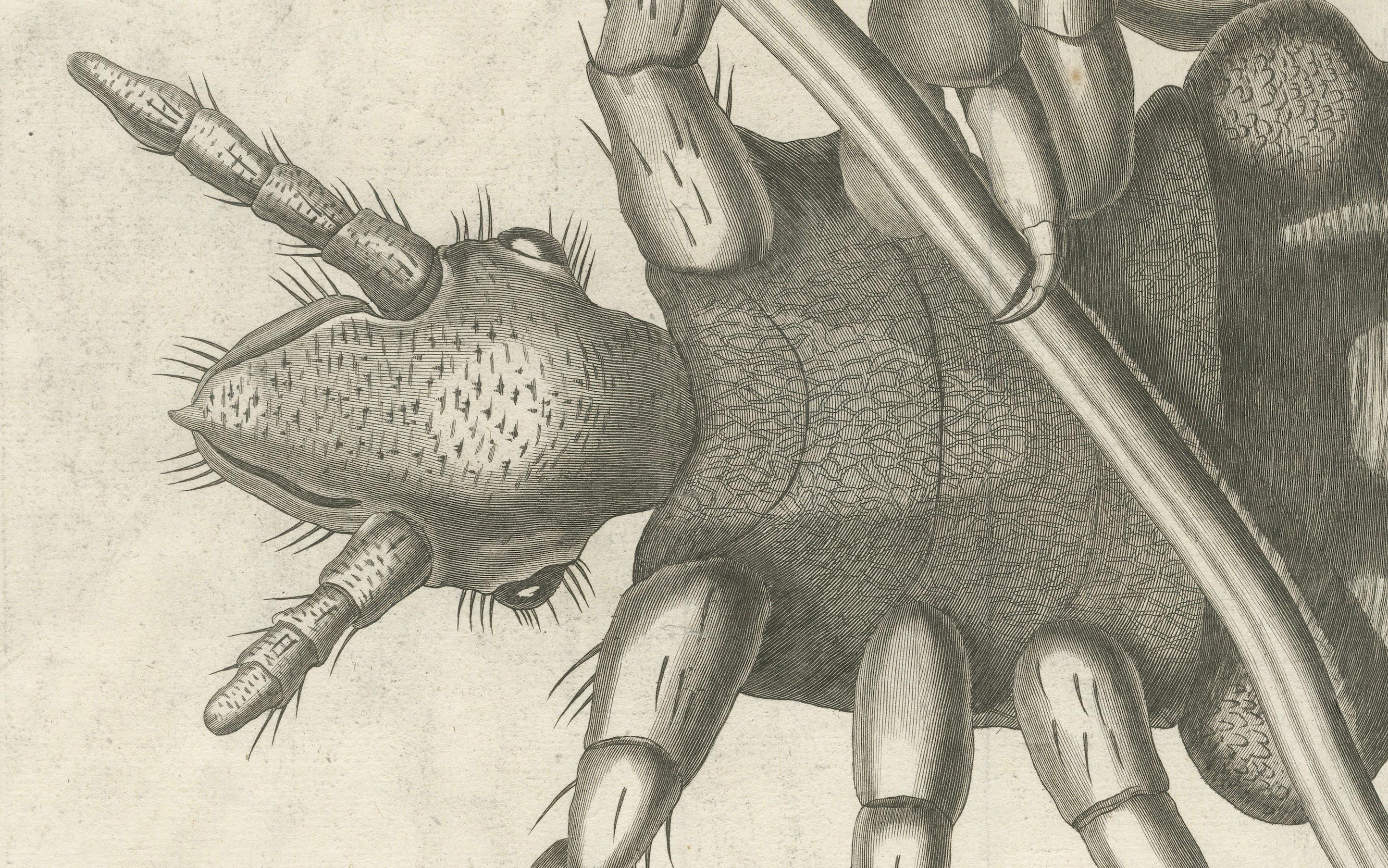
The engraving depicts the human louse (Pediculus humanus) magnified to extraordinary scale. Every feature is rendered with meticulous attention: the segmented body, articulated legs with claw-like grasping appendages, fine hairs covering the surface, and the distinctive head with mouthparts adapted for feeding. The dramatic enlargement underscores the fascination with microscopy during the Enlightenment, when instruments opened up new worlds of discovery invisible to the naked eye.
As one of the most unusual and memorable plates in the *Histoire naturelle* series, this engraving not only provided scientific instruction but also stirred curiosity and wonder in its viewers. The sheer size of the plate emphasizes the dramatic contrast between the insect’s minuscule real-life presence and its monstrous appearance under magnification.
This plate is of particular historical significance as it demonstrates the encyclopedists’ dedication to documenting all aspects of natural life, from the majestic to the microscopic. Today, it stands as both a scientific illustration and a piece of Enlightenment-era visual culture, combining empirical observation with a sense of the marvelous.
Condition report: Good condition for a folding plate of this size. Strong platemark visible. Vertical folds as issued, with some wear along the folds and light toning consistent with age. Minor marginal spotting, not affecting the image. Offered as a single large folio sheet, unframed.
Framing tips: This fold-out engraving makes a dramatic centerpiece on its own. A wide ivory or cream mount with a simple dark wood or black frame will highlight its extraordinary detail. Alternatively, a museum-style float mount that preserves visibility of the original folds can emphasize its character as a historical artifact.
Technique: Copperplate engraving (folding plate) Maker: Denis Diderot & Jean le Rond d’Alembert, Paris, ca. 1770