About this sheet
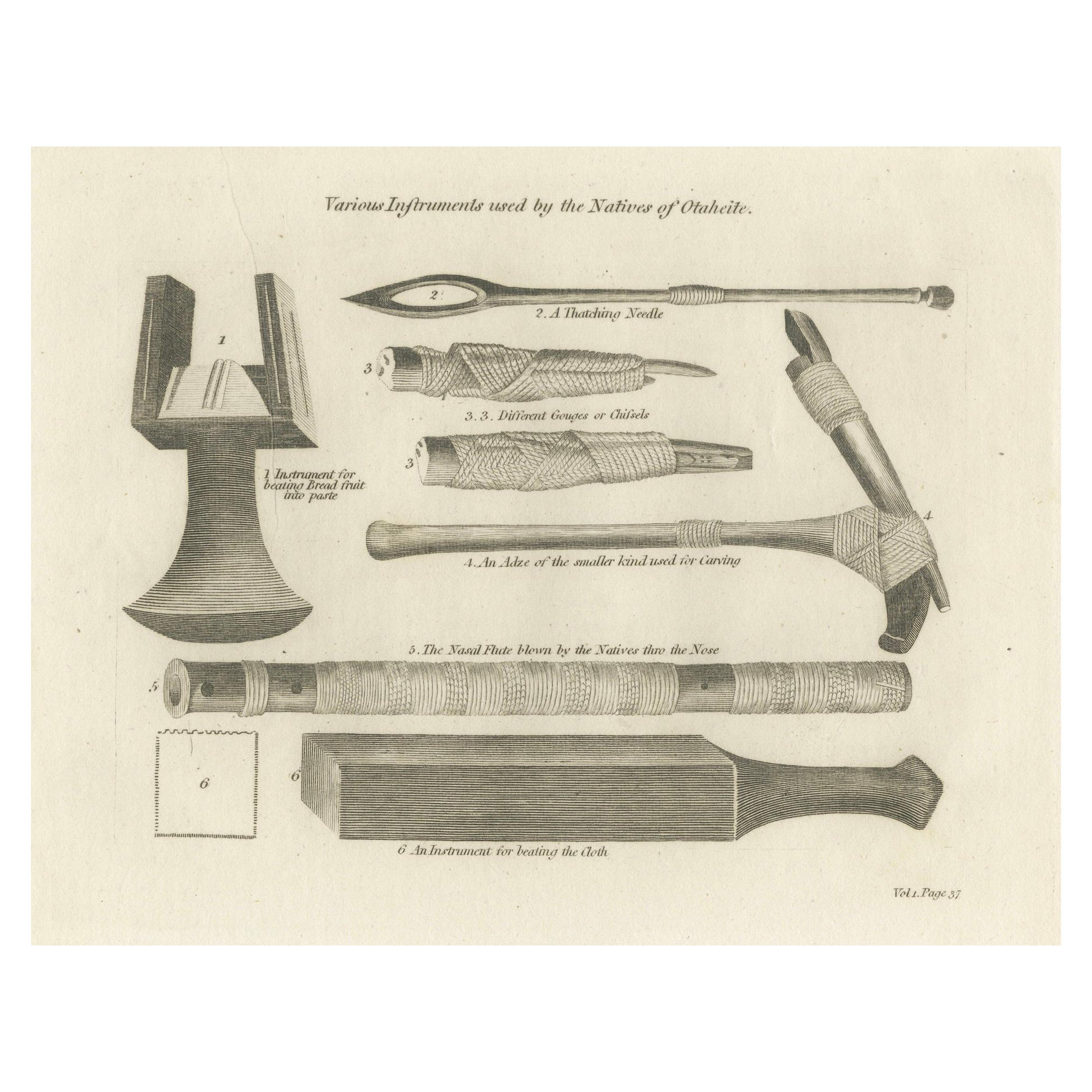
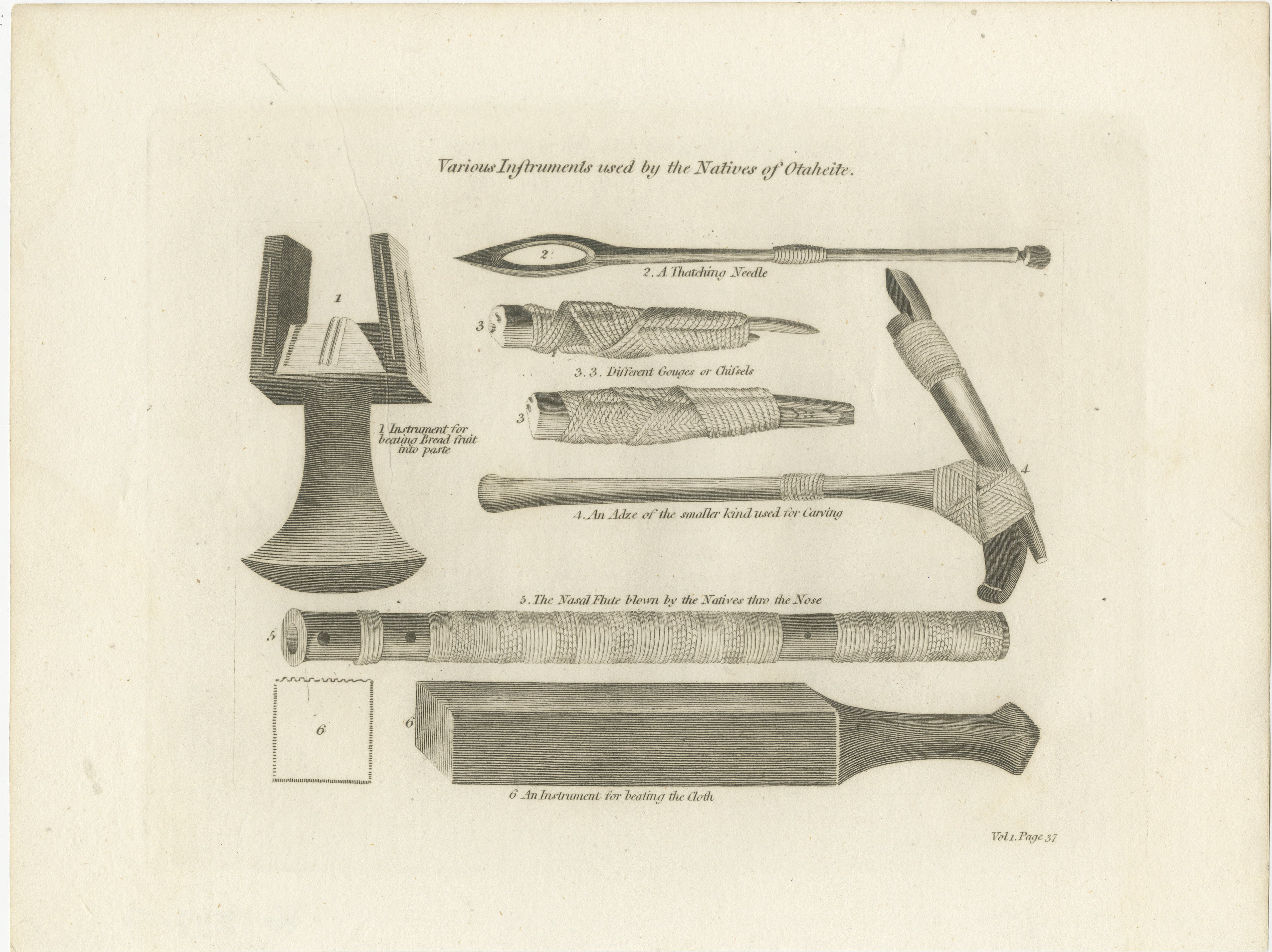
The print, titled "Various Instruments used by the Natives of Otaheite," was created by the artist John Webber, who is well-known for his work as the official artist on Captain James Cook's third voyage.
It was engraved by A. Warren and is an insightful compilation of the tools and instruments used by the inhabitants of Otaheite, an island in the South Pacific, now known as Tahiti.
The engraving was made for "A New, Royal, Authentic and Complete System of Universal Geography, Ancient and Modern" and was published by Royal Authority. This particular work is part of a series of engravings that depict the life, culture, and instruments of the peoples encountered during Cook's voyages.
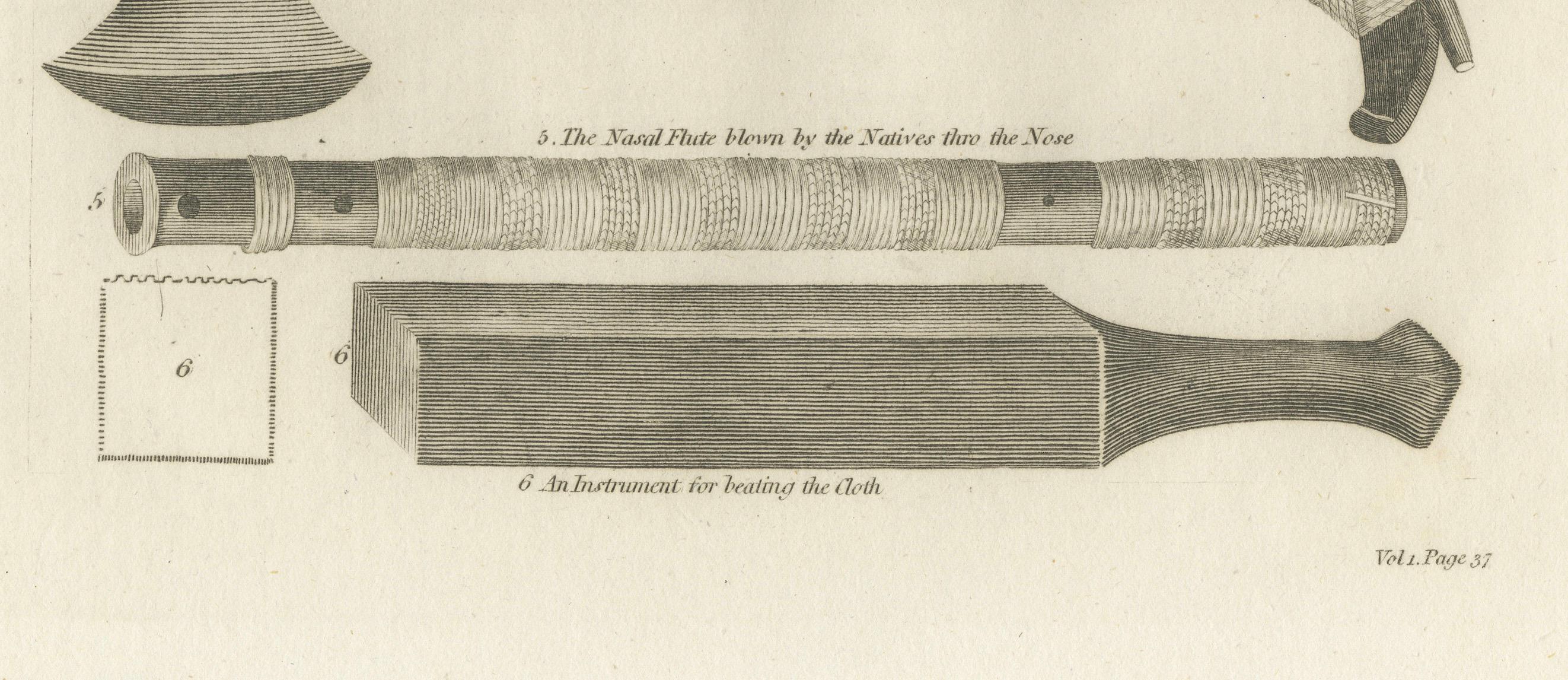
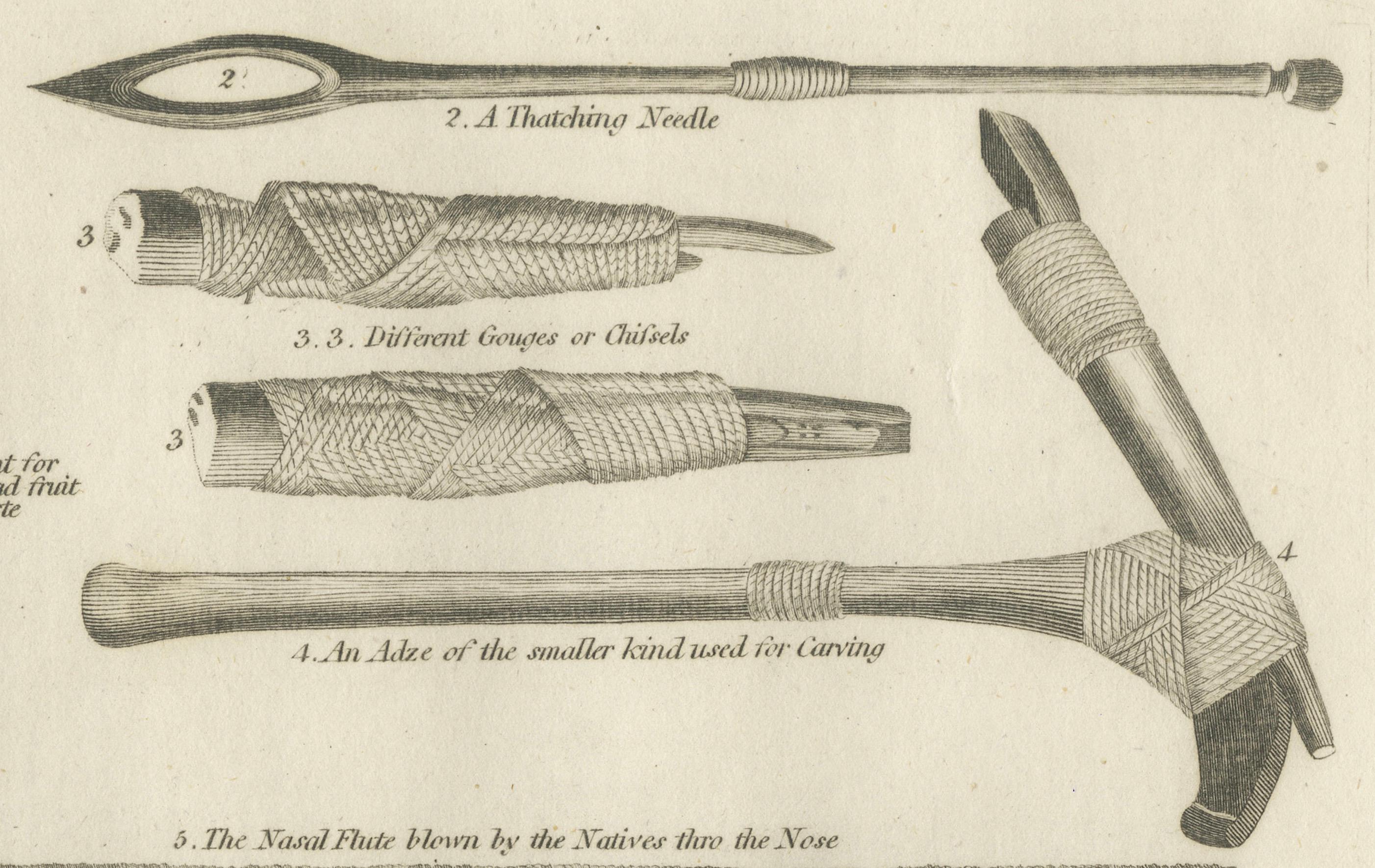
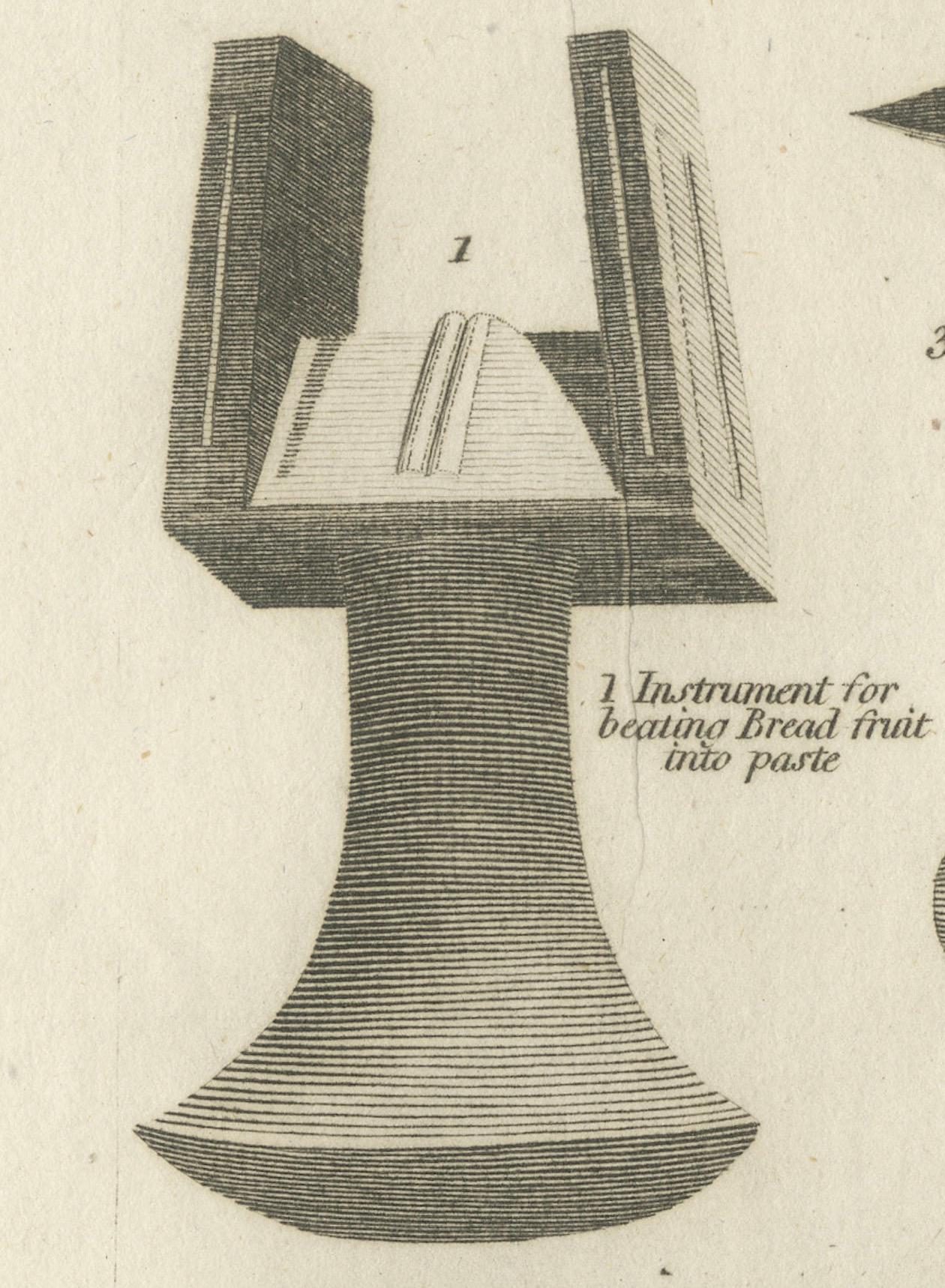
The image provides detailed illustrations of a broad range of tools, including a thatching needle, various gouges or chisels, a smaller axe for carving, an instrument for beating breadfruit into paste, a nasal flute, and a tool for beating cloth. The craftsmanship and functionality of these instruments highlight the technological ingenuity and everyday practices of the Tahitian people at the time.
The engraving is a significant historical document, offering not only a visual representation of the tools but also insights into the culture and daily life of Otaheite during the era of exploration. It is held in high esteem due to its detailed depiction and the authenticity brought about by Webber's first-hand experiences during the voyages.
This 1793 antique engraving provides a detailed representation of various tools used by the natives of Otaheite (Tahiti). It includes illustrations of a broad fruit-cutting instrument, a thatching needle, different gouges or chisels, two types of axes specialized for carving, a nose flute, and a cloth-beating tool.
Each item is meticulously detailed, showcasing the craftsmanship and functional aesthetics of the tools that played a daily role in the life of the Tahitian people. This engraving offers not only artistic value but also a window into the technology and culture of Otaheite during the late 18th century.