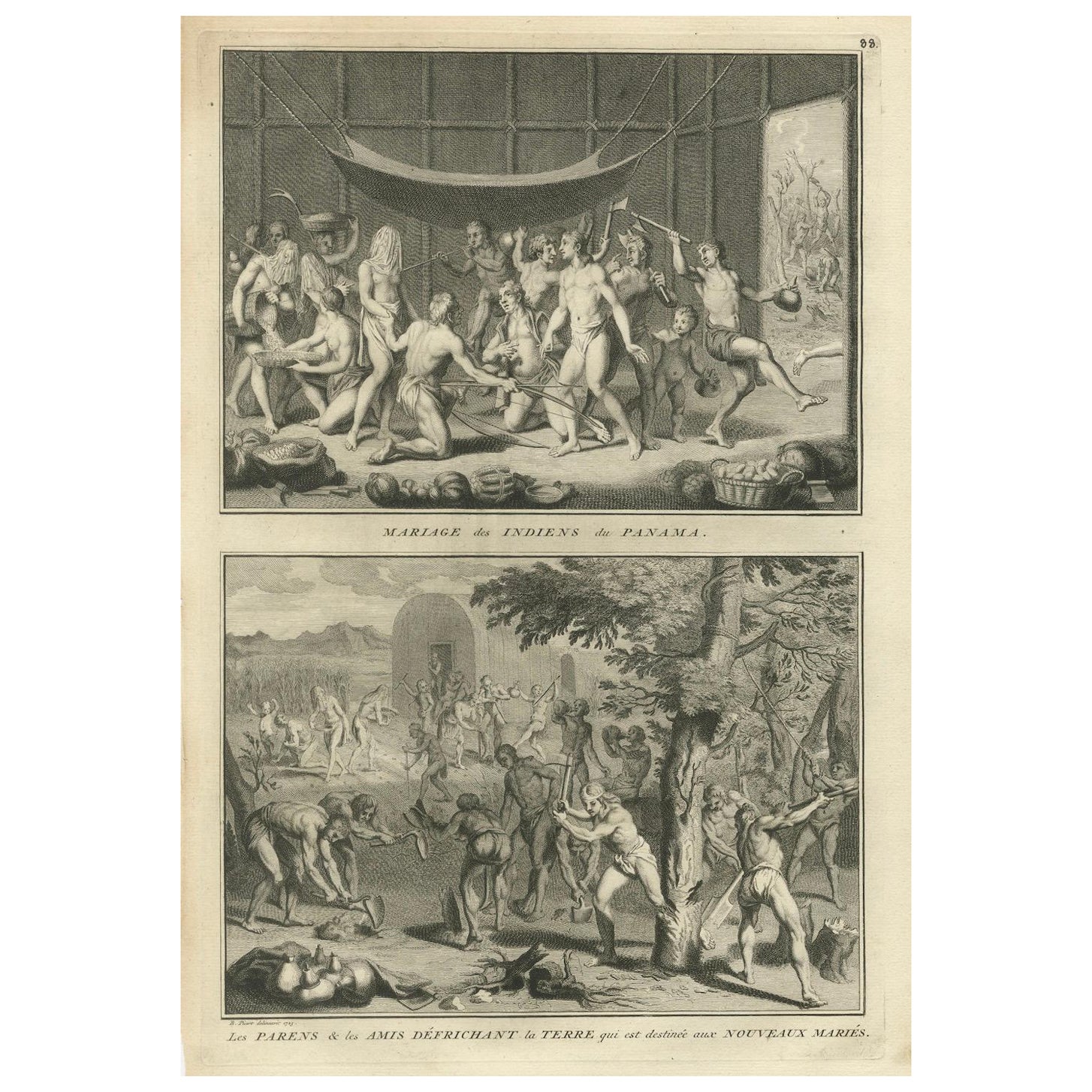
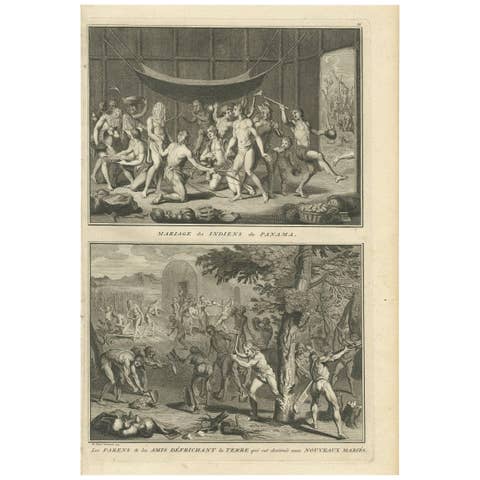
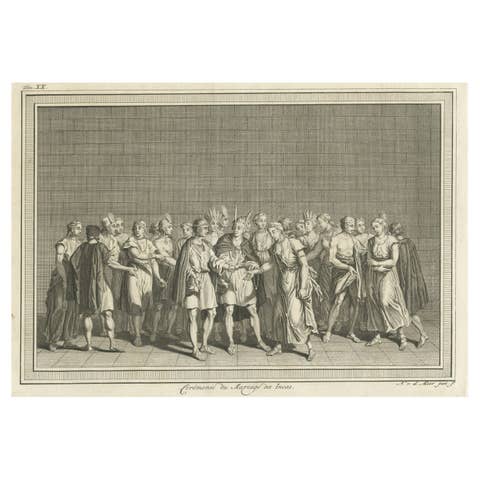
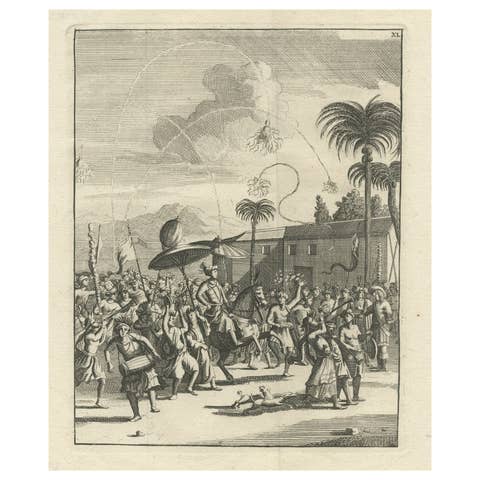
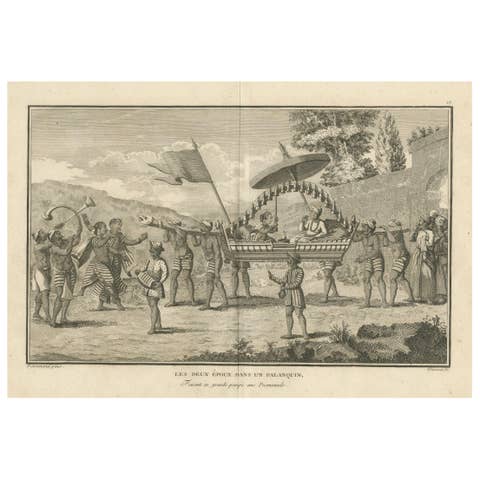
Marriage of the Indians of Panama and Land Clearing for the Newlyweds, 1734
€ 190
One of a kind: this is the sheet in the photographs. Ships from Langweer, the Netherlands.
Date
1734
Sheet size
42 × 26 cm (16.5 × 10.2 in)
Reference
BG-13806-69
Condition
Very good. The print features strong impressions and excellent detail. Some minor toning is present in the upper margin and light edge wear consistent with age. No tears or creases affect the image area.
About this sheet
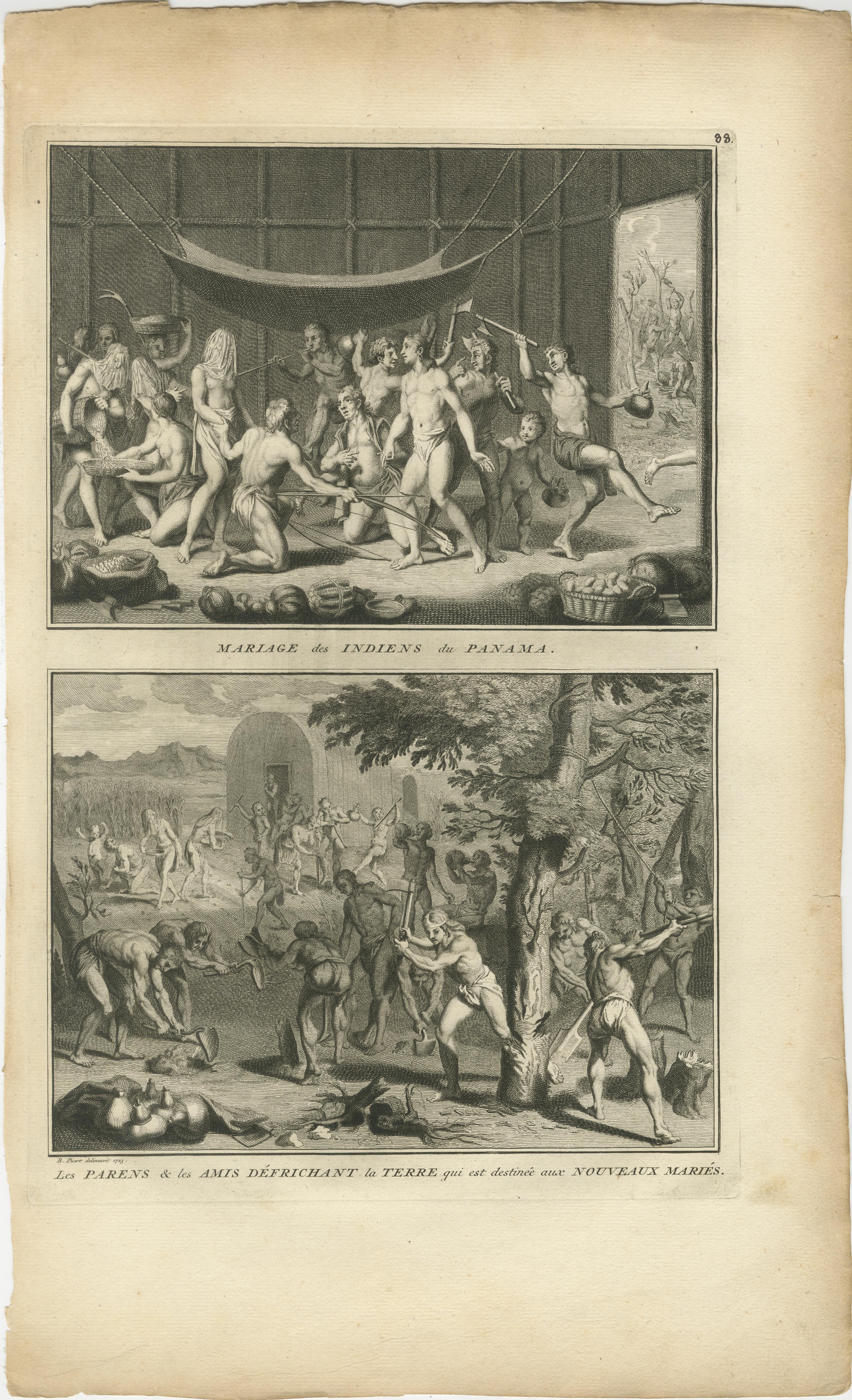
This detailed 18th-century copper engraving illustrates two important social customs among the Indigenous peoples of Panama, as interpreted through a European ethnographic lens. Created by Bernard Picart and published in *Cérémonies et Coutumes Religieuses de tous les Peuples du Monde* (1723), the plate is part of a larger project documenting non-European rituals and customs.
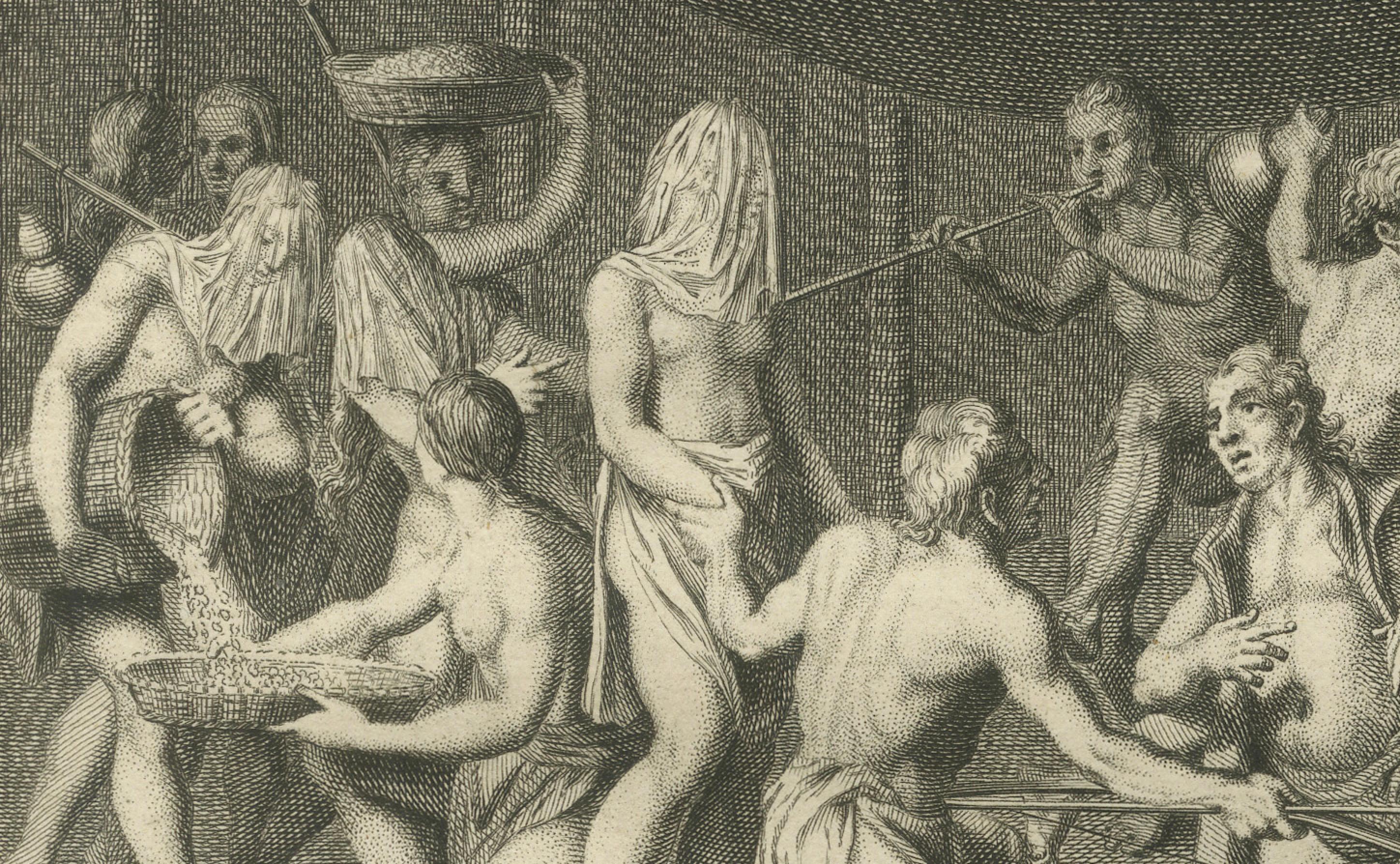
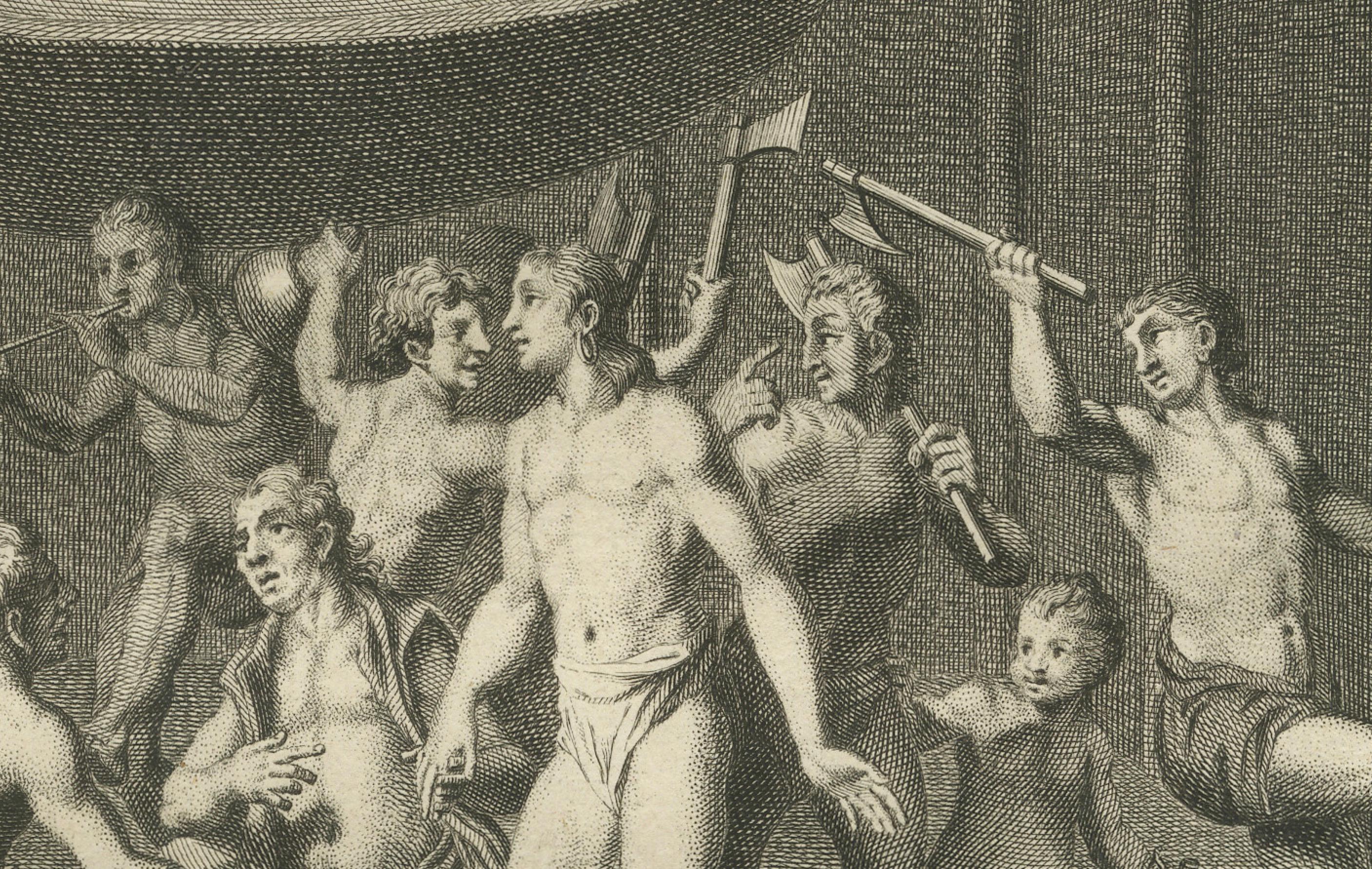
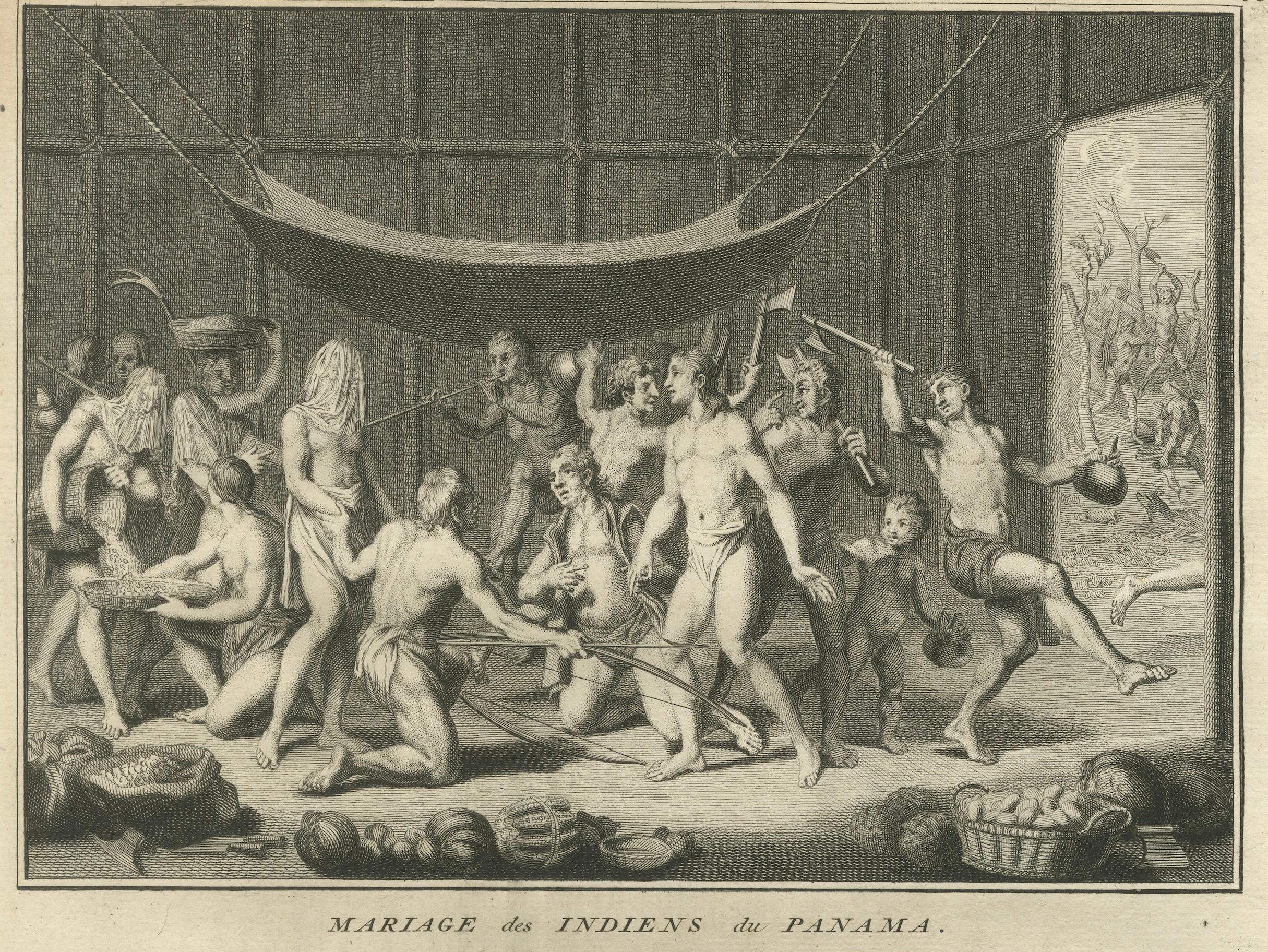
The upper half of the print is titled *Mariage des Indiens du Panama* (Marriage of the Indians of Panama). It depicts a lively communal wedding celebration, set within a large, open-walled structure, possibly a tribal longhouse. The central couple is surrounded by figures engaged in ceremonial gestures, offering gifts and instruments. A large hammock, suspended above the scene, may signify marital union or serve as part of the nuptial rites. The vivid choreography and dynamic poses, including singing, dancing, and feasting, suggest an event rich in symbolism and joy, celebrating union and fertility. Several onlookers outside the hut add a sense of extended community participation.
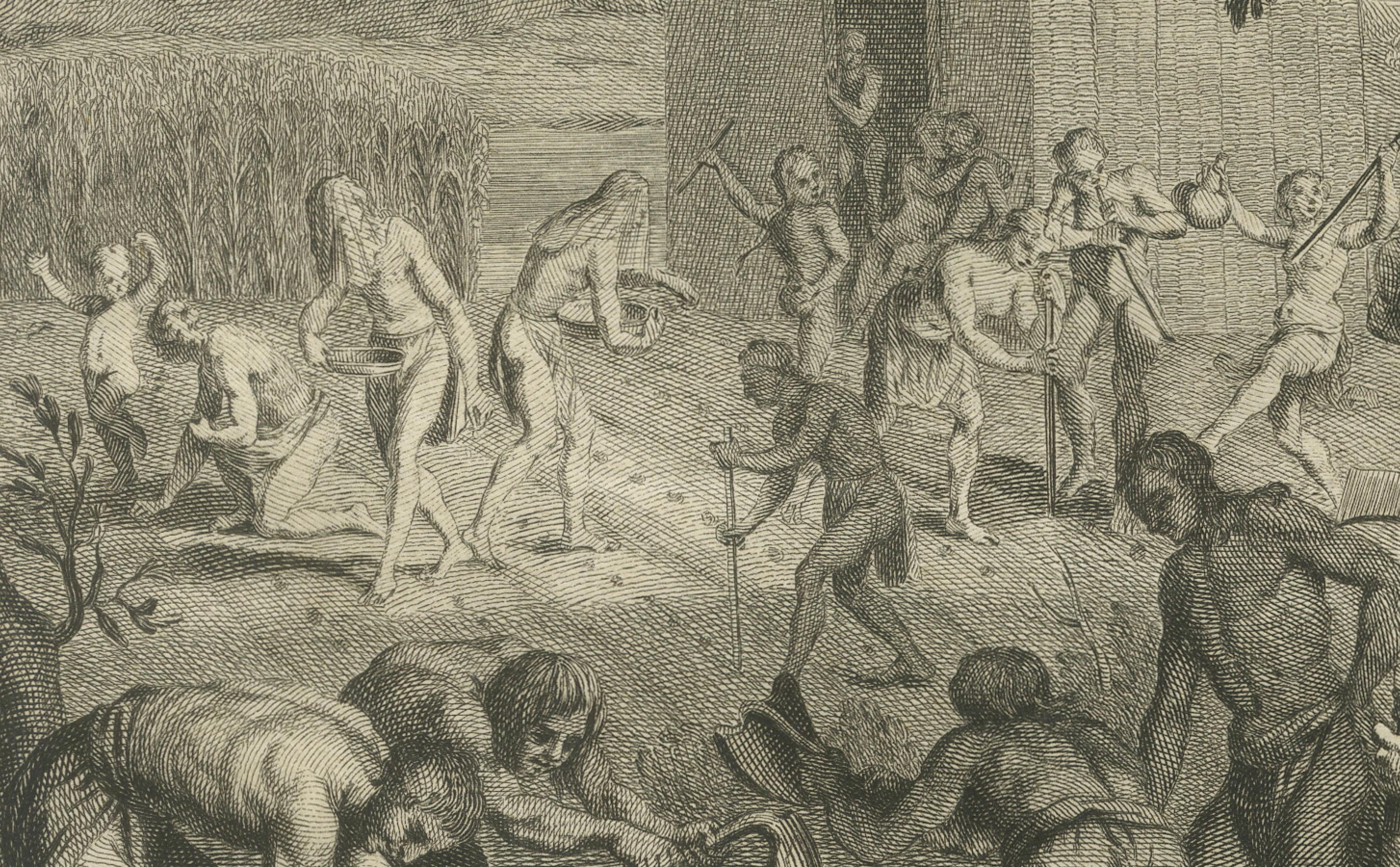
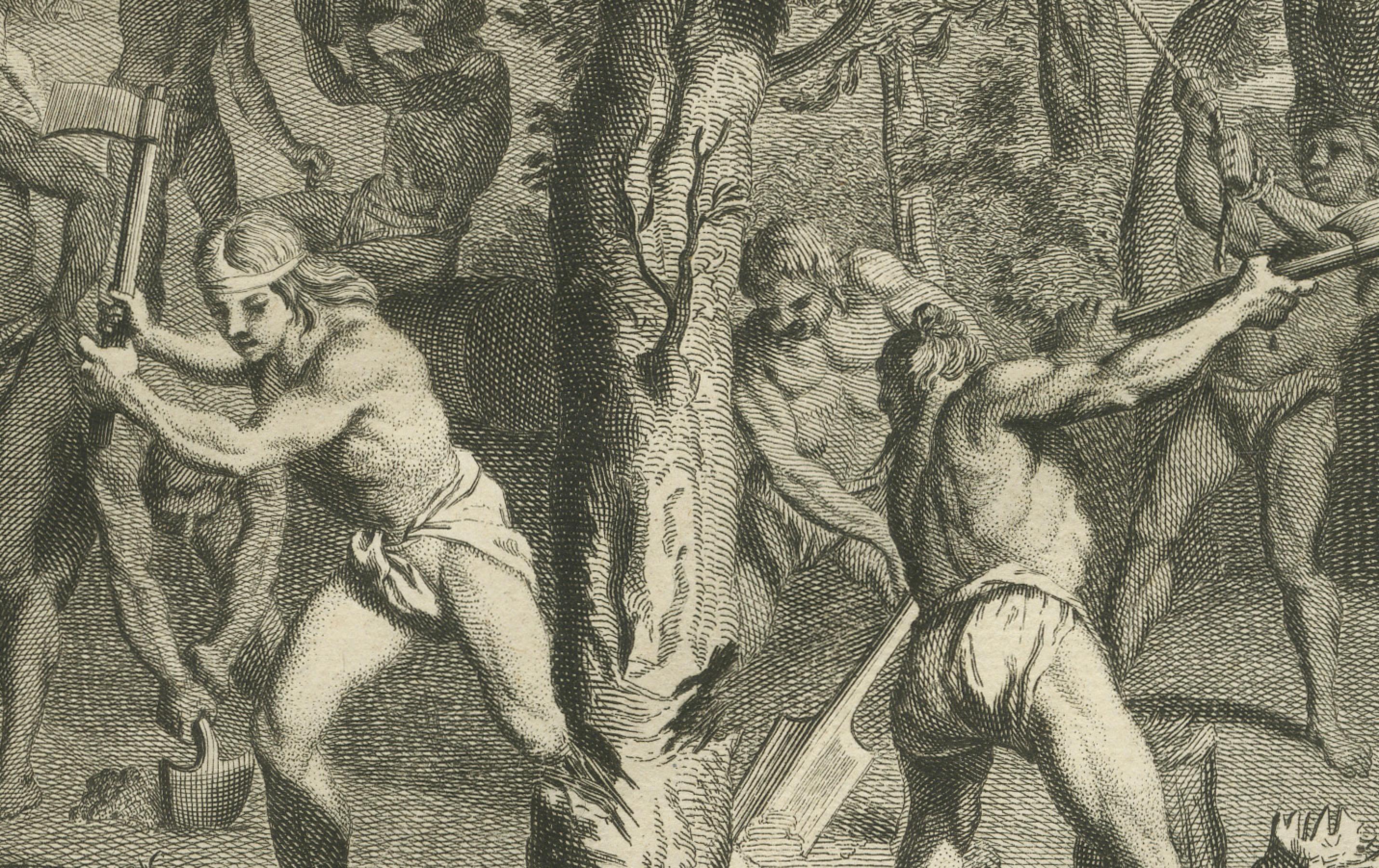
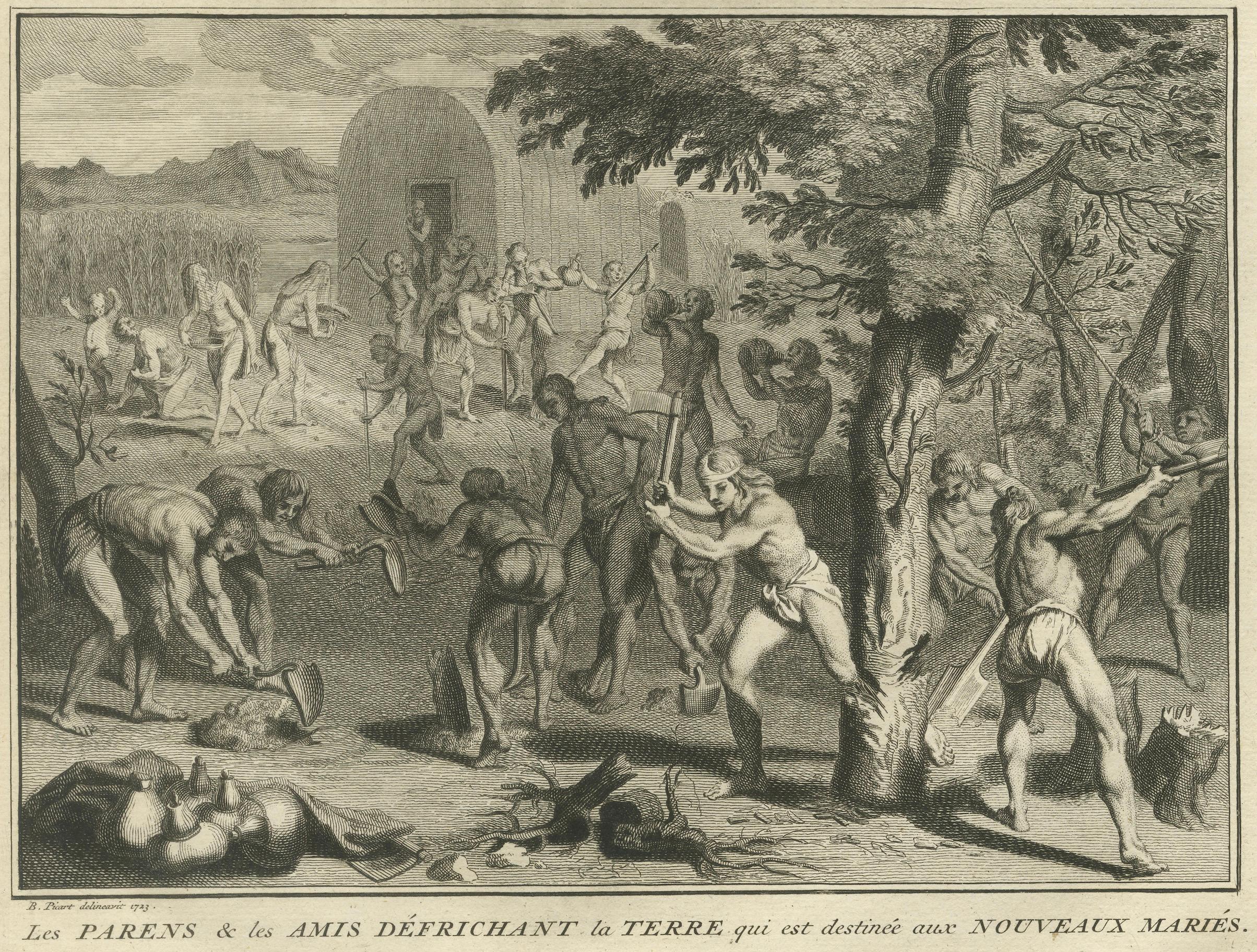
The lower panel, titled *Les Parens & les Amis Défrichant la Terre qui est destinée aux Nouveaux Mariés* (Relatives and Friends Clearing the Land Assigned to the Newlyweds), illustrates the communal effort that follows the ceremony. Family and villagers are shown cutting trees, digging soil, and preparing a piece of land to be handed over to the newly married couple. This practice reinforces the communal bonds and the social significance of marriage as a foundation for future settlement, sustenance, and prosperity.
As with many plates from Picart’s series, these scenes blend observed customs with artistic license, reflecting Enlightenment Europe's fascination with what they considered "exotic" cultures. The images were meant not only to document but also to instruct European audiences in the vast diversity of human customs around the world.
Condition: Very good. The print features strong impressions and excellent detail. Some minor toning is present in the upper margin and light edge wear consistent with age. No tears or creases affect the image area.
Framing tip: A warm-toned wood frame with natural or beige matting would complement the engraving’s earthy tones and historical character. Consider museum-quality glass to protect the piece while showcasing its fine linework and narrative power.