Showy Lily, Snake’s Head & Garden Tulip – Antique Flower Prints c.1897
€ 380
One of a kind: this is the sheet in the photographs. Ships from Langweer, the Netherlands.
Date
1897
Sheet size
24 × 15.9 cm (9.4 × 6.3 in)
Reference
BG-13692-4-55, -56, -57
Condition
Very good. Light age toning and minor edge wear consistent with age. Strong plate marks visible, with vibrant color retention. Sold as loose prints, there is no frame included.
About this sheet
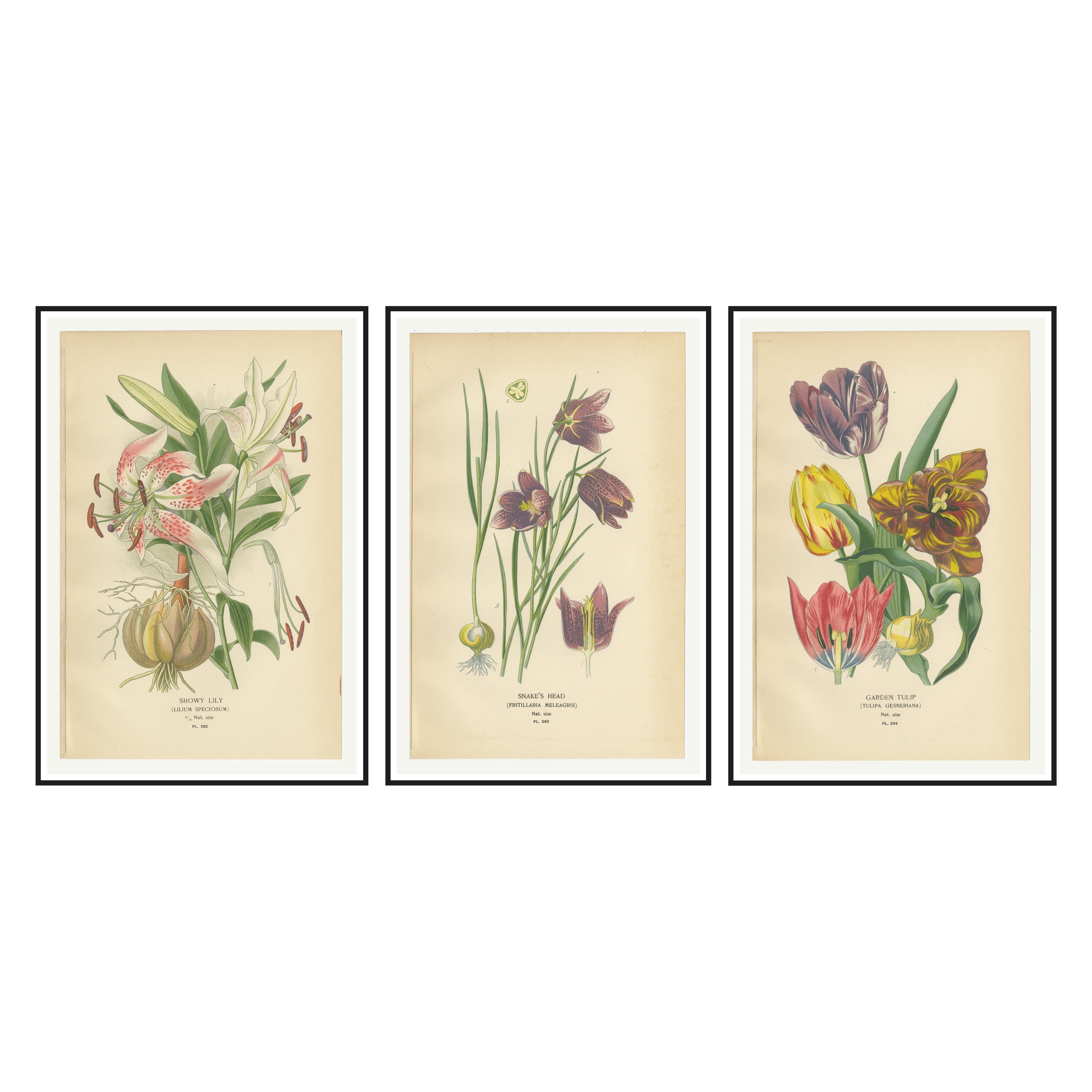
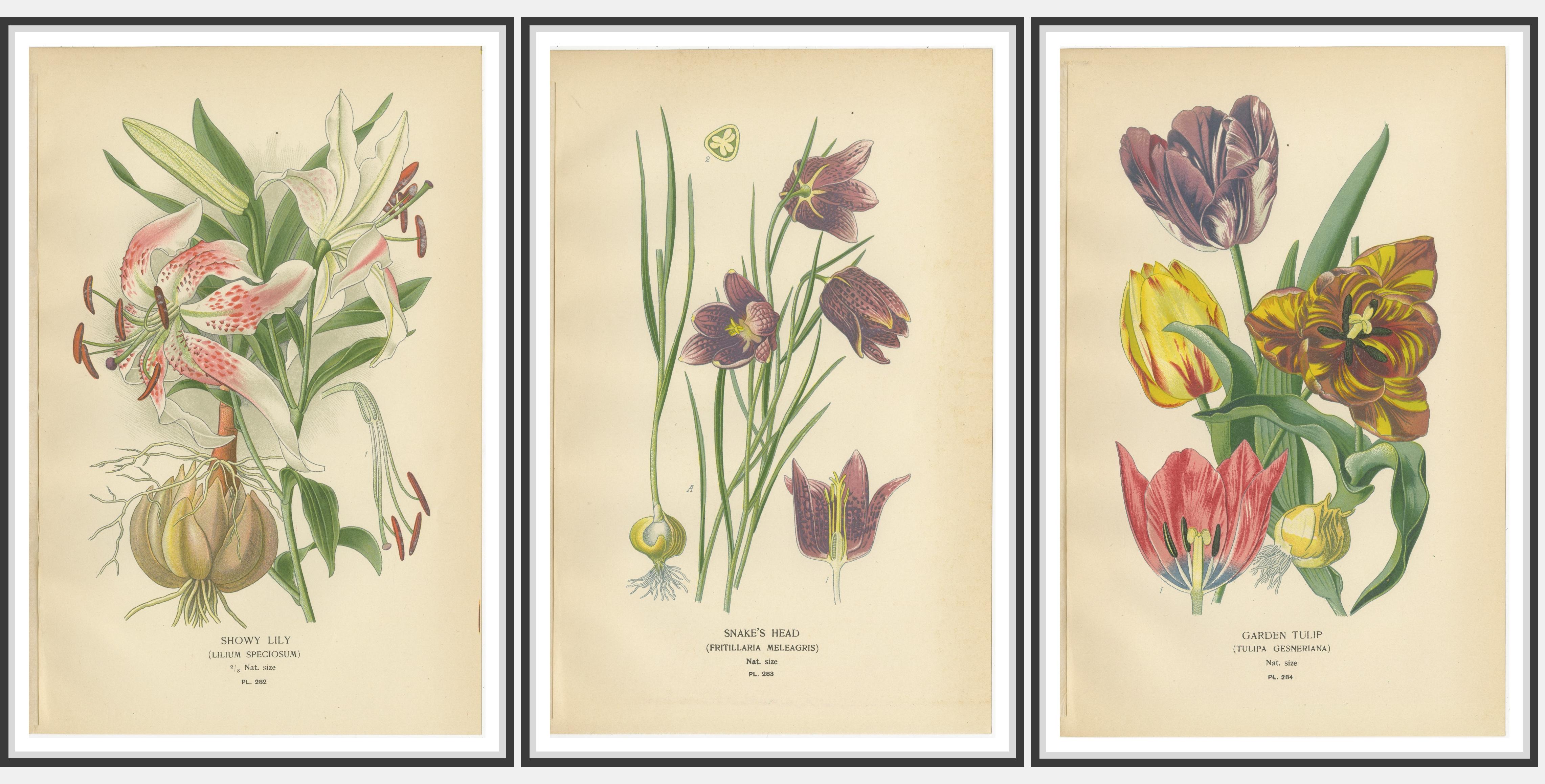
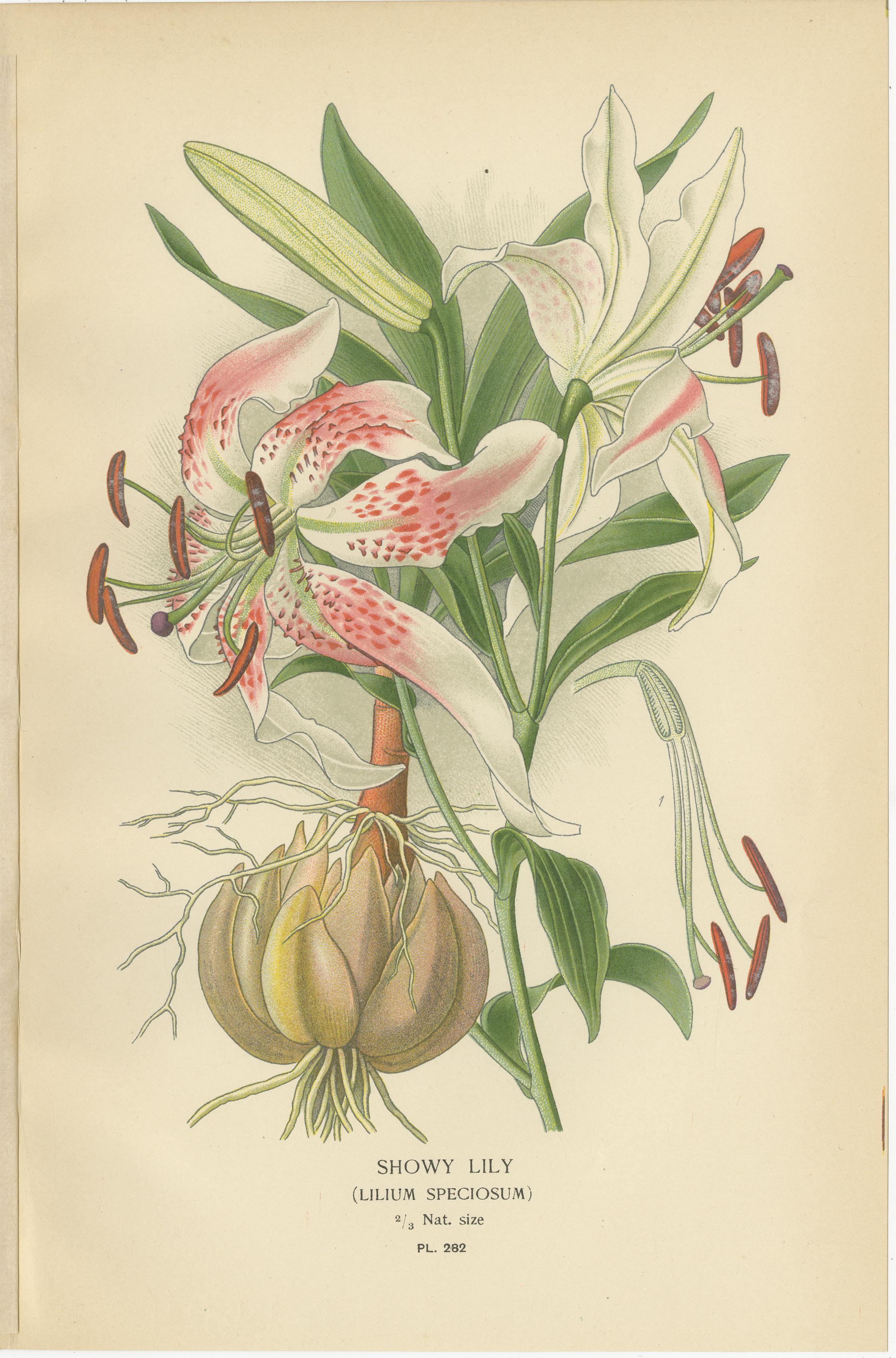
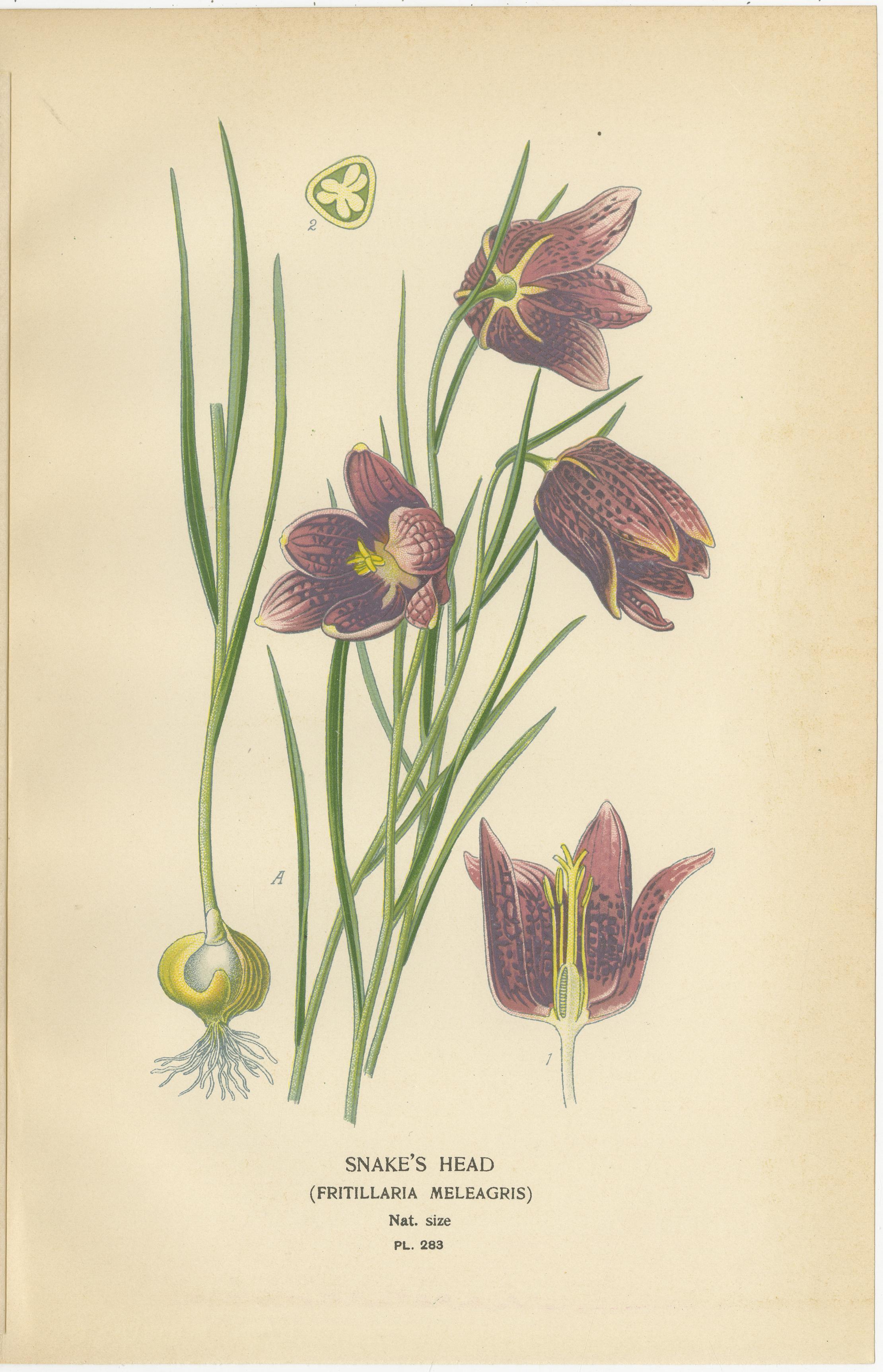
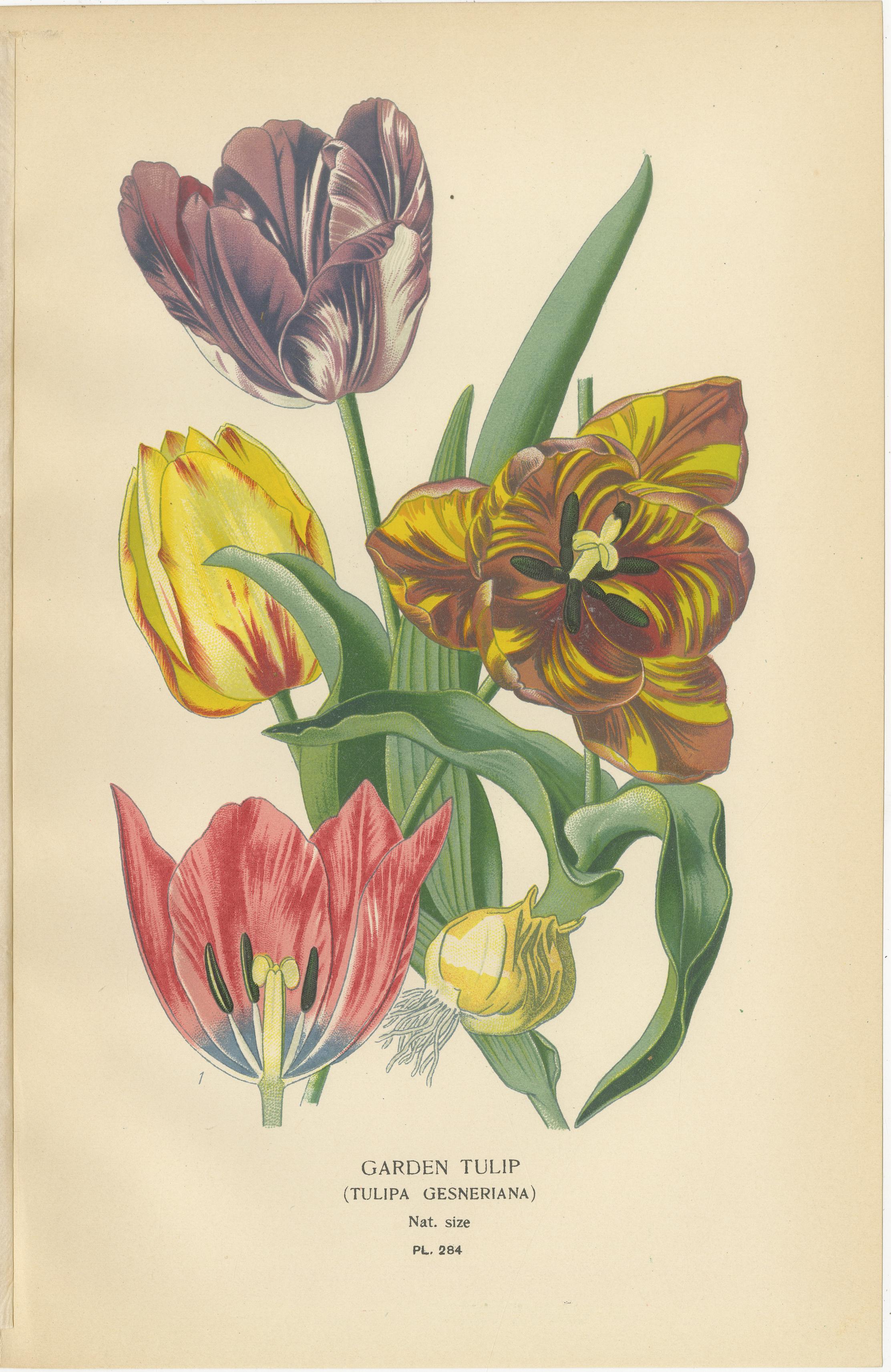
Antique Prints of Showy Lily, Snake’s Head & Garden Tulip – Plates 282–284, c.1897 This set of three late 19th-century botanical chromolithographs beautifully illustrates some of the most beloved flowering plants: the Showy Lily (*Lilium speciosum*), the Snake’s Head (Fritillaria meleagris), and the Garden Tulip (Tulipa gesneriana). Each plate comes from a finely produced botanical series of the Victorian era, prized for both its decorative artistry and scientific accuracy.
Plate 282 features the Showy Lily, a striking species with gracefully recurved petals shaded in white and rose, spotted with deep crimson, and accompanied by a detailed rendering of the bulb. Plate 283 depicts the Snake’s Head Fritillary, known for its distinctive nodding, bell-shaped blooms with a purple chequered pattern, along with bulb and floral details. Plate 284 presents the Garden Tulip in multiple forms, with blossoms in rich colors and intricate stripes, celebrating the horticultural fascination that made tulips central to European gardening traditions.
Together, these three chromolithographs not only highlight the Victorian passion for exotic and ornamental plants but also embody the elegance of botanical illustration at its finest. Their strong colors and detailed renderings make them ideal decorative pieces, while their historical and botanical significance will appeal to collectors of natural history art.
Condition: Very good. Light age toning and minor edge wear consistent with age. Strong plate marks visible, with vibrant color retention. Sold as loose prints, there is no frame included.
Framing tips: For a cohesive display, consider ivory or cream mats paired with dark wood or gilt frames. Displayed as a set, they create a striking wall arrangement that emphasizes both the scientific and artistic qualities of the prints.
Technique: Chromolithograph Maker: Anonymous botanical artist, late 19th century