About this sheet
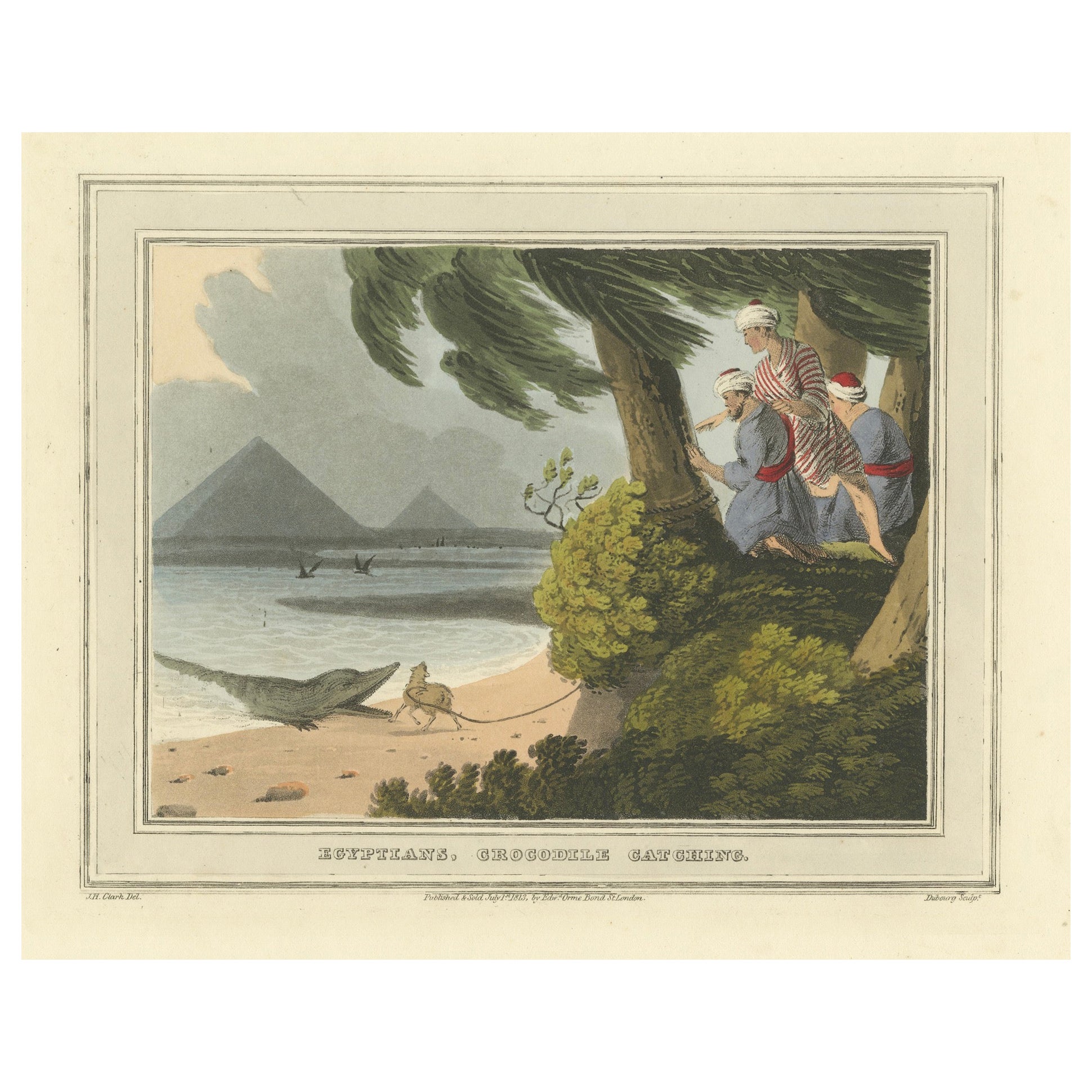
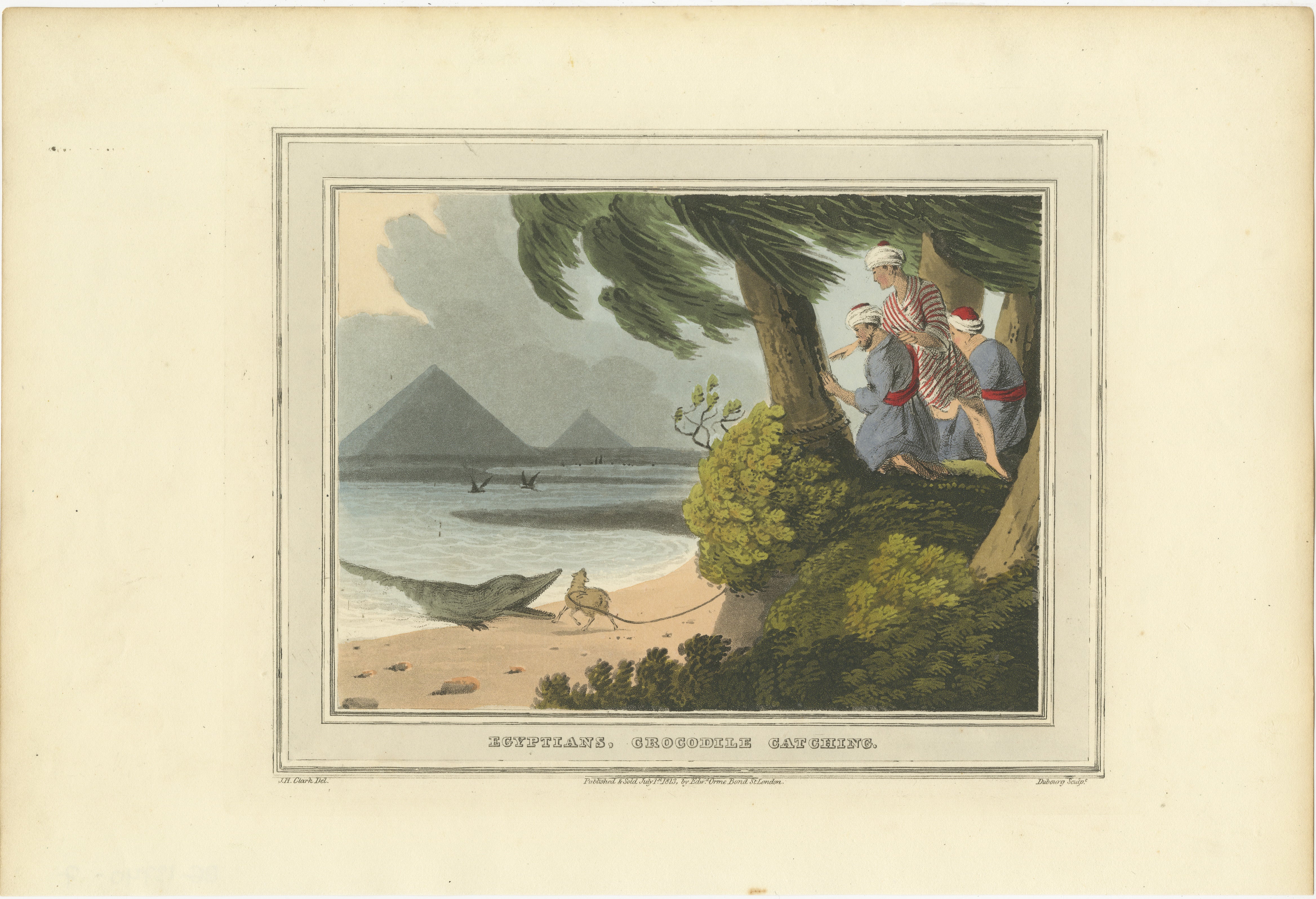
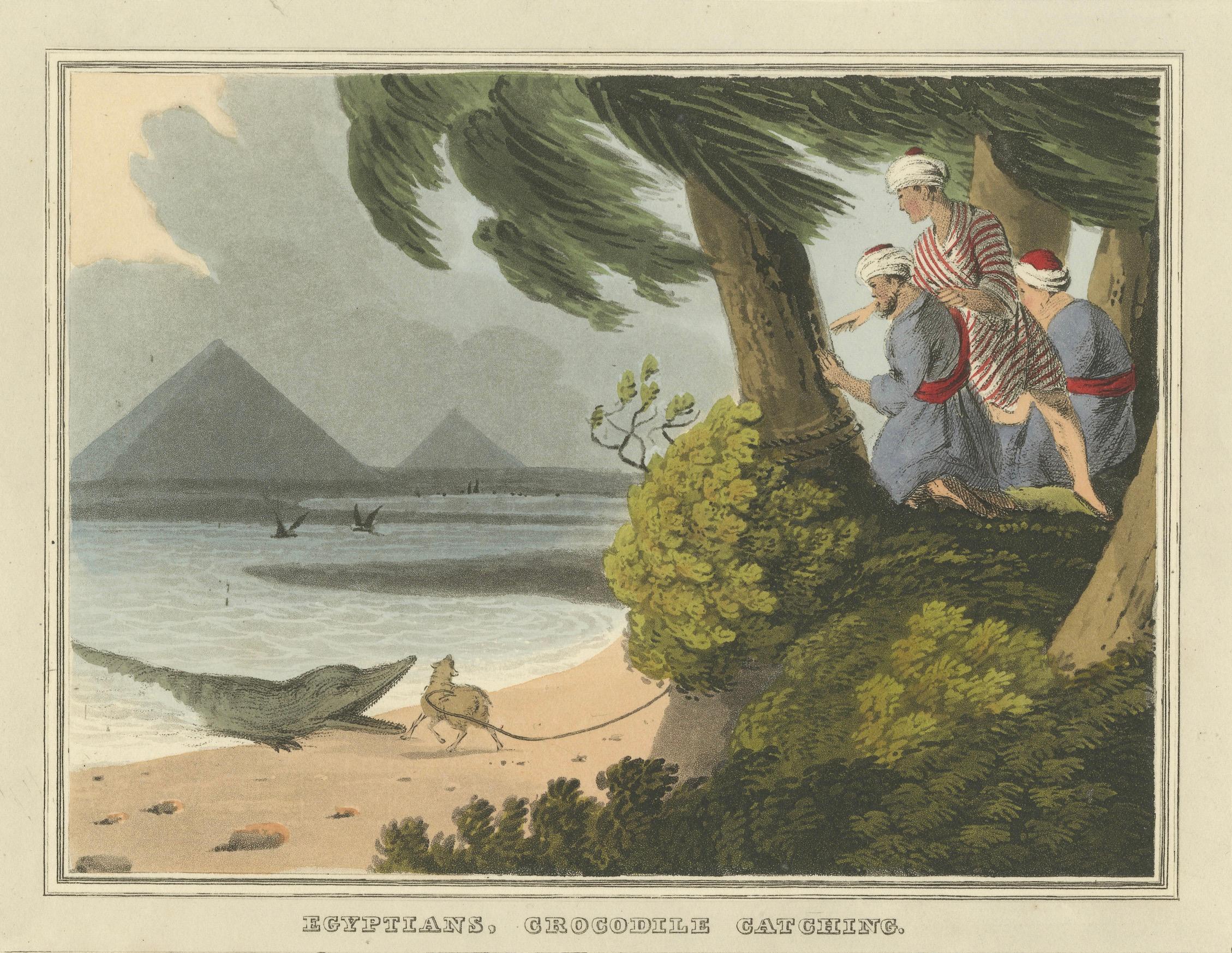
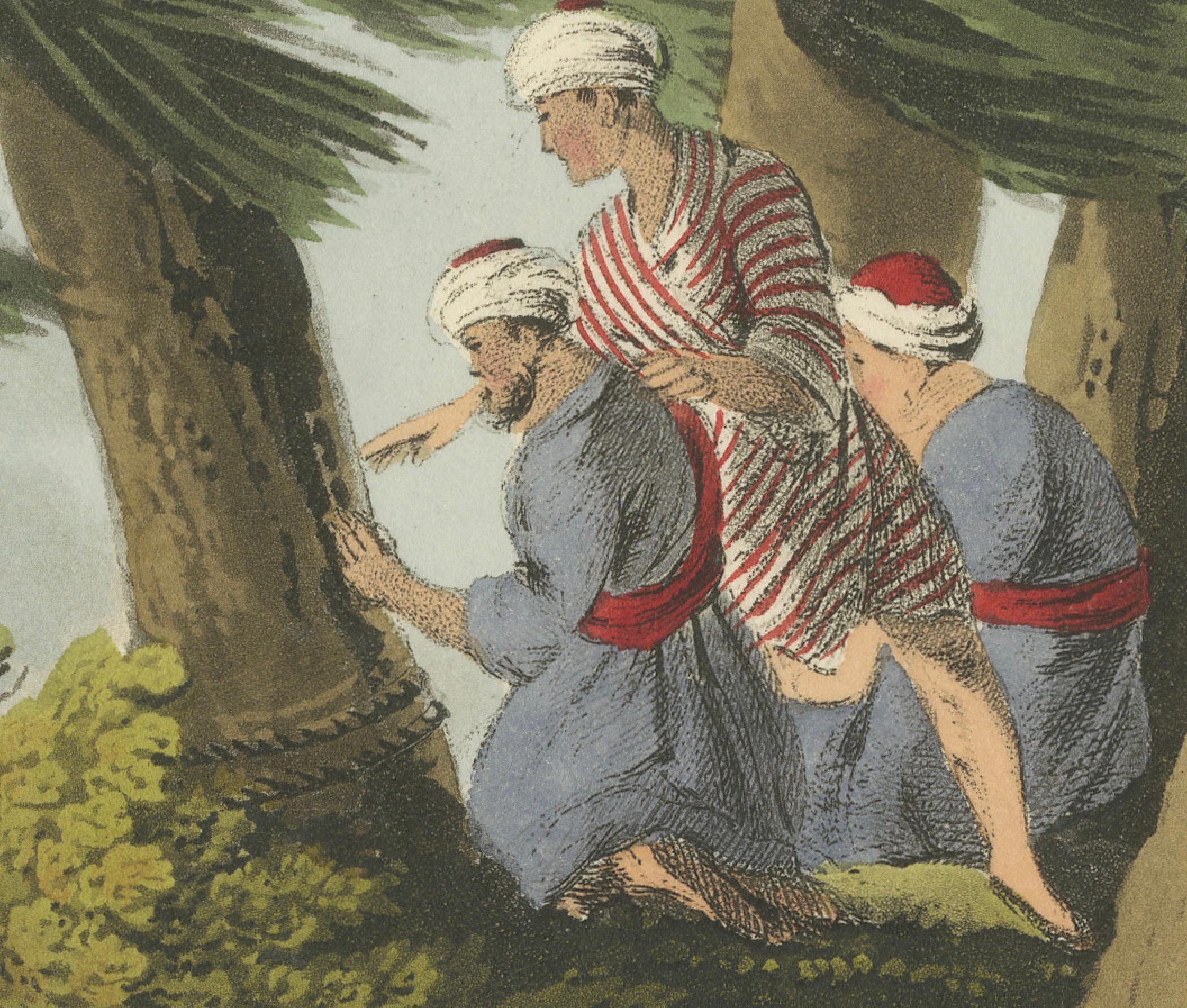
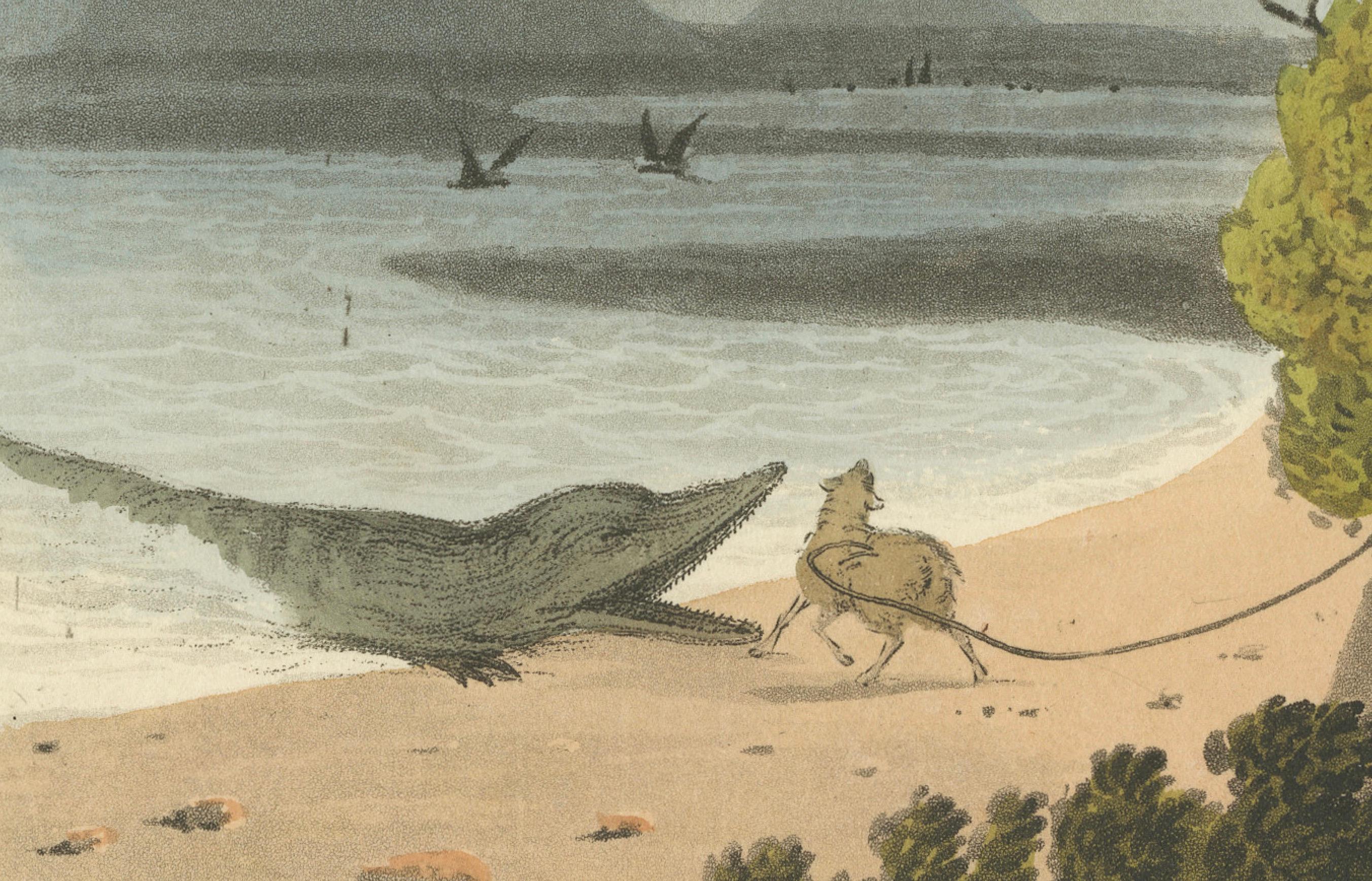
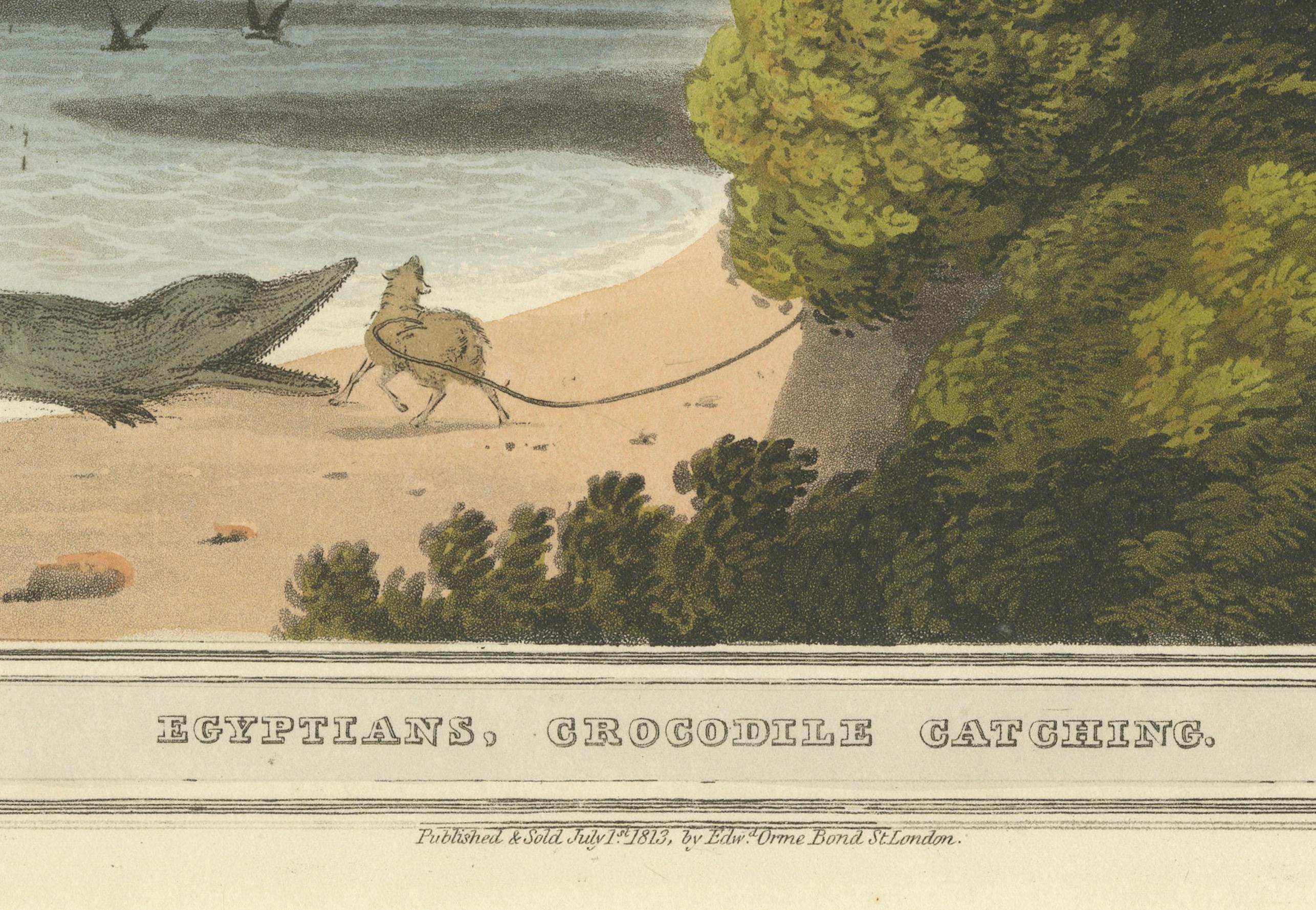
The image, an original antique aquatint, depicts "Egyptians Crocodile Catching." Historically, crocodile catching has been documented in various regions, primarily in Africa and Asia. Here are some regions and countries where such activities were common:
1. **Egypt**:
- The image shows Egyptian crocodile catching, which was a significant activity along the Nile River. Crocodiles were both feared and revered in ancient Egyptian culture, often associated with the god Sobek.
2. **Sub-Saharan Africa**:
- Crocodile catching was common in other parts of Africa, such as in the rivers and lakes of sub-Saharan regions, where crocodiles are native.
3. **India**:
- In India, particularly along the Ganges and Brahmaputra rivers, crocodile catching has been a traditional practice. The Mugger crocodile (Crocodylus palustris) and the Gharial (Gavialis gangeticus) were commonly hunted.
Crocodile catching still occurs in some regions today, but it is more regulated and often associated with conservation efforts rather than hunting for trade or protection.
1. **Africa**:
- Countries like South Africa, Zambia, and Zimbabwe have regulated crocodile farming and catching, primarily for conservation, tourism, and sustainable use.
2. **Australia**:
- Northern Australia, particularly in the Northern Territory, has controlled crocodile catching programs. These are mainly for managing the population of Saltwater crocodiles (Crocodylus porosus) to ensure safety and balance in ecosystems.
3. **Southeast Asia**:
- In countries like Thailand and the Philippines, crocodile farms and regulated catching practices exist, focusing on sustainable use and conservation.
Conservation Efforts
- **CITES (Convention on International Trade in Endangered Species of Wild Fauna and Flora)**:
- Many countries are signatories to CITES, which regulates the trade of crocodile skins and products to ensure that wild populations are not overexploited.
Protected Areas:
- Many countries have established protected areas and national parks where crocodiles are conserved and catching is strictly controlled or prohibited.
Current Regulations
- Permit Systems:
- In most countries where crocodile catching is allowed, it is heavily regulated through permit systems that ensure the activity is sustainable and does not threaten wild populations.
- Conservation Programs:
- Many regions have conservation programs aimed at protecting crocodile habitats and ensuring that any catching activities contribute to the species' long-term survival.
While the traditional practices of crocodile catching depicted in historical images like the one provided have largely been replaced by more regulated and conservation-oriented approaches, the cultural significance and history of these activities remain an essential part of the heritage in these regions.