About this sheet
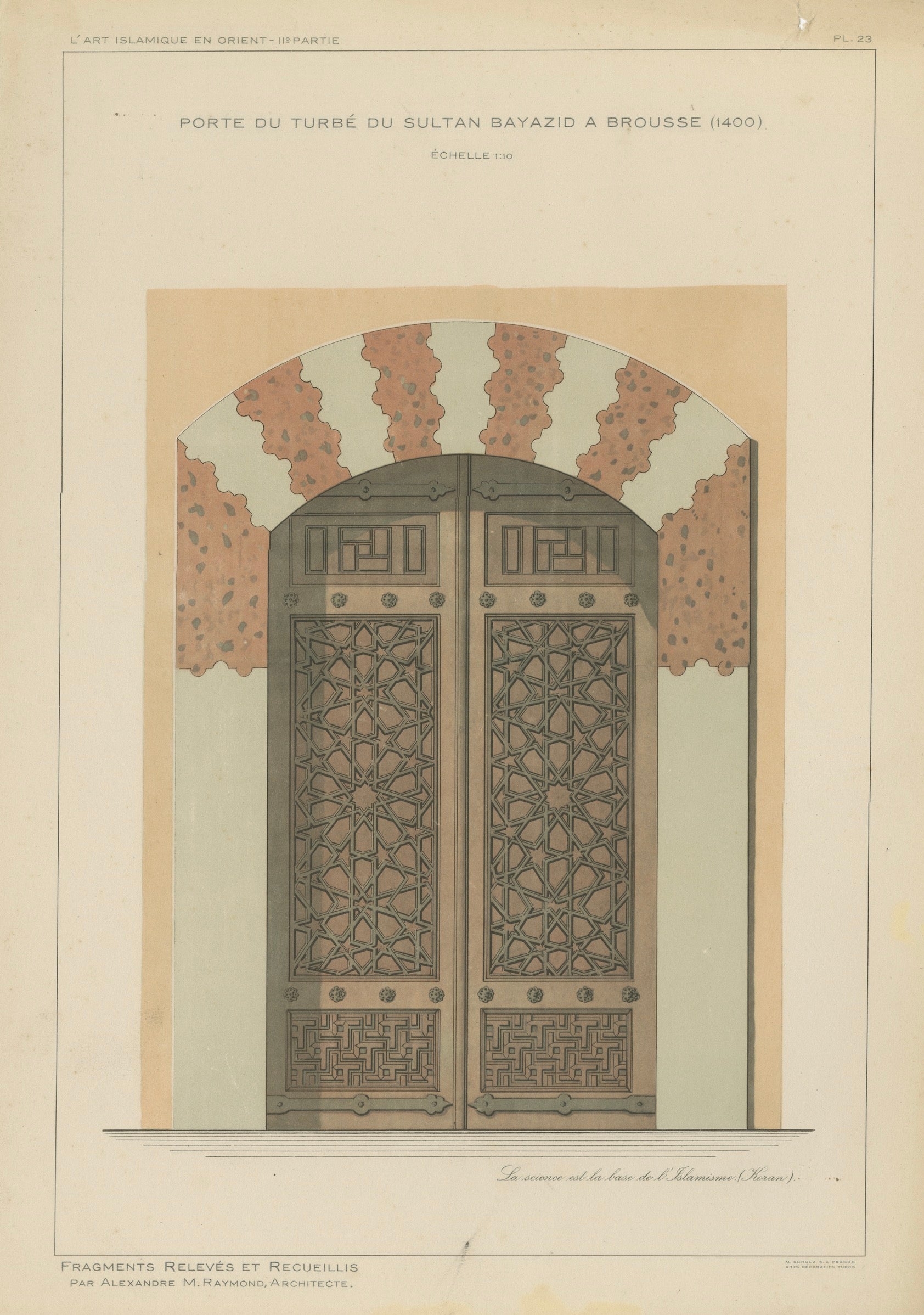
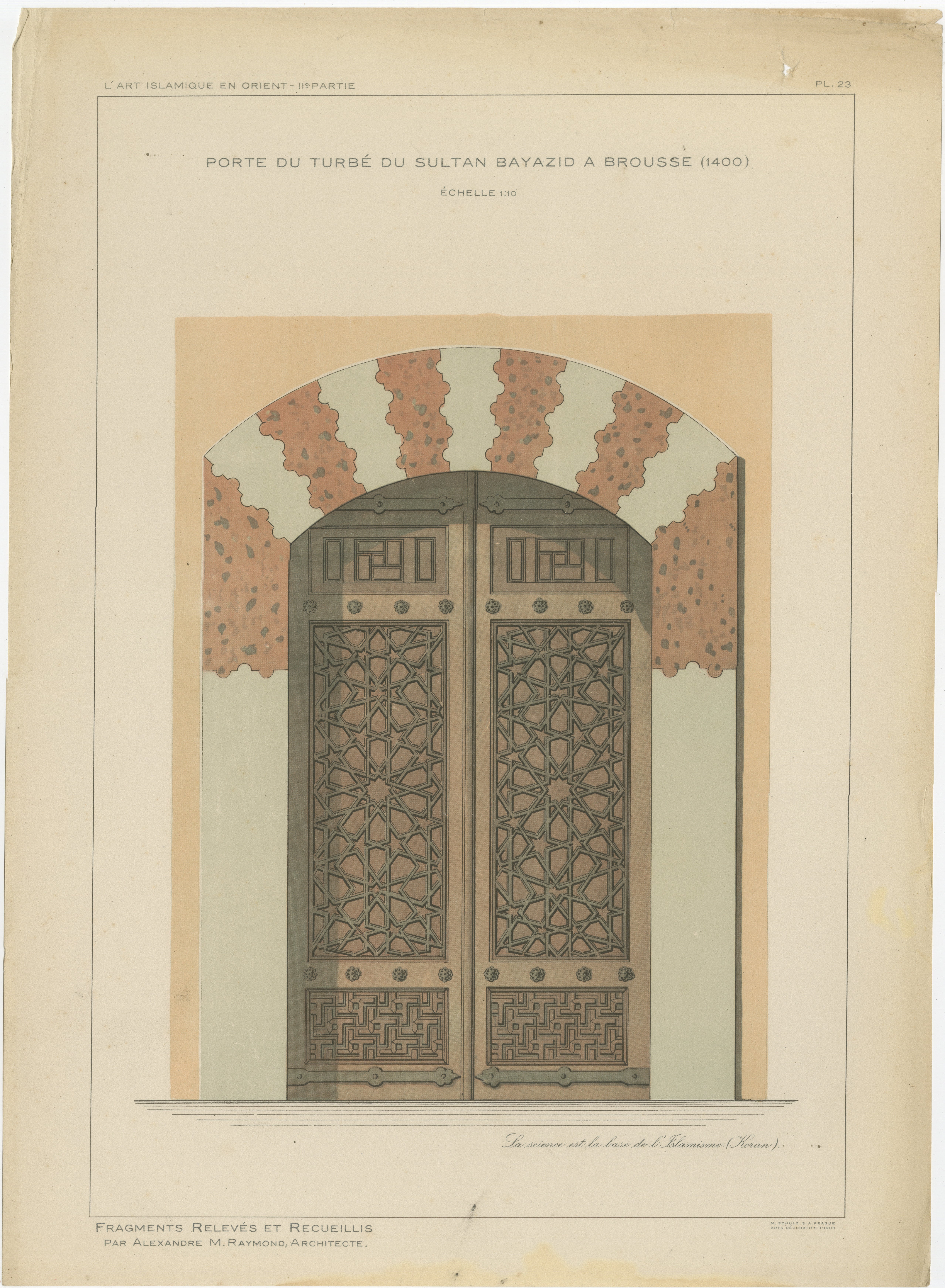
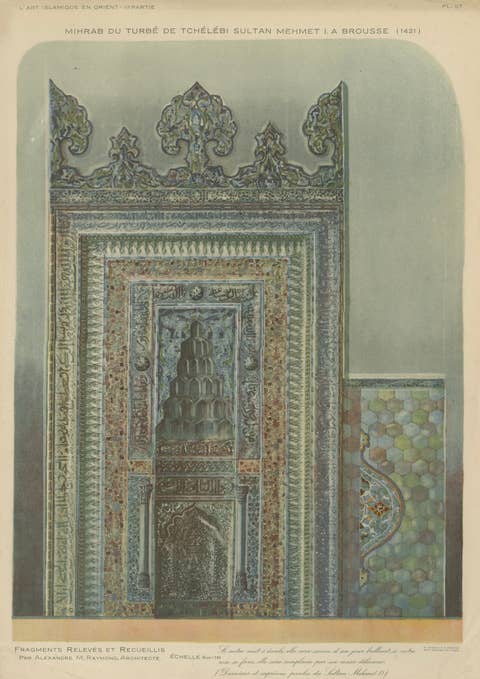
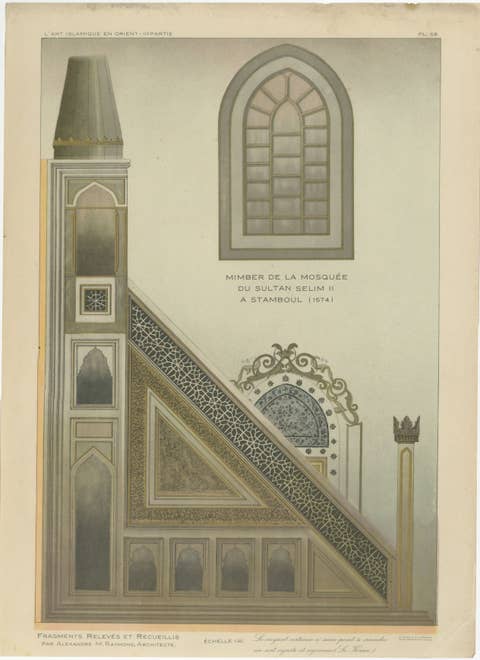
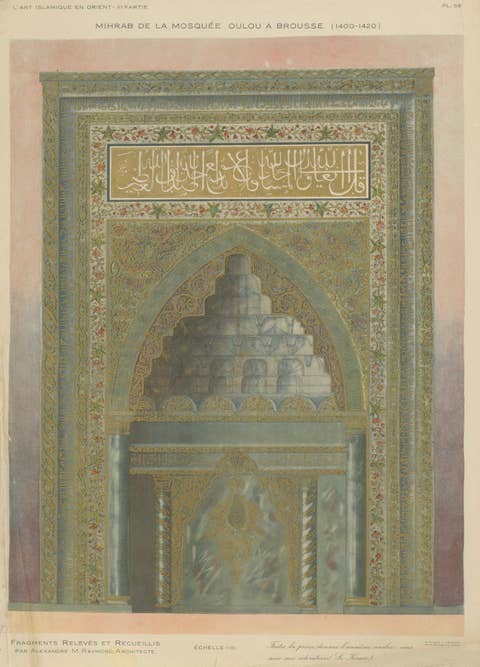
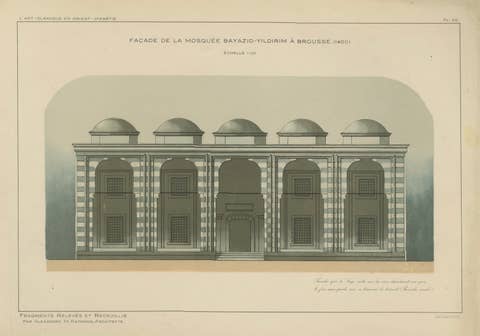
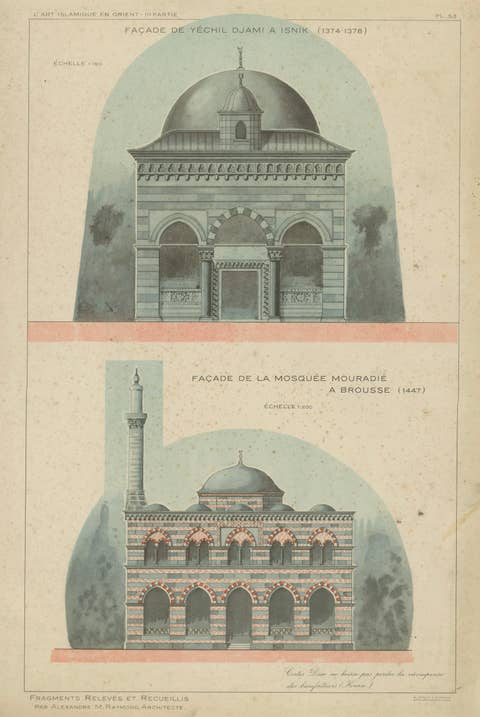
An original color lithographic architectural plate from Alexandre M. Raymond's monumental publication L'Art Islamique en Orient – IIe Partie, published in 1924. This striking composition illustrates the celebrated door of the Türbe (mausoleum) of Sultan Bayezid in Bursa, dated to around 1400, and represents one of the finest examples of the transition from late Seljuk to early Ottoman decorative arts.
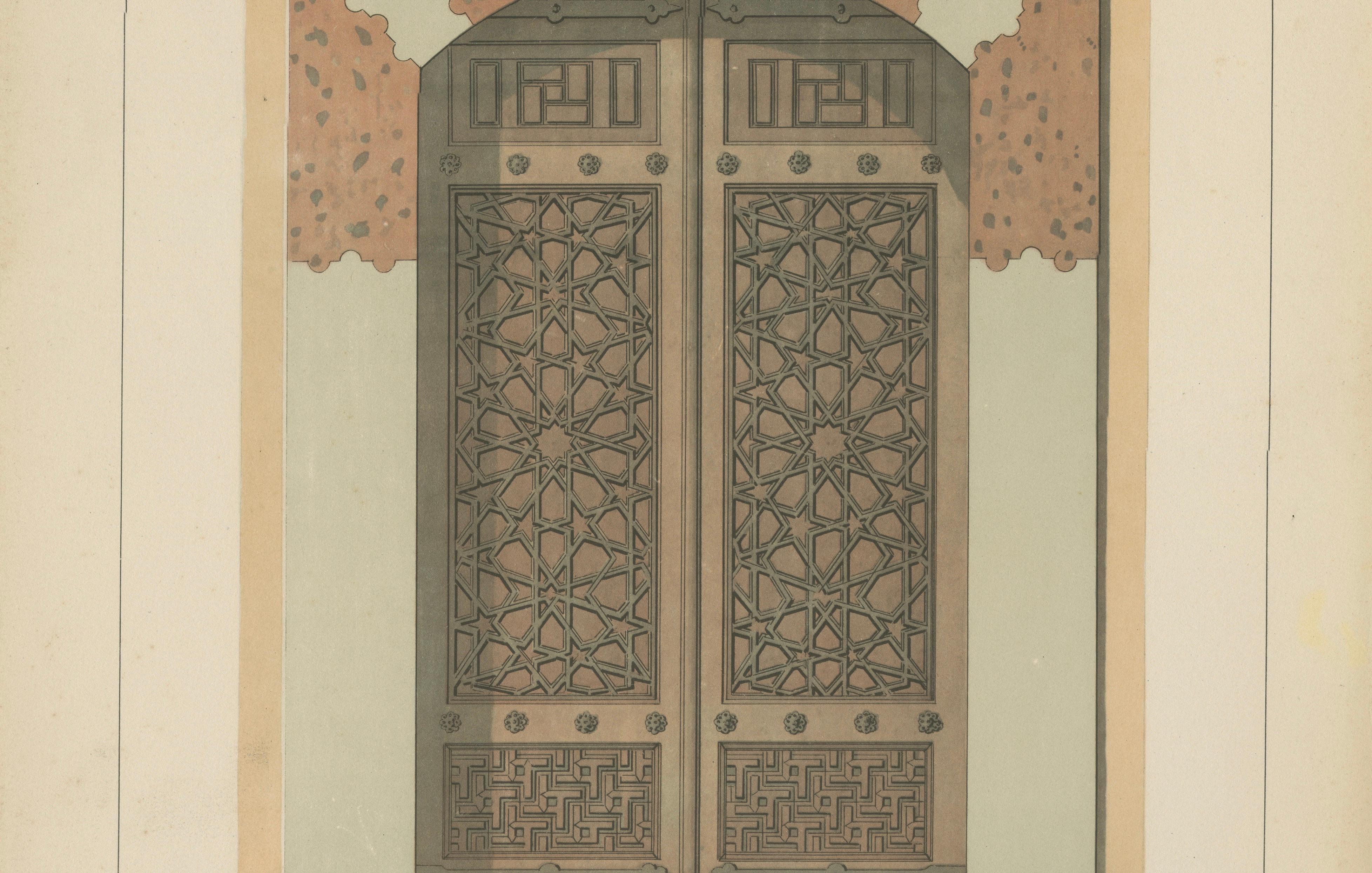
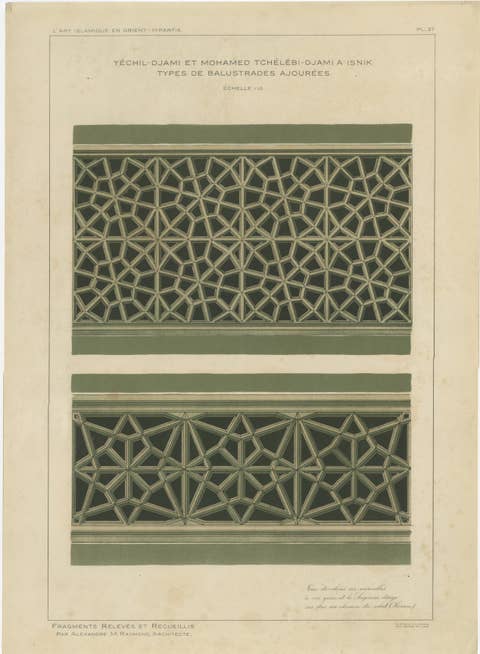
The design combines sophisticated geometric woodworking with elegant architectural framing beneath a monumental striped arch. The twin door leaves are dominated by intricate star-pattern lattices, executed according to the mathematical principles that define classical Islamic ornament. Smaller panels incorporate kufic-inspired geometric compositions, while the upper sections contain stylized calligraphic motifs that reinforce the spiritual and ceremonial importance of the structure.
Bursa, known historically as Broussa, served as the first major capital of the Ottoman Empire and became a center for artistic innovation during the fourteenth and early fifteenth centuries. The mausoleum of Sultan Bayezid formed part of this flourishing cultural environment, where craftsmen inherited Seljuk traditions while developing the distinct decorative language that would characterize Ottoman architecture for centuries to come.
The alternating stone bands of the surrounding arch, rendered in warm salmon and cream tones, reflect a decorative technique common throughout Islamic architecture. This interplay of color, geometry, and craftsmanship creates an image that is simultaneously archaeological documentation and refined work of decorative art.
Alexandre Marcel Raymond (1872–1941), a French architect born in Constantinople, devoted much of his career to recording the architectural heritage of Anatolia and the Ottoman world. His folio publications remain among the most important visual surveys of Islamic architecture produced during the early twentieth century. Printed in Prague by M. Schulz, these plates combined scholarly precision with exceptional lithographic quality, preserving monuments and decorative details for future generations.
The restrained palette of grey-green, terracotta, and cream gives this sheet a timeless elegance that complements both contemporary and traditional interiors. It is equally appealing to collectors of Islamic art, architectural history, Ottoman culture, and geometric design.
This is an original antique print from 1924 and not a modern reproduction. It is sold unframed.
Condition:
Good antique condition with age-related toning, scattered foxing, and minor handling wear to the margins. Small creases and light staining consistent with age. One small hole in the top, outside the image. The printed image remains strong and highly decorative.
Framing Tips:
Sold unframed. This piece would display beautifully in a dark walnut or ebonized frame with a wide ivory museum mat. Bronze or patinated metal finishes also complement the subtle colors and architectural character of the print.
Technique: Color lithograph
Maker: Alexandre M. Raymond, France/Constantinople, 1924
Keywords:
Alexandre Raymond, L Art Islamique en Orient, Sultan Bayezid, Bayezid Türbe, Bursa architecture, Broussa, Ottoman architecture, Islamic architecture, Ottoman door, Islamic woodwork, geometric ornament, Islamic geometry, Seljuk influence, early Ottoman art, mausoleum door, Turkish architecture, medieval Turkey, architectural lithograph, antique Islamic print, Arabic ornament, kufic design, Islamic decorative arts, star patterns, sacred architecture, Ottoman craftsmanship, architectural history, original antique print, color lithograph, museum quality print, unframed antique print, Middle Eastern art, Islamic interior design, Anatolian monuments, Bursa mausoleum, Ottoman heritage, historical architecture, Alexandre Marcel Raymond, architectural study, 1924 print.