About this sheet
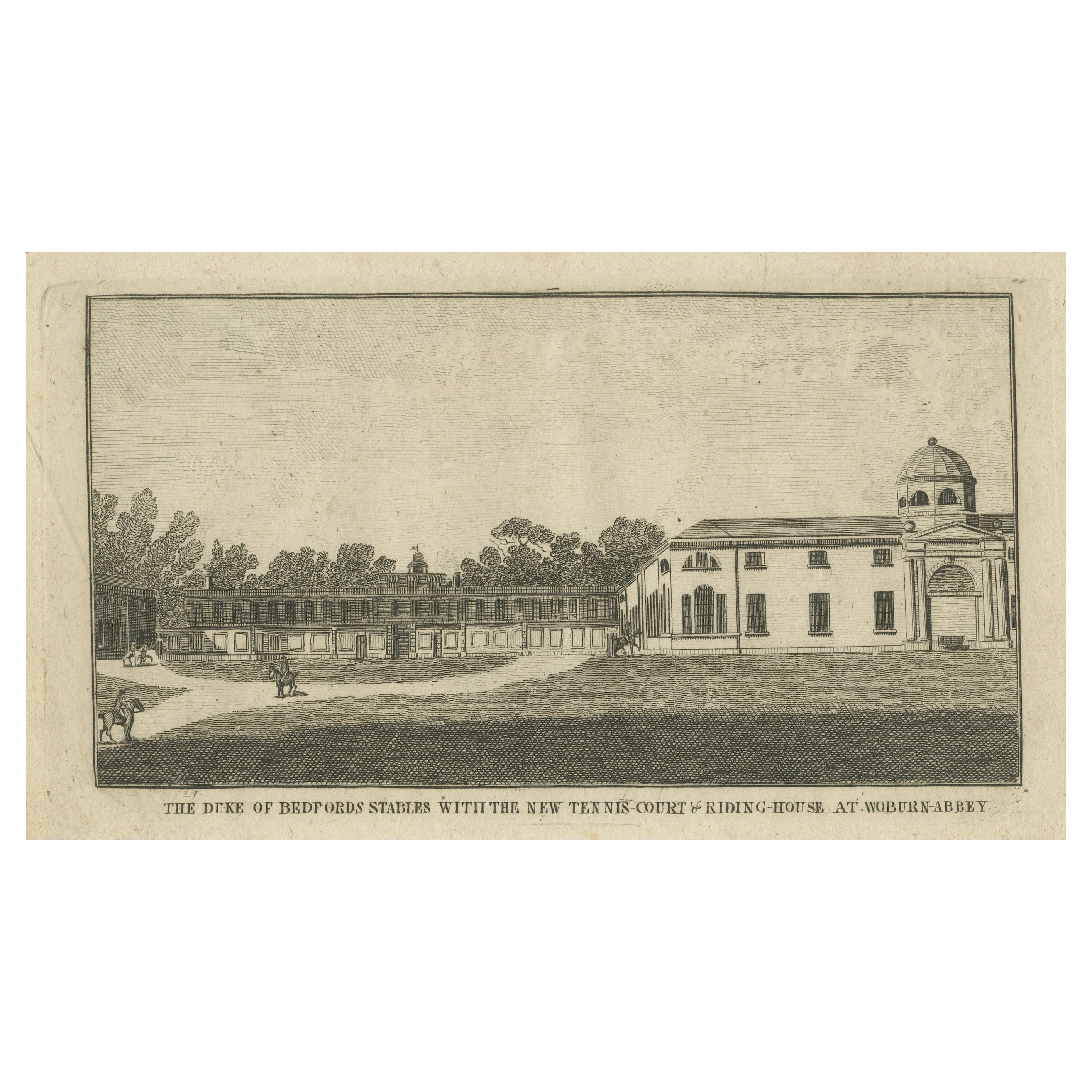
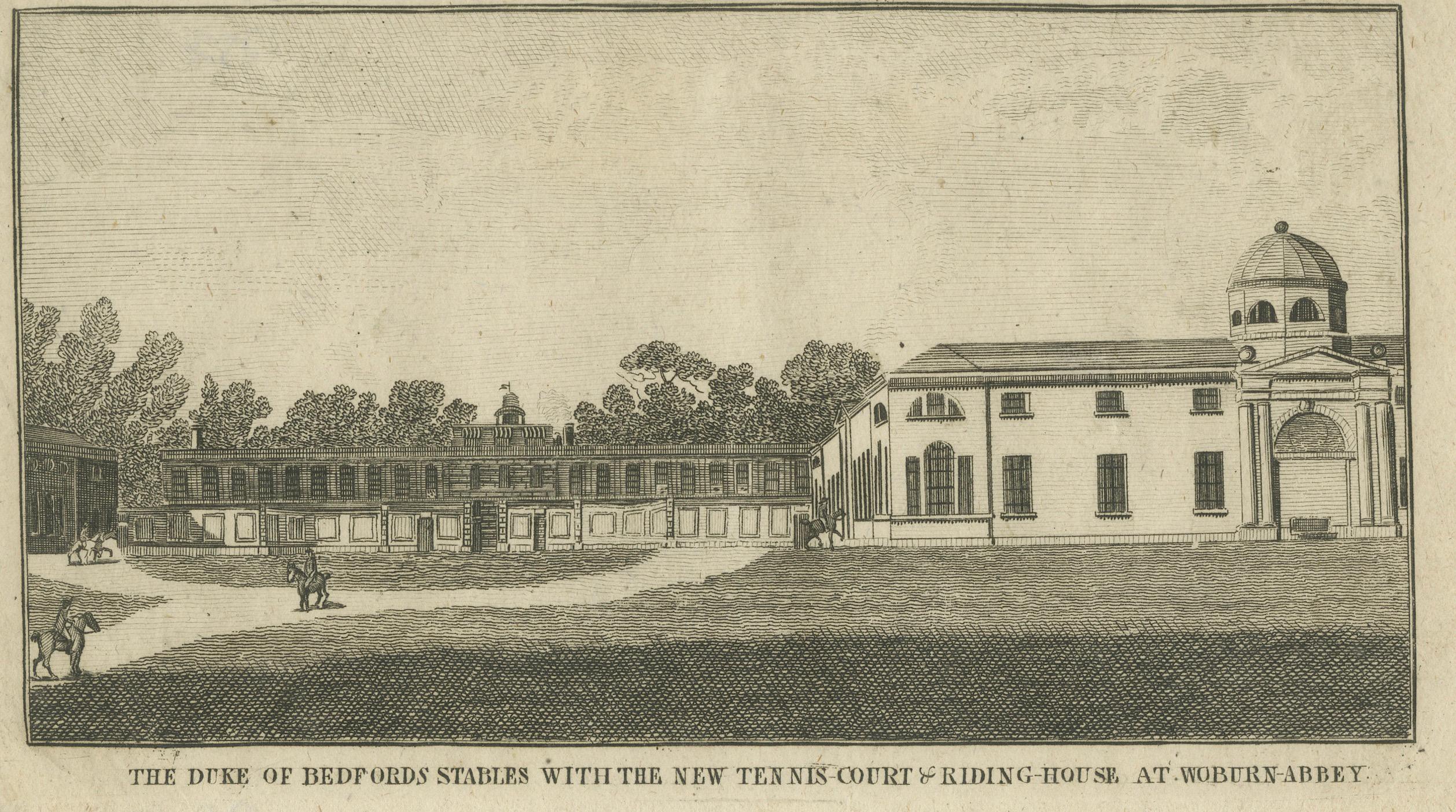
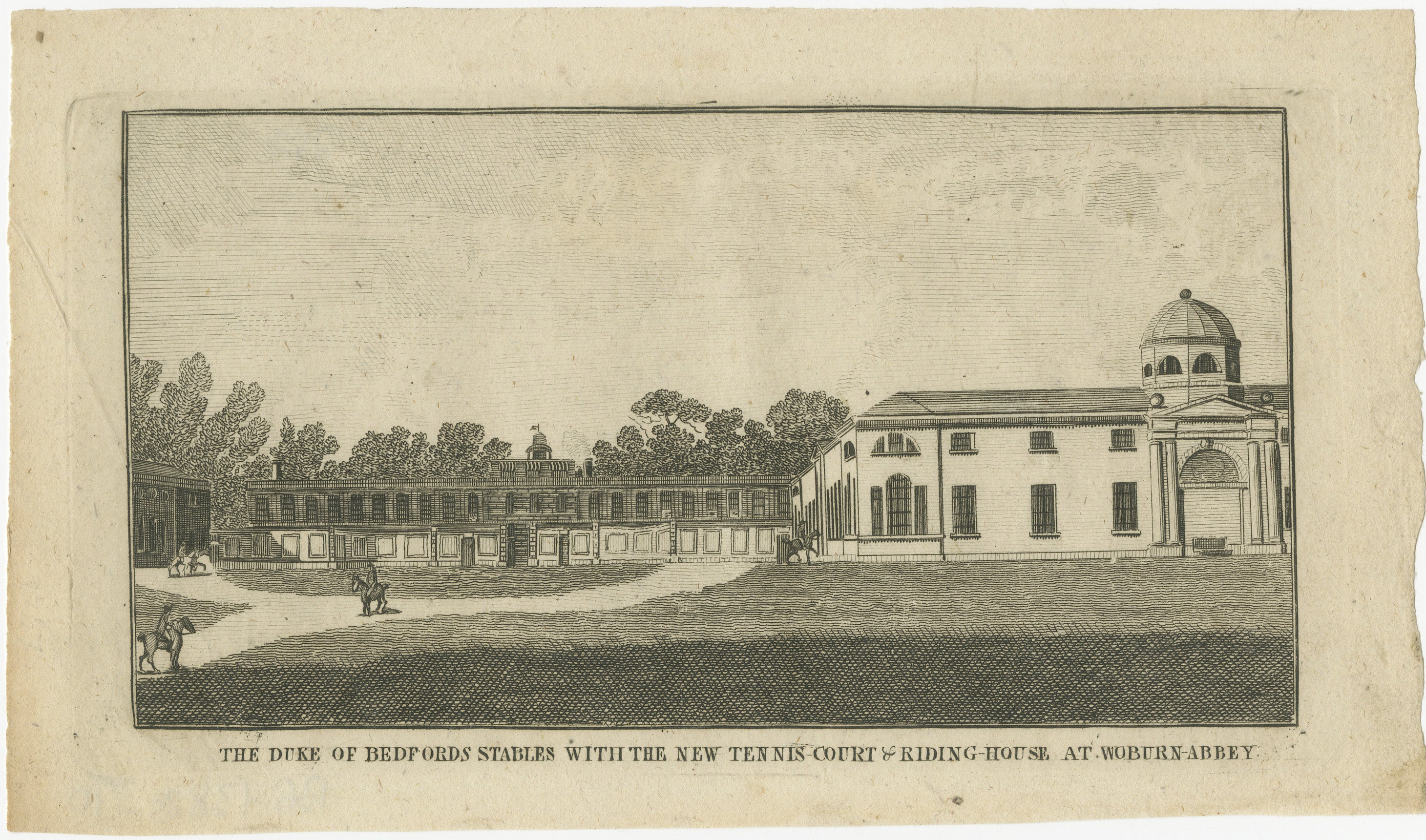
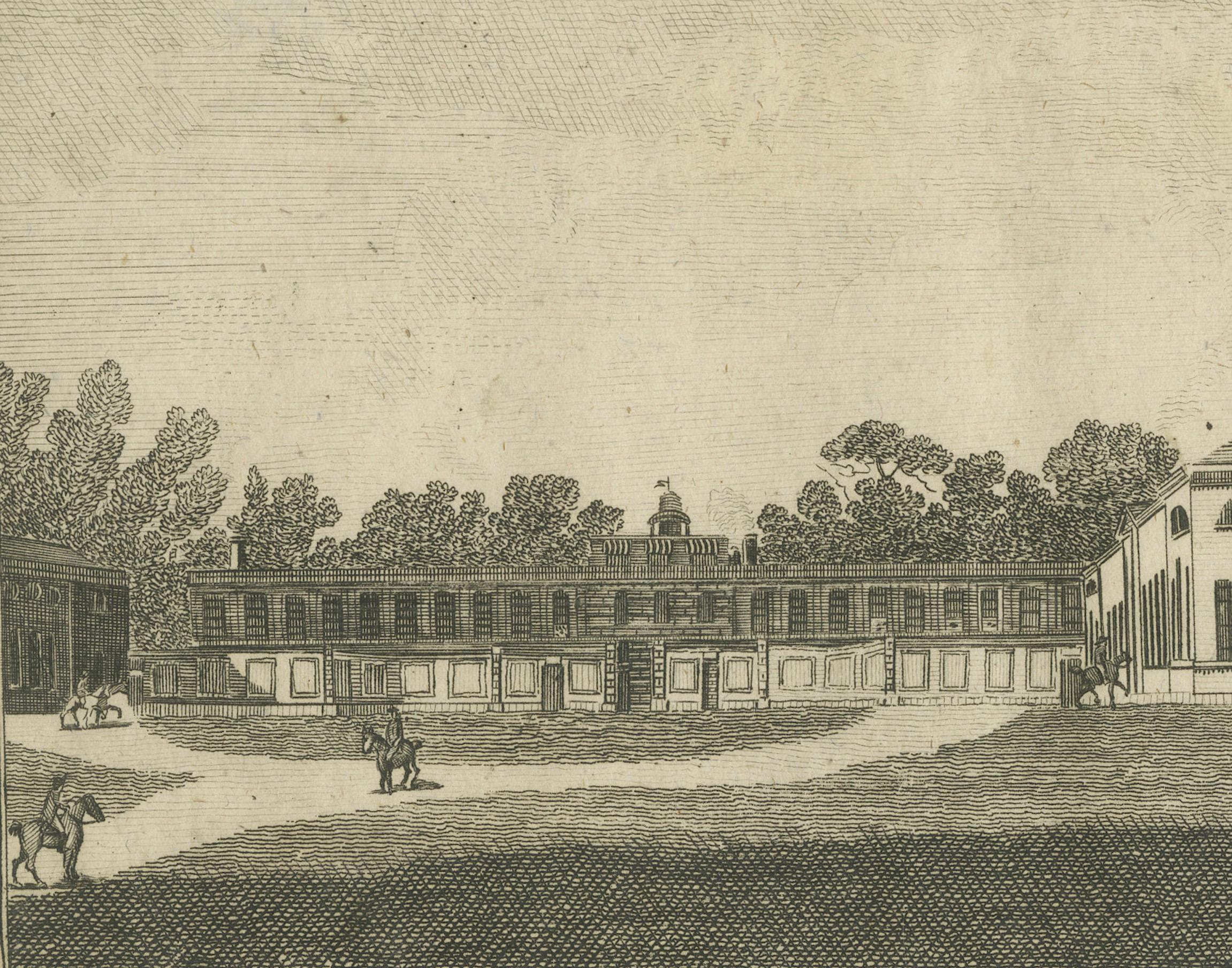
The engraving shows the Duke of Bedford's stables, alongside a newly constructed tennis court and riding house at Woburn Abbey in Bedfordshire, England. This architectural depiction dates 1757 and provides a view of the buildings commissioned by the Duke of Bedford, showcasing the grandeur of the estate's equestrian facilities.
The engraving highlights two main architectural features:
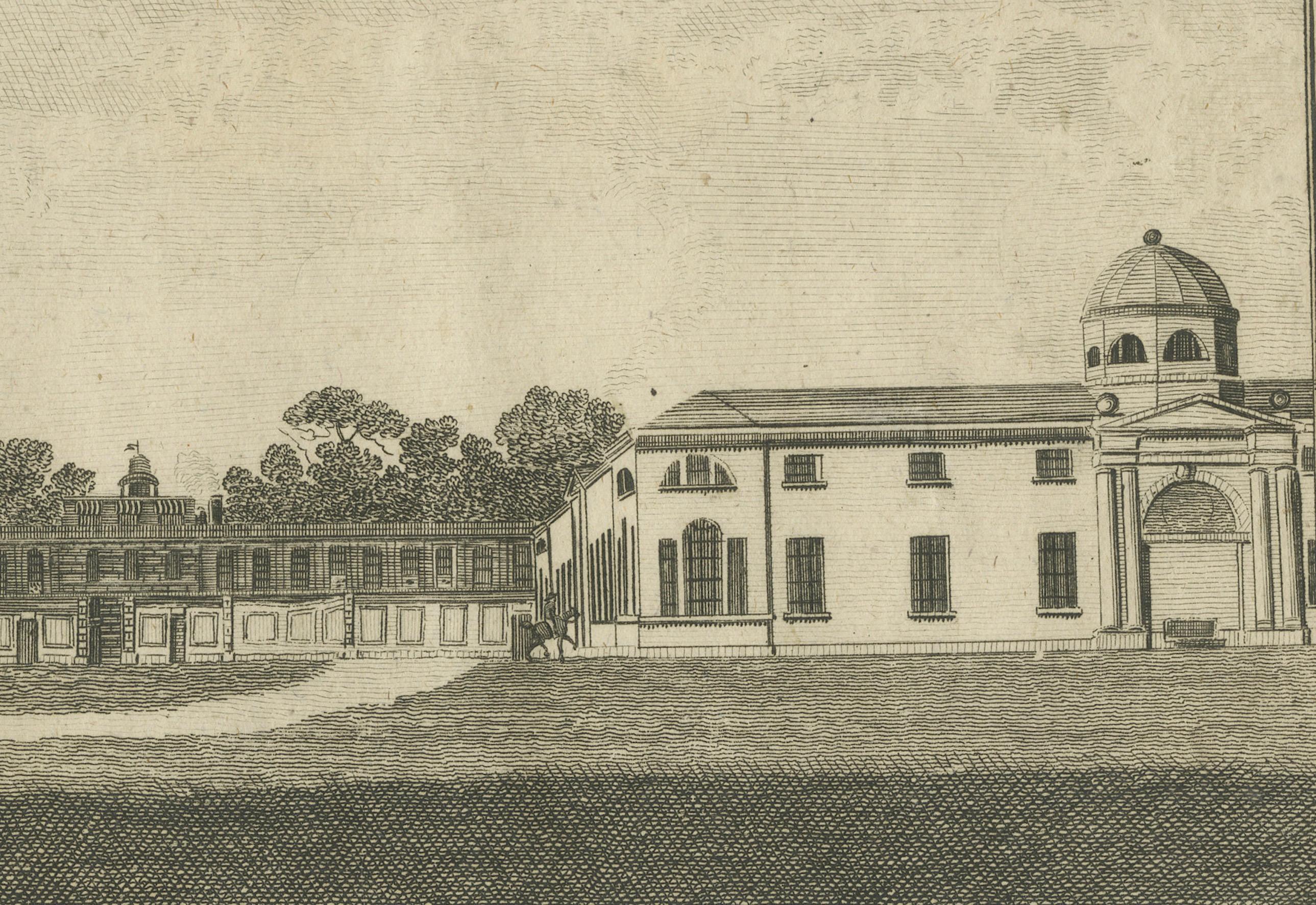
1. The Stables: The building to the left, topped with an octagonal drum and dome, was designed by the architect Henry Flitcroft for John Russell, the fourth Duke of Bedford. These stables are significant for their size and design, reflecting the status and wealth of the Duke. The dome adds a classical element to the otherwise functional building, emphasizing the importance placed on the care of horses during this period.
2. The Riding House and Tennis Court: To the right of the stables is the indoor riding school and tennis court. This structure was designed by Henry Holland, an architect known for his work on various prestigious projects. The inclusion of a tennis court indicates the importance of leisure and sport for the estate's residents. The riding school would have been used for training horses and riders, a common necessity for the British aristocracy.
Woburn Abbey has been the home of the Russell family, the Dukes of Bedford, since the 1620s. The estate is renowned for its impressive architecture and vast landscaped gardens. During the 18th century, the Dukes of Bedford undertook significant renovations and expansions to reflect their social status and accommodate the lifestyle of the British aristocracy.
The stables, designed by Henry Flitcroft, were part of a larger trend during this era, where country estates were equipped with luxurious facilities for horses, reflecting both their practical importance and the social standing of their owners. The additional building by Henry Holland for the fifth Duke, which housed an indoor tennis court and riding school, further exemplifies the fusion of luxury and leisure.
The Fate of the Fifth Duke
A tragic note in the history of Woburn Abbey involves the fifth Duke of Bedford, who commissioned the tennis court and riding house. He died in 1802 due to a strangulated hernia, reportedly sustained while playing tennis. This unfortunate event underscores the sometimes-risky nature of the sports and leisure activities pursued by the aristocracy.
Current State
Today, Woburn Abbey remains a significant historical site, open to the public. It continues to be associated with the Russell family and is known for its art collection, gardens, and deer park. The estate is a testament to the architectural and social history of Britain's aristocratic past.