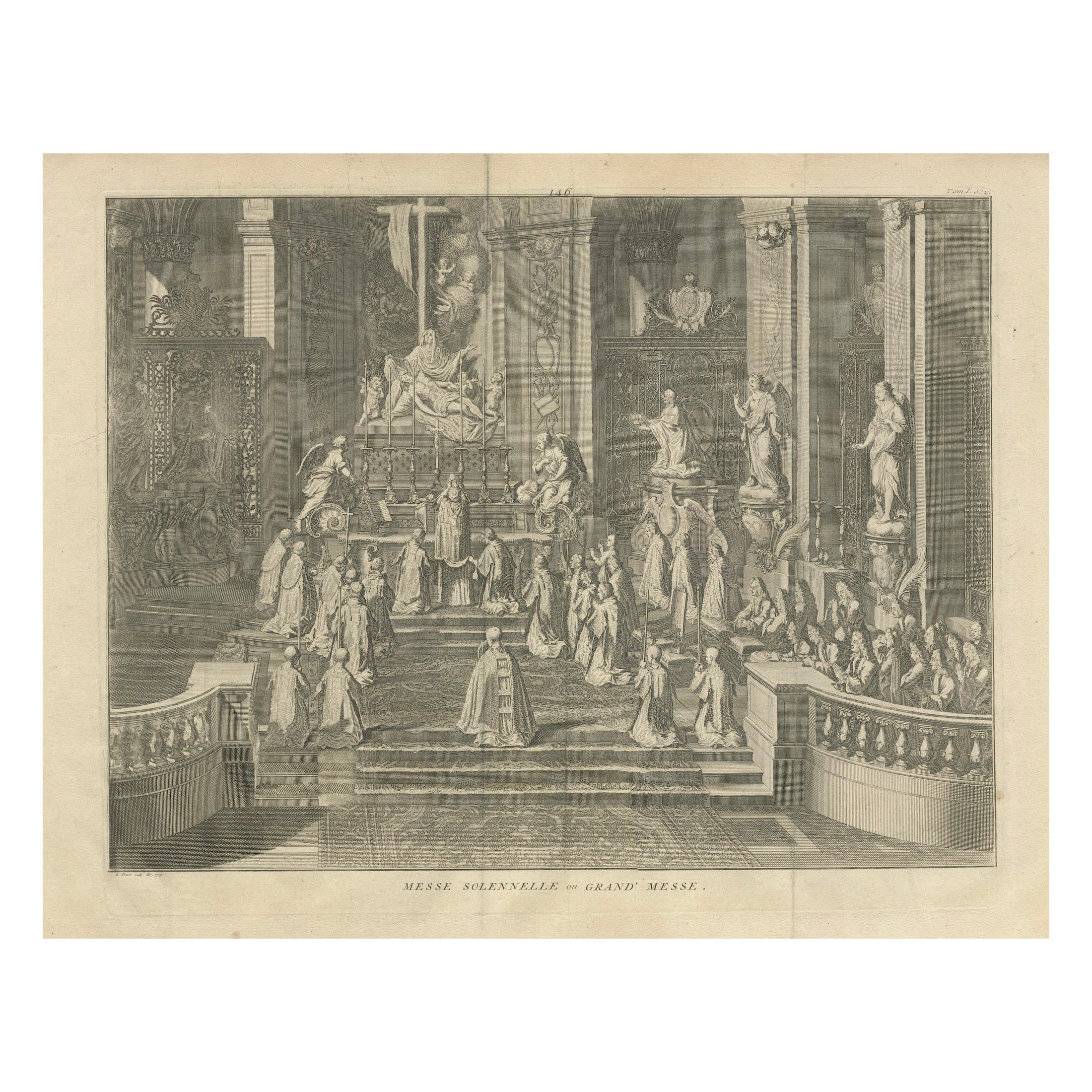
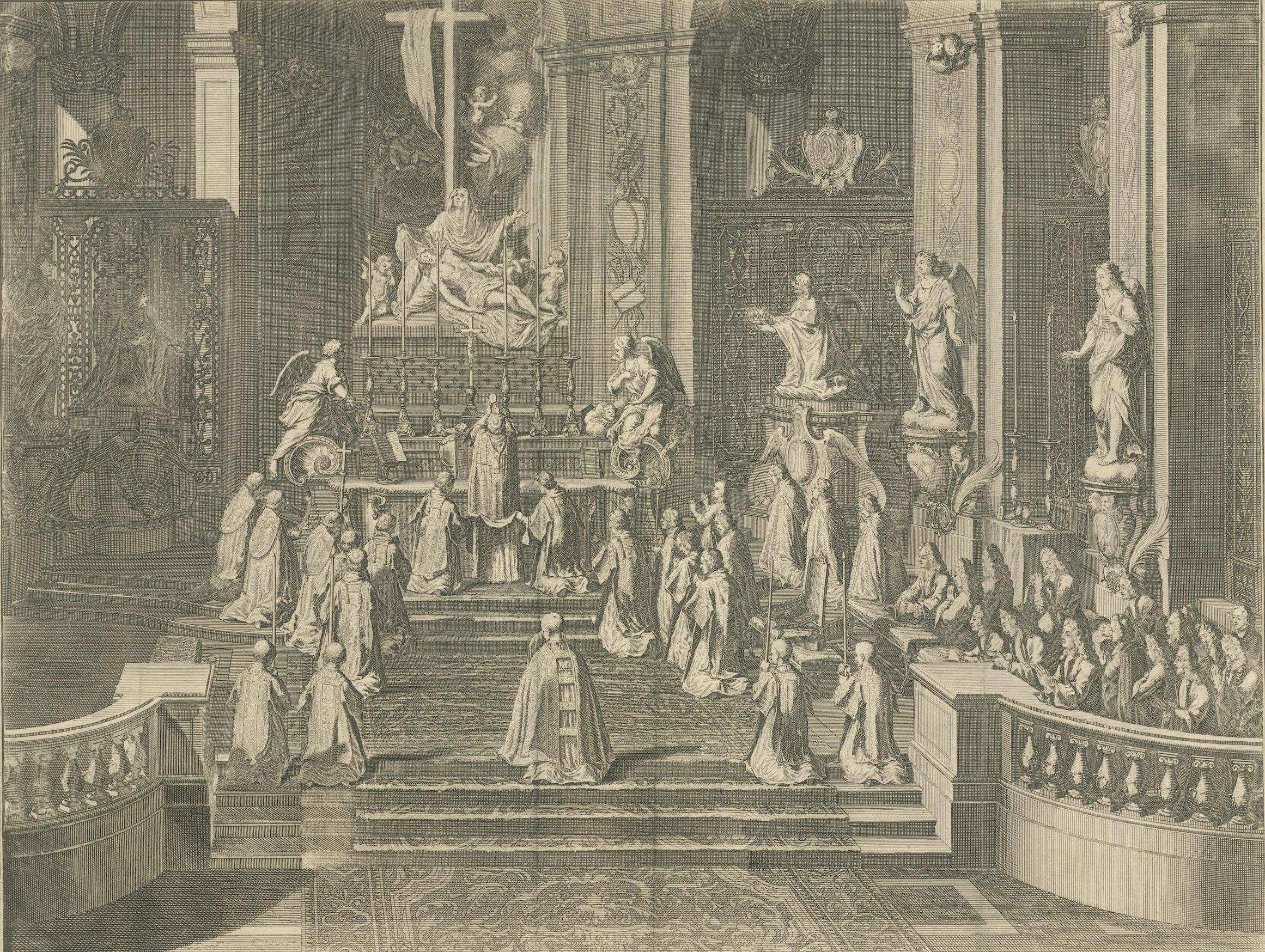
Solemn High Mass Celebration, Bernard Picart, 1725, Engraving
€ 270
One of a kind: this is the sheet in the photographs. Ships from Langweer, the Netherlands.
Date
1725
Sheet size
41 × 53 cm (16.1 × 20.9 in)
Condition
Good
Reference
BG-13806-10
Condition
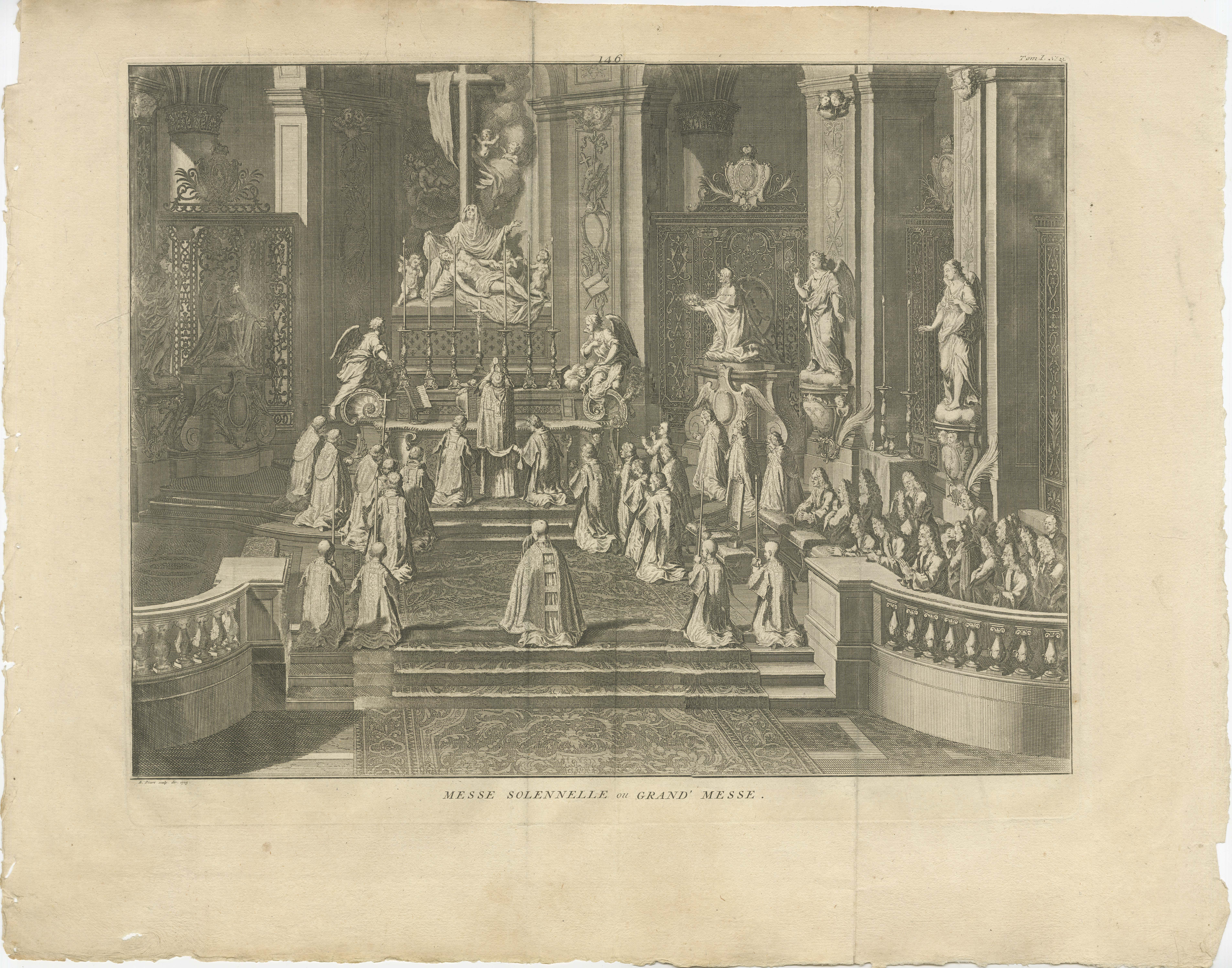
Minor fading. The print is in good overall condition given its age. There are vertical folding lines as issued and a slight discoloration (fading) Edge wear or minor tears, typical for paper items from this period. Study the scans carefully.
About this sheet
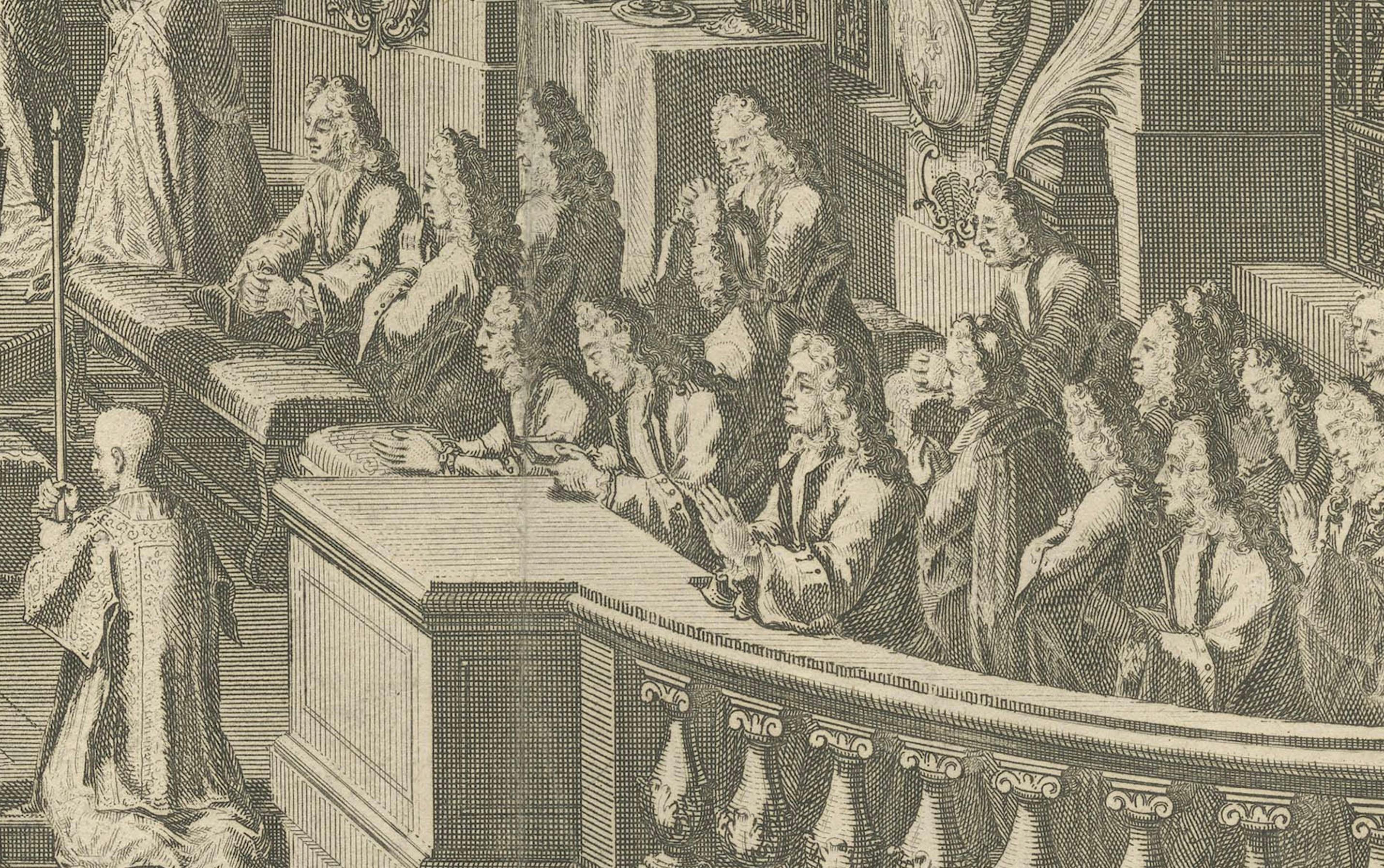
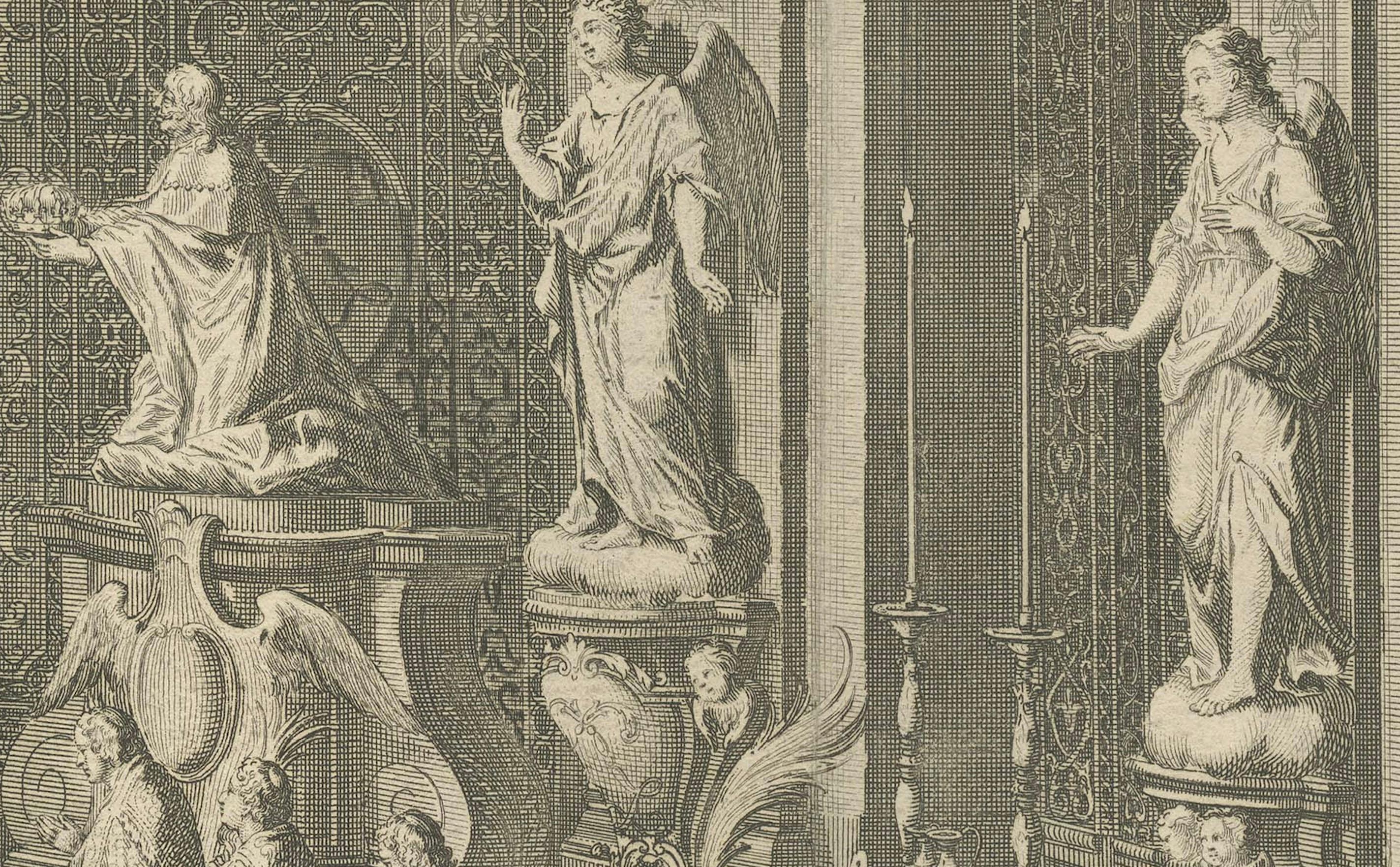
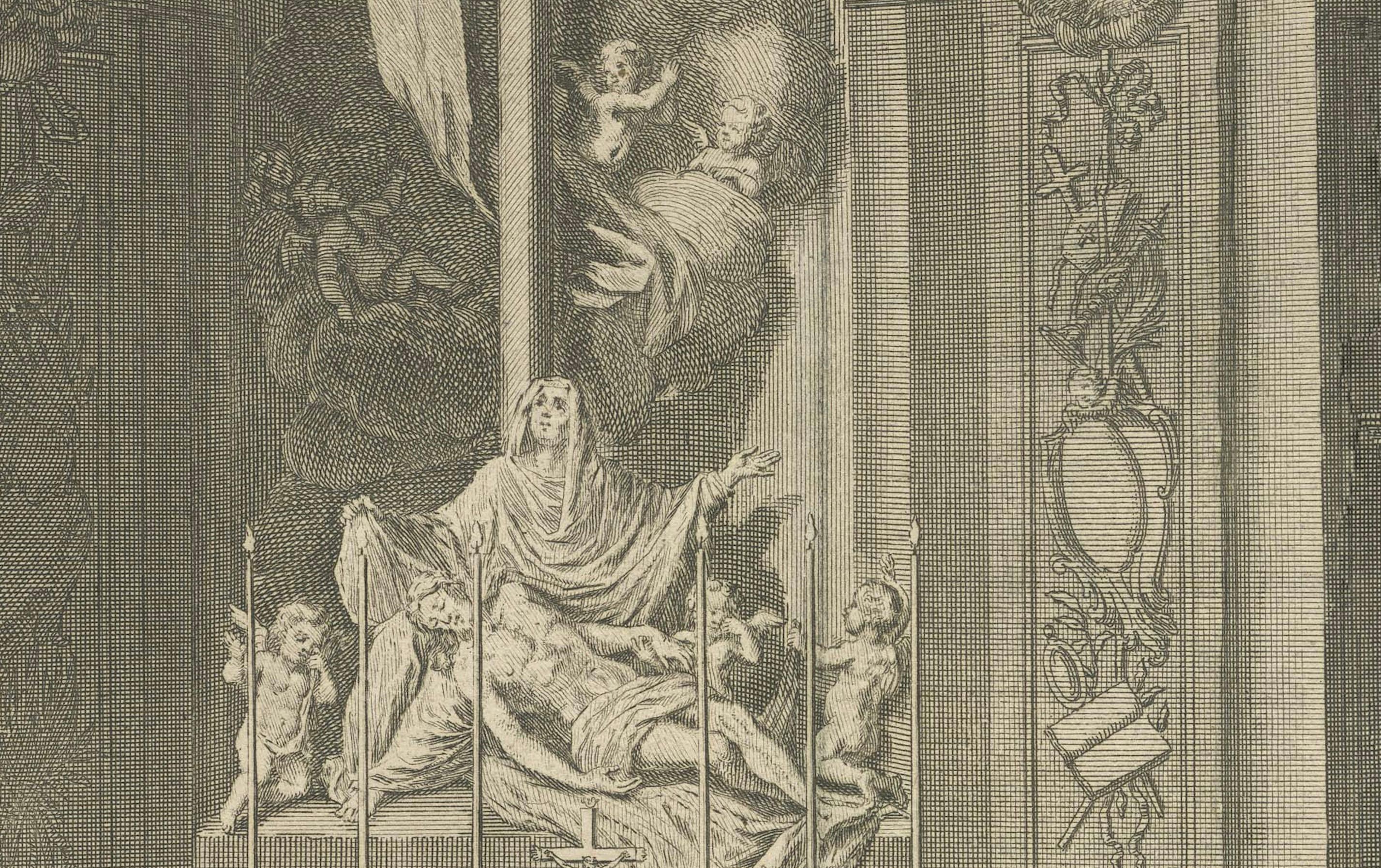
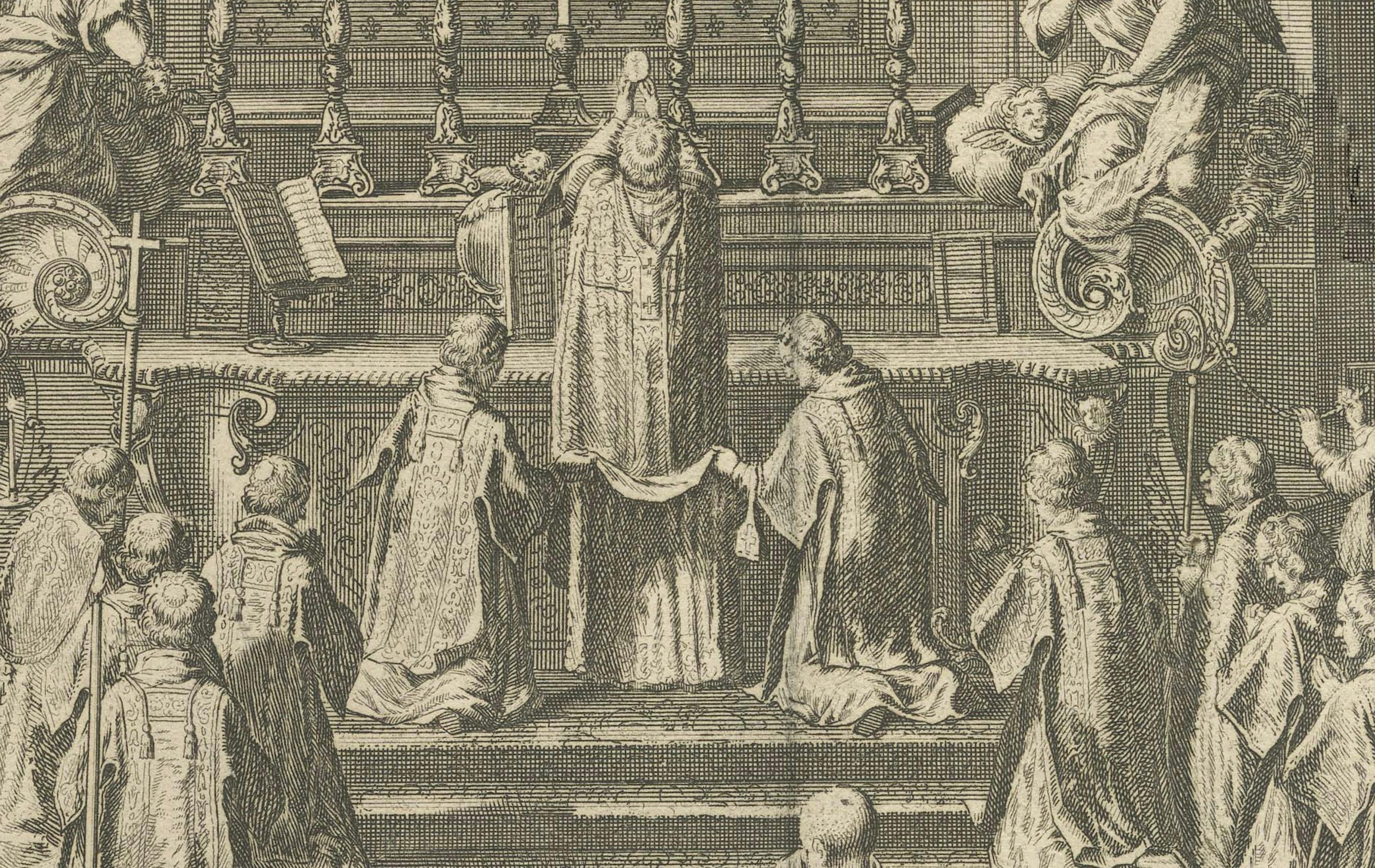
This detailed engraving depicts a Roman Catholic solemn or high mass, typically celebrated on Sundays and holy days. The scene is set within a grand church, lavishly decorated with religious statues and tapestries. At the center, a bishop elevates the host at the altar, surrounded by other clergy in ceremonial vestments. The congregation, composed of various ecclesiastical dignitaries and faithful attendees, is shown in a state of devotion, many kneeling in prayer. The architecture and adornments of the church are intricately rendered, highlighting the solemnity and significance of the mass.
About Bernard Picart
Bernard Picart (1673–1733) was a notable French engraver and illustrator, renowned for his detailed and expressive works. His studio in Amsterdam became a hub for producing high-quality engravings that were widely circulated throughout Europe. Picart's works often focused on religious and cultural ceremonies, capturing the nuances of different practices with a meticulous eye for detail and composition. This engraving, likely supervised and possibly even crafted by Picart himself, exemplifies his skill in blending artistic beauty with informational richness.
Condition Report
The print appears to be in good overall condition given its age. There are visible signs of aging, such as slight discoloration and potential edge wear or minor tears, typical for paper items from this period. The details of the engraving remain sharp and clear, with no significant loss of imagery due to fading or damage. The print’s preservation suggests careful handling over the years, though further examination might be necessary to assess any underlying issues not immediately visible.
This piece remains a valuable historical artifact, illustrating both the artistic style of the early 18th century and the religious practices of the time.