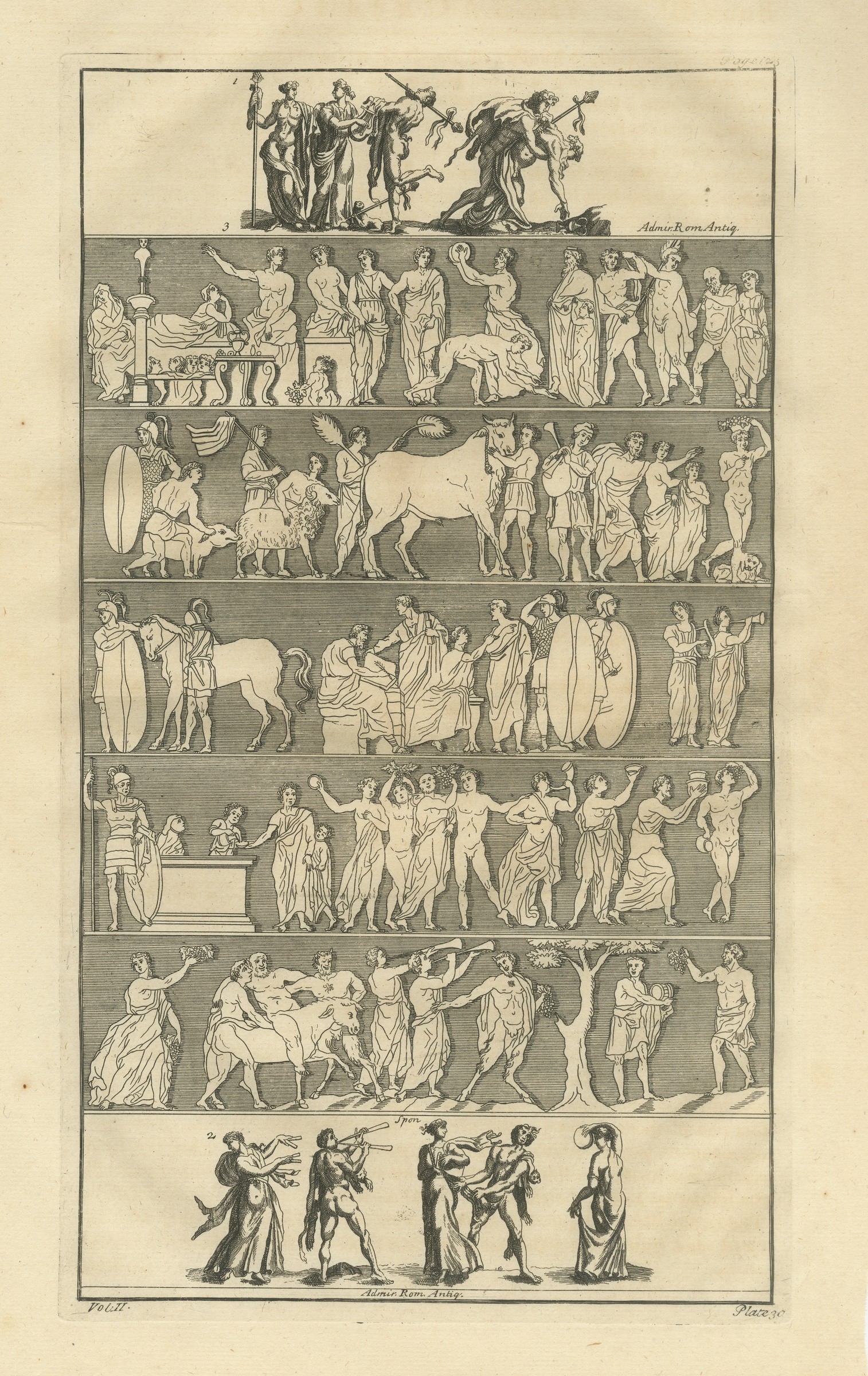
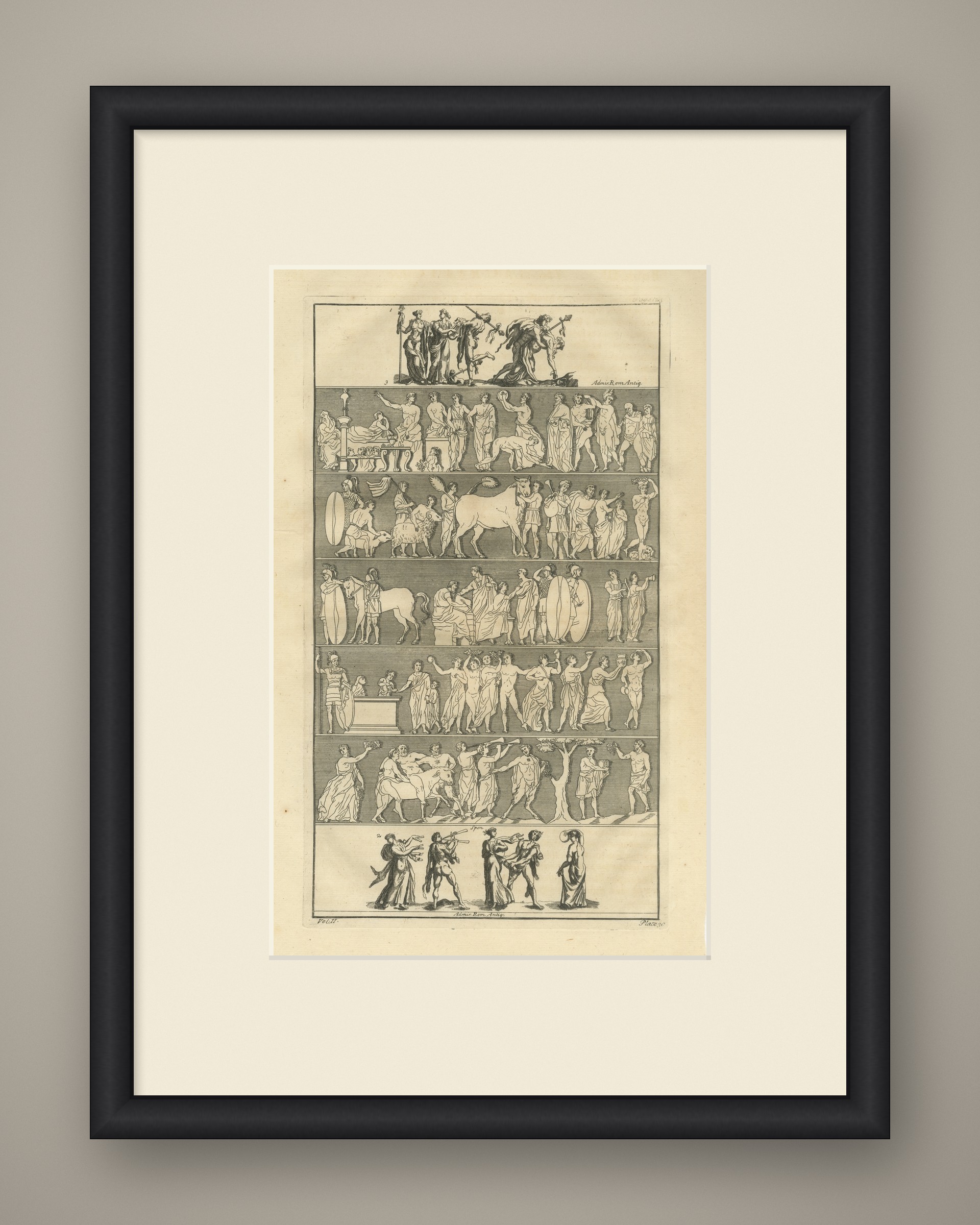
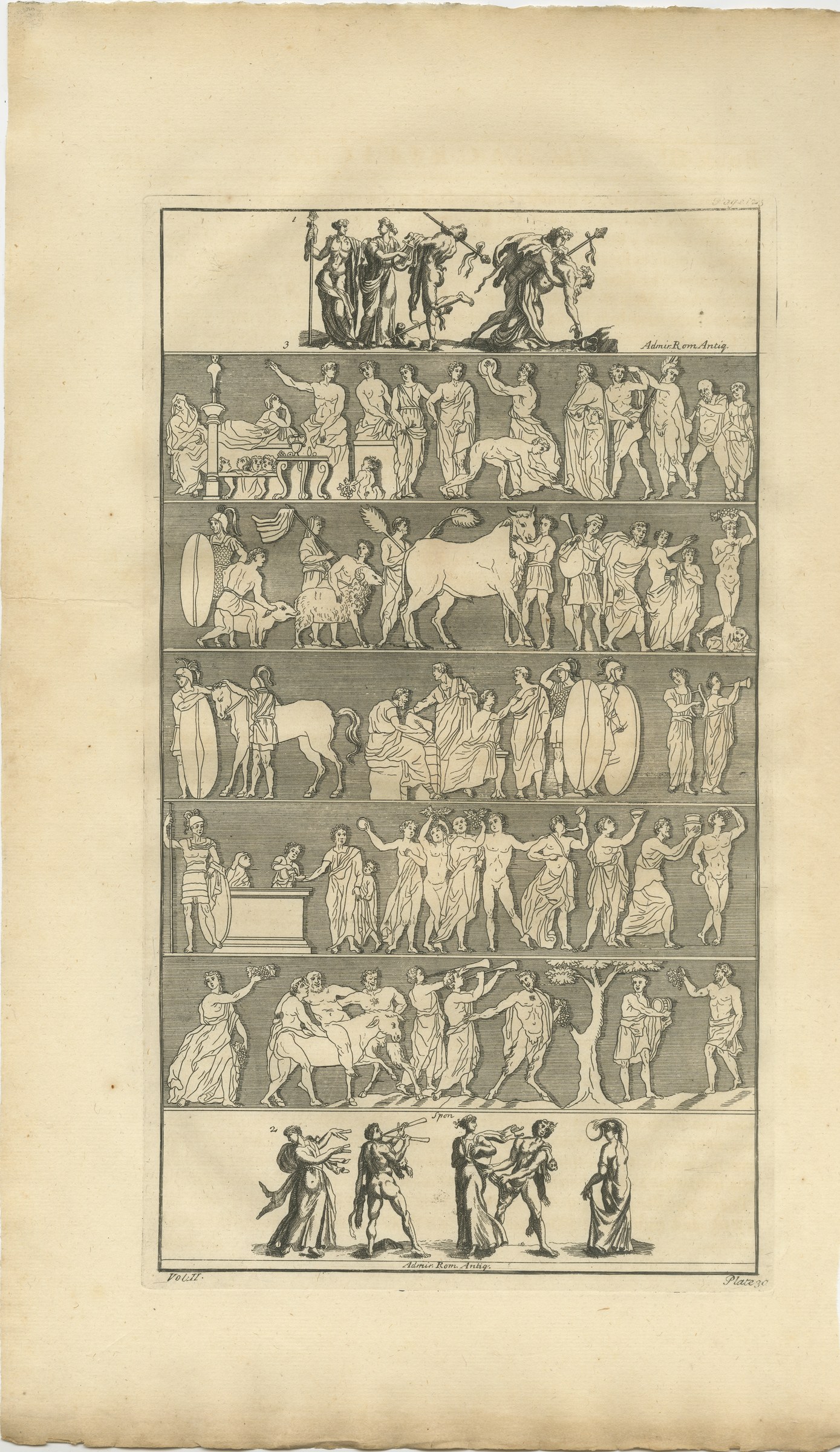
Seven Roman Sacrificial Friezes, Antique Engraving after Marbles, 1721
€ 355
Original antique · The actual sheet photographed · Certificate of authenticity on request · Sold unframed · Worldwide shipping from € 15 (rates)
Date
1721
Mapmaker / artist
Not named on the sheet
Publisher
J. Tonson and J. Watts, London
Technique
Copper Engraving
Coloring
Uncolored
Sheet size
42 × 25 cm (16.5 × 9.8 in)
Condition
Good
Reference
BG-14184-2-30
What the condition grades mean
Excellent
Bright and clean, with no faults worth mentioning.
Very good
Only light signs of age, such as faint toning.
Good
Normal signs of age for a sheet of this period: toning, some foxing, small marks or neat old repairs.
Fair
Clear faults such as staining, tears or repairs, priced to match.
Every fault we see is written in the condition note, and the whole sheet is shown uncropped in the photos.
Condition
Moderate overall age toning, with the paper darker along the bottom and top edges, foxing through the margins, one or two spots larger than the rest, stains in the margins, wear to the top left corner and minor nicks along the left edge.
About this sheet
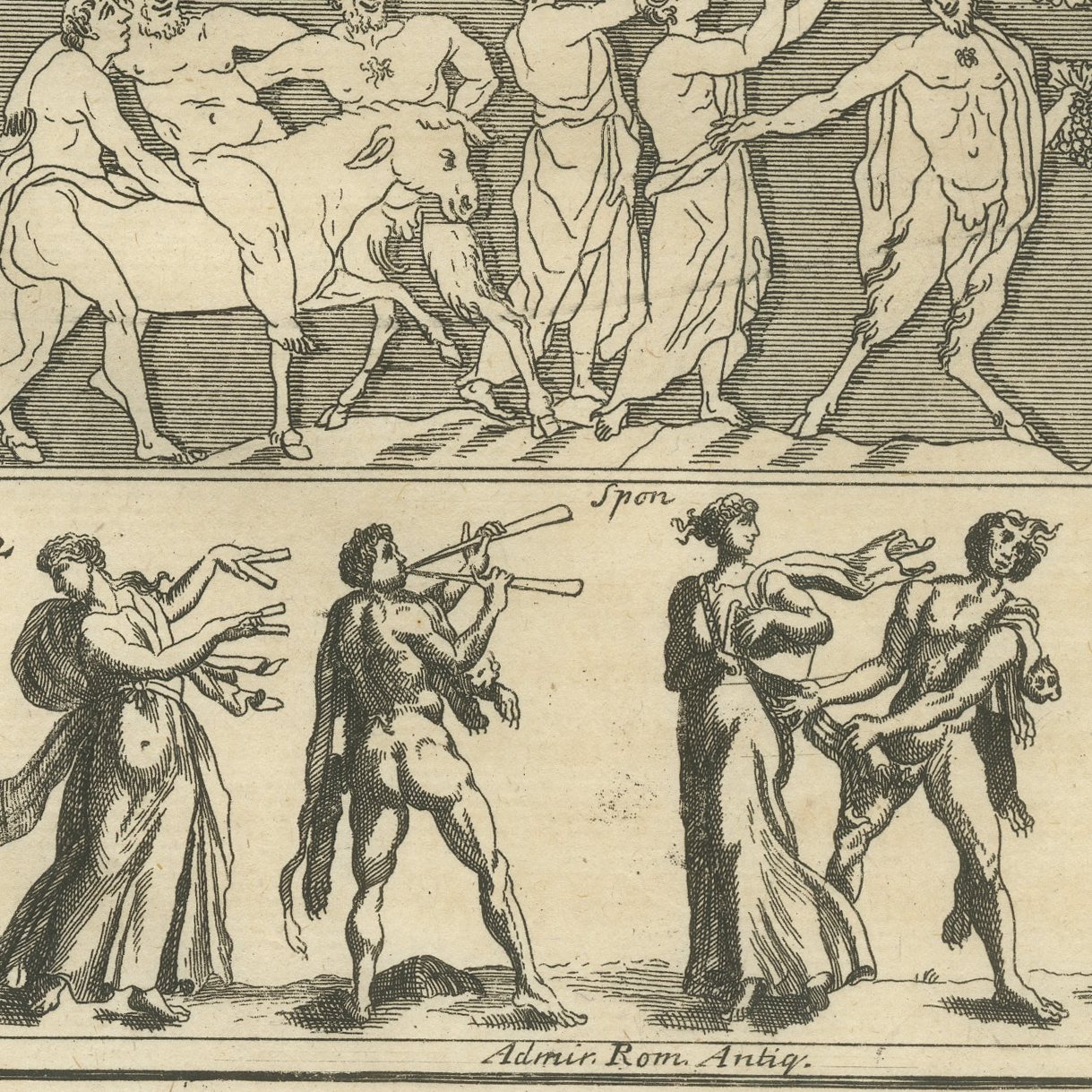
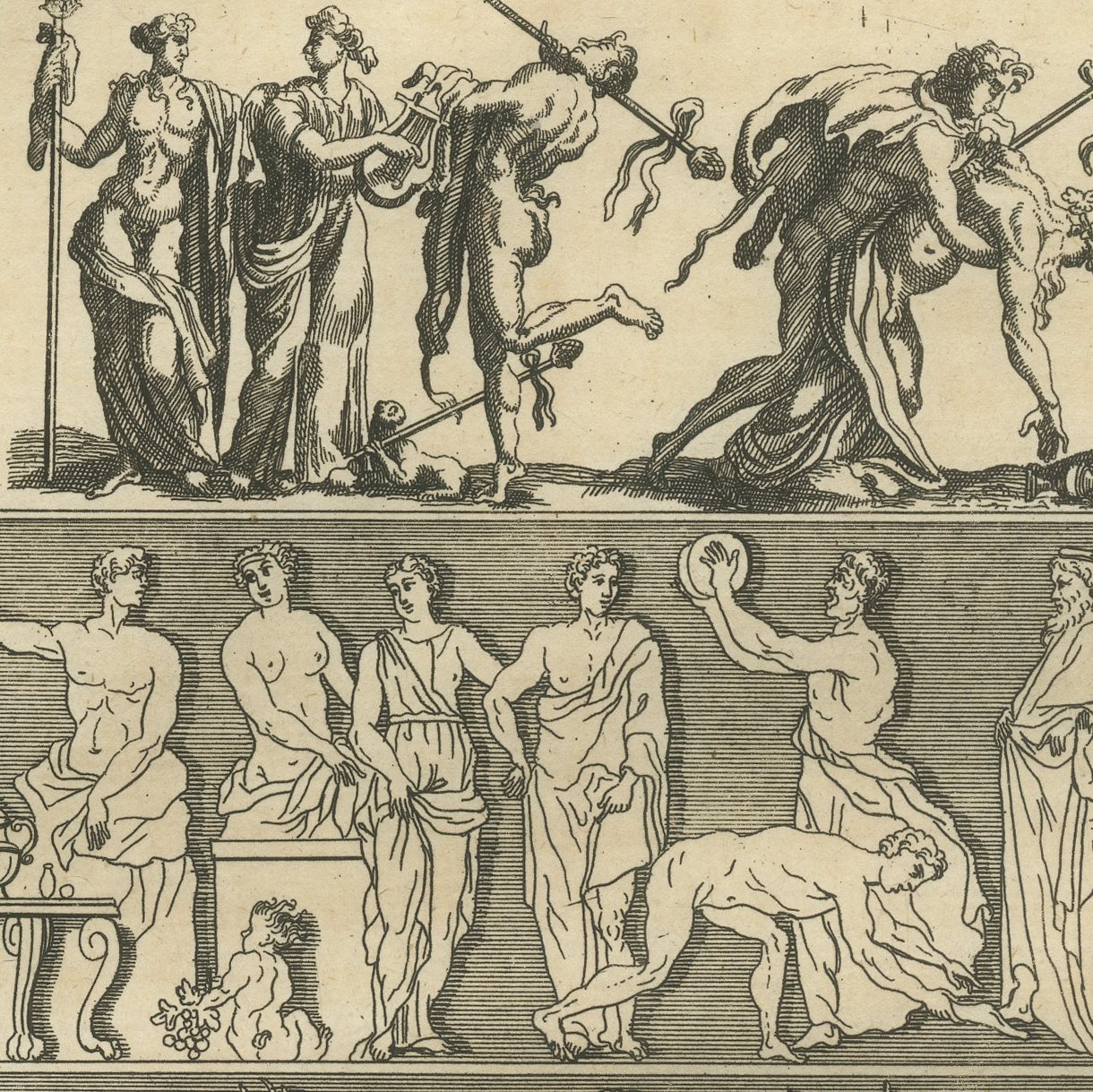
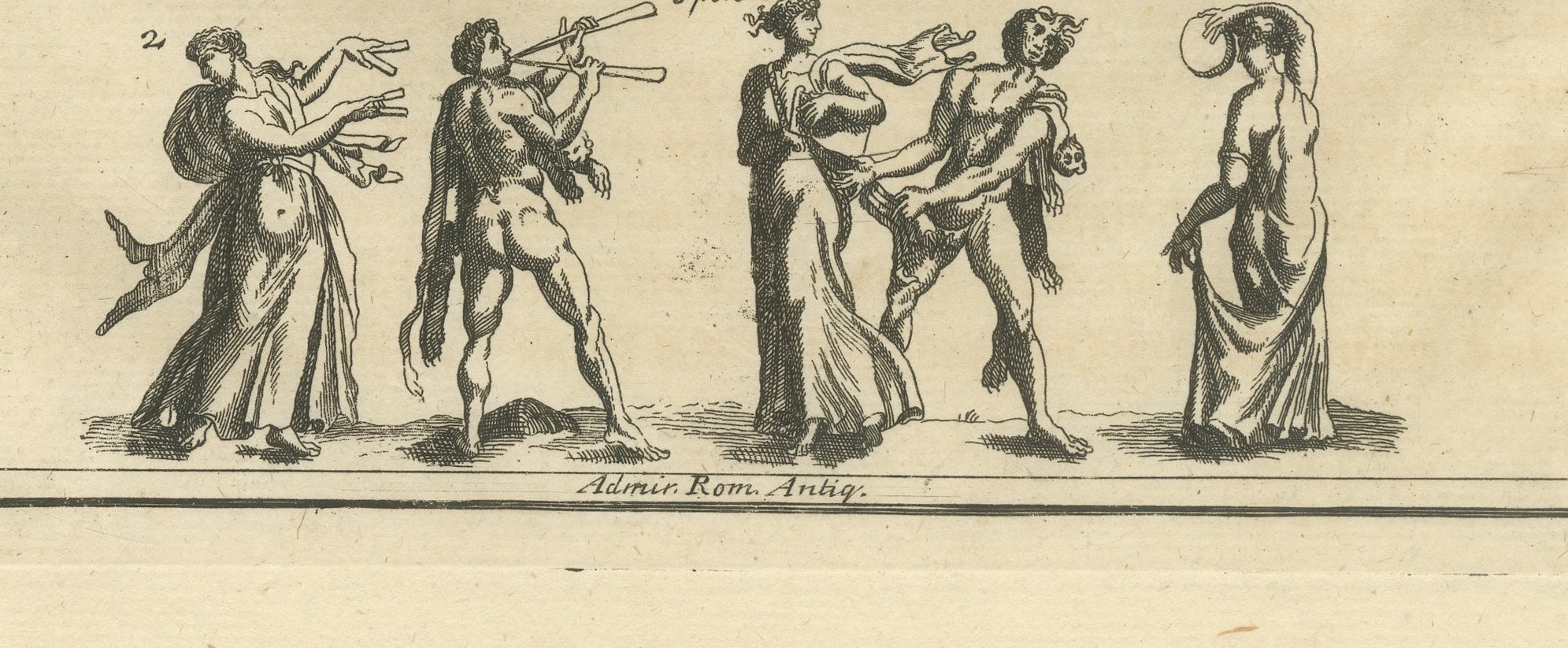
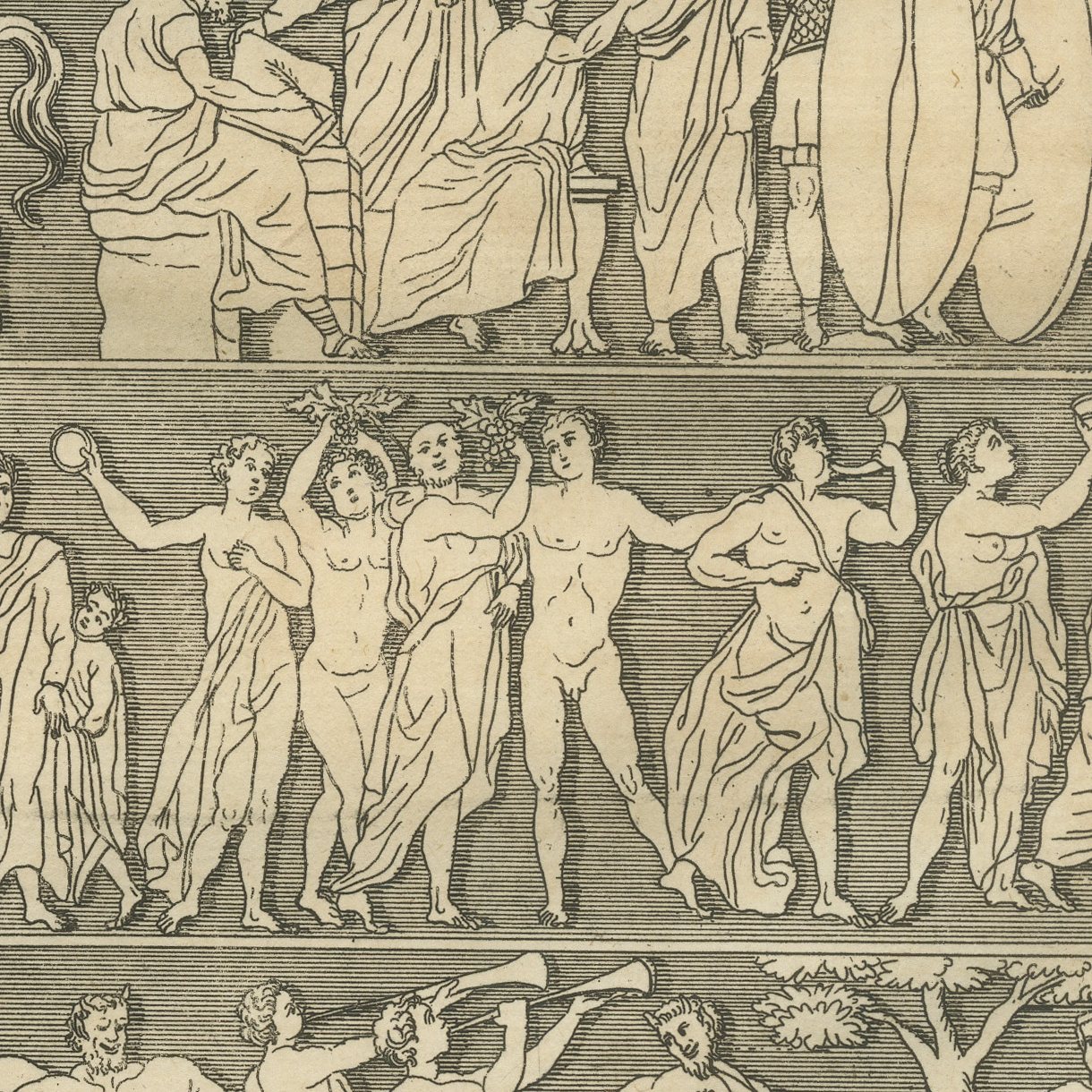
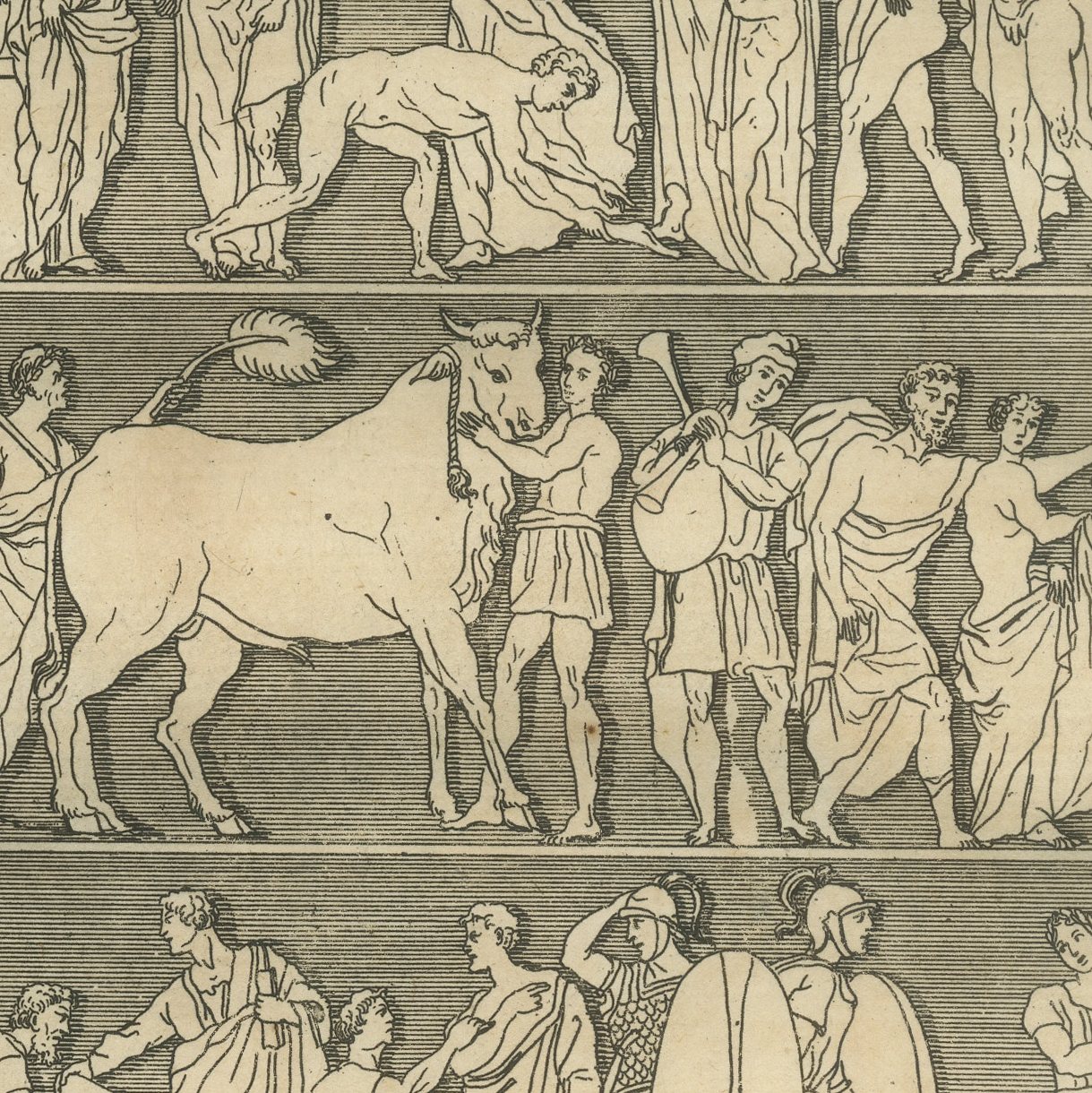
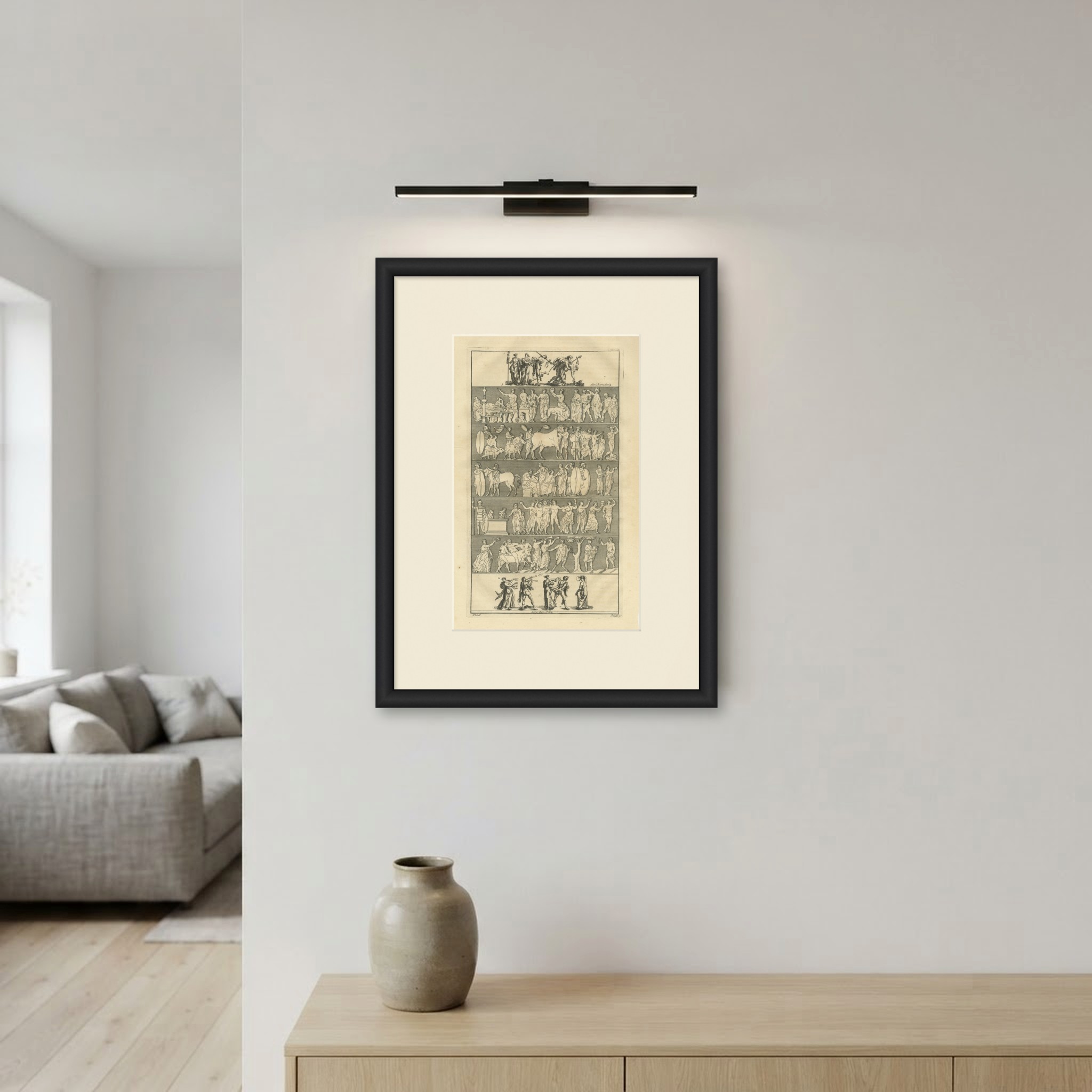
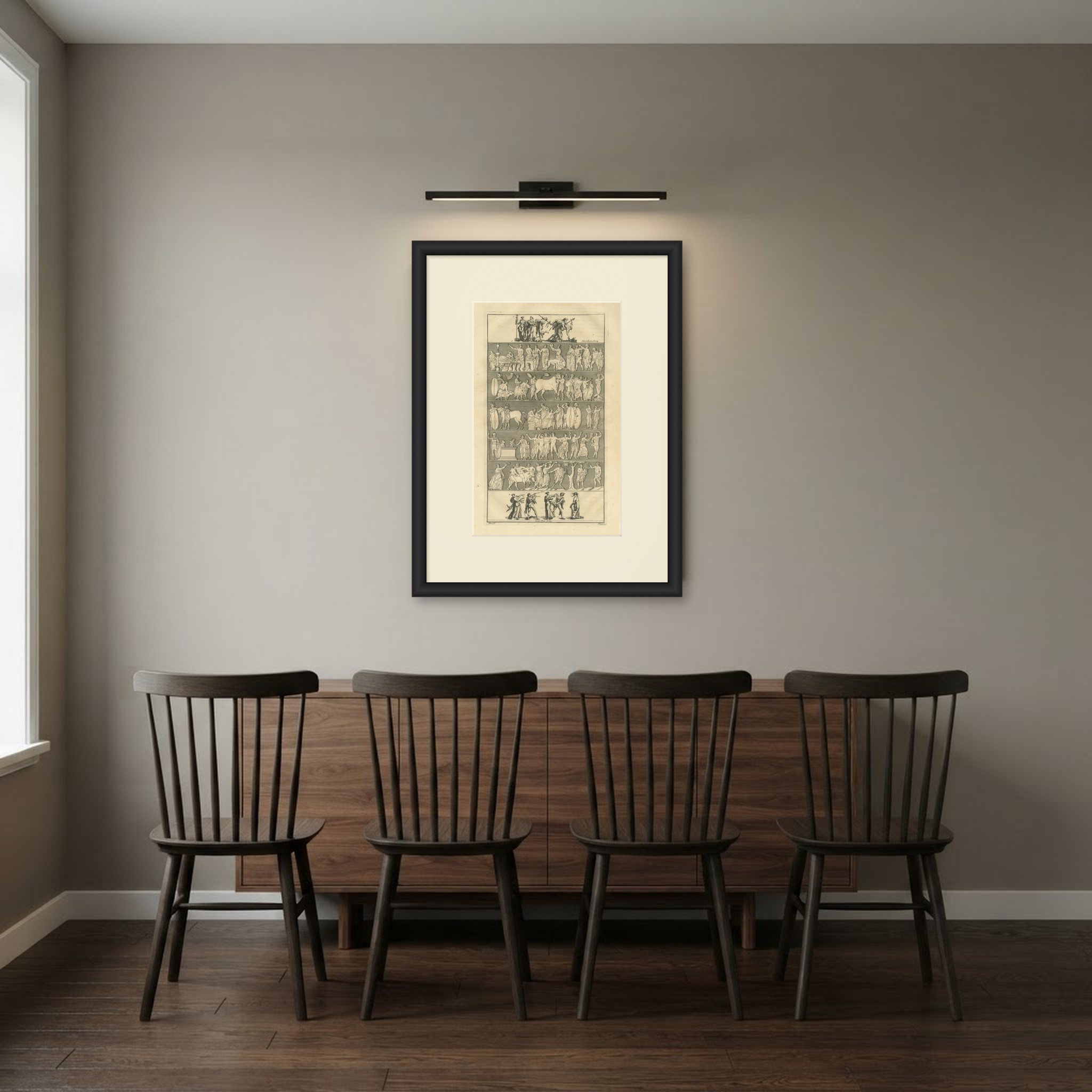
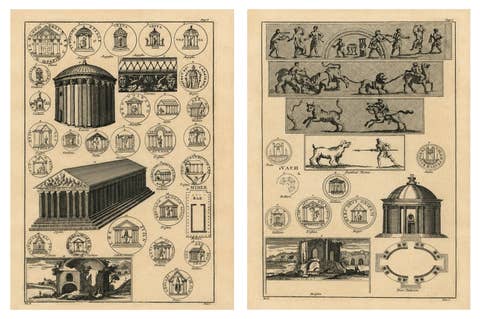
This antique copper engraving of 1721 stacks seven narrow friezes one above another down a single upright sheet, each a separate ancient marble reduced to the same width so that the ceremonies can be compared band by band. In the uppermost a line of togate figures moves toward an altar; in the next, attendants carry dishes and lead a sheep; below that a priest pours from a jug while a boy holds the incense box; further down a bull is held at the altar, musicians follow with pipes and a curved horn, and women with veiled heads bring offerings. The credits at the foot of each band name the Admiranda Romanarum Antiquitatum and Spon. Every band is numbered to Montfaucon's commentary. The corners of the plate are lettered Vol. II and Plate 30.
The plate comes from Volume the Second of Antiquity Explained, and Represented in Sculptures, the English translation of L'Antiquité expliquée et représentée en figures, published in Paris in 1719 by Bernard de Montfaucon (1655 to 1741), a French Benedictine monk of the Congregation of Saint Maur. The translation is by David Humphreys, fellow of Trinity College, Cambridge, and was printed in London by J. Tonson and J. Watts in five folio volumes, the first two dated 1721 and the other three 1722. The second volume deals with the worship of the Greeks and Romans and with the religions of other peoples, among them the Egyptians, Syrians, Persians, Germans and Gauls. Montfaucon arranged the surviving images of ancient monuments by subject, so that each plate gathers figures copied from statues, reliefs, altars, gems, coins and other objects, numbered to his commentary. The plates carry no engraver's name and no printed title.
The sheet is lettered with its volume and plate number, Vol. II and Plate 30, and with the page of Montfaucon's text that it faces.
Moderate overall age toning, with the paper darker along the bottom and top edges, foxing through the margins, one or two spots larger than the rest, stains in the margins, wear to the top left corner and minor nicks along the left edge.
This is an original antique print, not a modern reproduction. This item is sold unframed. Any framed or interior images are shown for presentation and inspiration only, unless the listing explicitly states that the item is sold framed.