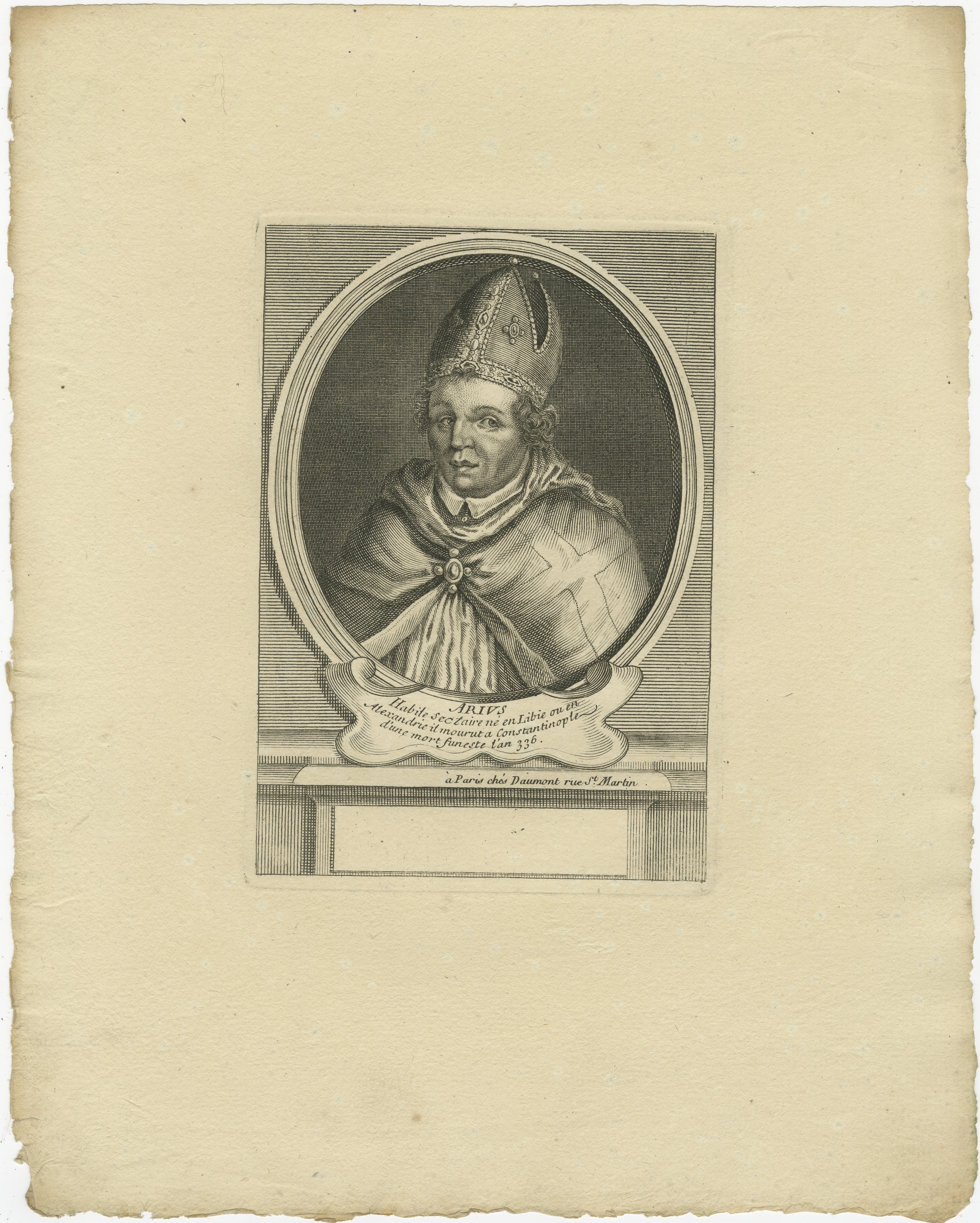
Saint Arno, Bishop of Metz – French Religious Engraving, circa 1670
€ 360
Original antique · The actual sheet photographed · Certificate of authenticity on request · Sold unframed · Worldwide shipping from € 15 (rates)
Date
1670
Sheet size
26.7 × 21.4 cm (10.5 × 8.4 in)
Condition
Good
Reference
BG-14073-10
What the condition grades mean
Excellent
Bright and clean, with no faults worth mentioning.
Very good
Only light signs of age, such as faint toning.
Good
Normal signs of age for a sheet of this period: toning, some foxing, small marks or neat old repairs.
Fair
Clear faults such as staining, tears or repairs, priced to match.
Every fault we see is written in the condition note, and the whole sheet is shown uncropped in the photos.
Condition
Good condition with wide original margins, light overall toning and minor foxing spots. Deckled edges preserved from original binding. The impression is strong with clear detailing in the facial features and inscriptions.
About this sheet
Saint Arno, Bishop of Metz – 17th Century French Engraving
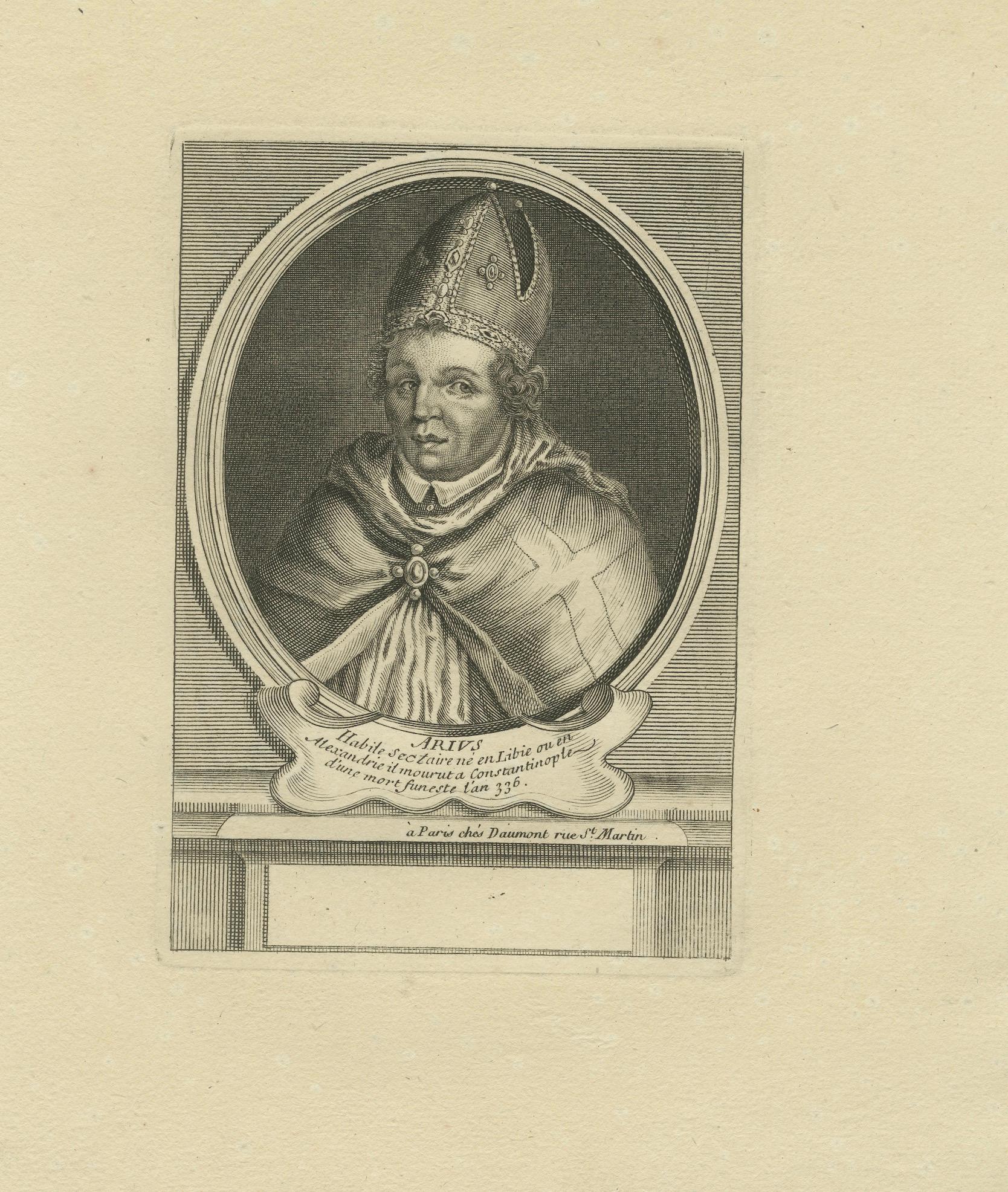
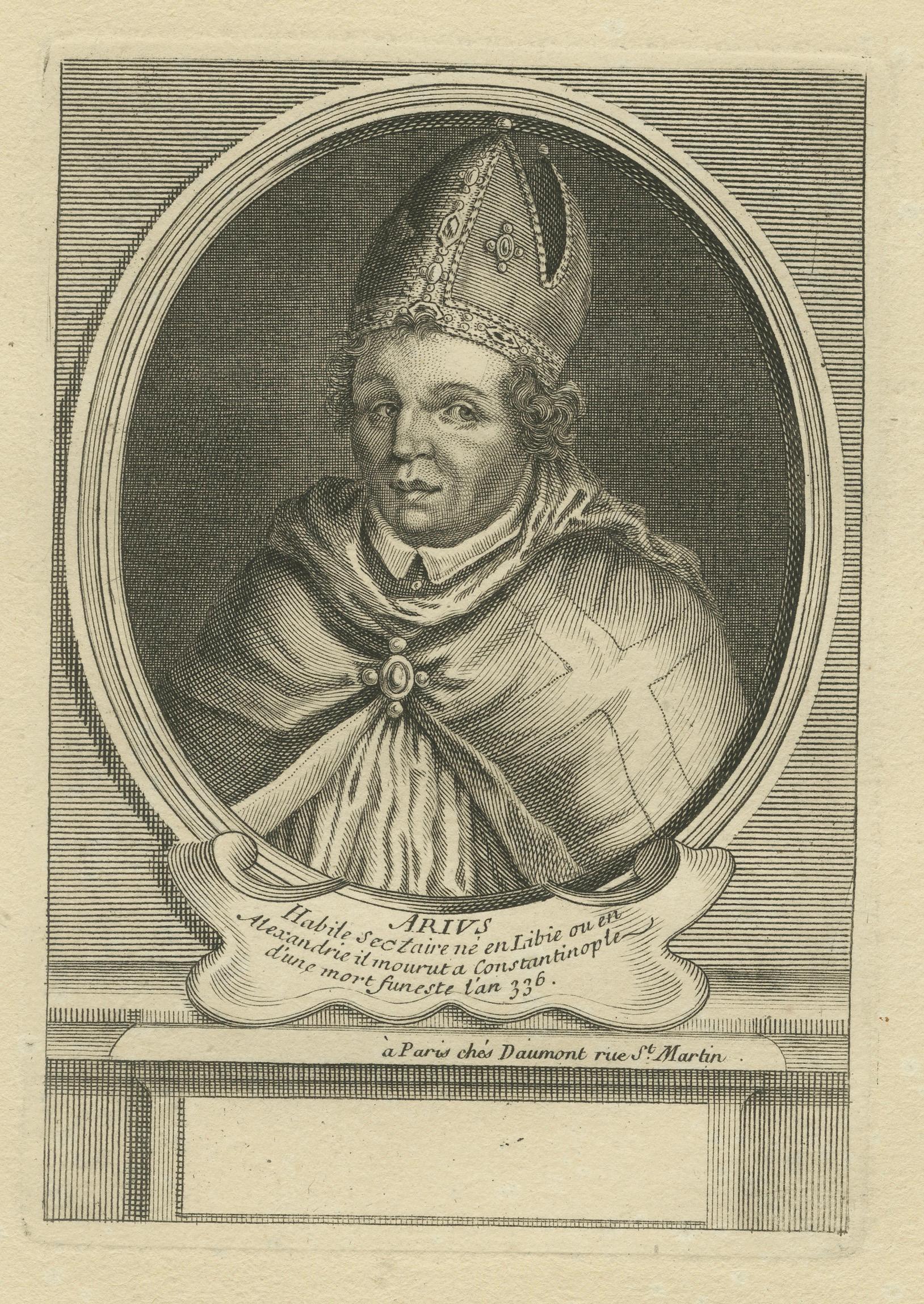
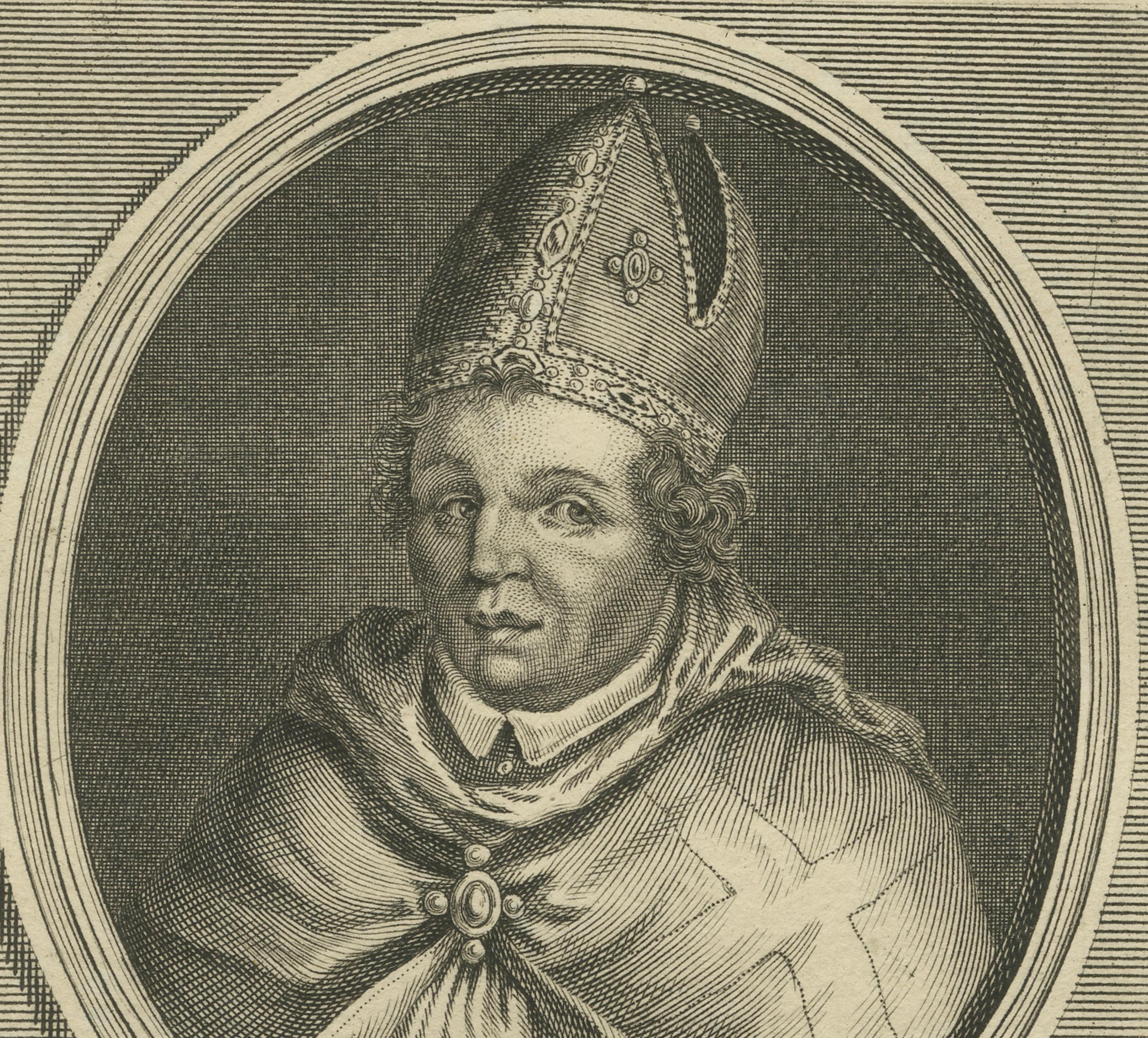
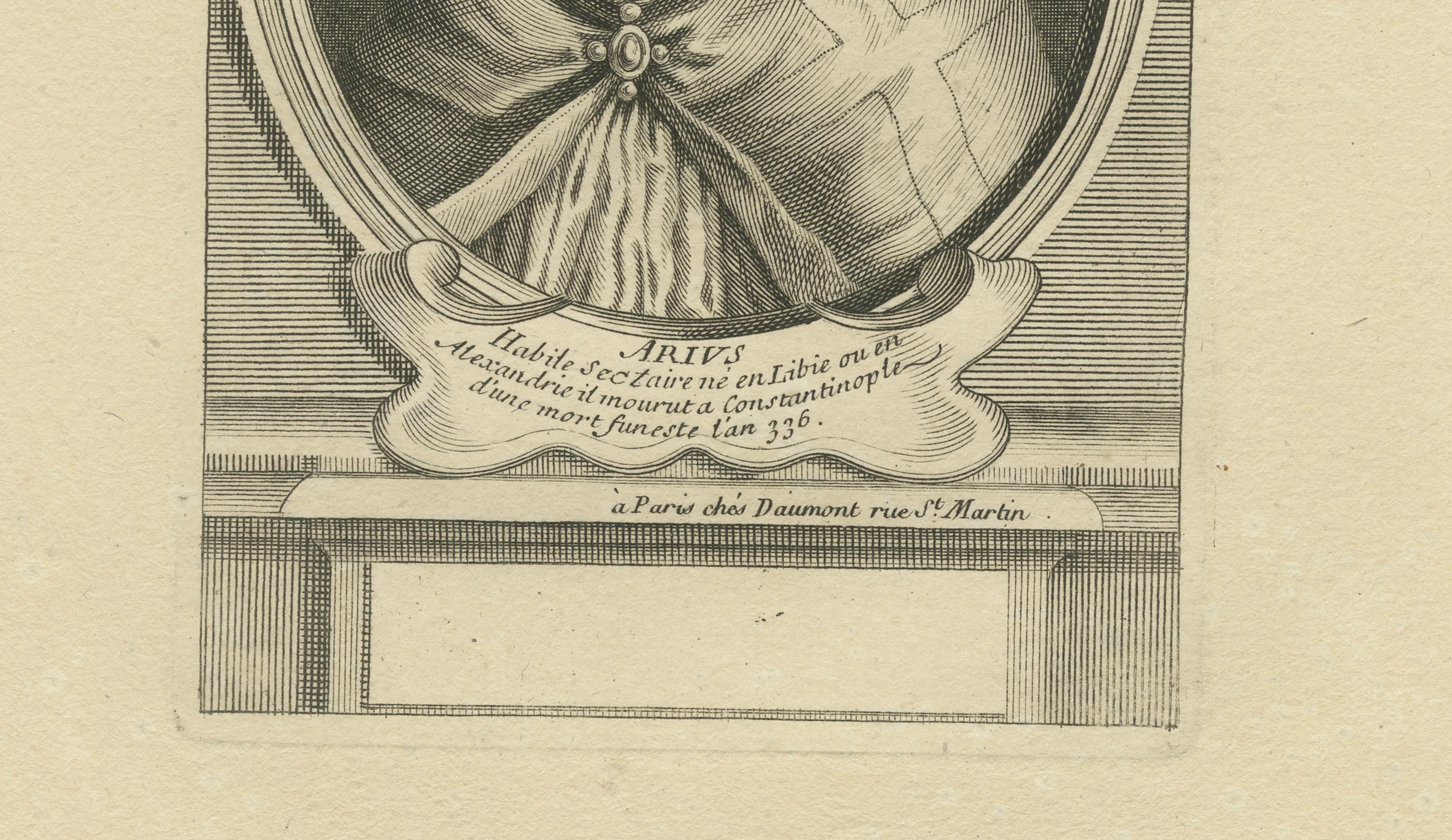
This original 17th-century engraving depicts Saint Arno (Arnulf) of Metz, a prominent 7th-century Frankish bishop and saint, shown bust-length within an oval frame. He wears episcopal robes with a richly ornamented mitre, and his pectoral cross is clearly visible. Below the portrait is a cartouche inscribed with Latin text summarizing his ecclesiastical role and death in 640 AD (note: the engraving reads 636).
Saint Arnulf of Metz (c. 582–640) was a nobleman who became bishop of Metz around 614. Renowned for his wisdom, charity, and piety, he retired as a hermit near Remiremont, where he died. He is also notable in European royal history as an ancestor of the Carolingian dynasty, including Charlemagne. This engraving was published in Paris by Daumont, Rue St. Martin, as indicated in the lower margin. It exemplifies the crisp line engraving and portrait format typical of French devotional prints of the period, intended for private devotion or clerical biographical collections.
Condition report: Good condition with wide original margins, light overall toning and minor foxing spots. Deckled edges preserved from original binding. The impression is strong with clear detailing in the facial features and inscriptions.
Framing tip: Best presented in a fine black or dark walnut frame with a neutral archival mount, highlighting the engraving’s devotional simplicity and academic significance. Suitable for ecclesiastical collections, historical libraries, or as an elegant classical accent in study or hallway settings.