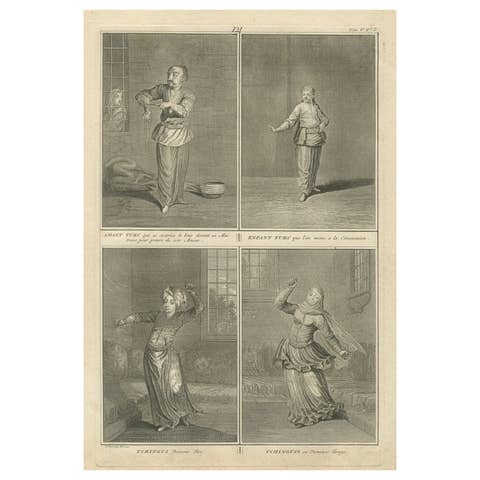
Mexican Penitence and Human Sacrifice – 1734 Engraving of Aztec Religious Rites
€ 240
One of a kind: this is the sheet in the photographs. Ships from Langweer, the Netherlands.
Date
1734
Sheet size
42 × 26 cm (16.5 × 10.2 in)
Condition
Good
Reference
BG-13806-55
Condition
Condition is good. The engraving retains crisp lines and deep impressions. There is light foxing and minor soiling in the lower right corner, along with small paper losses at the edges, but the image area is unaffected.
About this sheet
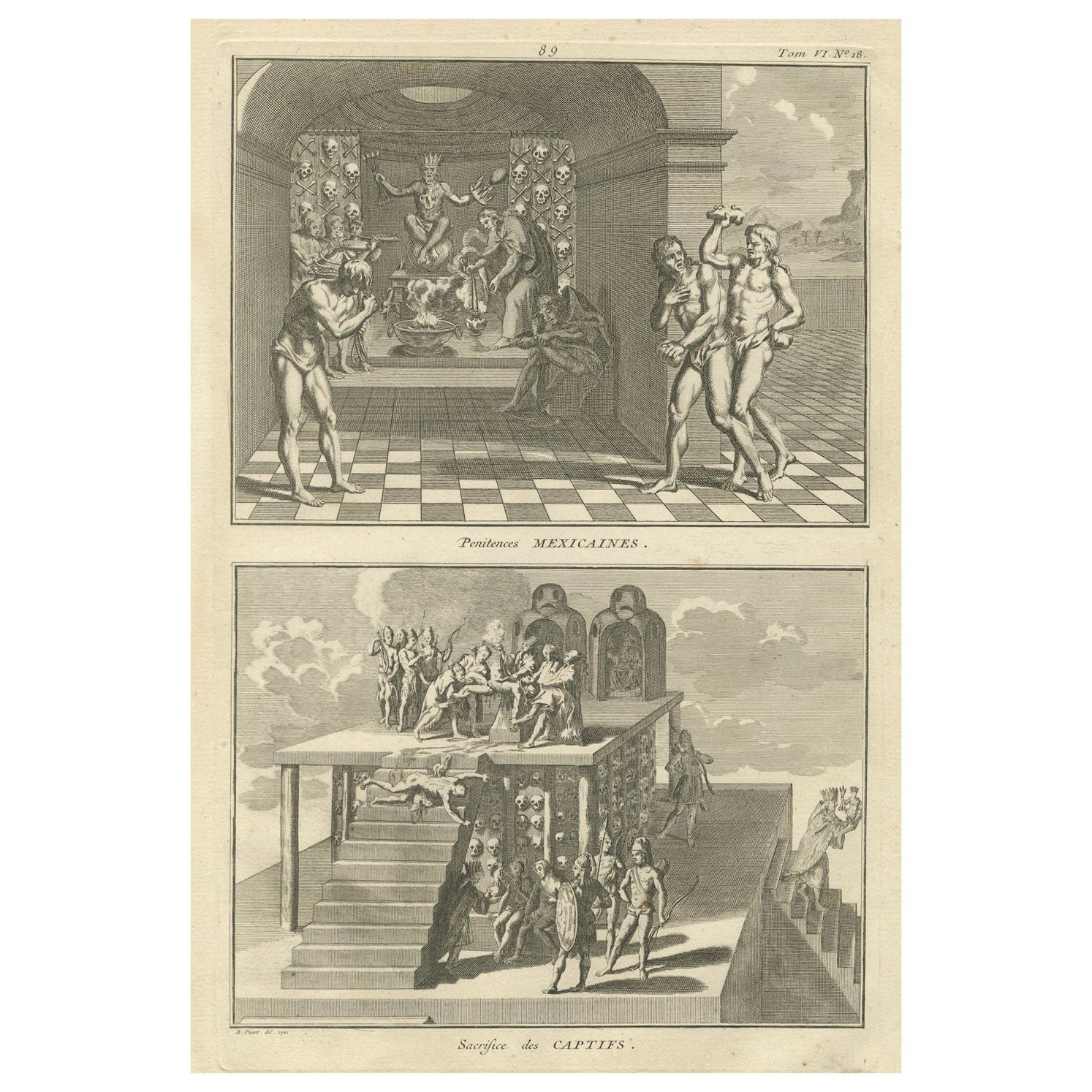
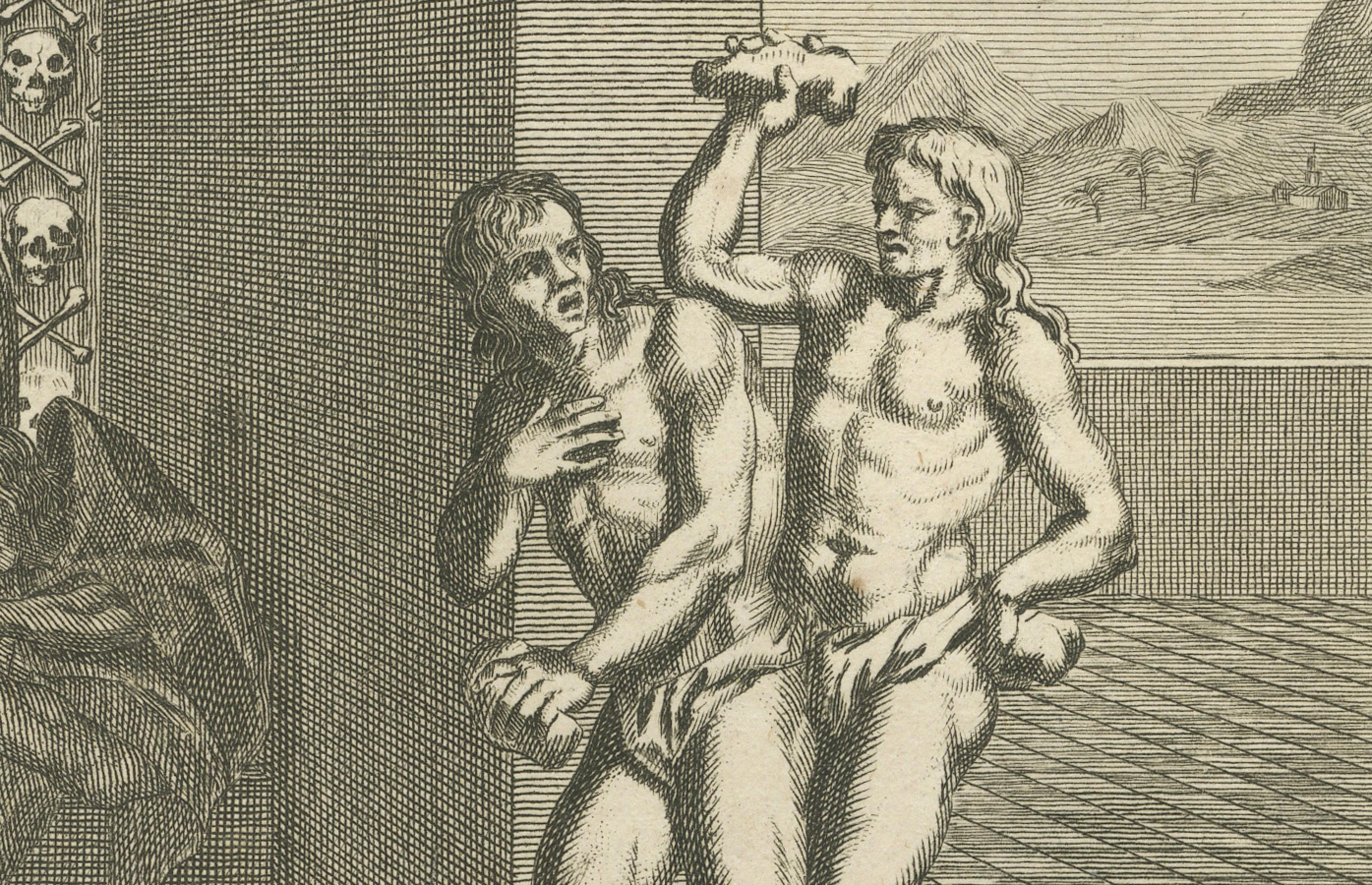
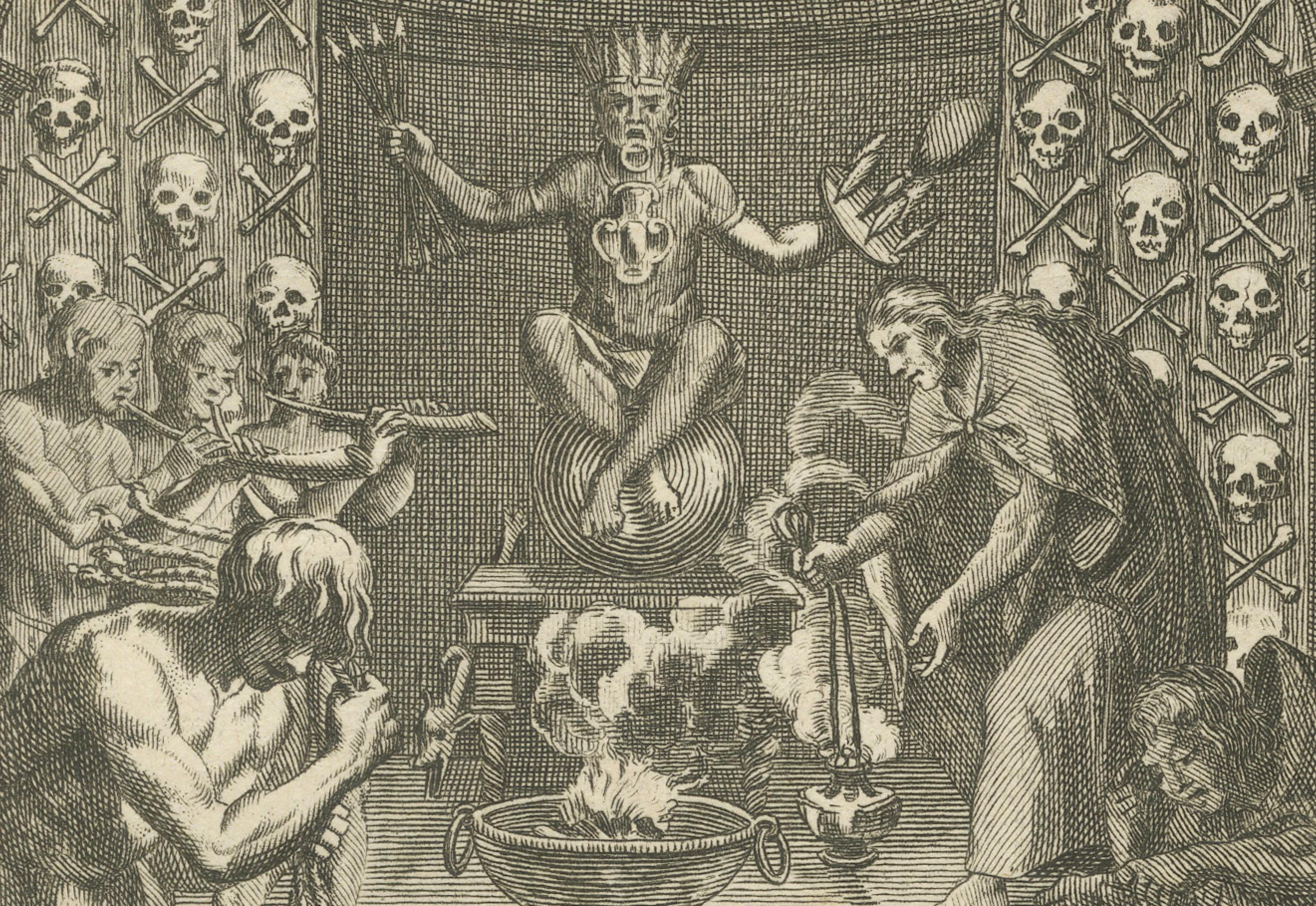
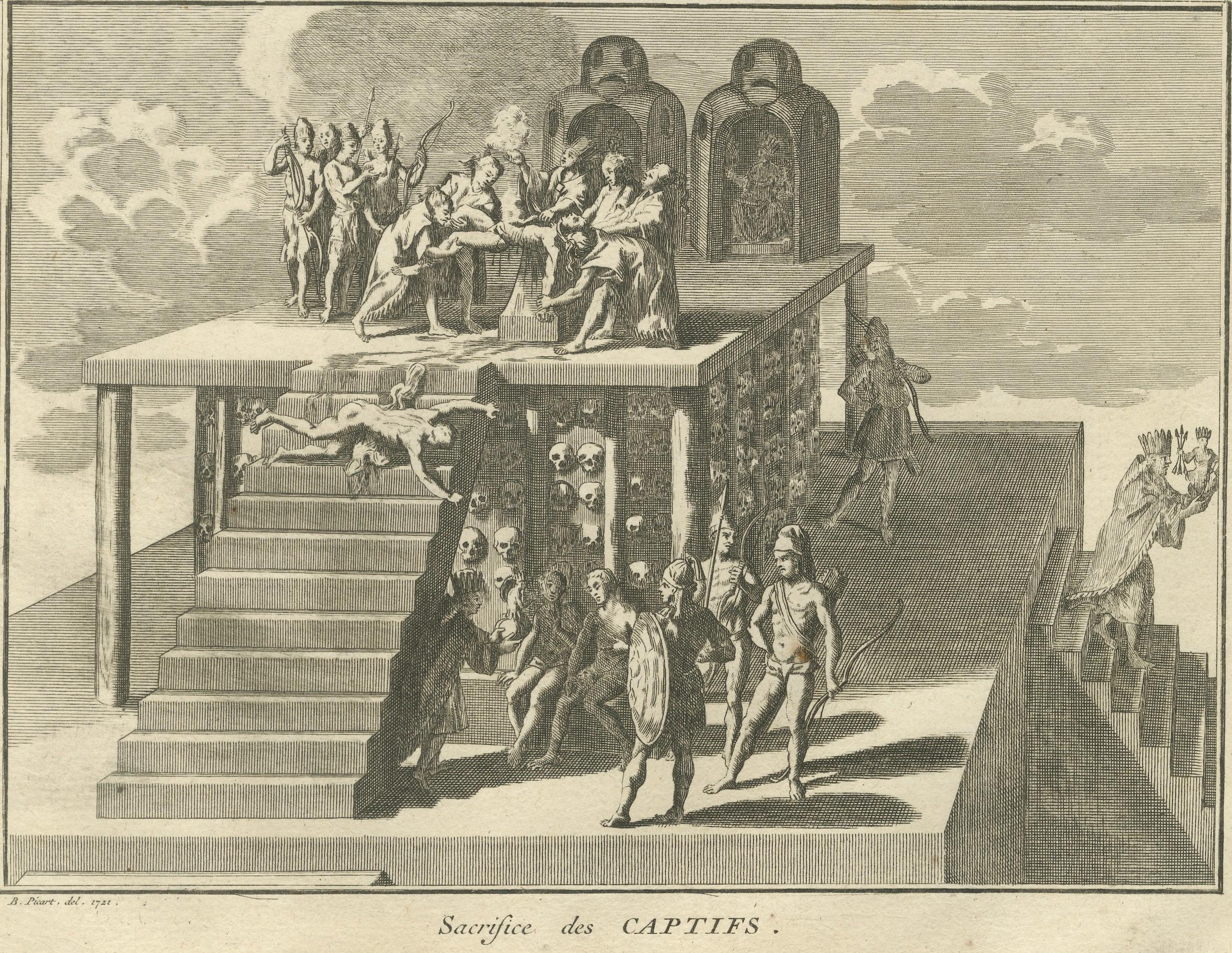
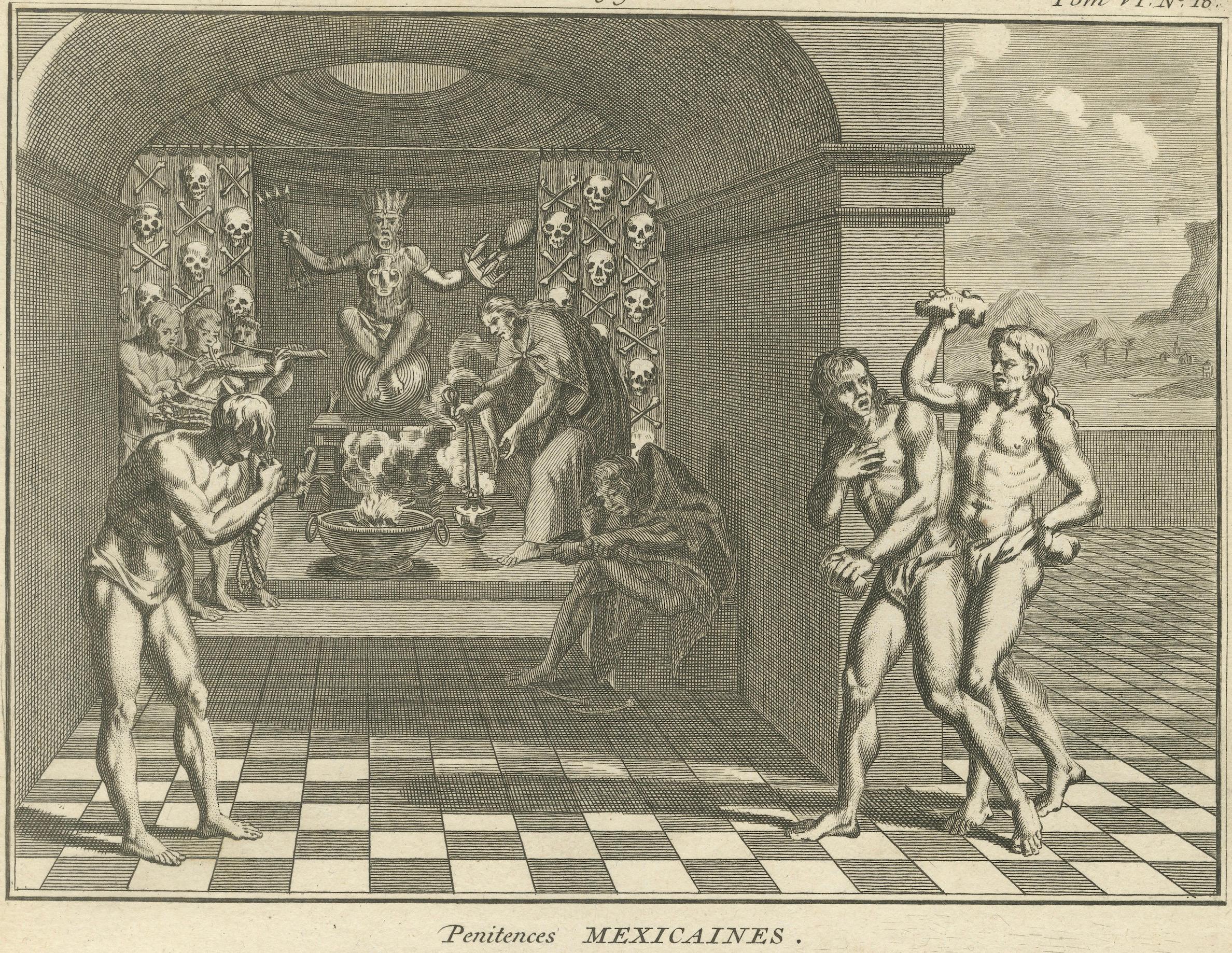
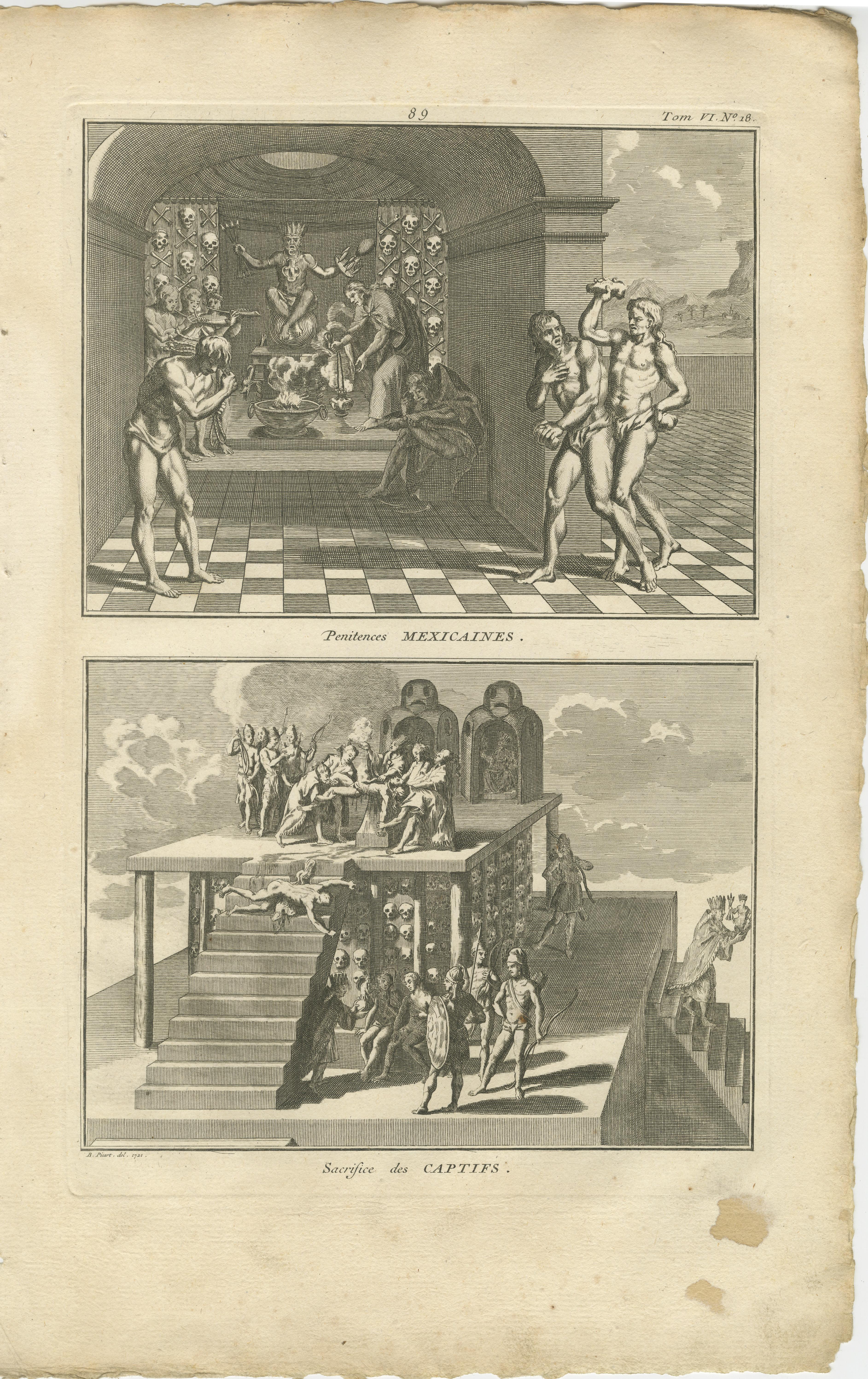
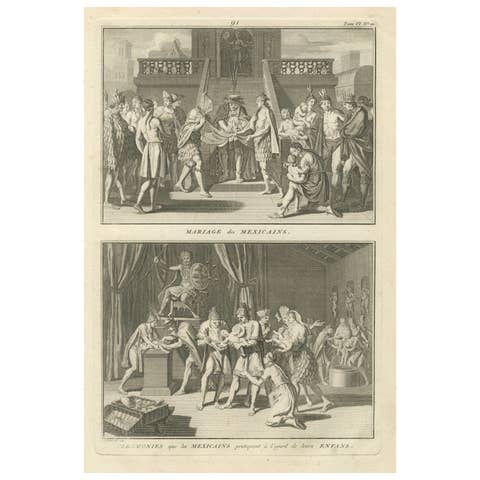
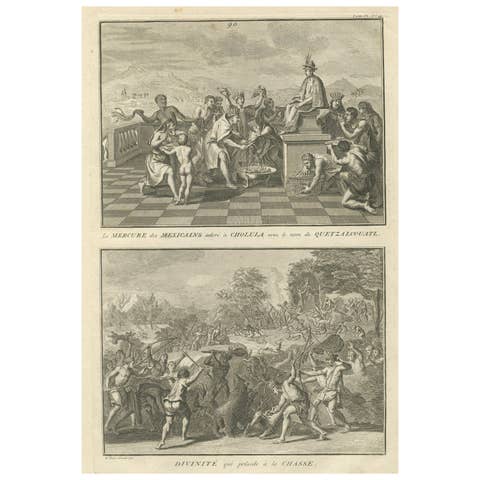
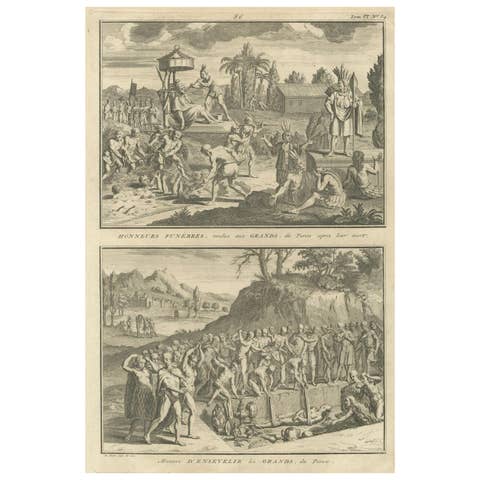
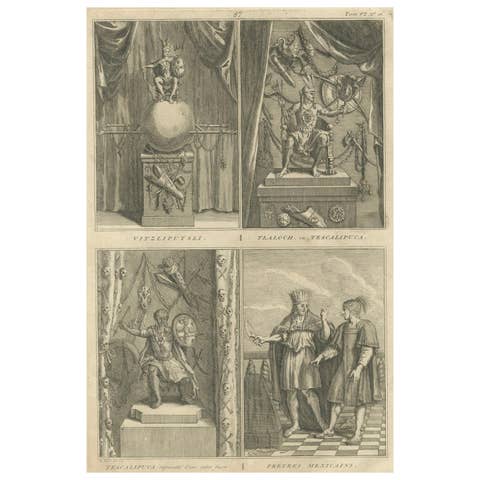
Mexican Penitence and Human Sacrifice – 1734 Engraving of Aztec Religious Rites This dramatic 1734 copperplate engraving illustrates two imagined rituals from ancient Mexico, as interpreted by European artists of the Enlightenment. The print comes from the influential series *Les Cérémonies et Coutumes Religieuses de tous les Peuples du Monde*, which sought to catalog religious practices across the globe through a European lens. Though not ethnographically accurate, these scenes reflect how early modern Europeans conceptualized Indigenous religions—with fascination, awe, and theatrical intensity.
The top panel is titled *Pénitences Mexicaines* (Mexican Penitences). It shows a solemn interior chamber where penitents perform acts of ritual self-mortification. At the center, a deity—possibly Tezcatlipoca—is enthroned, surrounded by skulls set into the walls as a powerful visual symbol of death and sacrifice. A group of men, some whipping themselves or bearing torches, are engaged in penance before the god. One figure kneels at an altar while another is whipped by an attendant, suggesting a stylized depiction of confession and purification. The checkerboard floor and vaulted architecture are distinctly European, reflecting Enlightenment-era attempts to frame unfamiliar religious practices within known visual conventions.
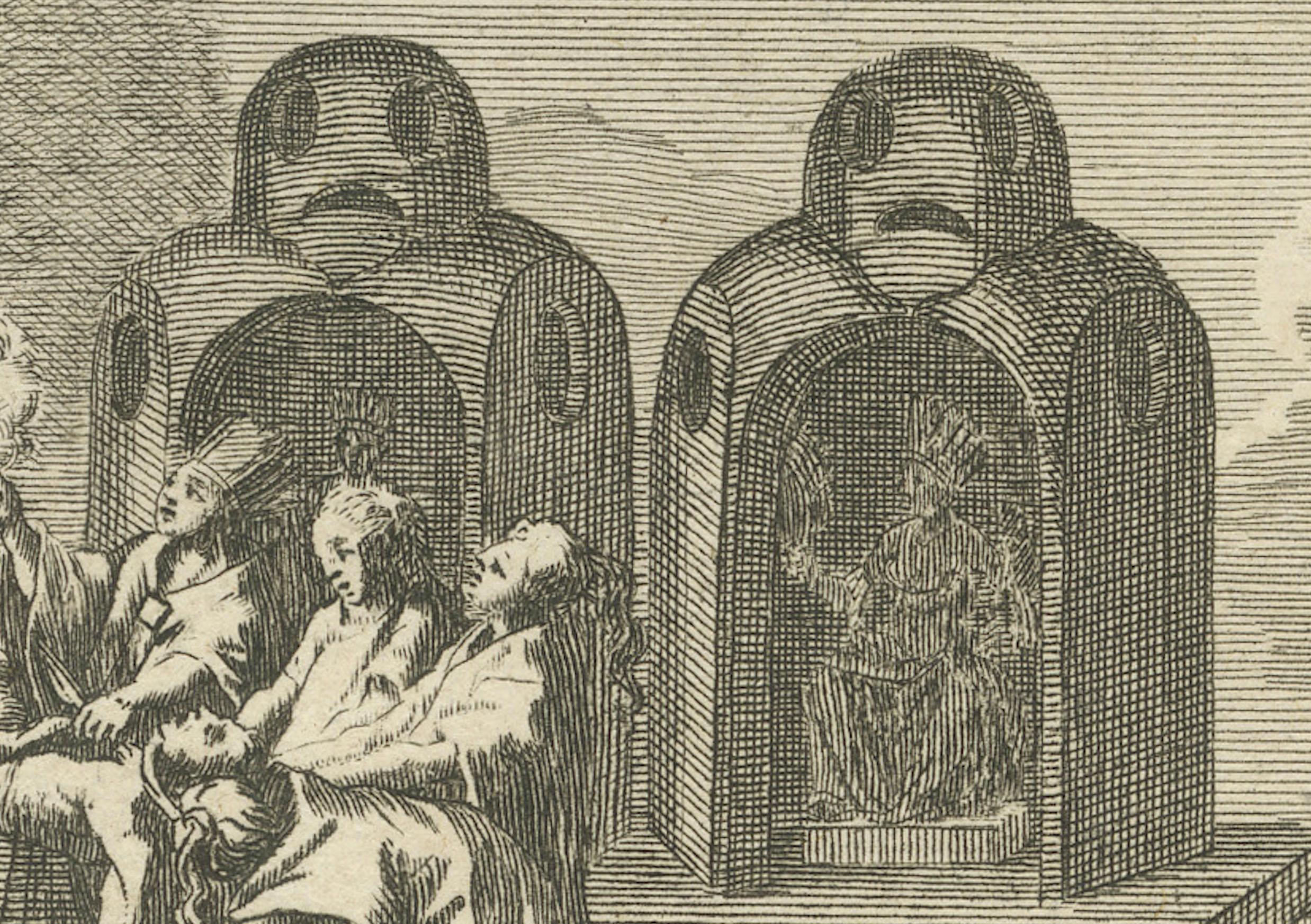
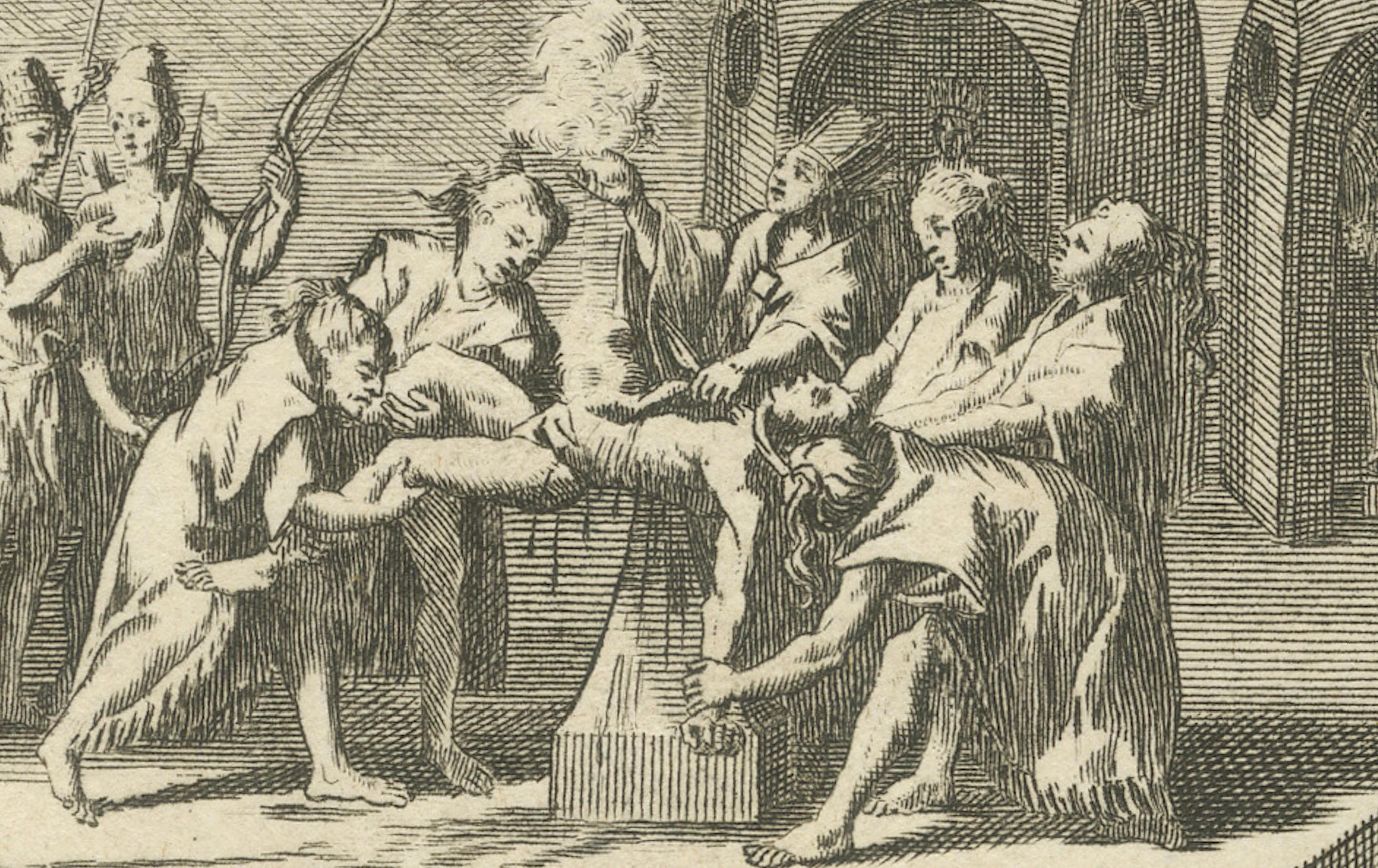
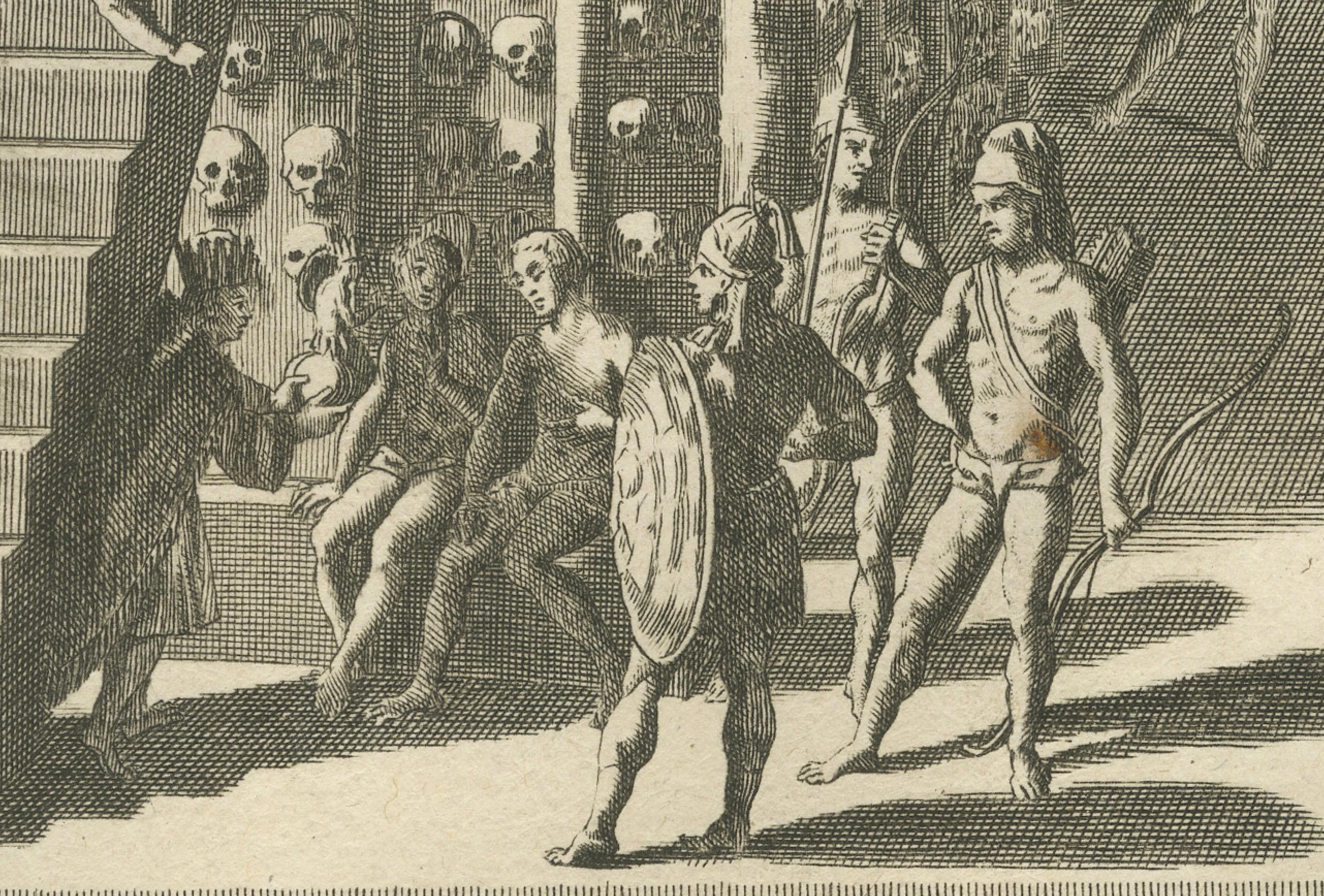
The bottom panel, titled *Sacrifice des Captifs* (Sacrifice of the Captives), presents one of the most iconic and controversial elements of Aztec ritual life—human sacrifice. A grand stepped temple pyramid forms the central structure, resembling the Templo Mayor in Tenochtitlan. Priests at the summit are seen preparing or conducting a ritual execution, while the victim’s body is dragged down the steep staircase. At the base, skulls are embedded in the architecture, evoking the tzompantli or skull rack. Warriors bearing shields stand nearby, and one figure appears to be led toward the altar. While exaggerated for European audiences, the scene is loosely inspired by historical accounts of Aztec sacrificial ceremonies and their symbolic relationship to warfare and cosmic balance.
These engravings are less historical documents and more visual commentaries—filtering Indigenous traditions through a European worldview that both exoticized and moralized them. The themes of pain, blood, and devotion are rendered with theatrical clarity, aimed at both educating and astonishing the viewer.
Condition is good. The engraving retains crisp lines and deep impressions. There is light foxing and minor soiling in the lower right corner, along with small paper losses at the edges, but the image area is unaffected.
This print displays well in a vertical format with a generous ivory or pale mat to isolate the two scenes. A dark wood or simple black frame provides a strong visual anchor. Use museum-quality glazing to protect the engraving from UV exposure and further aging.