About this sheet
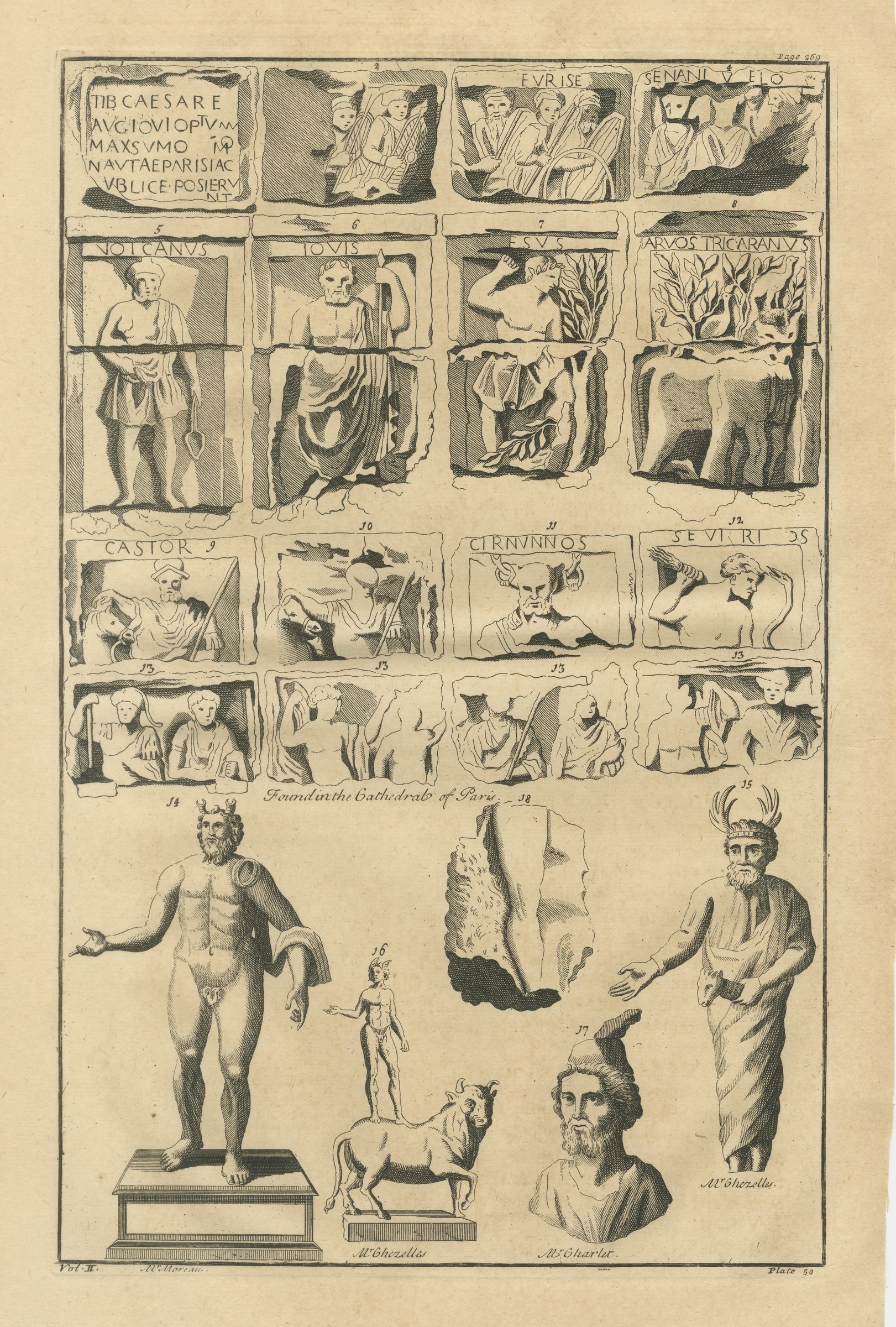
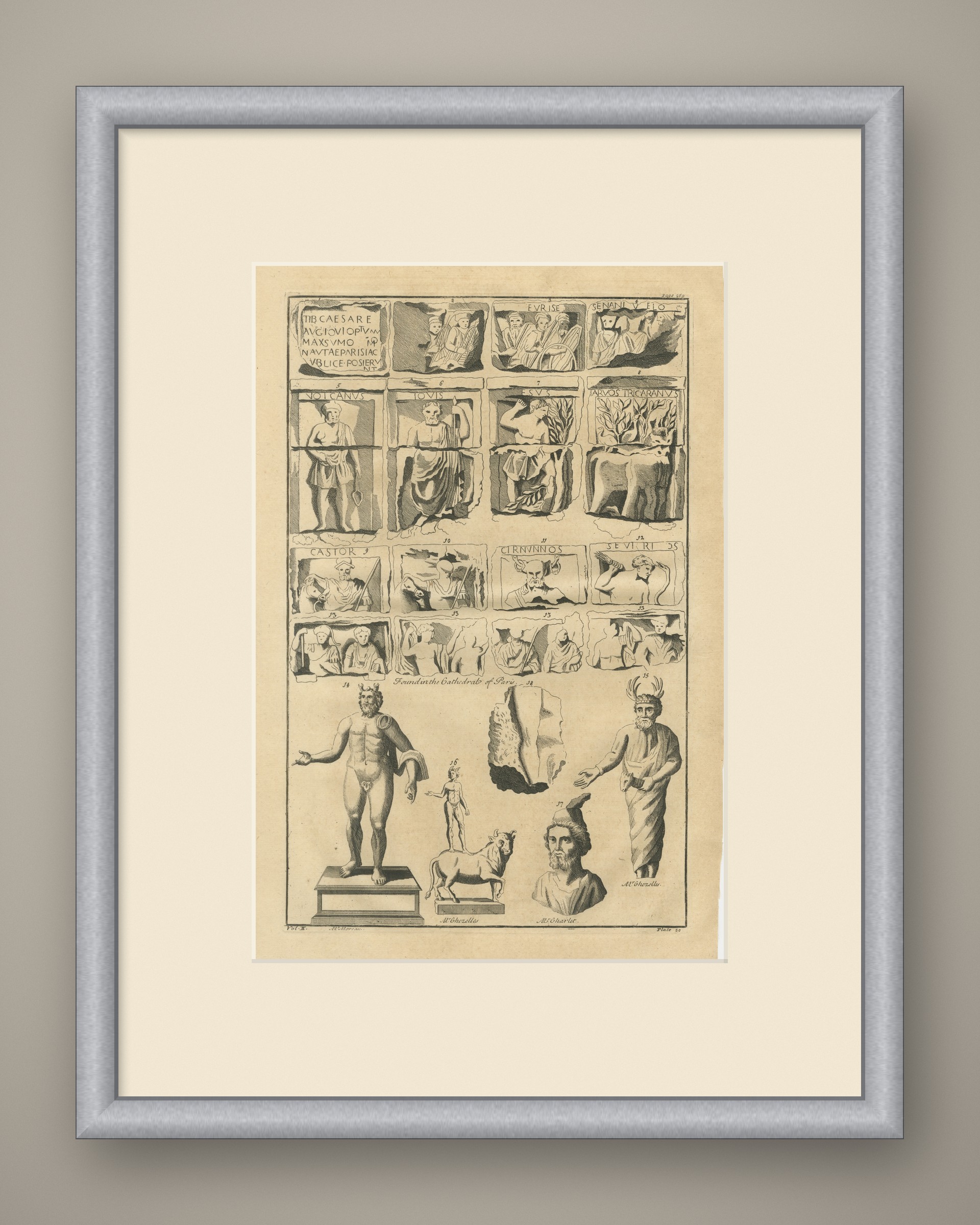
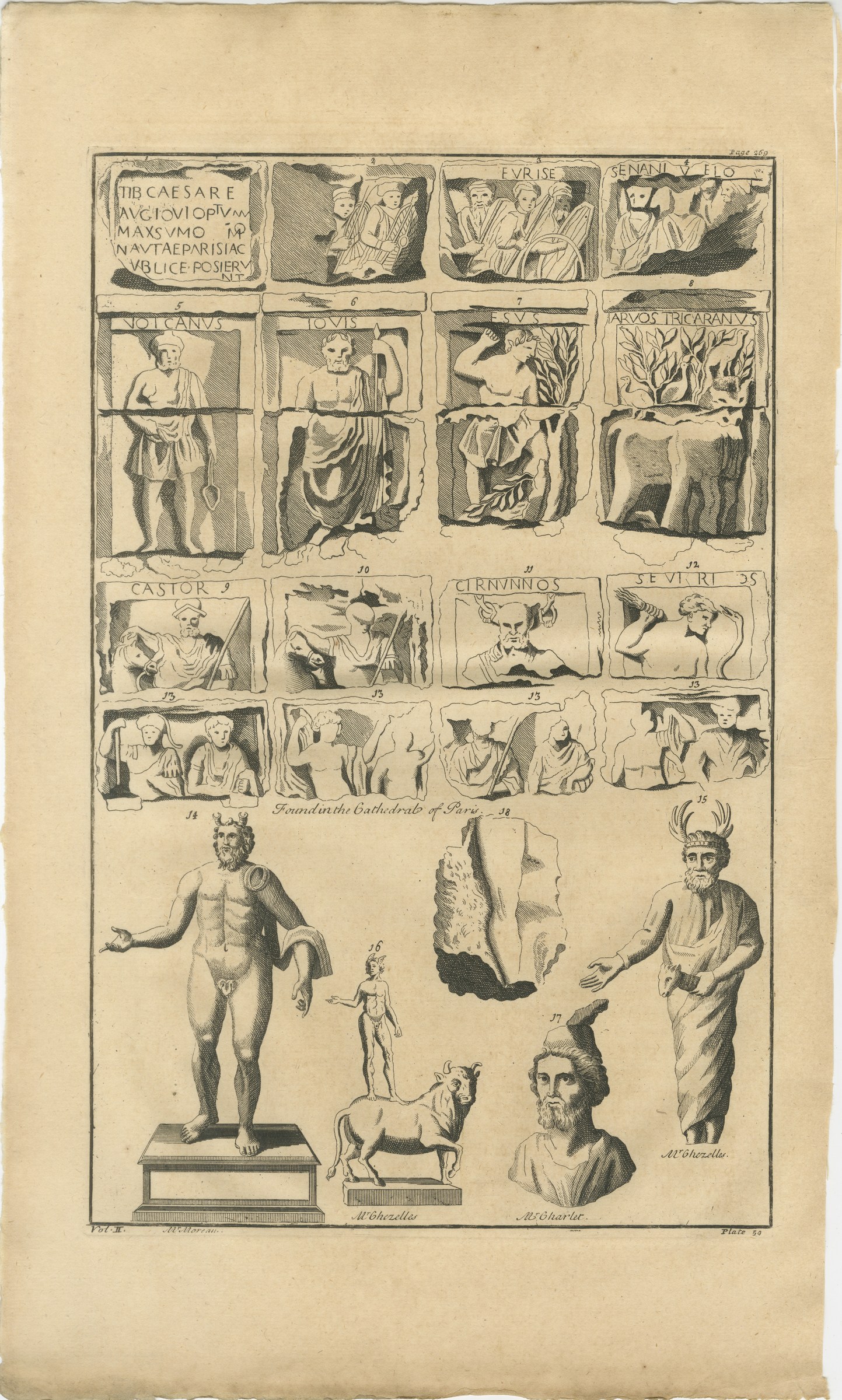
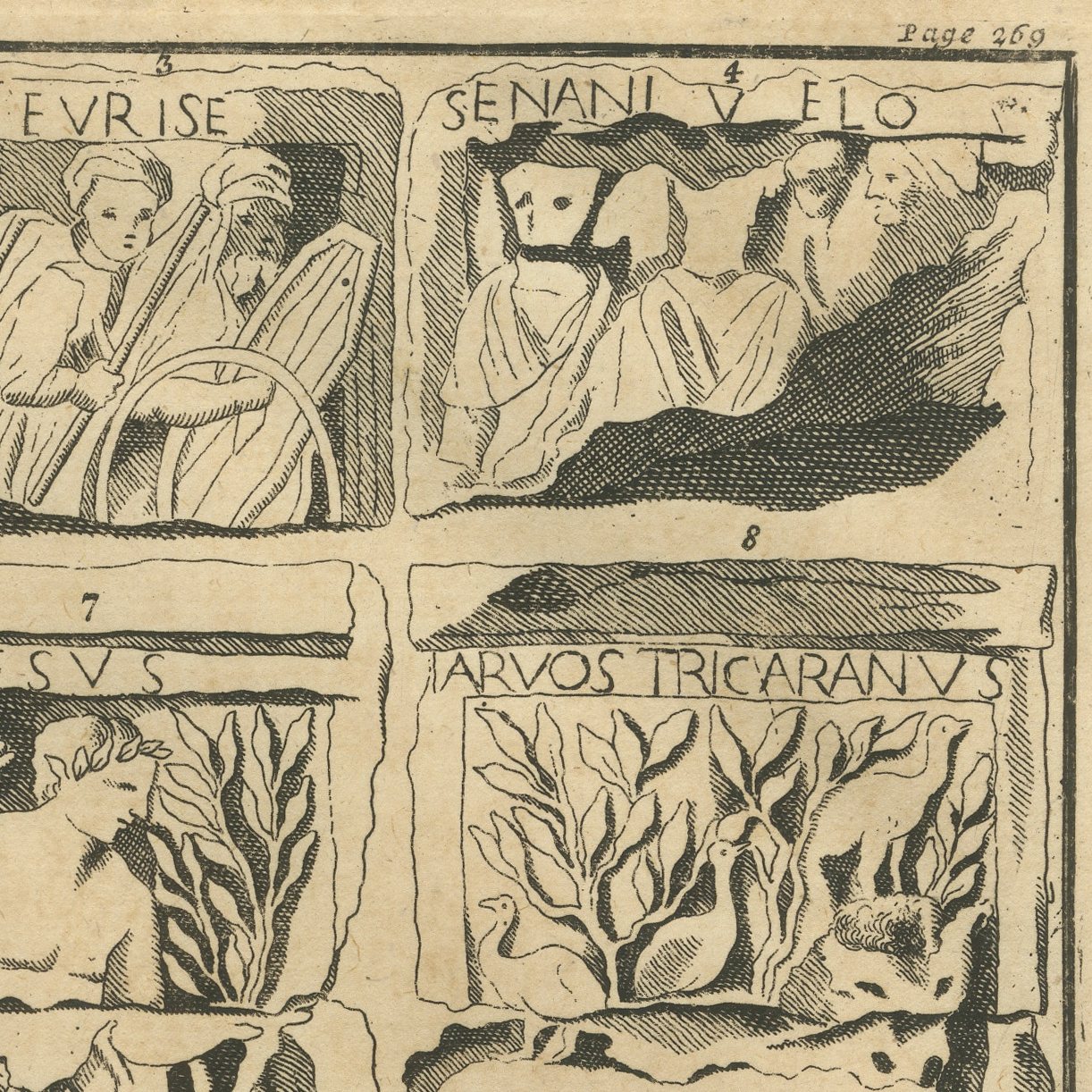
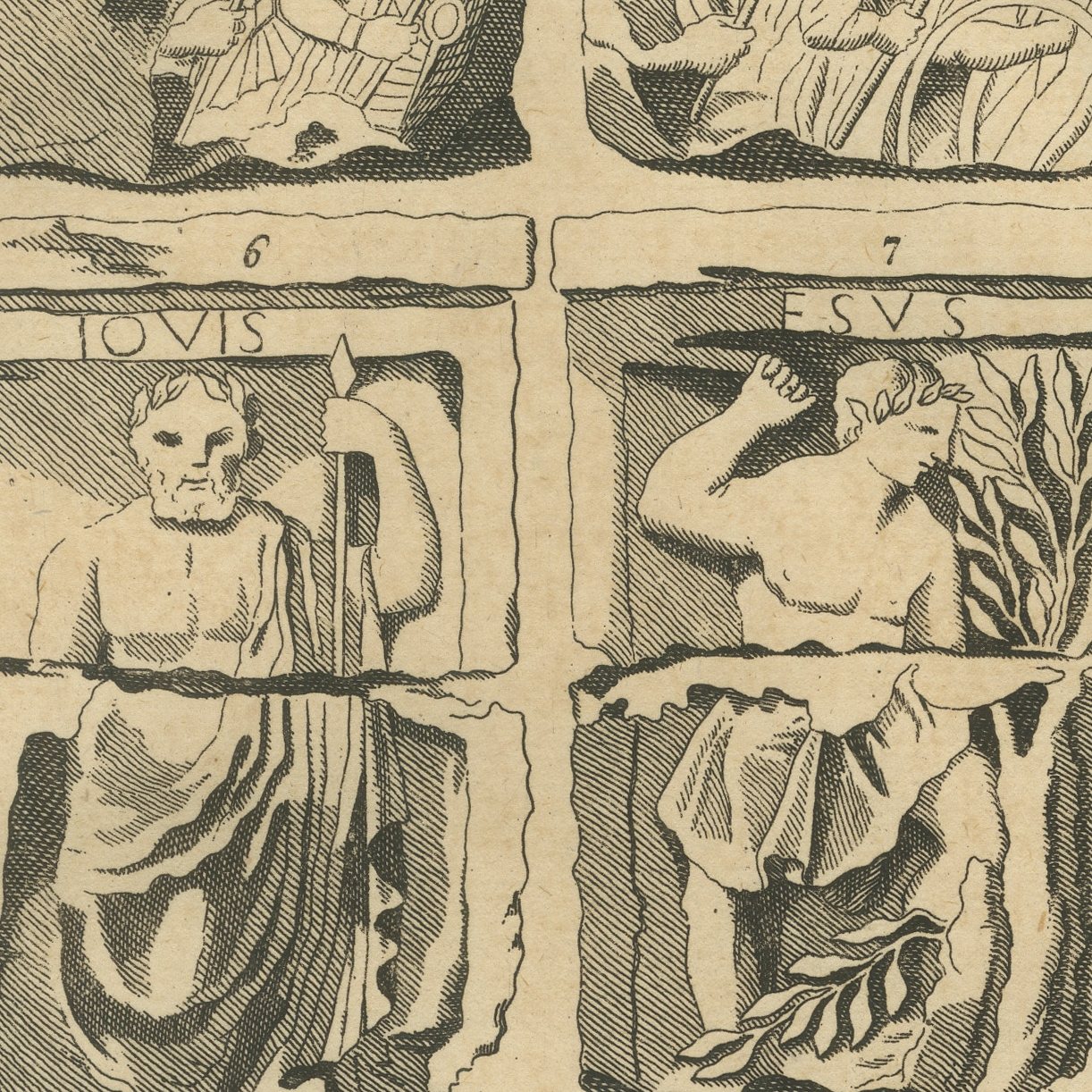
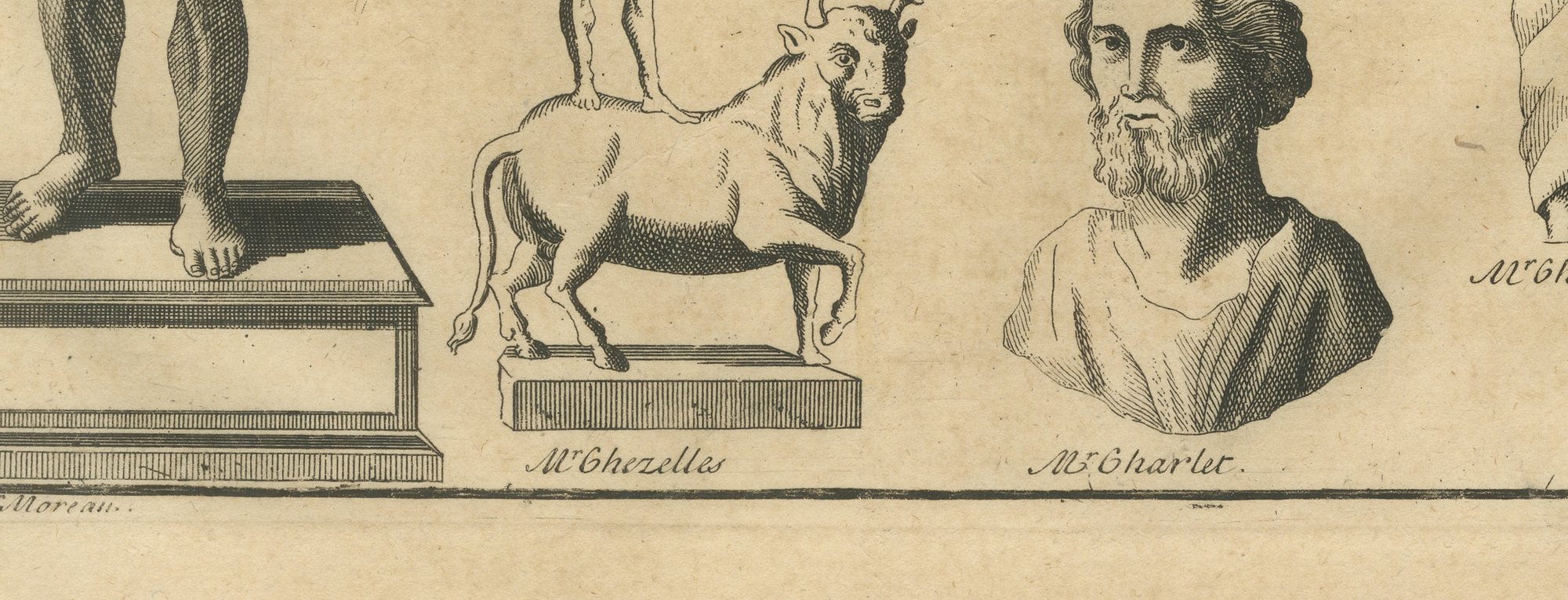
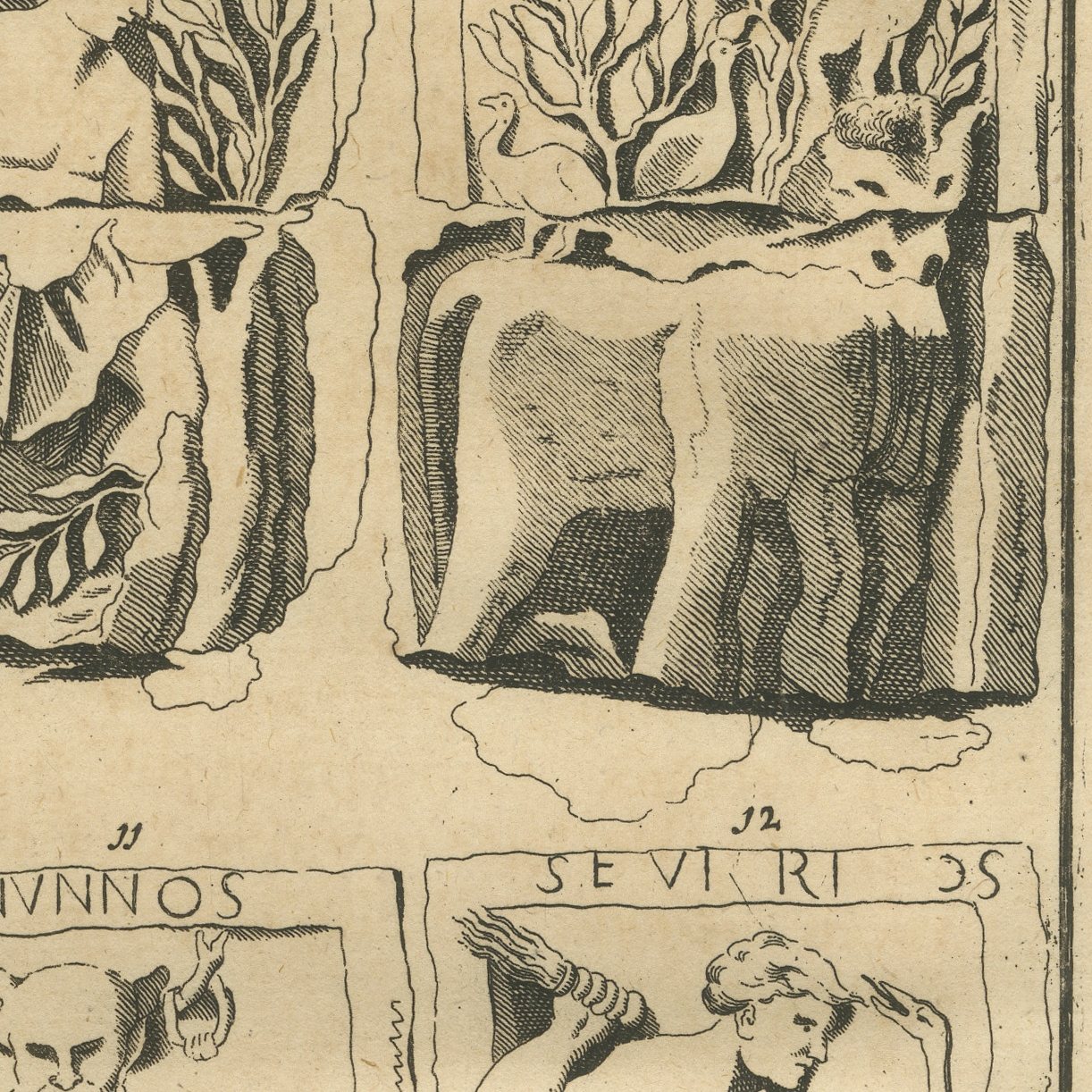
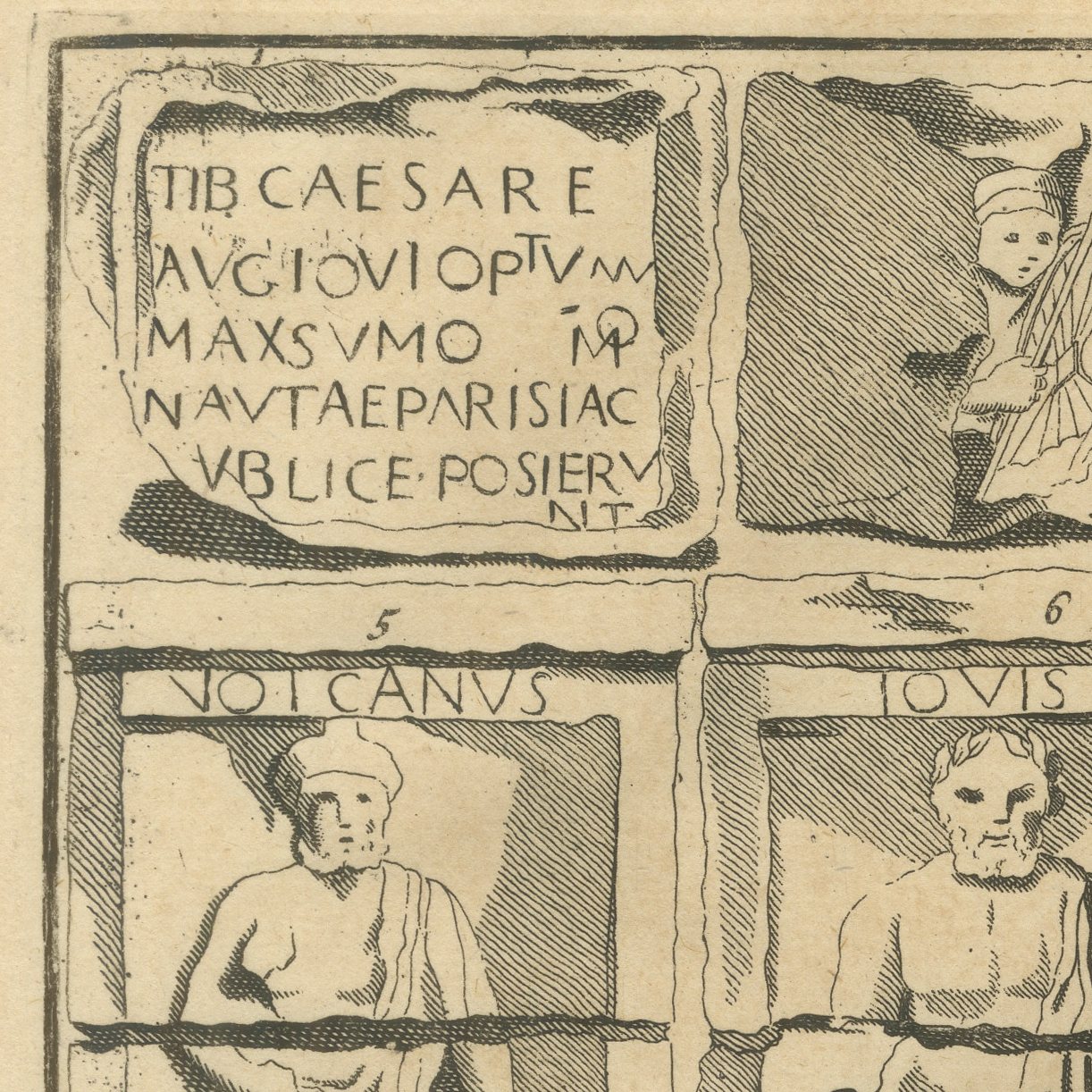
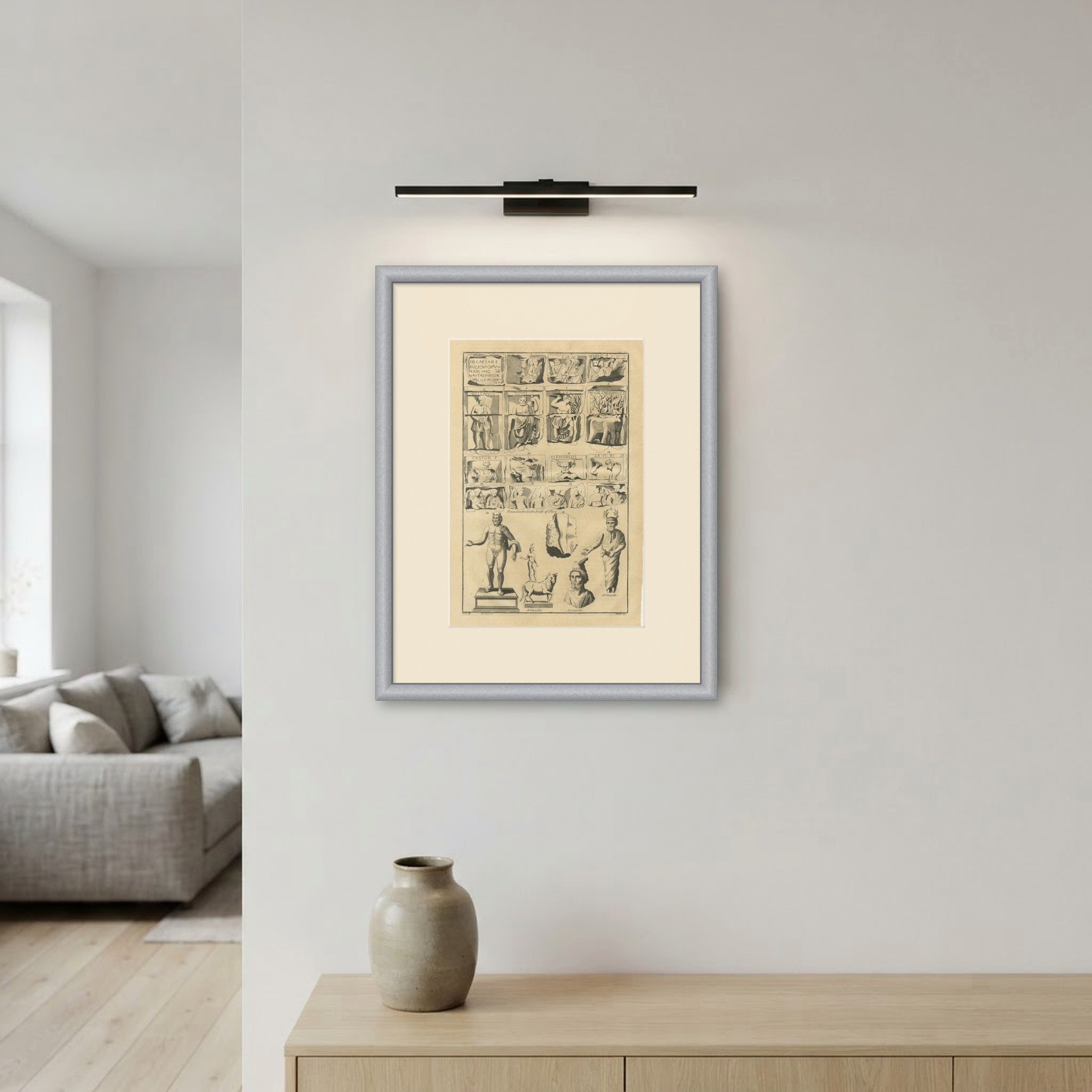
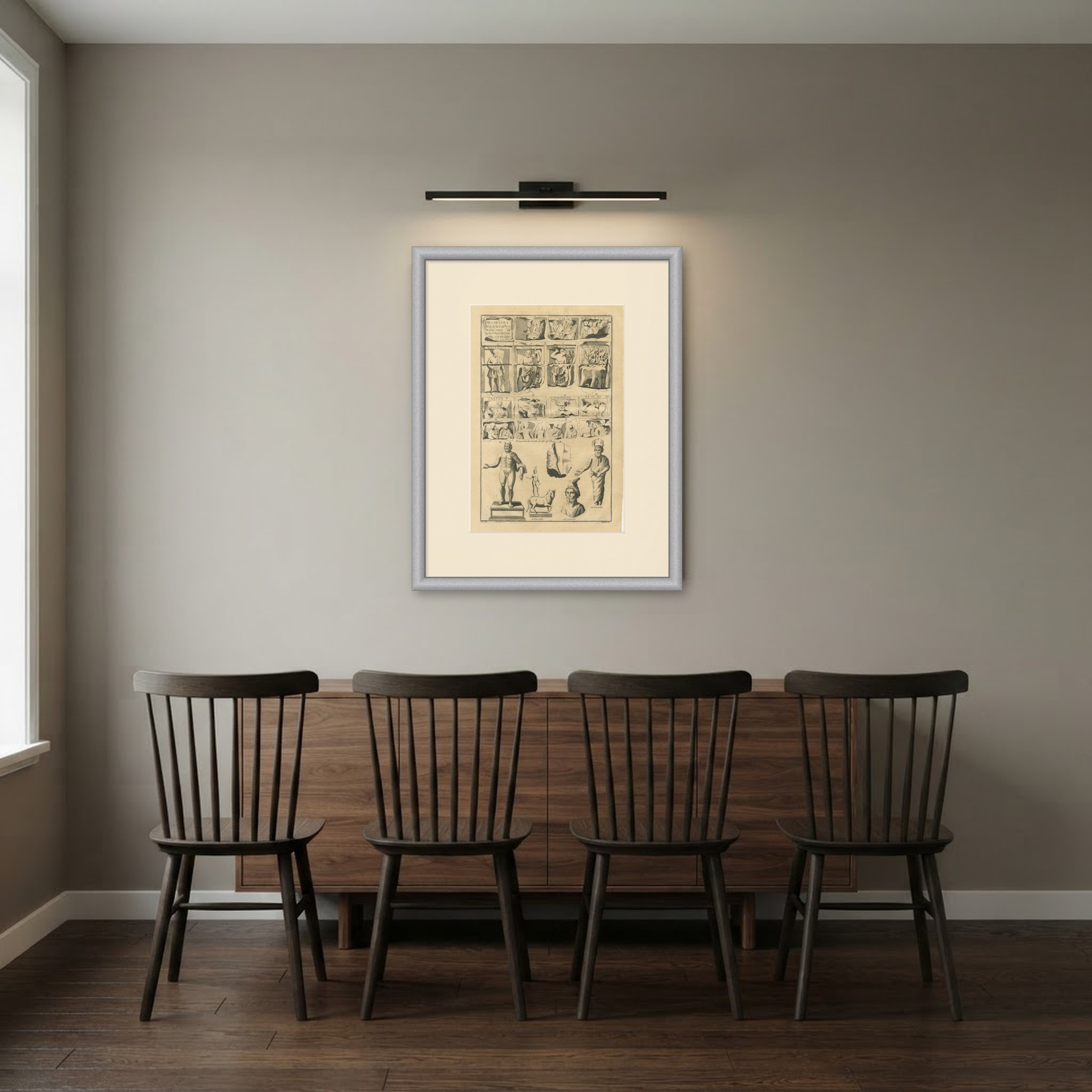
This original antique engraving of 1721 reproduces the carved blocks of the pillar dug up under the choir of the cathedral of Paris, lettered on the plate Found in the Cathedral of Paris. The dedication block is given first: TIB CAESARE AVG IOVI OPTVMO MAXSVMO NAVTAE PARISIACI PVBLICE POSIERVNT, the boatmen of the Parisii set this up publicly to Jupiter Best and Greatest under Tiberius Caesar Augustus. The remaining faces are drawn one by one with their names cut above them: VOLCANVS with his tongs, IOVIS with a spear, ESVS cutting at a tree, TARVOS TRIGARANVS, a bull with birds on its back and head, CASTOR with his horse, CIRNVNNOS as a horned and antlered bearded head, and panels lettered SENANI VSELONI, EVRISES and SEVIRI. Three bronzes stand below, among them a horned bearded god and a bull. The corners read Vol. II and Plate 59.
The plate comes from Volume the Second of Antiquity Explained, and Represented in Sculptures, the English translation of L'Antiquité expliquée et représentée en figures, published in Paris in 1719 by Bernard de Montfaucon (1655 to 1741), a French Benedictine monk of the Congregation of Saint Maur. The translation is by David Humphreys, fellow of Trinity College, Cambridge, and was printed in London by J. Tonson and J. Watts in five folio volumes, the first two dated 1721 and the other three 1722. The second volume deals with the worship of the Greeks and Romans and with the religions of other peoples, among them the Egyptians, Syrians, Persians, Germans and Gauls. Montfaucon arranged the surviving images of ancient monuments by subject, so that each plate gathers figures copied from statues, reliefs, altars, gems, coins and other objects, numbered to his commentary. The plates carry no engraver's name and no printed title.
The sheet is lettered with its volume and plate number, Vol. II and Plate 59, and with the page of Montfaucon's text that it faces. The pillar was found in 1710 beneath Notre-Dame de Paris, during work on a crypt, and its carved blocks are now in the Musée de Cluny in Paris.
Strong age toning, the paper a warm buff, with the paper darker along the bottom and top edges, foxing through the margins, one or two spots larger than the rest, stains in the margins and wear to the bottom right corner.
This is an original antique print, not a modern reproduction. This item is sold unframed. Any framed or interior images are shown for presentation and inspiration only, unless the listing explicitly states that the item is sold framed.