Original antique · The actual sheet photographed · Certificate of authenticity on request · Sold unframed · Worldwide shipping from € 15 (rates)
Date
1924
Mapmaker / artist
Alexandre M. Raymond, French architect and scholar of Islamic architecture, Paris, 1924
Technique
Lithograph with printed color
Sheet size
35.5 × 49 cm (14.0 × 19.3 in)
Condition
Good
Reference
BG-14306-35
What the condition grades mean
Excellent
Bright and clean, with no faults worth mentioning.
Very good
Only light signs of age, such as faint toning.
Good
Normal signs of age for a sheet of this period: toning, some foxing, small marks or neat old repairs.
Fair
Clear faults such as staining, tears or repairs, priced to match.
Every fault we see is written in the condition note, and the whole sheet is shown uncropped in the photos.
Condition
Good original condition with age-related toning, scattered foxing, light marginal wear, and minor handling marks consistent with age. The printed designs remain crisp and attractive with excellent preservation of color and detail.
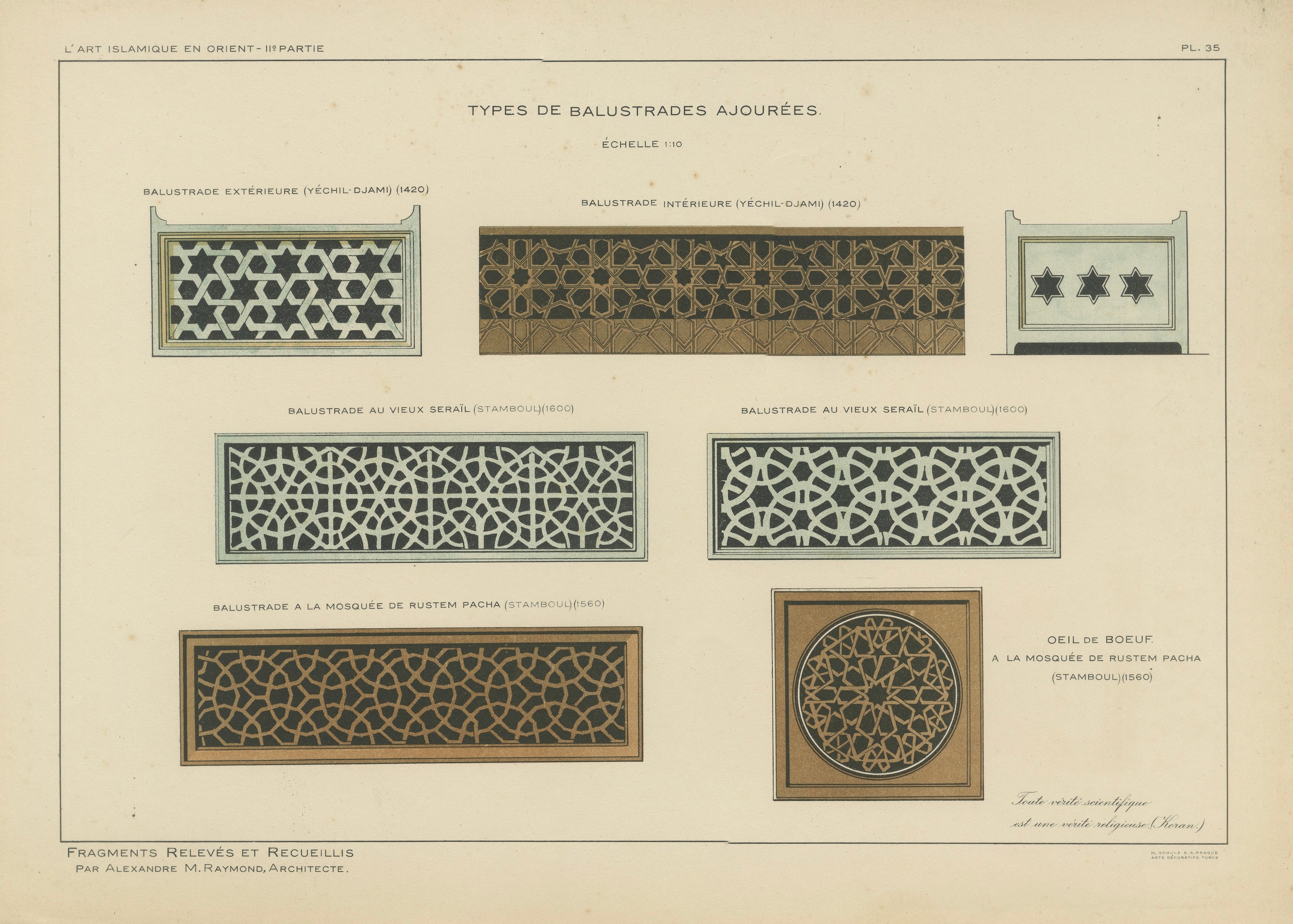
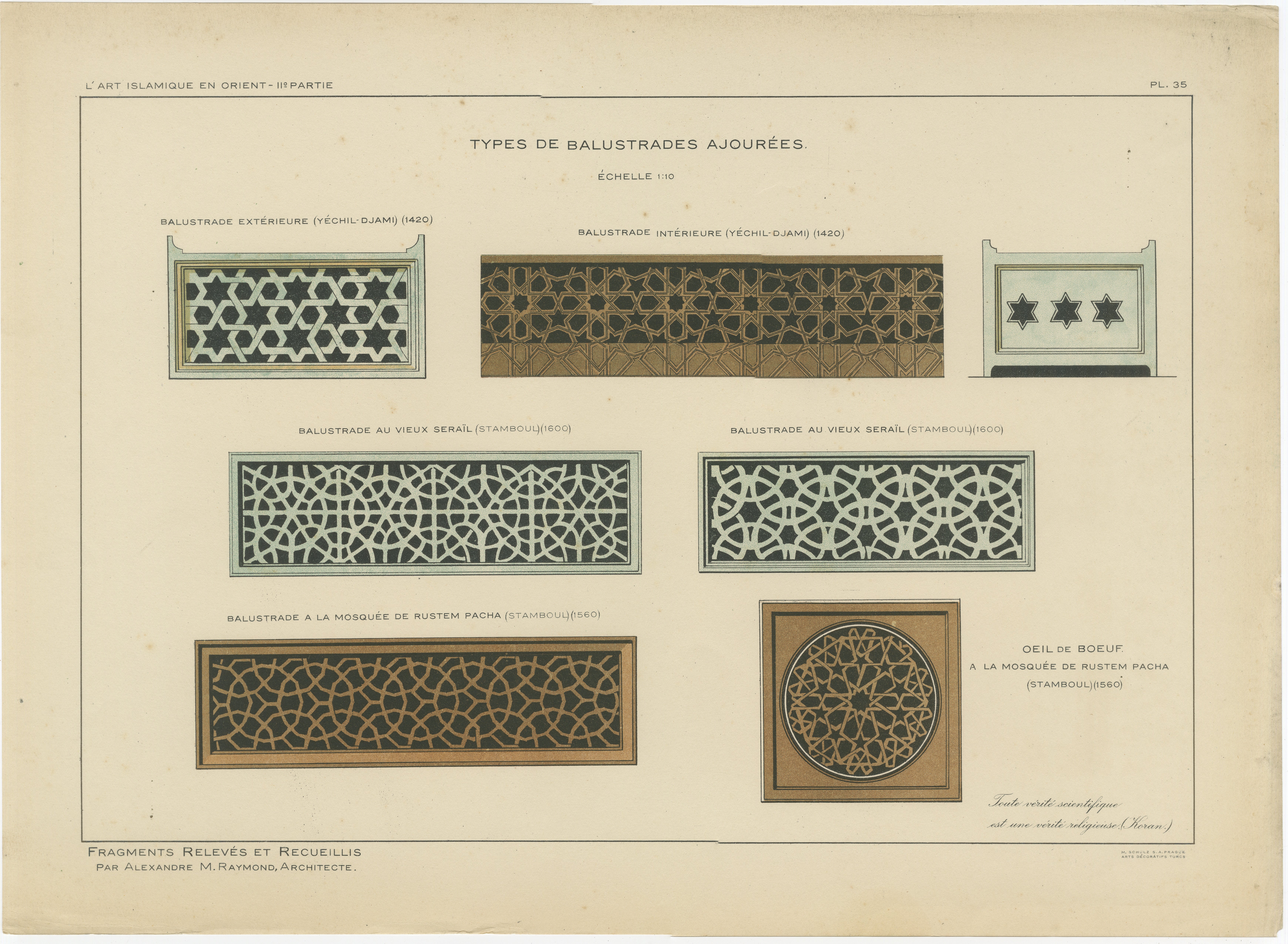
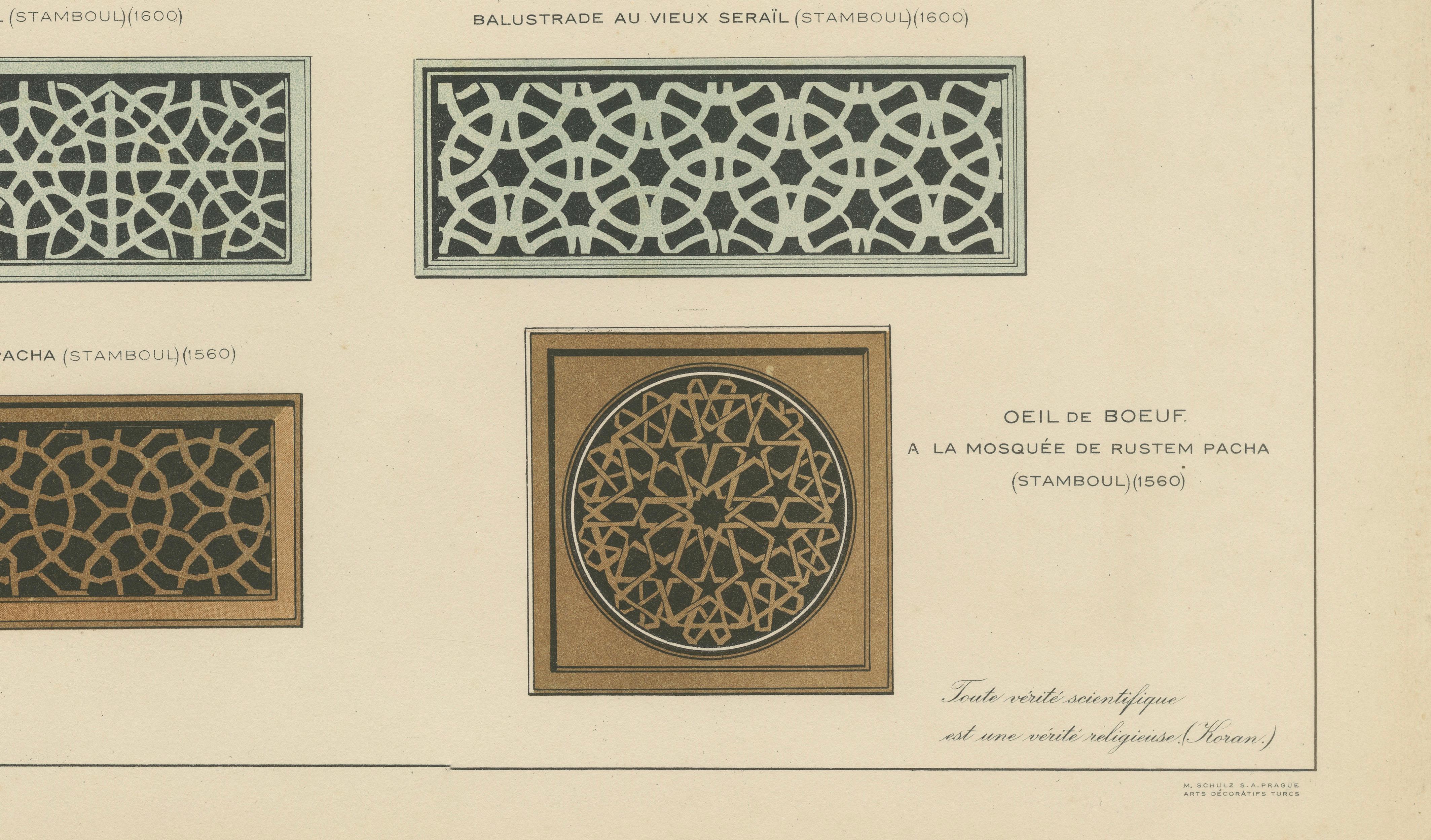
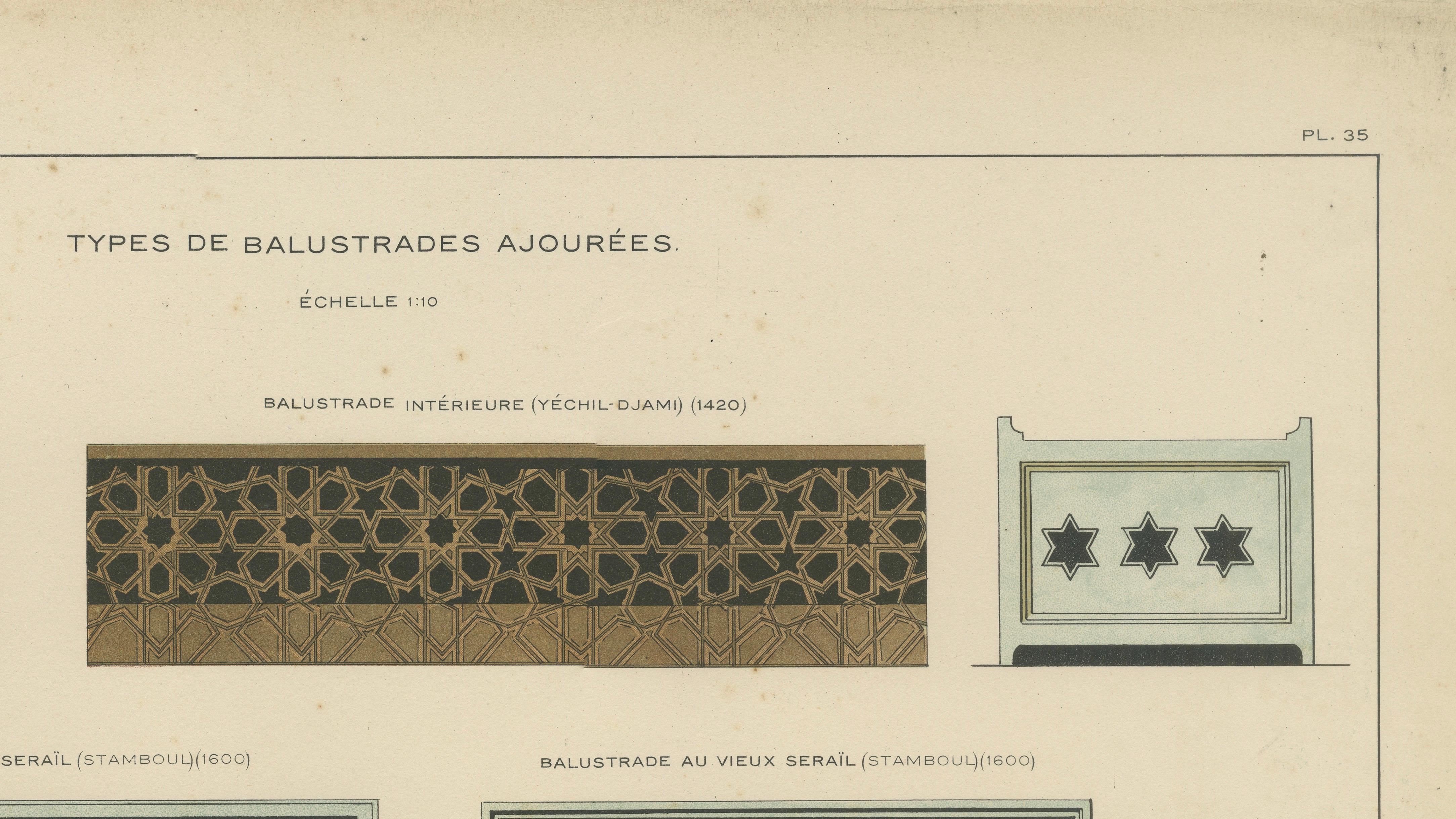
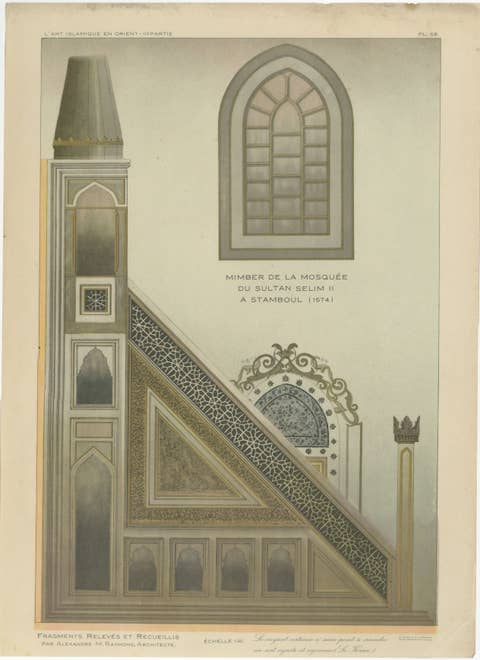
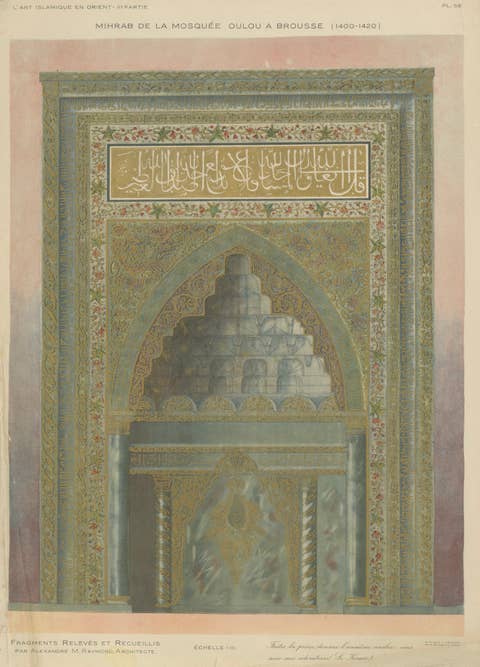
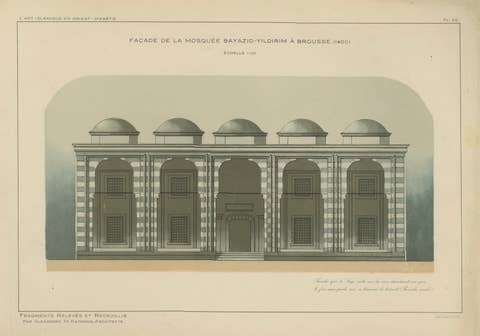
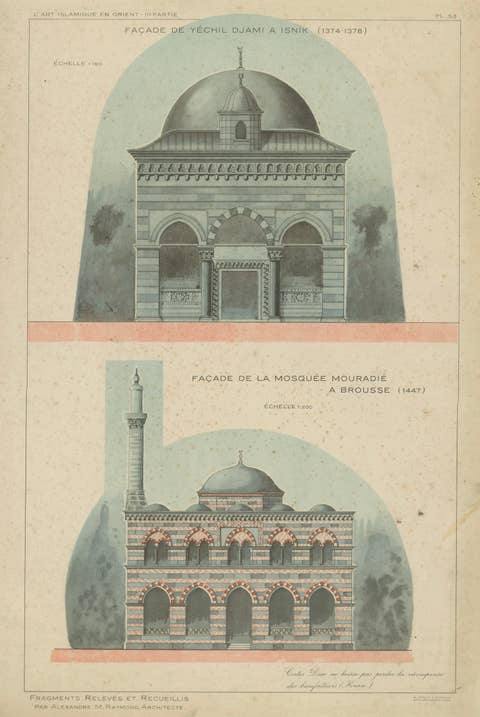
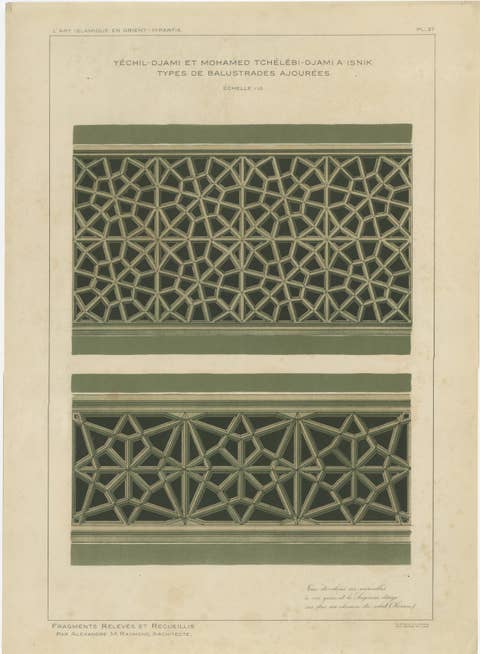
This original architectural plate presents a remarkable survey of pierced stone and wooden balustrade designs from some of the most celebrated monuments of Ottoman architecture. Published as Plate 35 in Alexandre M. Raymond's monumental L'Art Islamique en Orient – IIe Partie, the sheet forms part of one of the finest scholarly studies of Islamic decorative arts produced during the early twentieth century.
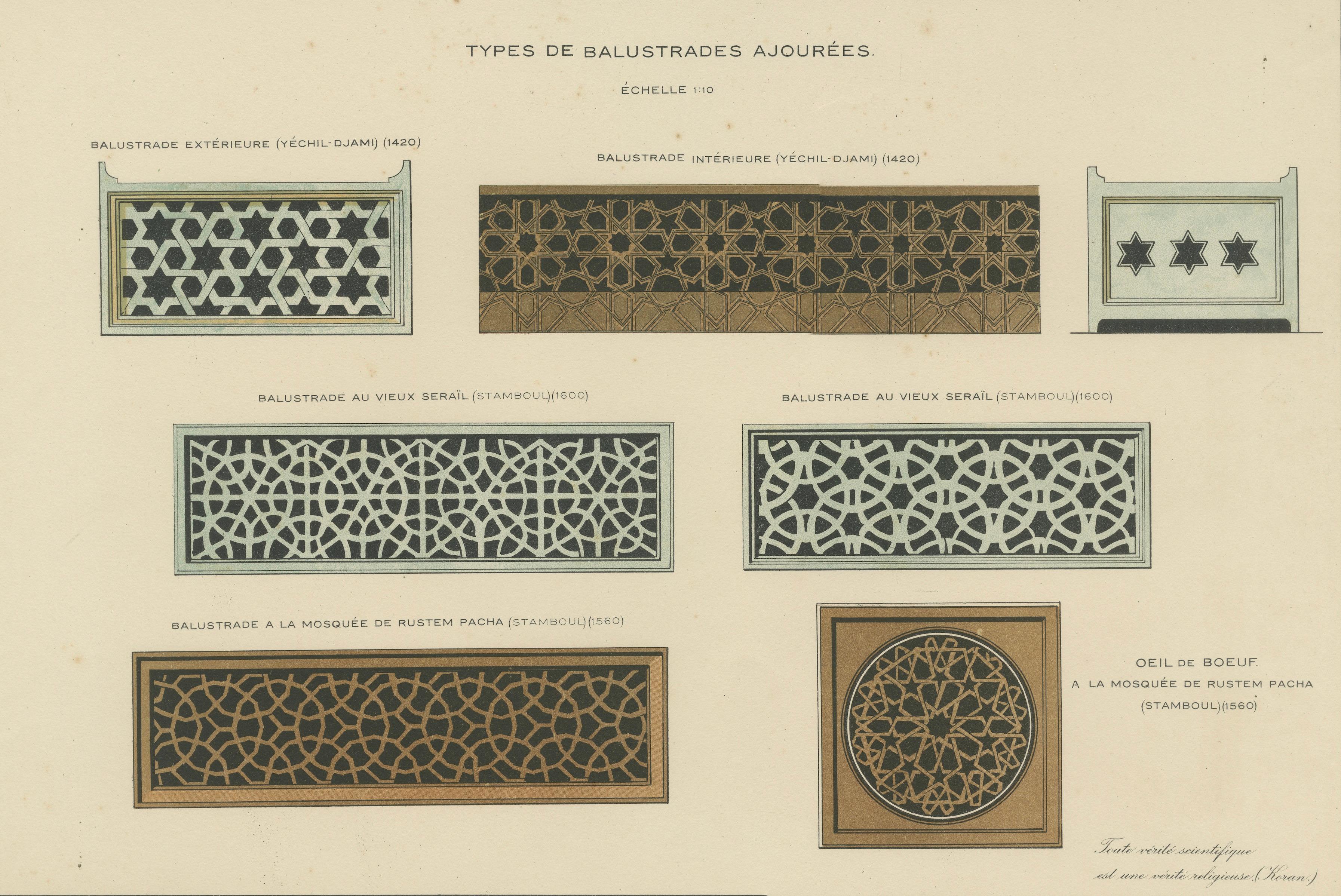
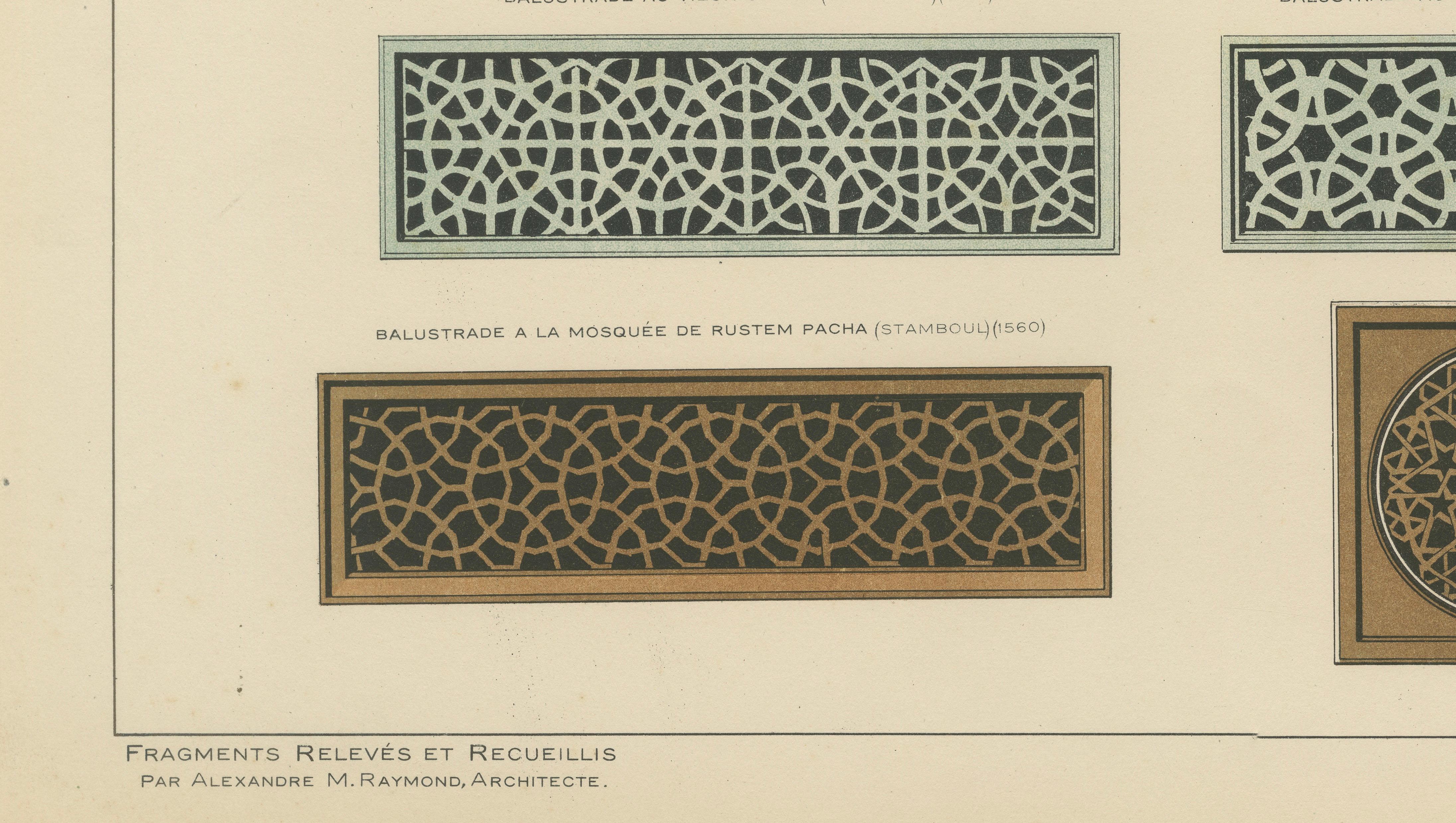
The composition brings together several geometric railing and screen designs spanning nearly two centuries of Ottoman artistic development. Included are exterior and interior balustrades from the Yeşil Djami (Green Mosque) in Bursa, dated 1420, elegant lattice panels from the Old Seraglio in Istanbul dating to around 1600, and sophisticated geometric screens from the Mosque of Rüstem Pasha, completed in 1560 under the patronage of Grand Vizier Rüstem Pasha and designed by the imperial architect Mimar Sinan. The plate also illustrates a circular oeil de boeuf window screen from the same monument.
These intricate compositions reveal the extraordinary mastery of Ottoman craftsmen in transforming mathematical geometry into architectural ornament. Interlaced stars, polygons, and scrolling networks create a delicate balance between structure, decoration, light, and shadow. Such openwork screens served practical functions while simultaneously expressing ideals of harmony and divine order central to Islamic art.
Alexandre M. Raymond carefully measured and documented these details during his travels throughout Turkey, preserving examples that remain invaluable references for historians, architects, restorers, and collectors. The restrained palette of black, cream, ochre, and pale turquoise lends the sheet an elegant modernity while retaining its historical character.
This print is entirely original and dates from 1924. It is sold unframed. Any framed illustrations are shown for visual inspiration only.
Framing recommendations: The broad horizontal format is ideally suited to a wide ivory museum mat and a dark walnut or ebonized frame inspired by traditional Ottoman woodwork. A subtle gilt slip complements the warm ochre tones. Museum glass is recommended for long-term conservation.
Original antique print. Sold unframed. Framed images are for display inspiration only.