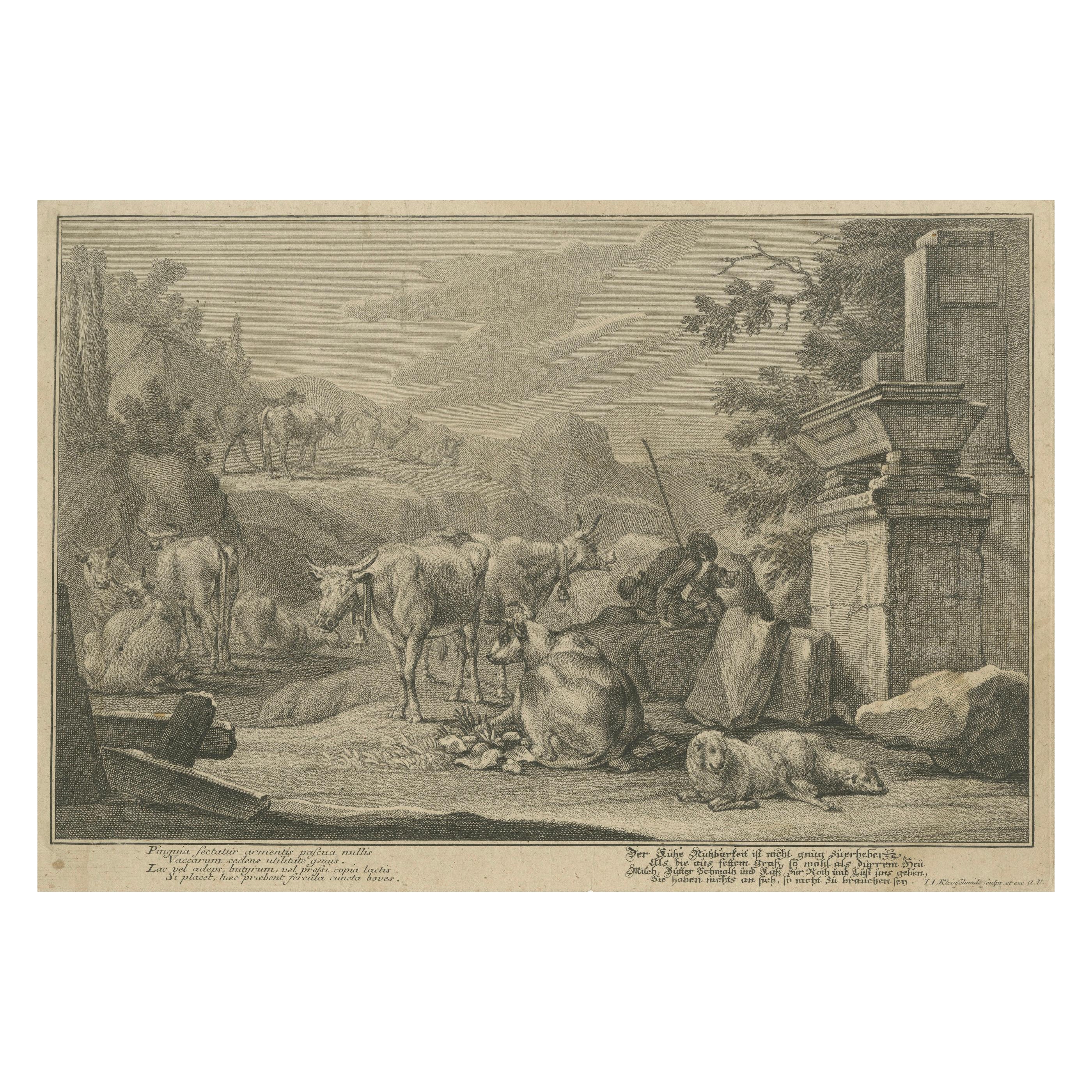
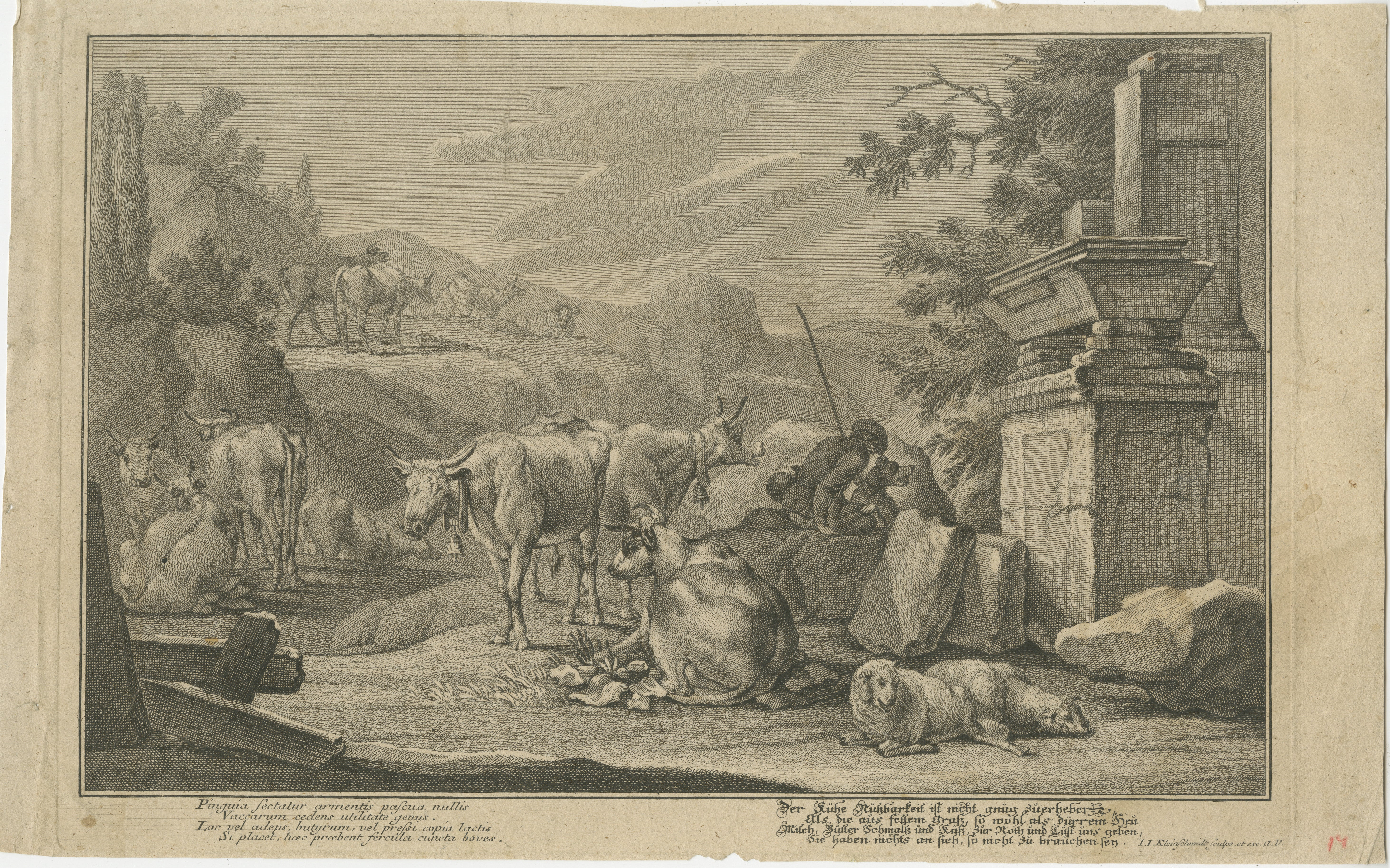
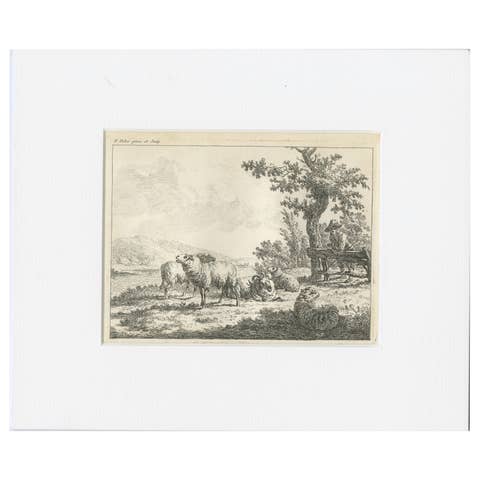
Pastoral Engraving by Johann Jakob Kleinschmidt: Shepherd, Cattle, and Ruins
€ 290
One of a kind: this is the sheet in the photographs. Ships from Langweer, the Netherlands.
Sheet size
25.5 × 41 cm (10.0 × 16.1 in)
Condition
Good
Reference
BG-12678-152
Condition
condition for its age, with toning due to handling and light foxing due to age. Paper edges slightly worn but intact. The engraved details and inscriptions remain clear.
About this sheet
Artist: Johann Jakob Kleinschmidt (1687–1772) Designer: Initials "A.V." (specific identity unknown) Date: Circa 1720–1750 Medium: Engraving on laid paper
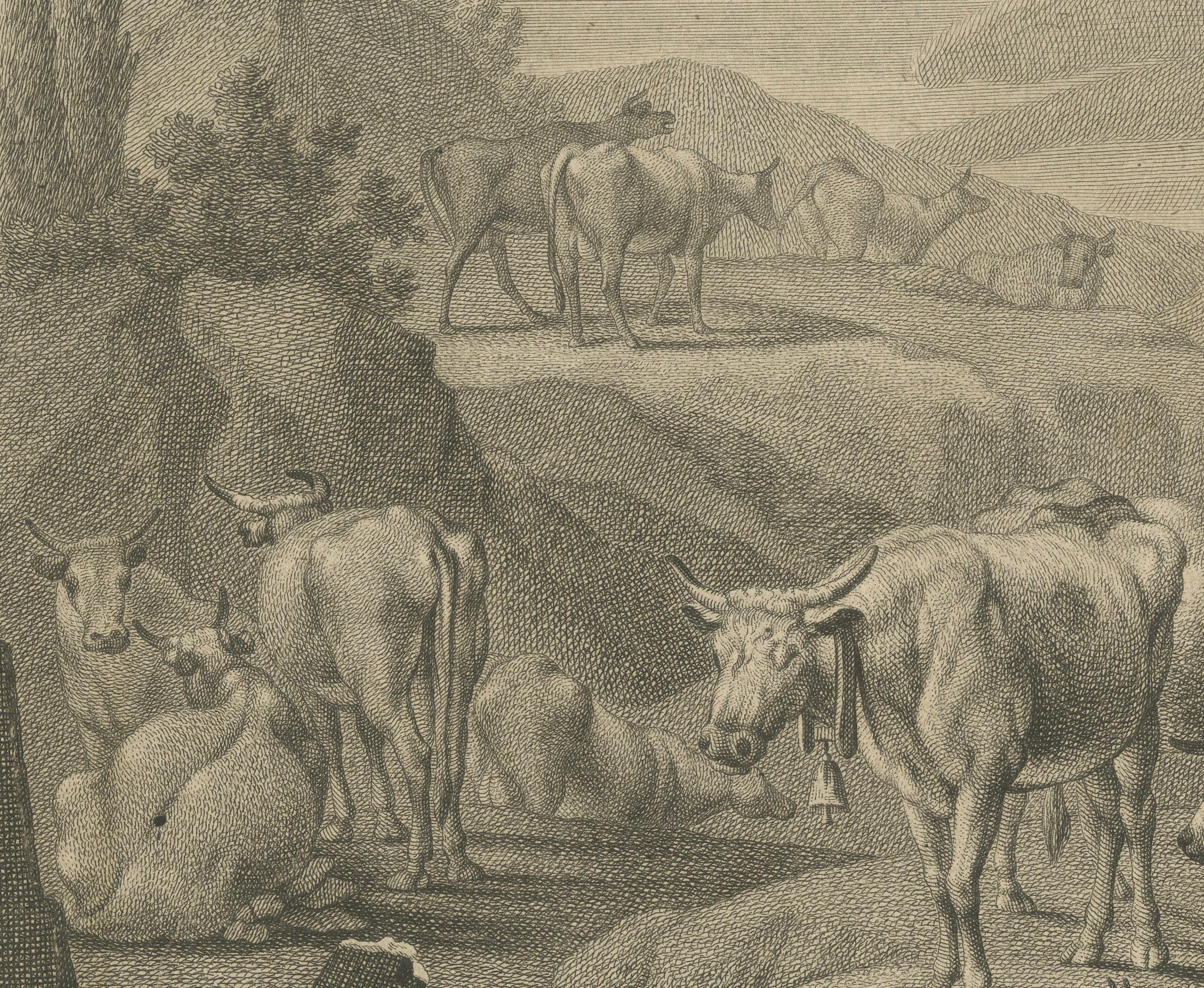
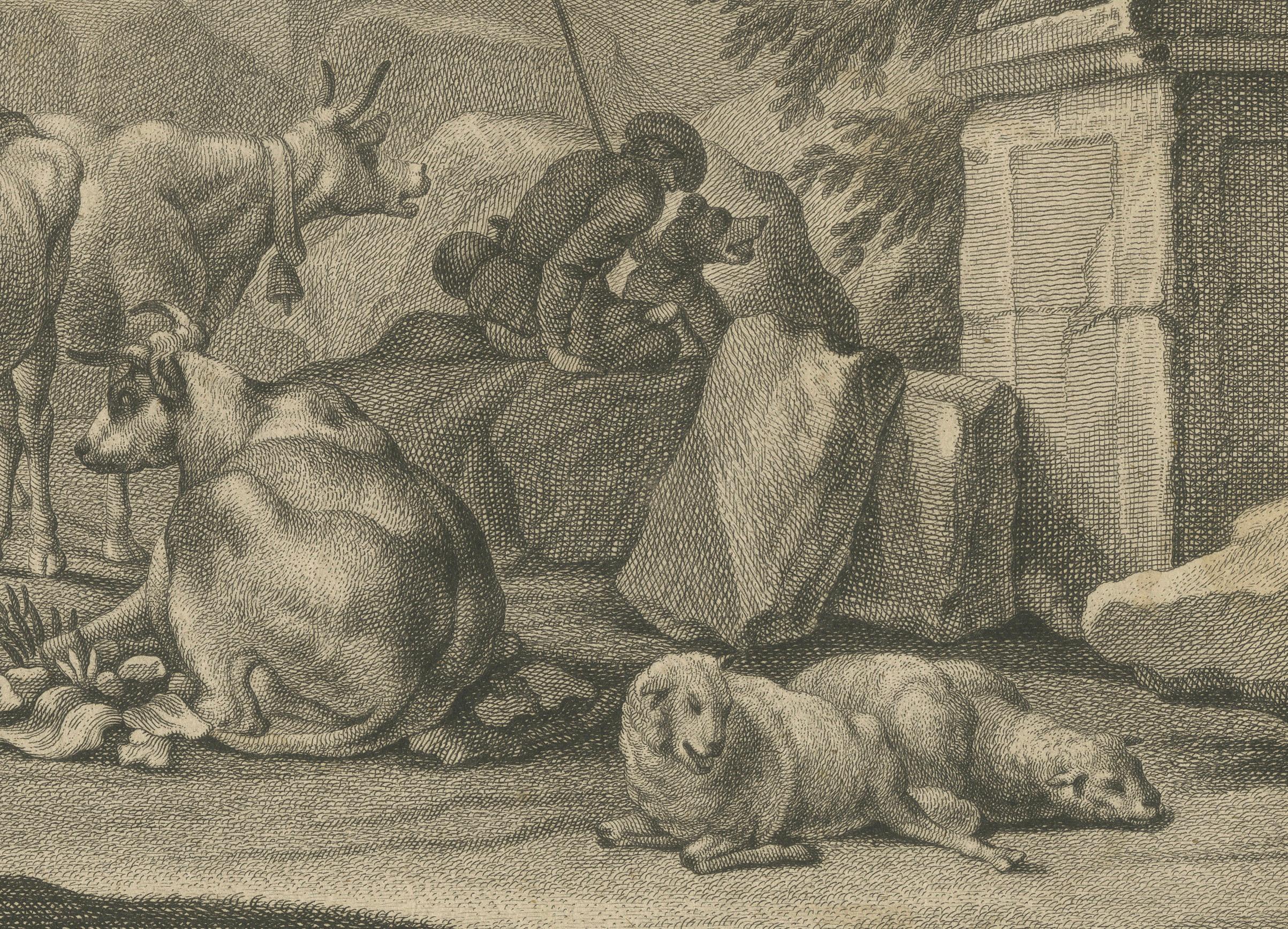
This intricate engraving depicts a peaceful rural landscape featuring cattle, a shepherd with a dog, and two lambs resting in the foreground. To the right, a partially ruined classical column adds a touch of antiquity, while the background reveals rolling hills with grazing animals and trees. The artist captures the idyllic harmony between humans, animals, and nature, reflecting the 18th-century fascination with pastoral scenes.
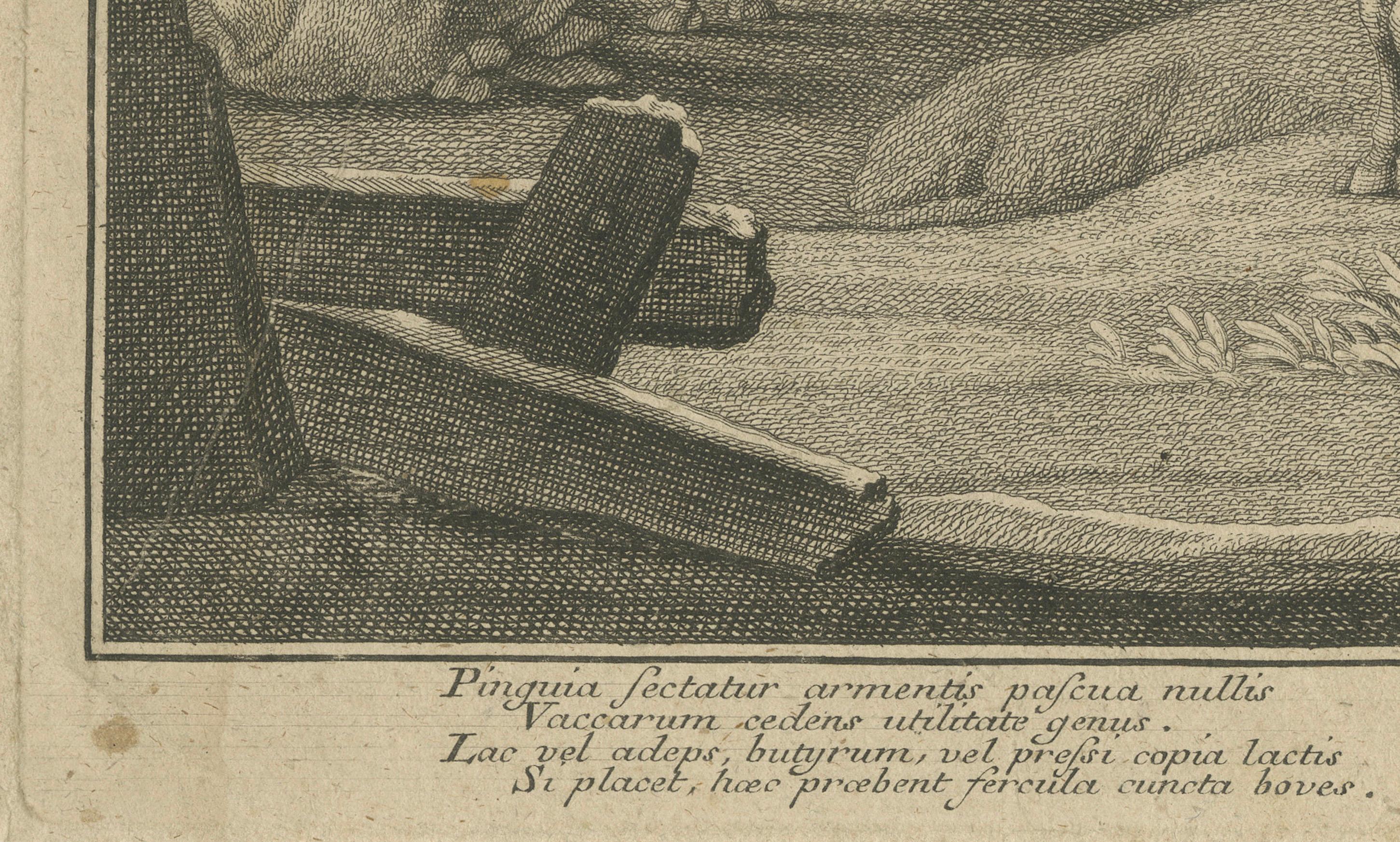
Inscriptions: - Latin Text: > *Pinguias spectatur armentis pascua nullus Vaccarum dumetis subvenit quaqua. Lax pet adur, bufanum vel fipum copia lactis Si placet hoc probant proba, curata boves.*
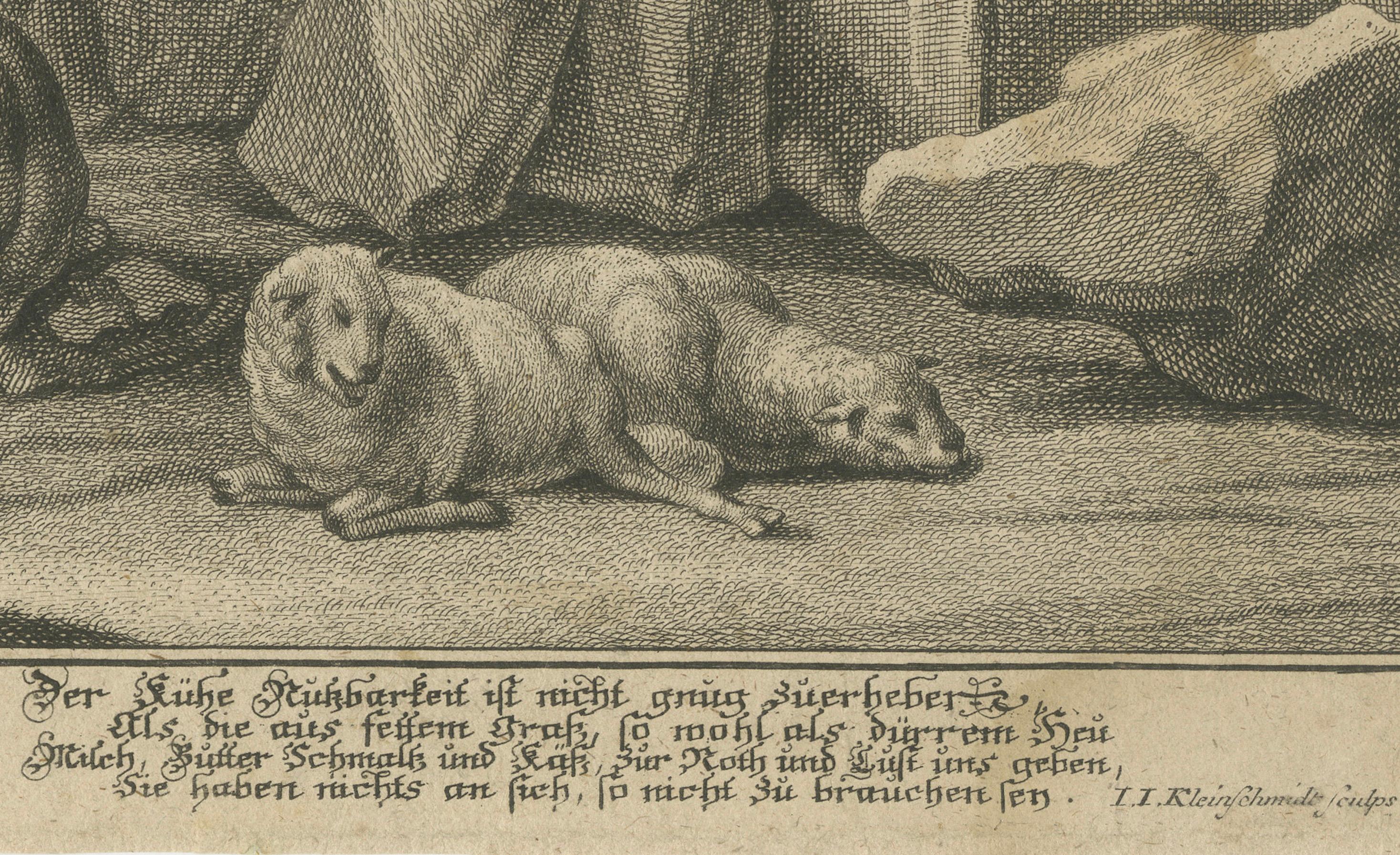
- German Text: > *Der Kühte Fröhlichkeit ist nicht gnüg über herzetz Es ist wie reines Brodt, so wohl als gute Heit. Schlöde, falge Fergnüg ins Koch, in des zu gern gebiert Der hohen meister an sech, so müste als truchens Fröh.*
Interpretation: The Latin text reflects a pastoral theme, possibly emphasizing the abundance and simplicity of rural life. The German text appears to highlight contentment in simple pleasures, contrasting it with idle luxury. Together, they celebrate the virtues of a modest and industrious countryside lifestyle.
Condition: Good condition for its age, with minor toning and light foxing. Paper edges slightly worn but intact. The engraved details and inscriptions remain clear. --- About Johann Jakob Kleinschmidt: Johann Jakob Kleinschmidt (1687–1772) was a German engraver known for his detailed works capturing both pastoral tranquility and dynamic historical subjects. He was active in Augsburg, contributing to the flourishing printmaking industry of the time. Many of his engravings are inspired by earlier artists, reflecting themes of rural life and morality. His works can be found in renowned collections such as the British Museum and the National Portrait Gallery.