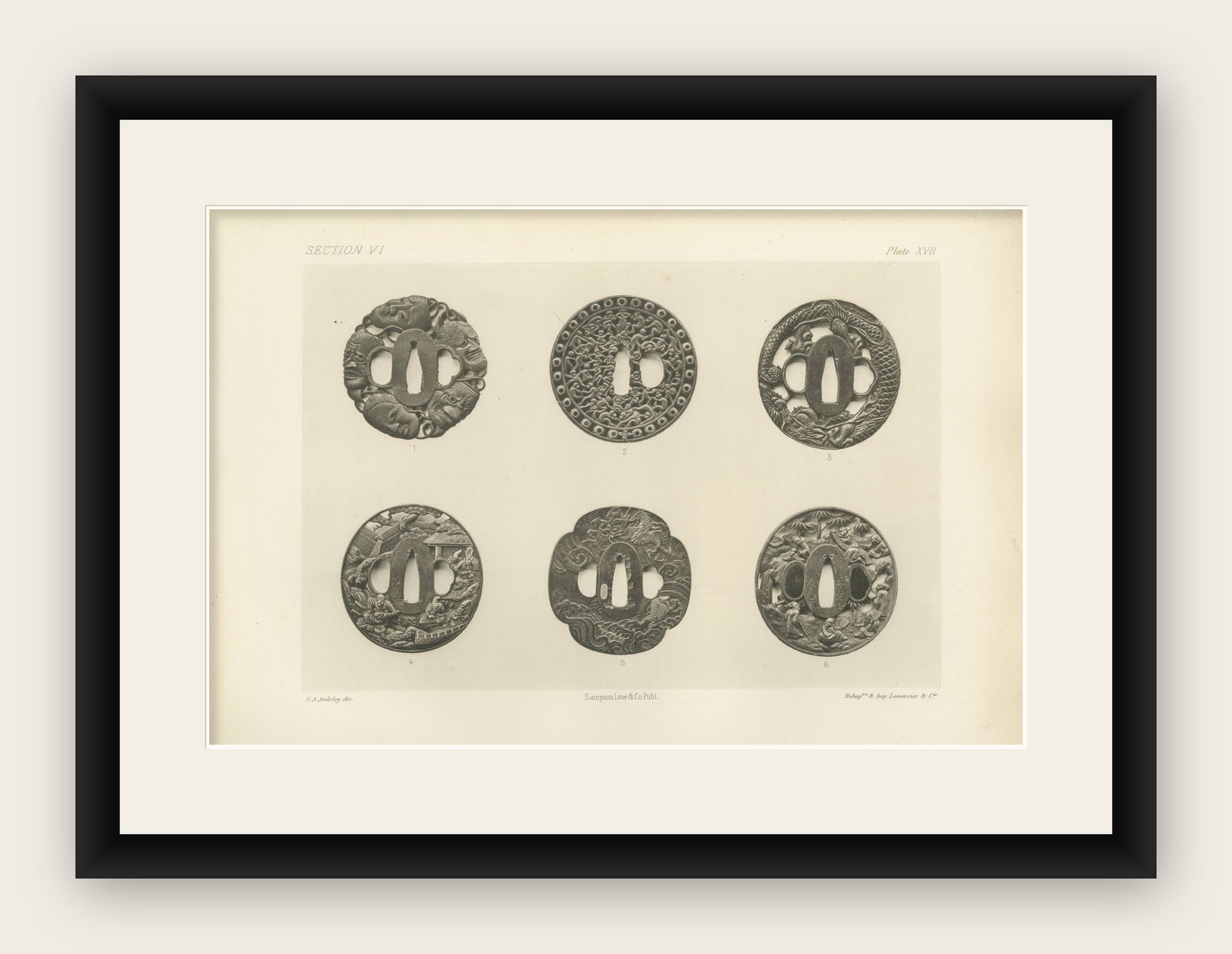
Masterfully Crafted Tsuba with Narrative and Symbolic Motifs– A Heliograph 1884
€ 340
Original antique · The actual sheet photographed · Certificate of authenticity on request · Sold unframed · Worldwide shipping from € 15 (rates)
Date
1884
Sheet size
27 × 40 cm (10.6 × 15.7 in)
Condition
Good
Reference
BG-14034-26
What the condition grades mean
Excellent
Bright and clean, with no faults worth mentioning.
Very good
Only light signs of age, such as faint toning.
Good
Normal signs of age for a sheet of this period: toning, some foxing, small marks or neat old repairs.
Fair
Clear faults such as staining, tears or repairs, priced to match.
Every fault we see is written in the condition note, and the whole sheet is shown uncropped in the photos.
Condition
The print is in very good condition, minor foxing on the margins, and sharp details, typical for its age. The margins are intact and free of tears, ensuring the print remains suitable for framing or display.
About this sheet
Plate XVII from Section VI of G. A. Audsley’s decorative art series features six intricately designed Japanese tsuba (sword guards), showcasing the artistic and cultural significance of Edo-period sword fittings. Published by Sampson Low & Co. and printed by Lemercier & Cie in Paris, this chromolithograph highlights the exquisite detail and symbolism in traditional Japanese metalwork.
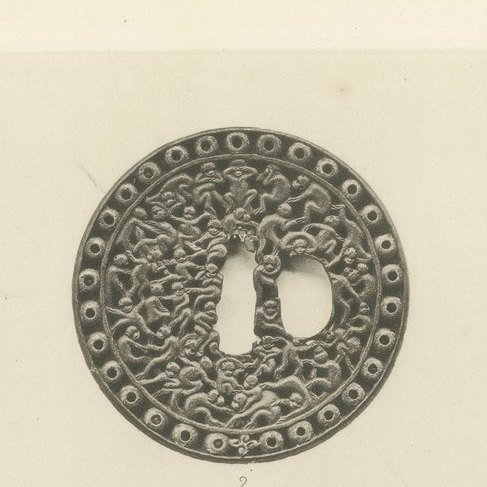
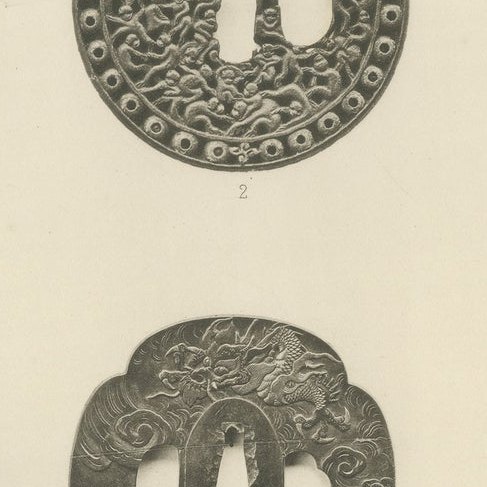
The tsuba depicted in this plate display a variety of designs, including masks and faces evoking theater and folklore, coiling dragons, intricate floral patterns, and serene pastoral scenes. Each piece is a testament to the artistry of its maker, with detailed engravings and dynamic compositions that balance form and function. The central apertures and surrounding openings for sword attachments are seamlessly integrated into the elaborate designs.
Rendered in monochromatic tones, the print emphasizes the textures and intricacies of the metalwork, allowing viewers to appreciate the craftsmanship and narrative depth of each tsuba. These pieces not only served as practical elements of sword construction but also as expressions of cultural identity and artistic refinement.
Provenance: Published by Sampson Low & Co., printed by Lemercier & Cie, Paris
This rare and refined print is ideal for collectors of Japanese art, antique weaponry, or enthusiasts of decorative arts. Perfect for framing, it serves as a timeless celebration of Japanese craftsmanship and cultural heritage.