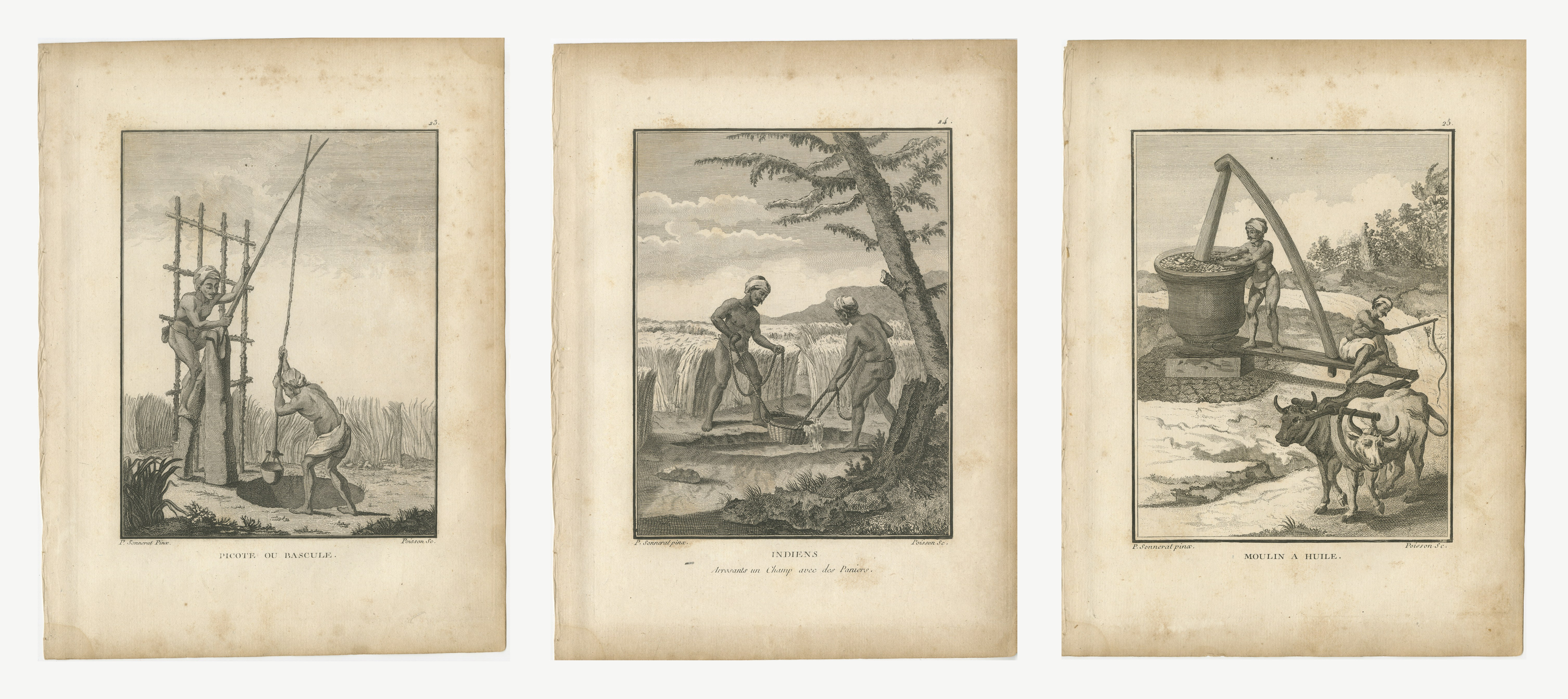
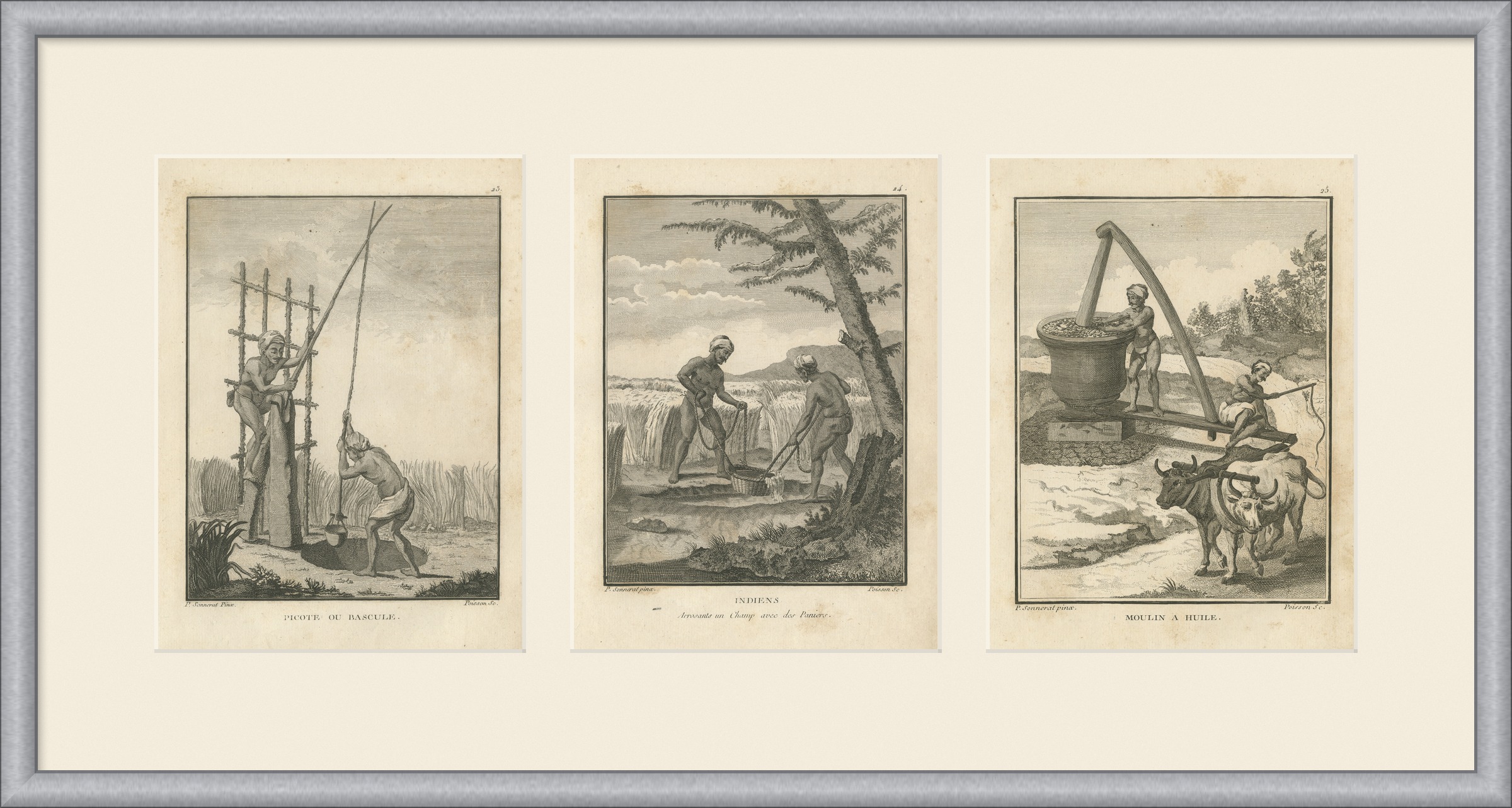
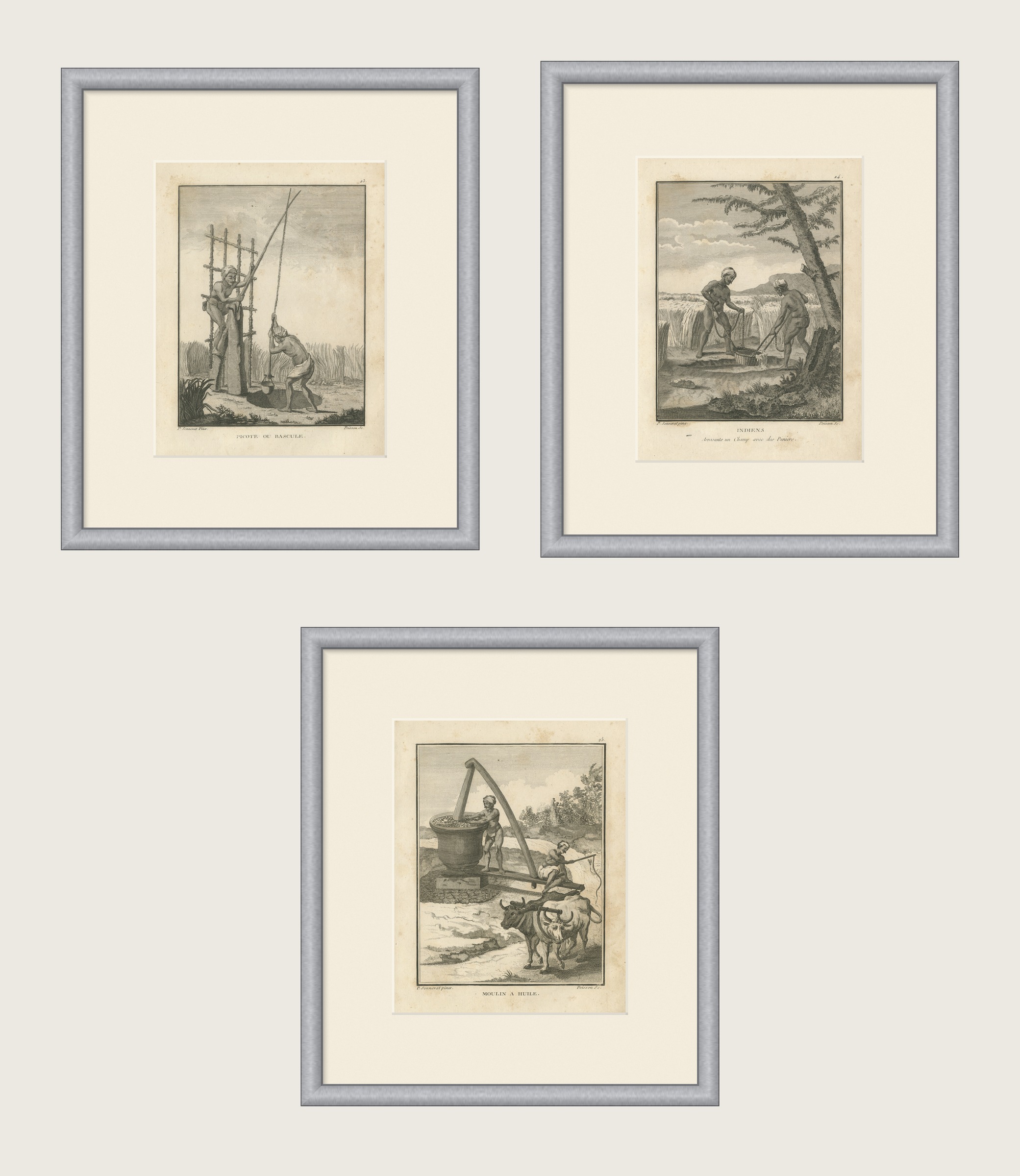
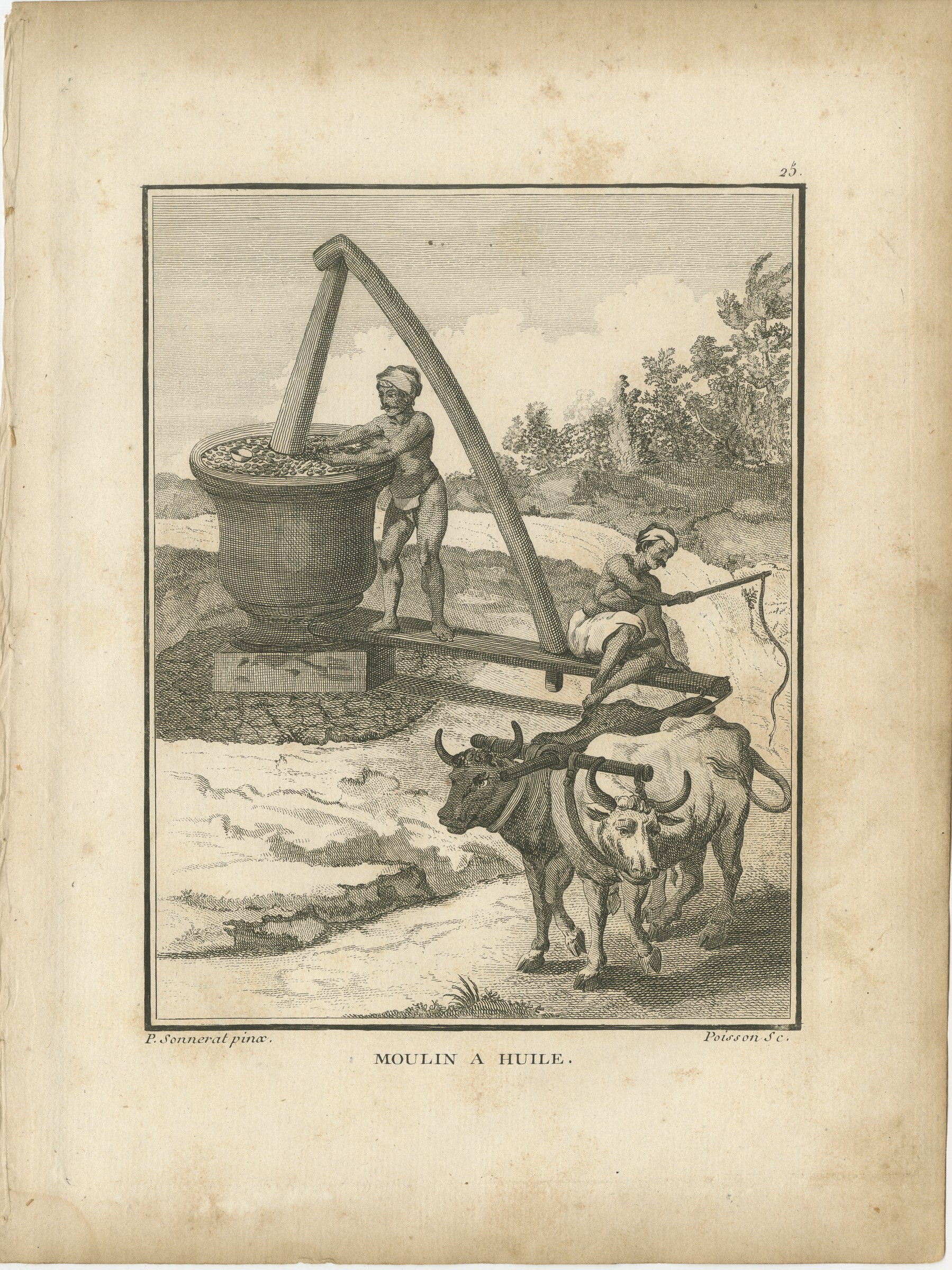
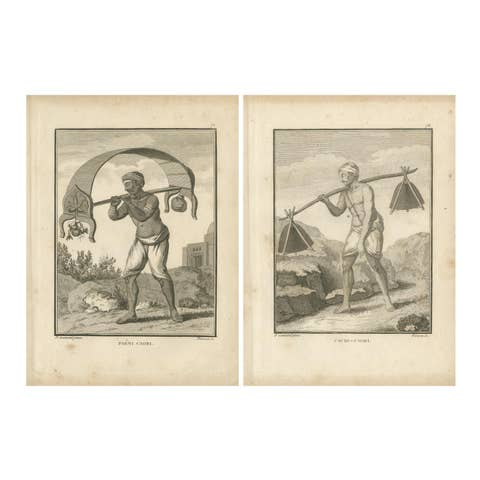
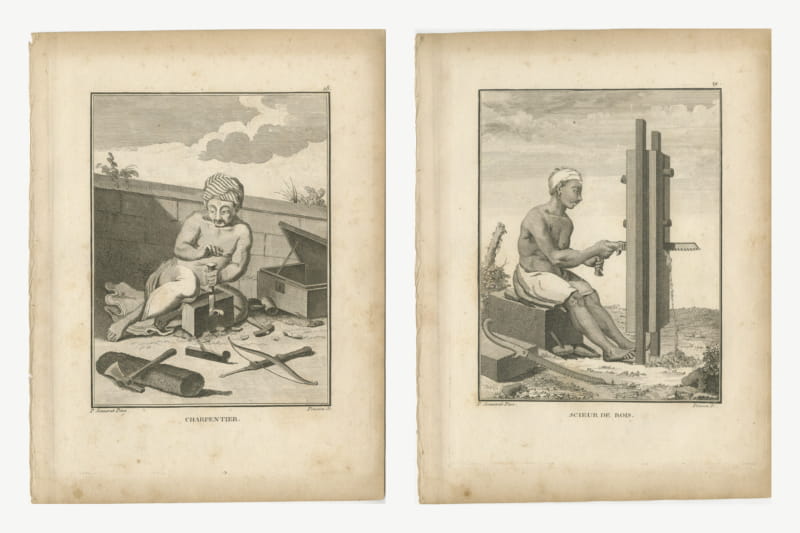
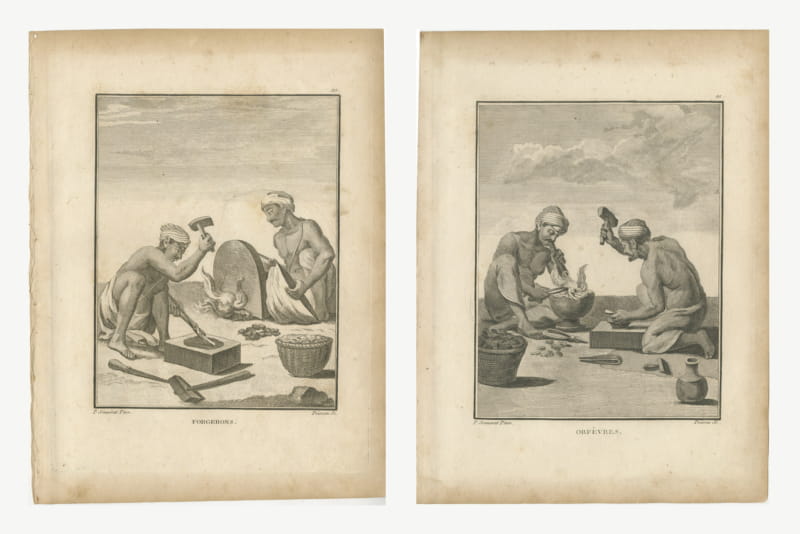
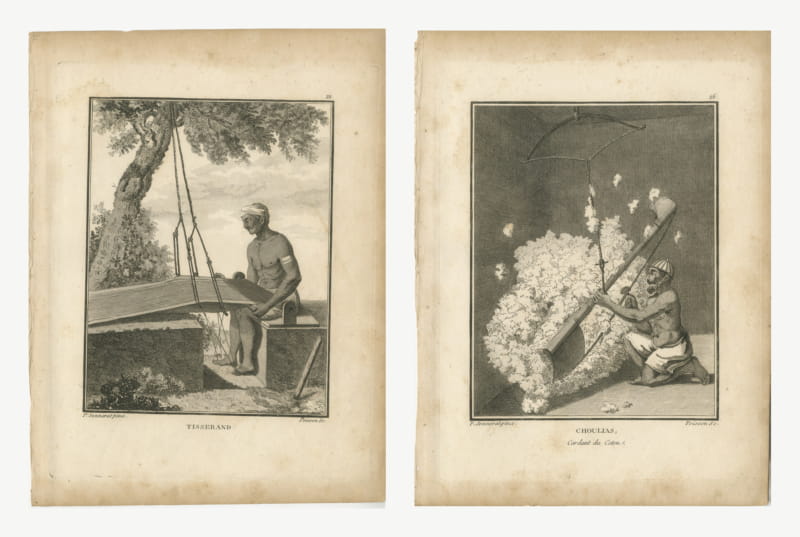
Indian Water Lift, Field Irrigation and Oil Mill, Three Plates, 1806
€ 520
Original antique · The actual sheet photographed · Certificate of authenticity on request · Sold unframed · Worldwide shipping from € 15 (rates)
Date
1806
Mapmaker / artist
Pierre Sonnerat
Publisher
Dentu, Paris
Technique
Copper Engraving
Coloring
Uncolored
Sheet size
28.5 × 21 cm (11.2 × 8.3 in)
Condition
Good
Reference
BG-13429-23
What the condition grades mean
Excellent
Bright and clean, with no faults worth mentioning.
Very good
Only light signs of age, such as faint toning.
Good
Normal signs of age for a sheet of this period: toning, some foxing, small marks or neat old repairs.
Fair
Clear faults such as staining, tears or repairs, priced to match.
Every fault we see is written in the condition note, and the whole sheet is shown uncropped in the photos.
Condition
Noticeable uneven toning on some sheets. Marked handling soiling along the edges of all three sheets. Scattered light foxing in the margins of all three sheets. Slight wear at the corners of two of the three sheets.
About this sheet
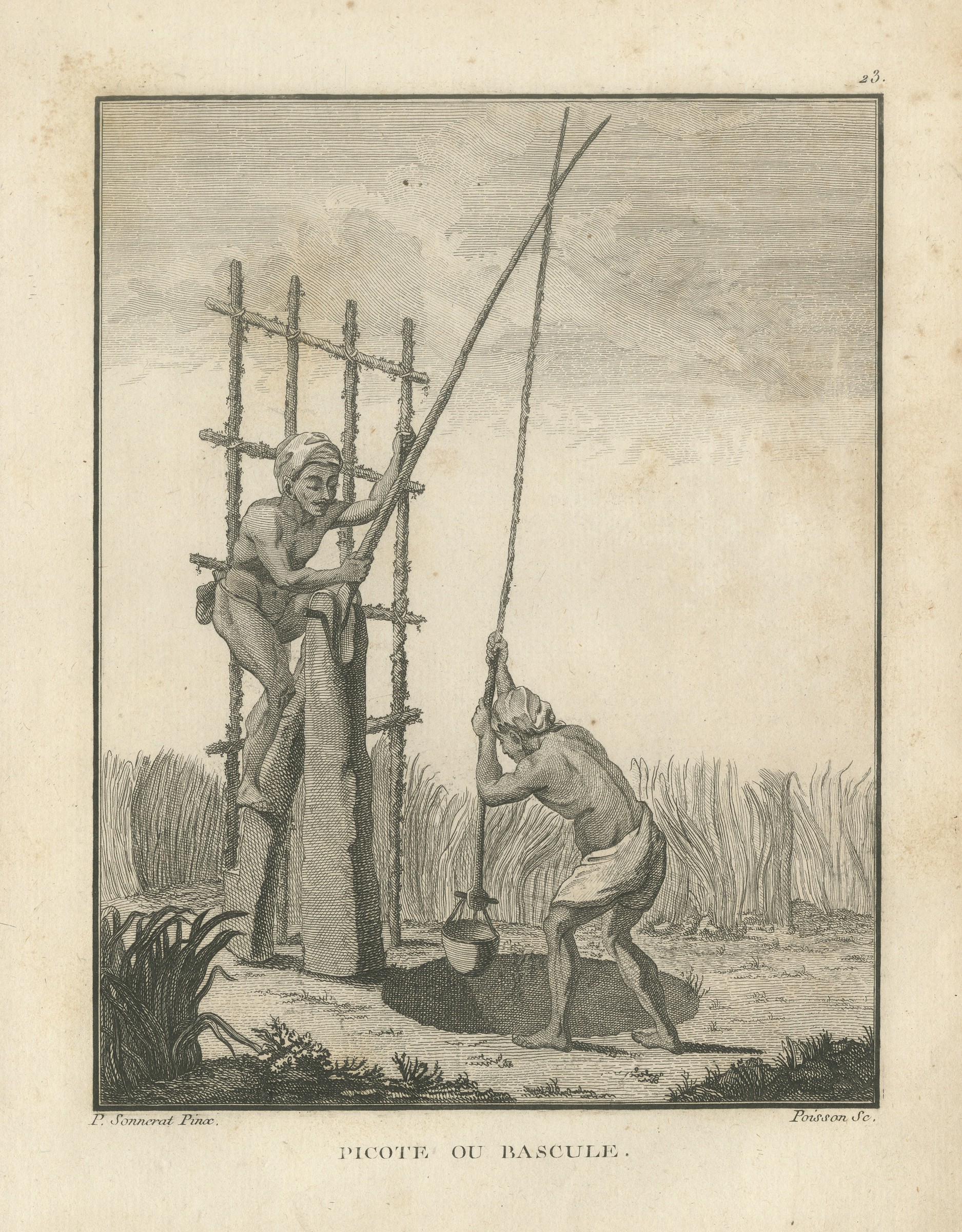
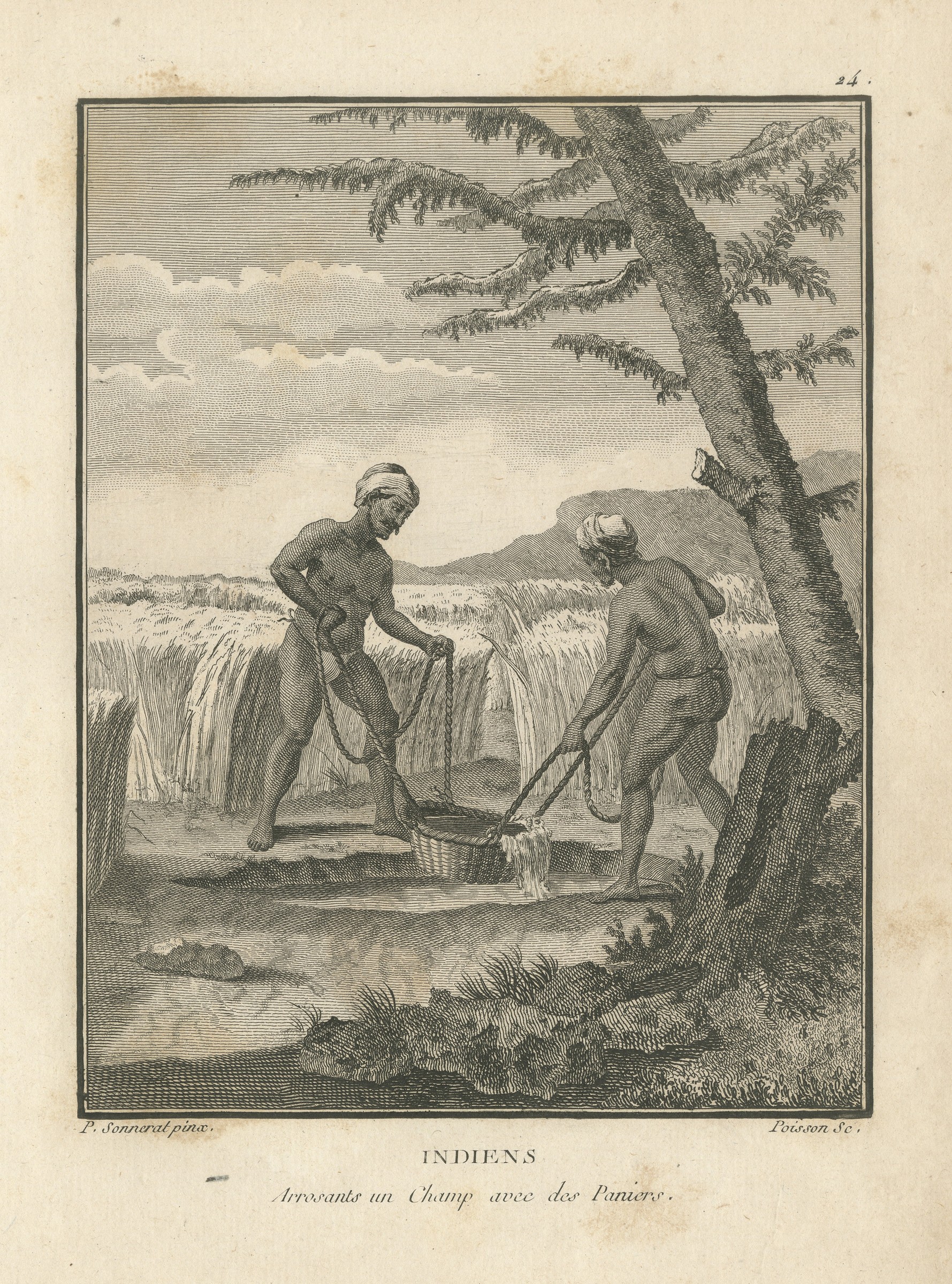
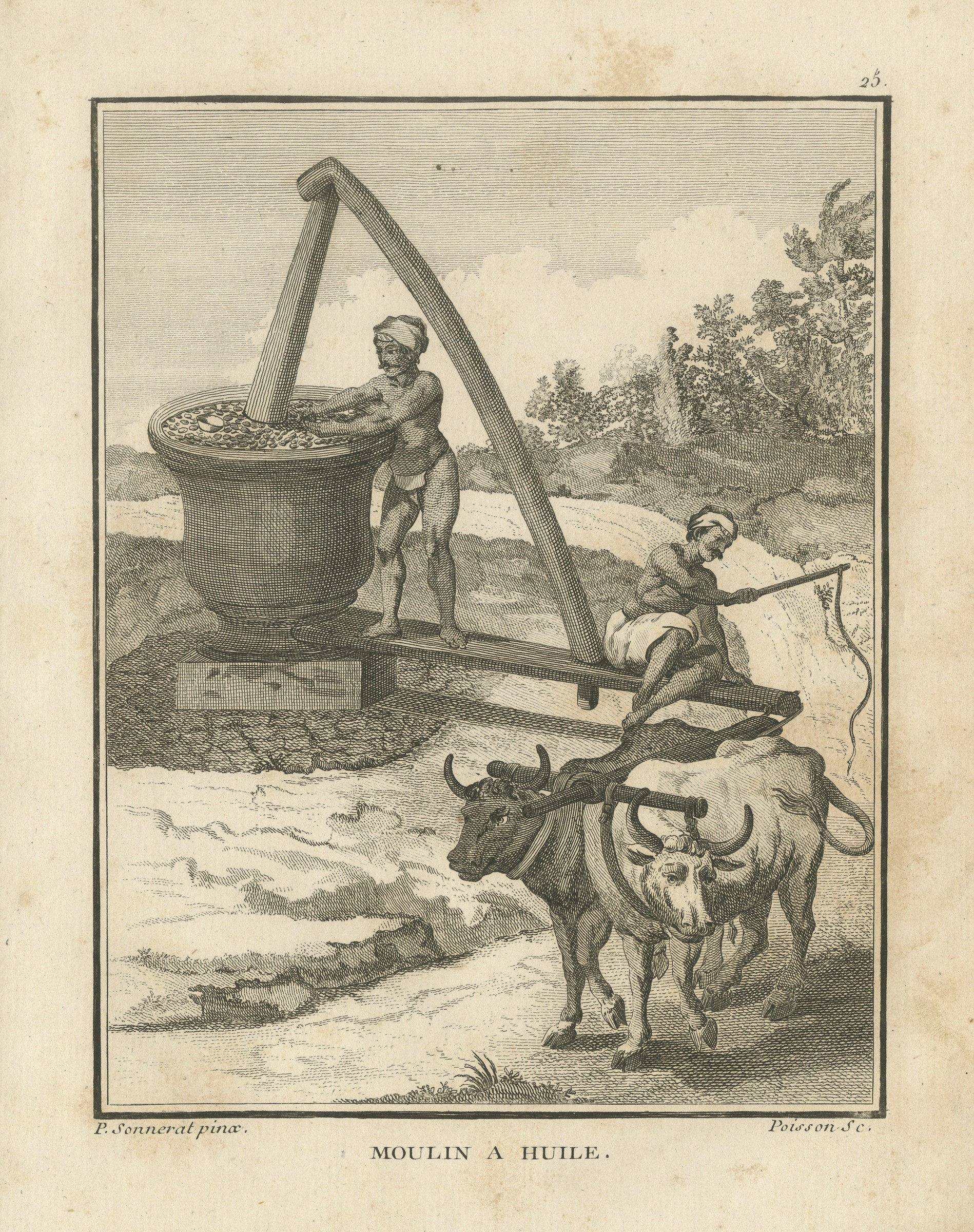
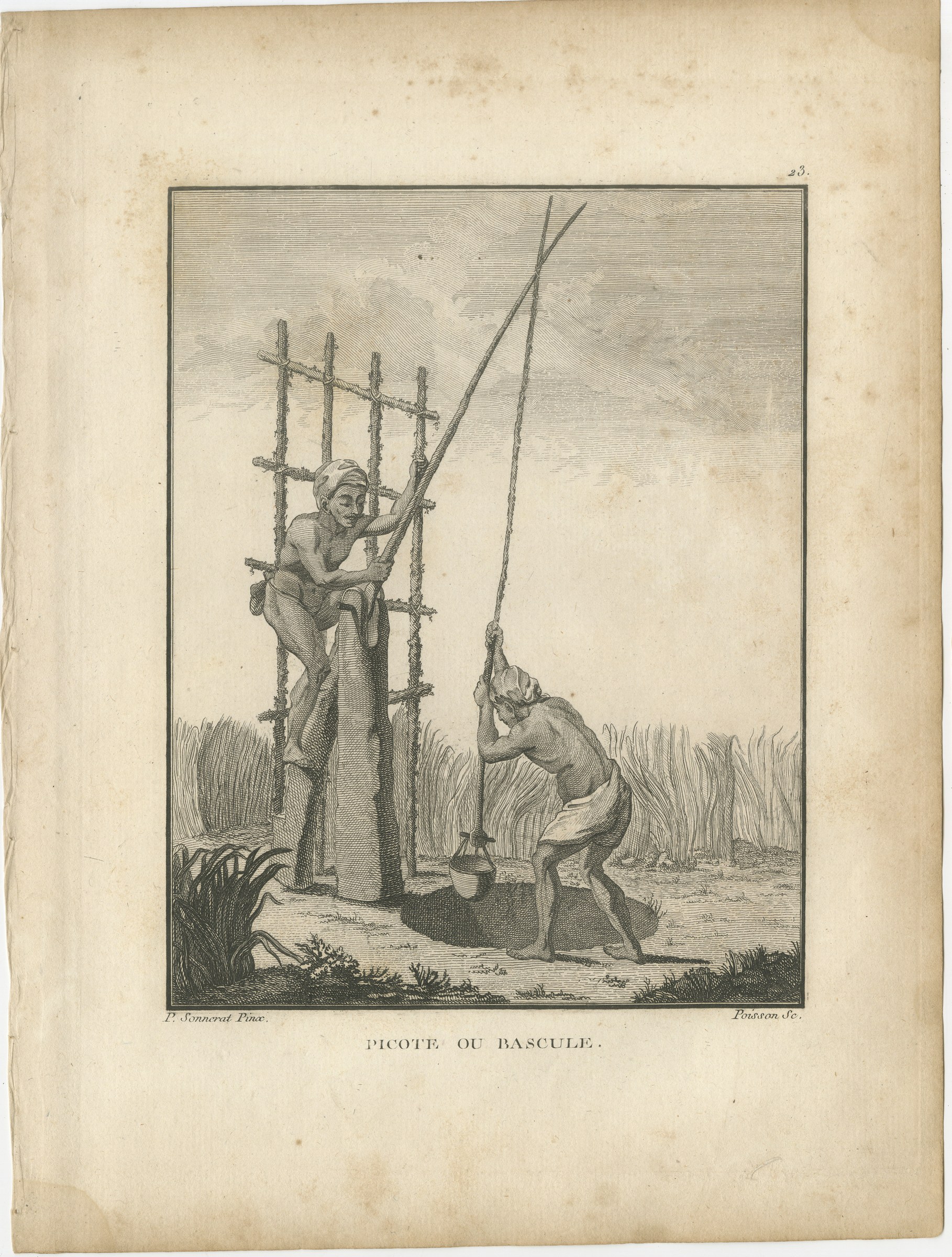
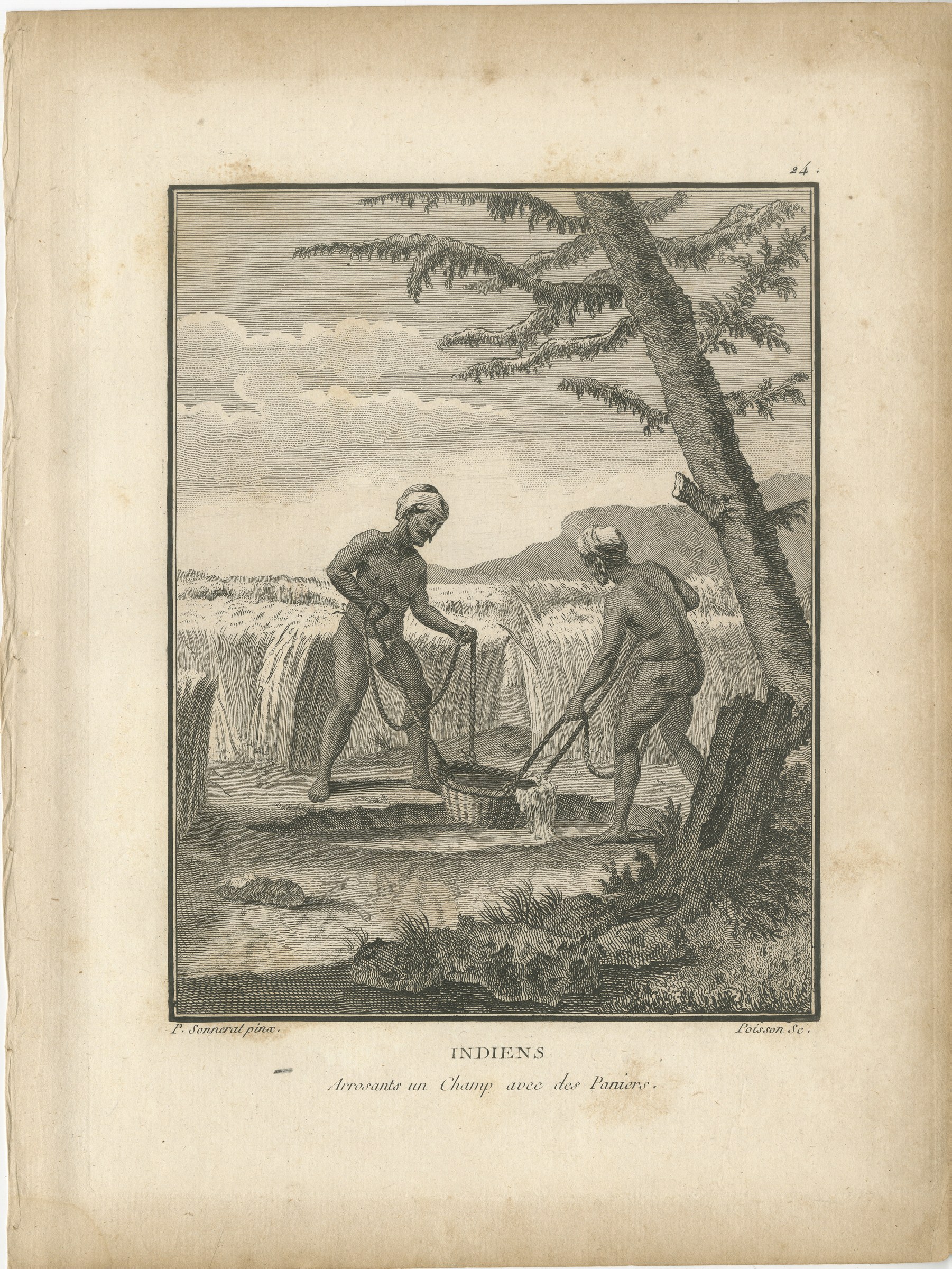
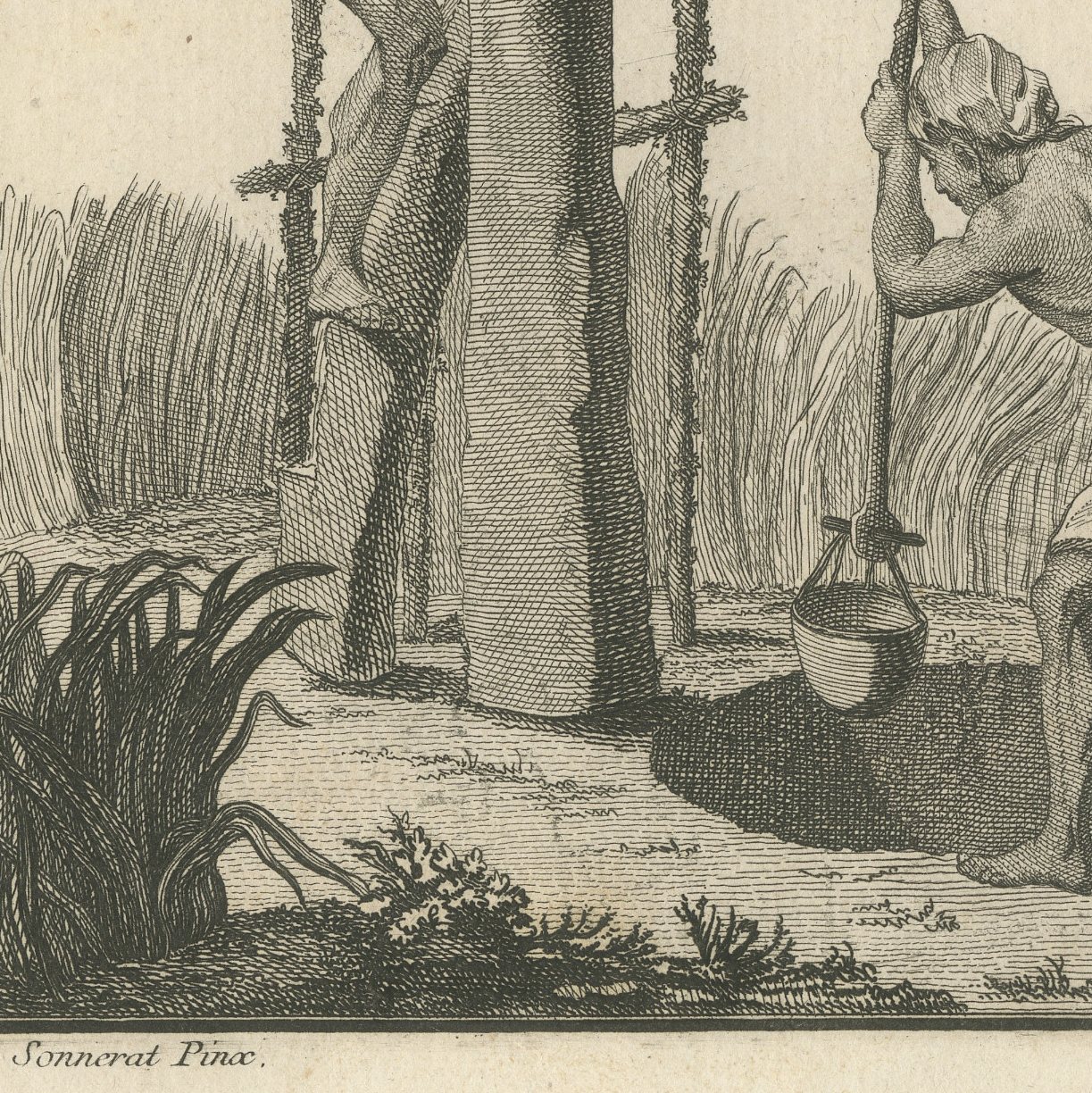
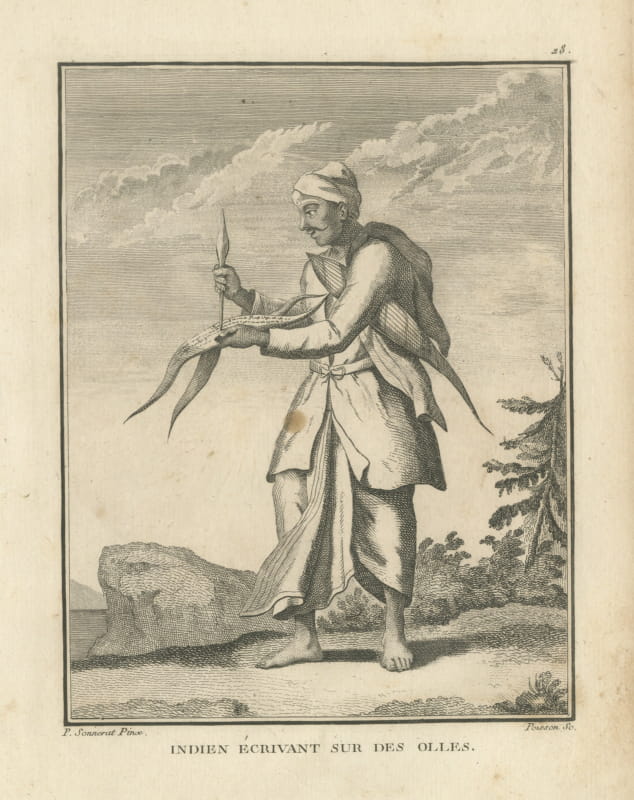
This set of three original antique copper engravings, Plates 23, 24 and 25 from Sonnerat's Voyage aux Indes Orientales et a la Chine, is sold as one set. They are three original sheets sold together as one lot, and the set is never split. Plate 23 shows the picottah, a counterweighted lever used across southern India to lift water from a well into an irrigation channel. Plate 24 shows two Indian laborers swinging a rope slung basket between them to throw water from a channel onto a field. Plate 25 shows an Indian oil mill, a great wooden mortar and pestle turned by a yoked bullock walking in a circle, with the oilman seated alongside. Each sheet carries its engraved plate number at the upper right, the artist and engraver credits at the foot of the image and its caption lettered beneath.
The sheets come from the Collection de planches pour servir au Voyage aux Indes Orientales et a la Chine, the plate volume issued in Paris by Dentu, Imprimeur-Libraire of the quai des Augustins, in 1806. The plates were engraved on copper after drawings Pierre Sonnerat made in the field between 1774 and 1781, while he served the French crown as a naval commissary at Yanam and Pondicherry and traveled on from India to China, Malacca, Madagascar and the Cape of Good Hope. The images are copper engravings, printed in black on laid paper with a clear plate mark, the lettering cut below each image in the same plate. No color was applied, which is how the volume was issued.
The plates of Indian life are the part of Sonnerat's work that collectors look for first. He recorded the trades, the tools, the ceremonies and the religion of the Tamil country at a moment when very few Europeans were doing so with any care, and he did it without the condescension that runs through most travel books of his century. The working plates in particular are a straightforward record of how things were made. All three sheets are the same size and the same orientation and come from one volume of one book, which is why they are offered as a set and not one at a time. Pierre Sonnerat, born in Lyon in about 1748 and dead in Paris in 1814, was the nephew and private secretary of Pierre Poivre, the colonial administrator who broke the Dutch monopoly on the spice trade. Sonnerat traveled in the Philippines and the Moluccas, in Mauritius and Reunion, and then through India, China, Malacca, Madagascar and the Cape. He drew what he saw, which is why the plates have a directness that engravings worked up in Paris from other men's notes rarely have.
Noticeable uneven toning on some sheets. Marked handling soiling along the edges of all three sheets. Scattered light foxing in the margins of all three sheets. Slight wear at the corners of two of the three sheets.
These are original antique prints, not modern reproductions. This item is sold unframed. Any framed or interior images are shown for presentation and inspiration only, unless the listing explicitly states that the item is sold framed.