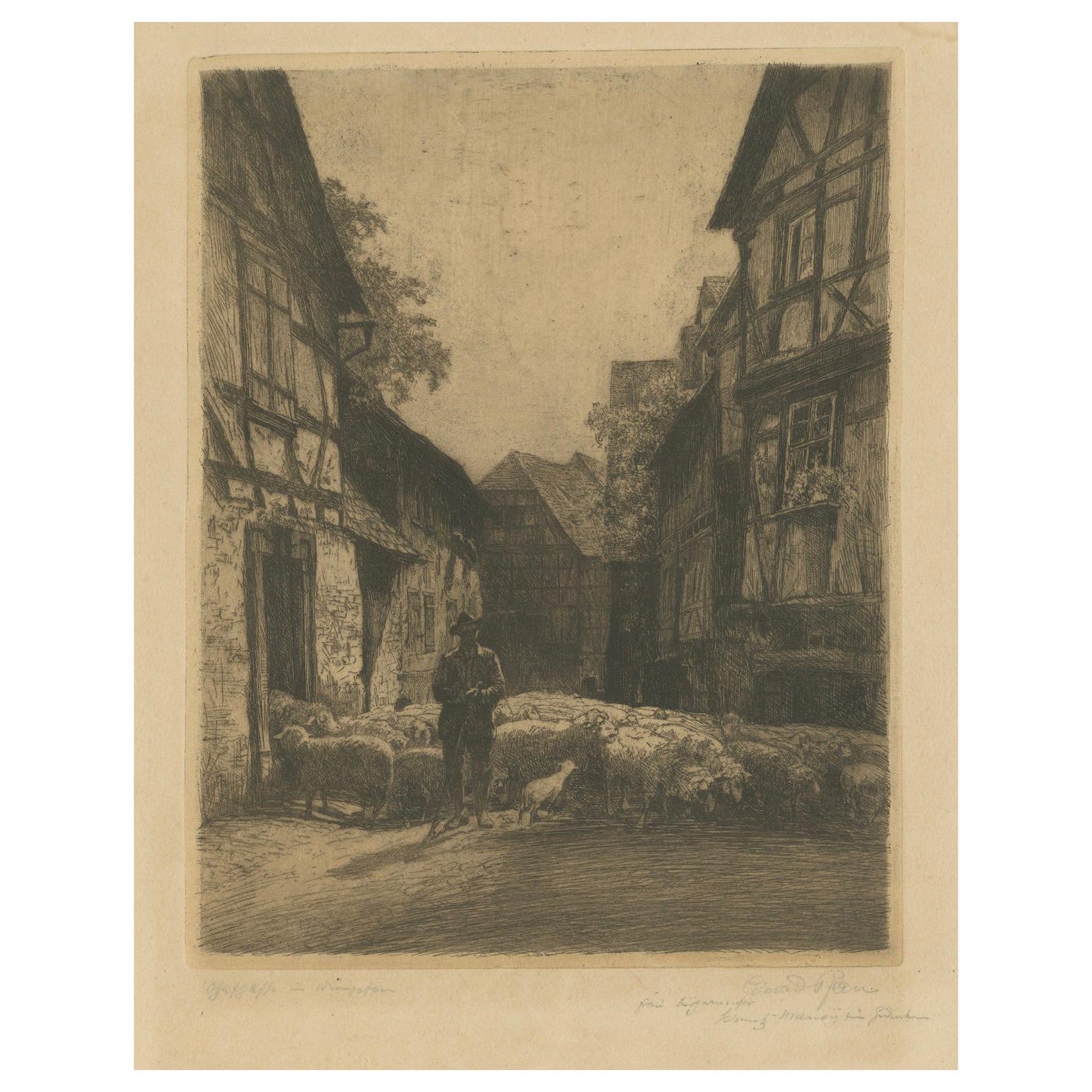
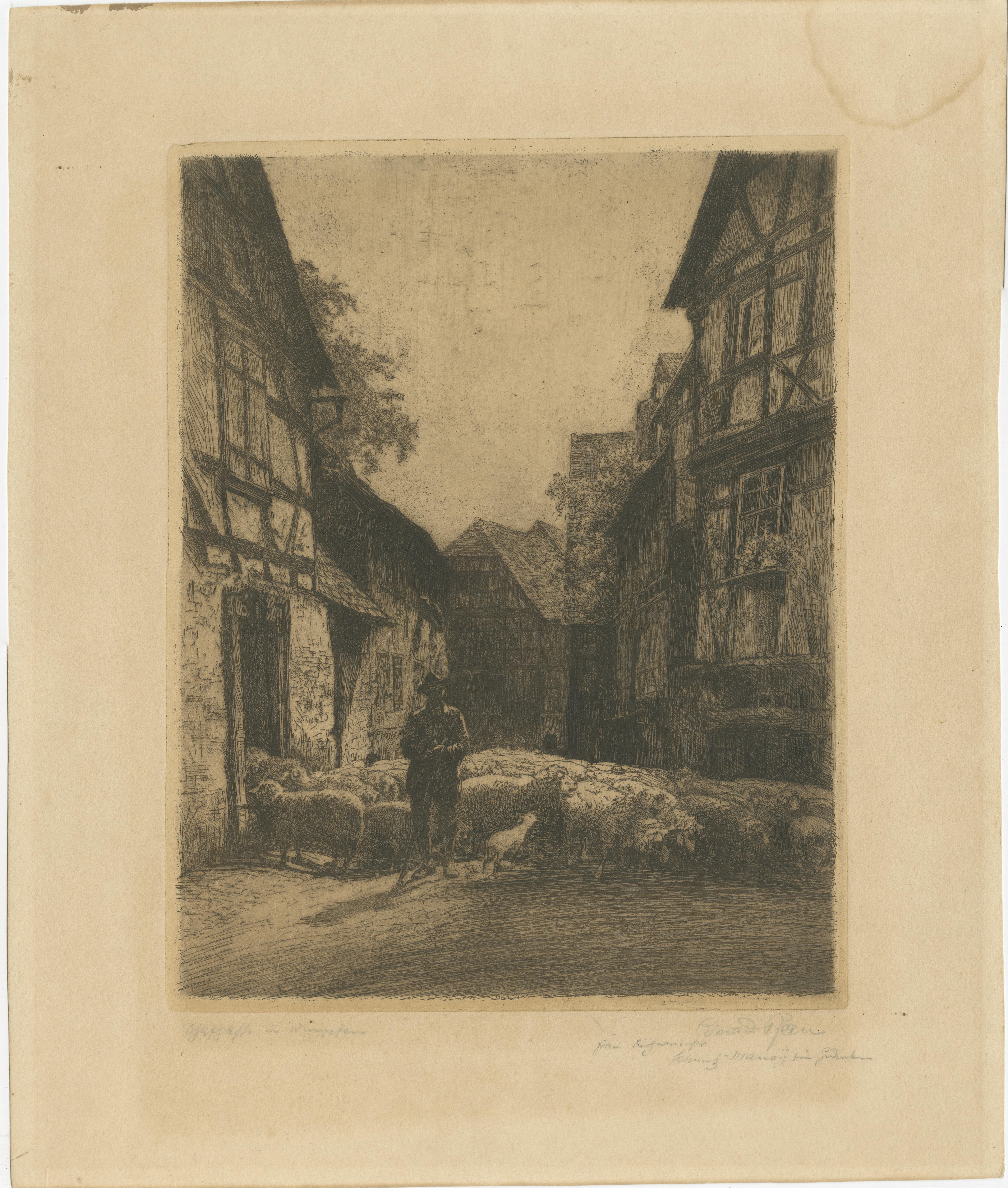
Antique etching: German Village, Shepherd & Flock, signed ‘Conrad Rau’, ca.1920
€ 360
One of a kind: this is the sheet in the photographs. Ships from Langweer, the Netherlands.
Date
1920
Sheet size
40.2 × 33.5 cm (15.8 × 13.2 in)
Condition
Good
Reference
BG-12209-232
Condition
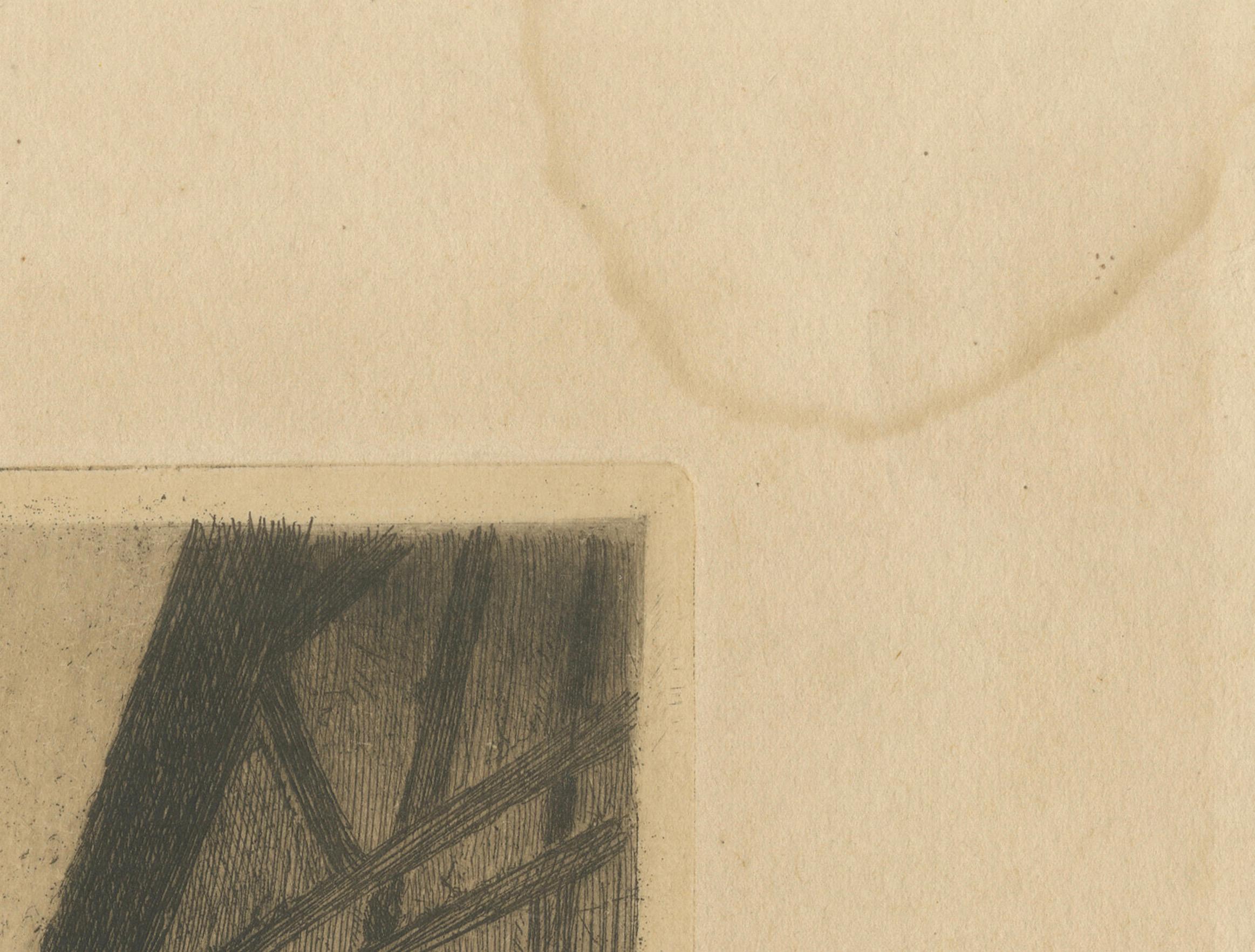
Condition report: Good, honest early 20th-century impression with plate tone. Overall age toning to sheet; scattered tiny specks in the sky; a faint tide or cup ring in the upper margin, well outside the image.
About this sheet
Antique etching: German village, shepherd & flock, signed ‘Conrad Rau’
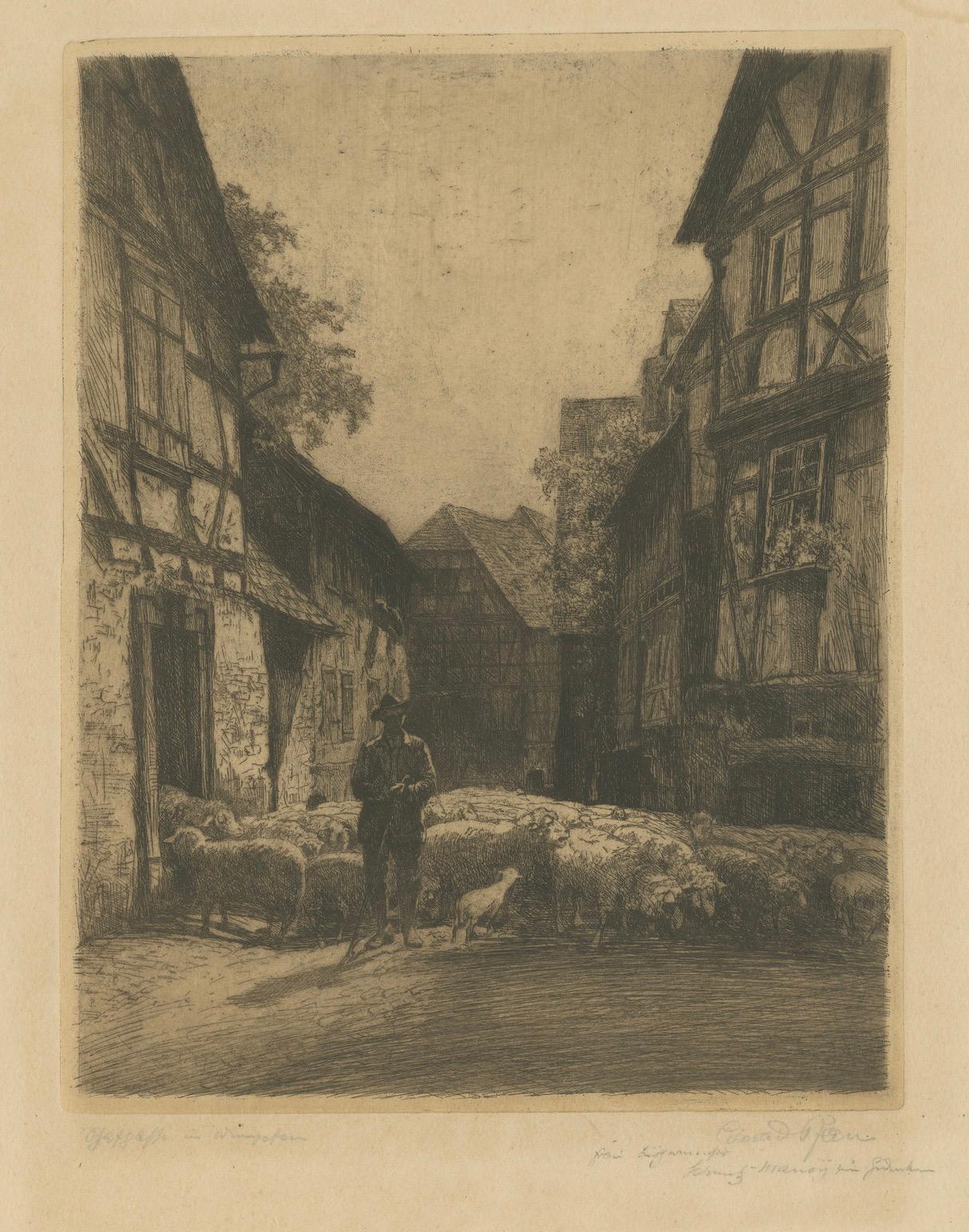
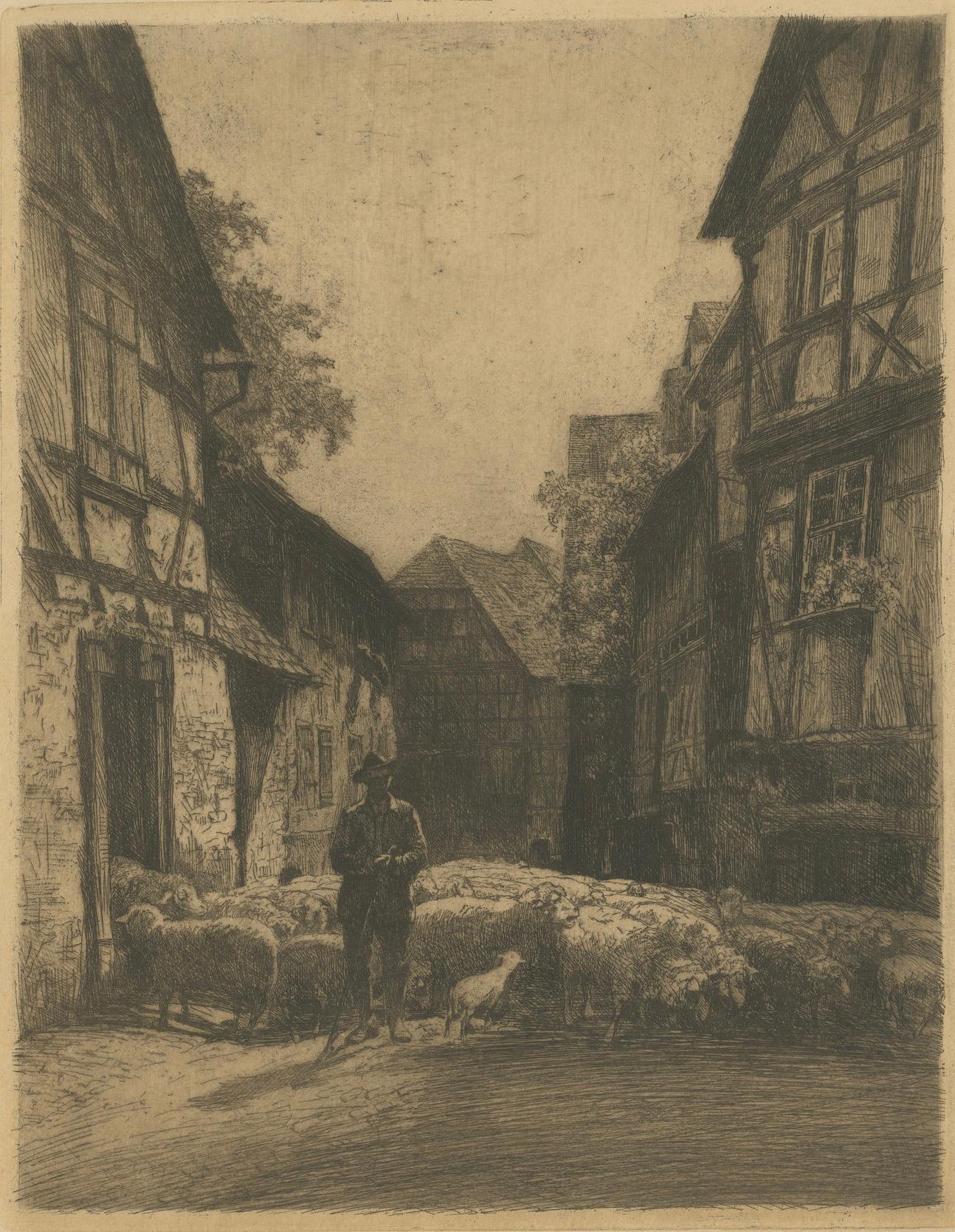
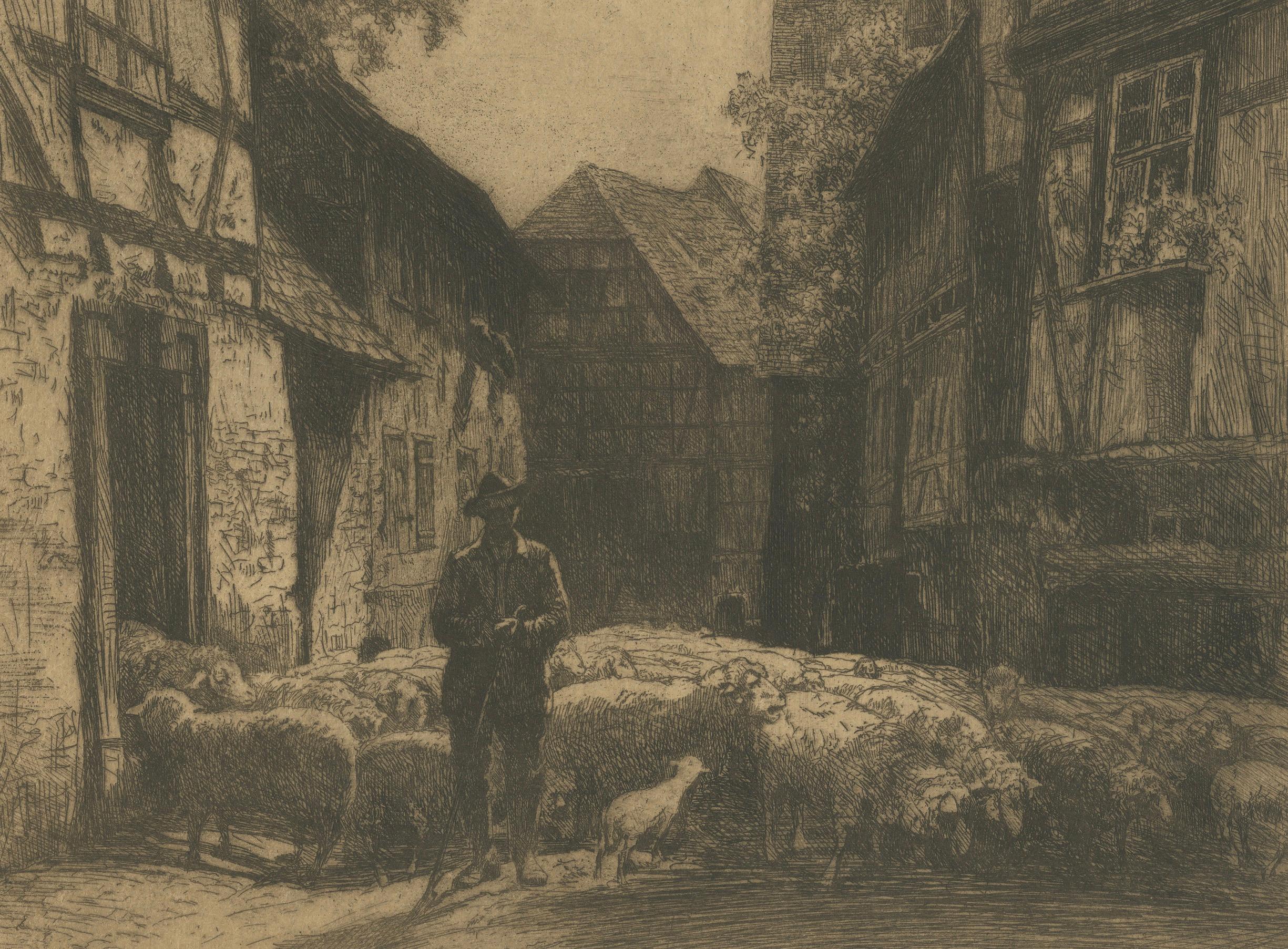
A richly worked etching of a narrow German street framed by tall half-timbered houses. In the foreground a shepherd pauses with his crook while a dense flock fills the lane; a small dog keeps close watch at his feet. The artist has built the architecture with fine cross-hatching and left a soft plate tone in the sky so the façades and foliage read in gentle chiaroscuro. It is an intimate, atmospheric study of rural life in a medieval townscape.
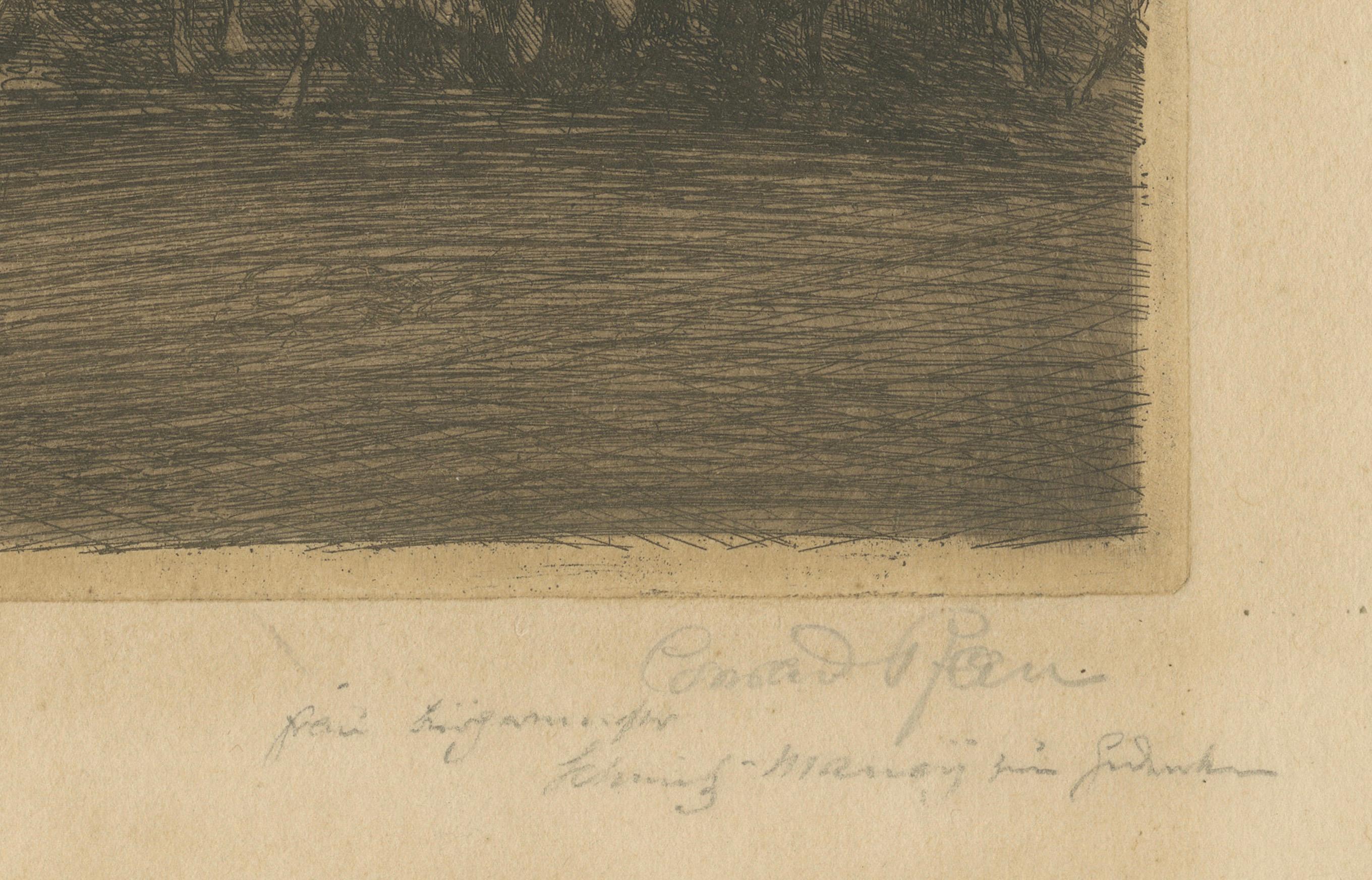
In pencil along the lower margin the sheet is signed “Conrad H. Rau” (more research needed) at right and bears a faint location note at left, reading along the lines of “Offstadt in Wimpfen” (likely referring to Bad Wimpfen in Baden-Württemberg). There also appears to be a brief dedication mentioning Dresden. On stylistic grounds and materials, the print is most plausibly early 20th century. While the signature vagely reads Conrad H. Rau and matches other period German graphic hands, further documentary research would be helpful to confirm the identity and dates of the maker; we therefore list the artist as “Conrad (attributed)” pending deeper verification. Regardless of the final attribution, the plate shows skilled handling of line and tone, particularly in the textures of stonework, timber framing and wool, and it sits comfortably within the tradition of German town-view etching between the wars.
This impression has a strong platemark and generous margins, ideal for conservation framing. The subject will appeal to collectors of European topography, pastoral scenes and German half-timbered architecture. It presents well on the wall, with a warm, even tonal palette that suits both traditional and modern interiors.
Condition report: Good, honest early 20th-century impression with plate tone. Overall age toning to sheet; scattered tiny specks in the sky; a faint tide or cup ring in the upper margin, well outside the image; light handling and small hinge remnants at the top edge. No tears into the image; paper sound and stable.
Framing tips: A simple dark oak or black frame works well with the architecture; pair with a warm off-white or light cream window mount to complement the paper tone. Keep the full margins visible to show the platemark and pencil inscriptions. Use UV-filter glazing.
Technique: Etching (intaglio), possibly with touches of drypoint Maker: Conrad H. Rau (attributed), German, early 20th century; further research needed