About this sheet
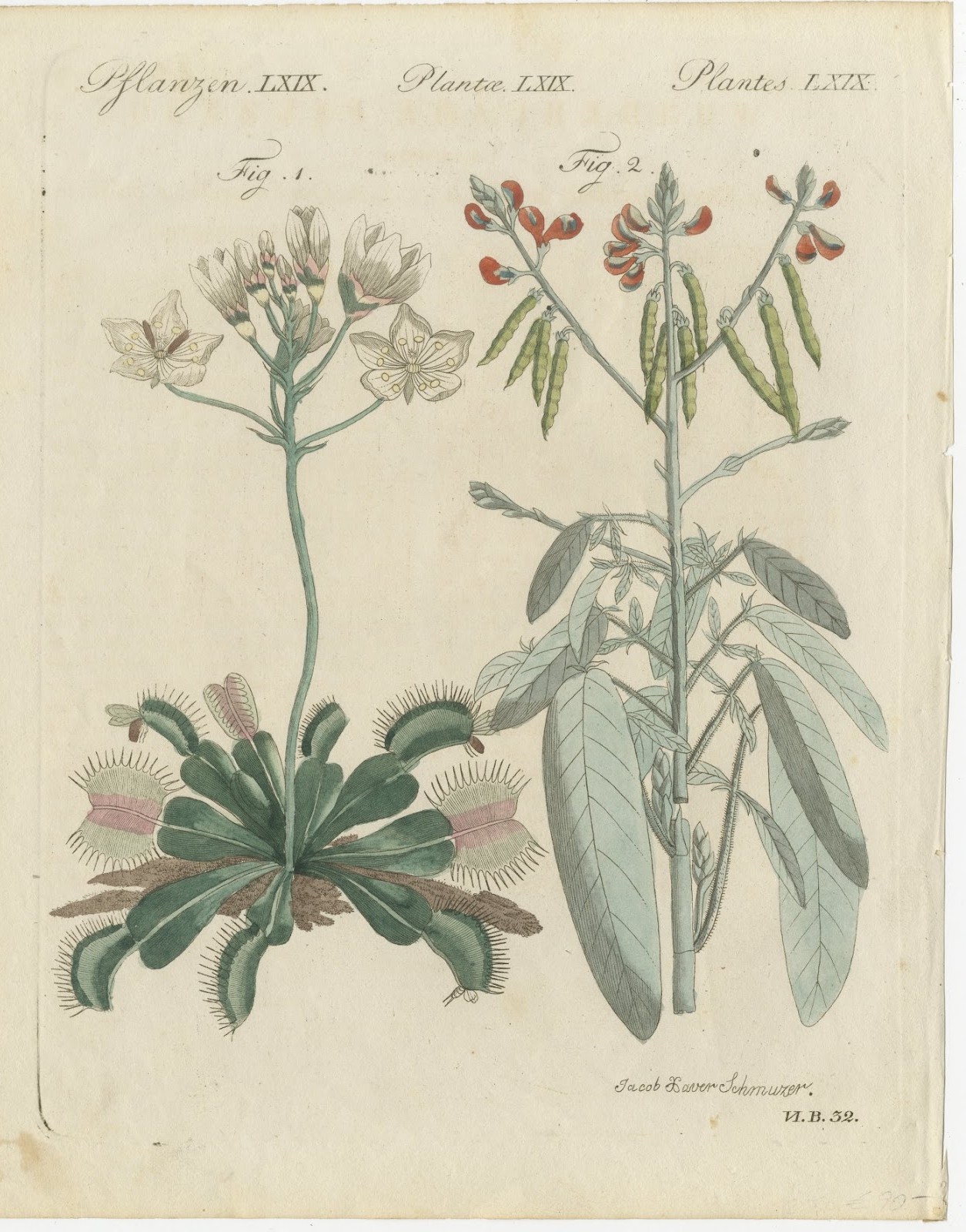
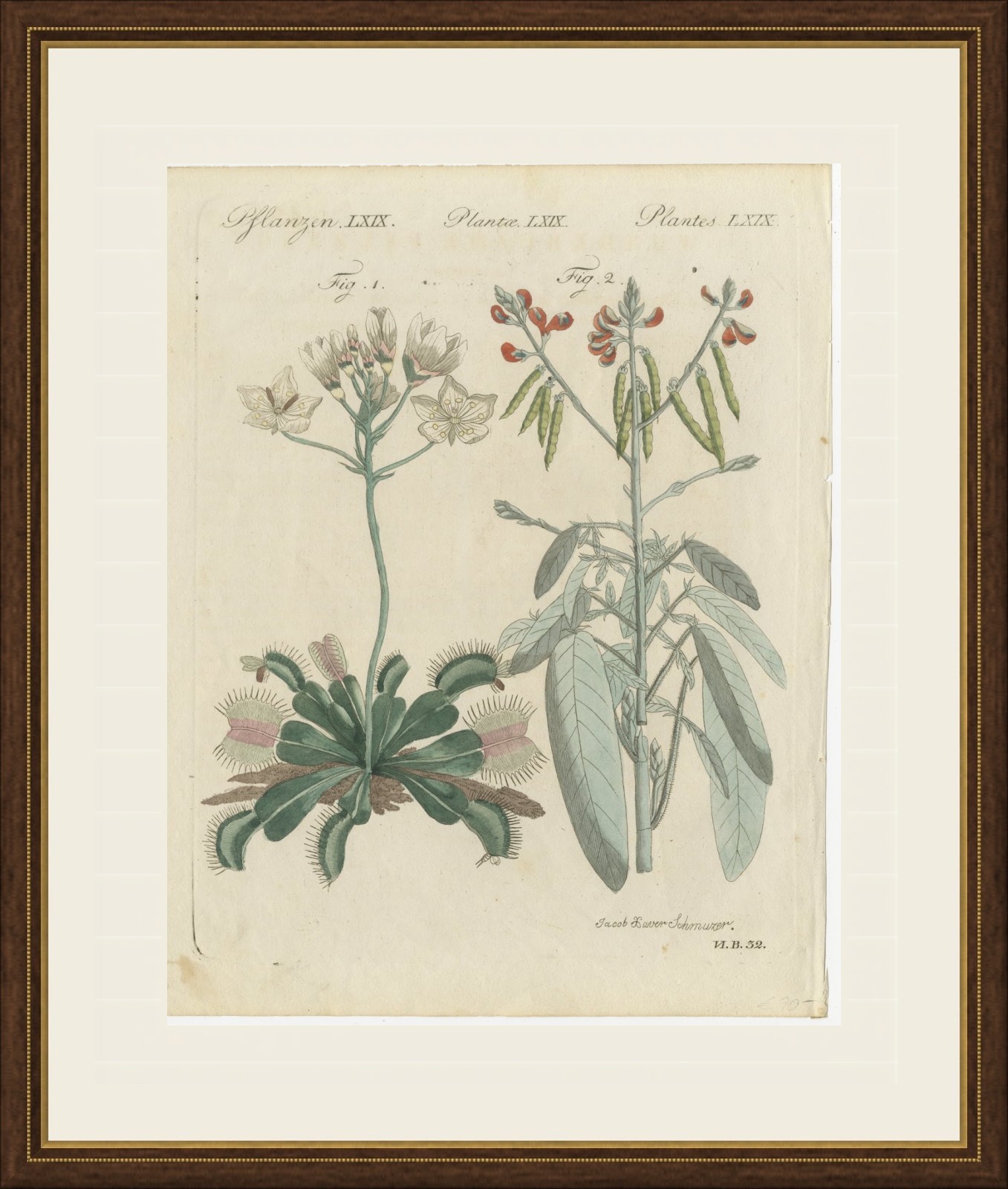
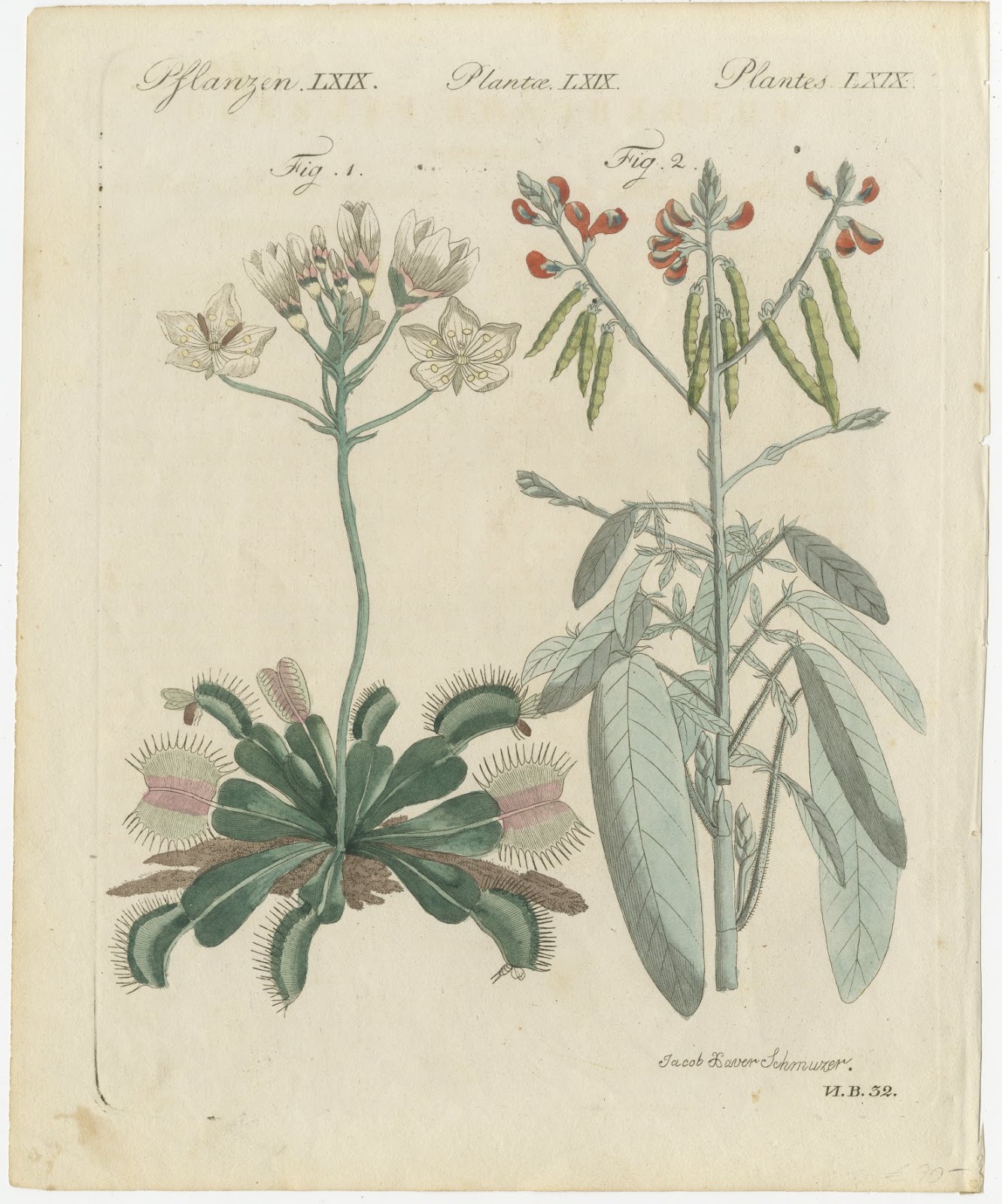
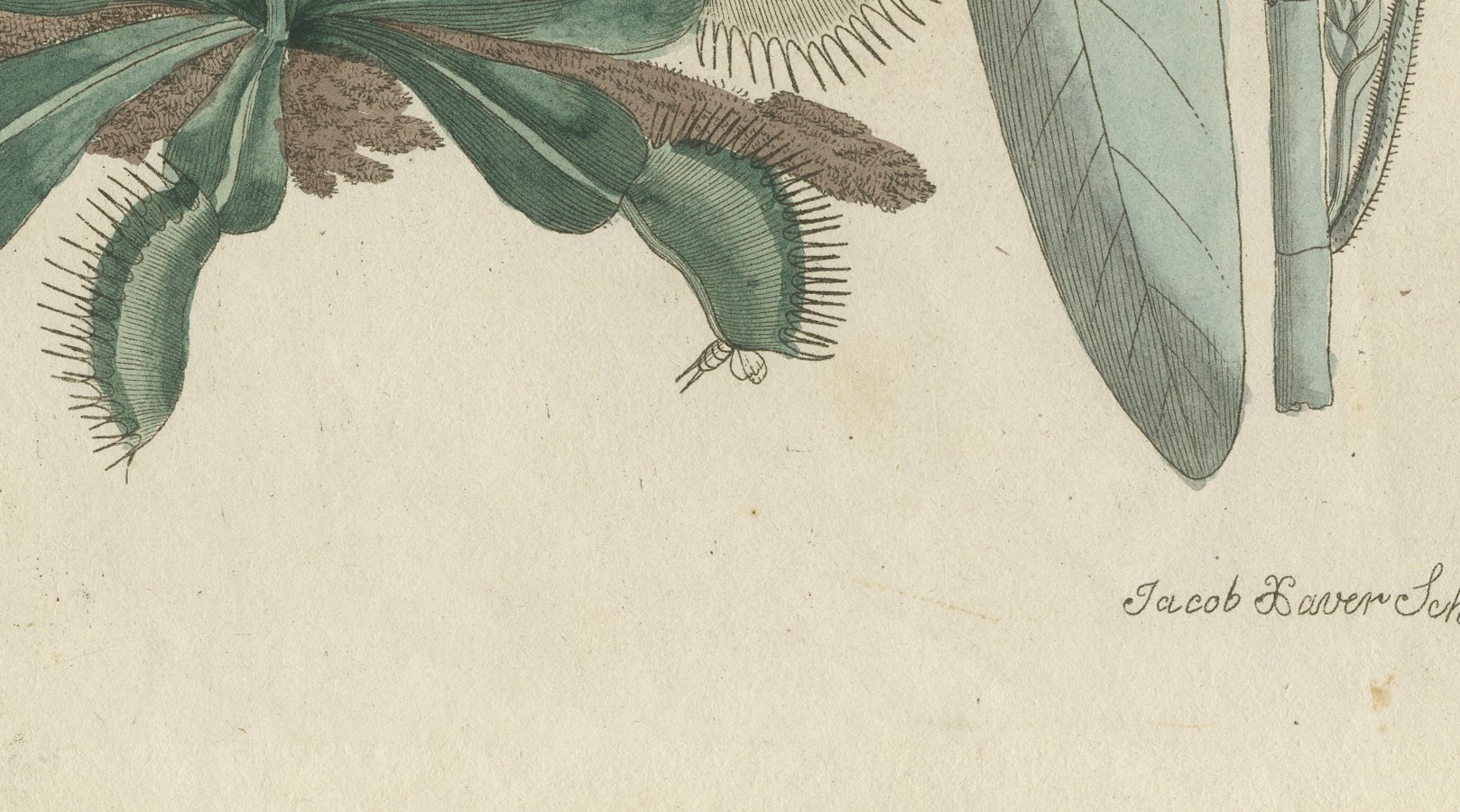
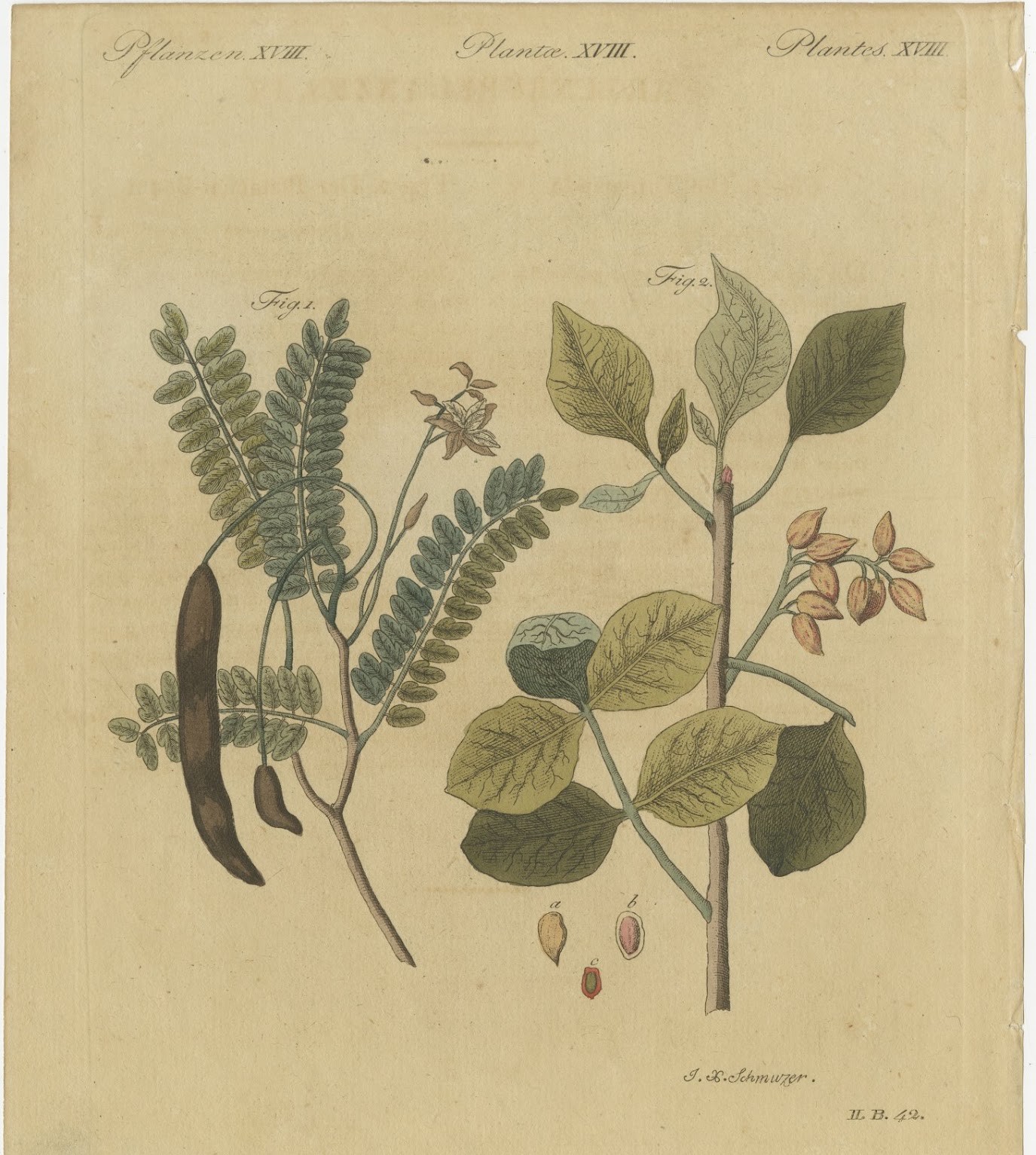
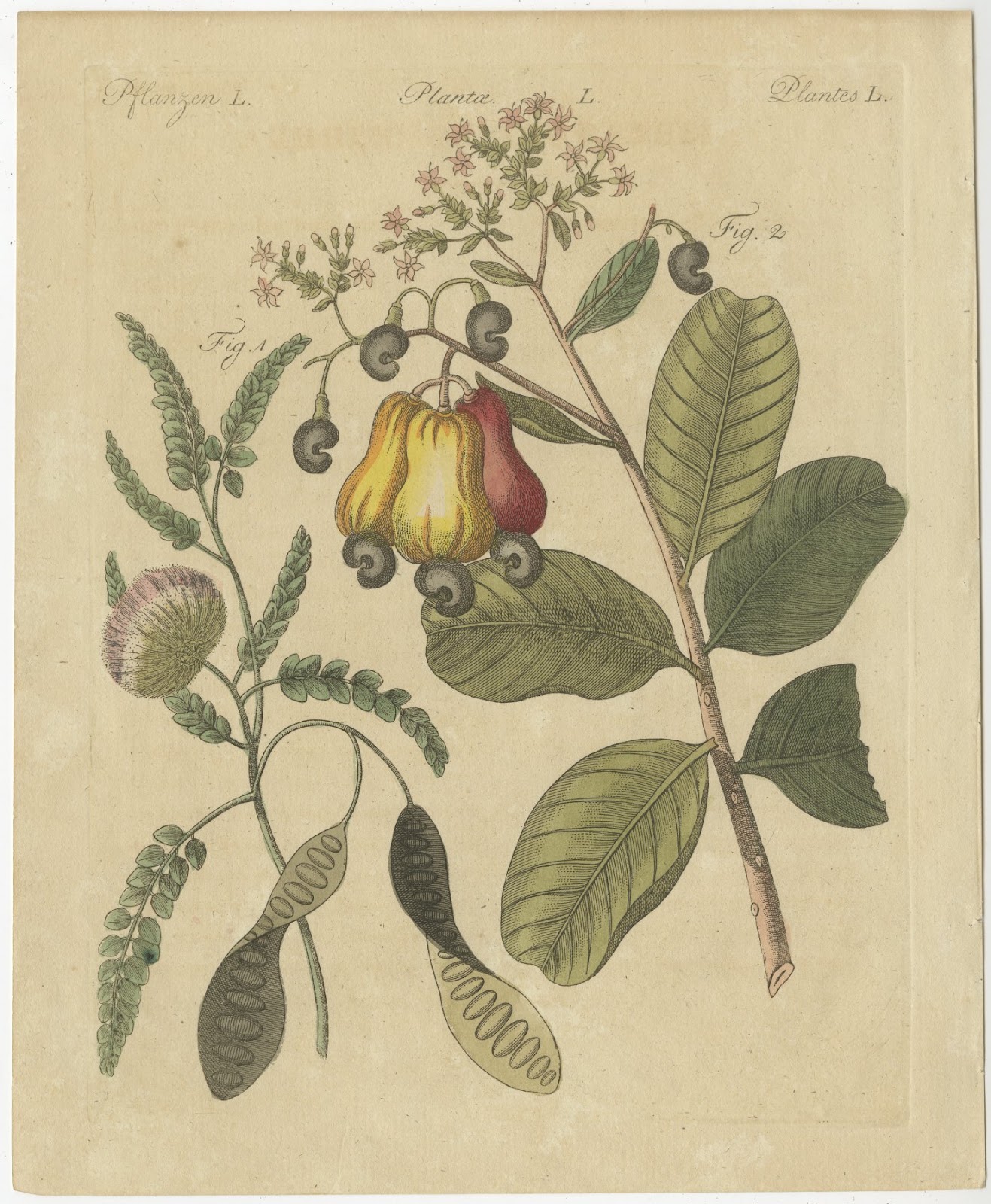
This antique botanical print from Bertuch's Bilderbuch shows the Venus flytrap, Dionaea muscipula, the carnivorous plant that astonished European naturalists in the late eighteenth century. The heading reads Pflanzen LXIX and the plate is signed in full by Jacob Xaver Schmuzer above the mark VI.B.32.
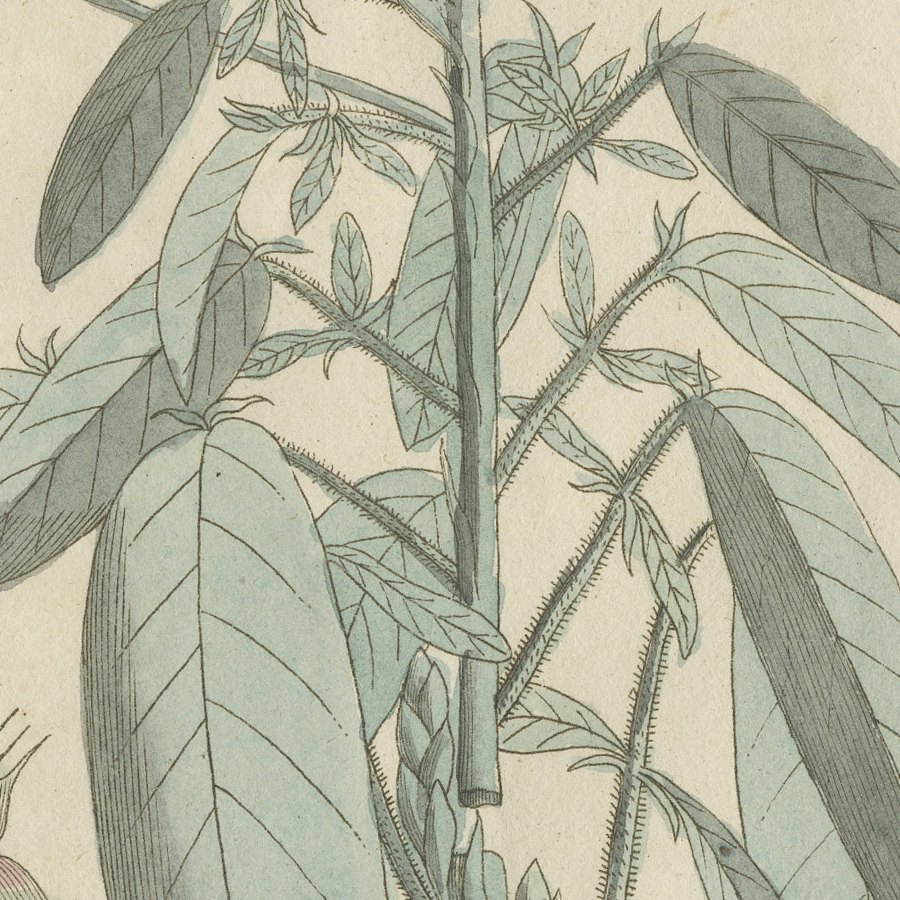
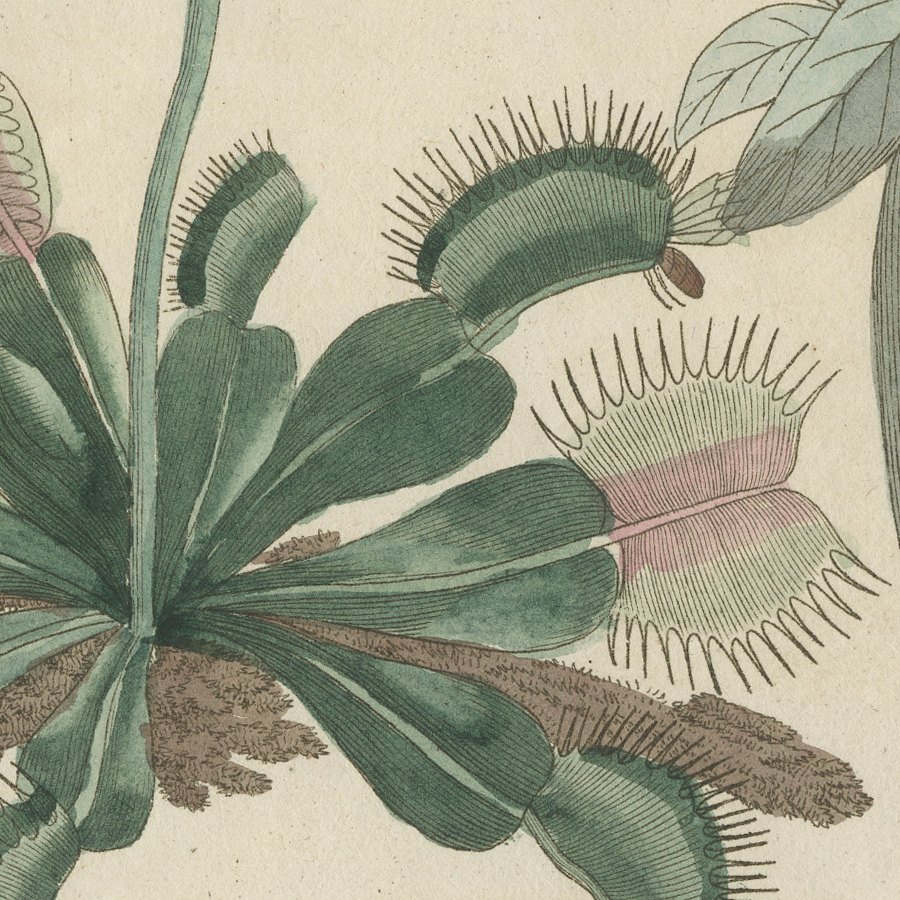
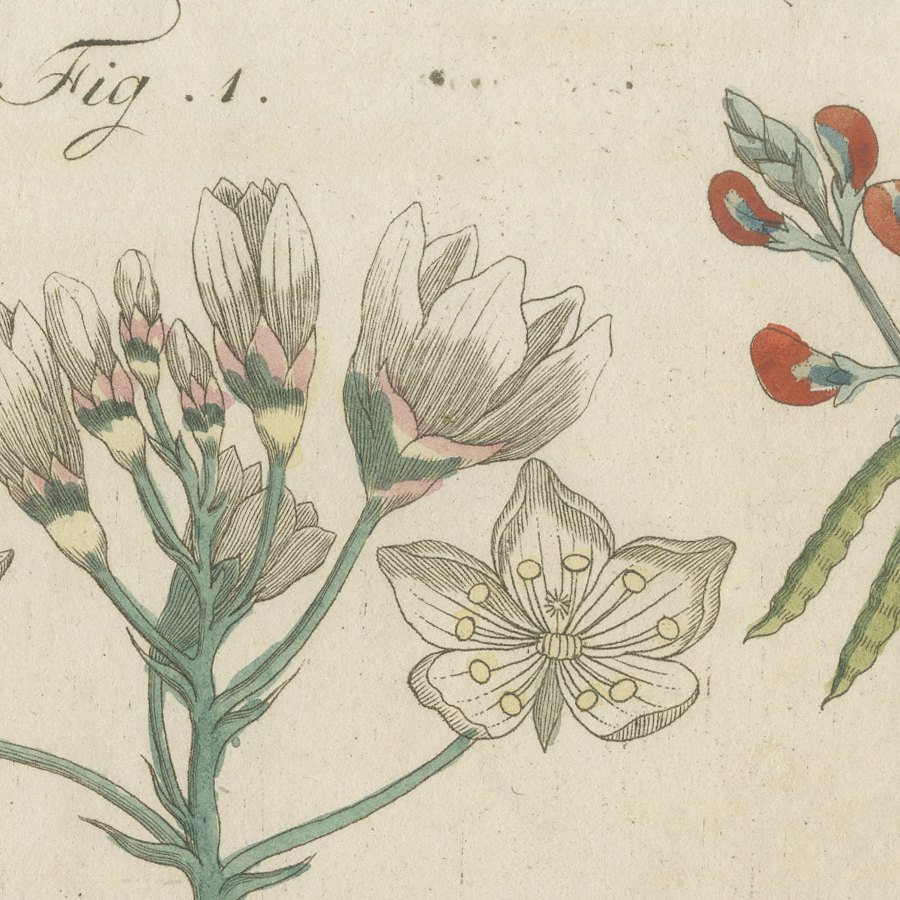
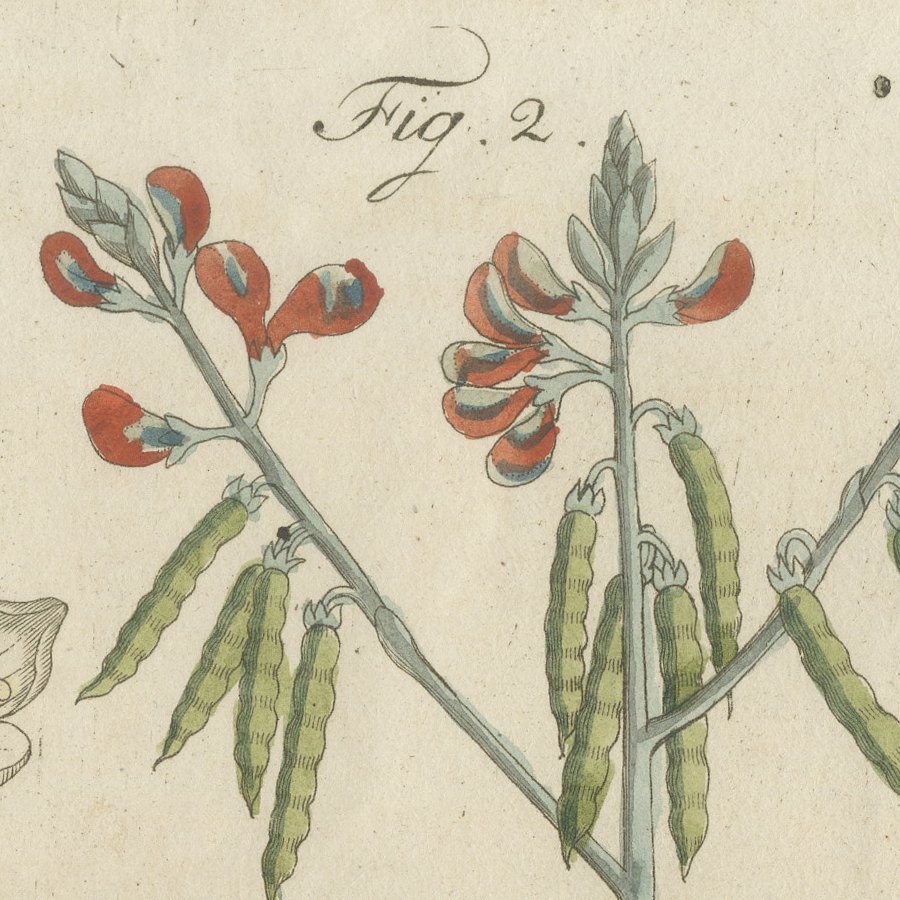
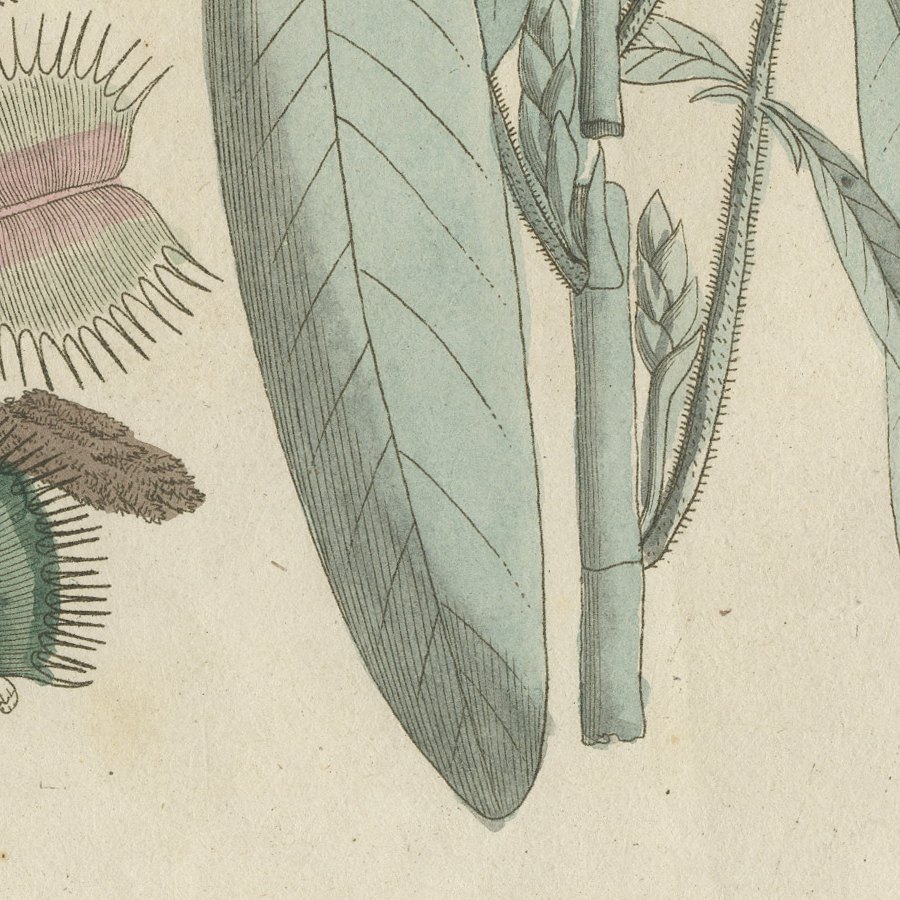
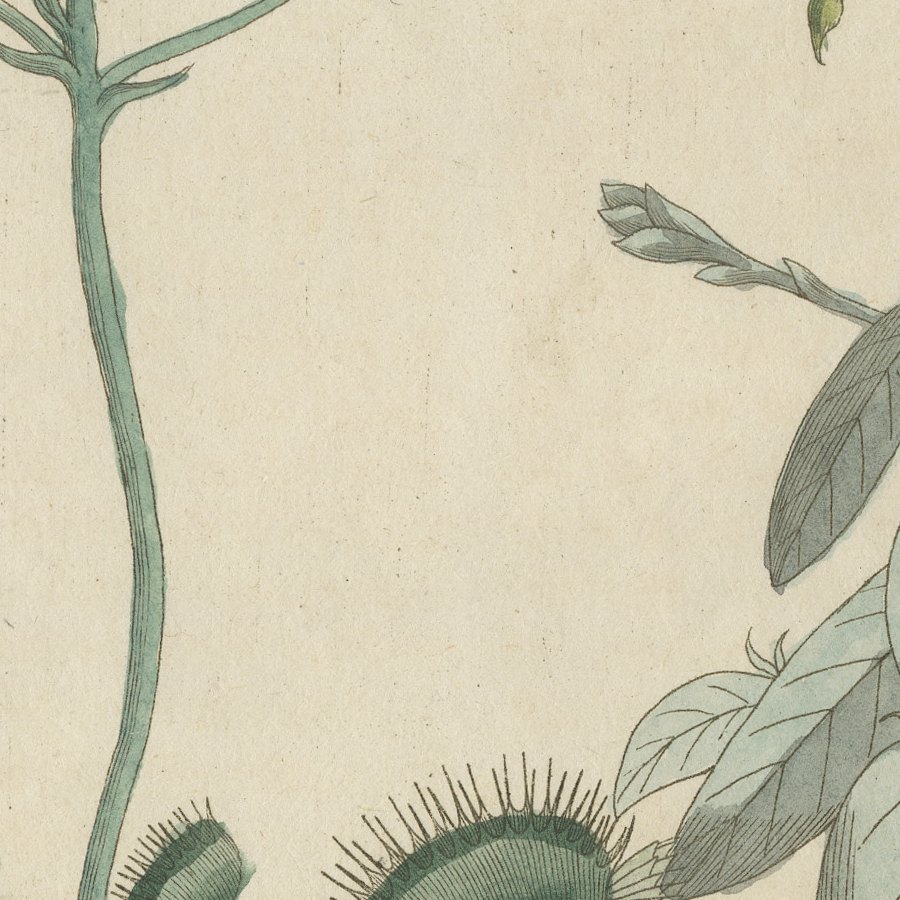
Figure 1 shows the flytrap's rosette of hinged, bristle edged traps, several holding insects, beneath a tall stalk of white flowers. Figure 2 is a leguminous plant with long leaves, orange red pea flowers and slender pods, believed to be the telegraph plant, whose leaflets move on their own, which would make this a plate of plants that move. The Venus flytrap grows wild only in the Carolinas and was described by the naturalist John Ellis around 1770, so the plate records a botanical sensation still fresh when the Bilderbuch appeared.
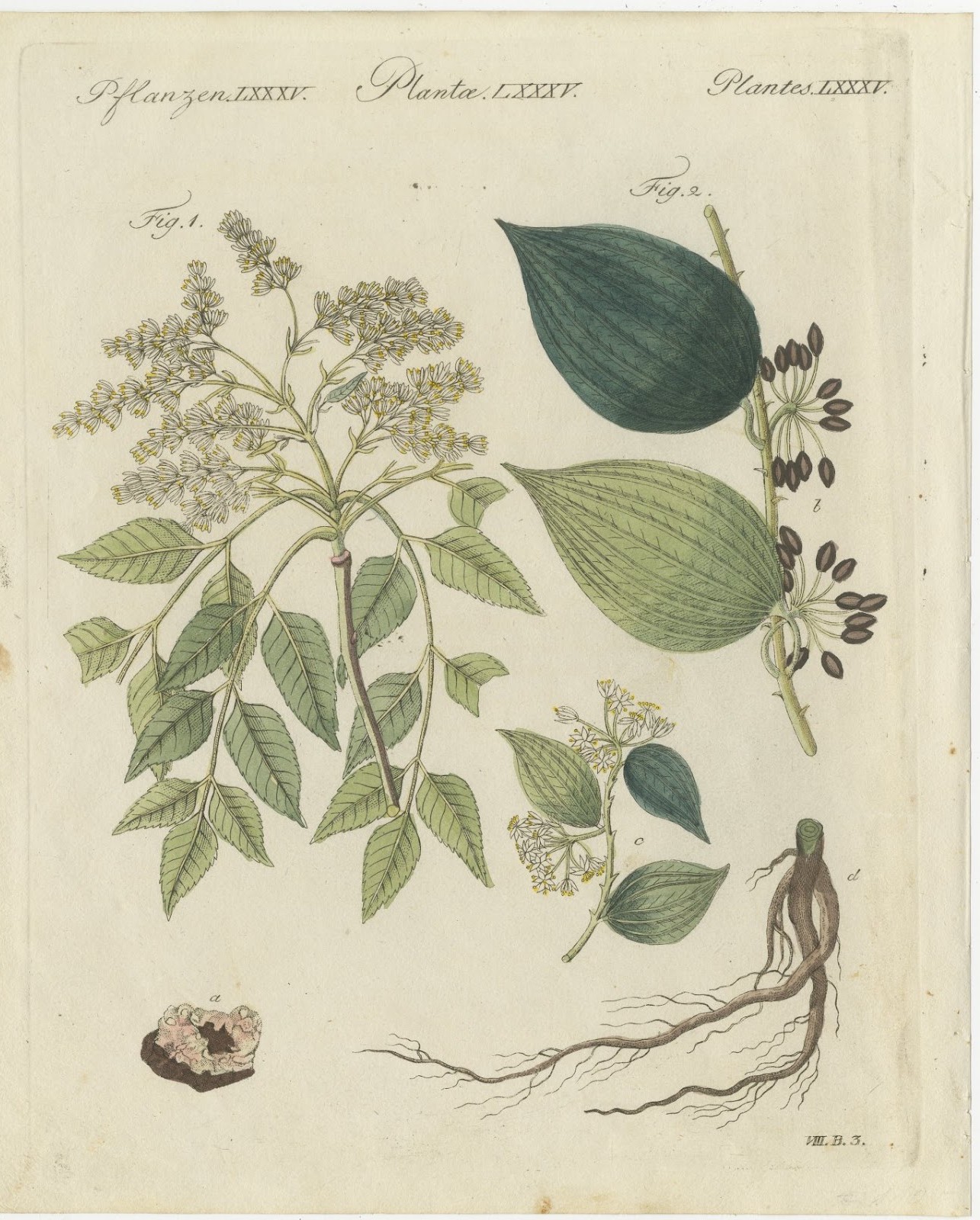
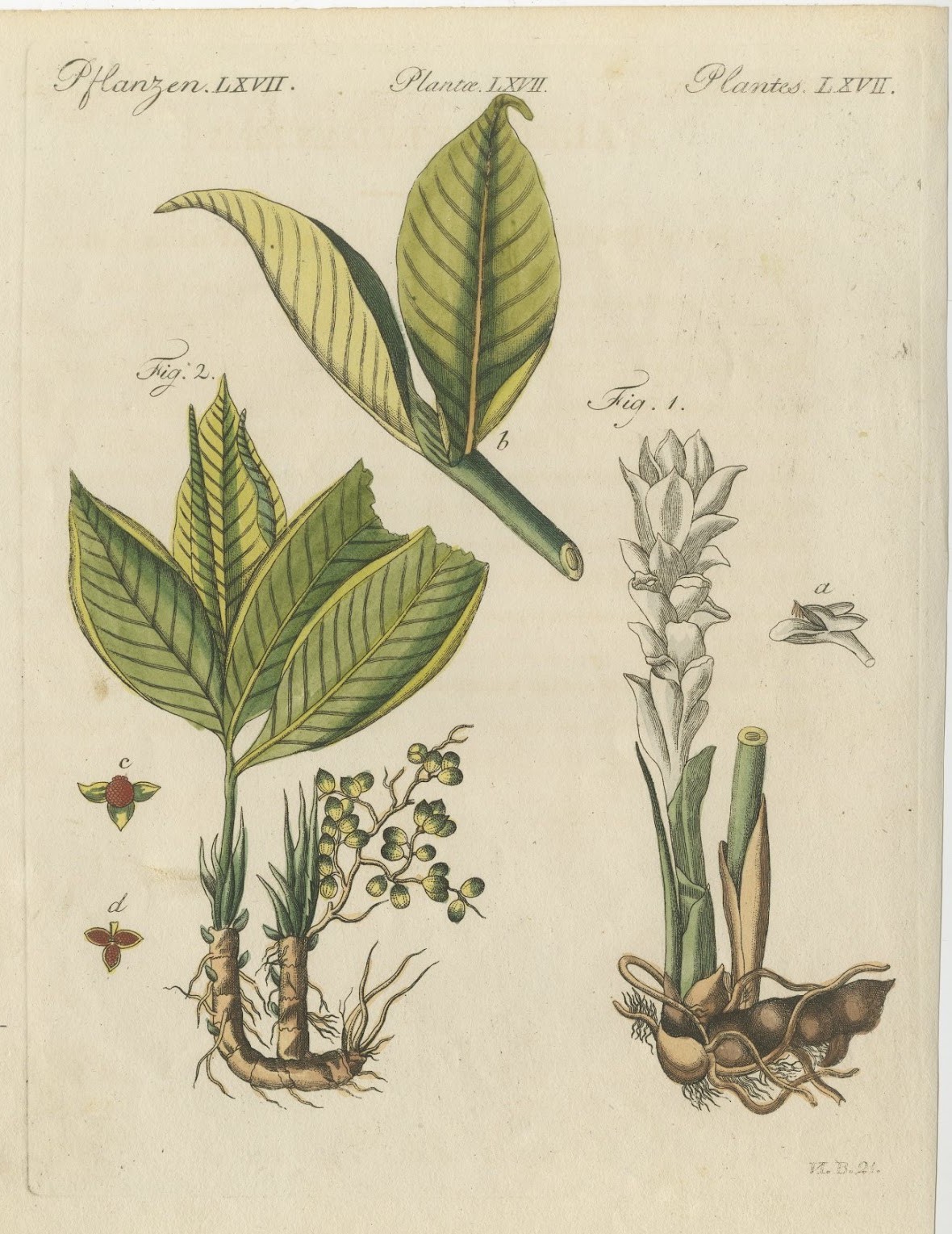
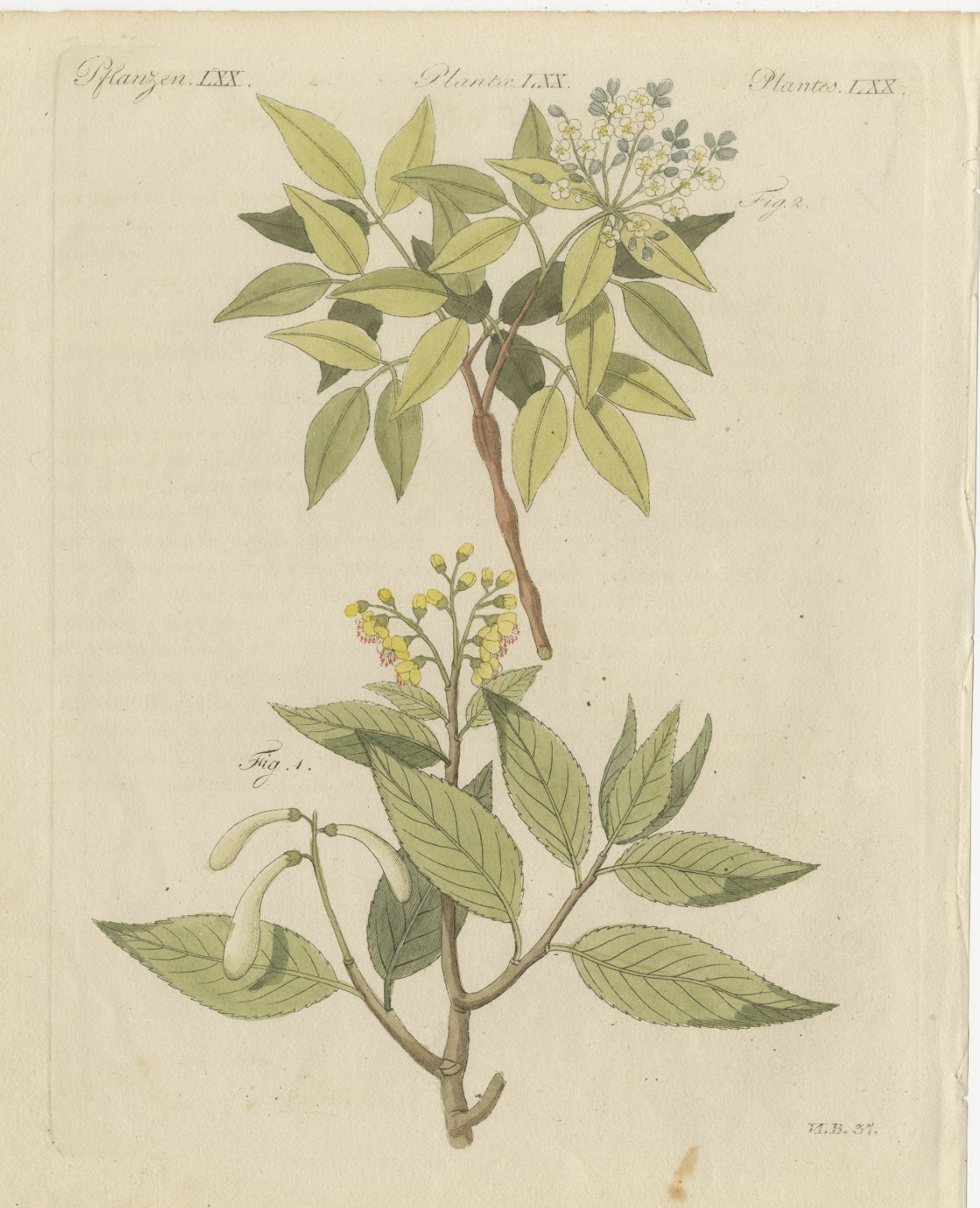
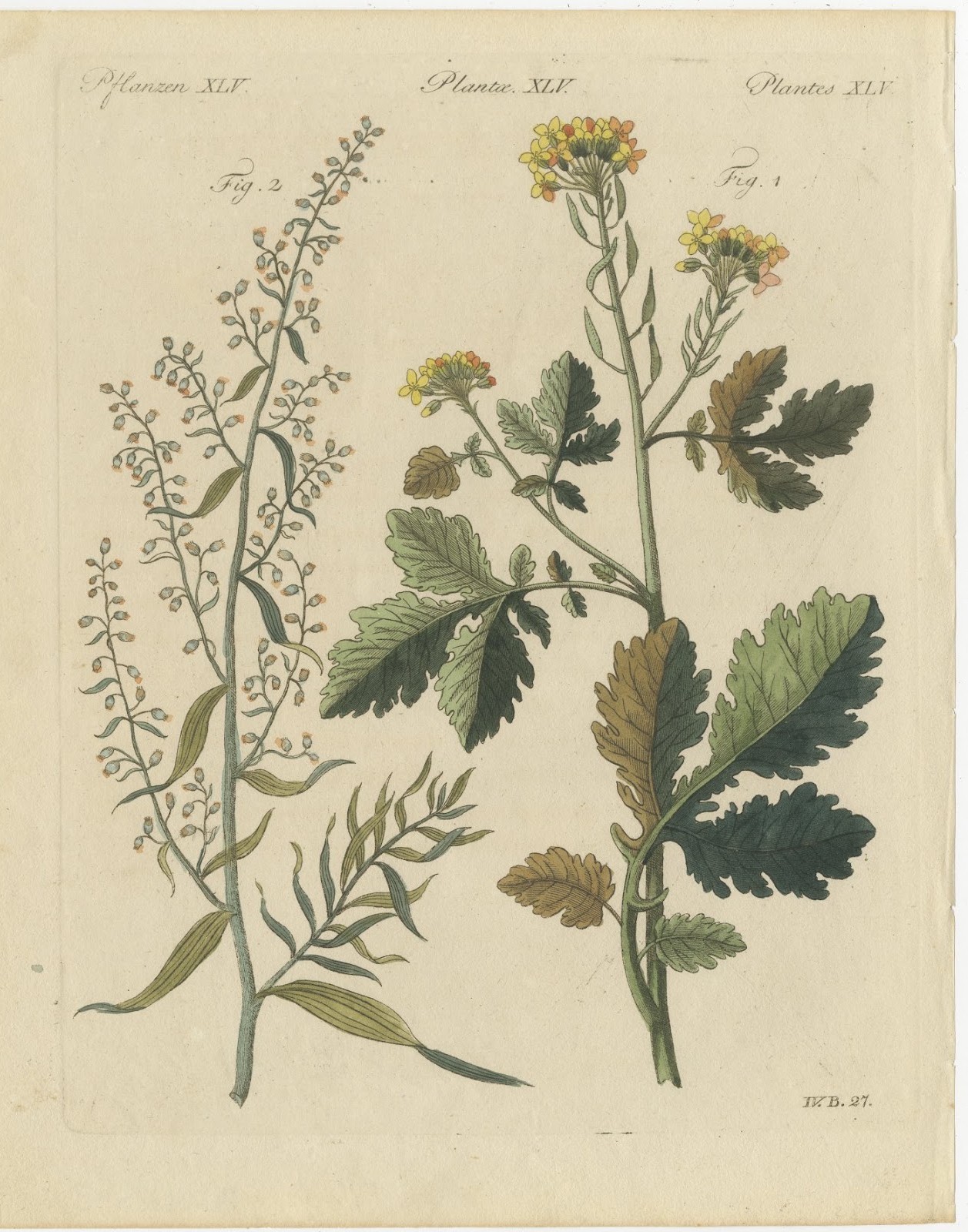
Friedrich Justin Bertuch (1747 to 1822) began his Bilderbuch fuer Kinder in Weimar in 1790 as a picture encyclopaedia for young readers, and over four decades it grew to almost 1,200 plates on plants, animals, peoples, antiquities and the sciences. Its success led to other editions, and this sheet comes from the Vienna edition published by Anton Pichler as the Bilderbuch zum Nutzen und Vergnuegen der Jugend, with text in German and French. The Vienna plates were newly engraved after the Weimar originals, keep the Weimar subject numbering in a heading in German, Latin and French, and carry a volume and plate number in the lower margin, here the mark VI.B.32. Vienna volume VI follows Weimar volume III, which appeared in 1798, so this plate was published no earlier than that. The plate is signed in full, Jacob Xaver Schmuzer, the Viennese engraver of many plates in this edition. The plate is a copper engraving with original hand colour, as the Vienna volumes were issued coloured.
A plate like this suits a kitchen, study or garden room, and it hangs well in a group with other Bertuch botanical sheets of the same size. For a collector it is also a neat example of how the Bilderbuch travelled beyond Weimar in the years around 1800.
The sheet is in good condition for its age, with light toning, a faint stain in the lower left margin and a small pencil note; the image itself is clean and bright.
This is an original antique print, not a modern reproduction. This item is sold unframed. Any framed or interior images are shown for presentation and inspiration only, unless the listing explicitly states that the item is sold framed.