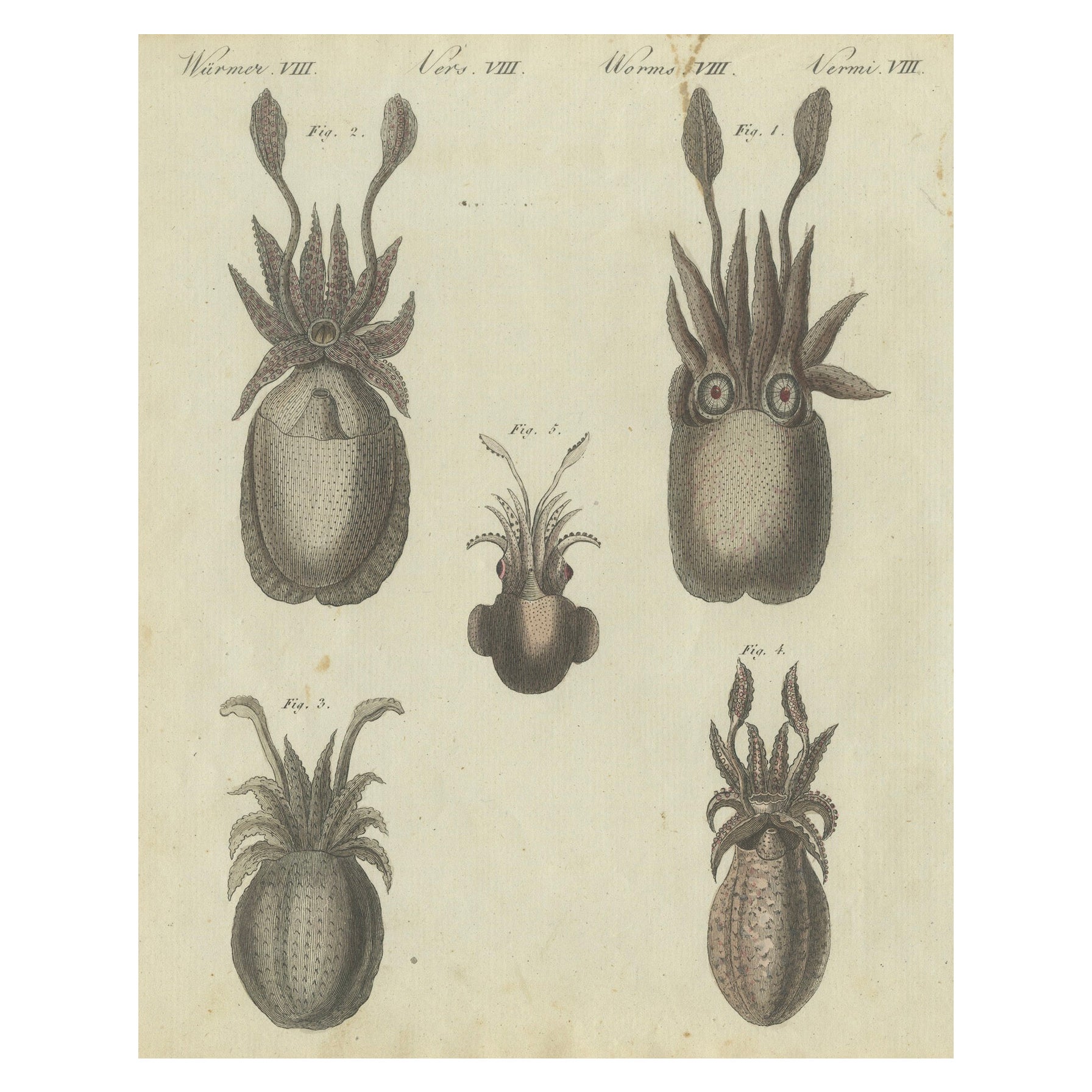
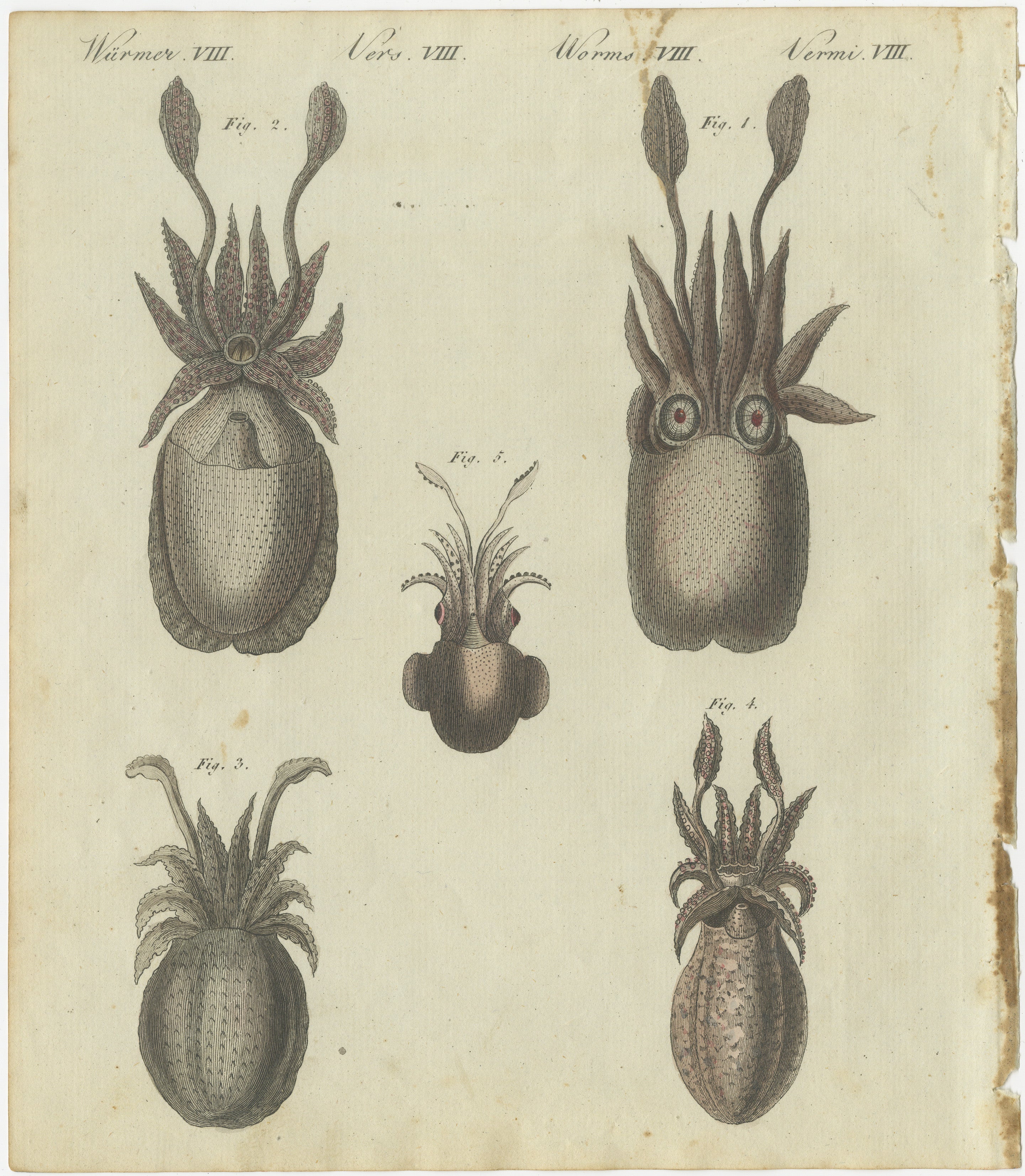
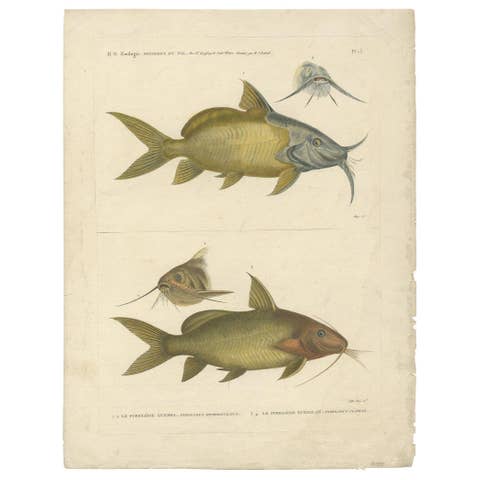
Intricate Depictions of Marine Life: Hand-Colored Copperplate Engraving, 1805
€ 140
One of a kind: this is the sheet in the photographs. Ships from Langweer, the Netherlands.
Date
1805
Sheet size
23 × 22 cm (9.1 × 8.7 in)
Condition
Good
Reference
BG-14000-56
Condition
The engraving is in good condition for its age, with some light foxing and minor discoloration along the edges. The hand-applied colors remain delicate and vibrant, enhancing the intricate details of each marine form.
About this sheet
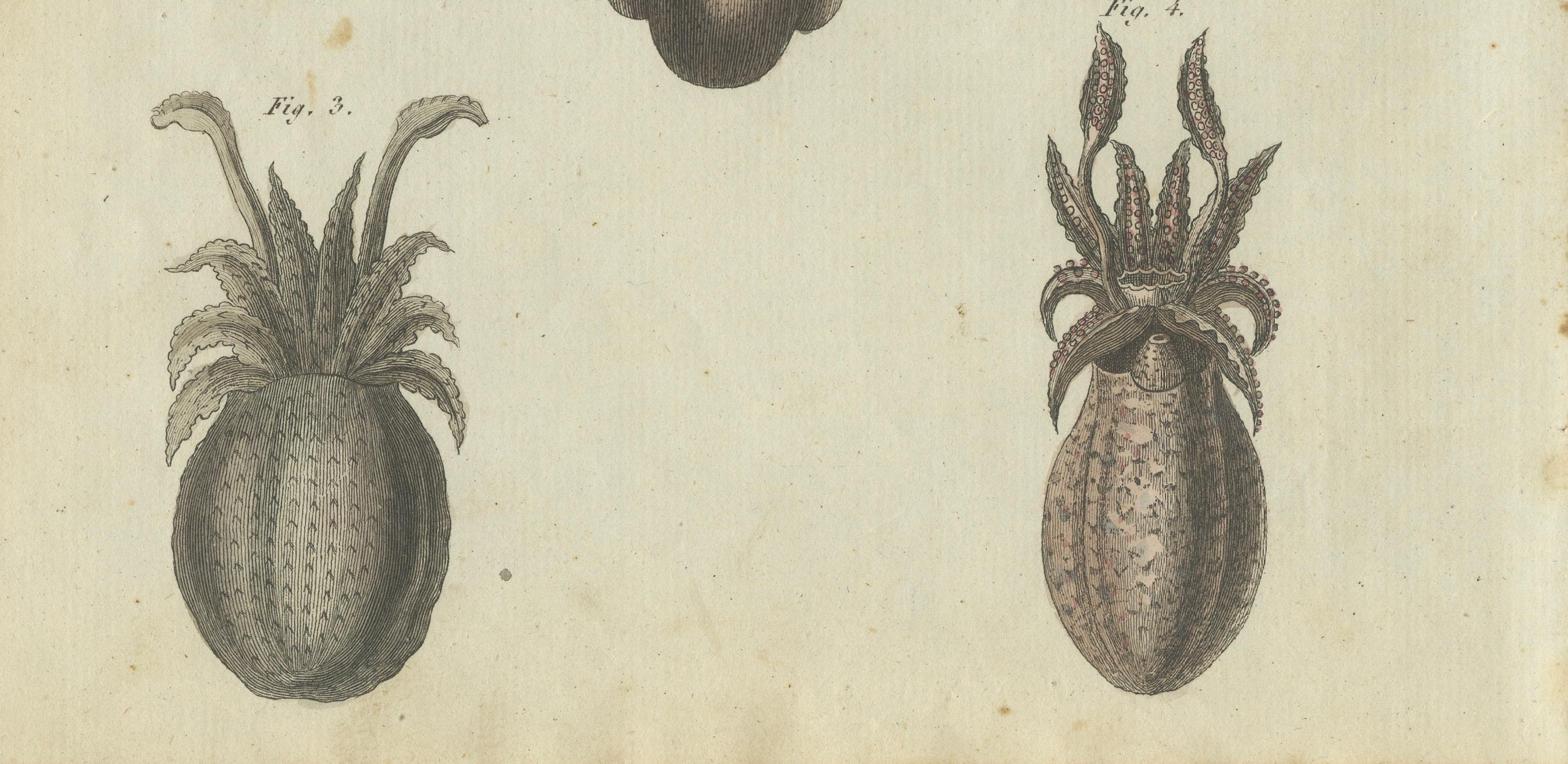
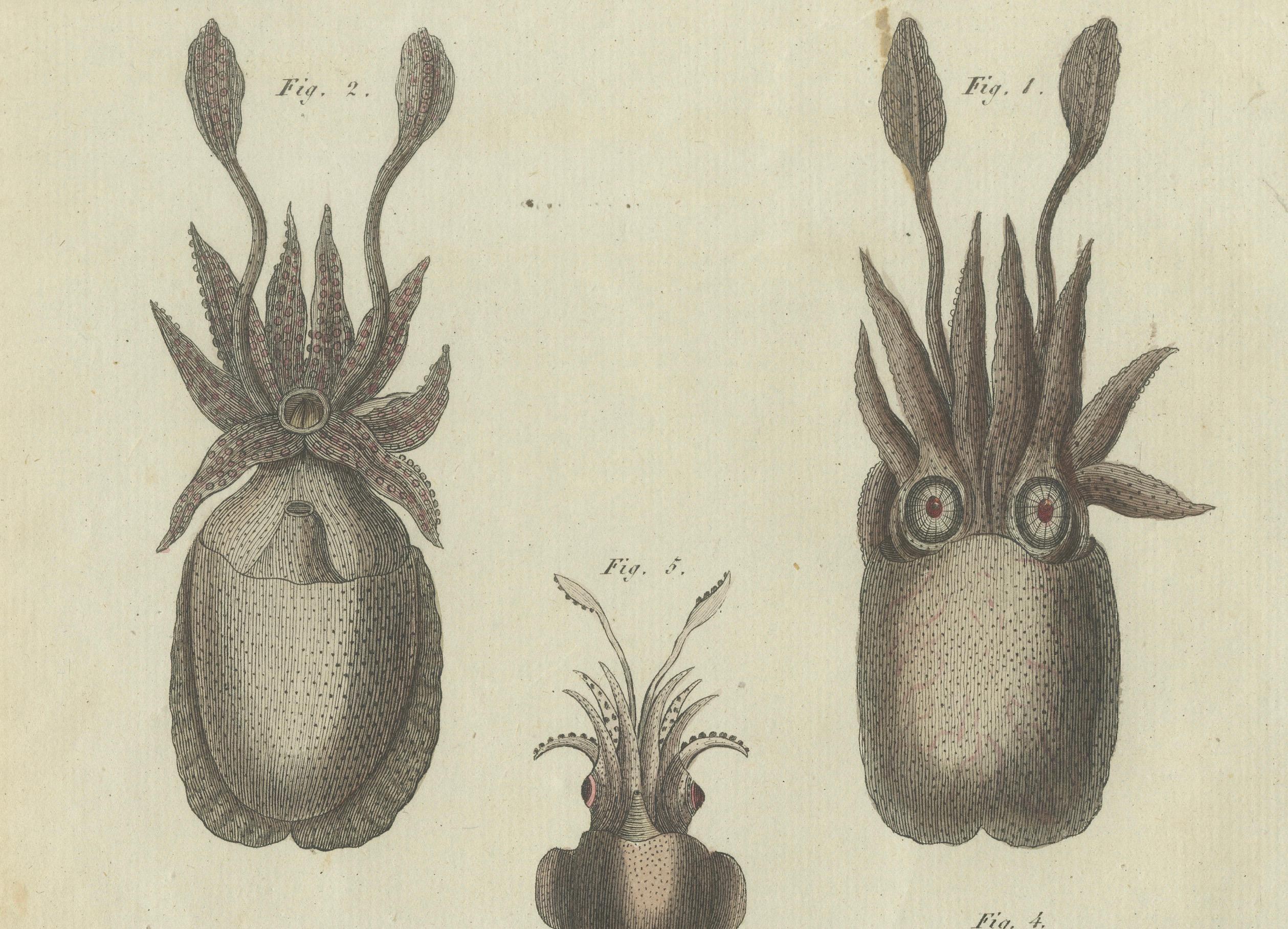
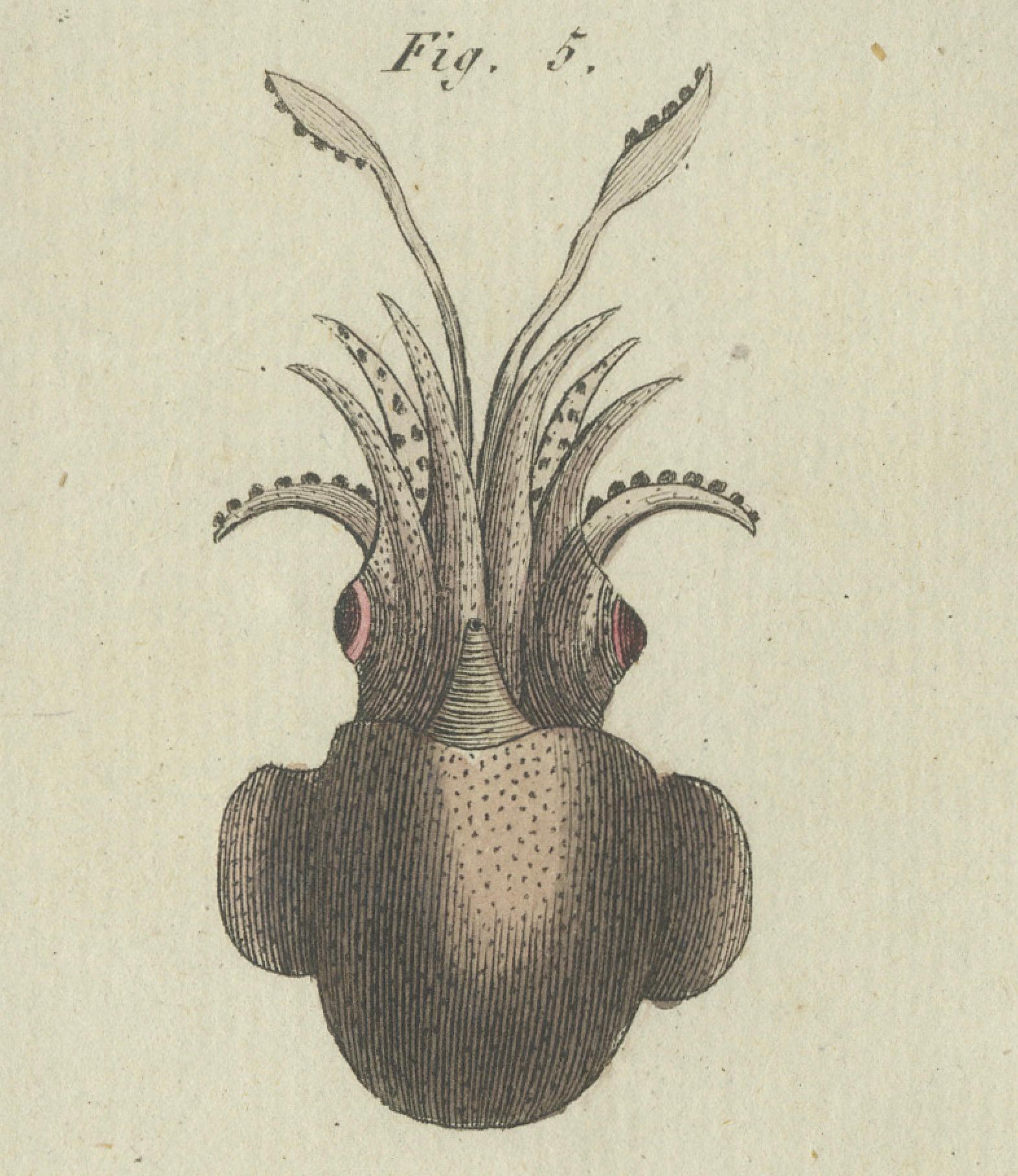
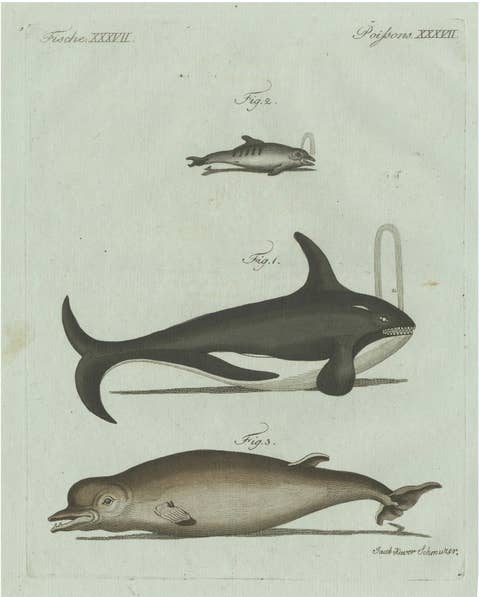
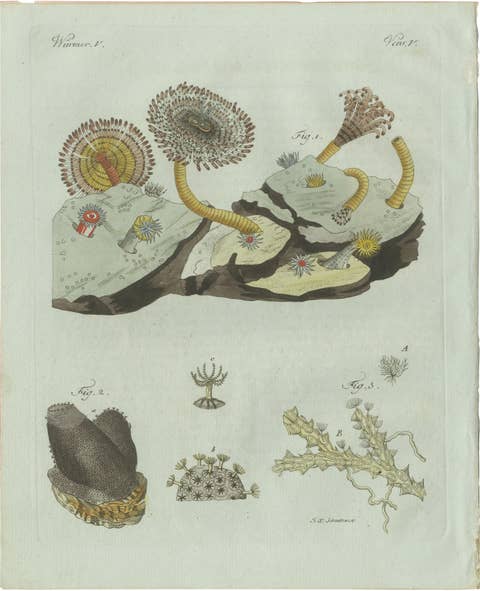
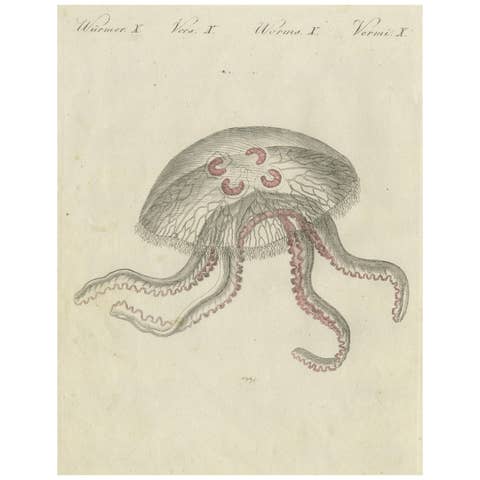
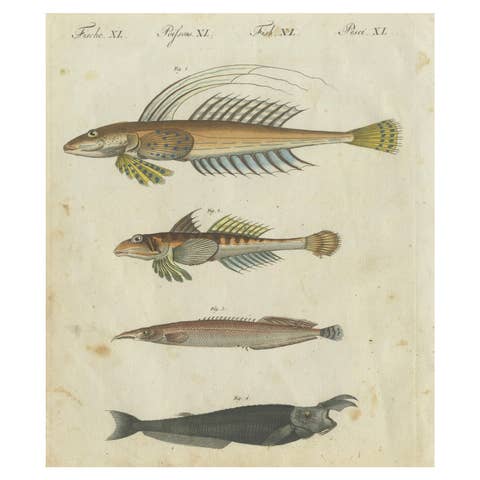
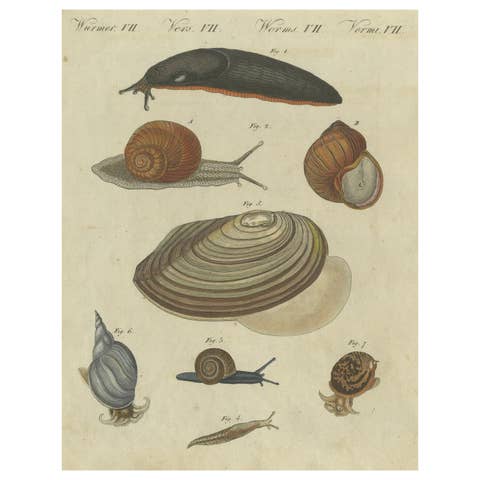
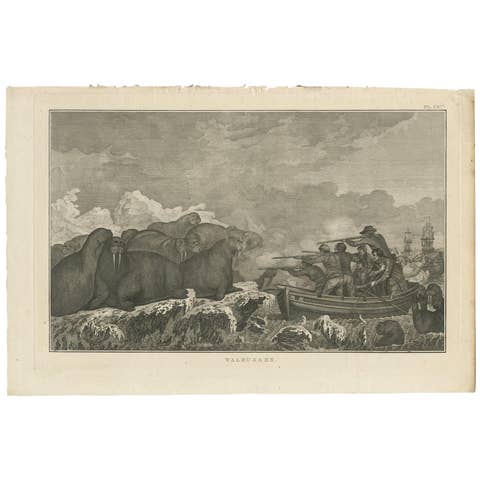
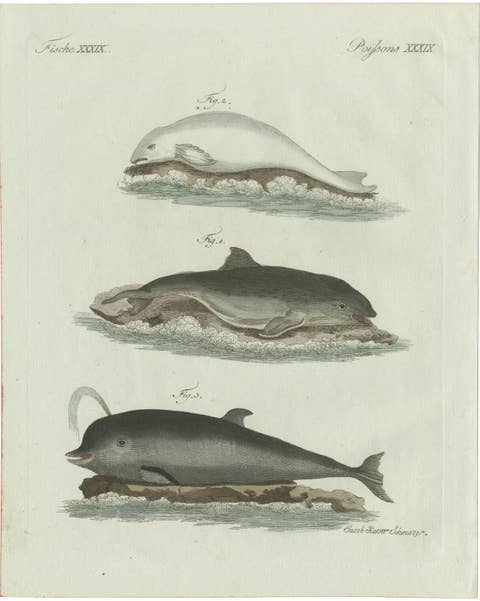
This fascinating hand-colored copperplate engraving presents a detailed study of marine organisms, resembling various fantastical cephalopods or sea plants. The imaginative forms, featuring long tentacle-like appendages and elaborate body structures, evoke both curiosity and admiration for the diversity of marine life. Each figure is meticulously rendered, showcasing the Enlightenment-era intrigue with natural history and artistic exploration.
Published in Friedrich Johann Bertuch’s *Bilderbuch für Kinder* (Picture Book for Children) in Weimar, 1805, this engraving reflects the era’s dedication to educating young minds through captivating visual representations. The detailed texturing and soft hand-applied coloring breathe life into these unusual and captivating creatures.
Condition: The engraving is in good condition for its age, with some light foxing and minor discoloration along the edges. The hand-applied colors remain delicate and vibrant, enhancing the intricate details of each marine form.
Advice on presentation: 1. Frame this engraving in a simple, dark wood or metal frame to draw attention to the unique details. 2. Use acid-free mats and UV-resistant glass to preserve the condition of the artwork. 3. Display in a collection of marine or natural history illustrations to emphasize its scientific and artistic value. 4. Pair with educational or interpretive text to engage viewers and add context to the unique imagery.
This engraving is an exceptional piece for collectors of historical natural history illustrations, showcasing the blend of scientific curiosity and artistic elegance that defined the early 19th century.