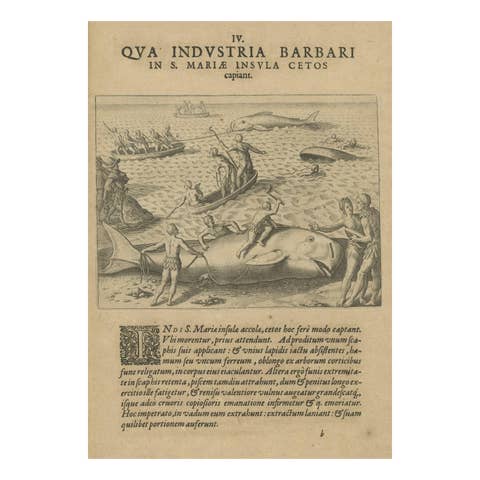
Indigenous Fishing Scene – Early Dutch Engraving from Linschoten, c.1601
€ 240
Original antique · The actual sheet photographed · Certificate of authenticity on request · Sold unframed · Worldwide shipping from € 15 (rates)
Date
1601
Mapmaker / artist
After Jan Huygen van Linschoten, Amsterdam, c.1601
Technique
Copperplate engraving with letterpress text on laid paper
Sheet size
24 × 18.2 cm (9.4 × 7.2 in)
Condition
Fair
Reference
BG-13098-11
What the condition grades mean
Excellent
Bright and clean, with no faults worth mentioning.
Very good
Only light signs of age, such as faint toning.
Good
Normal signs of age for a sheet of this period: toning, some foxing, small marks or neat old repairs.
Fair
Clear faults such as staining, tears or repairs, priced to match.
Every fault we see is written in the condition note, and the whole sheet is shown uncropped in the photos.
Condition
Laid paper with age toning, light edge wear, and minor tears; fine early impression with clear plate mark visible.
About this sheet
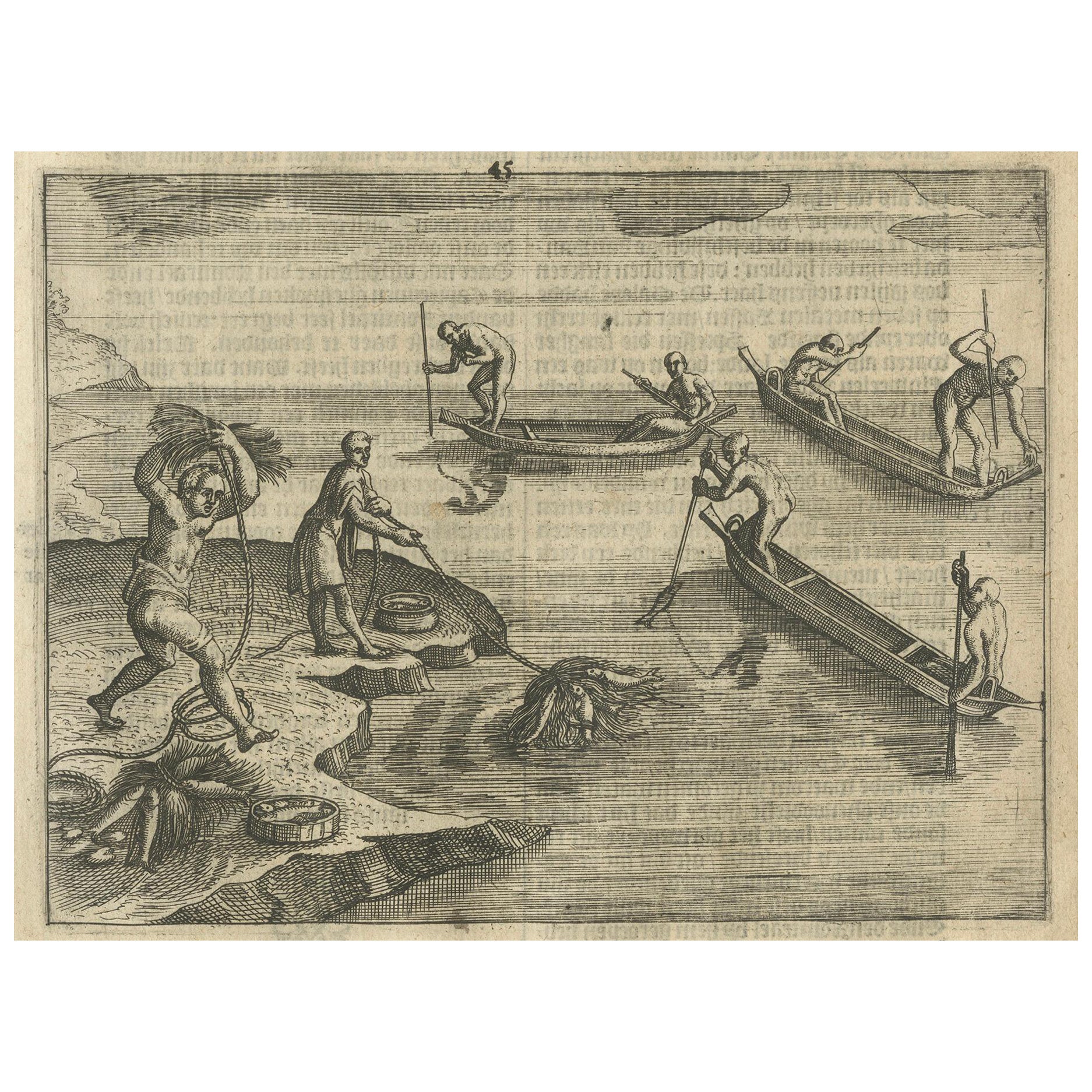
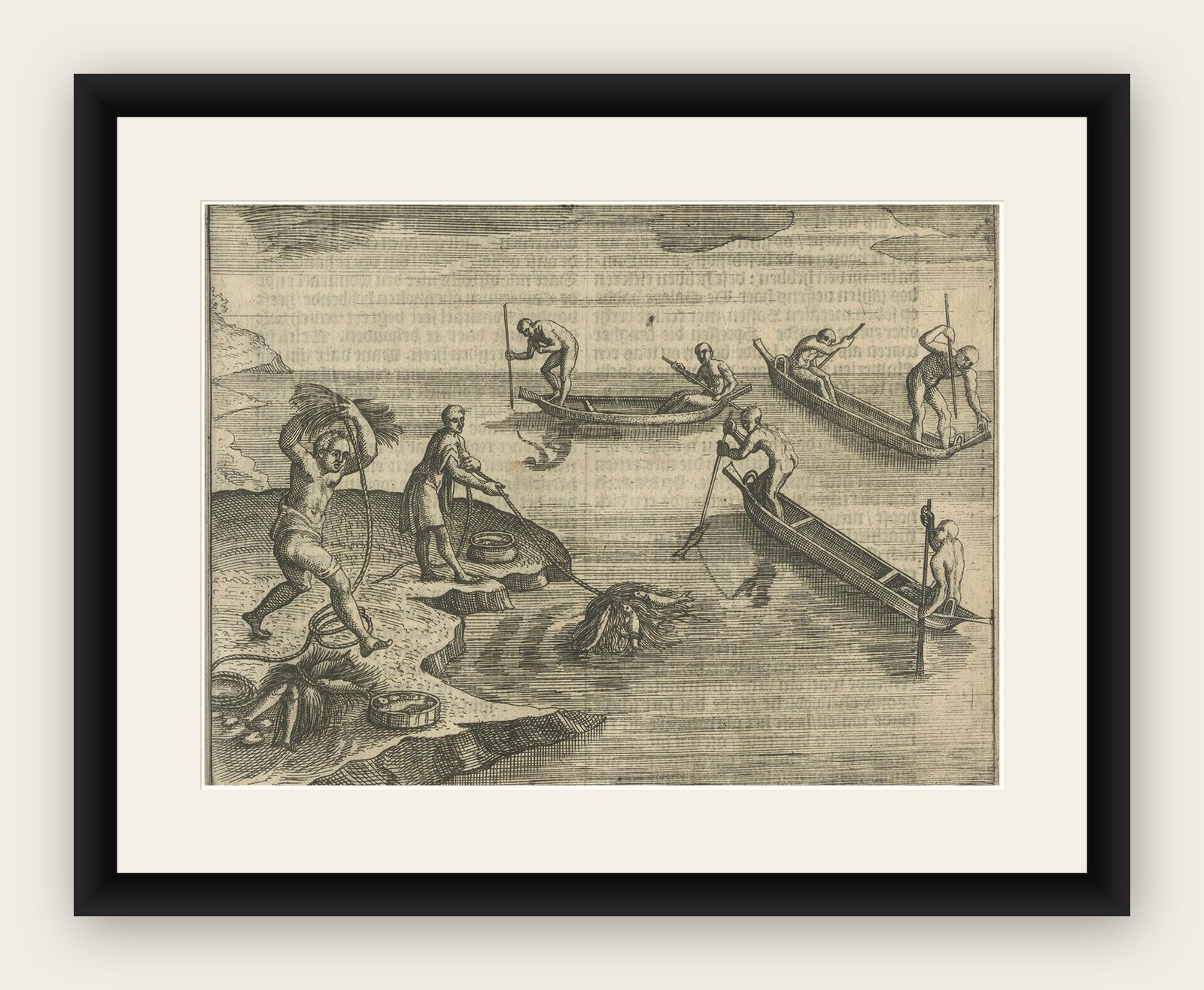
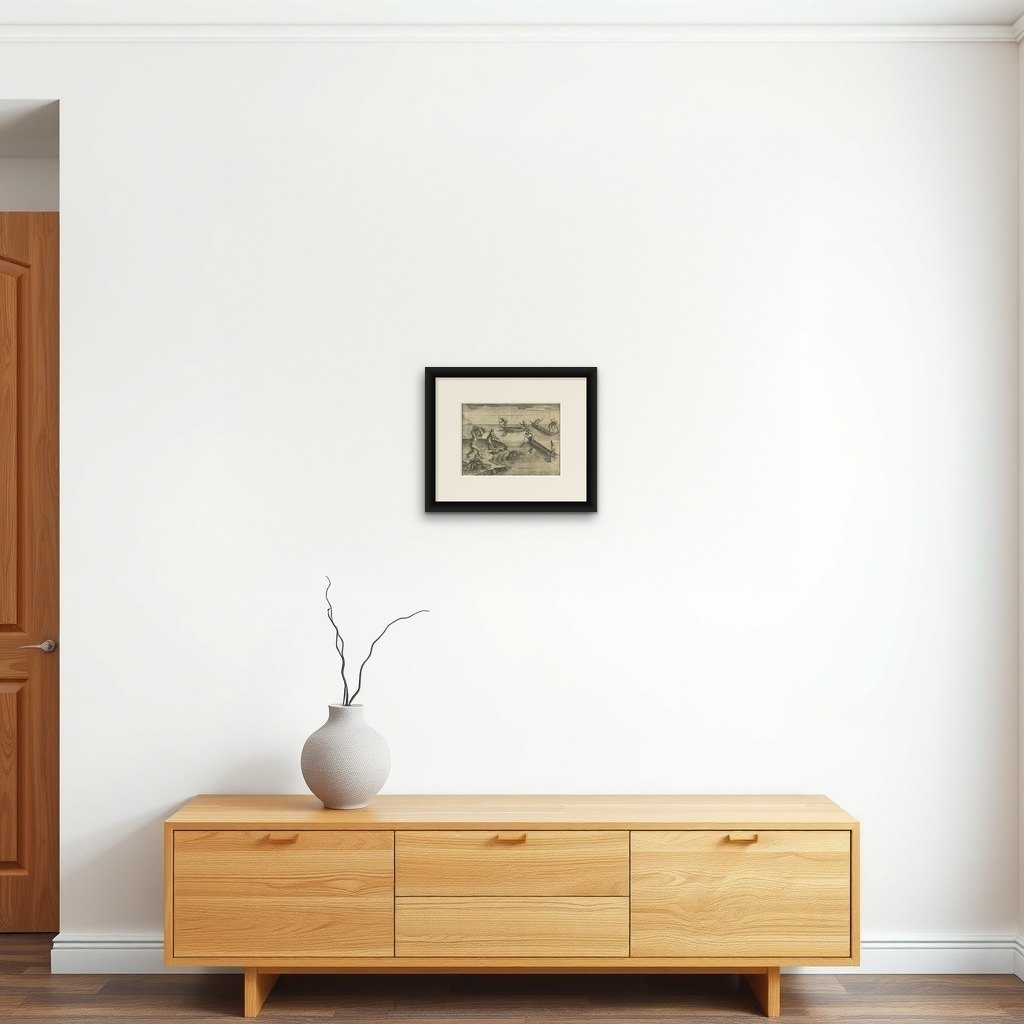
Original 17th-century Dutch engraving from Itinerario by Jan Huygen van Linschoten, published in Amsterdam by Cornelis Claesz around 1598–1601. The image, titled “Maniere van te visschen,” illustrates an early depiction of tropical fishing practices observed during Dutch voyages to the East Indies. Figures in small canoes and onshore are shown hauling nets and traps baited with palm leaves, using methods adapted to shallow waters.
This engraving is one of the earliest printed European images of indigenous fishing in the Indian Ocean or Indonesian archipelago. It forms part of the same series as the famous “King of Bali” and “Balinese Festival” engravings, all central to Linschoten’s pioneering illustrated travel narrative.
A vivid ethnographic image showing how the first Dutch explorers interpreted the maritime world they encountered.
Laid paper with age toning, light edge wear, and minor tears; fine early impression with clear plate mark visible.
Framing tips: Ideal for float mounting in a teak or dark walnut frame with a warm off-white mat. For scholarly display, a double-glass frame allows viewing of the text verso.