About this sheet
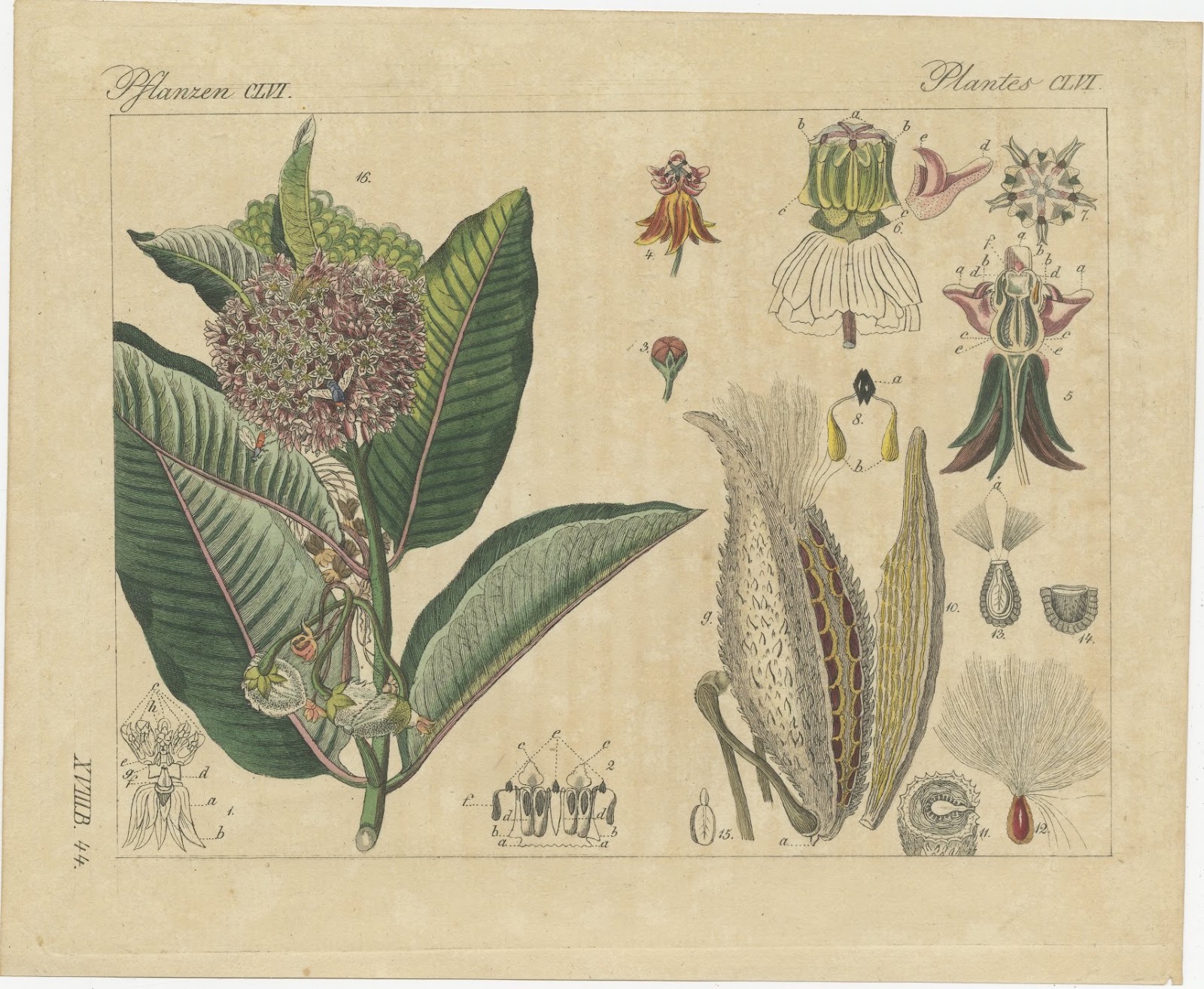
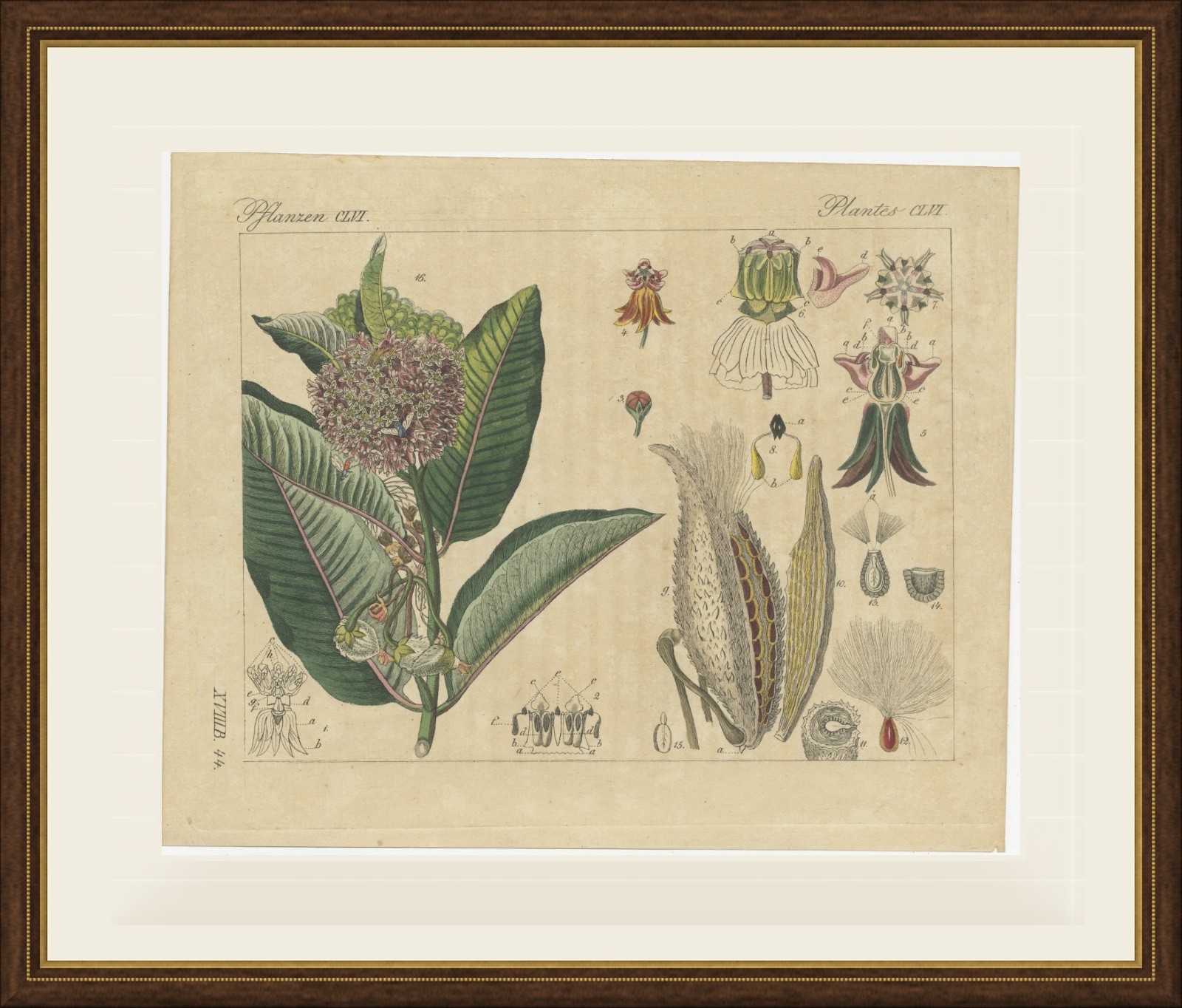
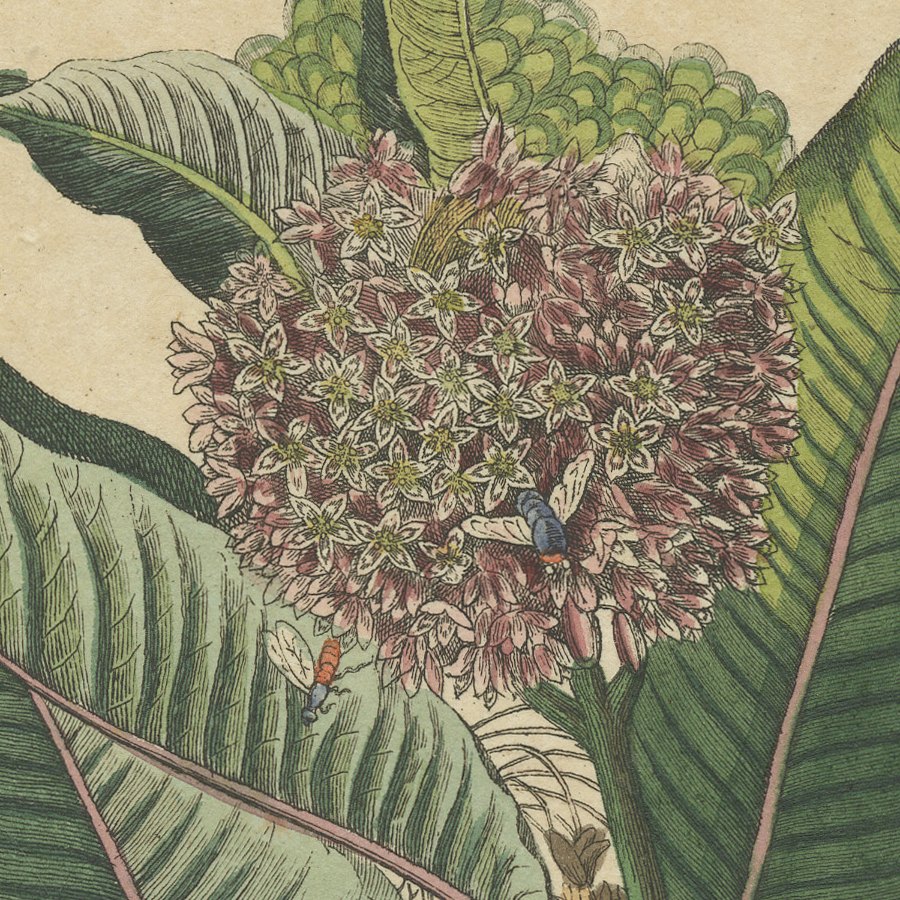
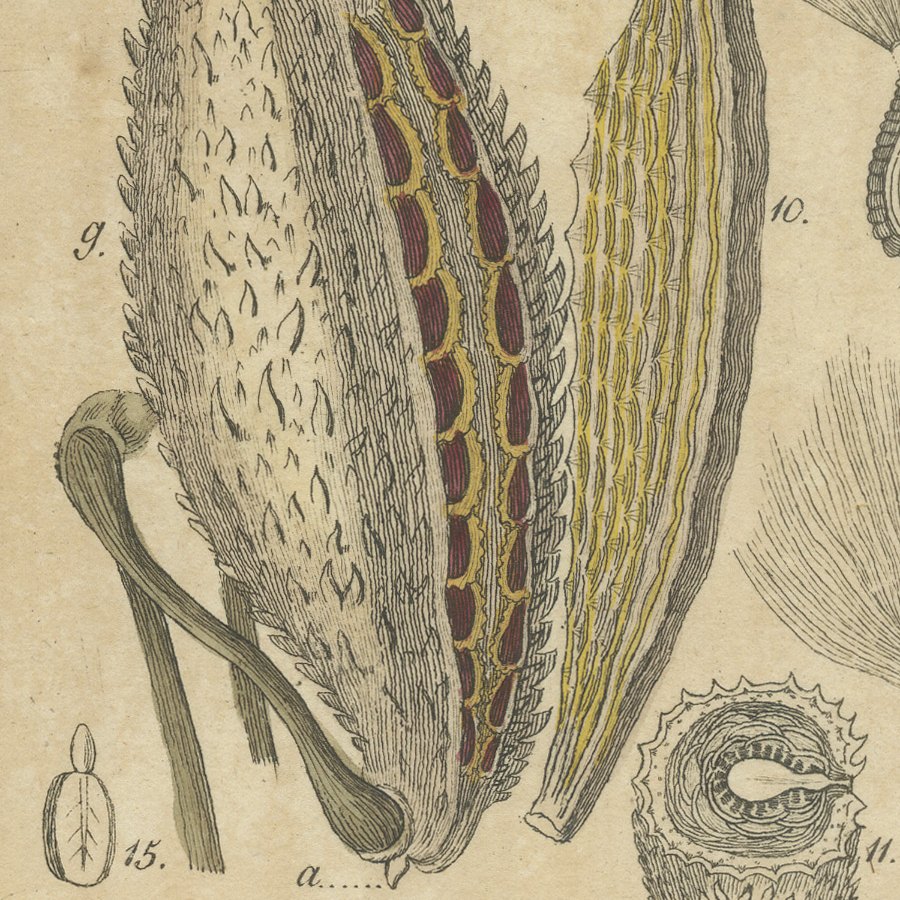
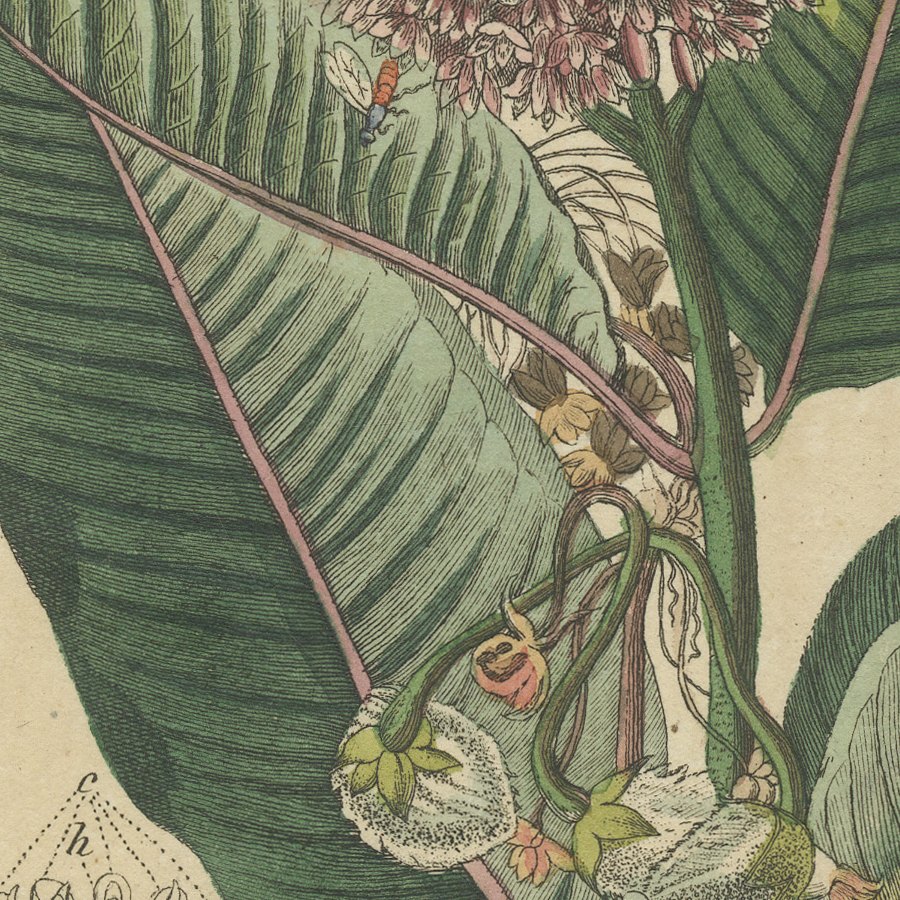
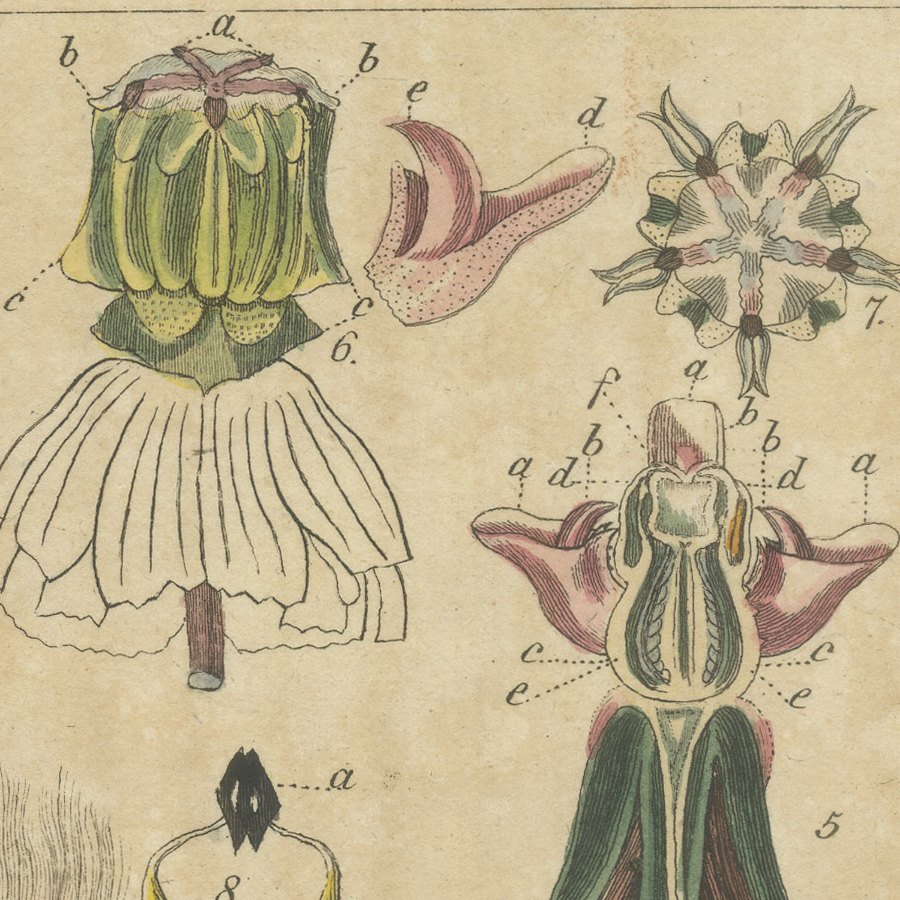
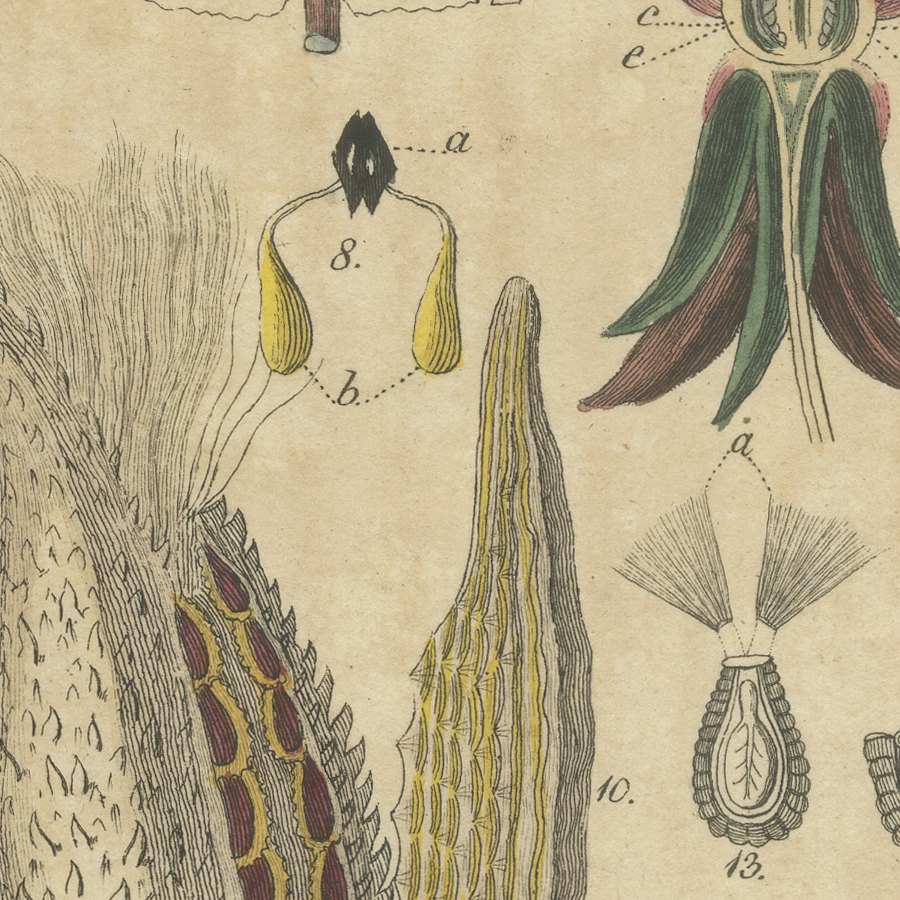
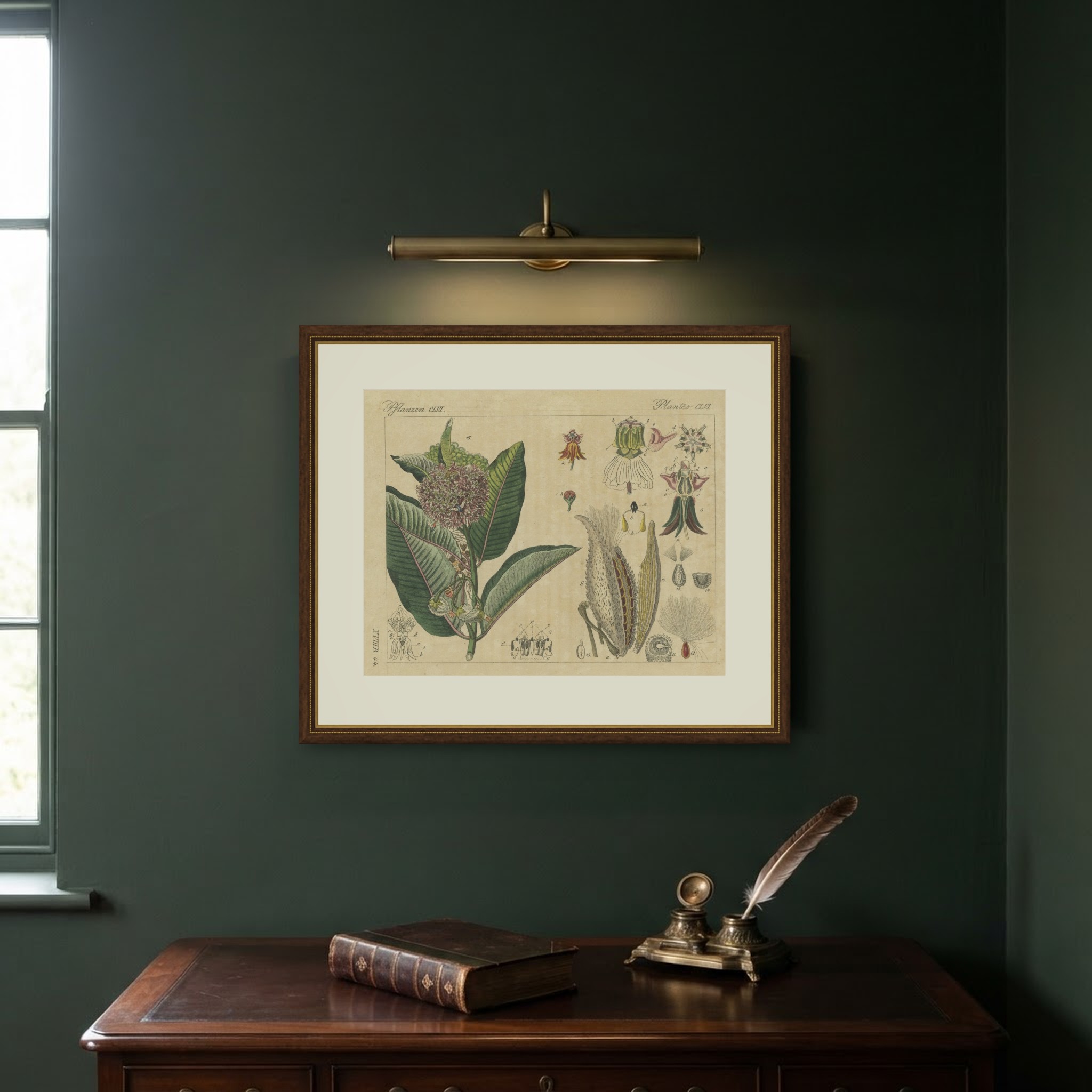
This antique botanical print from Bertuch's Bilderbuch shows the common milkweed, Asclepias syriaca, with its rounded pink flower cluster, split seed pod and silky seeds. The heading reads Pflanzen CLVI and the Vienna mark XVIII.B.44 runs up the left margin of this landscape sheet.
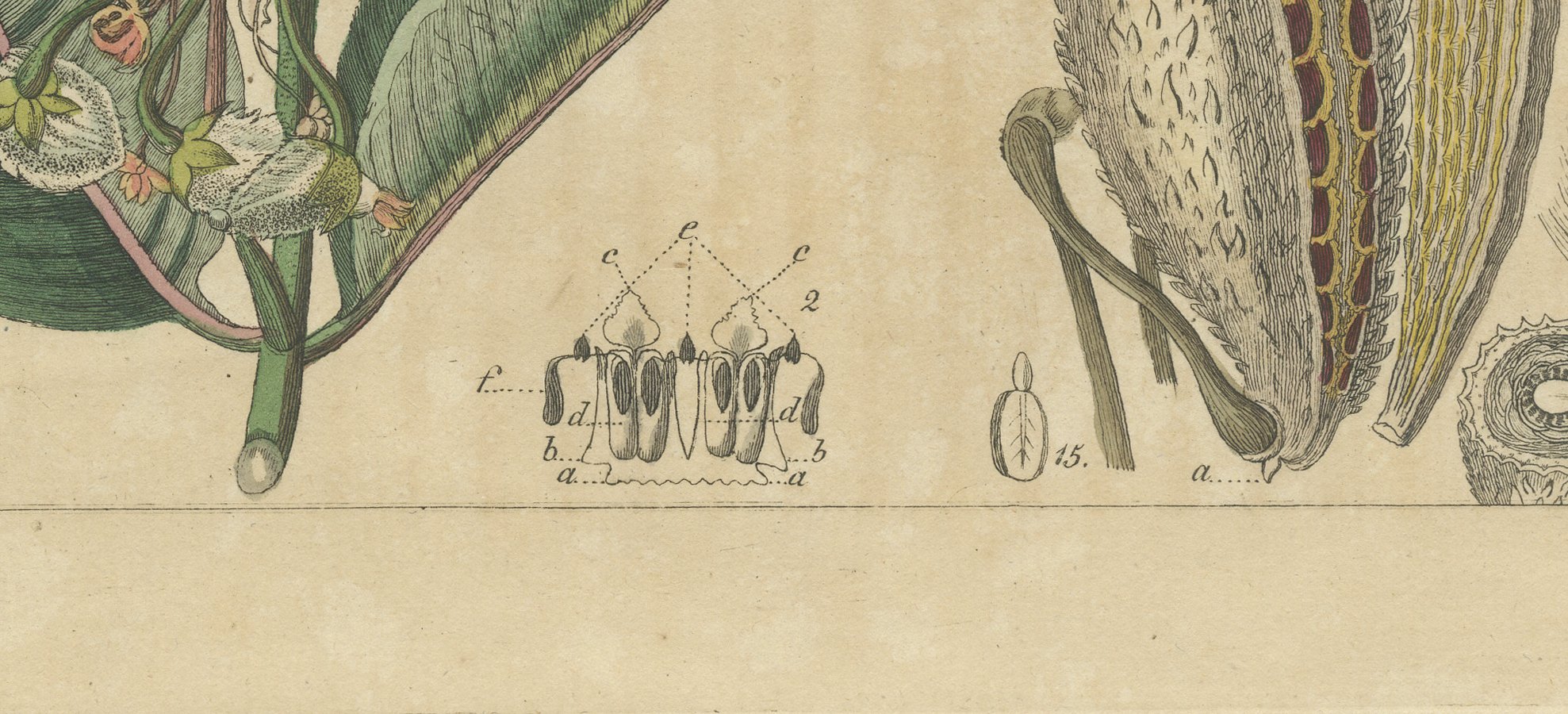
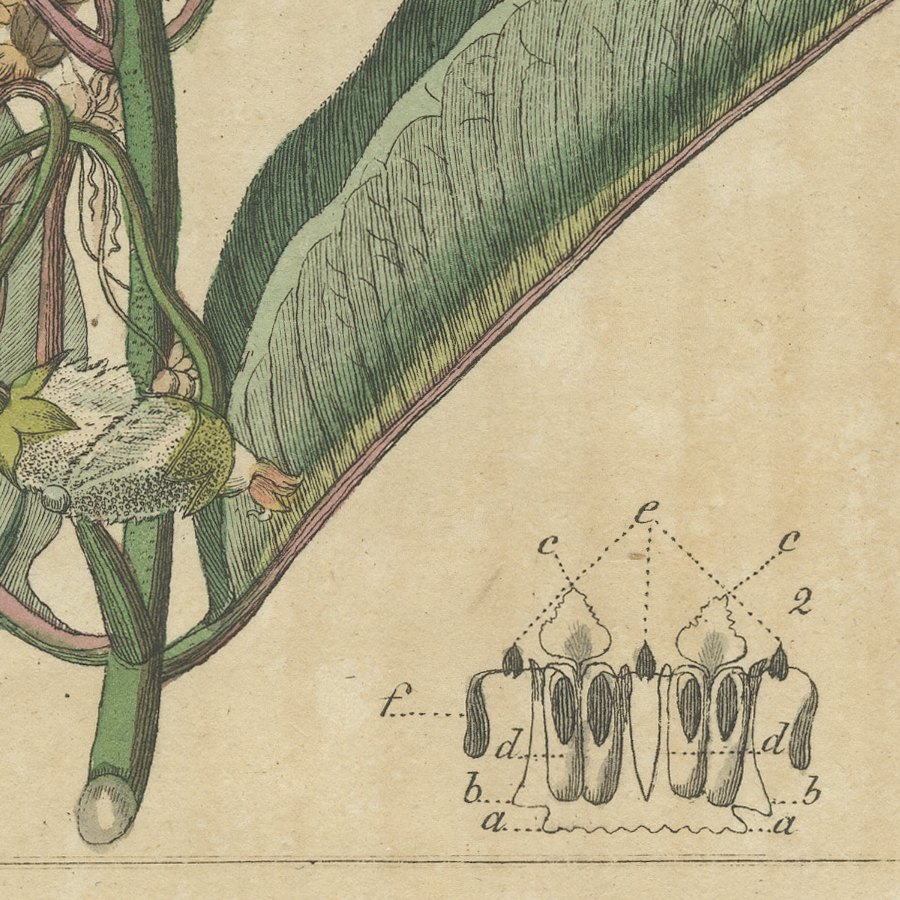
At left is a leafy stem with the pink flower head; at right the engraver has set out sixteen numbered details, from single flowers and their curious horned parts to the opened pod and a seed with its tuft of silk. The silk of milkweed, then called Syrian swallowwort though it comes from North America, was tried in Europe around 1800 as a substitute for cotton and for stuffing, which explains its place among the useful plants. The careful dissections show the more scientific style of the later Bilderbuch volumes.
Friedrich Justin Bertuch (1747 to 1822) began his Bilderbuch fuer Kinder in Weimar in 1790 as a picture encyclopaedia for young readers, and over four decades it grew to almost 1,200 plates on plants, animals, peoples, antiquities and the sciences. Its success led to other editions, and this sheet comes from the Vienna edition begun by Anton Pichler as the Bilderbuch zum Nutzen und Vergnuegen der Jugend, with text in German and French; Pichler issued the first ten volumes, and the later volumes, including this one, are believed to have been issued by B. Ph. Bauer in Vienna. The Vienna plates were newly engraved after the Weimar originals, keep the Weimar subject numbering in a heading in German, Latin and French, and carry a volume and plate number in the lower margin, here the mark XVIII.B.44. Vienna volume XVIII follows Weimar volume IX, which appeared in 1816, so this plate was published no earlier than that. The plate is a copper engraving with original hand colour, as the Vienna volumes were issued coloured.
A plate like this suits a kitchen, study or garden room, and it hangs well in a group with other Bertuch botanical sheets of the same size. For a collector it is also a neat example of how the Bilderbuch travelled beyond Weimar in the years around 1800.
The sheet is in good condition for its age, with toning, some pale discolouration in the upper part of the image and a small nick at the lower right edge.
This is an original antique print, not a modern reproduction. This item is sold unframed. Any framed or interior images are shown for presentation and inspiration only, unless the listing explicitly states that the item is sold framed.