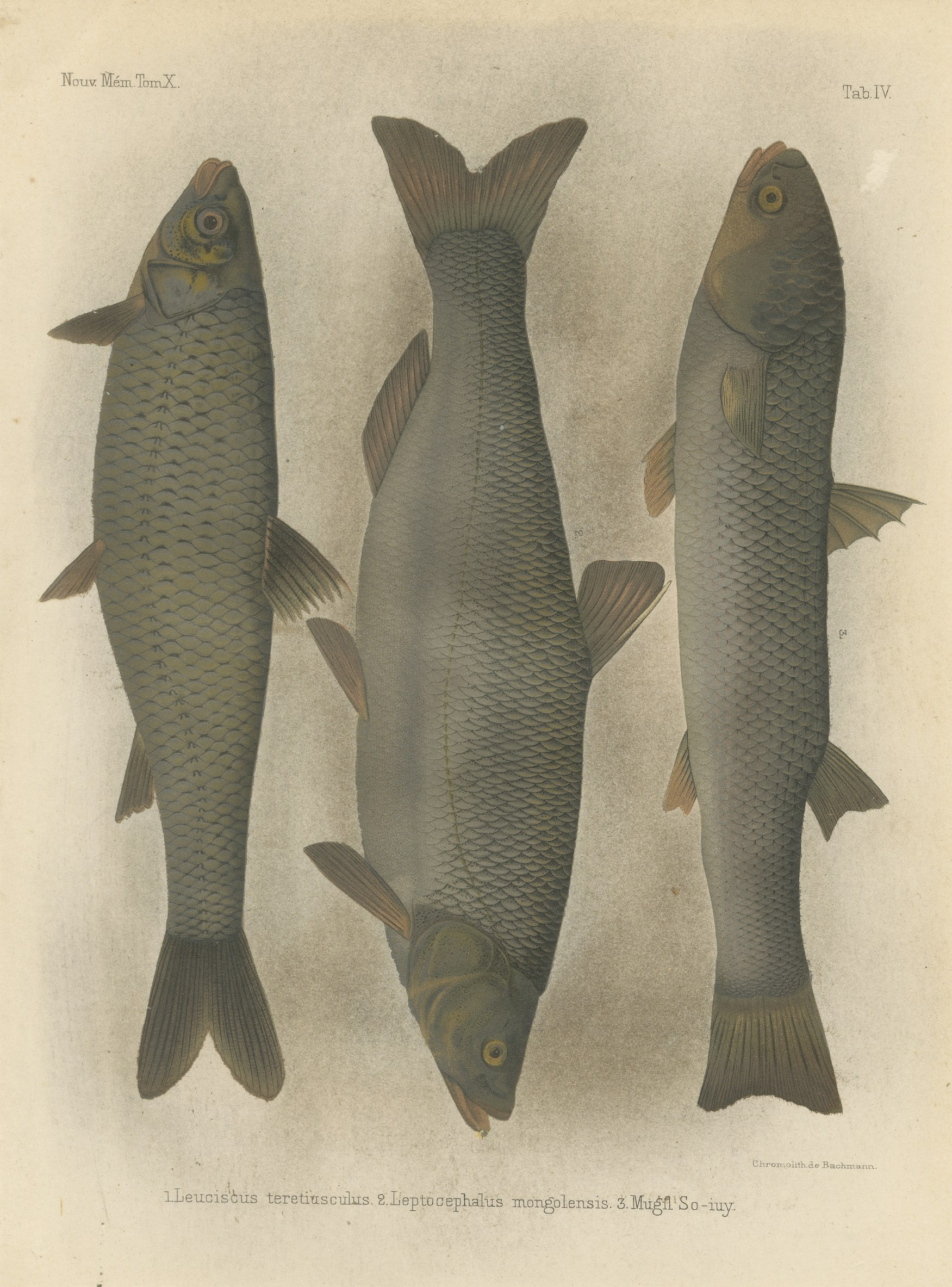
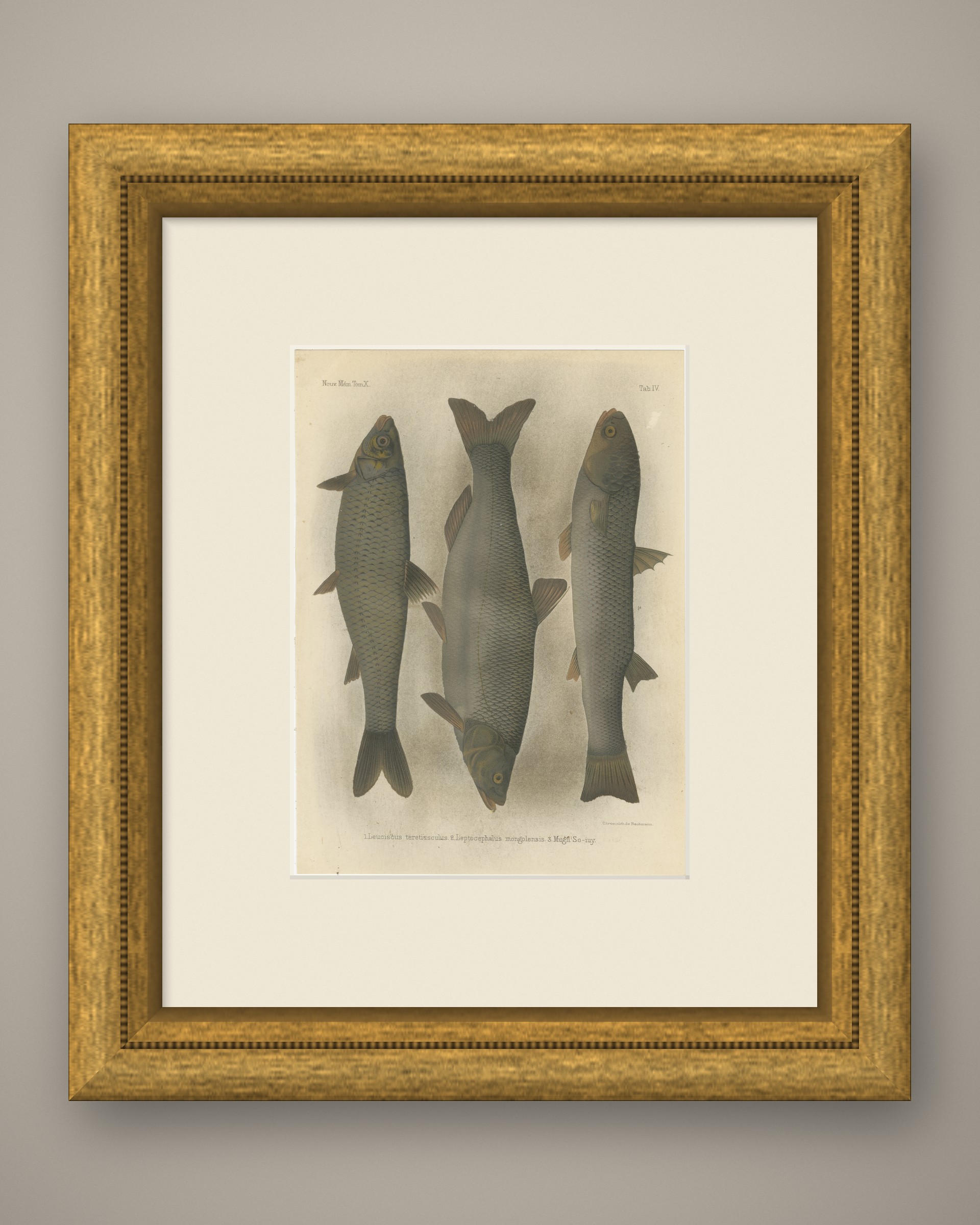
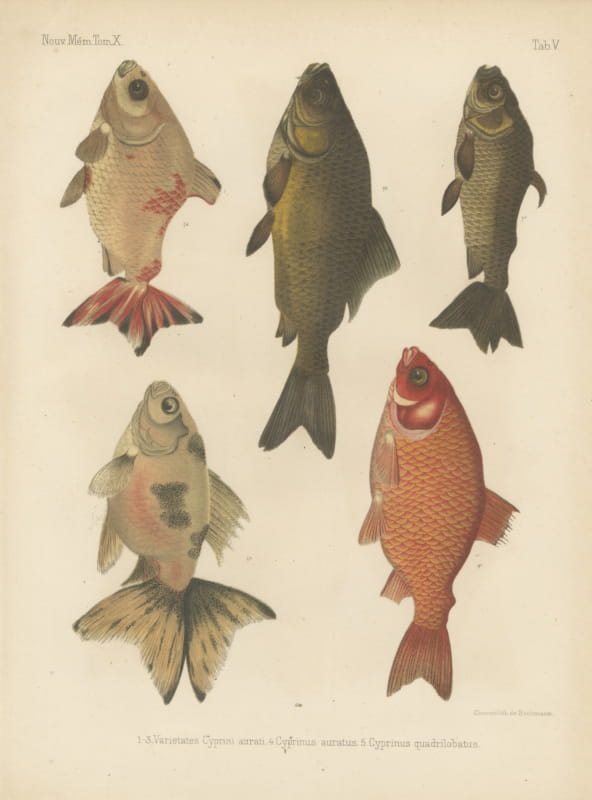
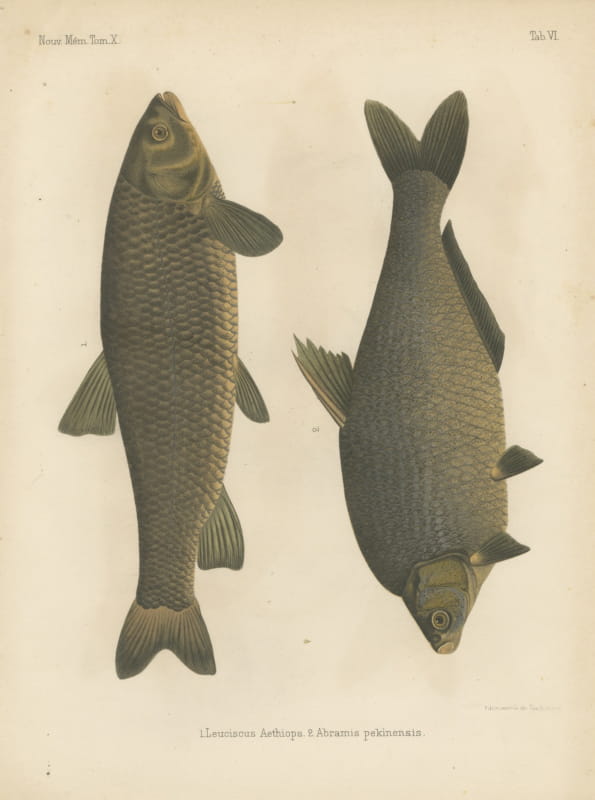
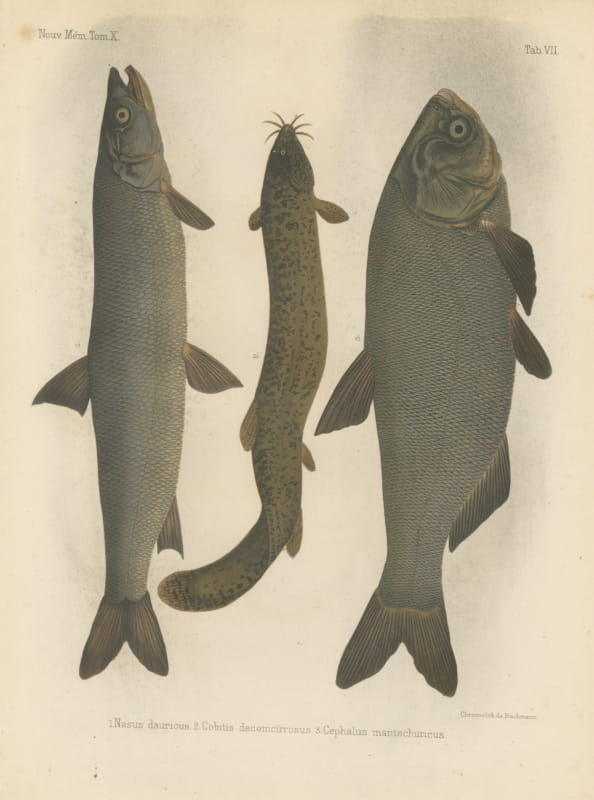
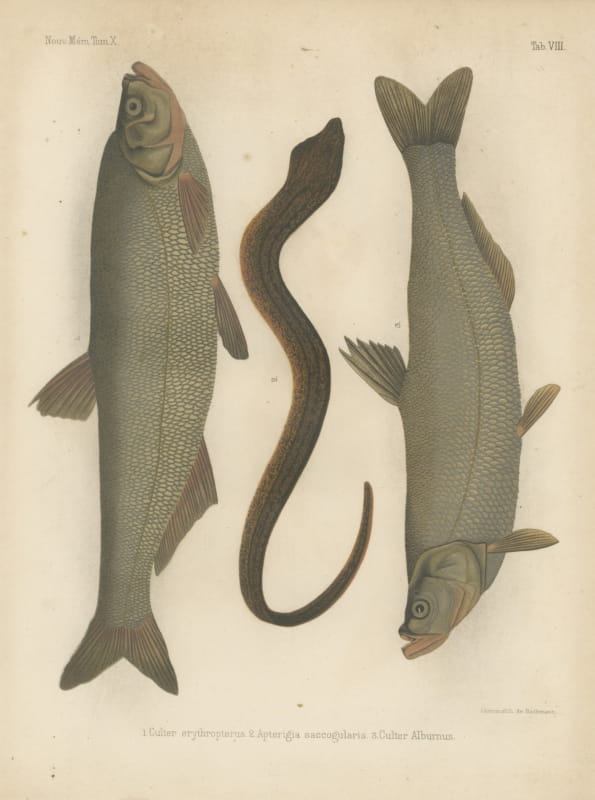
Chinese Mullet and Dace, Antique Chromolithograph of Fishes, 1855
€ 285
Original antique · The actual sheet photographed · Certificate of authenticity on request · Sold unframed · Worldwide shipping from € 15 (rates)
Date
1855
Mapmaker / artist
Stepan Basilewsky, with the figures painted from nature by a Chinese artist
Publisher
Societe Imperiale des Naturalistes de Moscou, Moscow
Technique
Chromolithograph
Coloring
Printed color
Sheet size
28 × 21 cm (11.0 × 8.3 in)
Condition
Good
Reference
BG-14475-1-4
What the condition grades mean
Excellent
Bright and clean, with no faults worth mentioning.
Very good
Only light signs of age, such as faint toning.
Good
Normal signs of age for a sheet of this period: toning, some foxing, small marks or neat old repairs.
Fair
Clear faults such as staining, tears or repairs, priced to match.
Every fault we see is written in the condition note, and the whole sheet is shown uncropped in the photos.
Condition
Light uneven toning, browner toward the edges. Handling soiling along the top edge. A few small foxing spots in the margin. Slight wear at the bottom left corner.
About this sheet
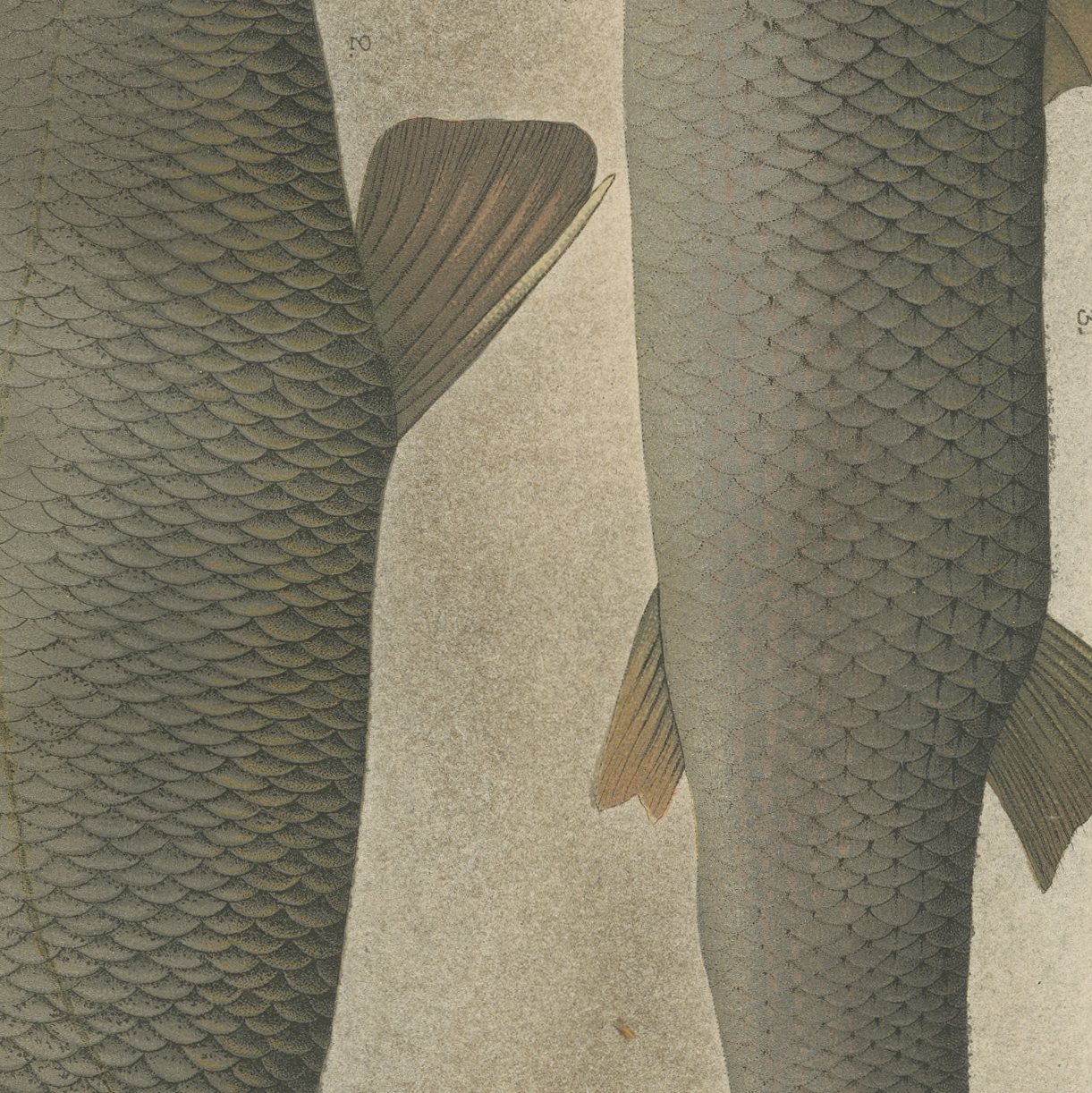
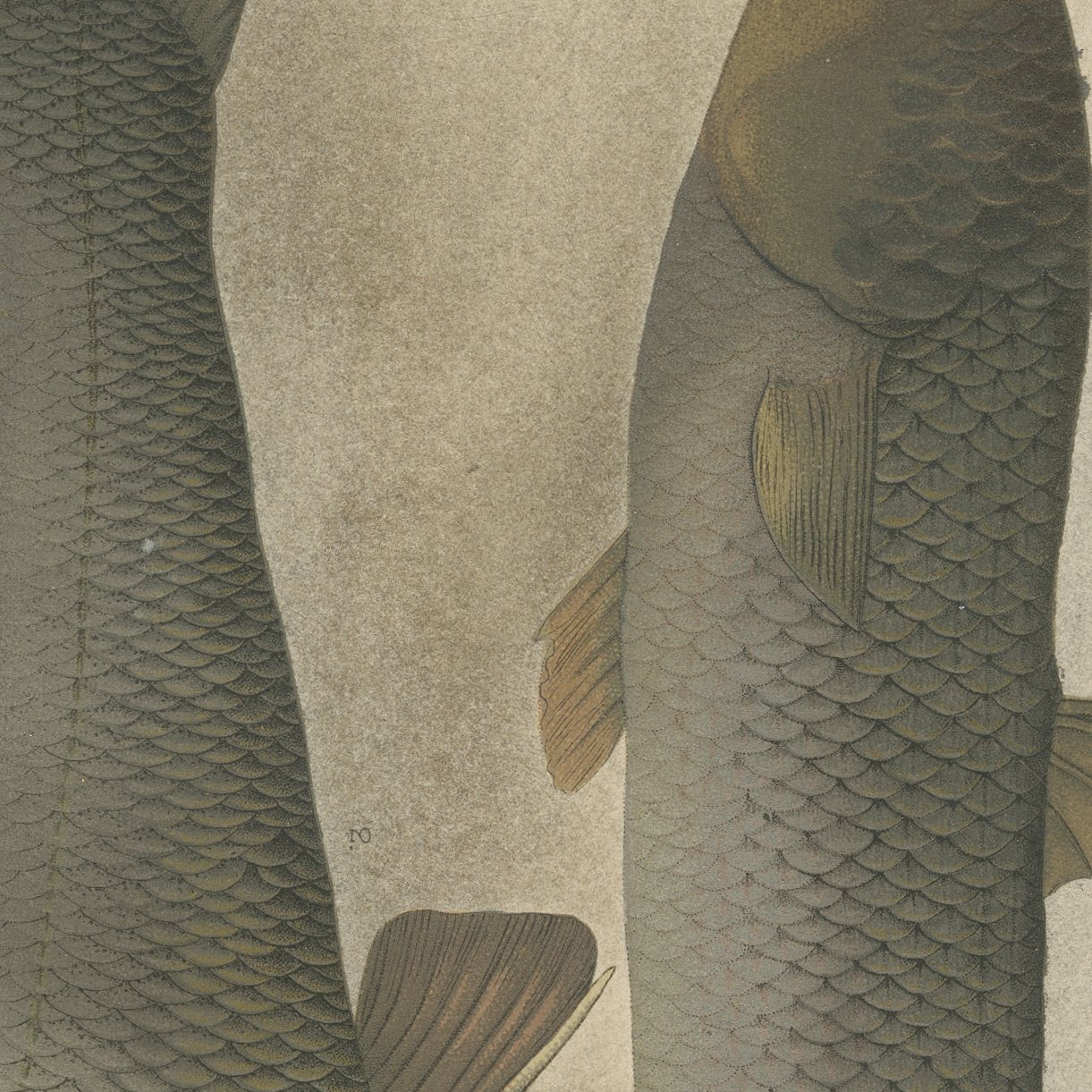
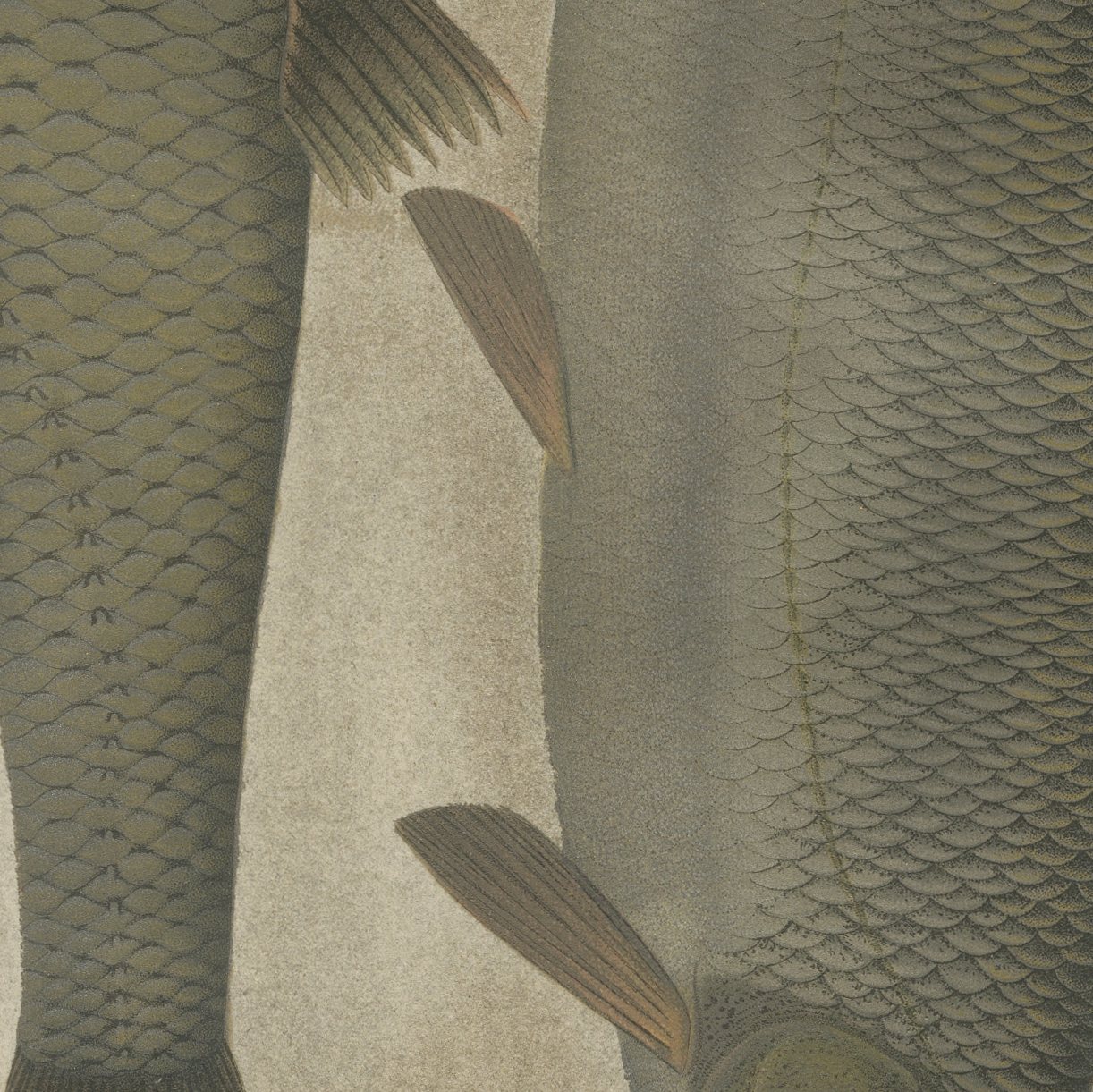
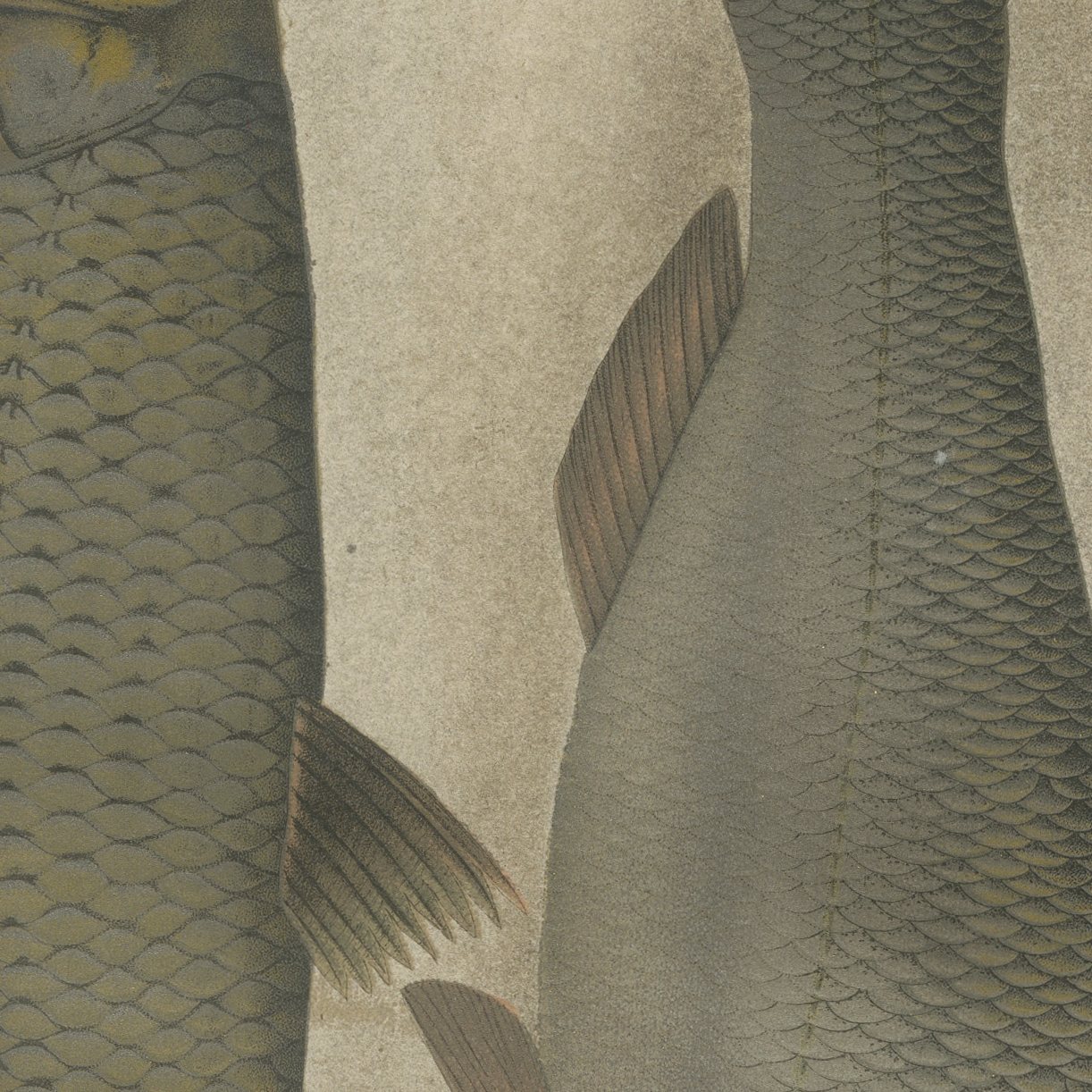
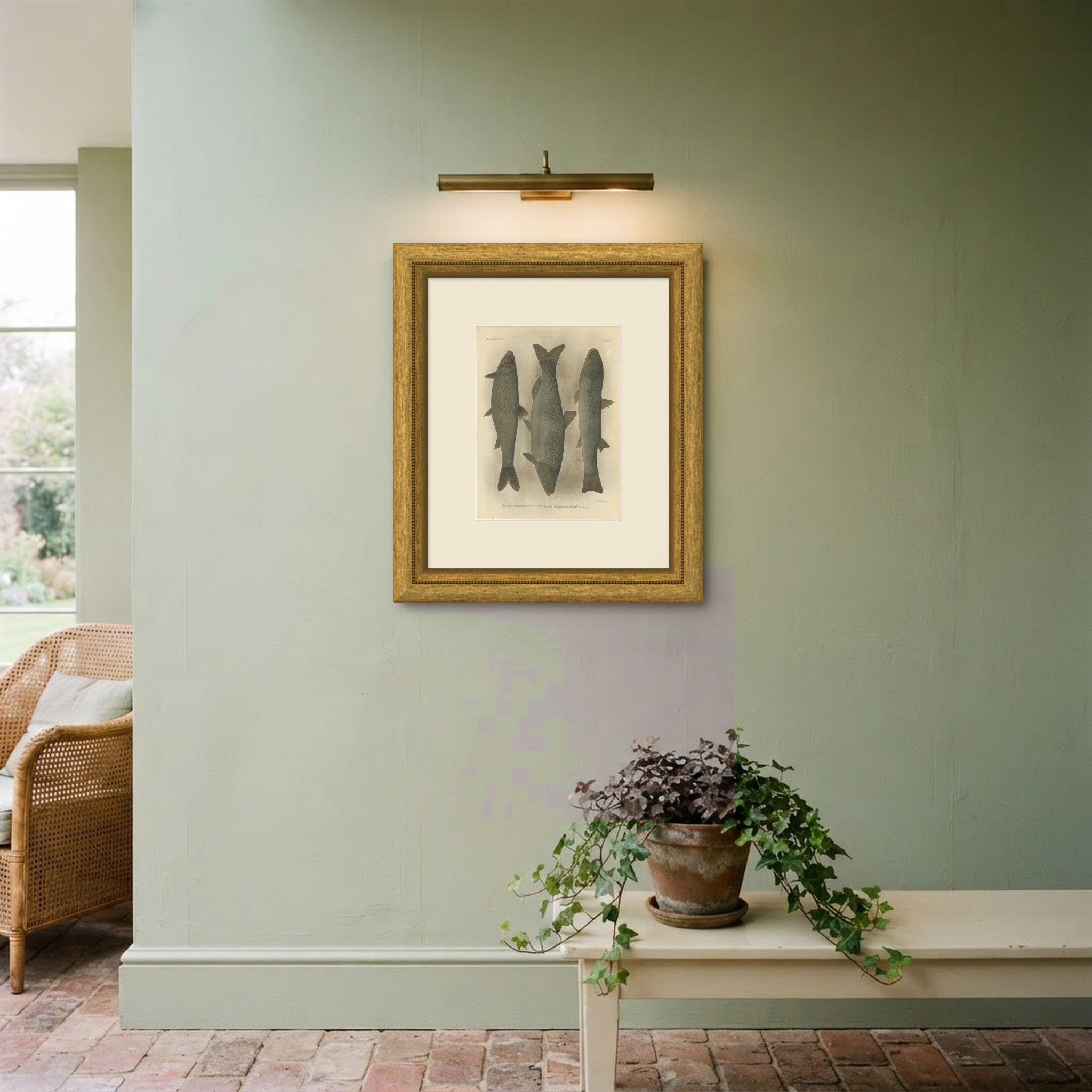
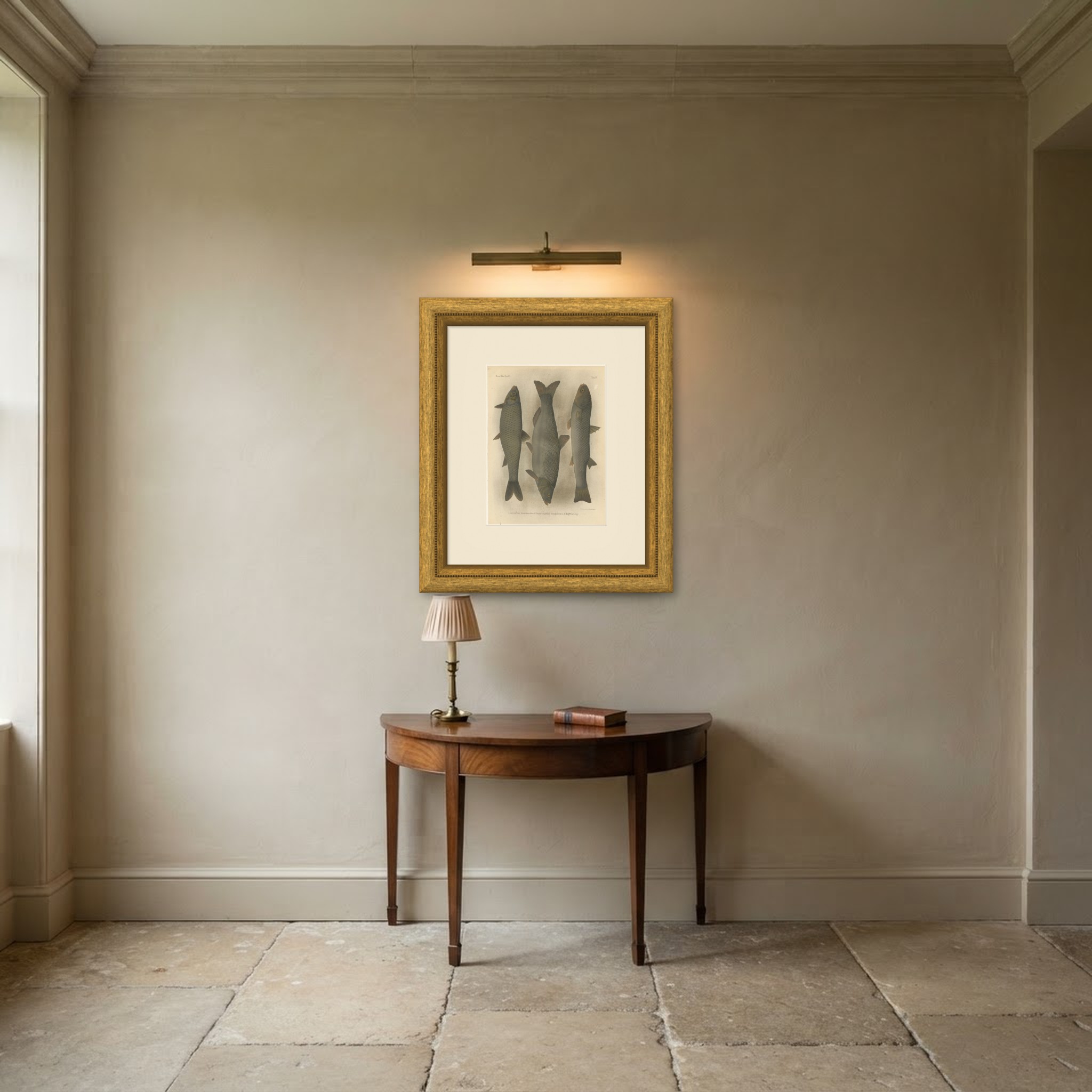
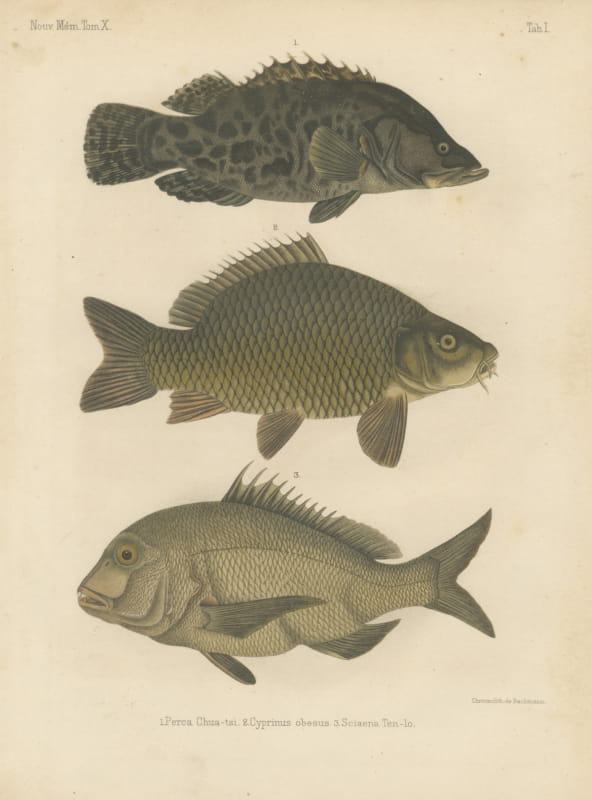
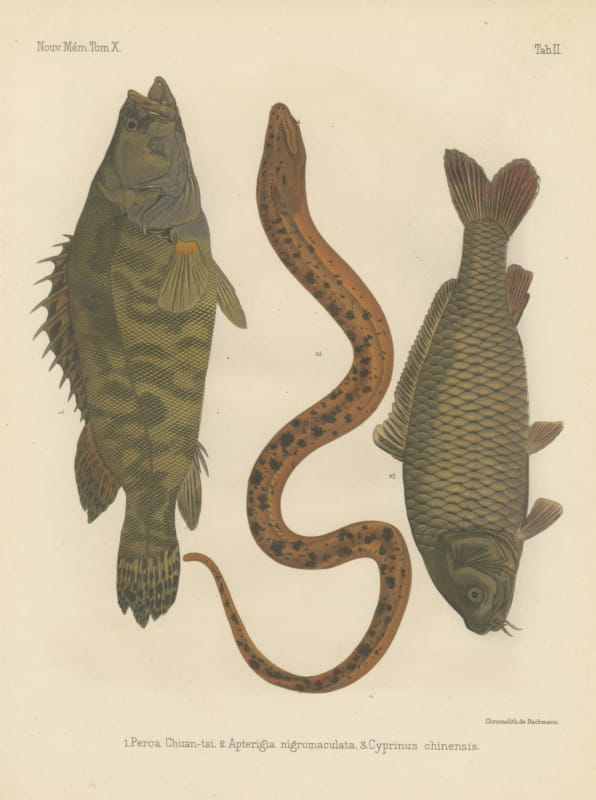
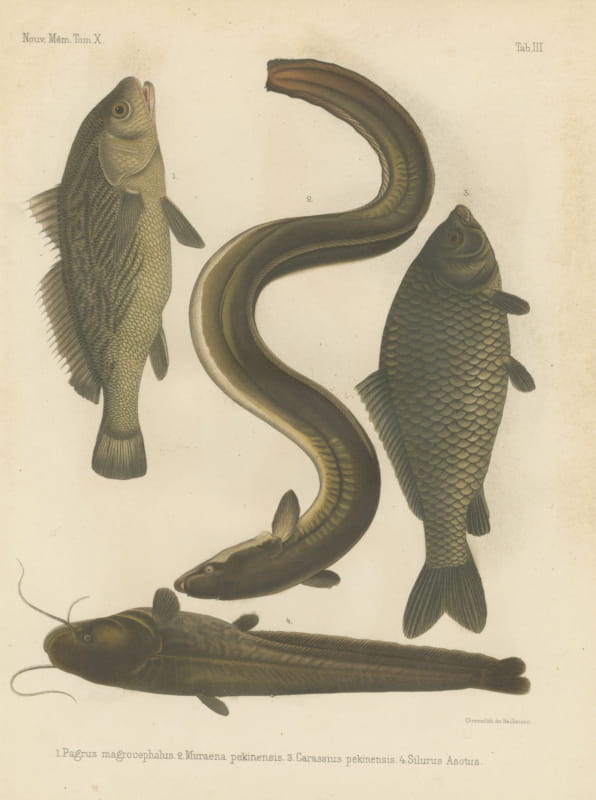
This is an original antique chromolithographed plate of Chinese fishes, the fourth of the nine plates of Basilewsky's Ichthyographia Chinae Borealis. Three fishes are printed in color and named along the foot: the dace Leuciscus teretiusculus, the slender Leptocephalus mongolensis and the mullet Mugil So-iuy, which takes its species name from the Chinese word the fishermen used. The plate is lettered Tabula the fourth and carries the Bachmann line.
It comes from Basilewsky's Ichthyographia Chinae Borealis, printed in 1855 in the tenth volume of the Nouveaux Memoires of the Imperial Society of Naturalists of Moscow from a text written in Peking three years earlier. All nine plates were chromolithographed by Bachmann in Moscow after paintings taken from the living fish by a Chinese painter working for the author.
Mugil so-iuy, now usually placed in the genus Planiliza, is the so-iuy mullet, a fish that has since spread far beyond its native waters and is farmed and fished commercially. This plate is where the name was published, which gives the sheet a documentary standing most decorative fish prints do not have. The dace and the slender Leptocephalus beside it make a quiet, well balanced composition, and the soft Russian chromolithographic color has held its strength on this impression. Plates from this work reach the market only rarely because the paper was issued inside a learned journal rather than as a separate book, so most surviving copies sit in institutional libraries. A plate of this kind frames well in plain dark wood and sits happily in a kitchen, a study or a hallway, alone or in a run with its companions.
Light uneven toning, browner toward the edges. Handling soiling along the top edge. A few small foxing spots in the margin. Slight wear at the bottom left corner.
This is an original antique print, not a modern reproduction. This item is sold unframed. Any framed or interior images are shown for presentation and inspiration only, unless the listing explicitly states that the item is sold framed.