About this sheet
Carp, Goldfish, and Loaches - Vibrant Freshwater Fish of Scandinavia
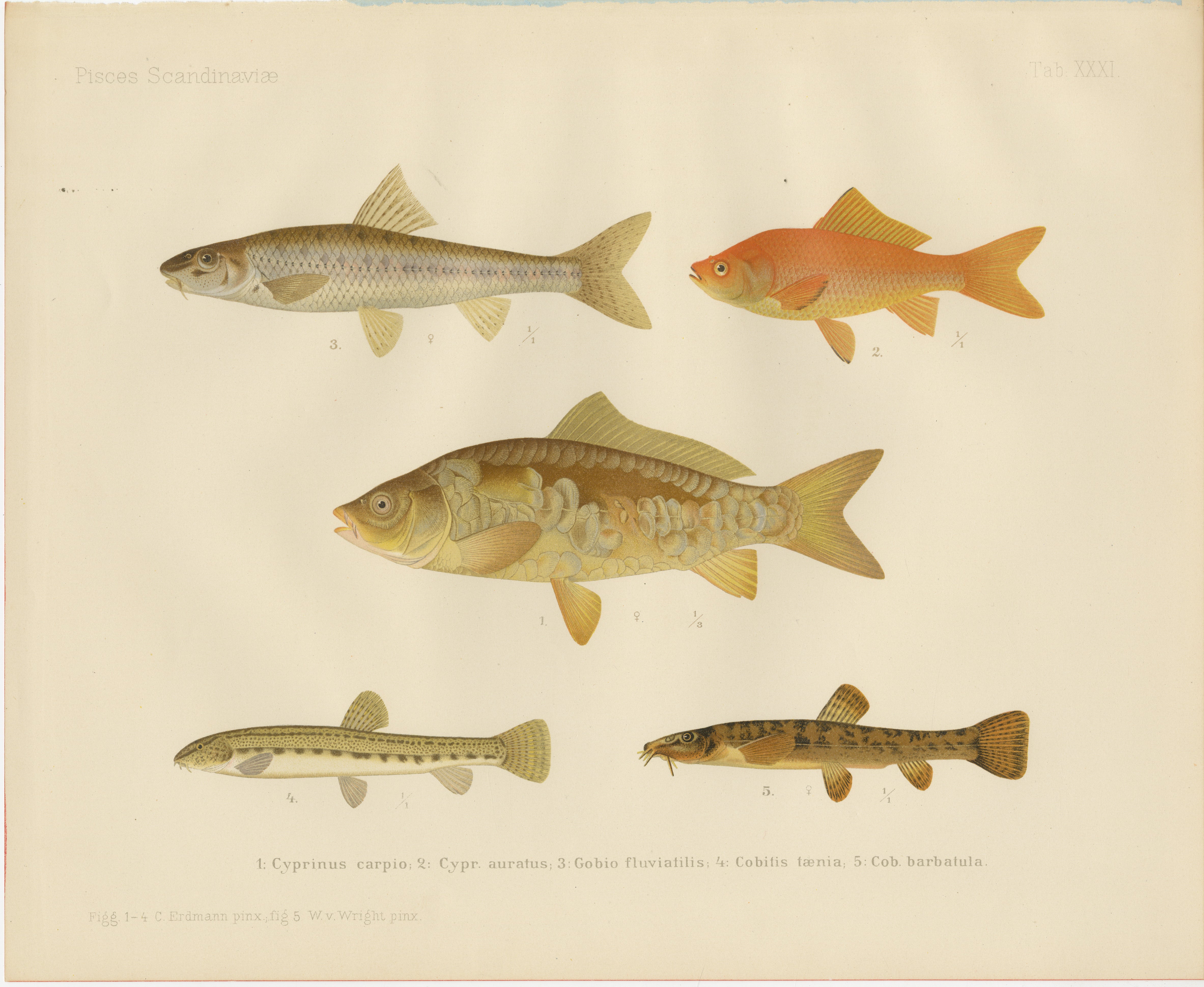
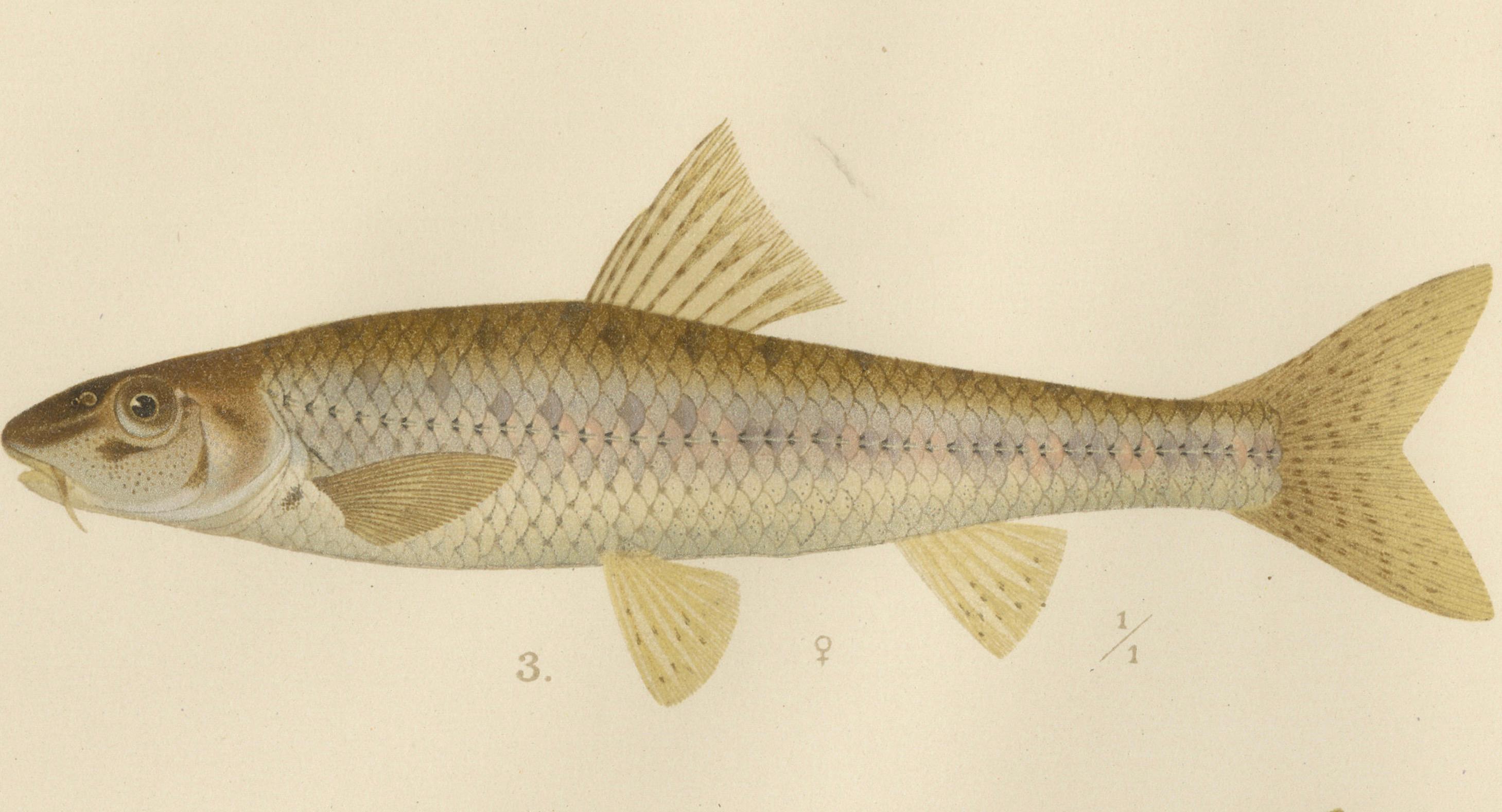
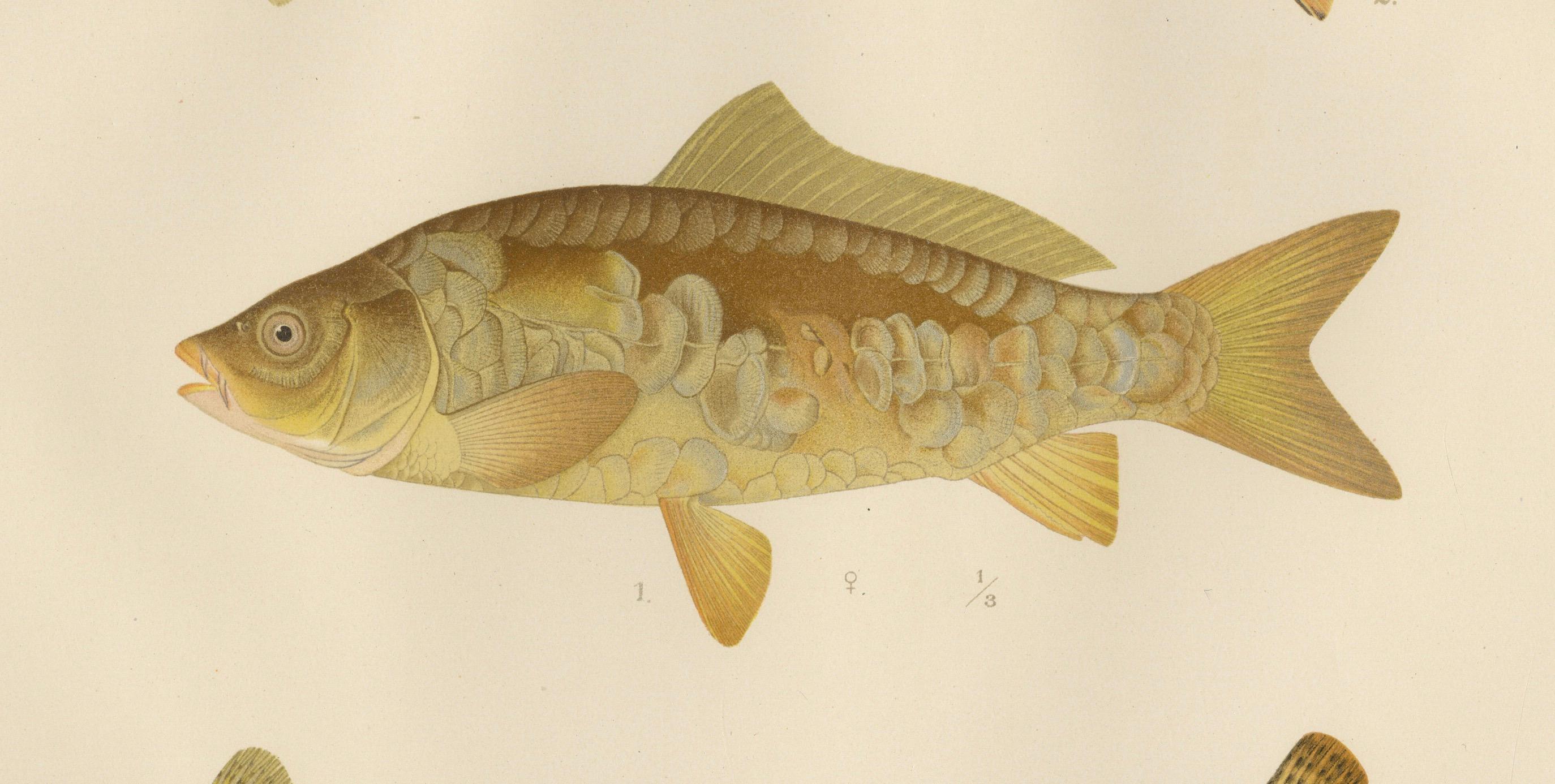
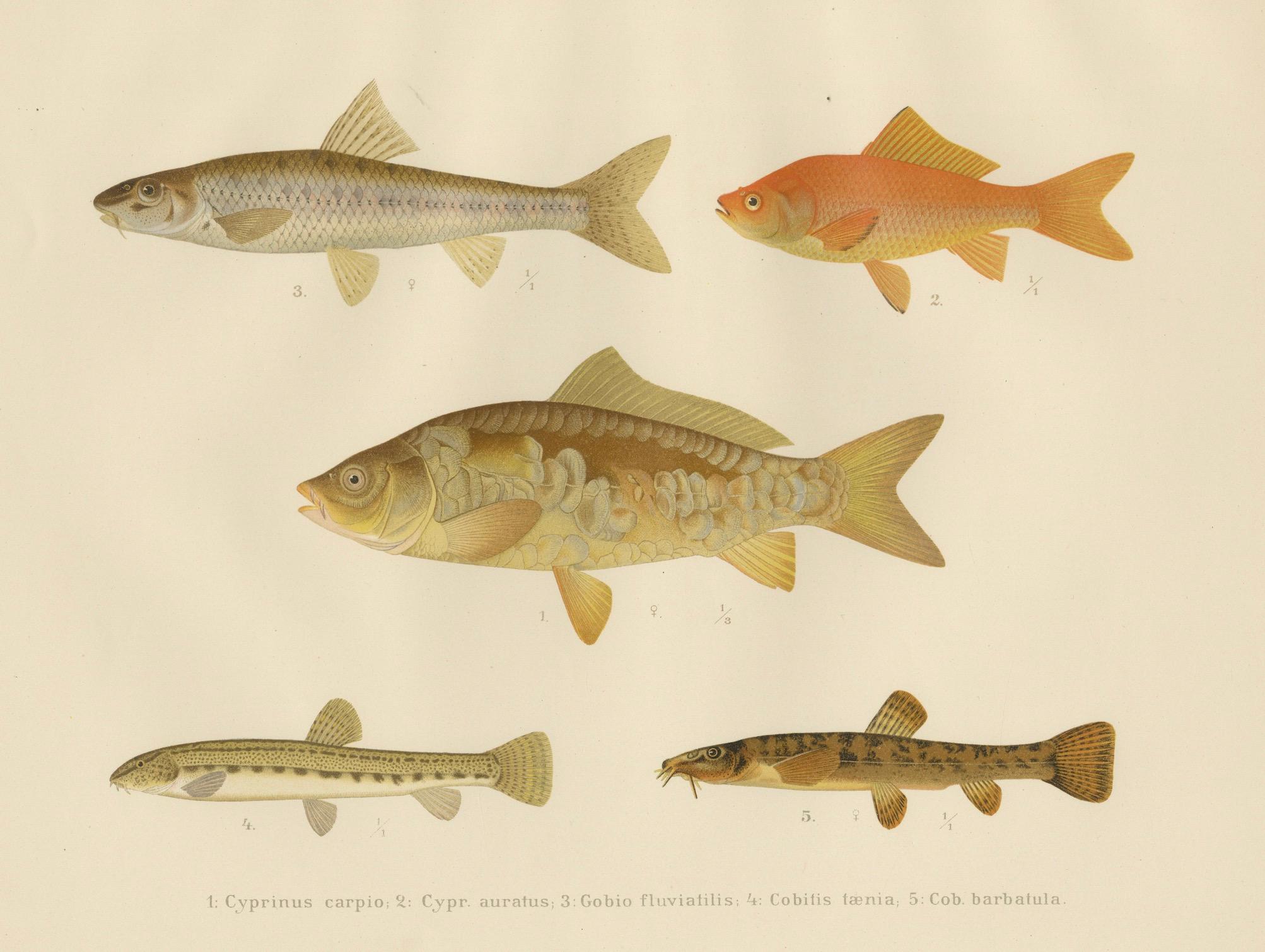
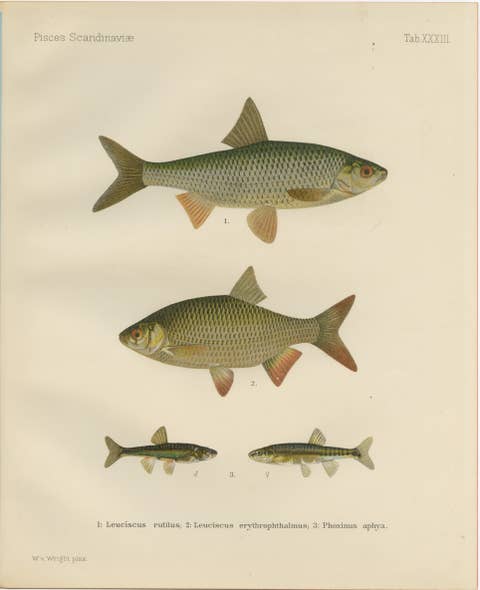
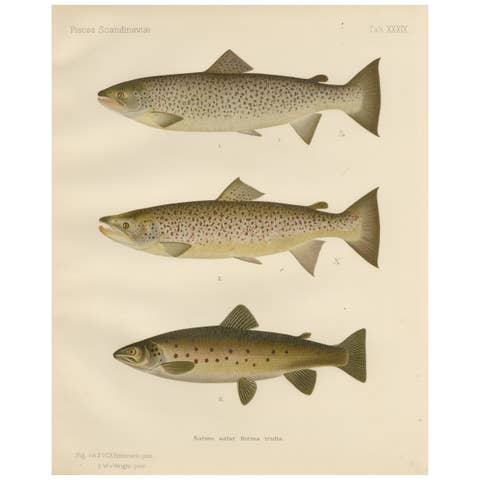
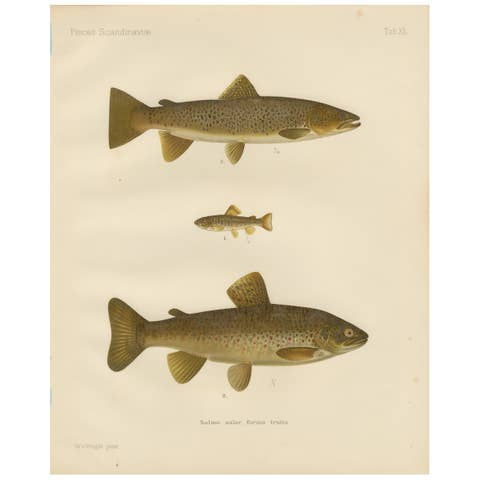
This striking 19th-century lithograph from *Skandinaviens Fiskar* presents a vivid array of Scandinavian freshwater fish, showcasing the Common Carp (Cyprinus carpio), Goldfish (Cyprinus auratus), Gudgeon (Gobio fluviatilis), Spined Loach (Cobitis taenia), and Stone Loach (Cobitis barbata). Illustrated by C. Erdmann and Wilhelm von Wright, and published by P. A. Norstedt & Söners Förlag in Stockholm, this plate captures both the diversity and beauty of commonly found freshwater species in Scandinavia.
At the center of the plate, the Common Carp (Cyprinus carpio) dominates the composition with its robust, deep-bodied shape and distinctive scale patterning. The earthy brown and golden hues blend beautifully, and the prominent scales are meticulously detailed, emphasizing the carp’s rugged and resilient nature. Known for its adaptability and longevity, the Common Carp thrives in a wide range of freshwater habitats, making it an iconic species in European waters.
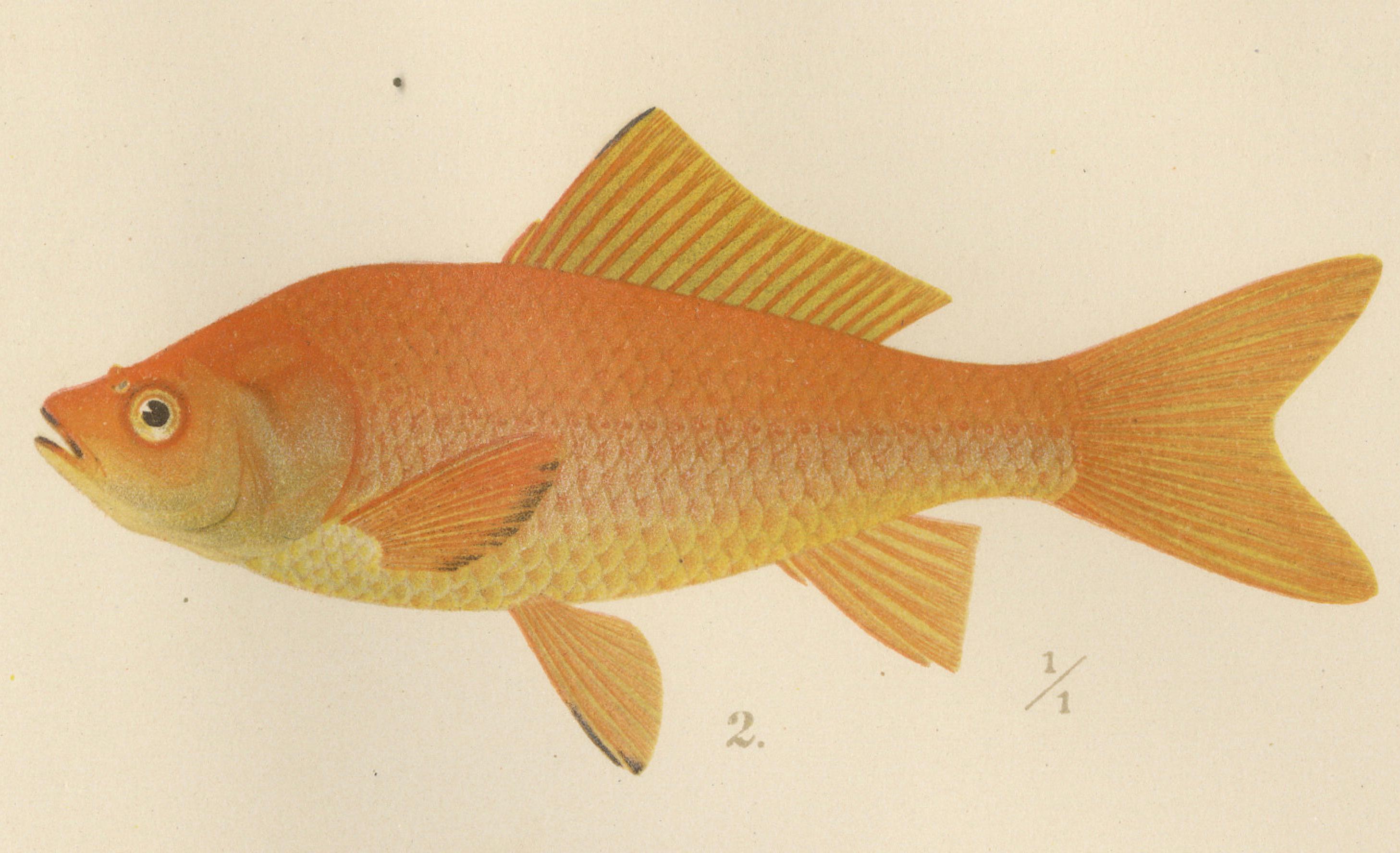
To the right of the carp, the Goldfish (Cyprinus auratus) displays its characteristic bright orange coloration, rendered with remarkable vibrancy and precision. The smooth, streamlined body and flowing fins are carefully depicted, capturing the elegance and ornamental quality that has made this species popular in ponds and aquariums worldwide. Originally domesticated from the Prussian carp, the Goldfish has become synonymous with decorative aquatic life.
At the top left, the Gudgeon (Gobio fluviatilis) is illustrated with its sleek, slender body and subtle speckling along the sides. The fine scales and soft grayish-brown coloration mirror its natural appearance, while the characteristic barbel near the mouth indicates its bottom-feeding behavior. Gudgeons are common in slow-moving rivers and lakes, known for their sociable nature and agile movements.
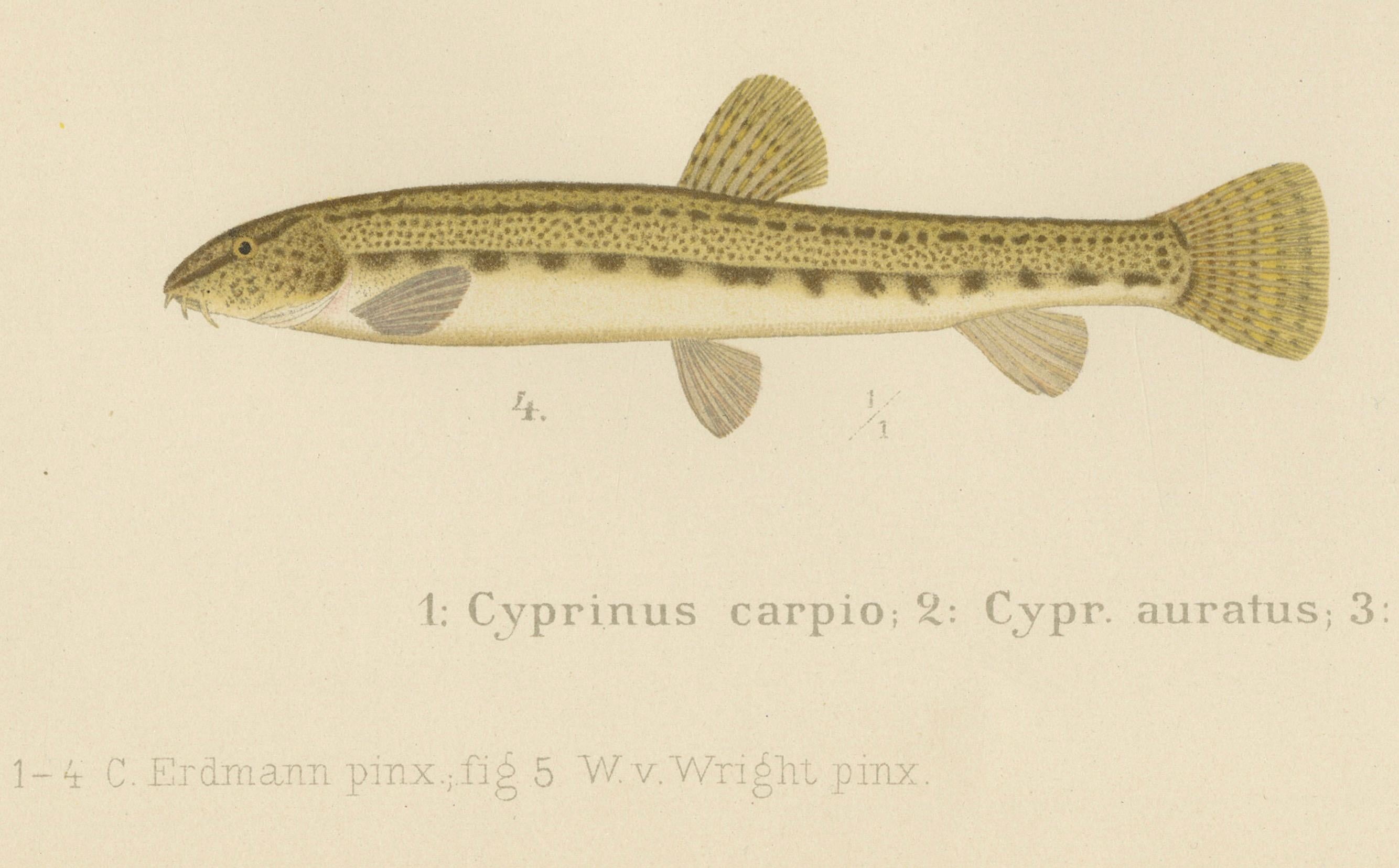
Below the Gudgeon, the Spined Loach (Cobitis taenia) is rendered with a long, thin body and a distinctive row of small, sharp spines along its lateral line. The muted tones of brown and beige, interspersed with darker blotches, reflect its natural camouflage among sandy and muddy riverbeds. Loaches are known for their burrowing habits and their ability to survive low oxygen levels, making them resilient inhabitants of diverse freshwater systems.
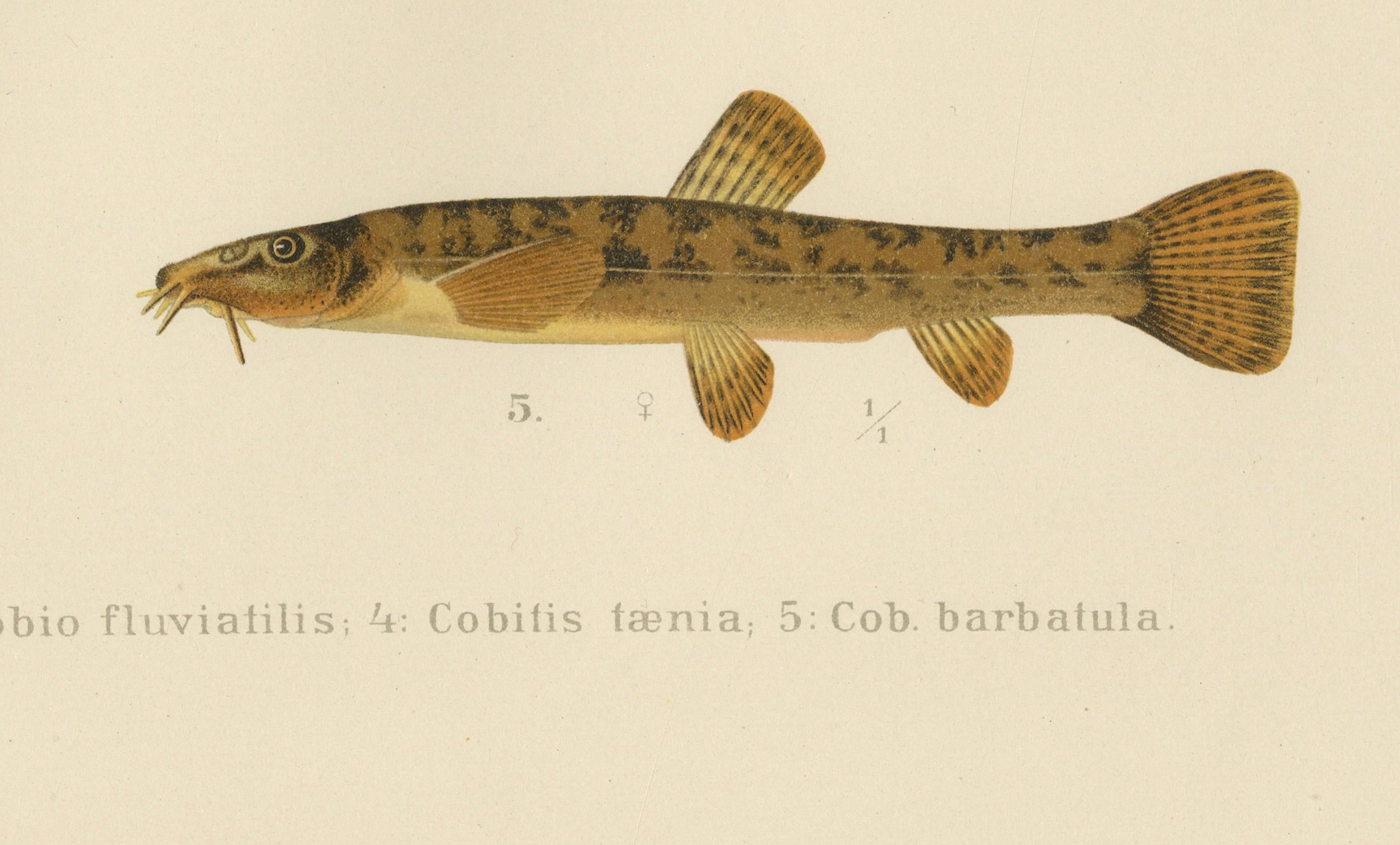
At the bottom right, the Stone Loach (Cobitis barbata) is depicted with a more robust and slightly flattened form, with darker mottling along the back and a series of barbels around the mouth. These bottom-dwelling fish are well adapted to fast-flowing, oxygen-rich streams, where their low-profile shape helps them cling to the substrate.
The lithographic technique used in this plate is exemplary, combining fine line work with meticulous hand coloring to create scientifically accurate and visually captivating representations. The subtle shading and nuanced hues give each fish a lifelike presence, demonstrating both the technical skill and artistic vision of the illustrators.
Condition: The print is preserved in excellent condition, with vibrant colors and sharp details well maintained over time.
Framing tips: To enhance its decorative and educational appeal, consider framing it with a simple wooden frame and a light-colored mat that complements the warm tones of the fish. This lithograph would make an outstanding addition to any natural history collection or freshwater-themed interior, celebrating the iconic and resilient fish species of Scandinavian waters.