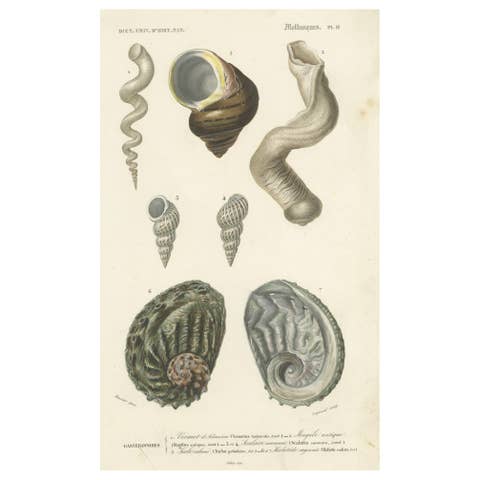
Aquatic Elegance: Molluscan Diversity Illustrated and Hand-Colored in 1849
€ 320
One of a kind: this is the sheet in the photographs. Ships from Langweer, the Netherlands.
Date
1849
Sheet size
24.5 × 15.5 cm (9.6 × 6.1 in)
Condition
Good
Reference
BG-13718-5 and BG-13718-8 and BG-13718-19
Condition
Good. Some edges a bit rough, but leaving enough space for matting or framing. Some soiling due to handling over almost 200 years, adding to its patina. Study the images carefully.
About this sheet
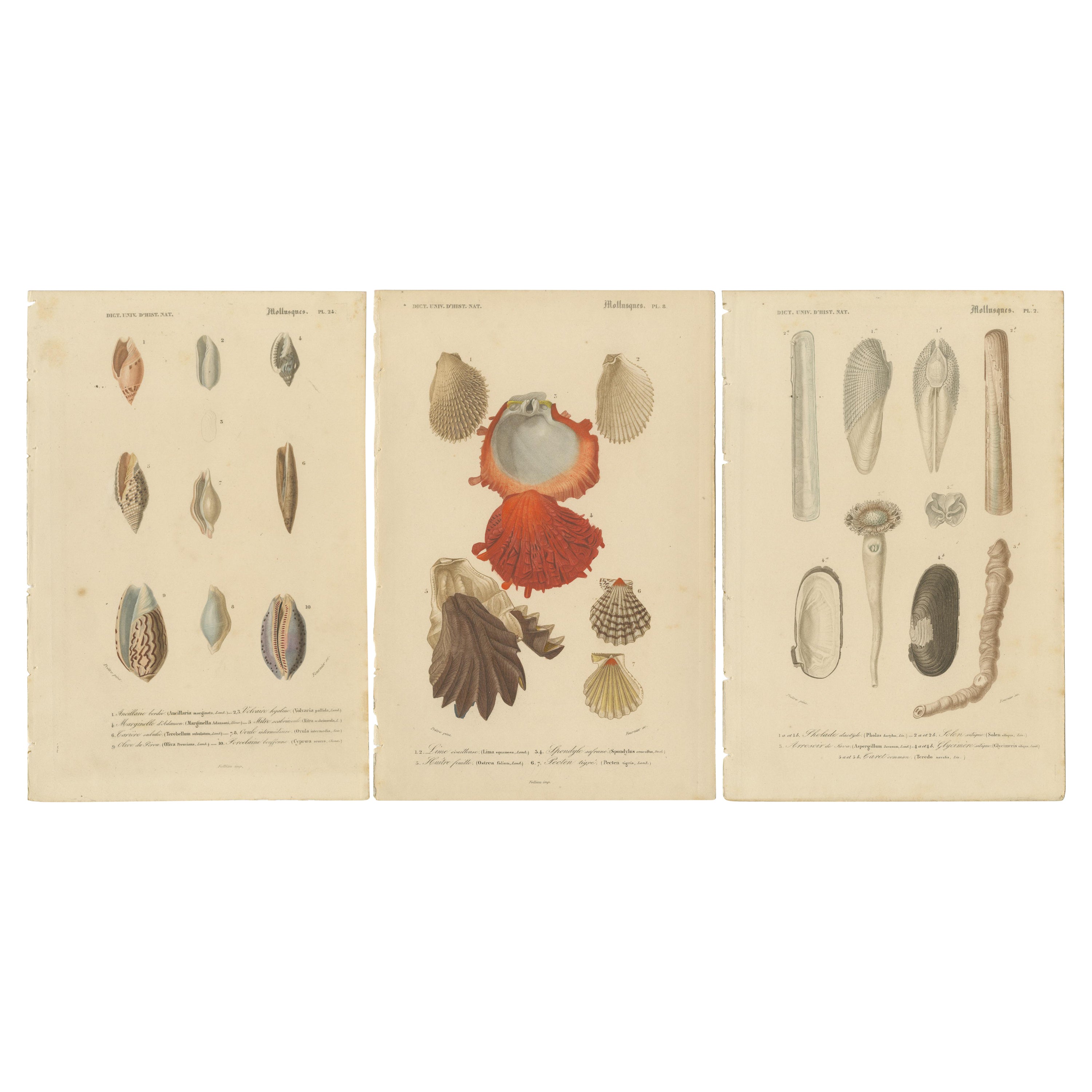
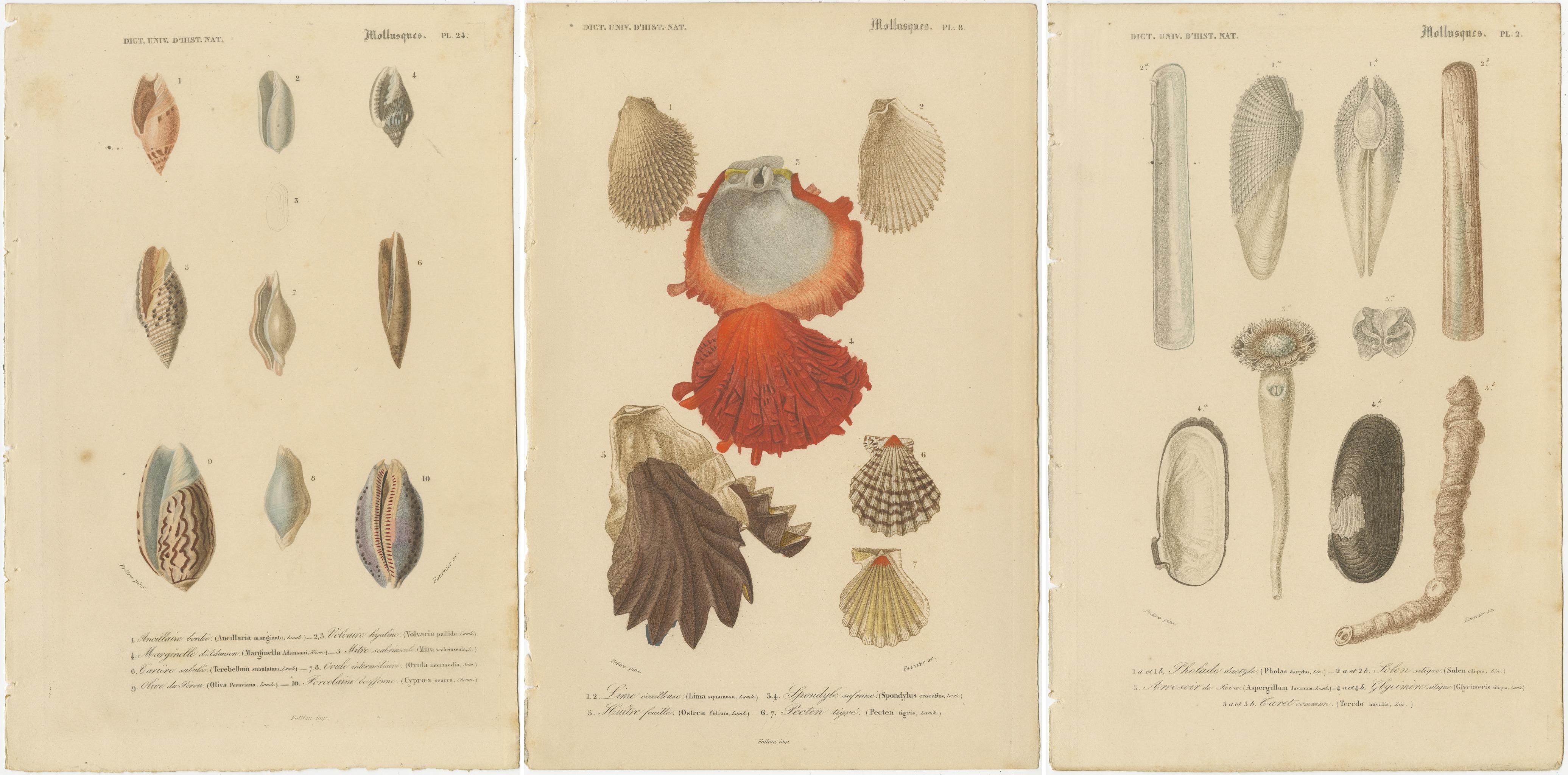
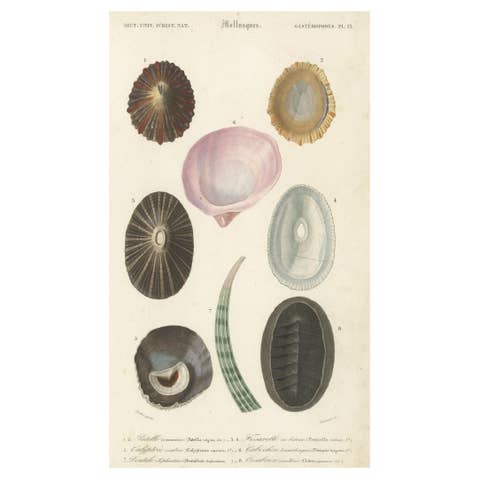
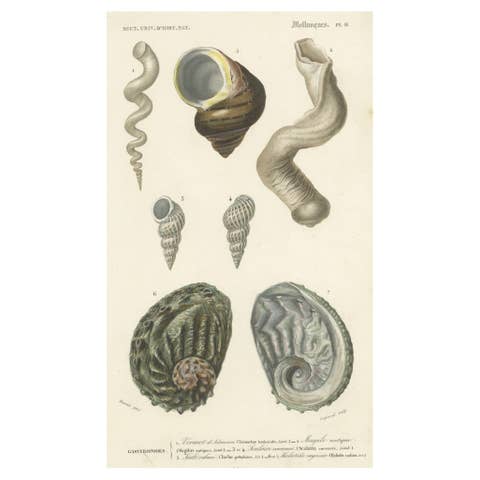
This horizontal collage exhibits a selection of marine mollusks from the "Dictionnaire Universel d'Histoire Naturelle". It captures the elegance and diversity of molluscan forms as seen through the lens of 19th-century science. The illustrations include the slender, tightly coiled shells of gastropods alongside the more robust and sculptural bivalves, each rendered with exquisite detail, showcasing the variety and complexity of these aquatic invertebrates. This collection serves as a tribute to the artistry of natural history illustration and the enduring allure of mollusks in the study of marine biology.
The work was edited by Charles d'Orbigny, a renowned French naturalist of the 19th century. The prints themselves would have been created by illustrators and engravers who specialized in scientific artwork of the time. Their names are often listed in the lower corners of the prints or in the index of the volumes
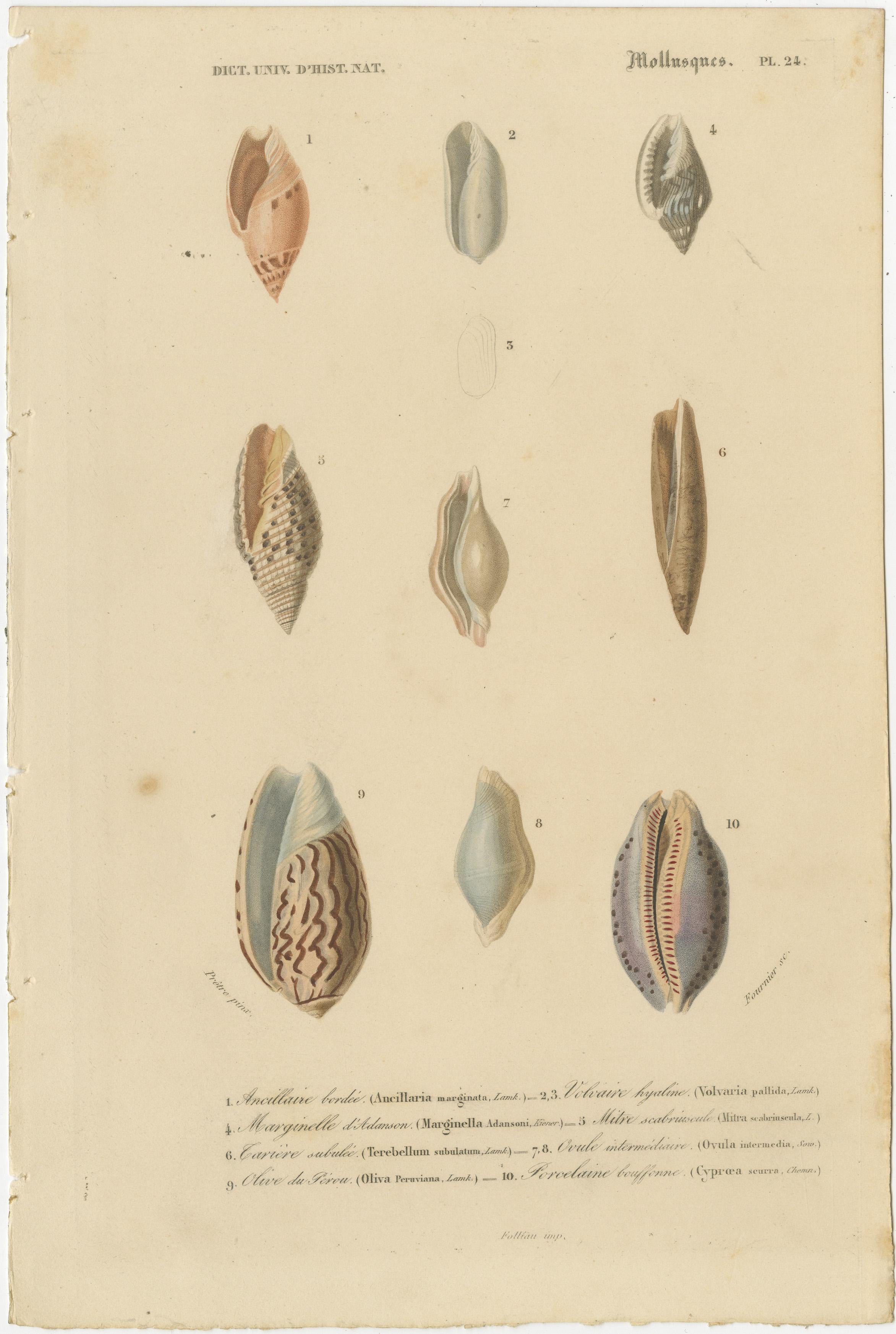
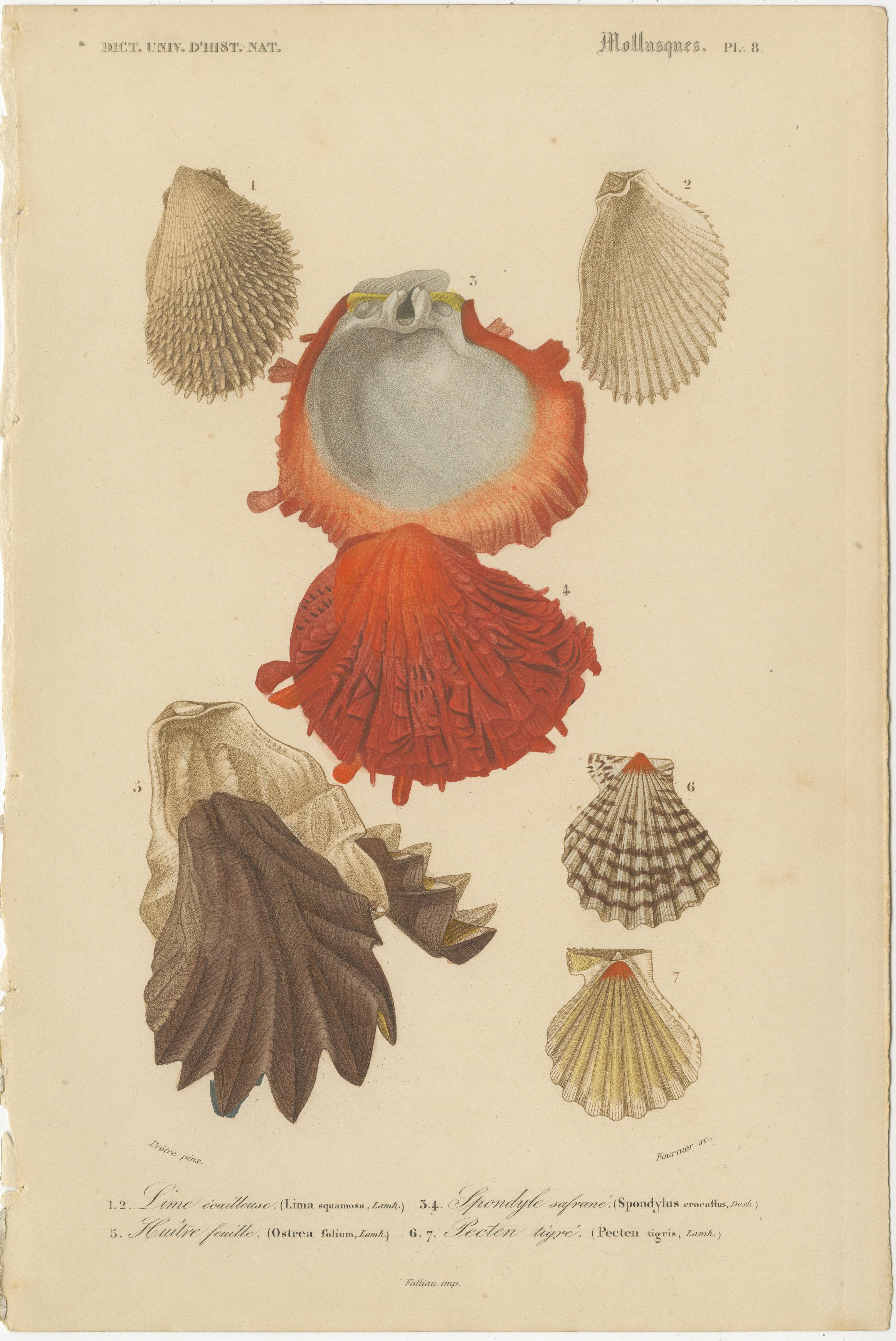
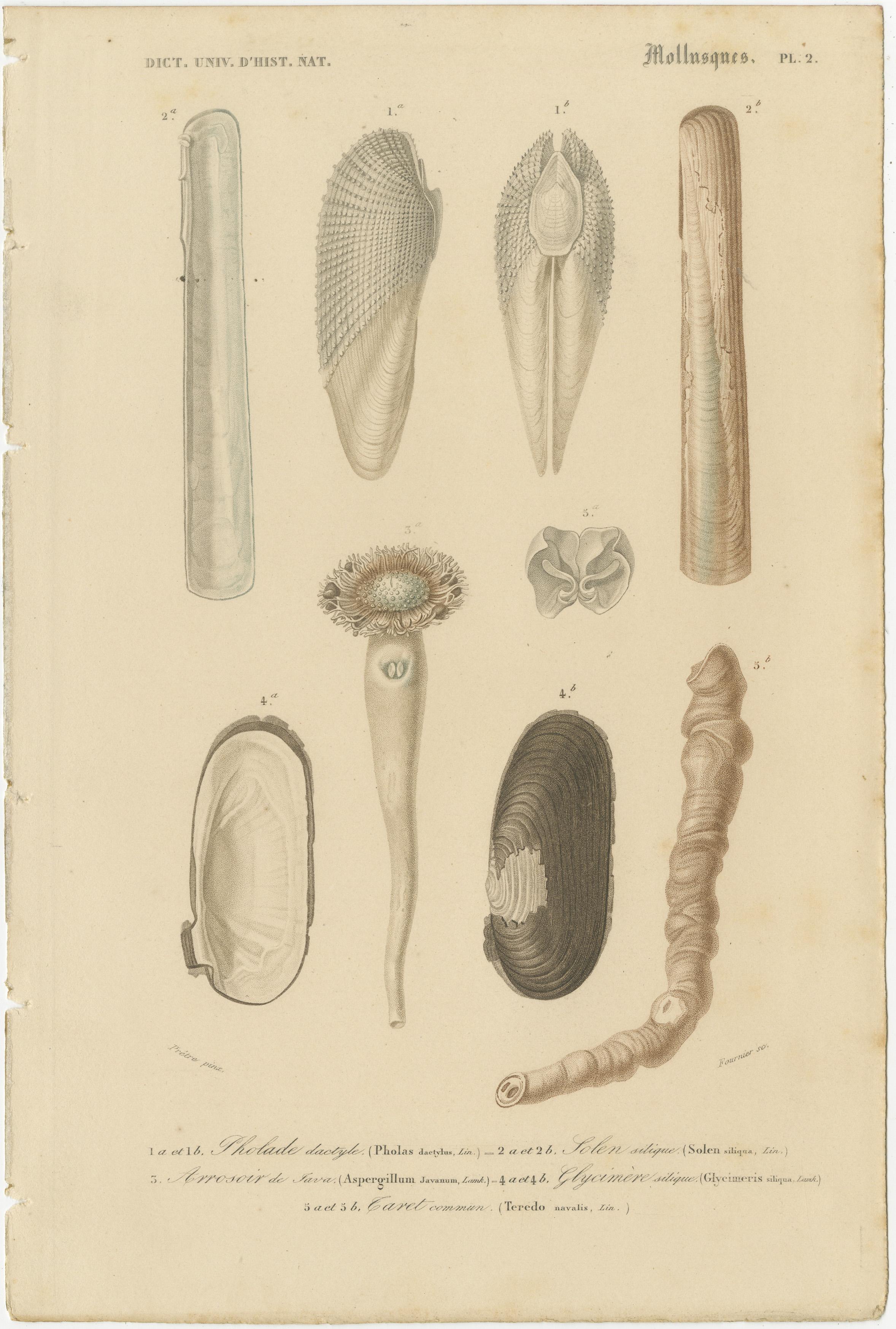
The species depicted in the provided images are various mollusks, characterized by their diverse and intricate shell structures. Here are the details based on the labels provided in the images:
**First Image:** 1. **Ancillaria marginata** - A species of sea snail with an elongated, tapering shell and distinctive colored bands or margins. 2. **Volvaria sp.** - These are small, elongated gastropods with smooth, glossy shells that resemble miniature elephant tusks. 3. **Marginella sp.** - These small gastropods have smooth, shiny shells that are often brightly colored or patterned. 4. **Mitra episcopalis** - Known for its tall, slender shell with a pointed apex, the mitre snail exhibits a variety of patterns and colors.
**Second Image** 5. **Lima squamosa** - The scaly file shell, a type of bivalve mollusk, has a shell with flared edges and a scaly texture. 6. **Spondylus sp.** - Often referred to as spiny oysters, these bivalves have thick, rigid shells adorned with spines or sculptural projections. 7. **Ostrea sp.** - Commonly known as oysters, these bivalves have irregularly shaped, rough shells and are well-known for their culinary and pearl-producing value.
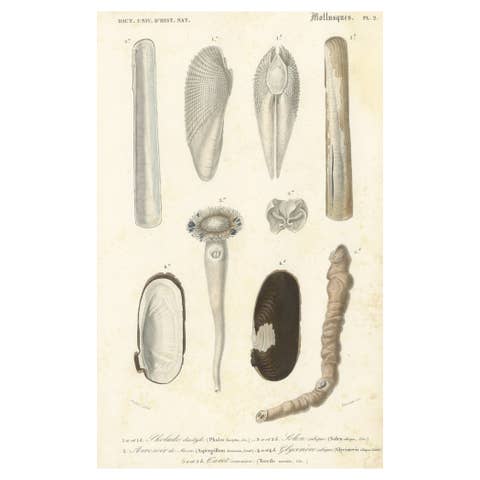
**Third Image** 8. **Pholas dactylus** - The common piddock, a bivalve that bores into wood or soft rock, has a long, cylindrical shell. 9. **Aspergillum sp.** - Also known as the watering pot shell, this unusual bivalve has a tubular shell with holes that resembles a watering can. 10. **Glycerimeris sp.** - This bivalve is characterized by a thick, ribbed shell, often burrowing into sandy or muddy substrates.
The mollusks illustrated are a testament to the diversity within the mollusk phylum, ranging from the deep burrowers of the ocean floor to the vibrant inhabitants of coral reefs. Each species has adapted unique shell features that reflect its ecological niche and lifestyle.