Original antique · The actual sheet photographed · Certificate of authenticity on request · Sold unframed · Worldwide shipping from € 15 (rates)
Date
1861
Sheet size
23.4 × 15.3 cm (9.2 × 6.0 in)
Condition
Good
Reference
BG-13214-35
What the condition grades mean
Excellent
Bright and clean, with no faults worth mentioning.
Very good
Only light signs of age, such as faint toning.
Good
Normal signs of age for a sheet of this period: toning, some foxing, small marks or neat old repairs.
Fair
Clear faults such as staining, tears or repairs, priced to match.
Every fault we see is written in the condition note, and the whole sheet is shown uncropped in the photos.
Condition
General age-related toning. Minor wear and soiling. With original protective sheet attached. Blank verso. Please review the images for further condition details.
About this sheet
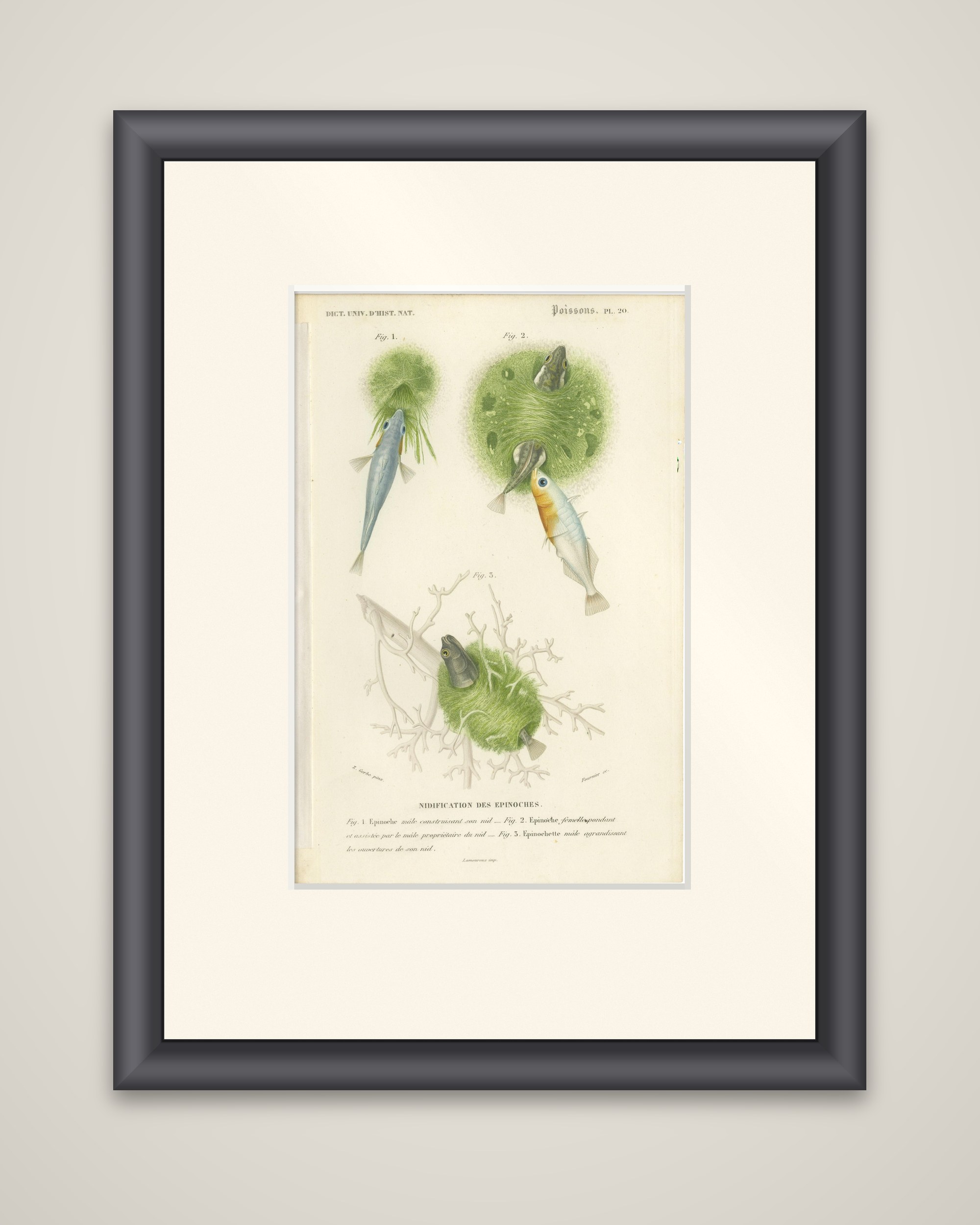
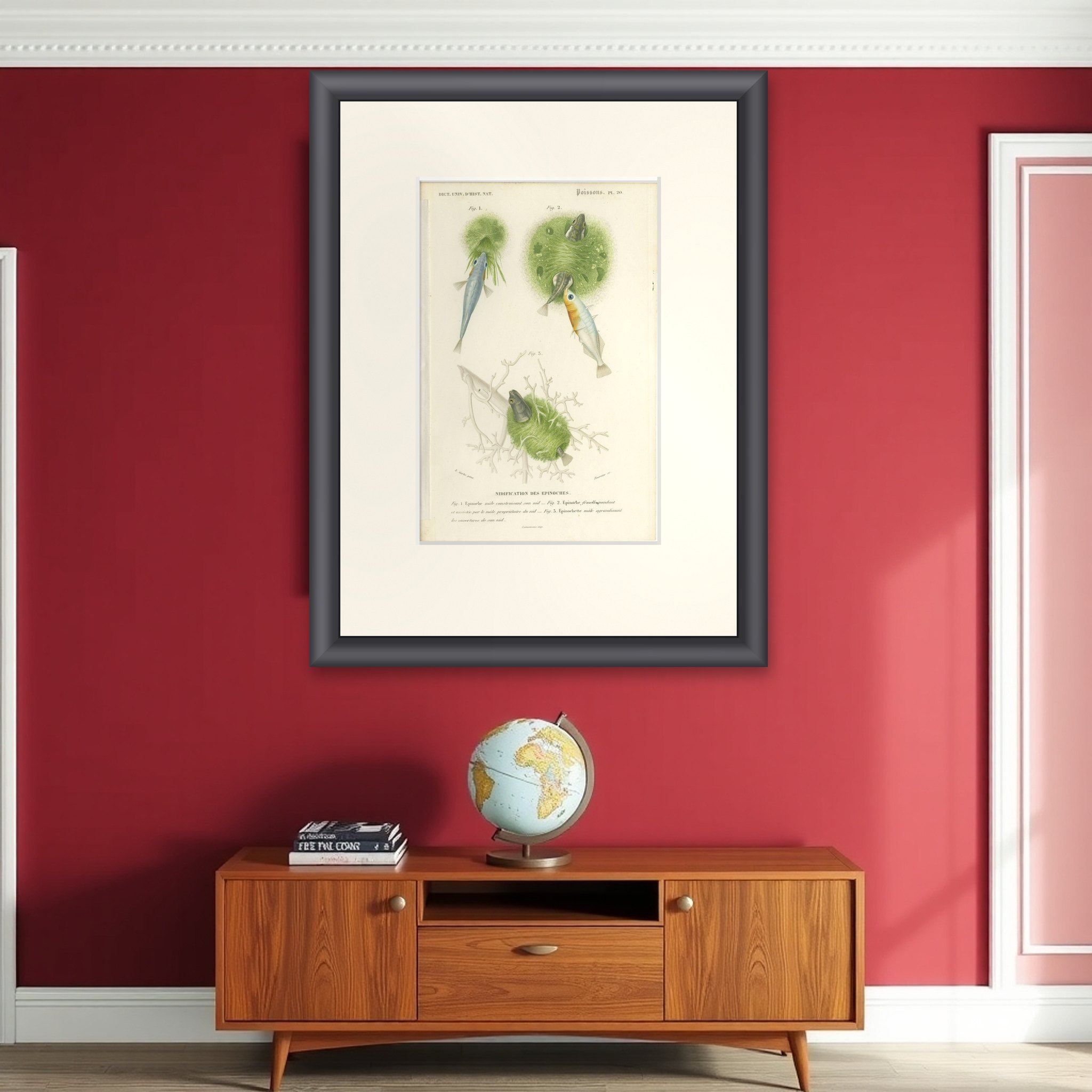
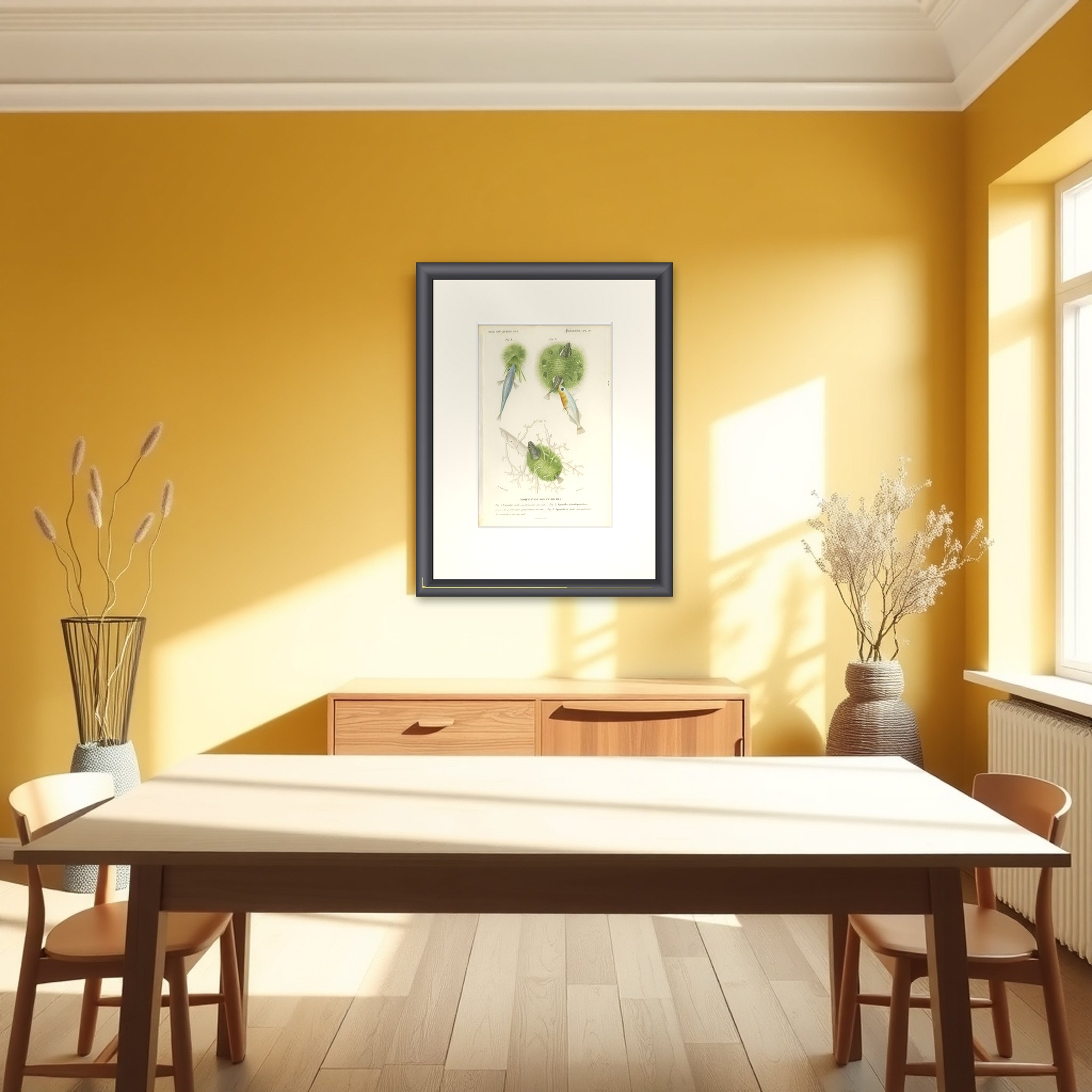
The nest building of the stickleback, a hand-colored engraving from the Dictionnaire universel d'histoire naturelle, edited by Charles Henry Dessalines d'Orbigny and published in 1861. The plate is headed "Dict. Univ. d'Hist. Nat." and "Poissons", marked Pl. 20, and titled "Nidification des Epinoches".
Three figures show the sequence, as the caption explains. In figure 1 the male stickleback works on his nest, a ball of green weed. In figure 2 the female spawns in the nest while the male stands guard, the male in an orange-and-silver breeding color and the female half inside the green mass. Figure 3 shows a young stickleback enlarging the openings of its nest, built among a tangle of pale branching twigs.
Sticklebacks are the family Gasterosteidae, ray-finned fishes found in fresh, brackish and marine waters across the northern hemisphere, and the male's nest building is one of the best-known behaviors of any fish.