About this sheet
Antique Lobster, Crab & Horseshoe Crab Engraving – Bertuch, 1792
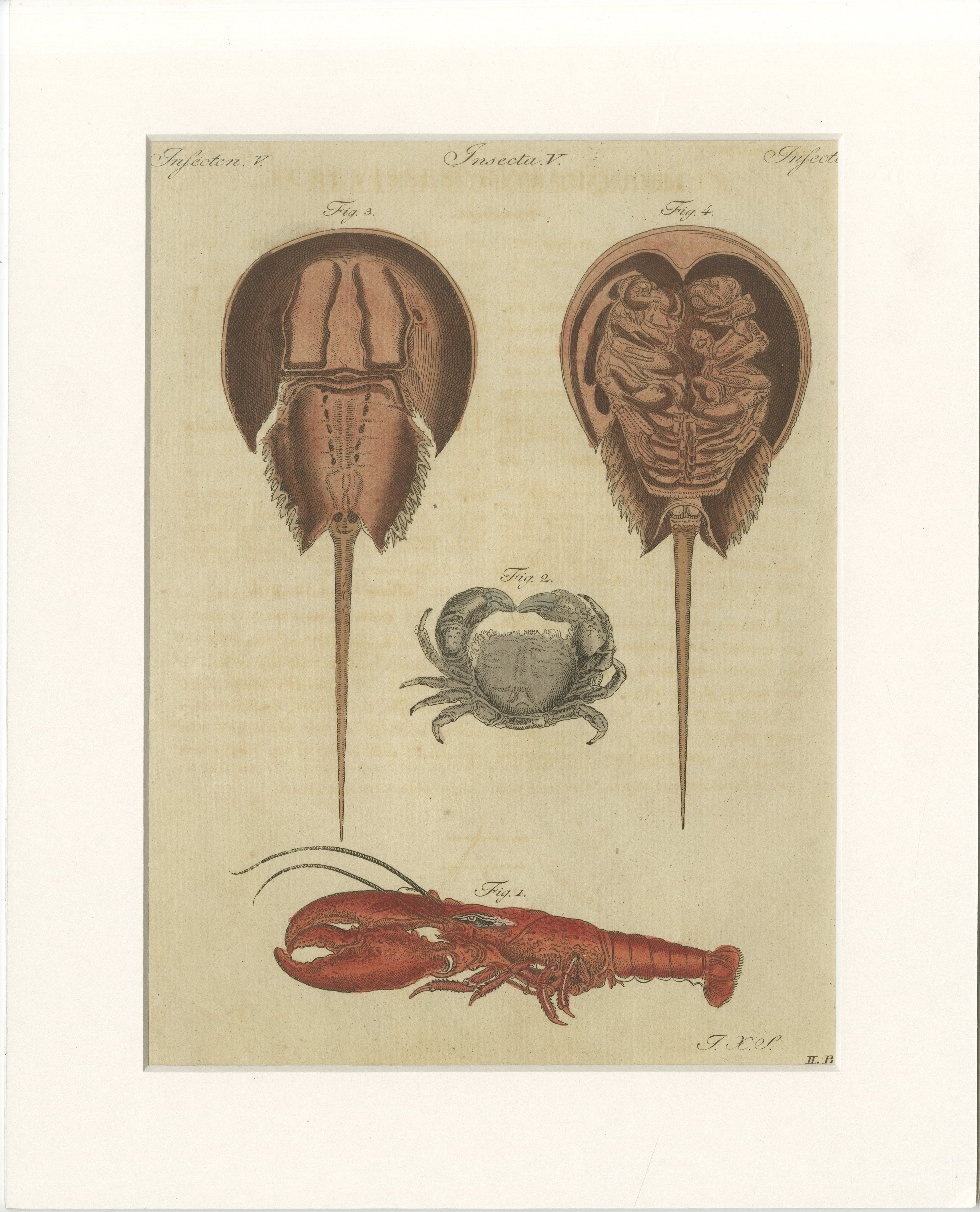
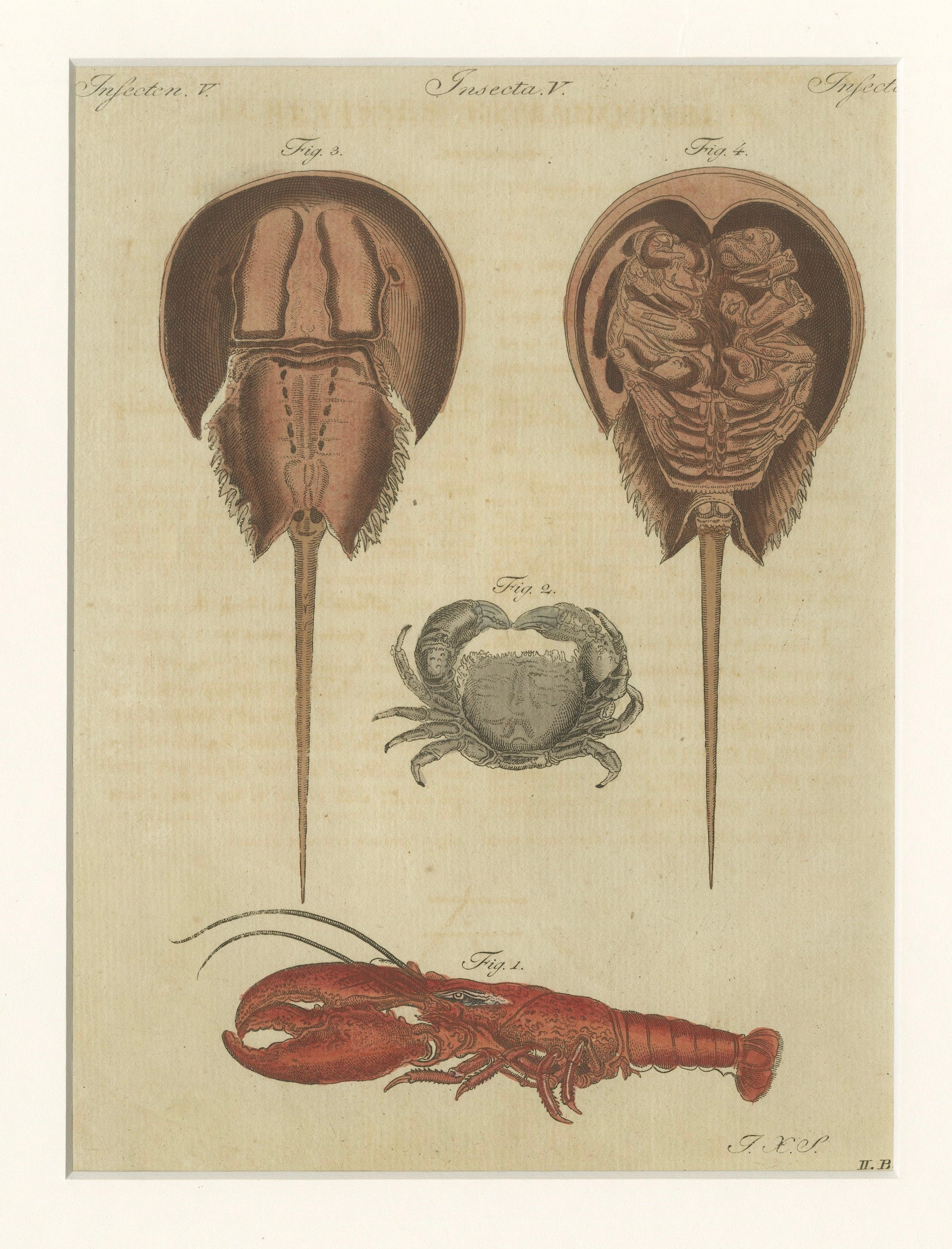
Original antique hand-colored copper engraving depicting a lobster, crab and the extraordinary Moluccan horseshoe crab, published in Friedrich Justin Bertuch’s celebrated “Bilderbuch für Kinder” in Weimar in 1792.
The plate is headed “Insecten V / Insecta V” and illustrates four figures devoted to unusual marine crustaceans and the horseshoe crab.
Although Bertuch placed these creatures under the historical heading “Insecten,” they are not insects according to modern zoological classification. Such broad groupings were common in 18th-century natural history, when the classification of invertebrate animals was still developing.
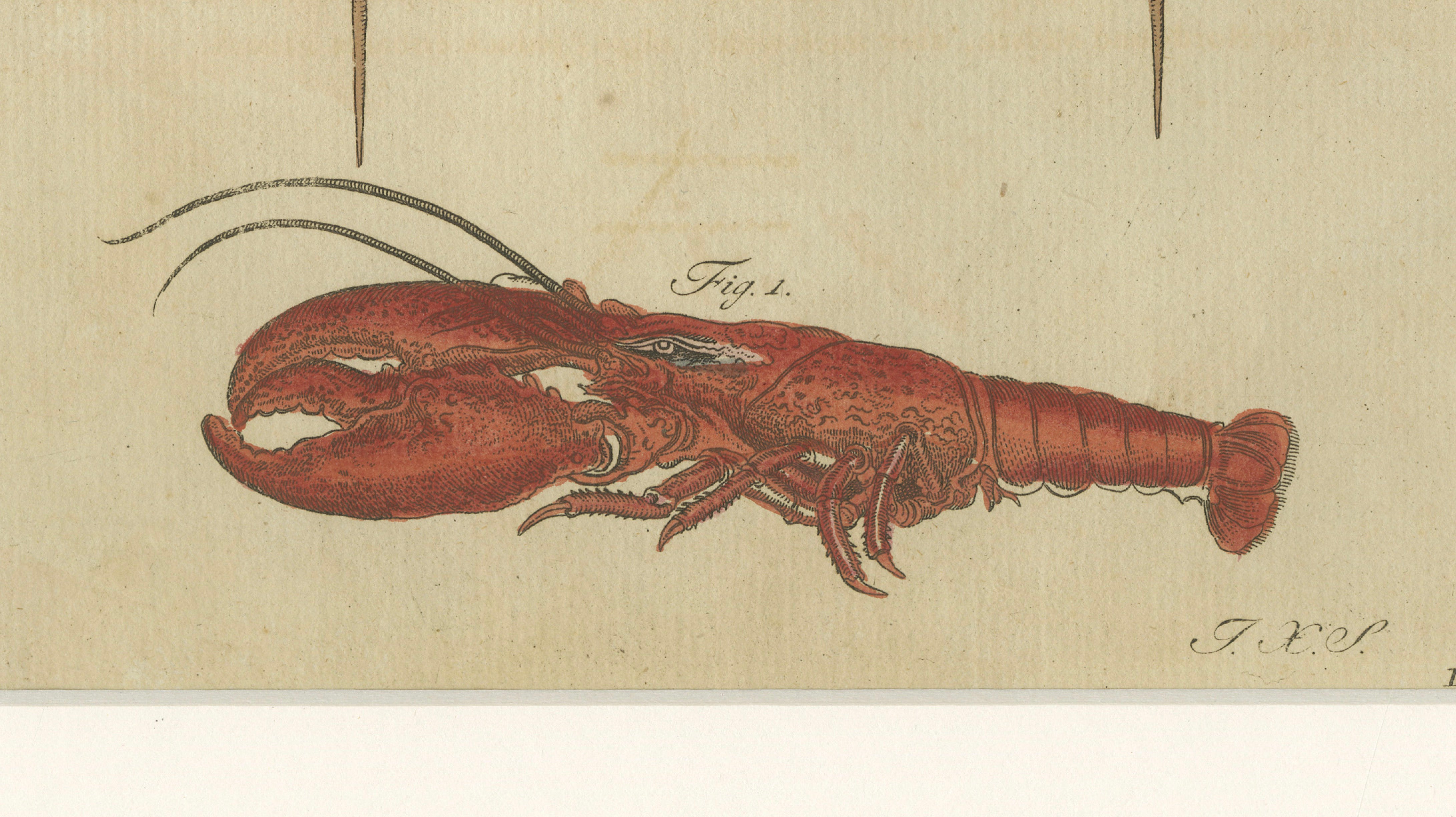
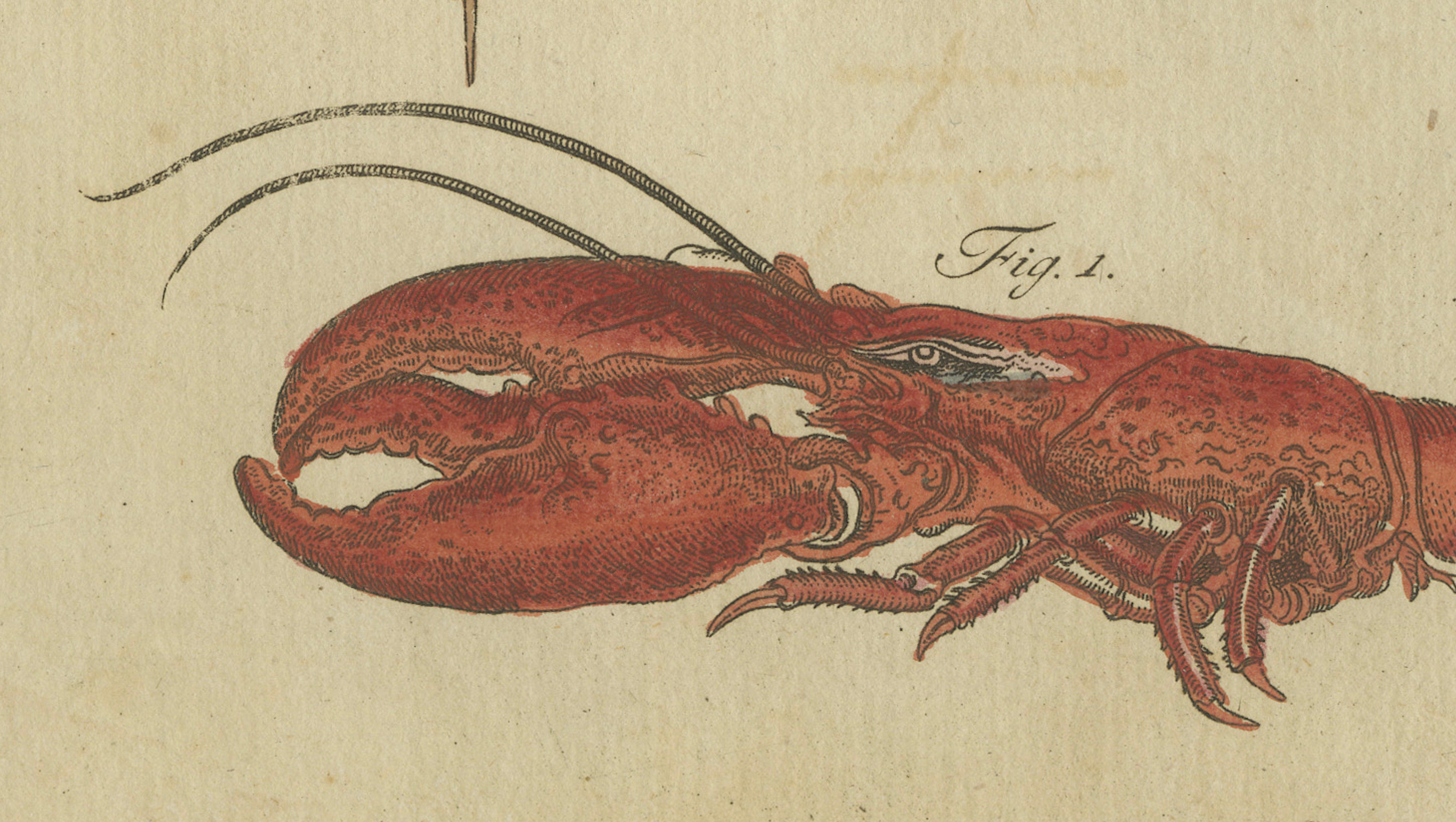
Fig. 1 – Sea Lobster / European Lobster
Historical German name: Der See-Hummer
A large marine lobster shown in profile with its characteristic massive claws, long antennae and segmented body.
The animal is recognizable as a lobster of the Homarus type, most closely associated with the European Lobster (Homarus gammarus), an important marine crustacean of European Atlantic waters.
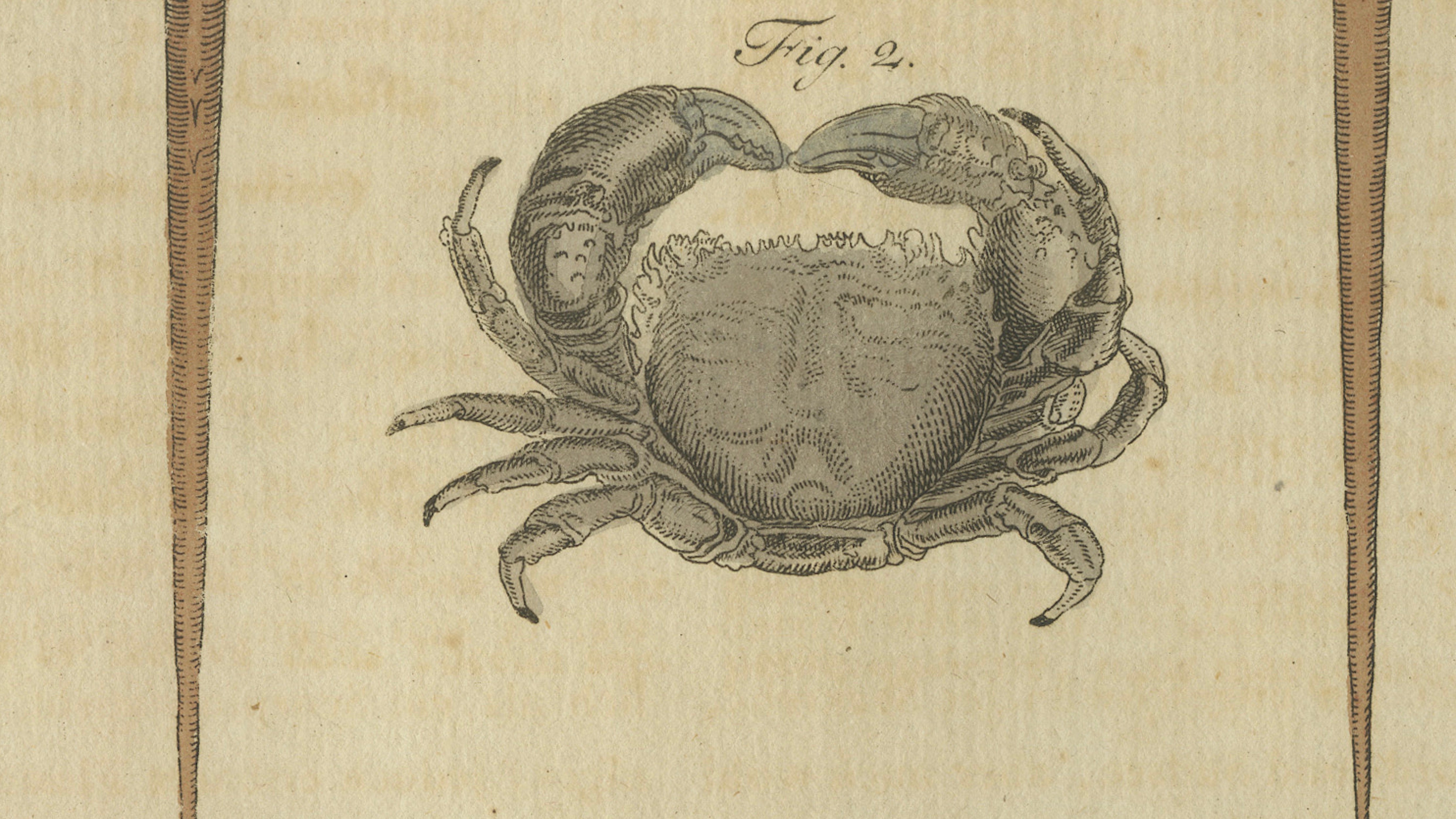
Fig. 2 – Crab
Historical German name: Die Krabbe
A compact true crab shown from above, with its broad carapace, prominent claws and multiple walking legs clearly represented.
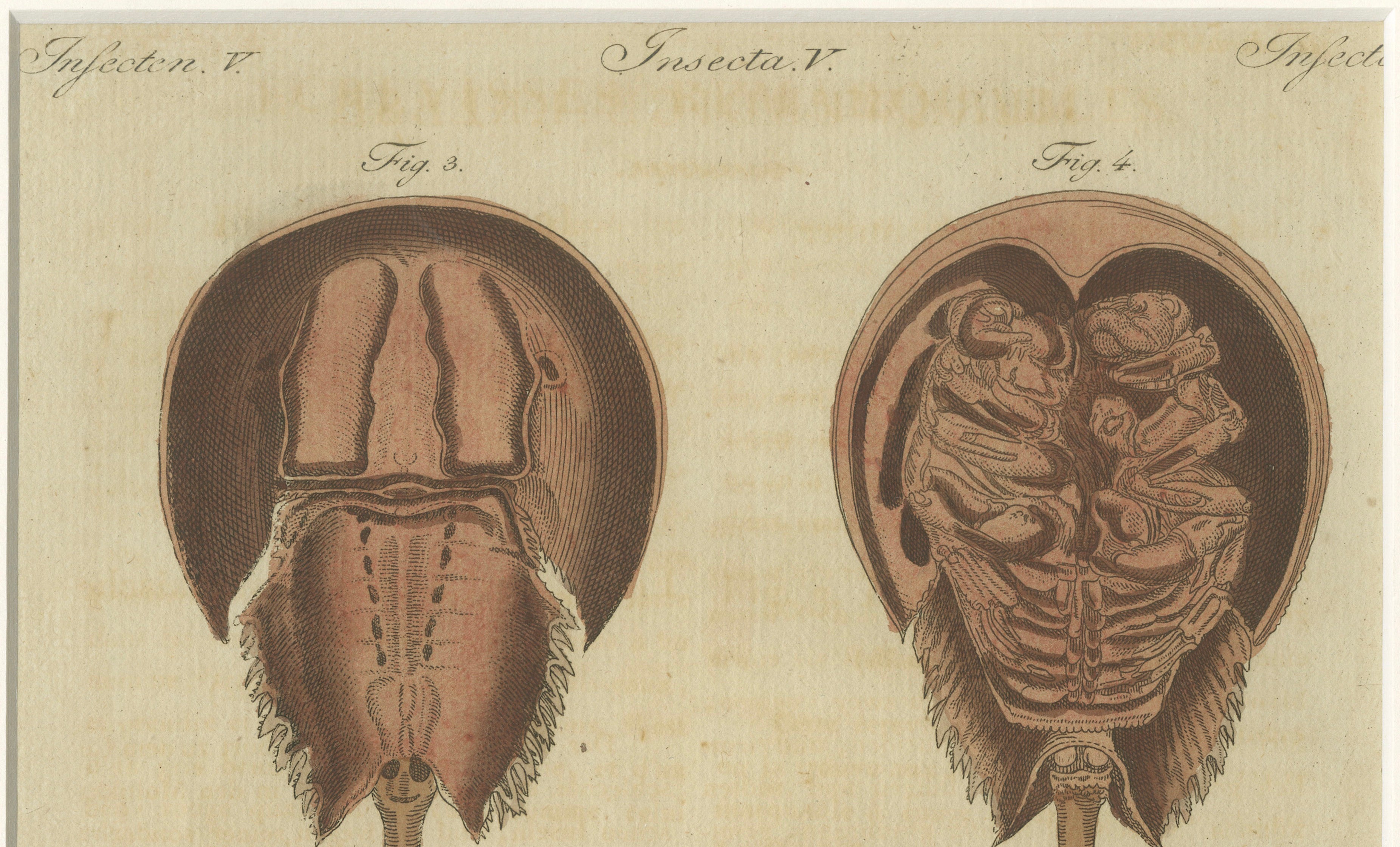
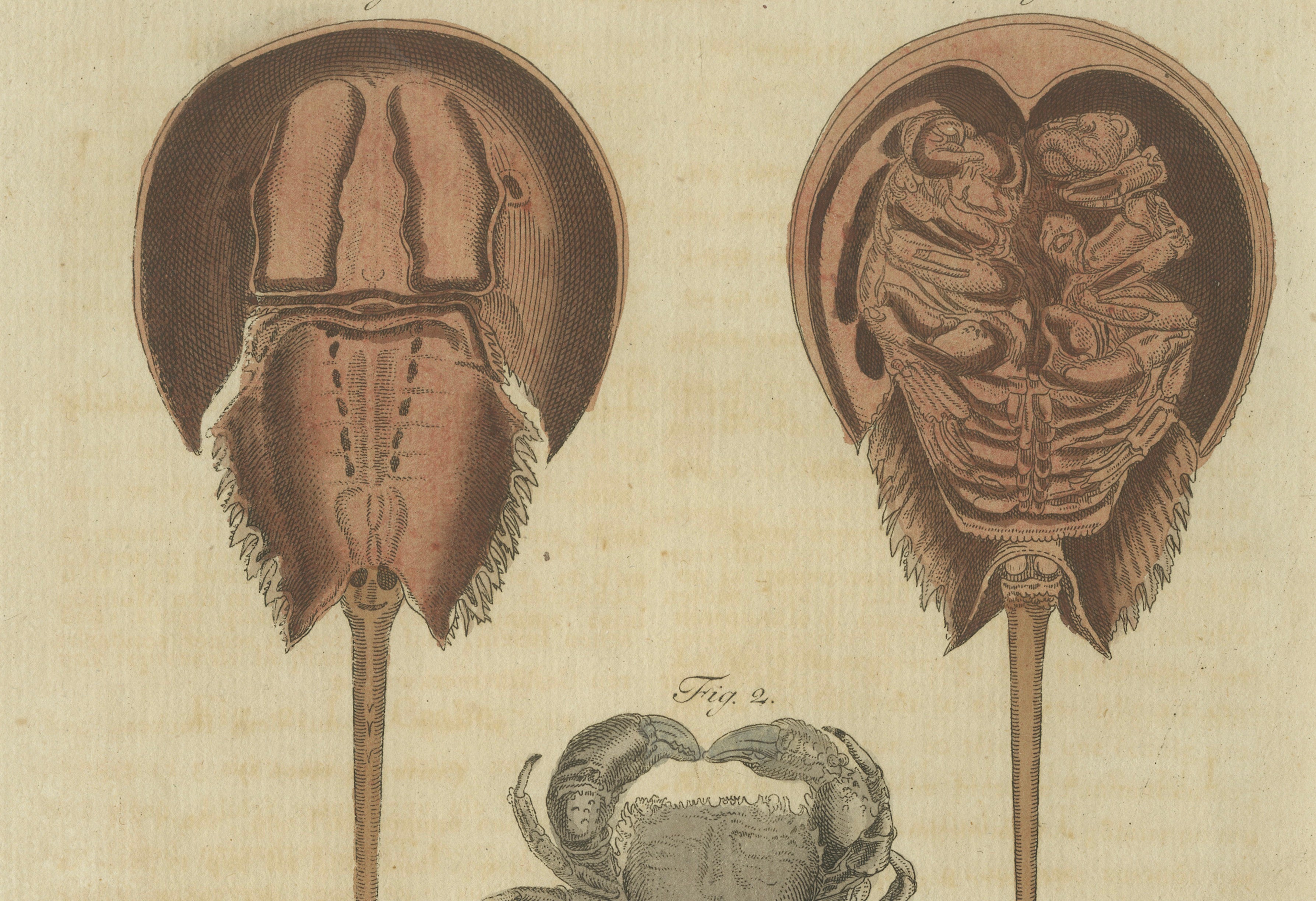
Fig. 3 & Fig. 4 – Moluccan Horseshoe Crab
Historical German name: Der Molukkische Krebs
These two remarkable figures show the animal now commonly known as a Horseshoe Crab.
Fig. 3 presents the animal from above, displaying its extraordinary horseshoe-shaped shell and exceptionally long pointed tail spine.
Fig. 4 shows the underside, revealing the complex arrangement of legs, mouthparts and other anatomical structures concealed beneath the protective shell.
Despite its familiar name, the horseshoe crab is not a true crab. Horseshoe crabs belong to an ancient lineage of marine arthropods more closely related to arachnids than to lobsters and true crabs.
The historical name “Moluccan Crab” or “Moluccan King Crab” reflects the association of these remarkable animals with the waters of Southeast Asia and the East Indies. The Asian horseshoe crab group includes species historically associated with the Moluccas and surrounding regions.
Horseshoe crabs are among the most ancient-looking animals represented in early natural-history books. Their basic body form has an exceptionally long evolutionary history, giving them their popular reputation as “living fossils.”
Friedrich Justin Bertuch (1747–1822) was a German publisher, writer and patron of the arts. His monumental “Bilderbuch für Kinder” (Picture Book for Children), first published in Weimar in 1790, became one of the great illustrated educational encyclopedias of the late 18th and early 19th centuries.
Its hundreds of engraved and hand-colored plates introduced readers to animals, plants, geography, science, technology, antiquity and cultures from around the world.
This particularly decorative plate combines the brilliant red-orange lobster with the almost anatomical studies of the horseshoe crab, making it an appealing example of late 18th-century marine natural-history illustration.
Technique: Original hand-colored copper engraving
Publisher: Friedrich Justin Bertuch / Industrie-Comptoir
Publication: Bilderbuch für Kinder
Place: Weimar, Germany
Date: 1792
Plate: Insecten V / Insecta V
Subjects: Sea Lobster, Crab and Moluccan Horseshoe Crab
Historical names:
Fig. 1 – Der See-Hummer
Fig. 2 – Die Krabbe
Fig. 3 & 4 – Der Molukkische Krebs
Condition:
Good antique condition with overall age-related toning and some scattered spotting and foxing. Some show-through or offsetting from text is visible in the background, together with minor marks and imperfections consistent with a print dating from 1792. The original hand coloring remains attractive, particularly the strong red-orange coloring of the lobster and warm reddish tones of the horseshoe crab. Please study the photographs carefully as they form part of the condition description.
The engraving is loosely inserted in an acid-free matting board.
Please note: This is an original antique hand-colored copper engraving from 1792, not a modern reproduction. The print is sold unframed. Framed images or interior views, if shown, are for presentation and inspiration only.
Other companion marine-life, animal and natural-history plates from Bertuch’s “Bilderbuch für Kinder” are also available separately.
Keywords: Friedrich Justin Bertuch, Bilderbuch für Kinder, lobster engraving, European lobster, Homarus gammarus, antique lobster print, crab engraving, antique crab print, horseshoe crab, Moluccan horseshoe crab, Moluccan crab, king crab, East Indies, Moluccas, marine life, crustacean print, marine zoology, ocean life, antique natural history, hand-colored copper engraving, 18th century natural history, 1792 engraving, Weimar, original antique print, maritime decor, coastal decor