About this sheet
Two-Toed Sloth – Antique Natural History Chromolithograph, 1894
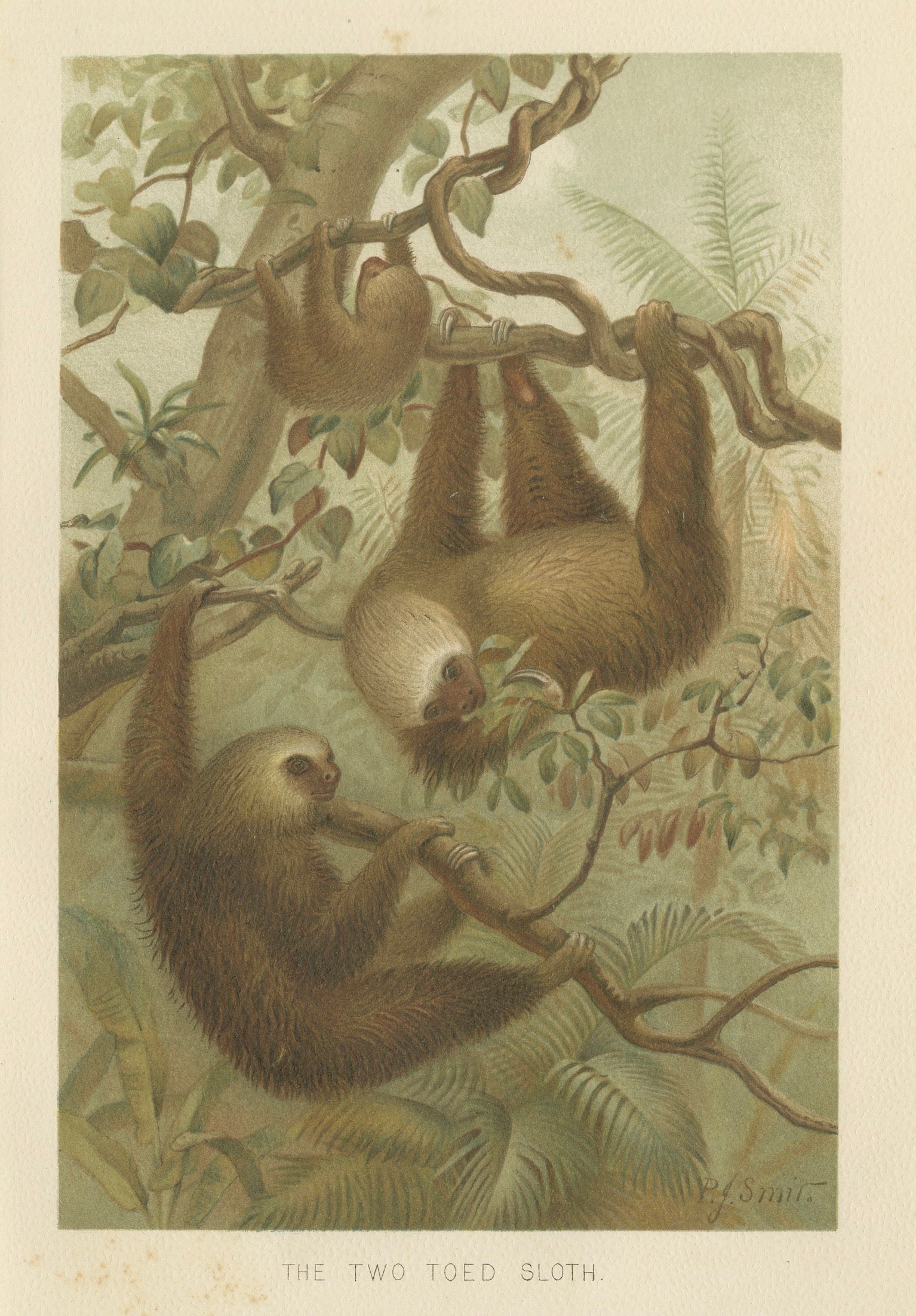
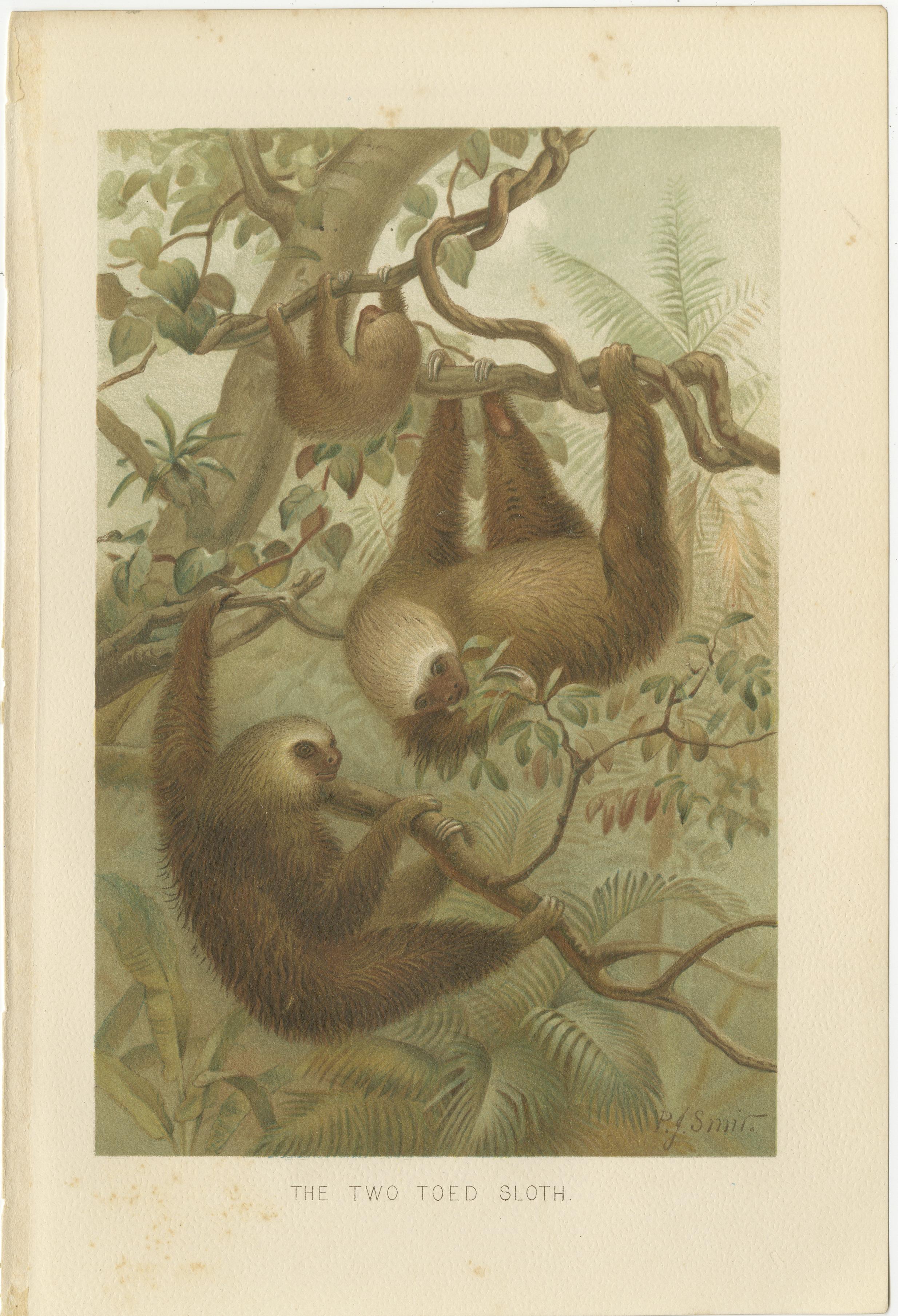
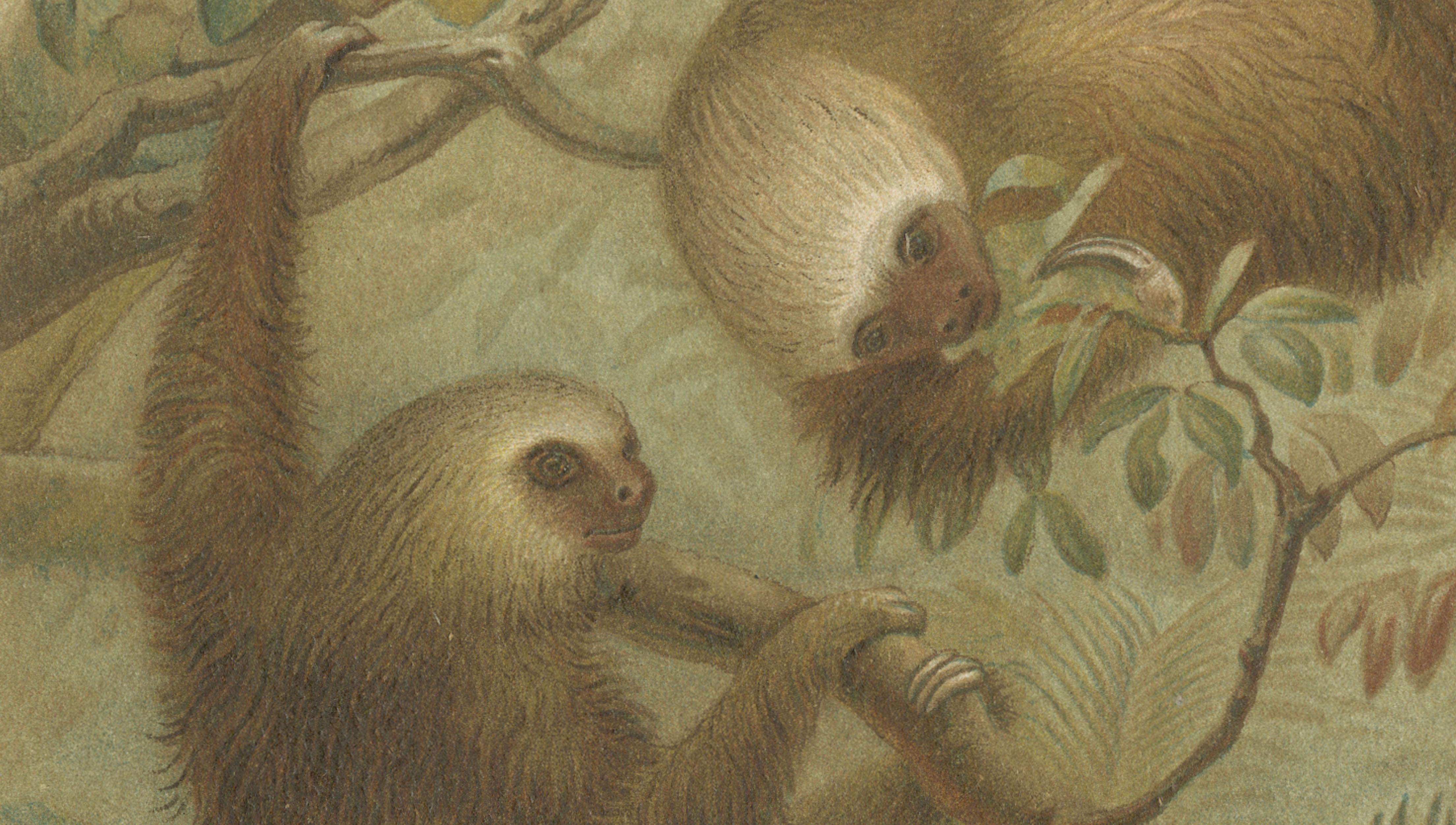
This charming chromolithograph depicts two-toed sloths moving slowly among tropical branches, rendered with remarkable sensitivity and observational detail. The composition captures the distinctive posture and gentle character of the species while surrounding foliage creates a layered jungle atmosphere rich in soft greens and warm earth tones.
The print originates from The Royal Natural History, edited by Richard Lydekker and published in London in 1894, one of the most ambitious zoological publications of the late Victorian era. Intended to bring the expanding scientific understanding of global wildlife into educated homes, the series combined accurate zoological study with refined artistic presentation.
The artwork, after P. J. Smit, exemplifies the period’s transition from purely taxonomic illustration toward naturalistic environmental depiction. Rather than isolating the animal, the sloths are shown within their habitat, lending the image both scientific credibility and decorative harmony.
Today, this plate appeals equally to collectors of natural history prints and interior designers seeking calm, organic imagery. Its muted palette and vertical composition make it particularly effective as a standalone statement or within curated gallery walls of botanical and zoological works.
Condition report:
Good antique condition with light age-related toning, scattered spotting primarily in the margins, and gentle handling wear consistent with bound plates from the period. Image area remains clear with strong original color.
Framing tips:
Especially attractive in natural oak, walnut, or bamboo-toned frames with a generous ivory mat. Works beautifully in biophilic interiors, studies, or relaxed contemporary spaces seeking subtle natural imagery.