About this sheet
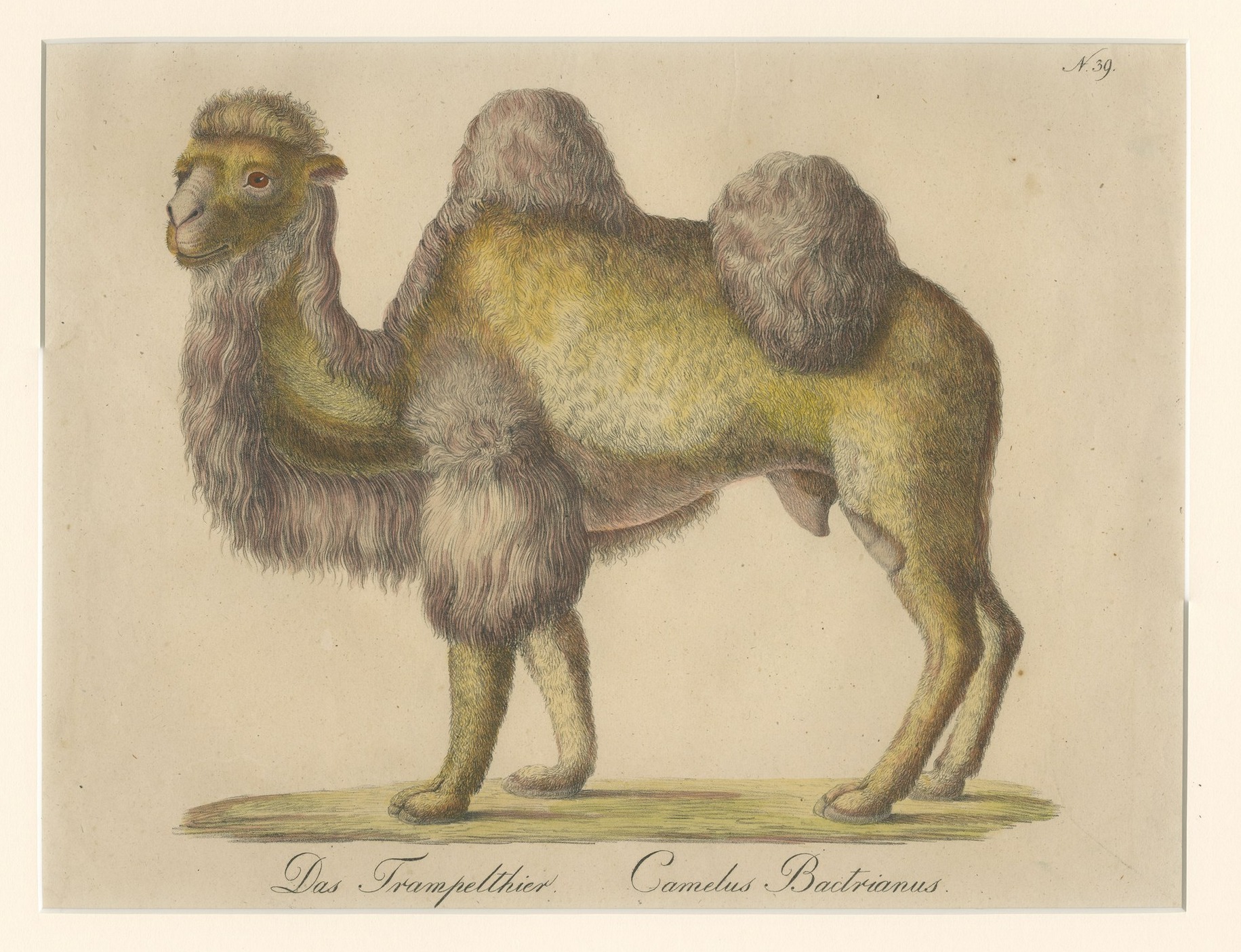
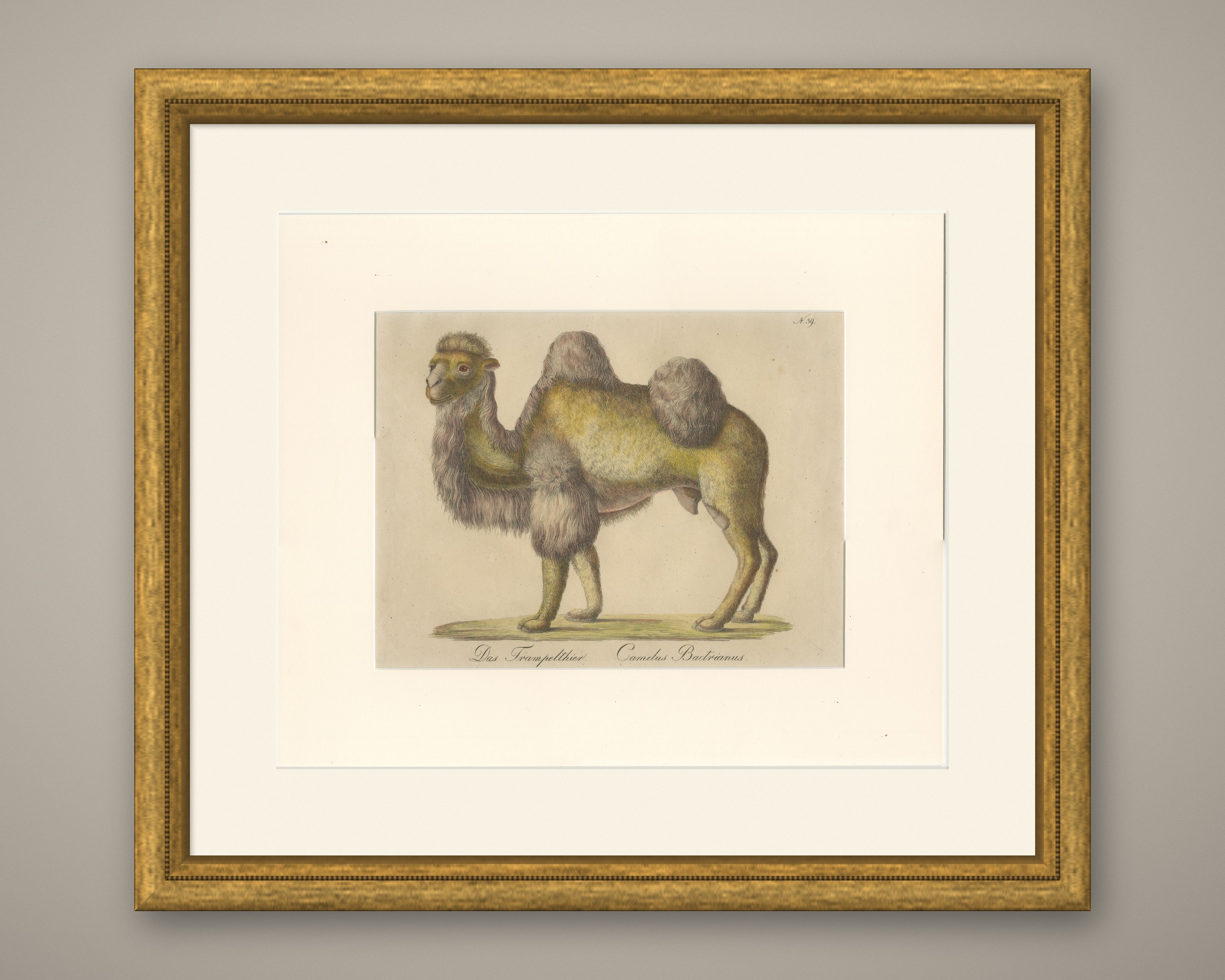
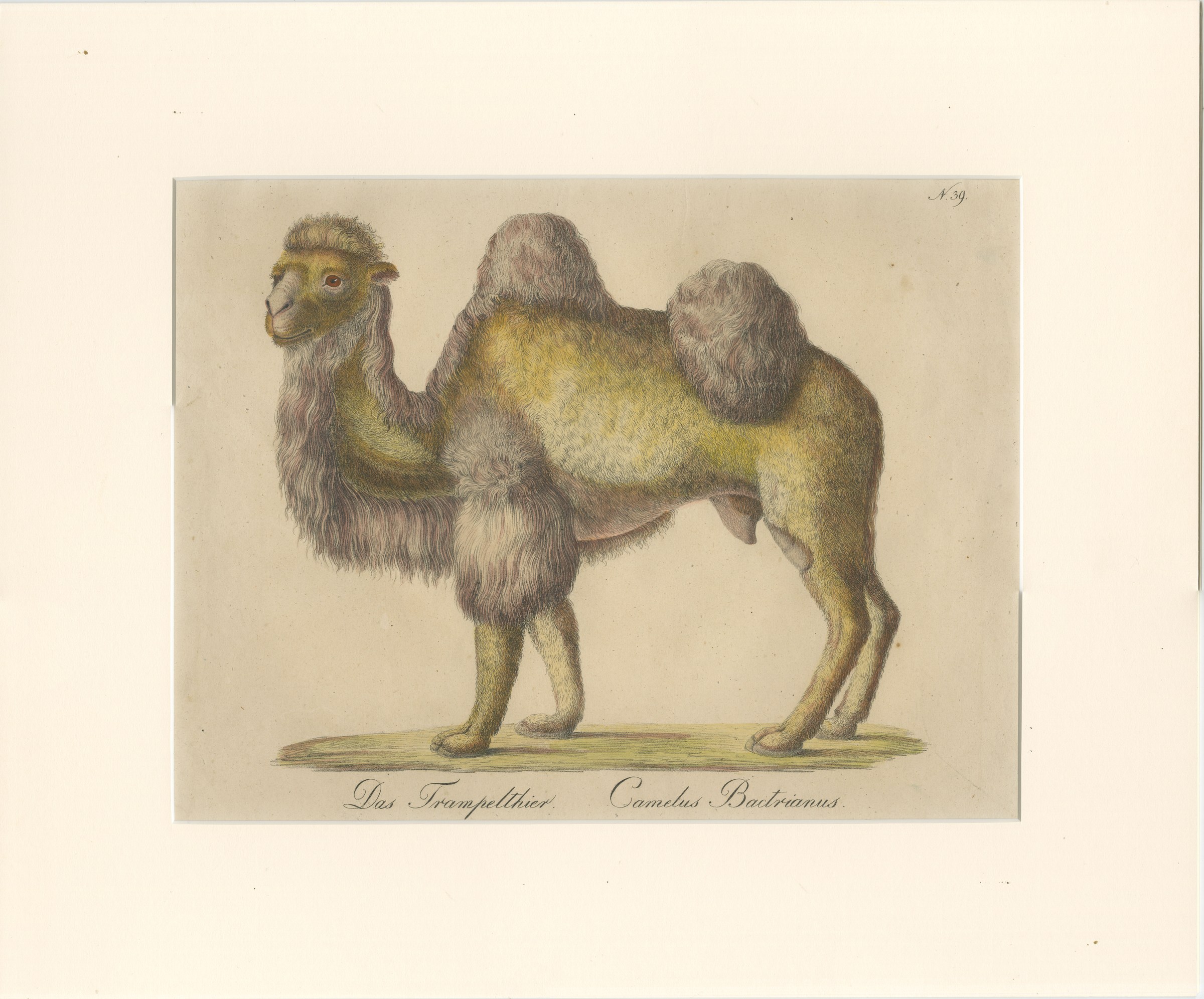
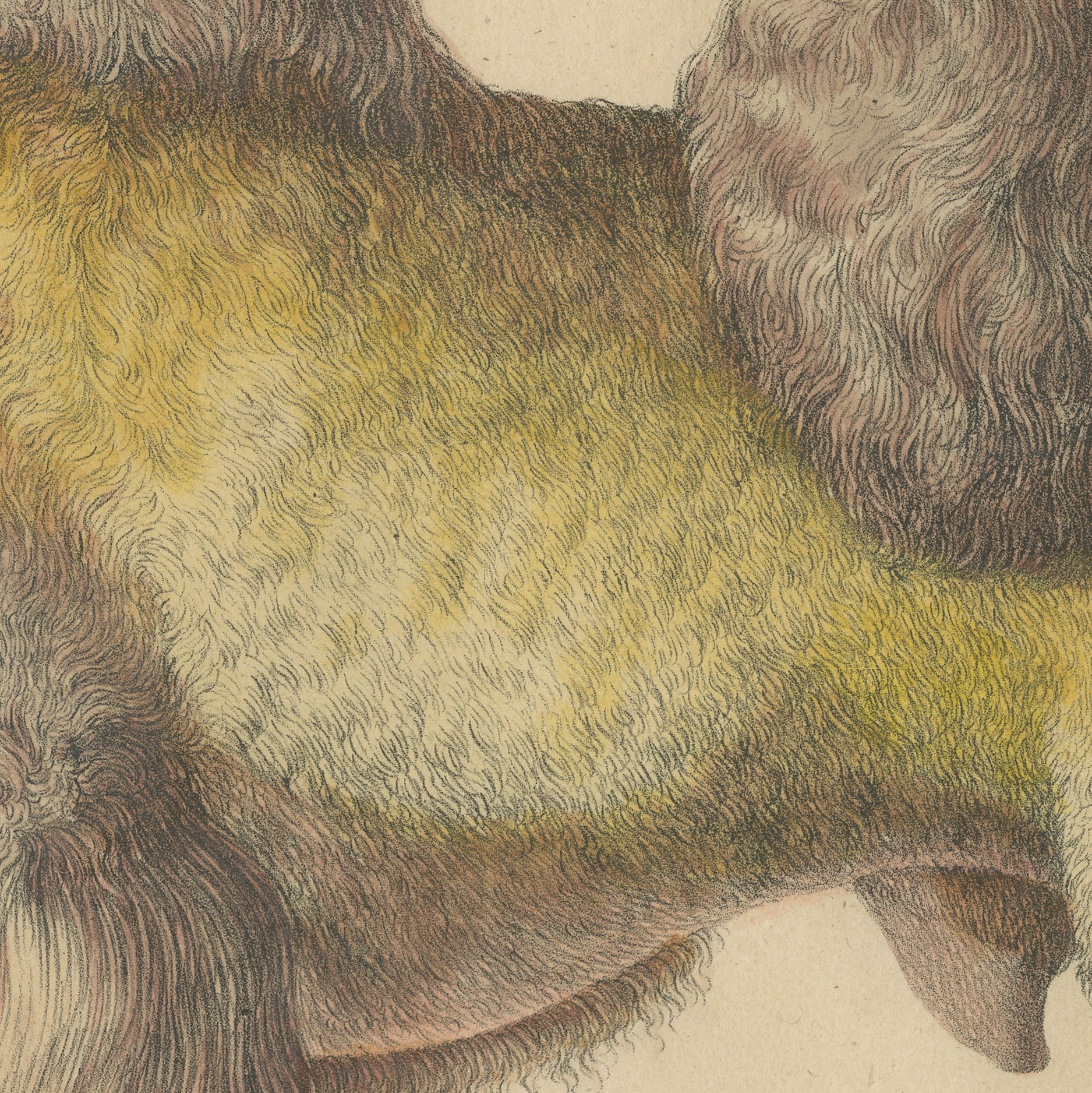
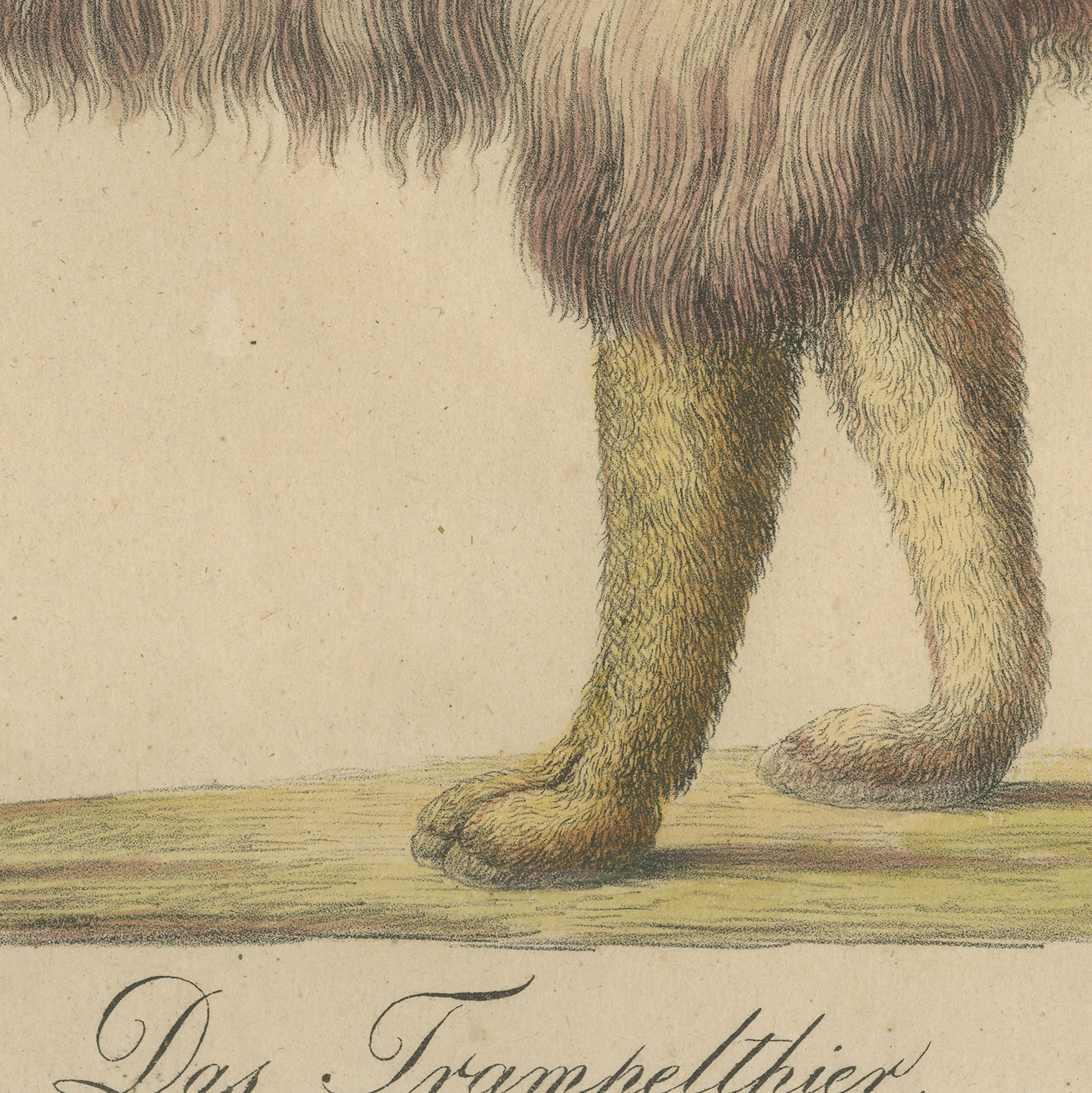
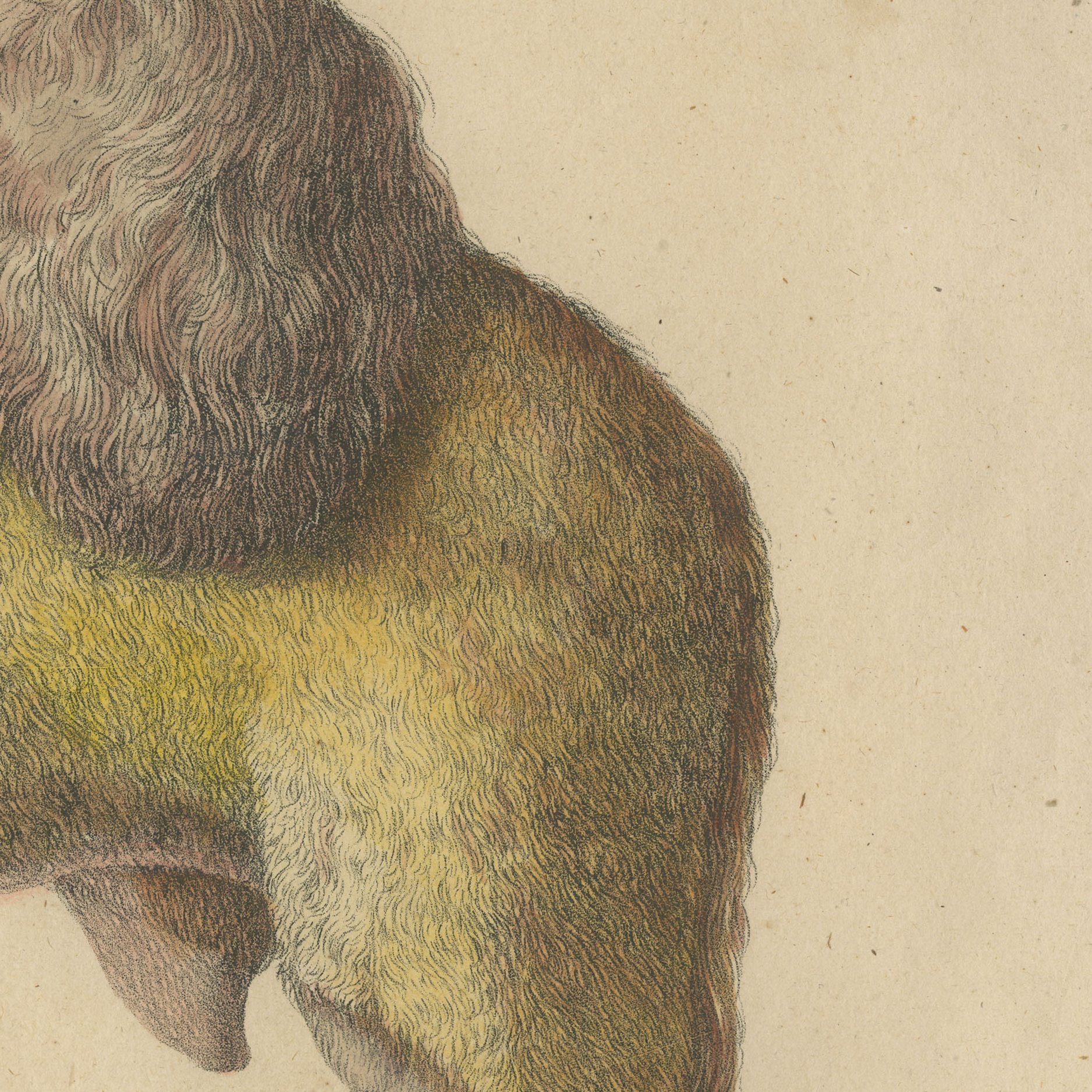
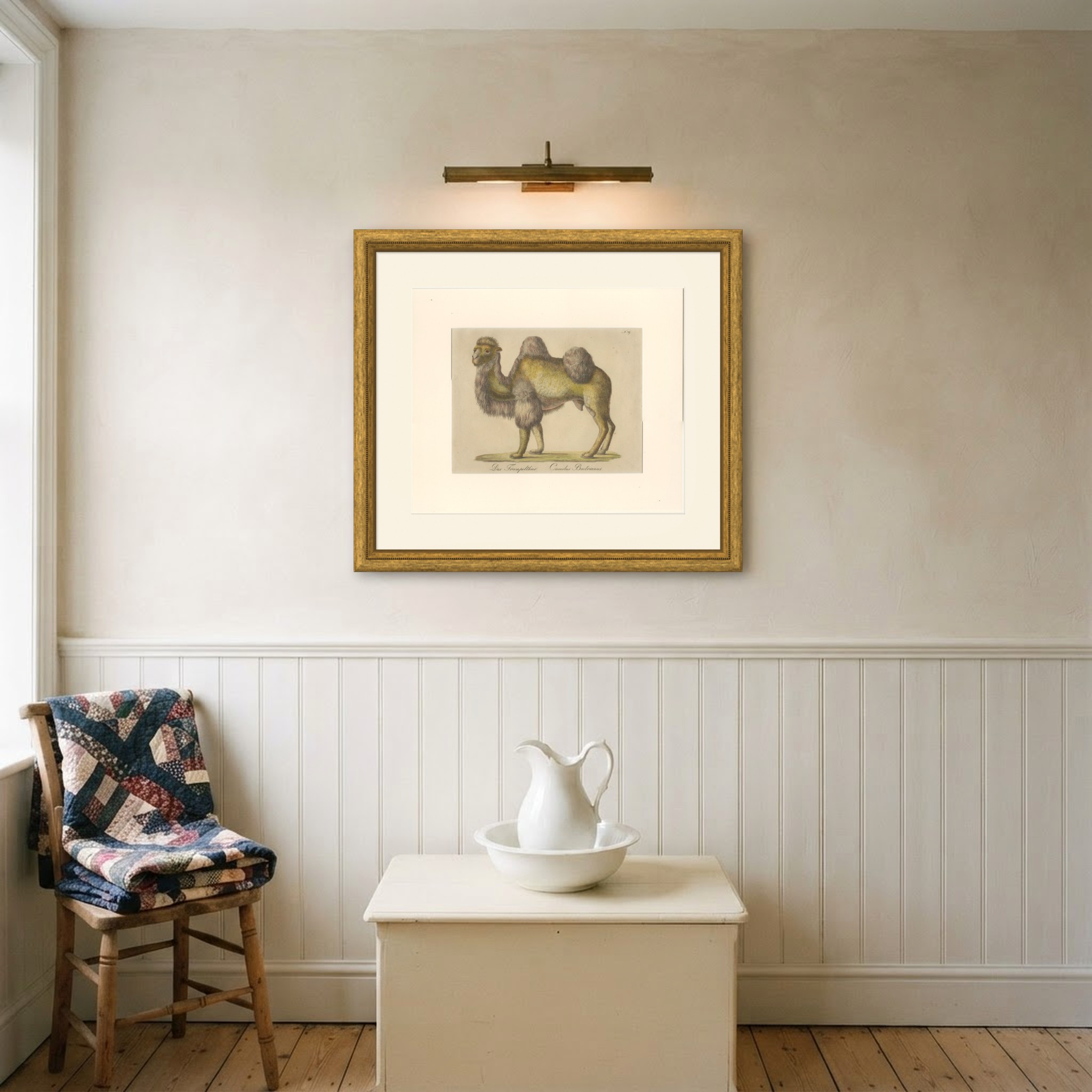
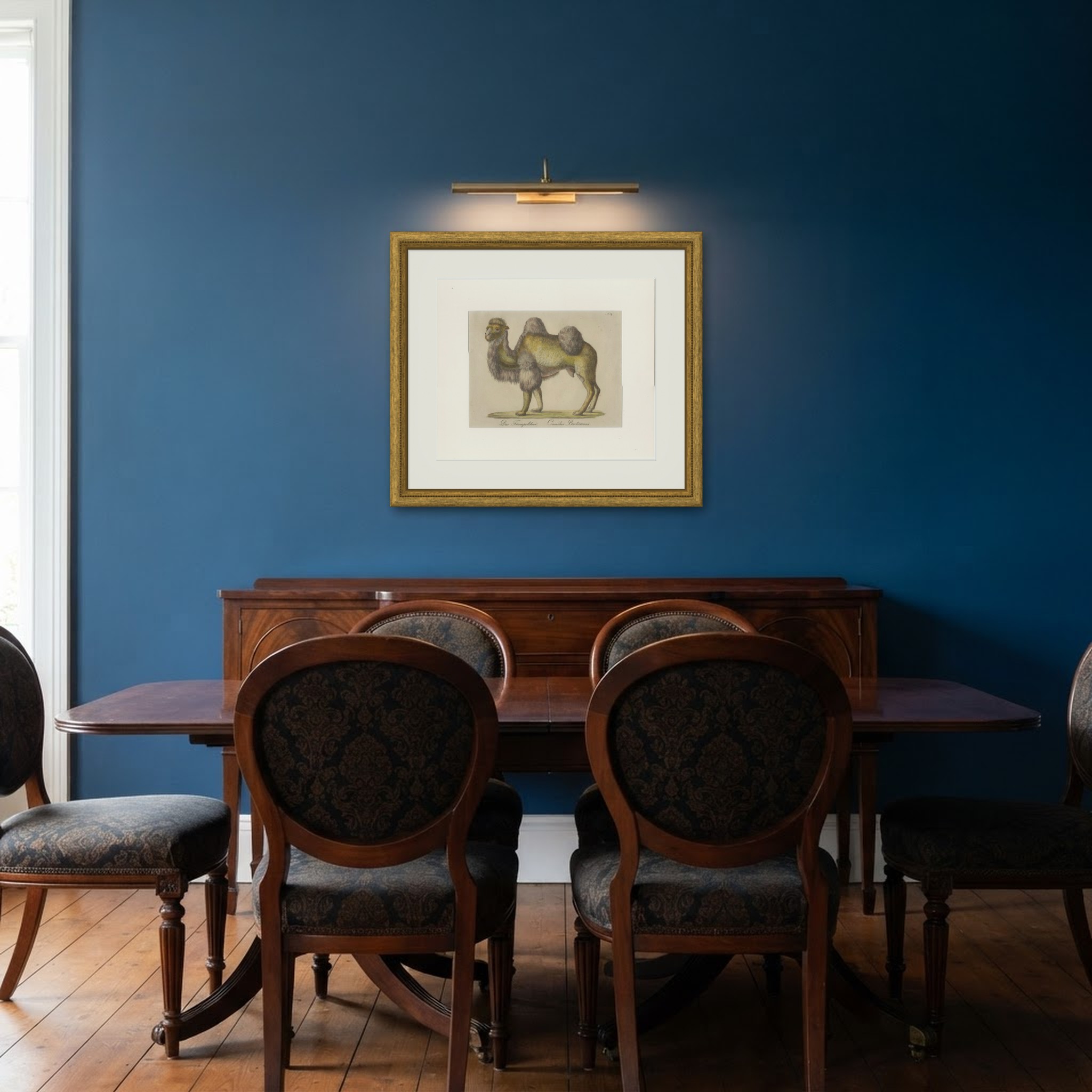
This original antique hand colored lithograph, The Bactrian Camel, is a plate from Schinz and Brodtmann's Naturgeschichte und Abbildungen der Saeugethiere, published at Zurich between 1824 and 1829. The sheet shows a two humped Bactrian camel standing square to the viewer's left, the long shaggy winter coat hanging from the neck and forelegs in pale yellow and cream, the two humps carried high and the whole animal placed on a thin strip of green ground.
The plate comes from Naturgeschichte und Abbildungen der Saeugethiere, the mammal volumes of Heinrich Rudolf Schinz, published at Zurich by Carl Joseph Brodtmann between 1824 and 1829. Schinz was professor of natural history at Zurich and Brodtmann, born at Ueberlingen in 1787 and died at Basel in 1862, drew the animals on the stone and printed them himself.
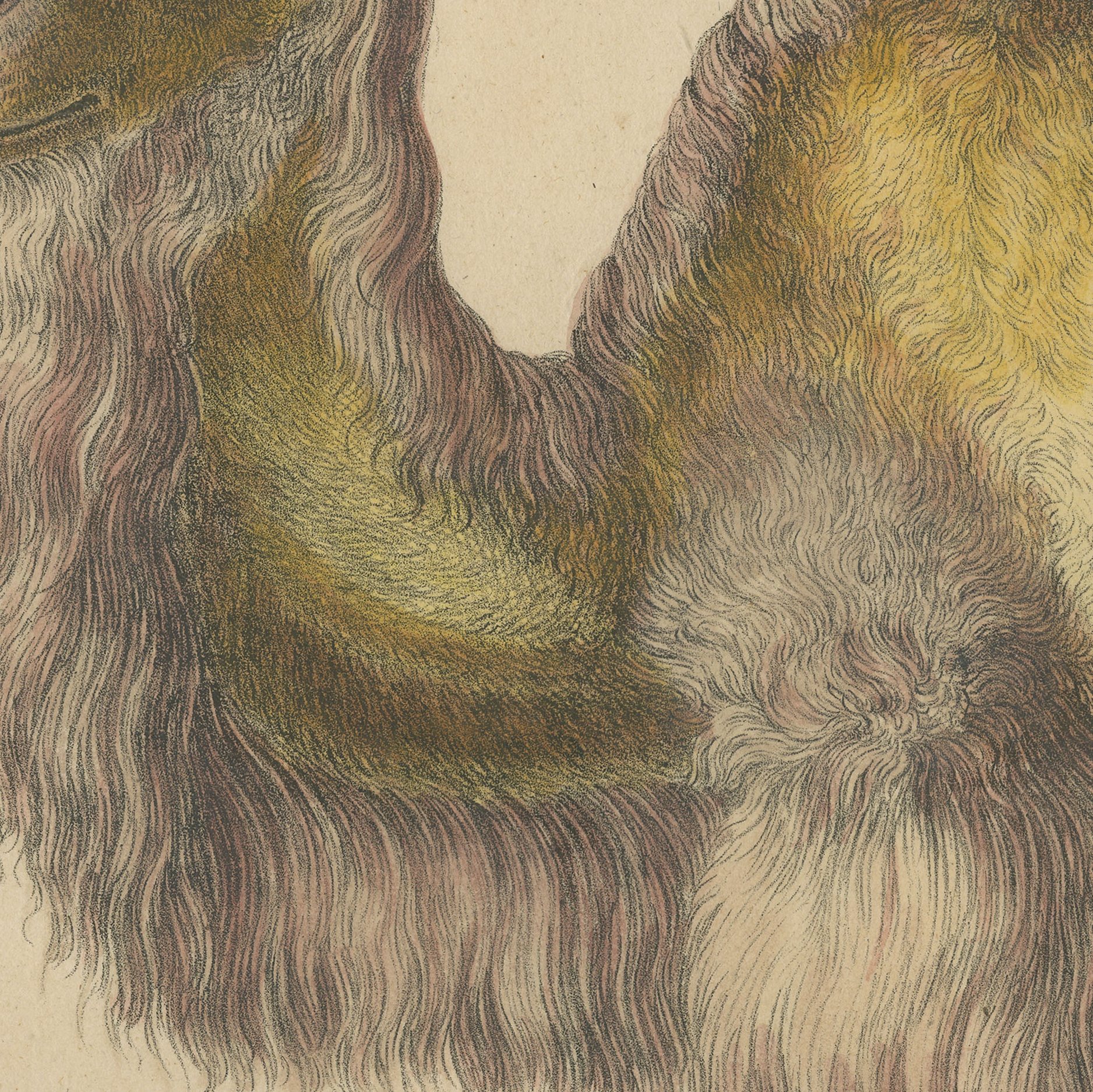
The Bactrian is the two humped camel of central Asia, and Brodtmann draws it in full winter coat, which is the state in which it was almost never illustrated. The German name Trampelthier, the trampling animal, is lettered on the sheet beside the Latin. The technique is lithography, drawn with a greasy crayon directly onto the stone and printed without any engraved or etched line, then finished by hand in watercolor. The softness in the modeling of the hide and the coat is characteristic of the crayon on stone and is the reason lithography took over natural history illustration so quickly. A large animal plate of this kind holds a wall on its own and frames handsomely in a plain dark molding with a wide mount. It suits a study, a library, a hallway or a child's room that is meant to last, and it sits well beside other early natural history material.
Even age toning. Scattered light foxing in the margin. All four corners complete.
This is an original antique print, not a modern reproduction. This item is sold unframed. Any framed or interior images are shown for presentation and inspiration only, unless the listing explicitly states that the item is sold framed.