About this sheet
The text sheet, titled "Over COLOBUS VERUS door H.S. Pel. Resident ter kust van Guinea, belast met het natuurkundig onderzoek," provides a detailed description of the Colobus Verus monkey as observed and studied by H.S. Pel. Here is a summary of the key points from the text:
1. Introduction to Colobus Genus:
- Established by Illiger, the Colobus genus is distinguished from Semnopithecus primarily by the absence of a thumb on the forelimbs, though a trace of a thumb is often visible.
2. Known Species:
- The number of well-known species is limited to four or five. When compared, many described species likely fall into the following categories:
- Colobus guereza
- Colobus ursinus
- Colobus ferrugineus
- Colobus verus (also known as Semnopithecus olivaceus)
3. Geographical Distribution:
- Colobus ursinus is very common and is often found on the Gold Coast.
- Colobus ferrugineus and Colobus verus are less common; Pel only obtained one specimen of each from the Gold Coast.
4. Habitat and Behavior:
- Colobus monkeys prefer dense forests, living in pairs or small families. They are highly shy, making them difficult to approach.
- They are very agile and feed on fruits, leaves, and insects.
- Colobus monkeys do not thrive in captivity, often refusing food.
5. Anatomy and Physical Description:
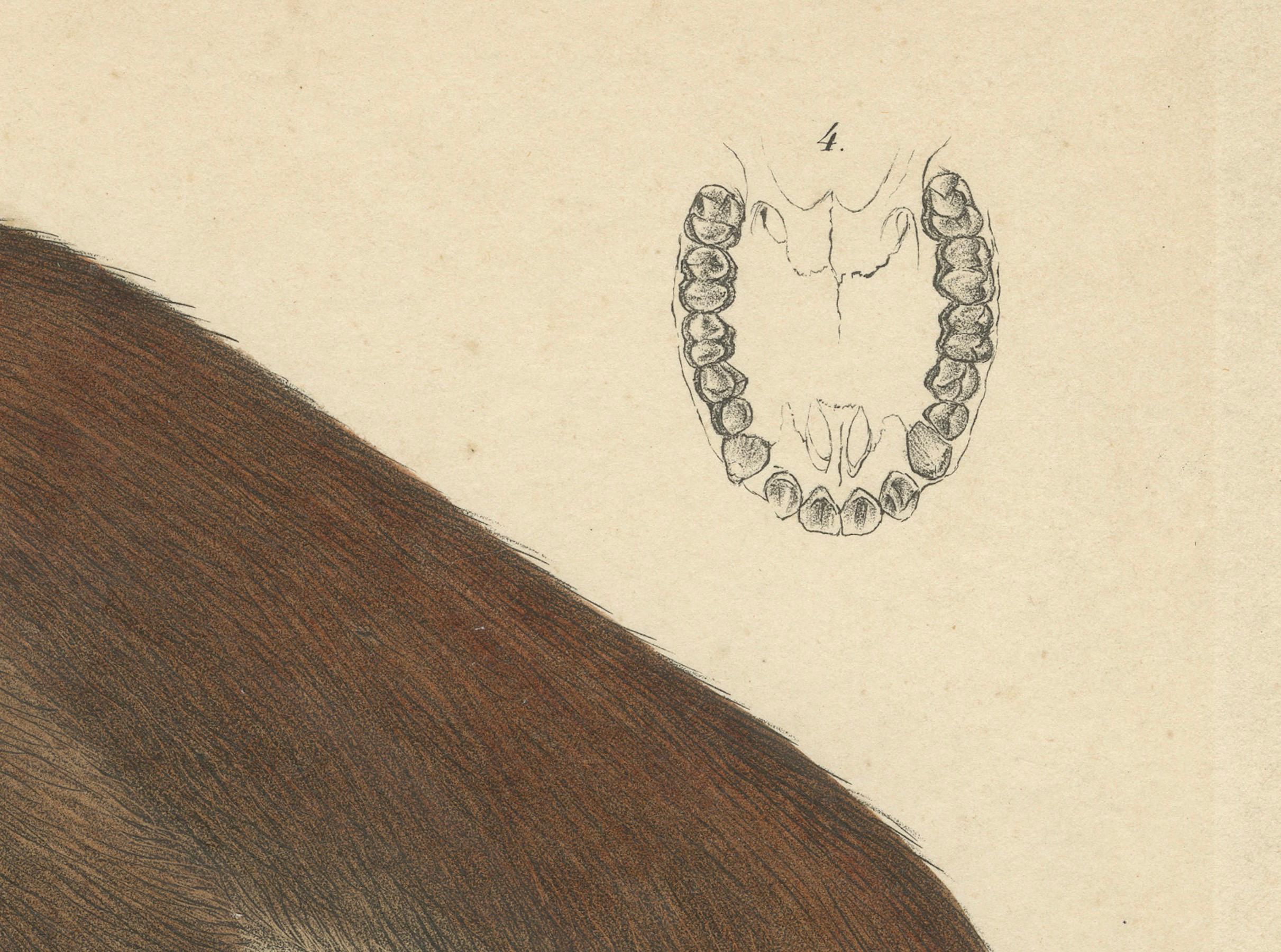
- The dental structure is the same across all four species and similar to that of the Semnopithecus genus.
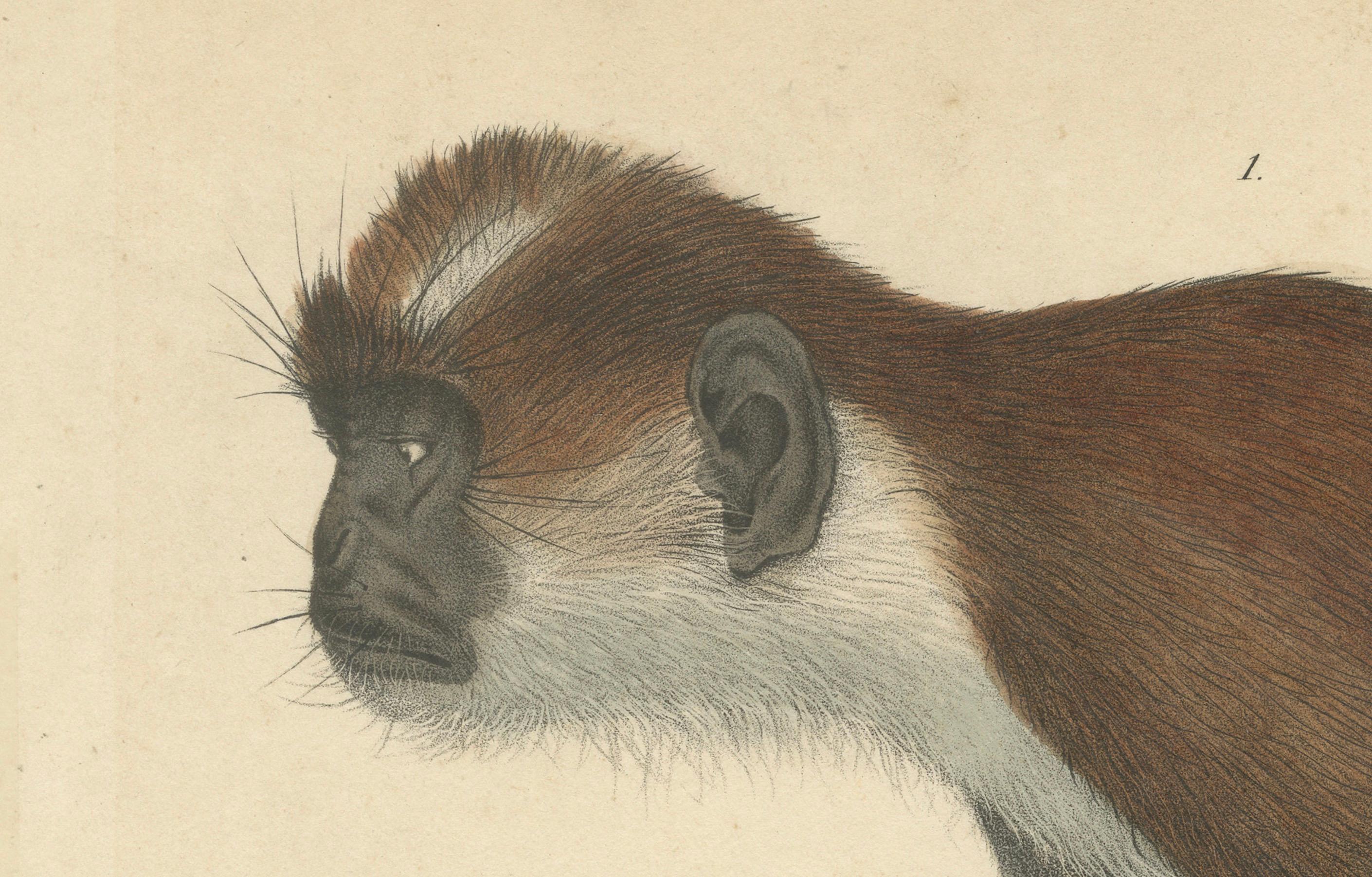
- **Colobus Verus Specifics**:
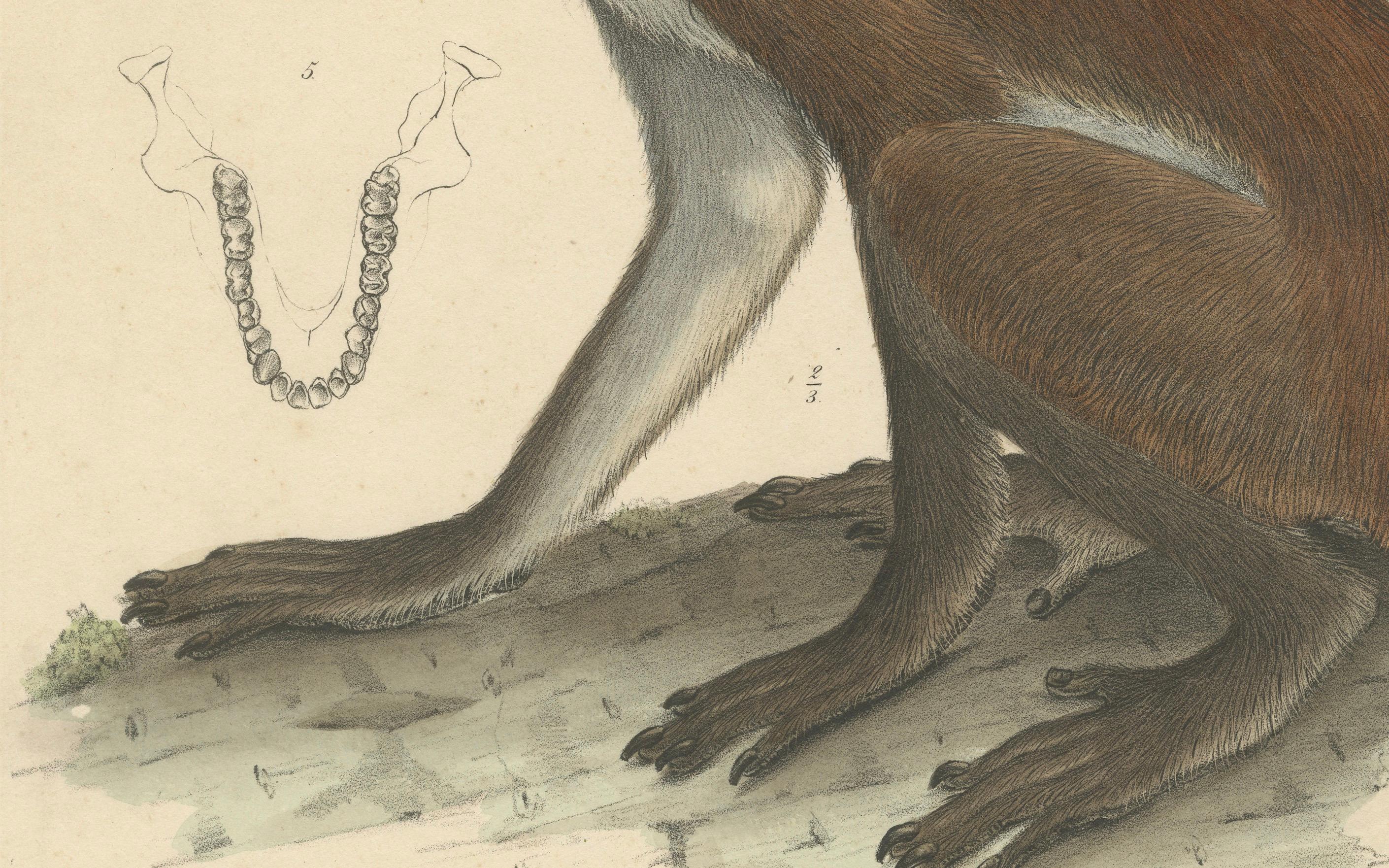
- No thumb on forelimbs; strong thumb on hind limbs.
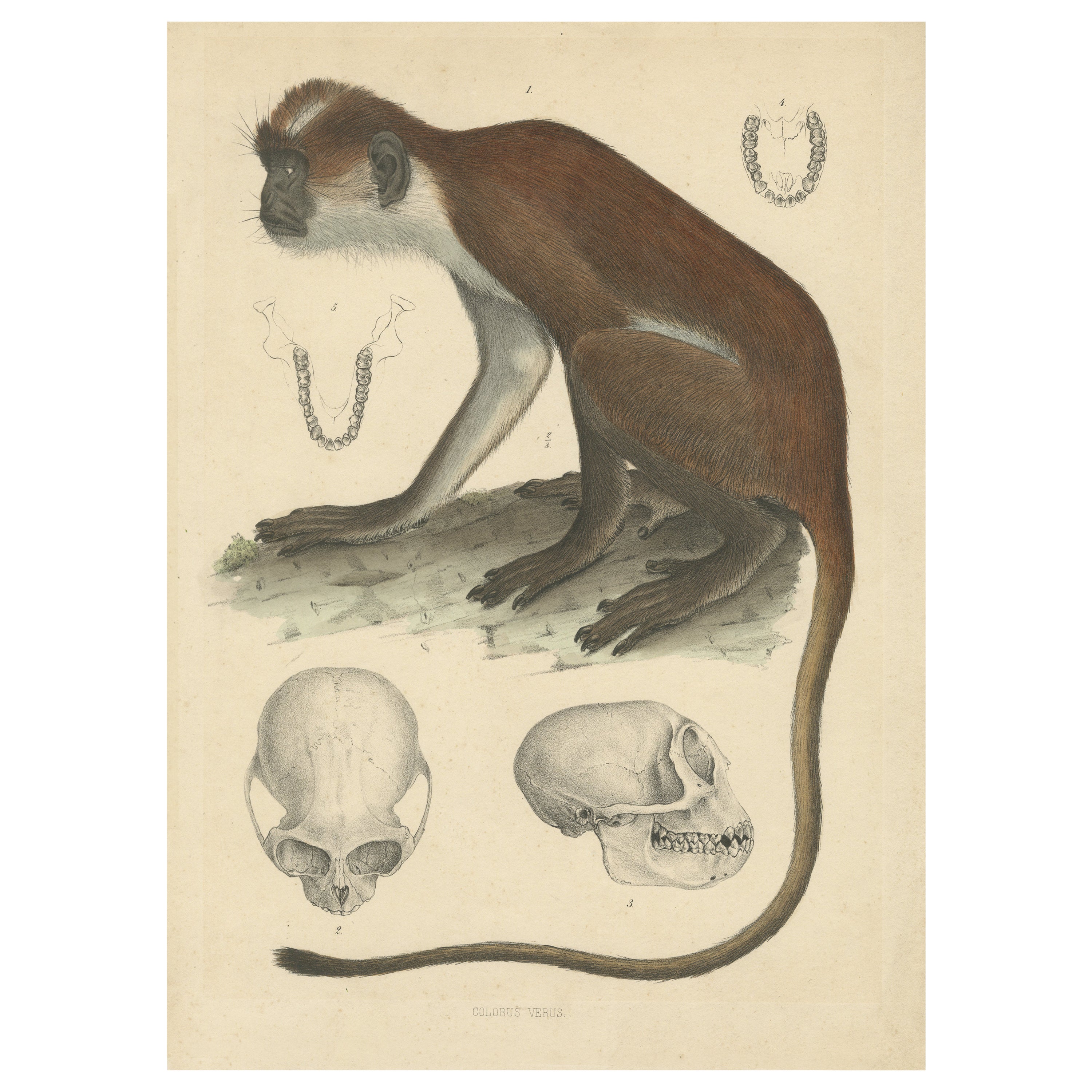
- Slender body, long limbs, and a tail slightly longer than the body.
- Coloration: Rosy brown hair on the upper head, cheeks, neck, back, and tail base, transitioning to brown-grey on limbs, hands, and tail; the tail tip is darker. Whitish-grey woolly hair on the neck sides, lower cheeks, throat, belly, and inner limbs.
- Notable for their large size compared to other species.
6. Illustration Explanation:
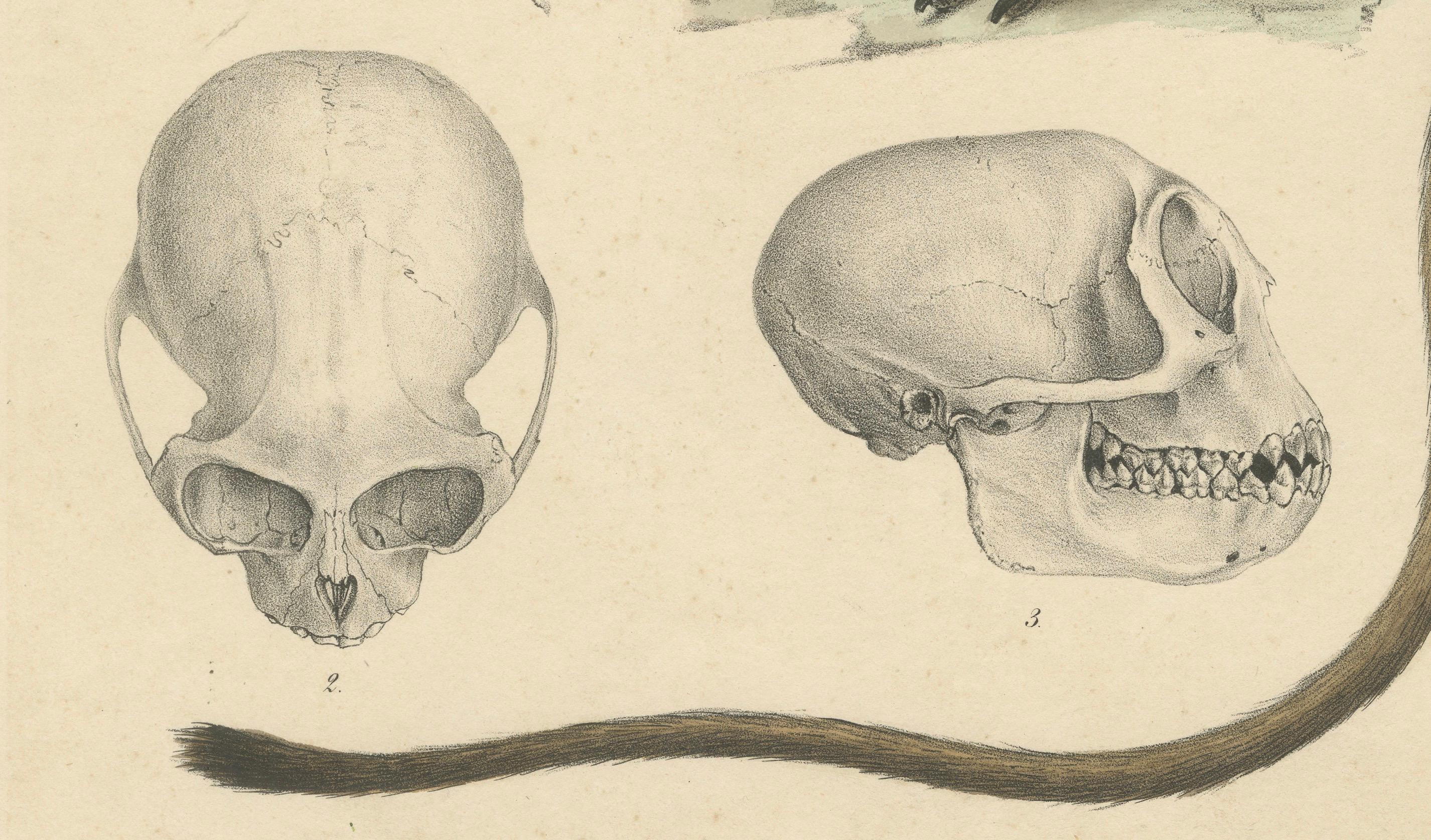
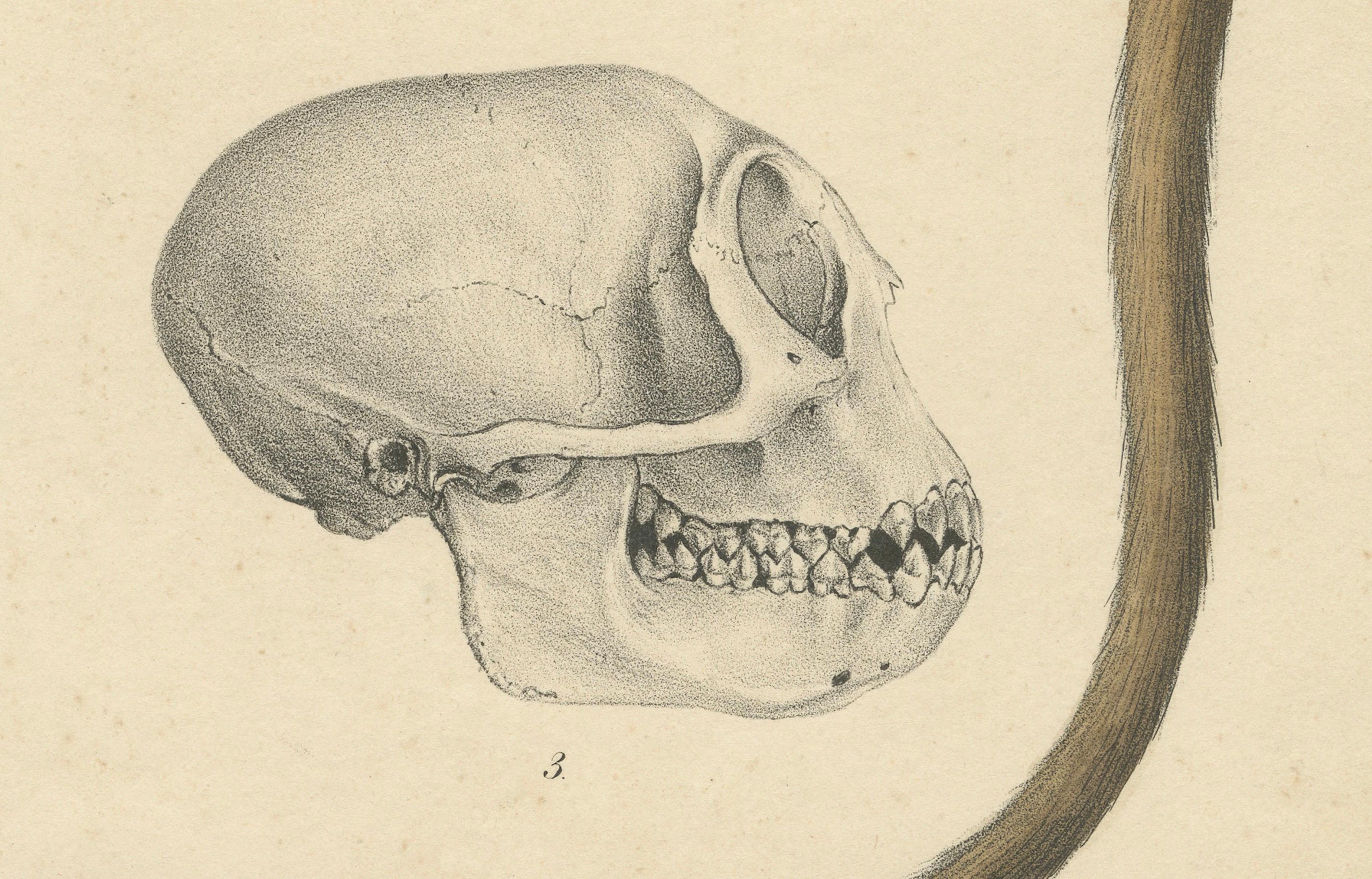
- The accompanying plate (illustration) includes:
- A depiction of Colobus verus at two-thirds natural size.
- The skull viewed from above and the side.
- The upper and lower jaw teeth.
This document provides a comprehensive overview of Colobus Verus, including anatomical details, behavior, and habitat, offering valuable insights into the study and classification of this species in the mid-19th century.
H.S. Pel, mentioned in the text as the author of the study on Colobus Verus, was a resident at the coast of Guinea and was responsible for natural research in that area. His full name is Hermanus Schijnvoet Pel.
Background Information on H.S. Pel:
- **Hermanus Schijnvoet Pel (1812-1856)**: He was a Dutch naturalist and explorer. Pel conducted extensive research on the flora and fauna of the Gold Coast (modern-day Ghana) during the mid-19th century. He collected numerous specimens and made significant contributions to the knowledge of West African wildlife.
- **Career**: Pel served as the Resident (a colonial administrative position) in Elmina, a town on the coast of the Gold Coast. His work involved not only administrative duties but also scientific research, particularly in the fields of zoology and botany.
- **Contributions**: Pel is noted for his meticulous observations and collections of various animal species, which were sent back to the Netherlands for further study. His contributions were valuable to the scientific community, providing insights into the biodiversity of West Africa.
Pel's work, including the study of Colobus Verus, was part of a broader effort to document and understand the natural history of regions that were relatively unknown to European scientists at the time. His efforts helped lay the groundwork for future research and conservation efforts in the area.
Artist: unknown. More research needed.