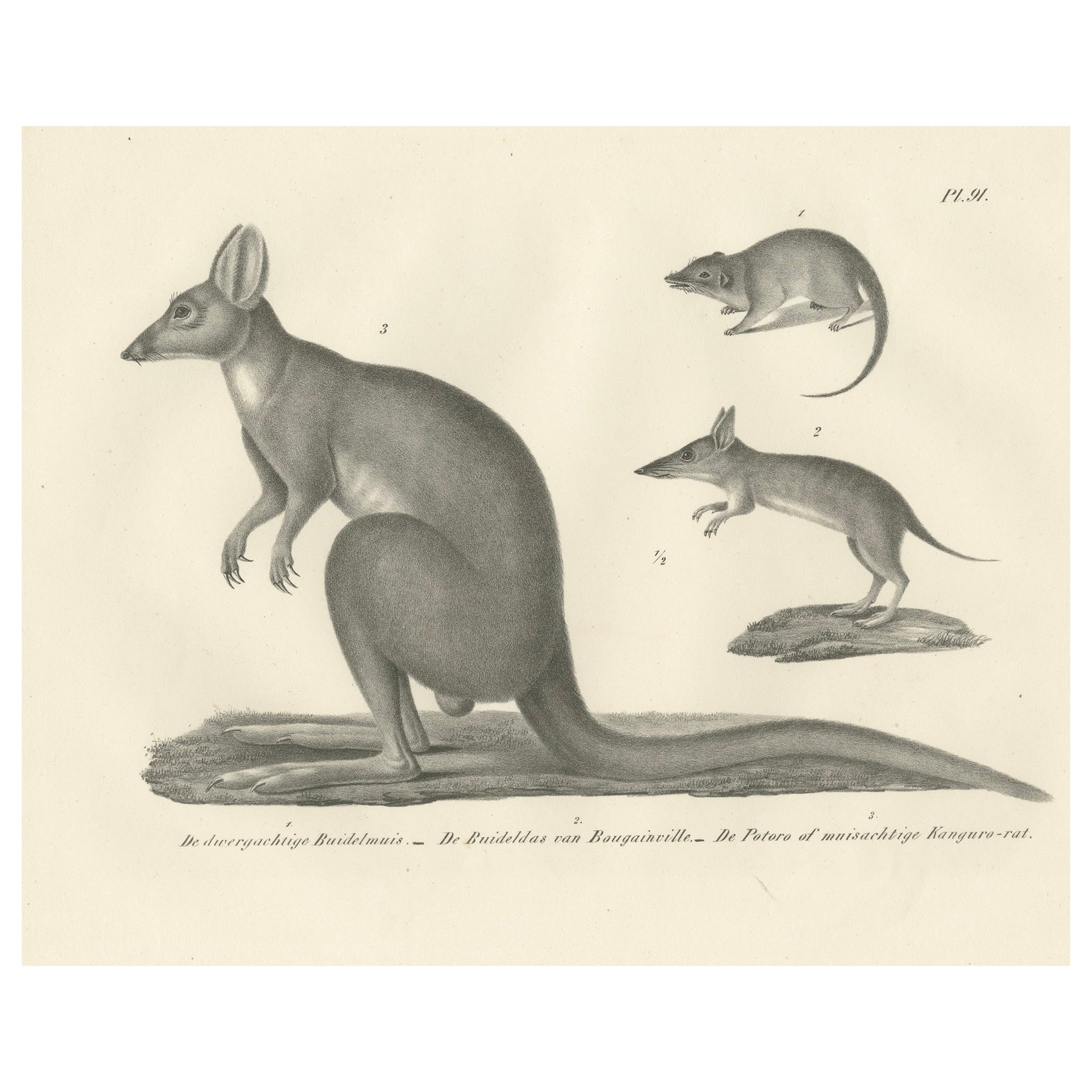
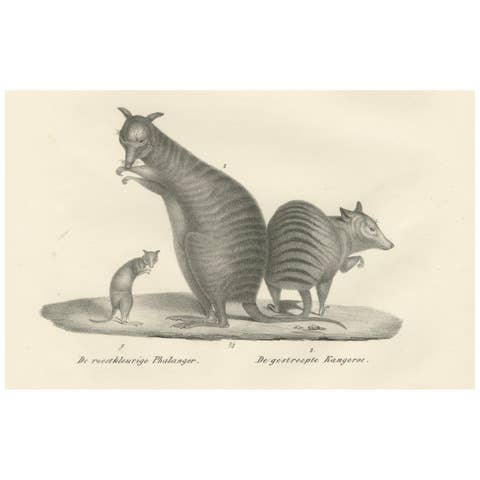
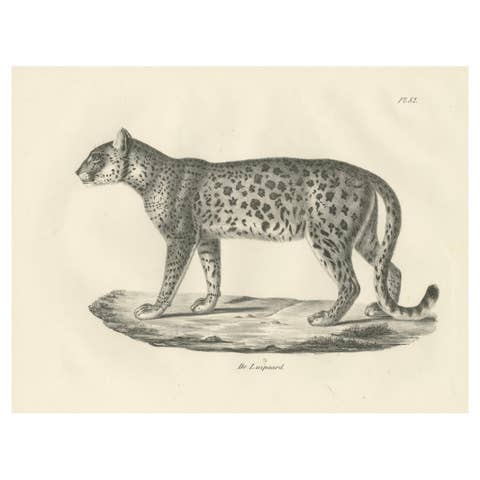
Rare 19th-Century Lithograph of Marsupials Showing the Potoroo and Kangaroo Rat
€ 340
One of a kind: this is the sheet in the photographs. Ships from Langweer, the Netherlands.
Sheet size
32.2 × 26 cm (12.7 × 10.2 in)
Condition
Good
Reference
BG-13176-91
Condition
This lithograph is in excellent condition, with minor foxing around the margins that does not interfere with the main illustrations. The paper has aged gracefully, retaining its original crispness and sharp contrast between shading and outlines.
About this sheet
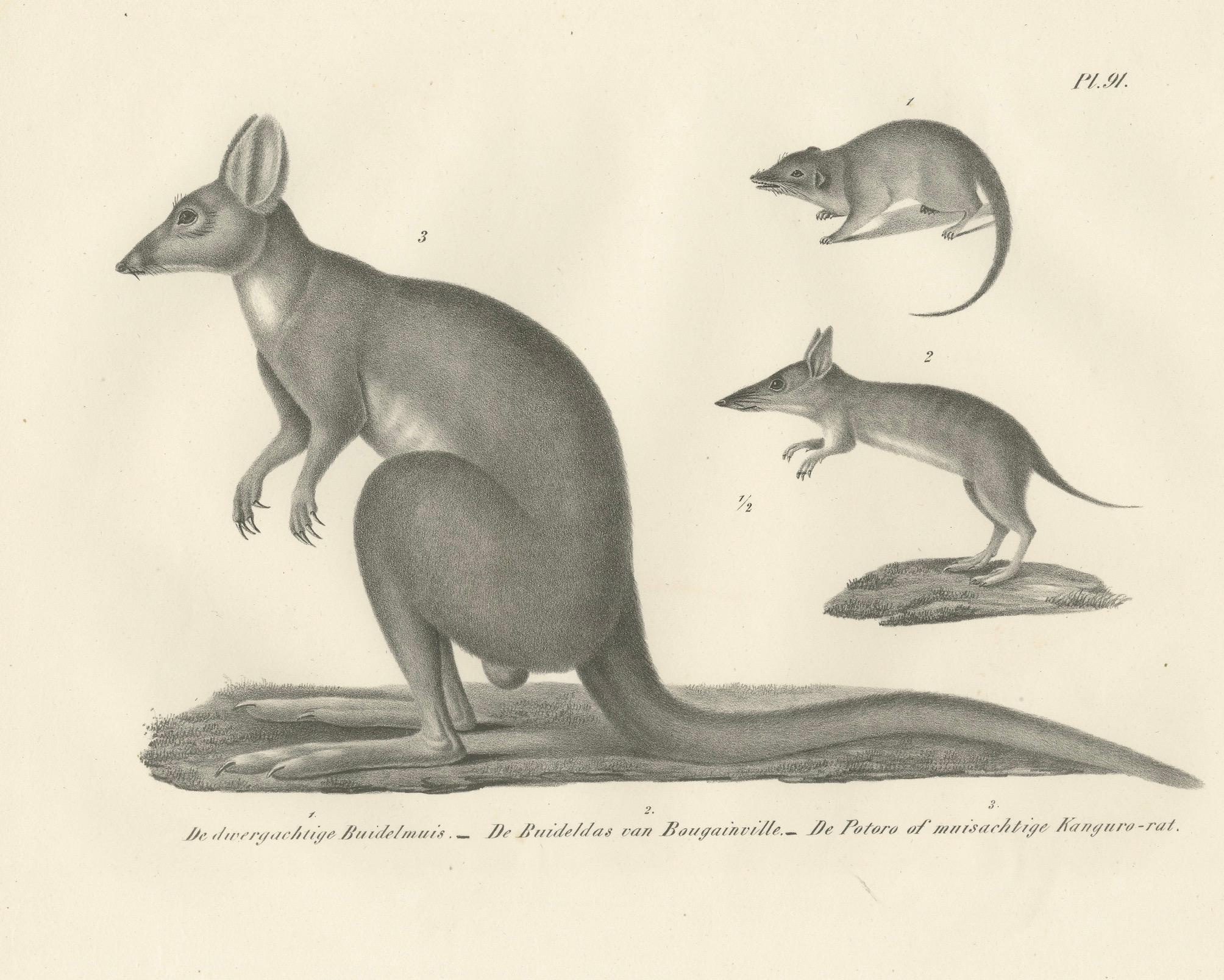
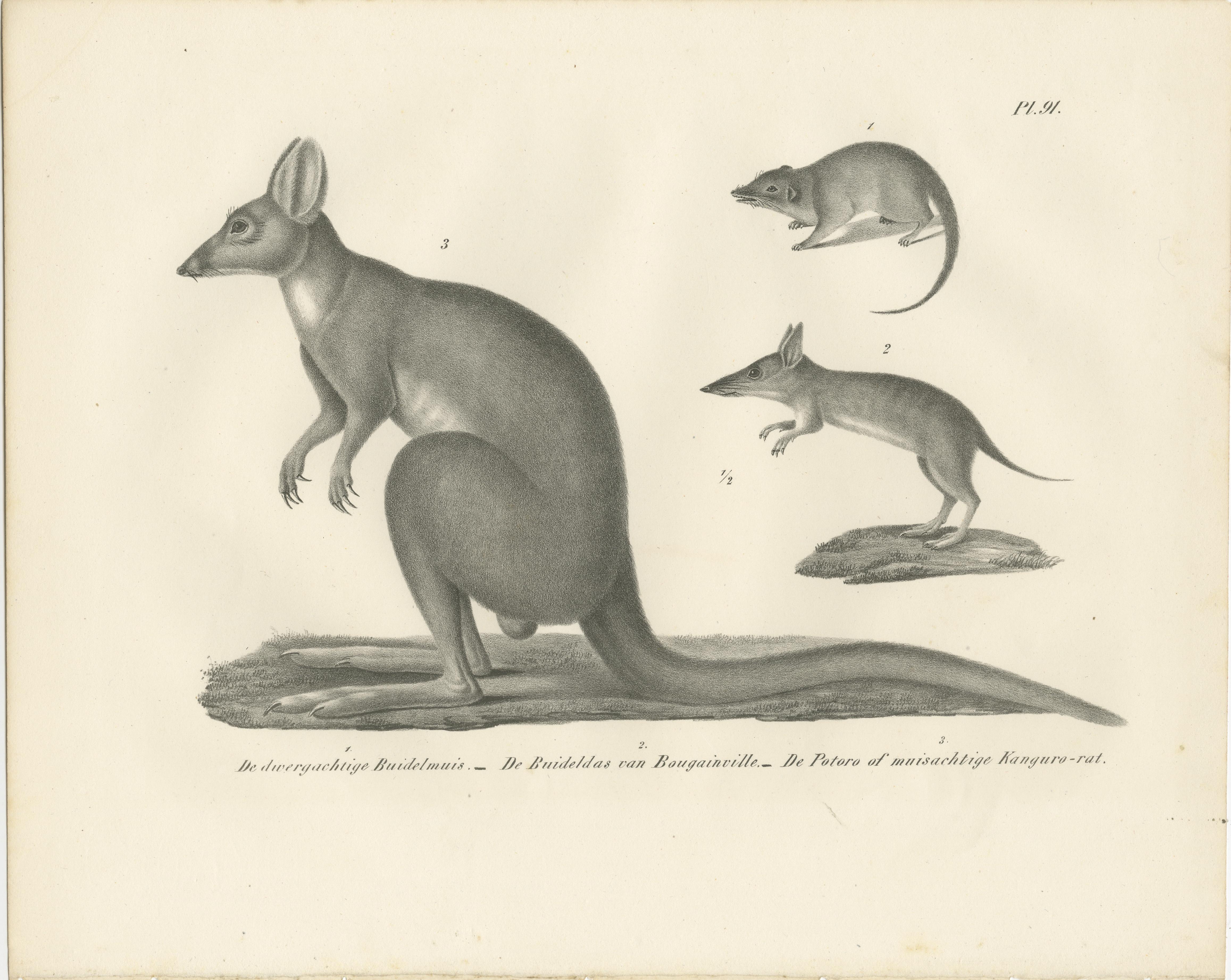
Rare 19th-Century Lithograph of Marsupials Including the Potoroo and Kangaroo Rat
This finely detailed 19th-century lithograph, from *De Zoogdieren: afgebeeld en in hunne levenswijze geschetst*, illustrates three unique marsupials native to Australia and nearby islands. These animals are depicted with precision, reflecting the scientific curiosity and documentation of the era.
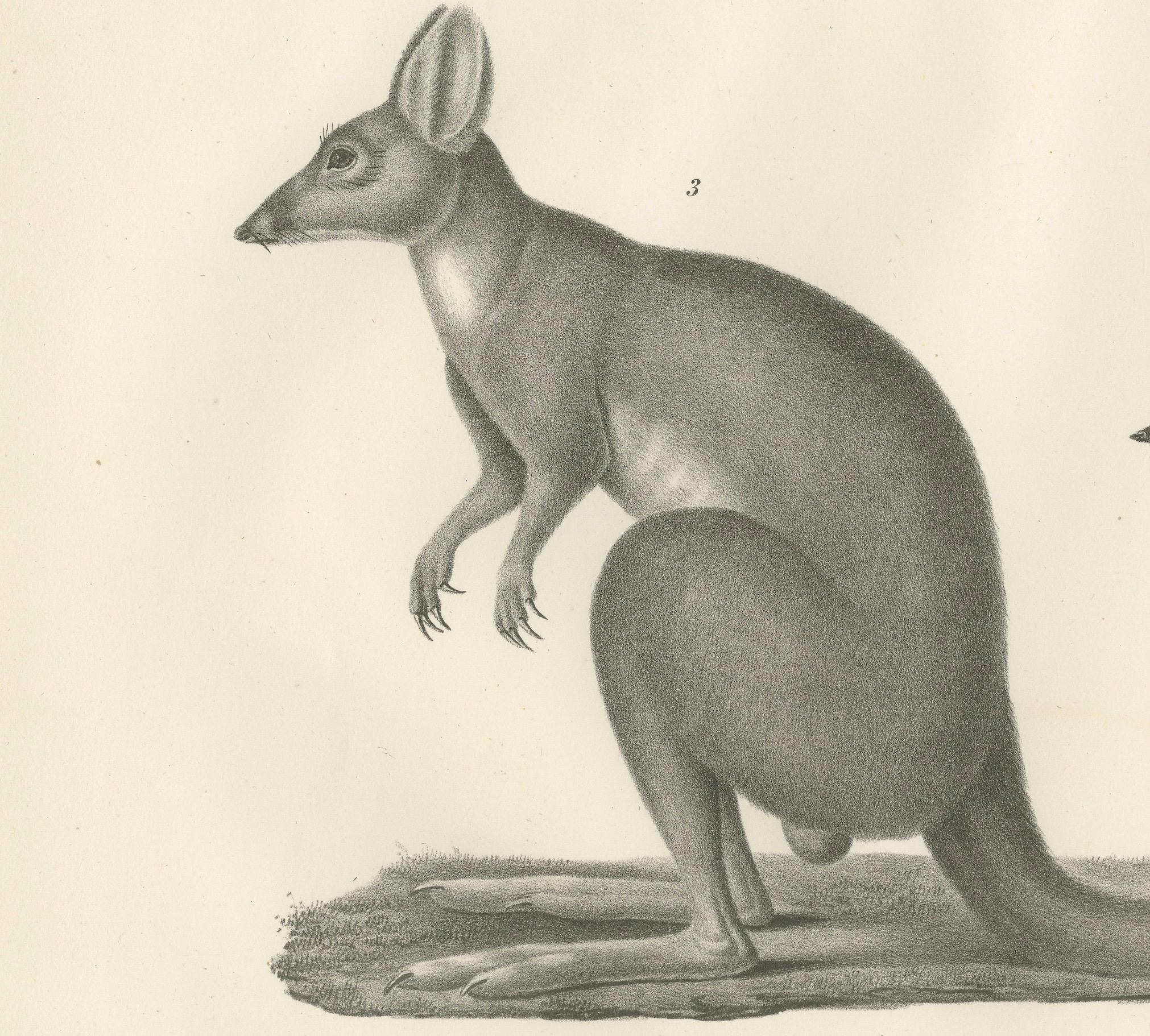
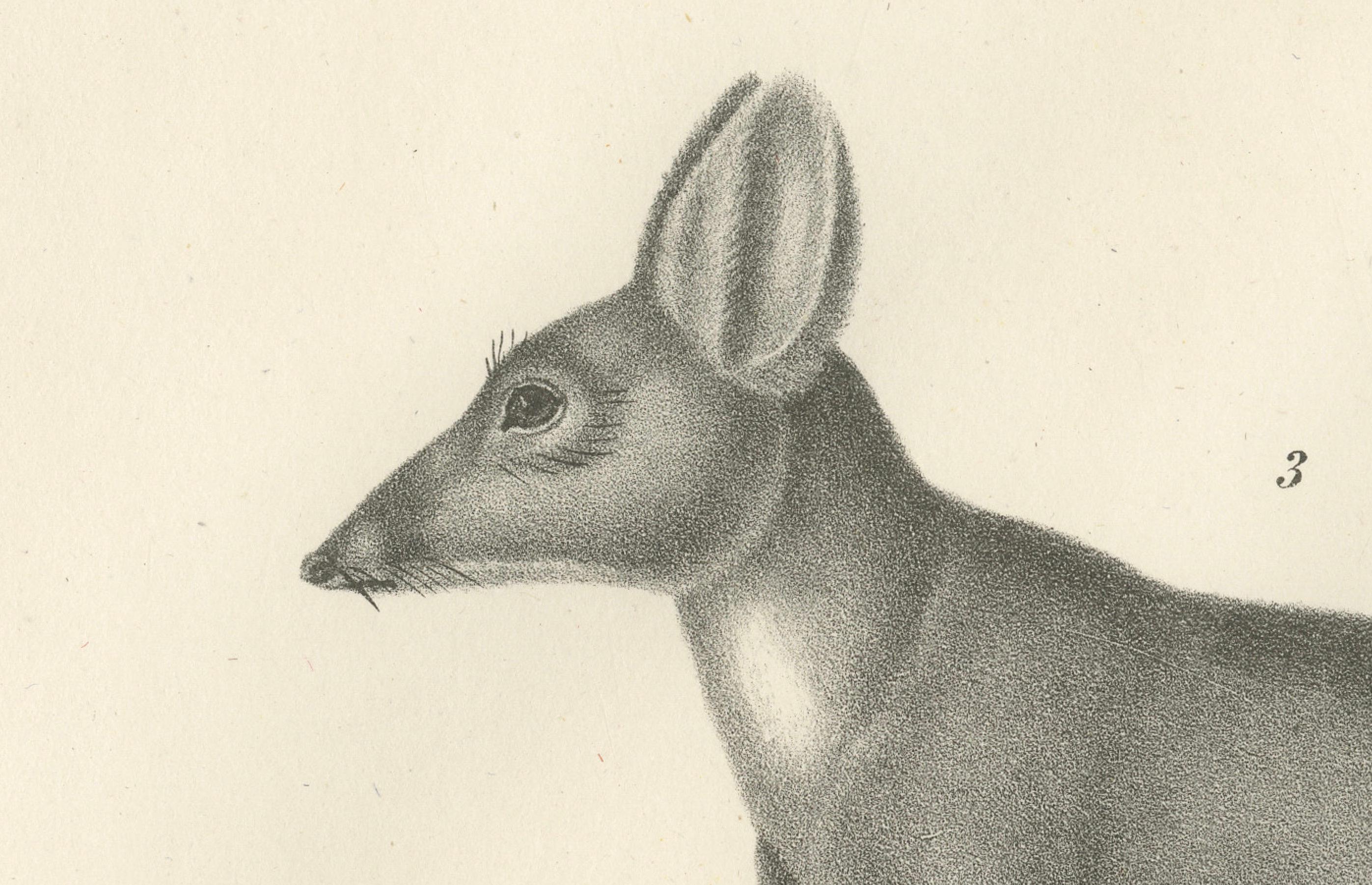
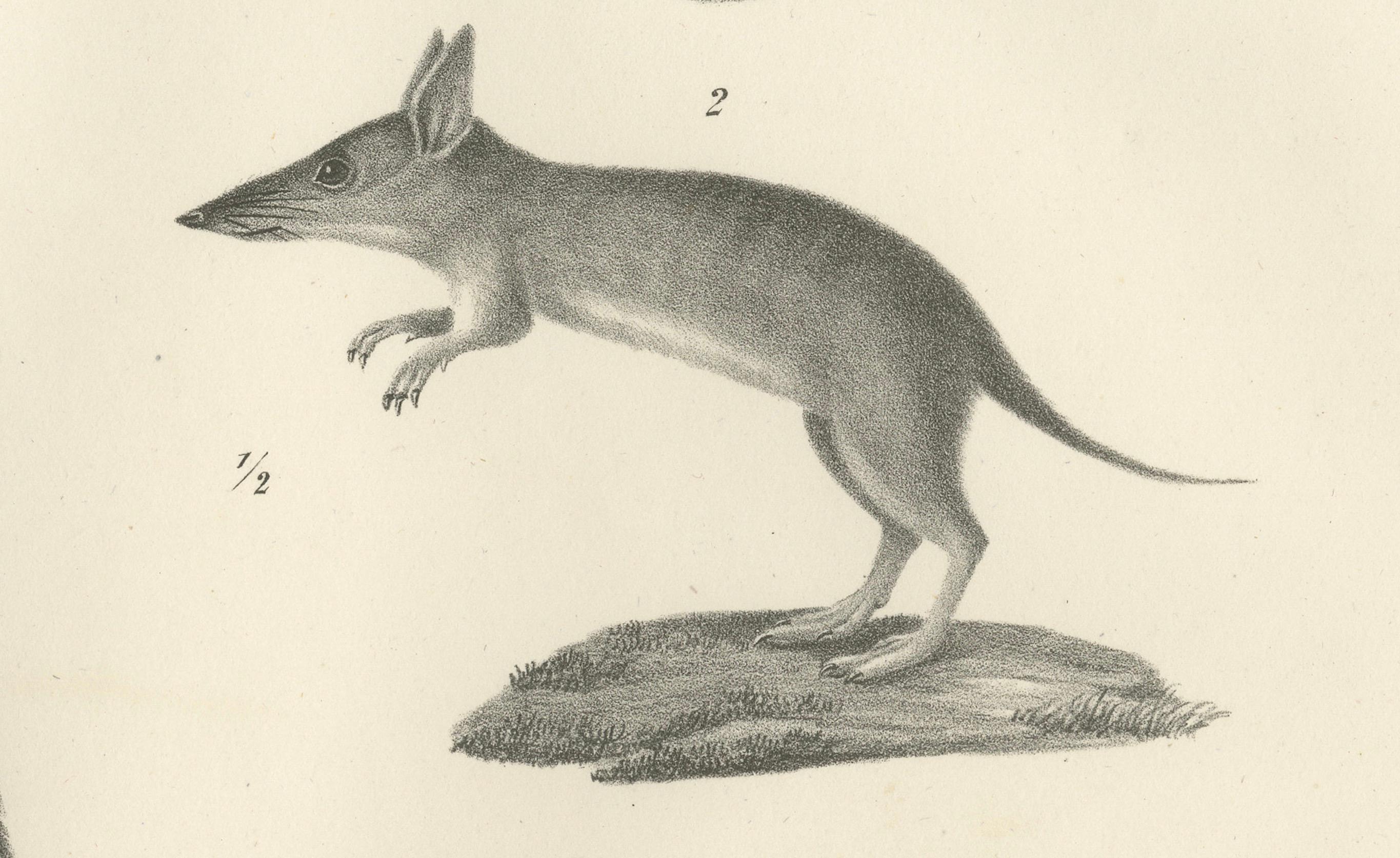
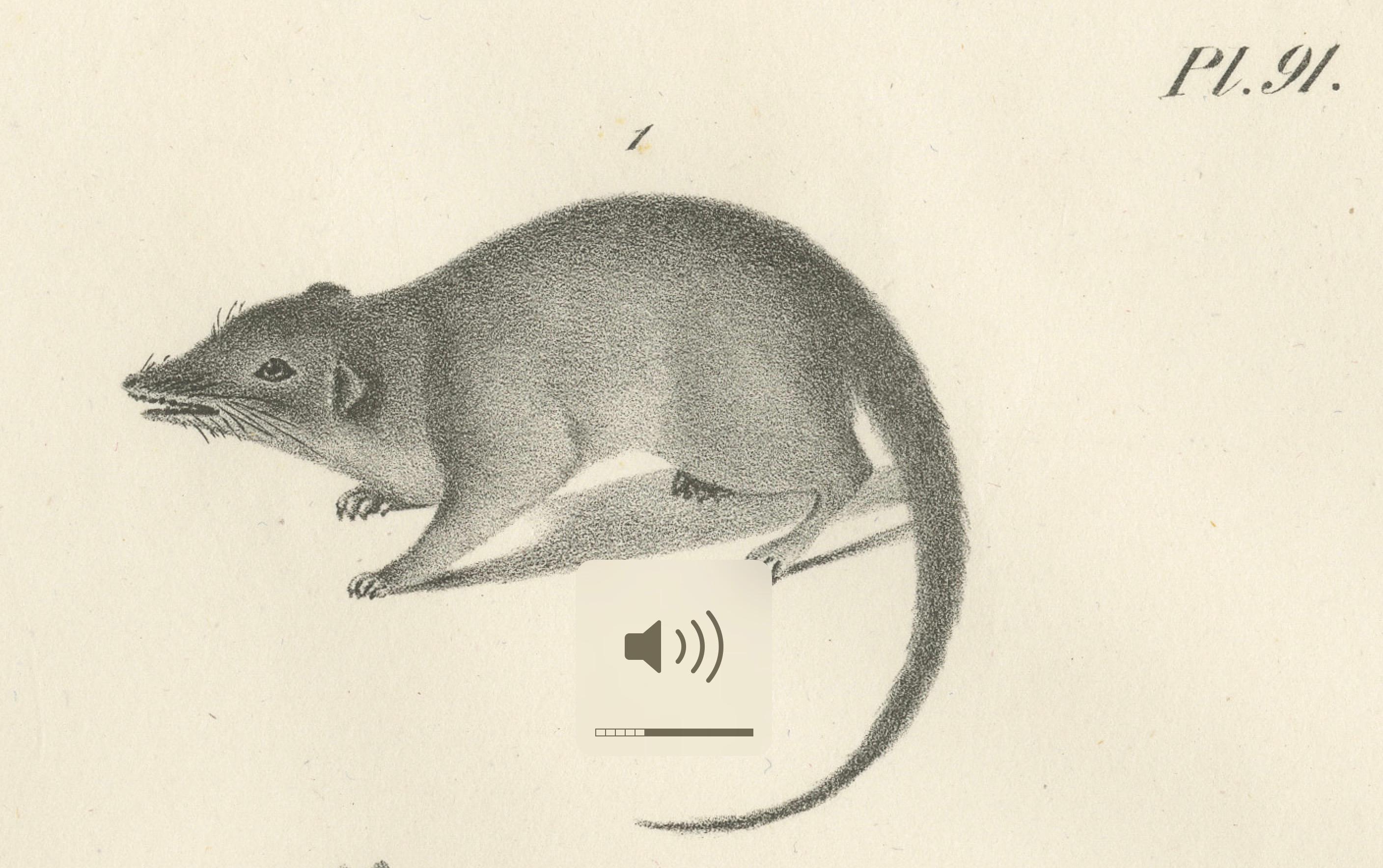
The print features the potoroo (Potorous), a small marsupial that resembles a miniature kangaroo and inhabits forests and coastal areas of Australia. Often mistaken for a rodent due to its size, the potoroo is a nocturnal forager, primarily feeding on fungi. Also included is the lesser pouched mouse (Planigale), an insectivorous marsupial that is one of the smallest carnivorous mammals, found in arid regions of Australia. The third species depicted is the Bougainville's pouched rat, which is likely a reference to a now-reclassified marsupial from Papua New Guinea, showcasing the breadth of species studied at the time.
This lithograph is a valuable representation of early zoological documentation and is an excellent addition to collections focused on Australian wildlife, marsupials, or 19th-century scientific illustrations.
Keywords: Potoroo, Kangaroo Rat, Bougainville Pouched Rat, Australian Marsupials, 19th Century, Natural History Print, Scientific Illustration, Zoological Study, Rare Lithograph
---
Condition Summary: This lithograph is in excellent condition, with minor foxing around the margins that does not interfere with the main illustrations. The paper has aged gracefully, retaining its original crispness and sharp contrast between shading and outlines. Some binding marks are visible along the edge, typical of 19th-century prints, but overall, this is a well-preserved and highly collectible piece.
Framing Tips: A simple wooden or gold-gilded frame with an archival-quality off-white mat will best highlight the detailed lithography. A museum-grade UV-protective glass is recommended to preserve the integrity of the paper and prevent further aging. Given the historical and scientific significance of this print, adding a small descriptive plaque beneath the frame could enhance its educational and aesthetic appeal.