About this sheet
Original antique print of various antelope species. This engraved print originates from a very rare unknown Dutch work. The plates are similar to the plates in the famous German work: ‘Bilderbuch fur Kinder' by F.J. Bertuch, published 1790-1830 in Weimar. This could be Dutch edition of this work (no references found), or a work that used the Bertuch plates. Published circa 1820.
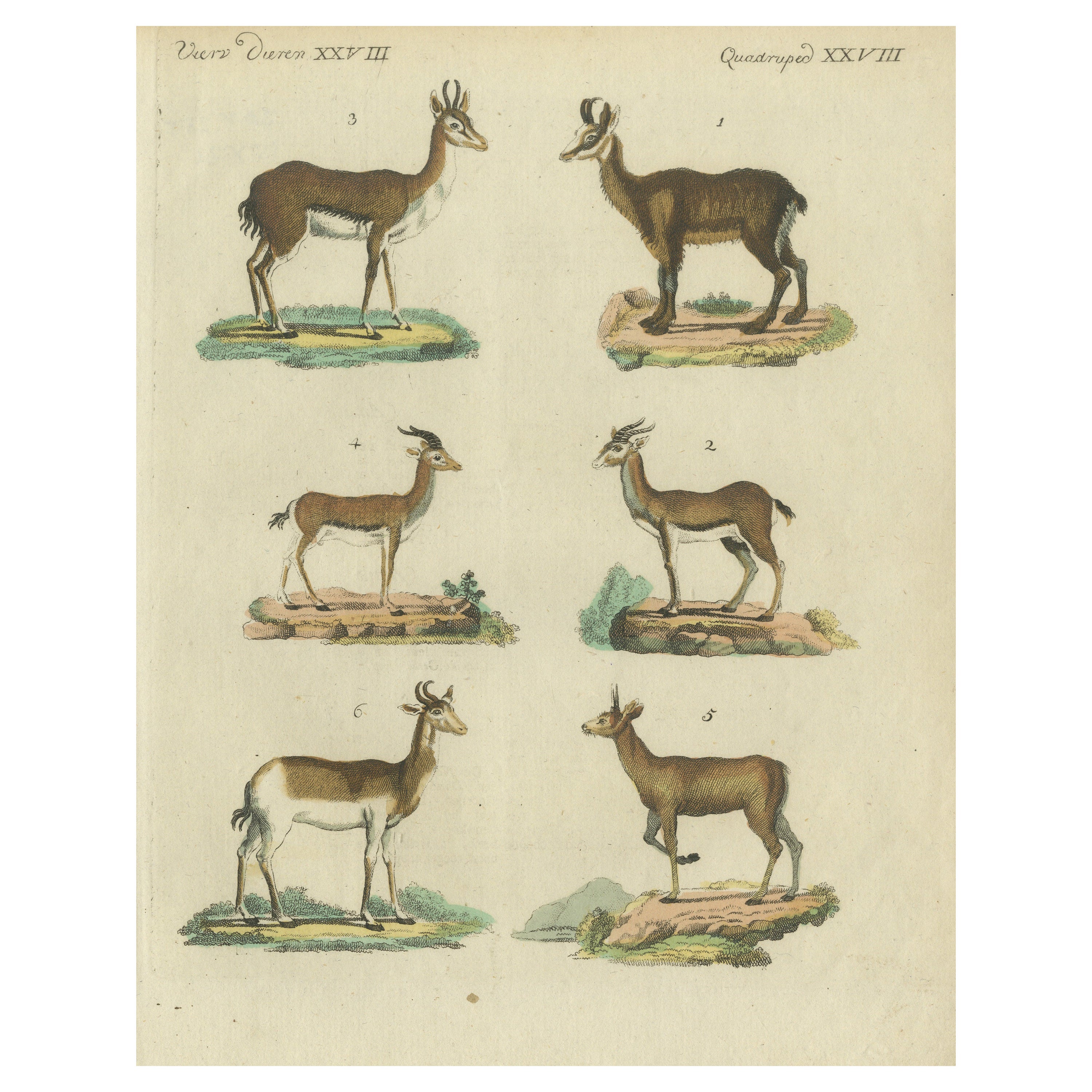
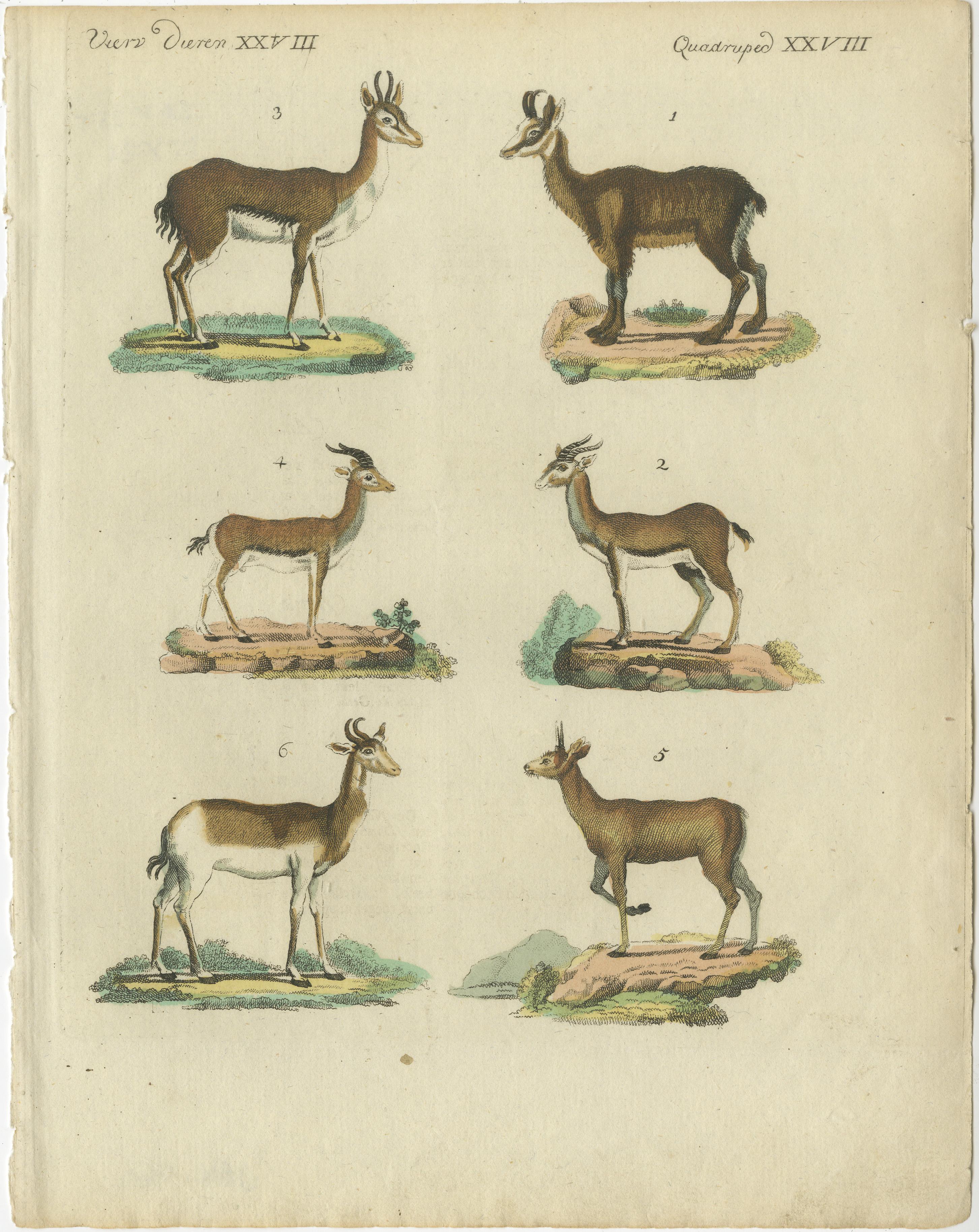
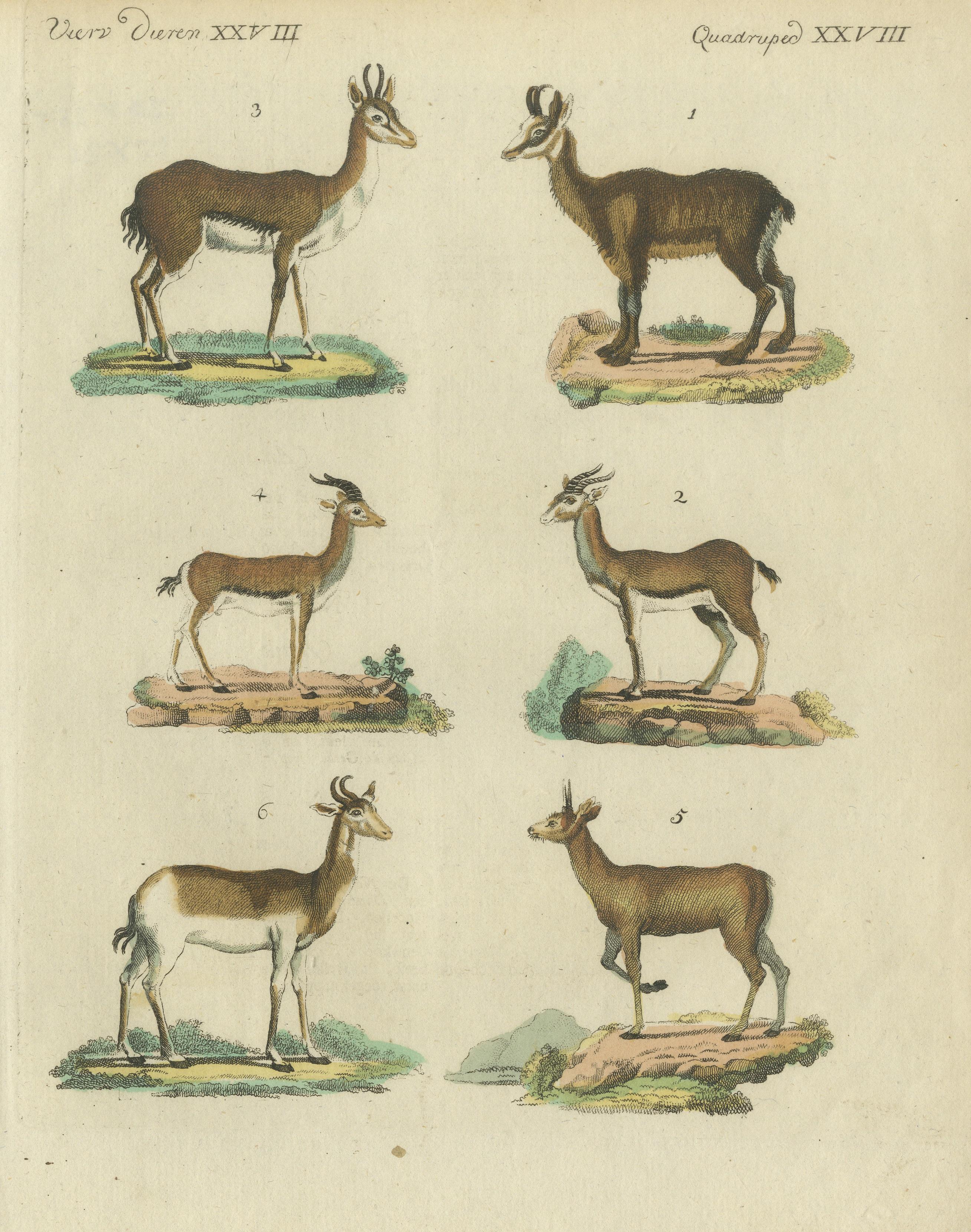
The image depicts six different illustrations of antelope-like animals, labeled "Viverr. Dieren XXVIII" (Dutch: viervoetige dieren) and "Quadrup. XXVIII", suggesting they are the twenty-eighth entry in a series on quadrupeds.
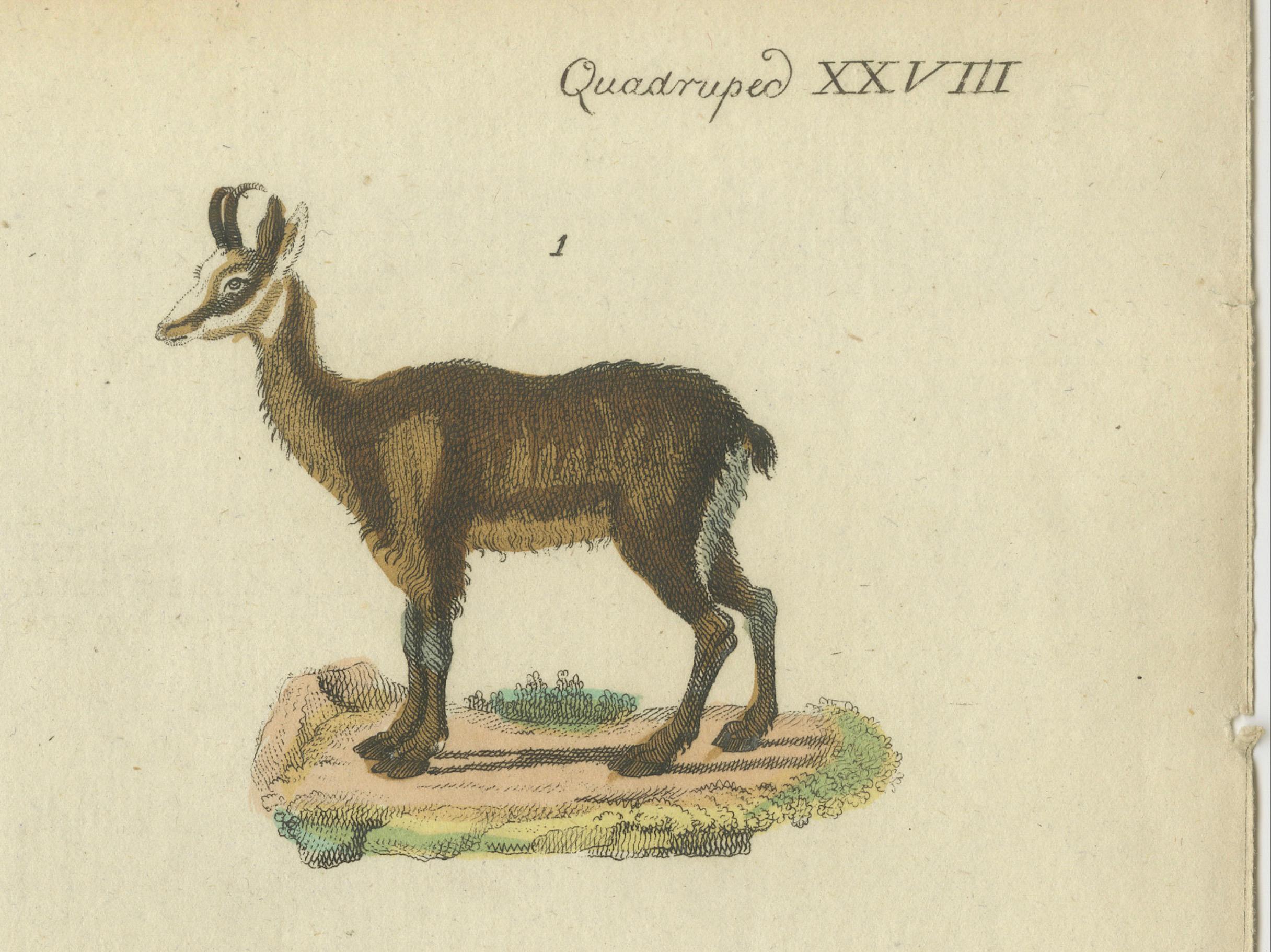
1. **Top Center (Number 1)**: This antelope has a rich, dark brown coat and is shown in profile. It has two straight and slender horns that rise above its head, with a slight backward curve at the tips. Its ears are perked up, and it has a calm, alert expression.
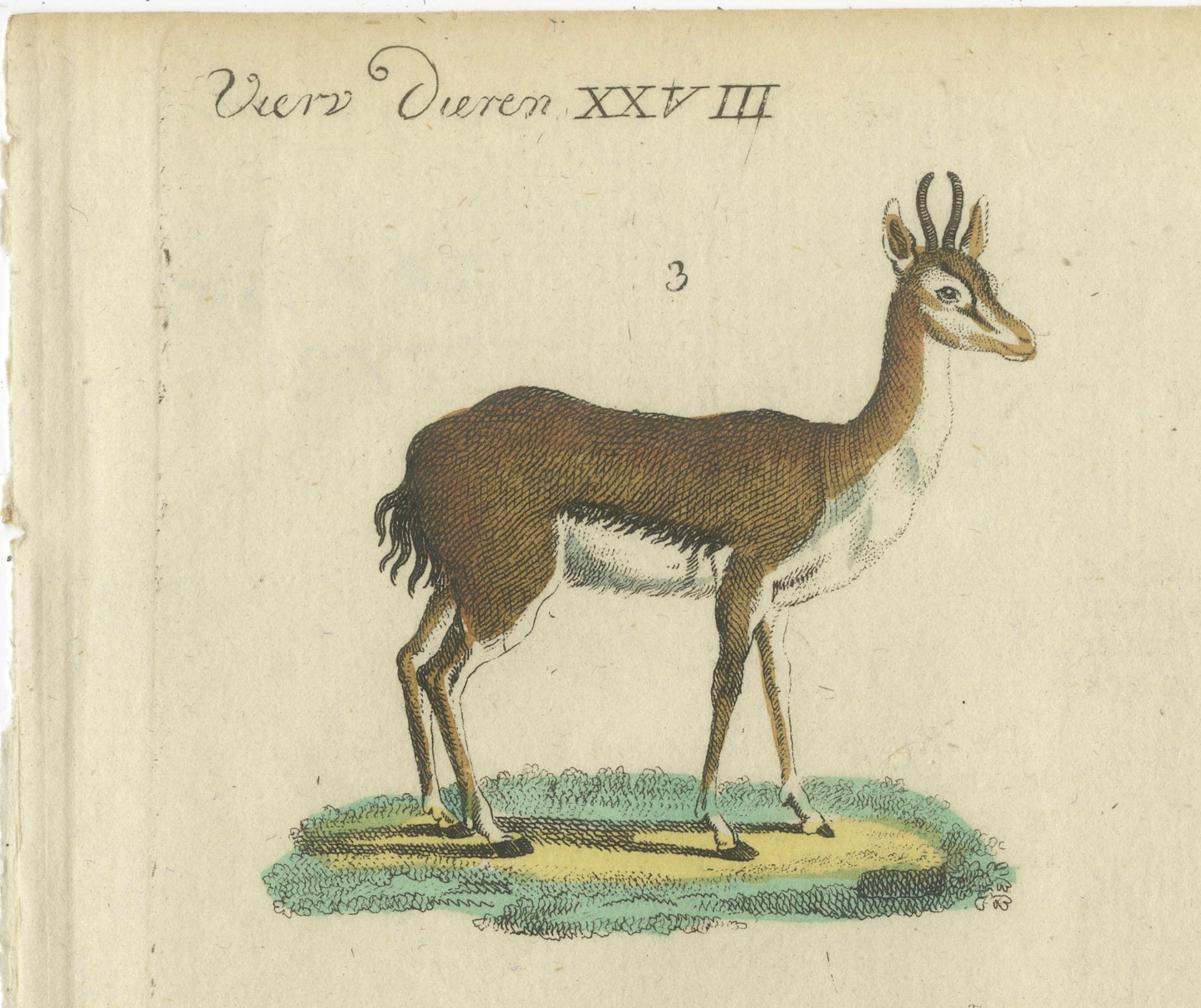
2. **Top Left (Number 3)**: This antelope is lighter in color, with a white underbelly that contrasts with the brown of its back and sides. It has two very straight horns and is depicted in a three-quarter view, looking off to the side. The animal's posture is upright and elegant.
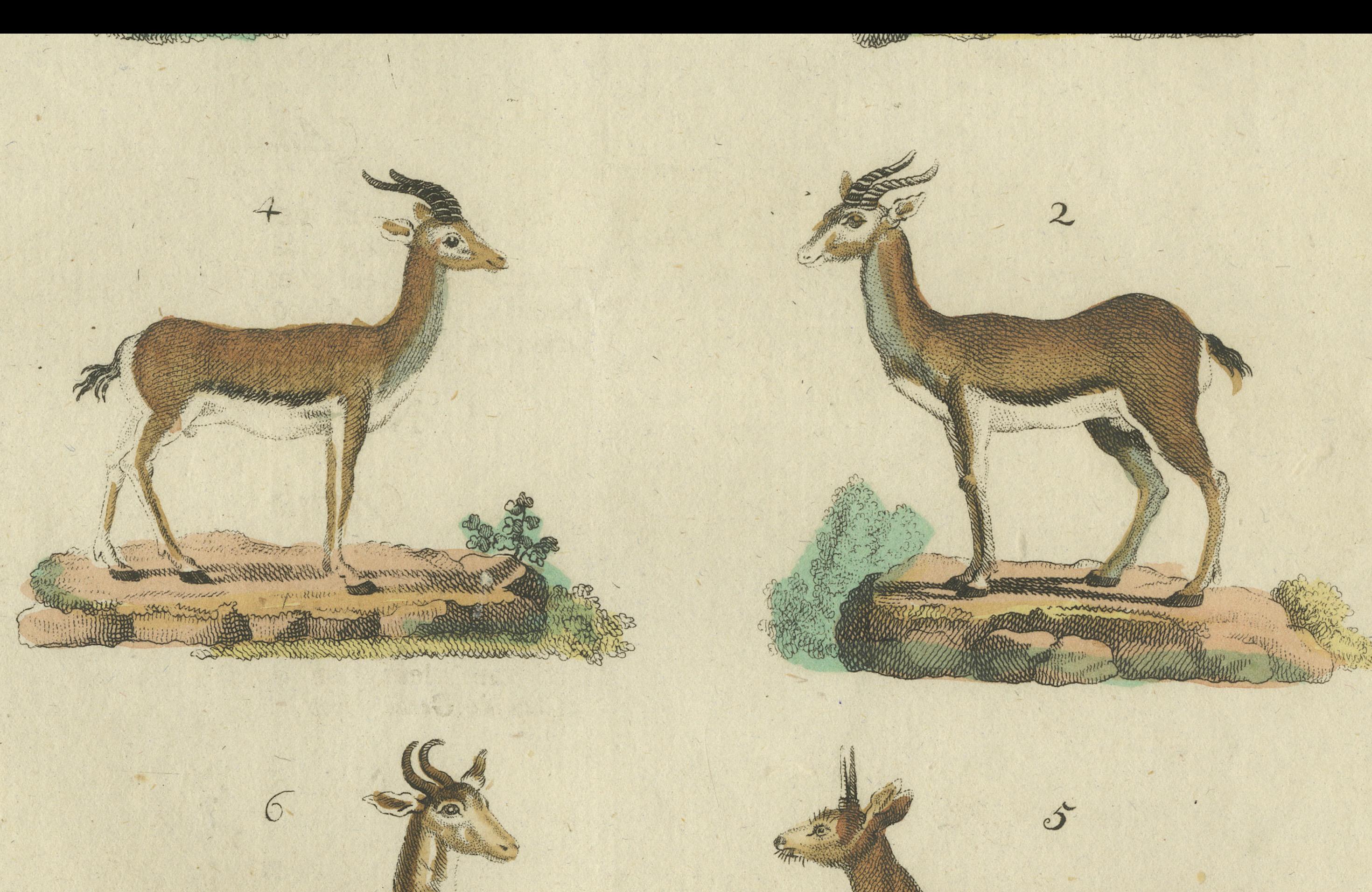
3. **Top Right (Number 2)**: A darker-toned antelope, similar to number 1, but shown in a different profile with its head turned toward the viewer. It has two prominently curved horns and a thick neck, suggestive of a strong and sturdy build.
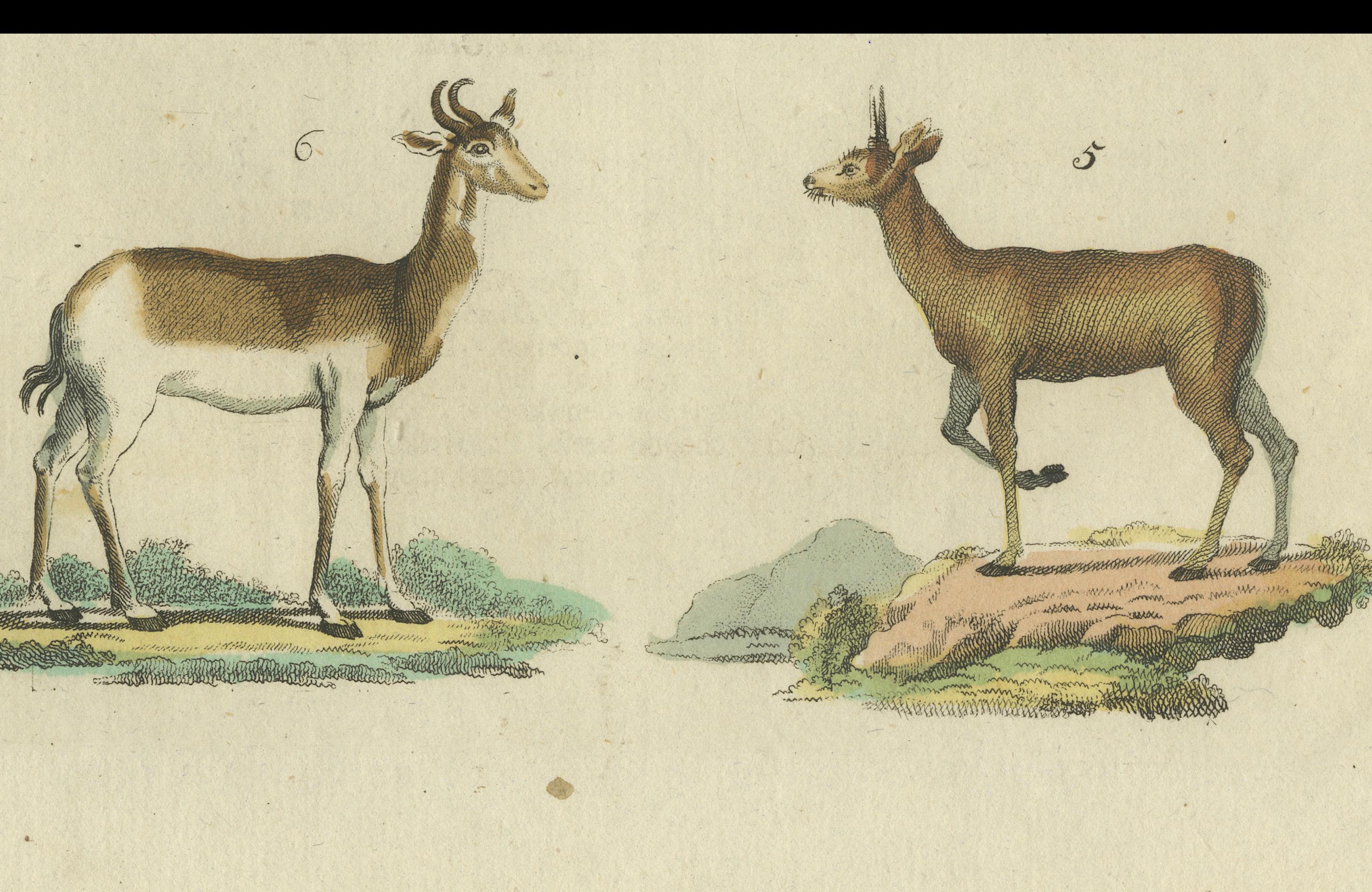
4. **Bottom Center (Number 6)**: The largest image, this antelope is shown with a light brown coat and a white underbelly. Its horns curve backward in a smooth arc. The animal is standing in a relaxed pose on a grassy plain.
5. **Bottom Left (Number 5)**: This illustration shows an antelope in mid-stride, with a two-tone body similar to number 6. Its horns are slightly curved back, and it has a white stripe on its snout that extends up between its eyes.
6. **Bottom Right (Number 4)**: Another light brown antelope, this one is positioned on a rocky outcrop, suggesting it may be accustomed to mountainous or rocky terrain. It has two long horns that curve back and down and is depicted in a three-quarter view facing to the right.
Each illustration captures the distinctive features and grace of these creatures, with detailed attention to their horns, which are key identification markers in antelope species. Their fur is rendered with care, showing variations in color and texture that could indicate different species or genders within a species. The animals are placed on small patches of ground with sparse vegetation, highlighting their form without the distraction of a detailed background. These engravings are typical of natural history documentation from earlier centuries, aimed at studying and cataloging biodiversity.