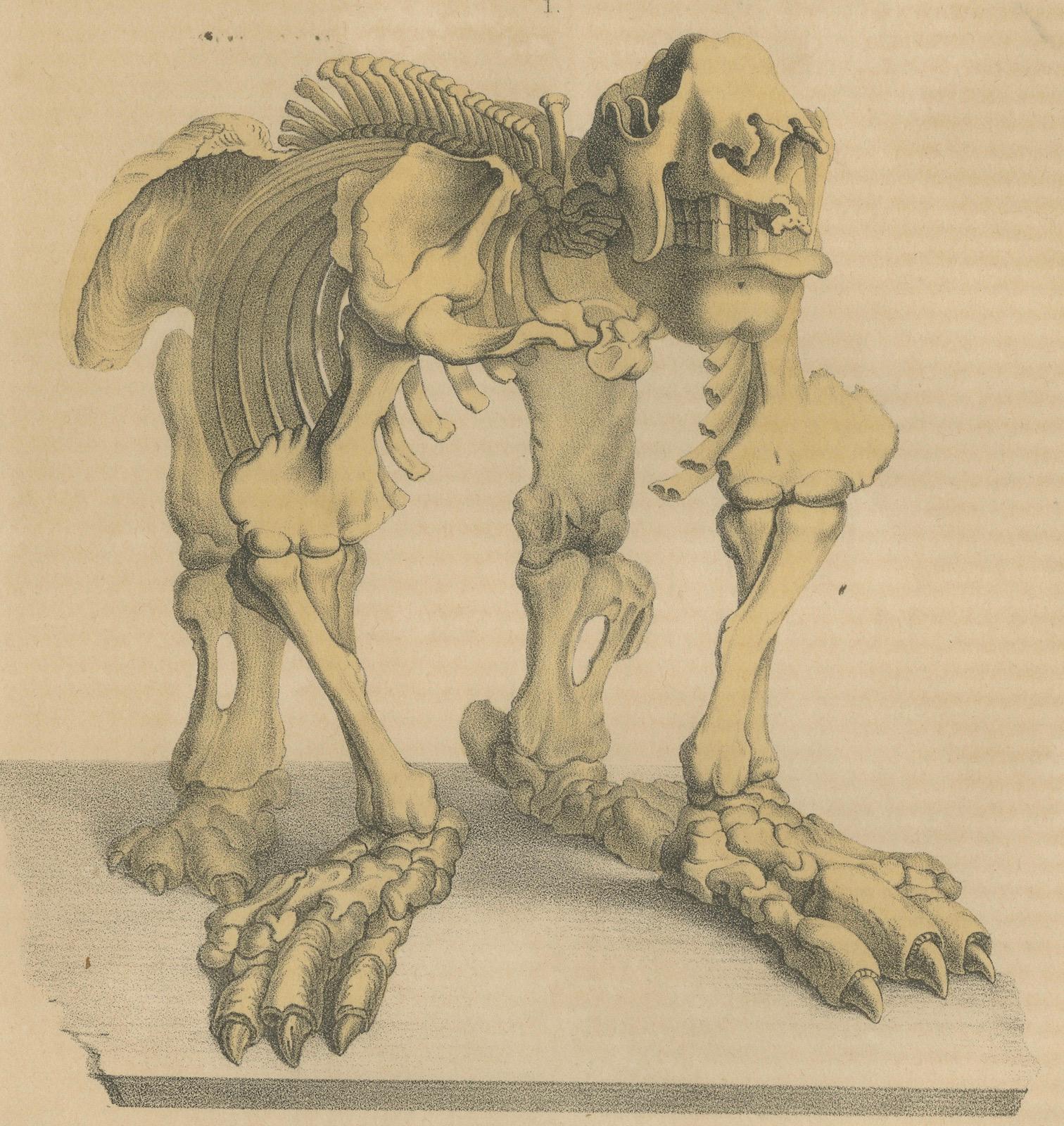
Original Engraving of The Skeletal Giant: Megatherium Anatomy, 1845
€ 290
Original antique · The actual sheet photographed · Certificate of authenticity on request · Sold unframed · Worldwide shipping from € 15 (rates)
Date
1845
Sheet size
26.5 × 17 cm (10.4 × 6.7 in)
Condition
Good
Reference
BG-13261-133
What the condition grades mean
Excellent
Bright and clean, with no faults worth mentioning.
Very good
Only light signs of age, such as faint toning.
Good
Normal signs of age for a sheet of this period: toning, some foxing, small marks or neat old repairs.
Fair
Clear faults such as staining, tears or repairs, priced to match.
Every fault we see is written in the condition note, and the whole sheet is shown uncropped in the photos.
Condition
Good. Border on the right side roughly cut. Aged paper with typically warm, yellowish-brown hue. Light offset and browning, mainly around the edges. Please review the images for further condition details.
About this sheet
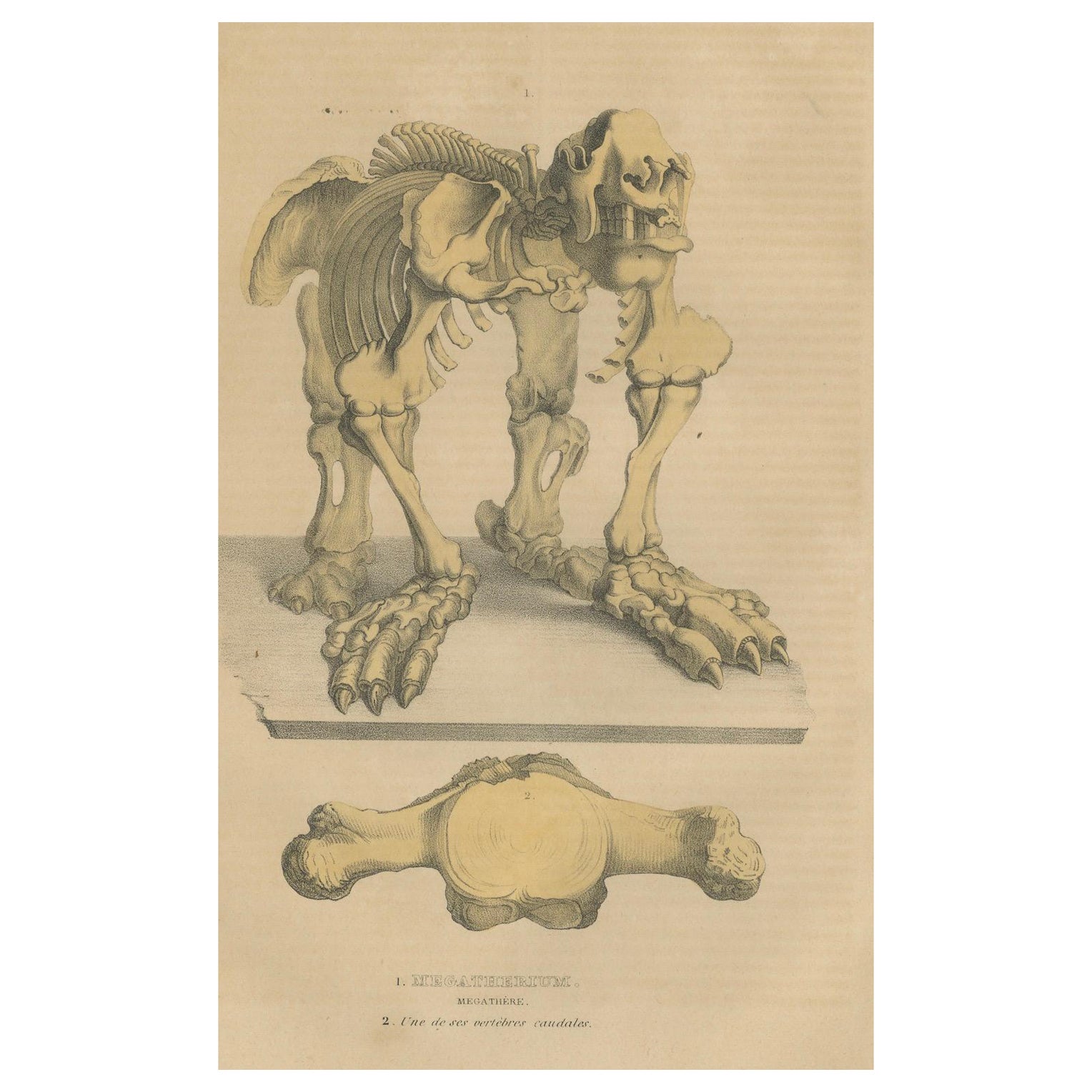
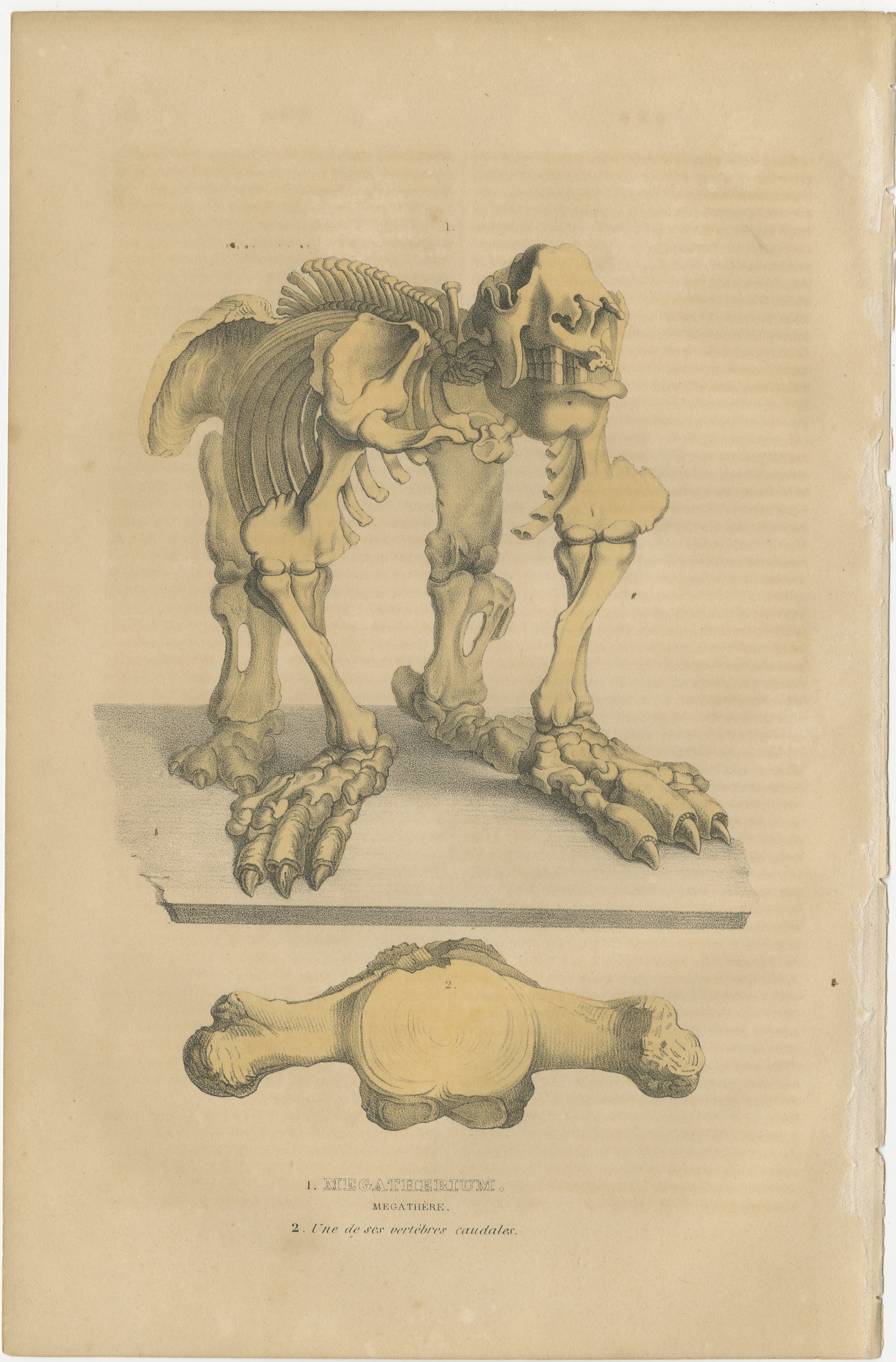
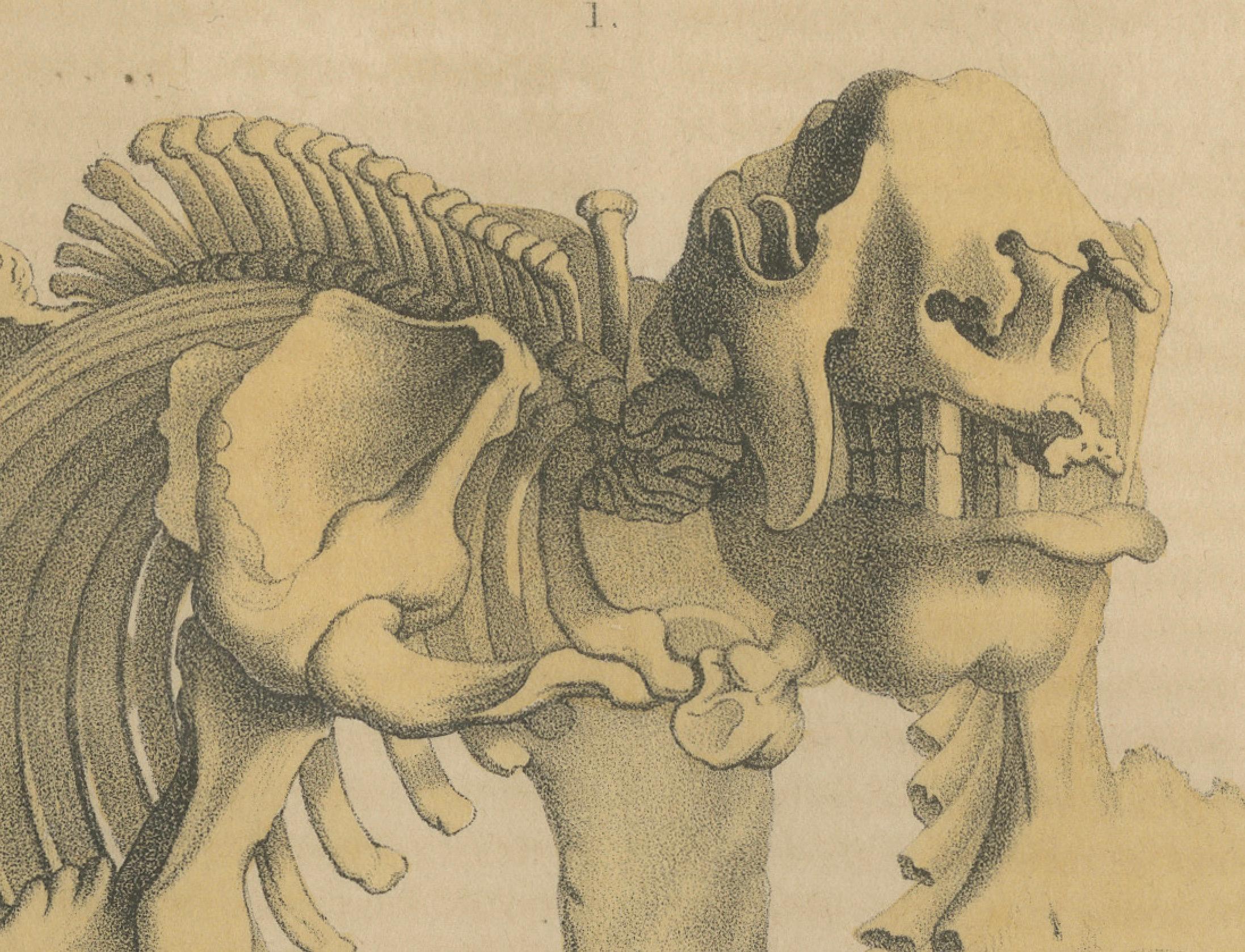
The print is a detailed anatomical illustration of the skeletal structure of a large animal, likely a mammal based on the bone structure. The main focus is on the axial skeleton, showing the vertebral column, ribs, and part of the skull. The ribs are depicted as large and well-defined, indicating a sizable thoracic cavity, while the skull suggests a large head and prominent jaw which could belong to a prehistoric or Ice Age mammal, potentially a Megatherium, given the label.
Megatherium was a genus of elephant-sized ground sloths that lived from the Early Pliocene through the end of the Pleistocene. The bones are robust and show adaptations for a massive, slow-moving creature.
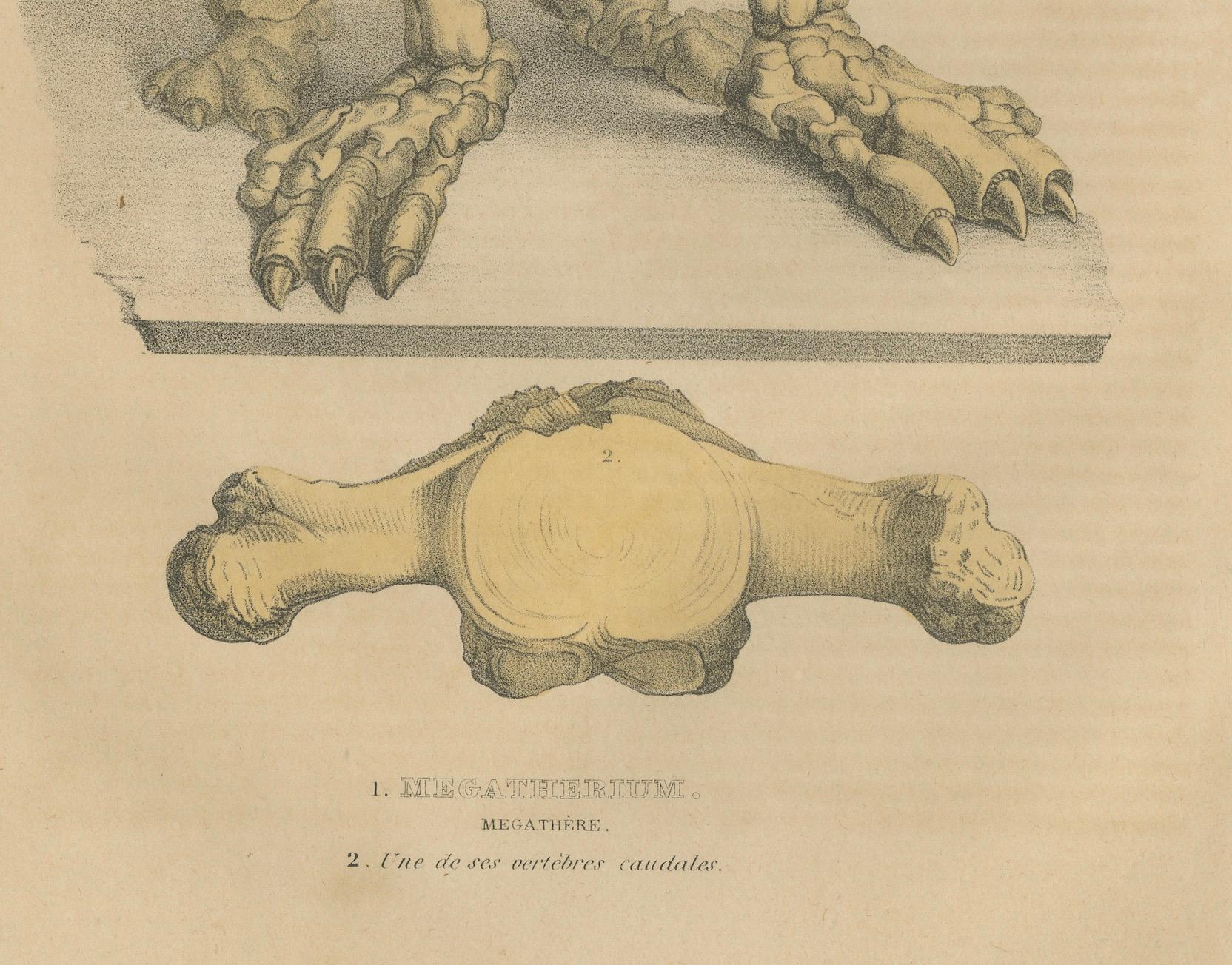
Below the main skeletal illustration is a separate depiction of one of the animal's caudal (tail) vertebrae, providing additional detail about the animal's skeletal structure.
The print is hand-colored, with subtle shading that gives depth to the bones and helps to distinguish different anatomical features. Such prints would have been essential for scientific study in the 19th century, offering a visual reference for comparative anatomy and paleontology studies.
The original skeleton of Megatherium, which was first discovered in 1788 on the bank of the Luján River in Argentina, is housed at the Museo Nacional de Ciencias Naturales in Madrid. This was the first prehistoric animal skeleton to be mounted, back in 1795. It was sent to Spain the year after its discovery and remains there to this day.
Furthermore, the fossils of Megatherium, including a skull collected by Charles Darwin during his voyage on the Beagle, were brought together for digitization at the Natural History Museum in London. This effort was part of a program to preserve the fossils digitally and make them more accessible to researchers and the public globally.
Additionally, replicas of the Megatherium skeleton were created in the latter 1800s and distributed to various institutions. These replicas were made by Henry Ward, who produced plaster casts of fossil specimens that were showcased at World’s Fairs and other expositions. Some of these casts can still be found in various institutions today.