About this sheet
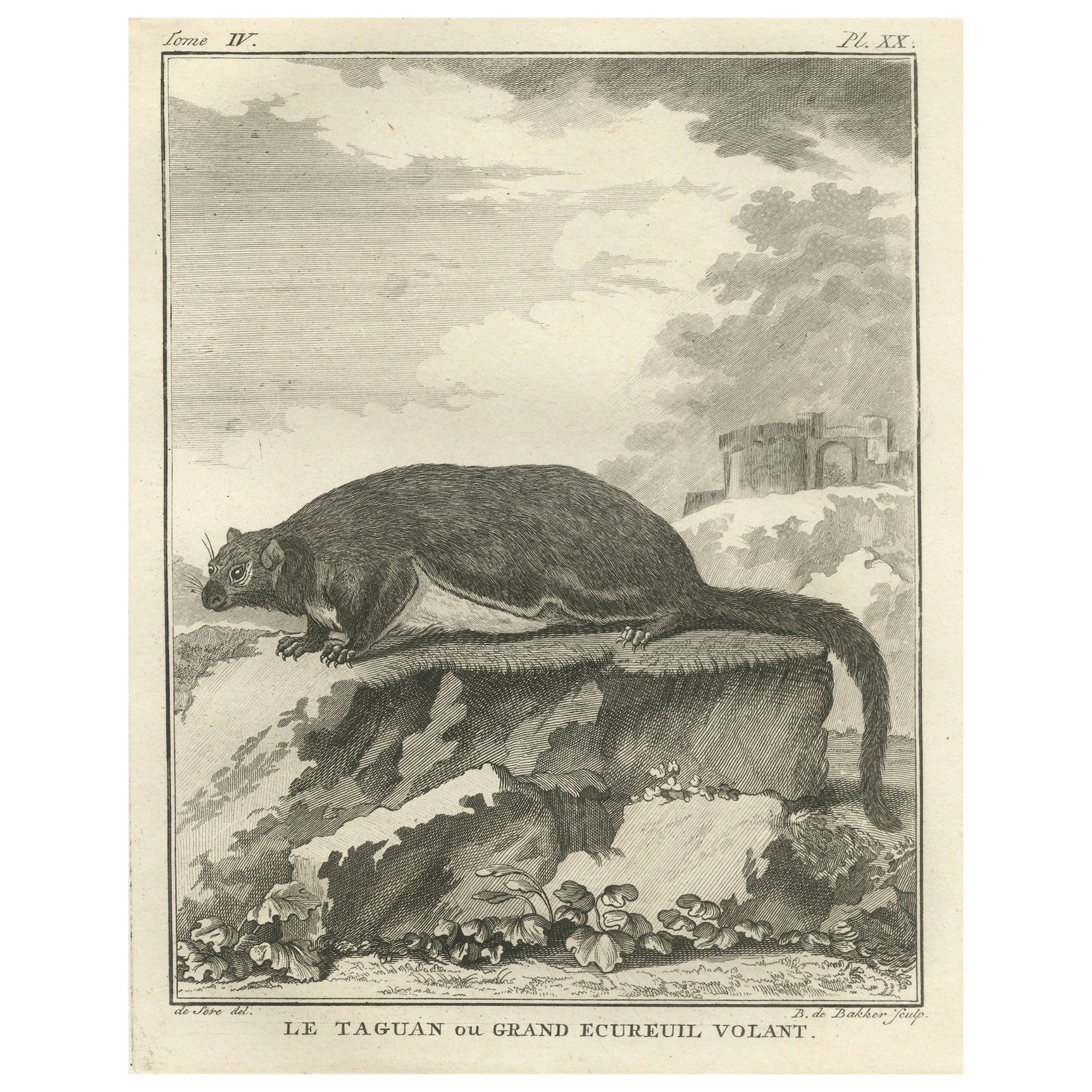
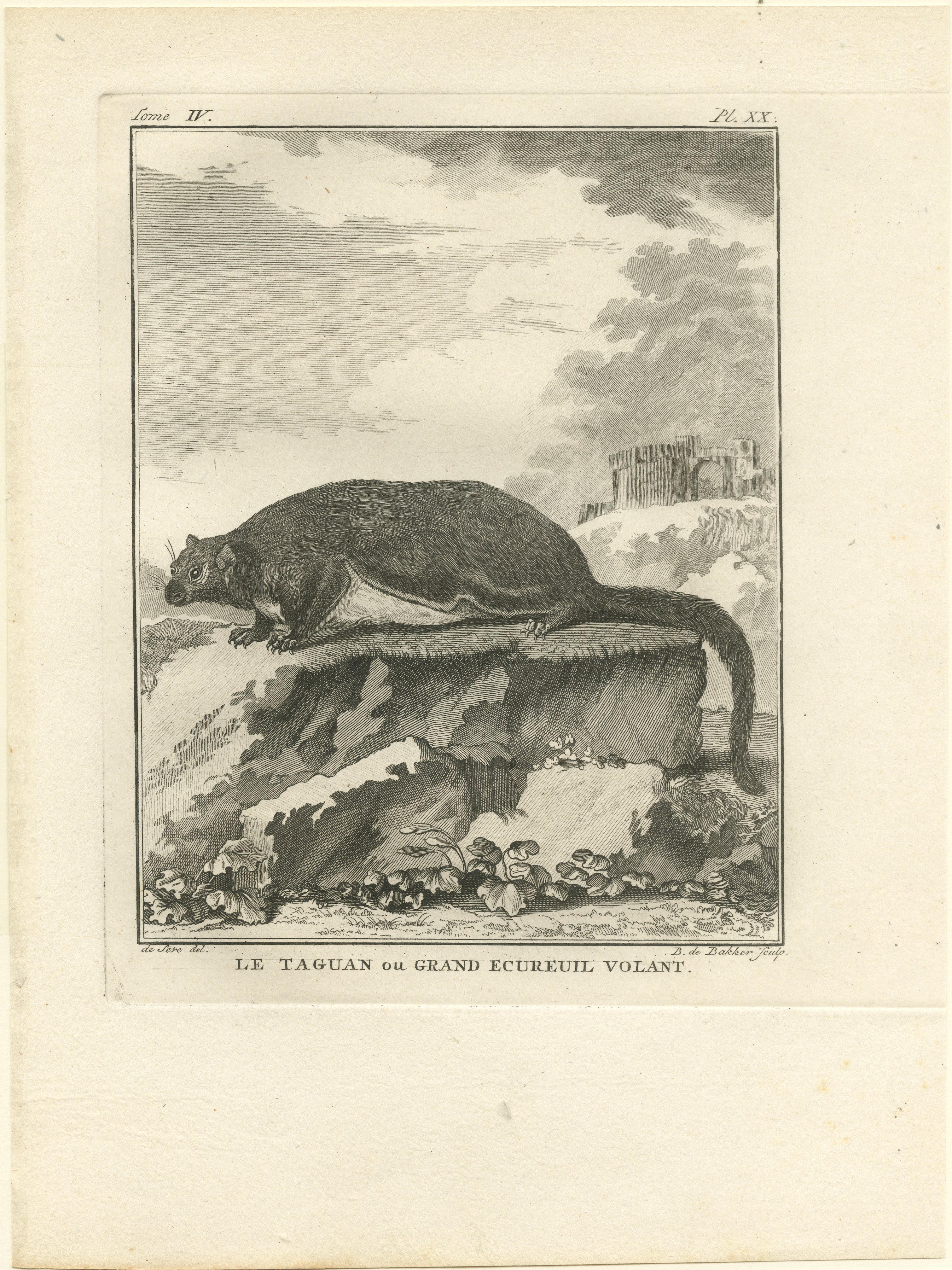
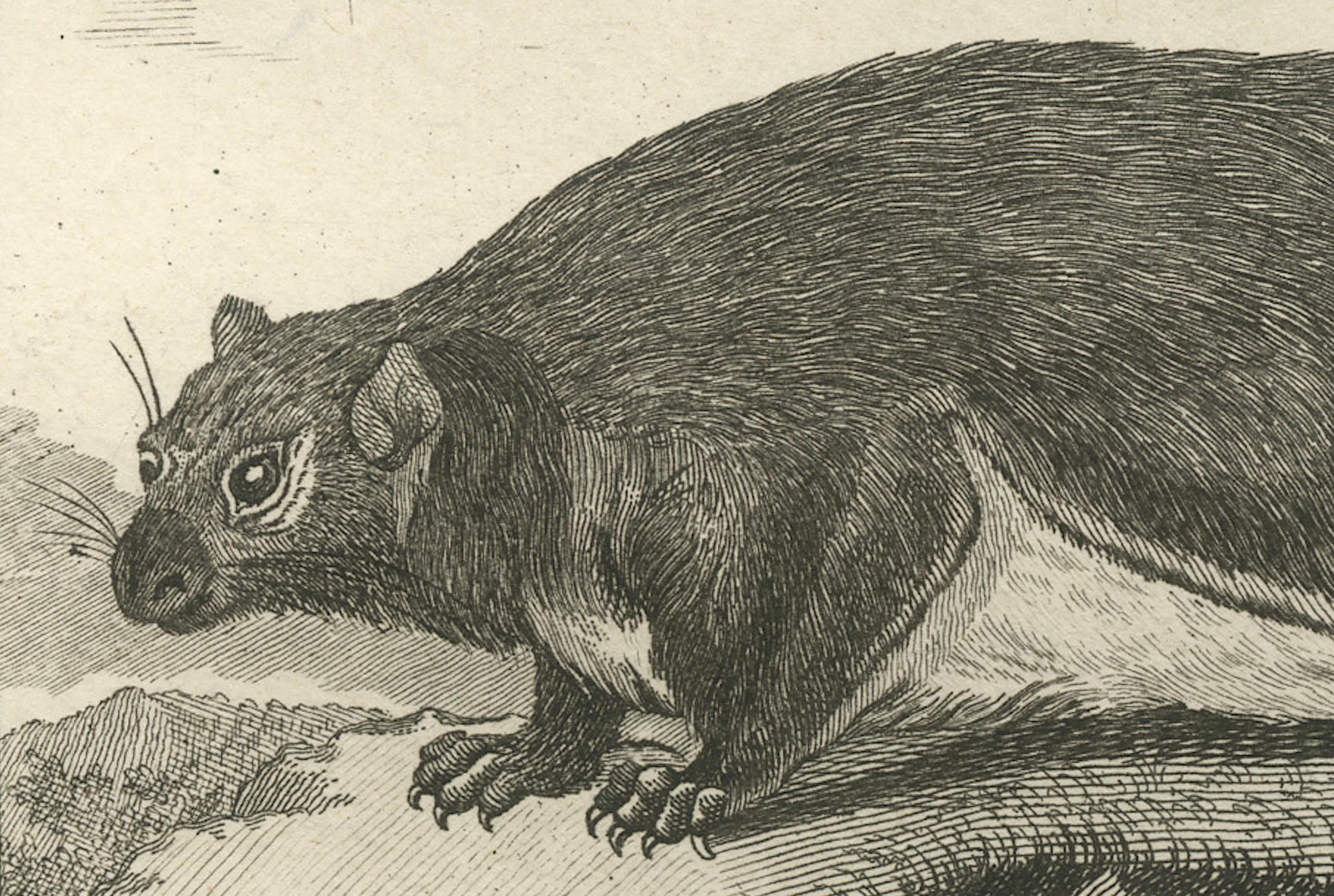
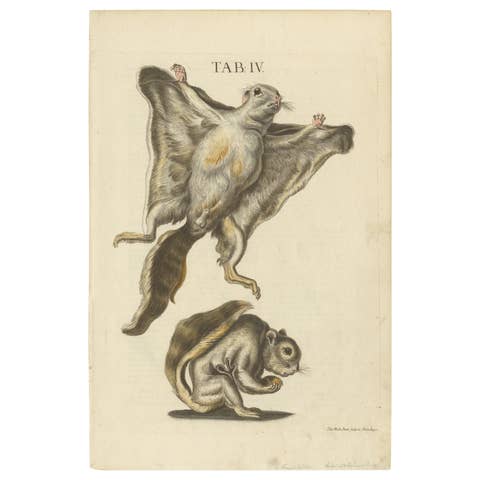
A historical copperplate engraving from Georges-Louis Le Clerc, Comte de Buffon's work "Histoire Naturelle Générale et Particuliere." It features an illustration titled "Le Taguan ou Grand Ecureuil Volant," which translates to "The Taguan or Great Flying Squirrel."
Here are some key points about this piece:
- Date and Origin: The engraving originates from a publication dated 1766.
- Authors and Artists: The work was authored by Georges-Louis Le Clerc, Comte de Buffon, a notable French naturalist, mathematician, biologist, and cosmologist. The engraving itself is the work of skilled artists and engravers, although specific artists are not mentioned in the provided description.
- Subject: The illustration depicts the Red Giant Flying Squirrel, scientifically known as "Le Taguan."
- Dimensions: The overall paper size is approximately 20 x 25.5 cm (7.9 x 10 inches), and the image itself measures around 15 x 19 cm (5.9 x 7.5 inches).
- Condition: The print is in excellent condition with very minor general age-related toning.
This type of work was instrumental in the dissemination of scientific knowledge during the 18th century, influencing many naturalists and the development of evolutionary theory.
The Red Giant Flying Squirrel (Petaurista petaurista), also known as the Taguan, is native to the forests of Southeast Asia. Its range includes countries such as:
- India
- Nepal
- Bhutan
- Bangladesh
- Myanmar (Burma)
- Thailand
- Laos
- Cambodia
- Vietnam
- Malaysia
- Indonesia
This species typically inhabits tropical and subtropical forests, preferring areas with dense tree cover where it can glide from tree to tree using the flaps of skin between its limbs.
MORE ABOUT THE ARTISTS:
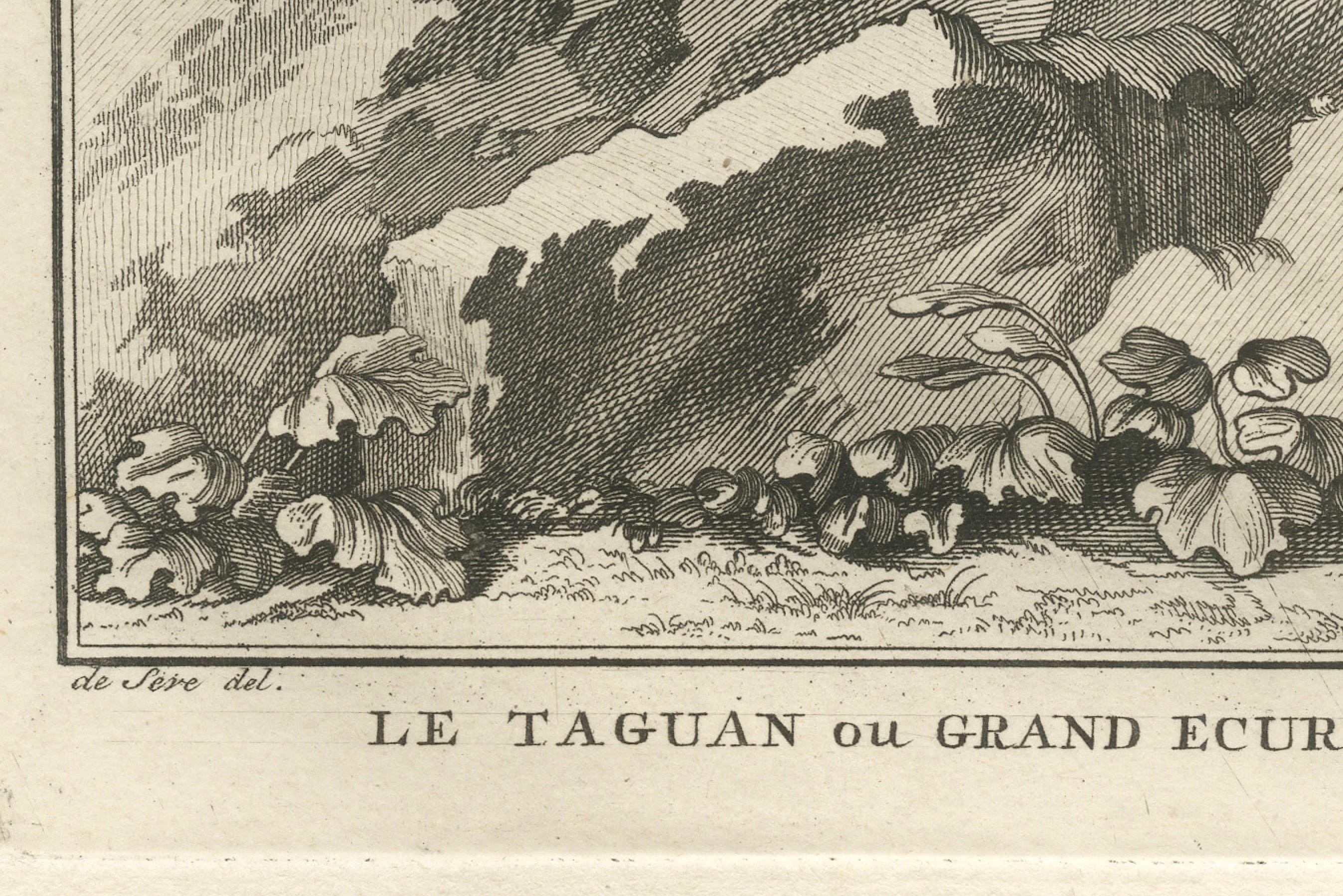
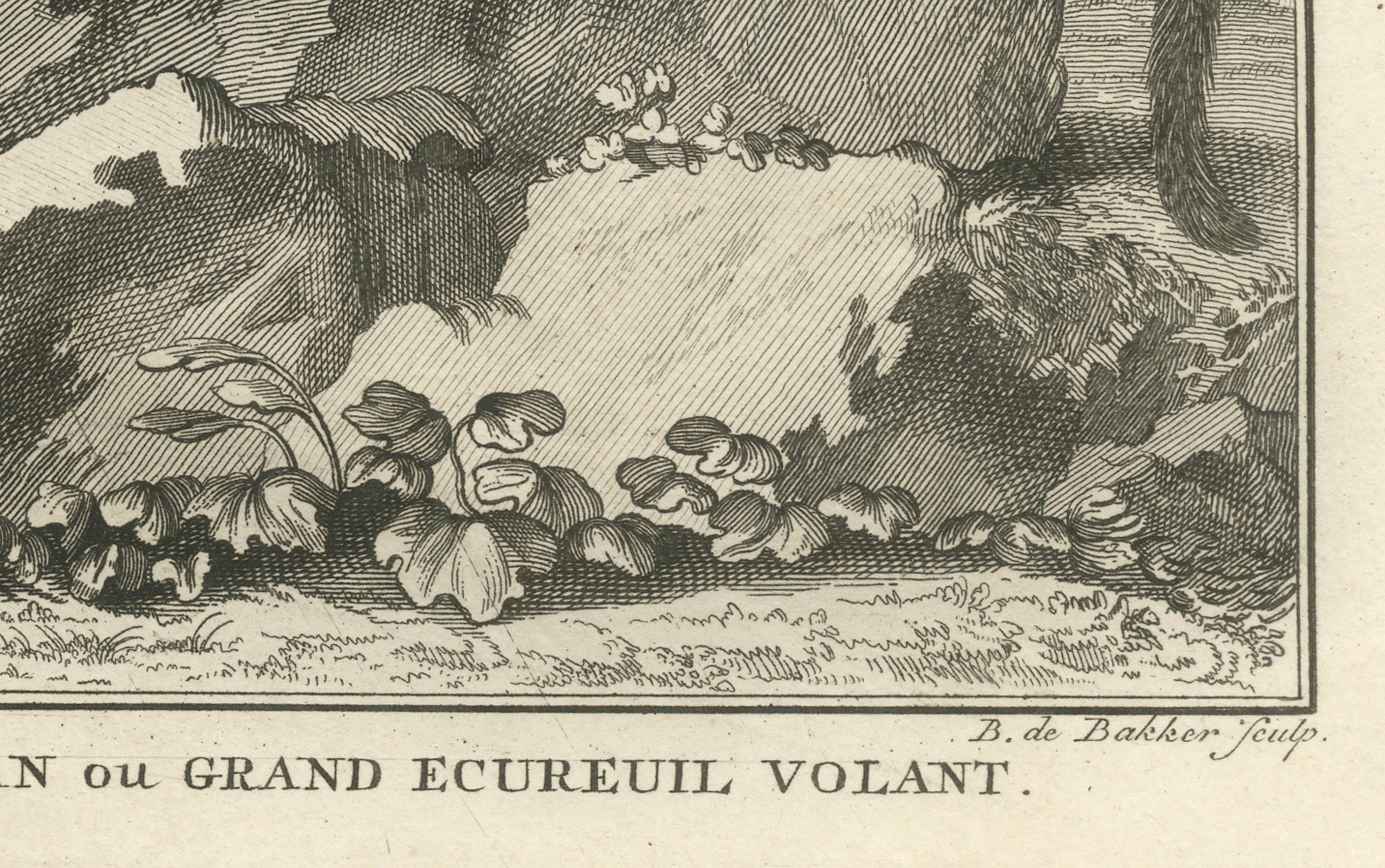
The inscriptions "De Sere del." and "B. de Bakker Sculp." on the engraving indicate the artists involved in its creation:
1. **De Sere del.**: The term "del." is an abbreviation of the Latin word "delineavit," which means "drew." This suggests that the artist who created the original drawing or design of the engraving is De Sere.
2. **B. de Bakker Sculp.**: The term "sculp." is an abbreviation of the Latin word "sculpsit," which means "engraved." This indicates that B. de Bakker is the engraver who carved the design into the printing plate.
In summary, De Sere created the original drawing, and B. de Bakker engraved it onto the plate used for printing.