About this sheet
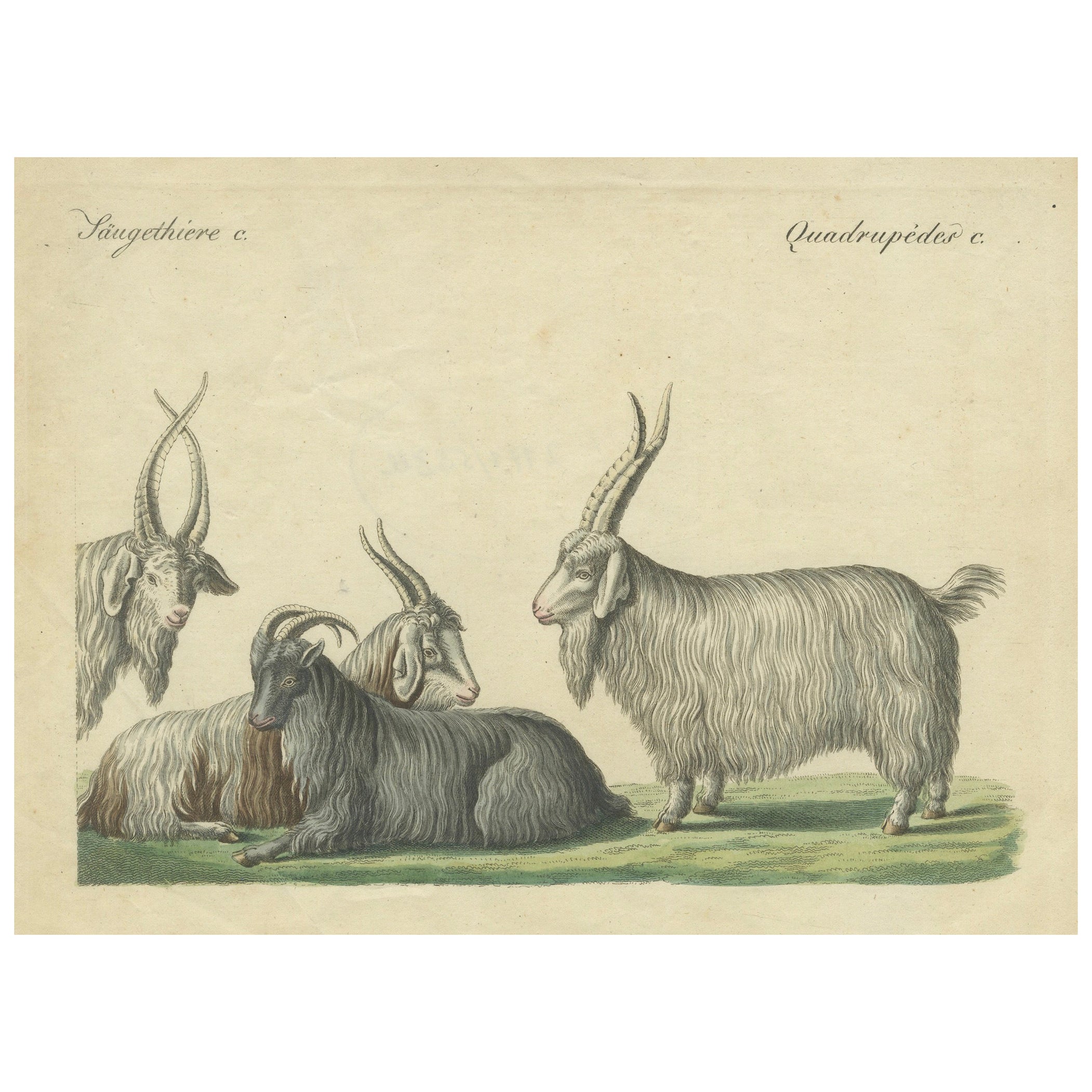
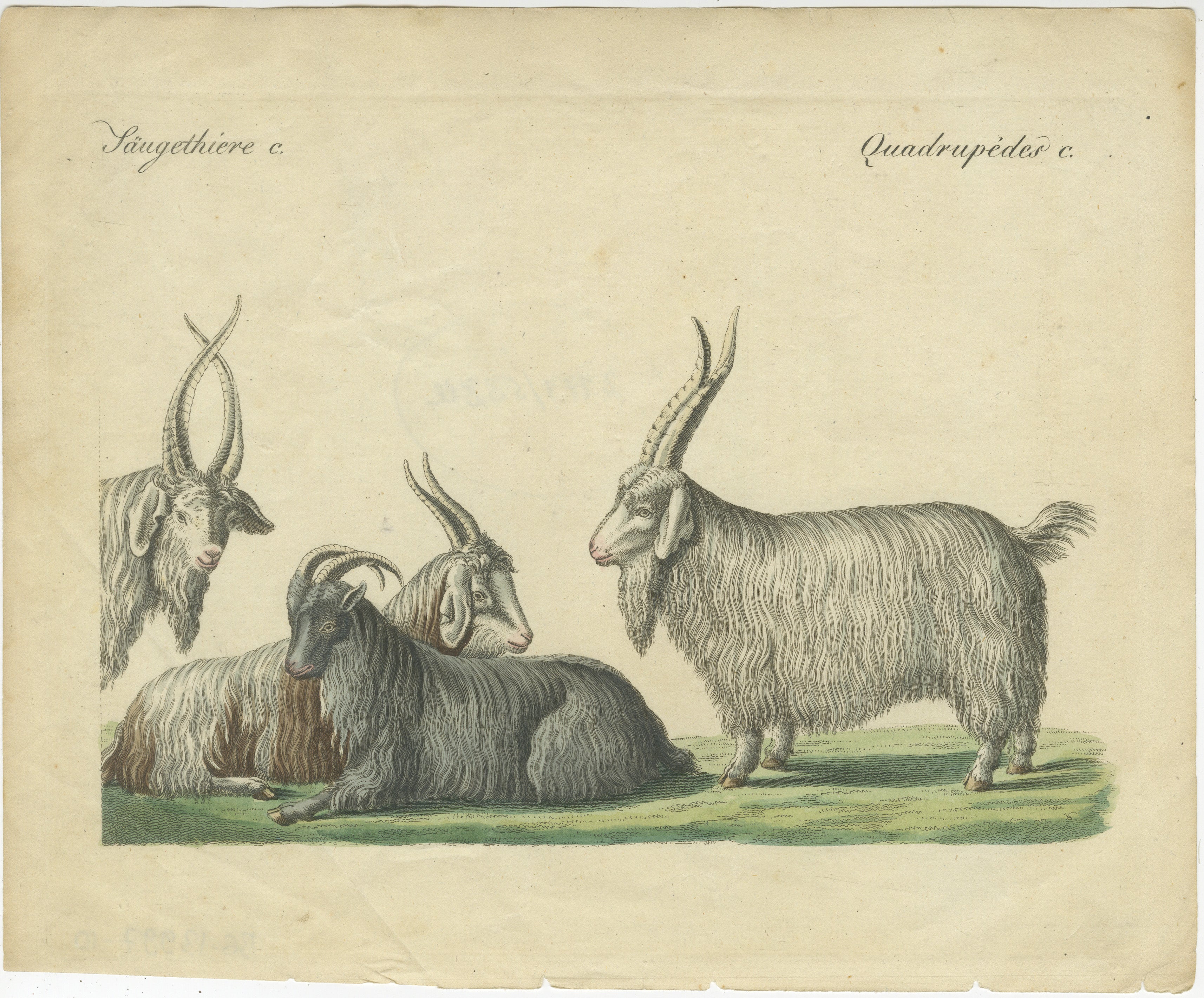
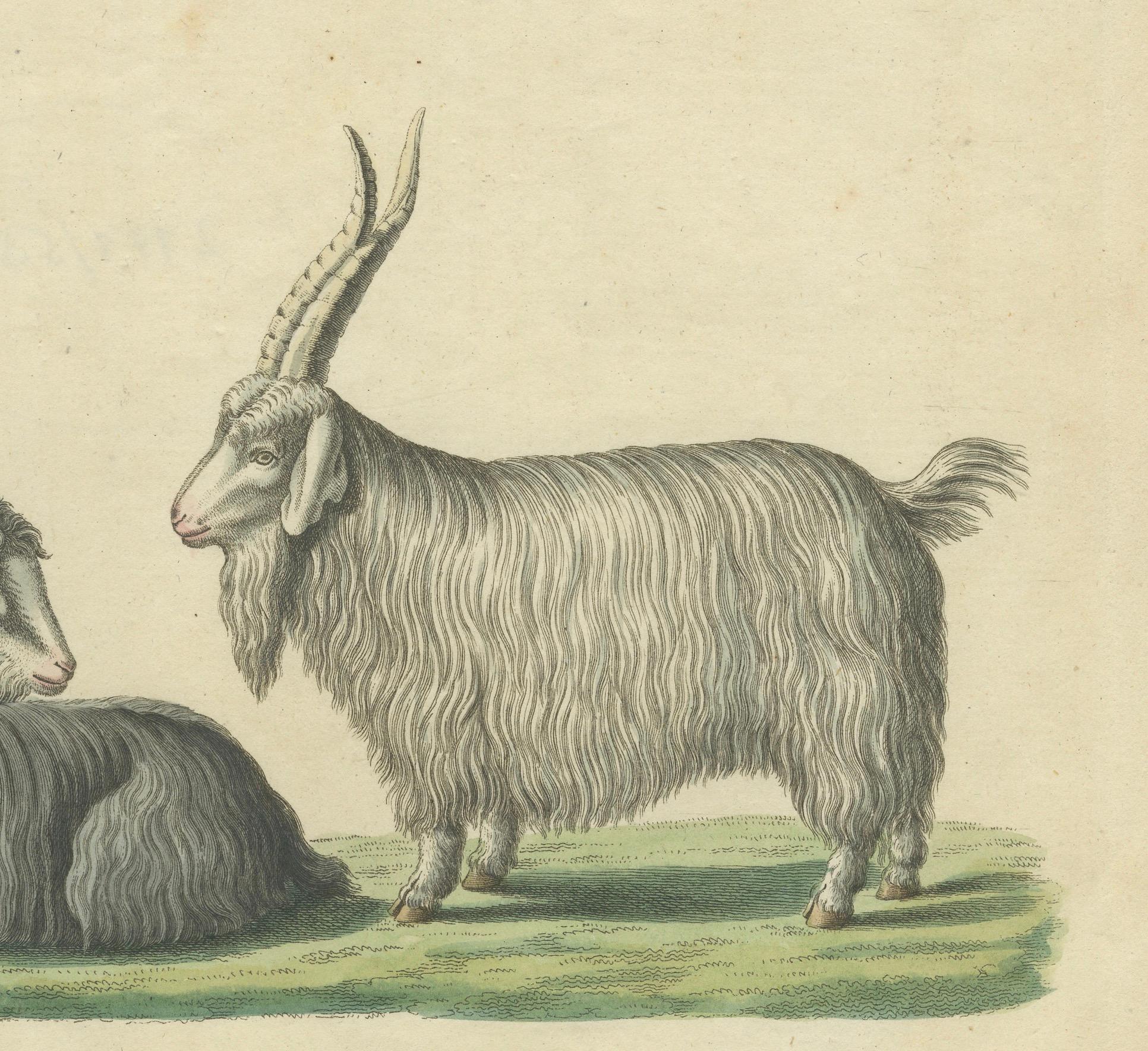
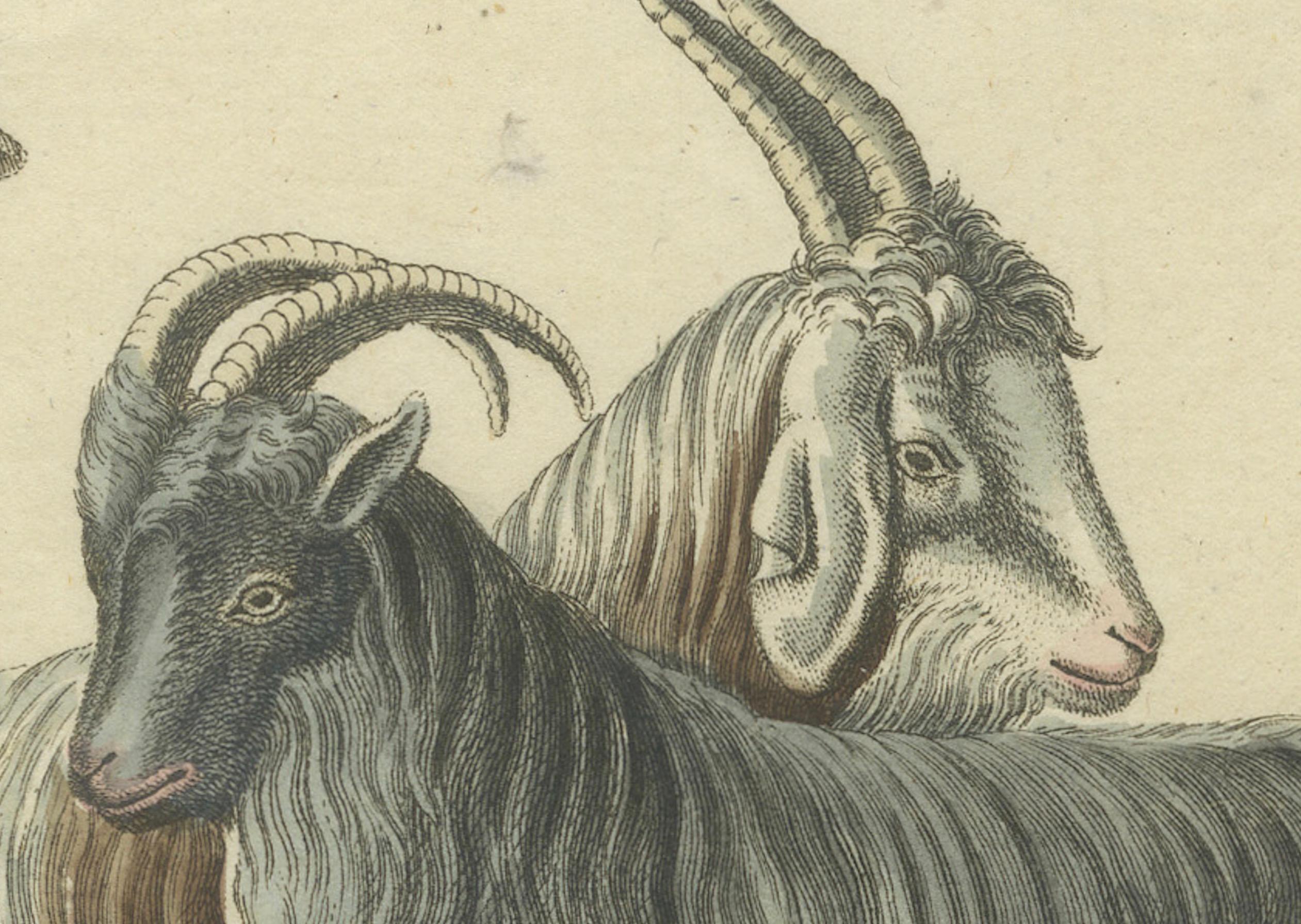
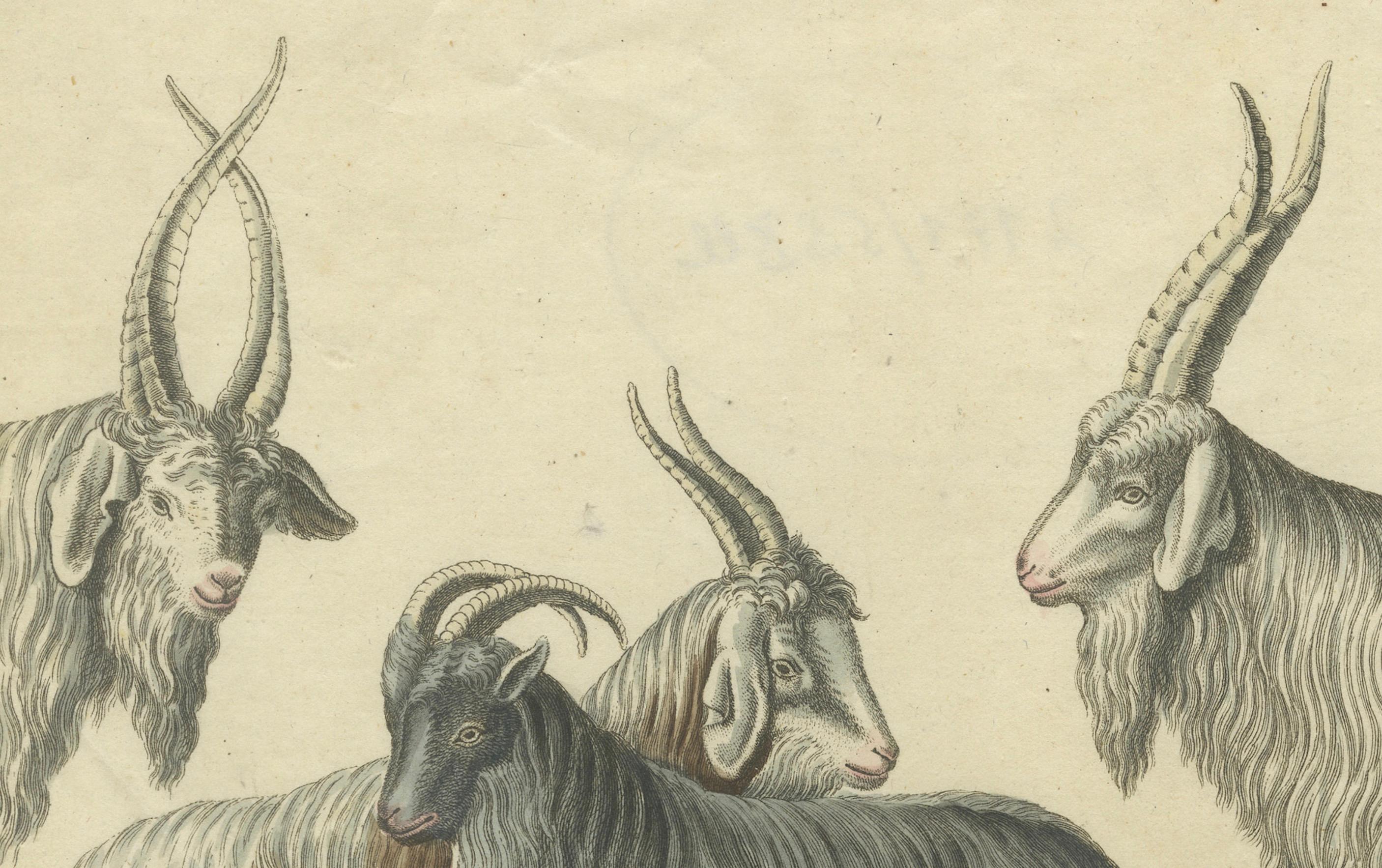
Handcolored Copperplate Engraving of Cashmere Goats and Sheep, Friedrich Johann Bertuch, 1823
This is an exquisite handcolored copperplate engraving depicting a group of Cashmere goats and sheep, renowned for their luxurious long fur. The illustration is sourced from Friedrich Johann Bertuch’s *Bilderbuch für Kinder* (Picture Book for Children), first published in Weimar in 1823. This educational and beautifully illustrated series was a cornerstone of 19th-century natural history and children’s literature, combining scientific accuracy with artistic elegance.
The engraving is in excellent condition for its age, with vibrant coloring and well-preserved detail, making it a valuable piece for collectors of zoological art, antique prints, or historical animal illustrations. This rare engraving would also make an elegant addition to home or office decor.
Cashmere goats, as depicted in the engraving, are native to regions in Asia, particularly the high plateaus and mountainous areas. They are traditionally found in the following regions:
1. Himalayas – Including parts of northern India (Ladakh and Kashmir), Nepal, and Bhutan, where they graze at high altitudes.
2. Central Asia – Particularly in Mongolia, Tibet, and the Xinjiang region of China.
3. Iran and Afghanistan – These regions have historically been important for Cashmere goat herding, especially for producing fine cashmere wool.
4. Turkestan and Kyrgyzstan – Areas with pastoral traditions involving these goats.
These goats are specifically bred for their fine, soft undercoat, known as cashmere, which is highly prized in textile production. They thrive in cold, arid climates due to their thick fur, which provides excellent insulation. Today, Cashmere goats are also bred in other parts of the world, including Australia, New Zealand, and the United States, for their high-quality wool.
Keywords
Antique engraving, Cashmere goats, sheep illustration, Friedrich Johann Bertuch, Bilderbuch für Kinder, 1823 natural history print, handcolored copperplate, zoological art, 19th-century animal engraving, collectible artwork, Weimar publication, historical animal print, natural history engraving, farmhouse decor, rare prints for collectors, early 19th-century engraving.