About this sheet
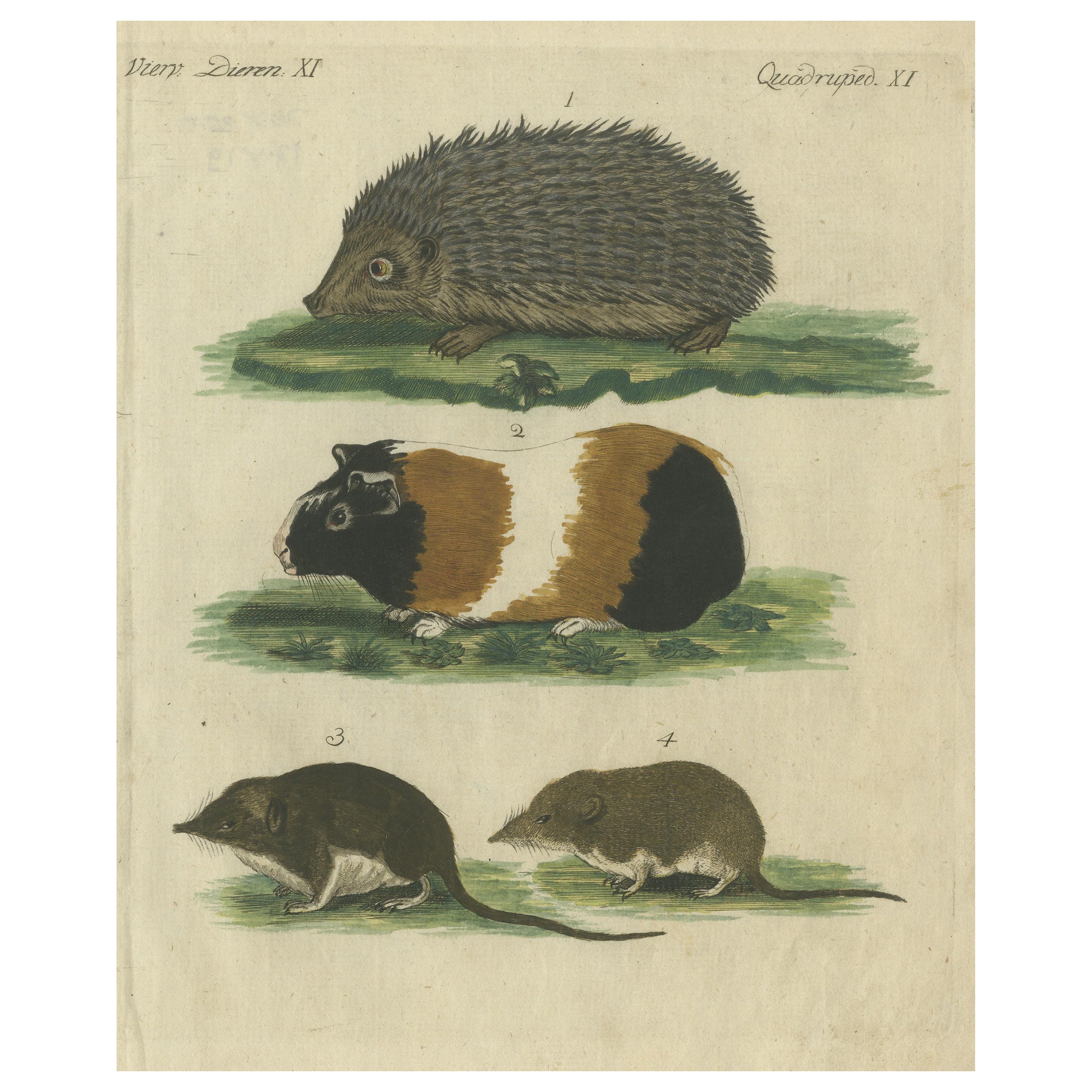
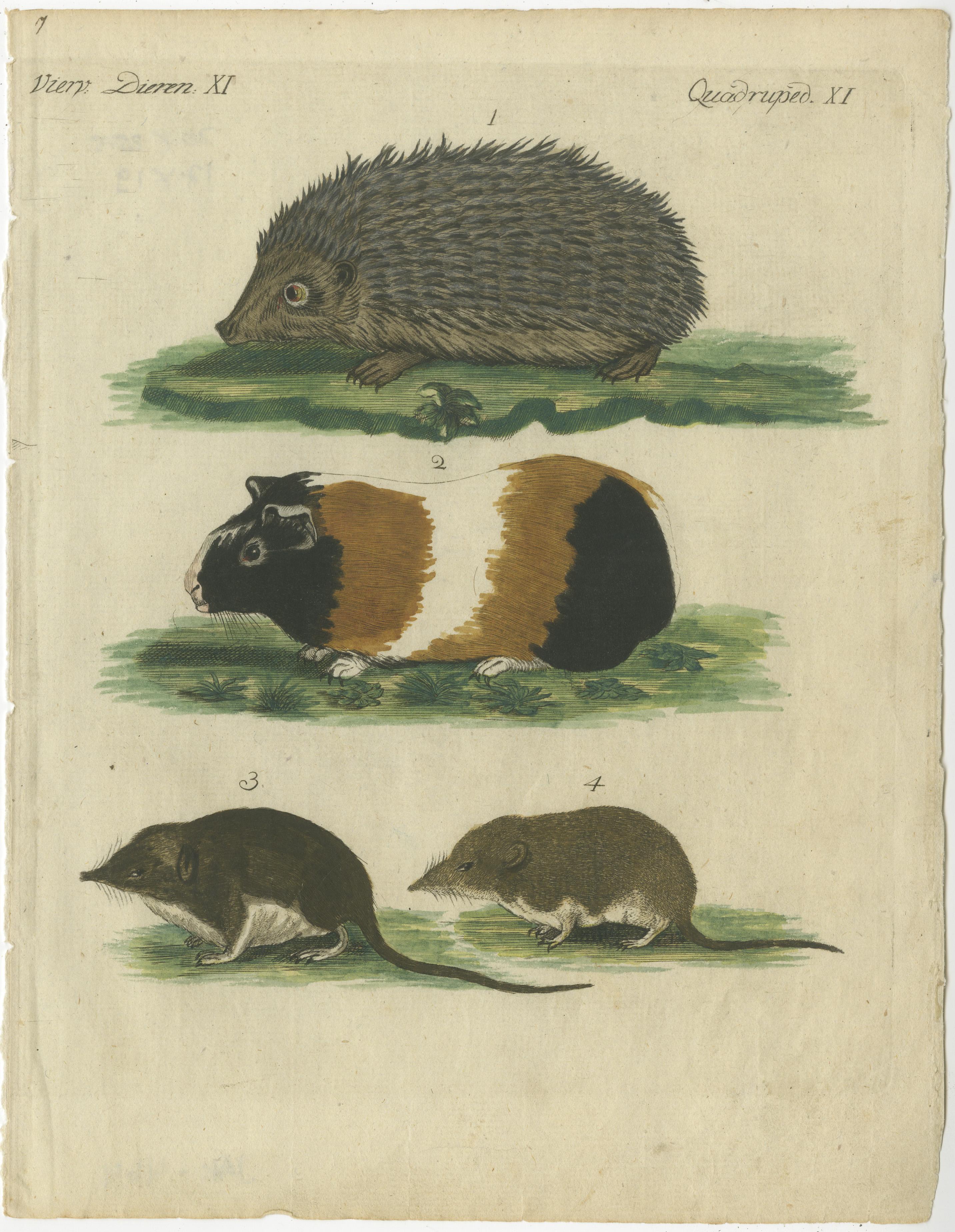
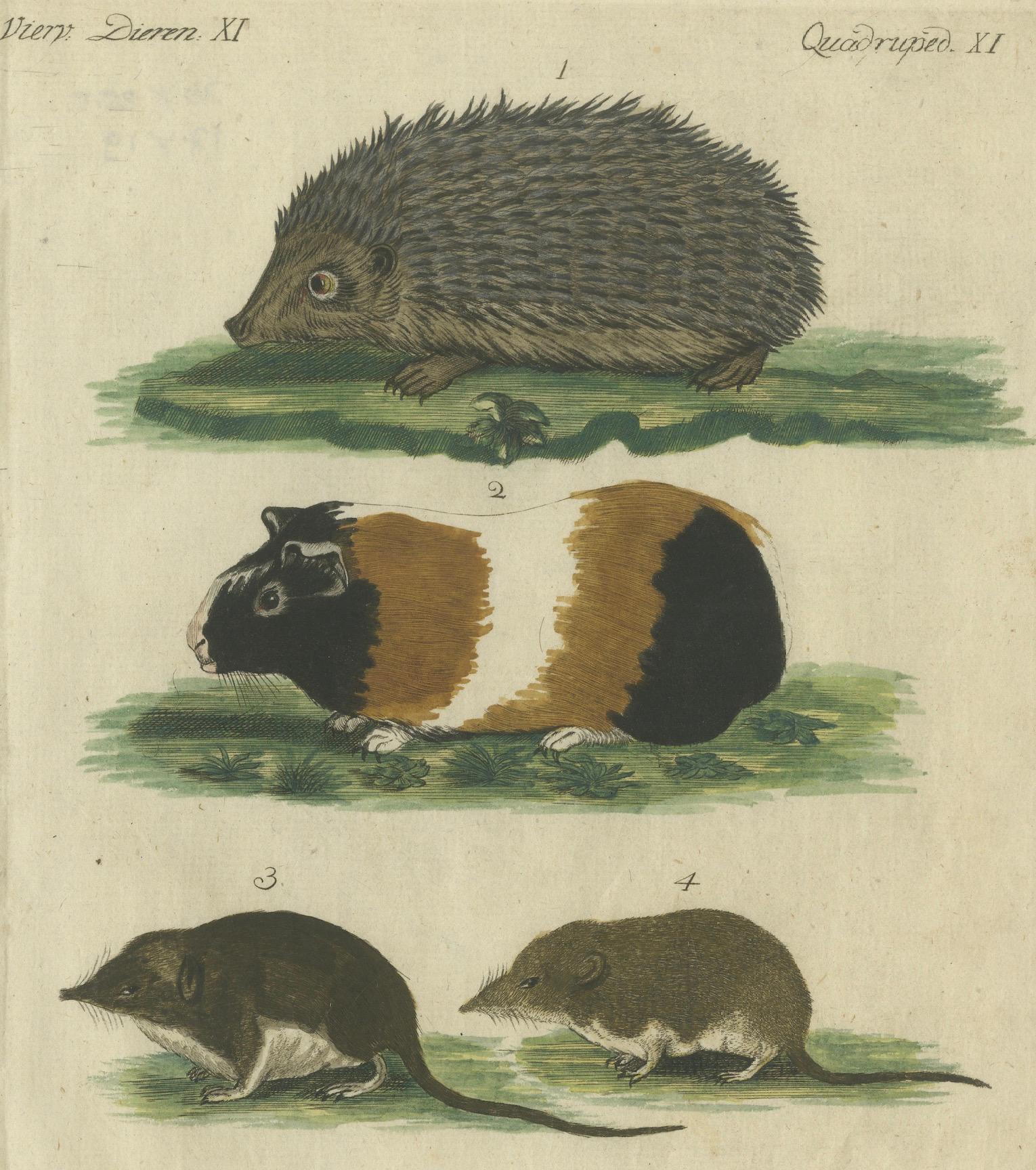
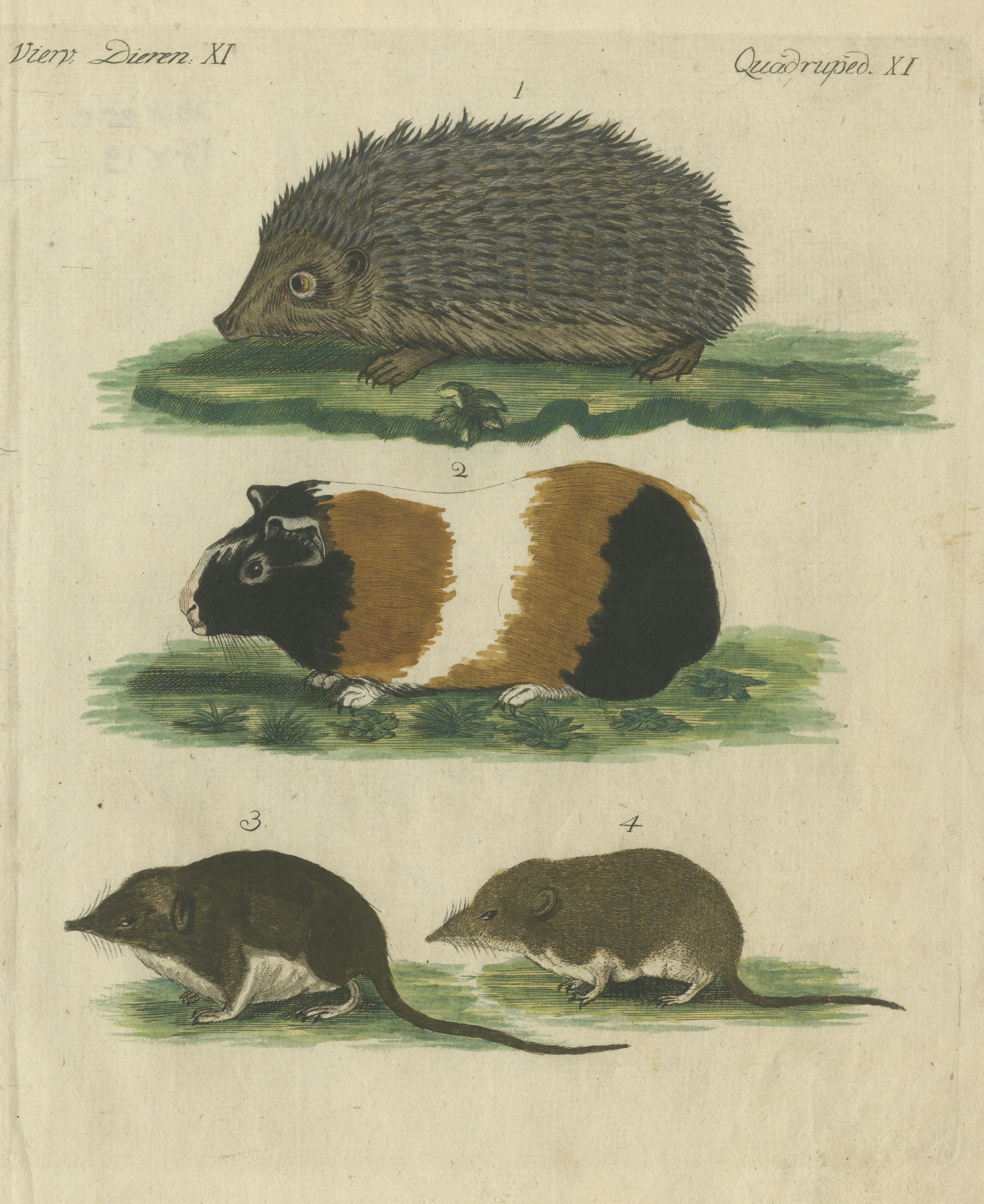
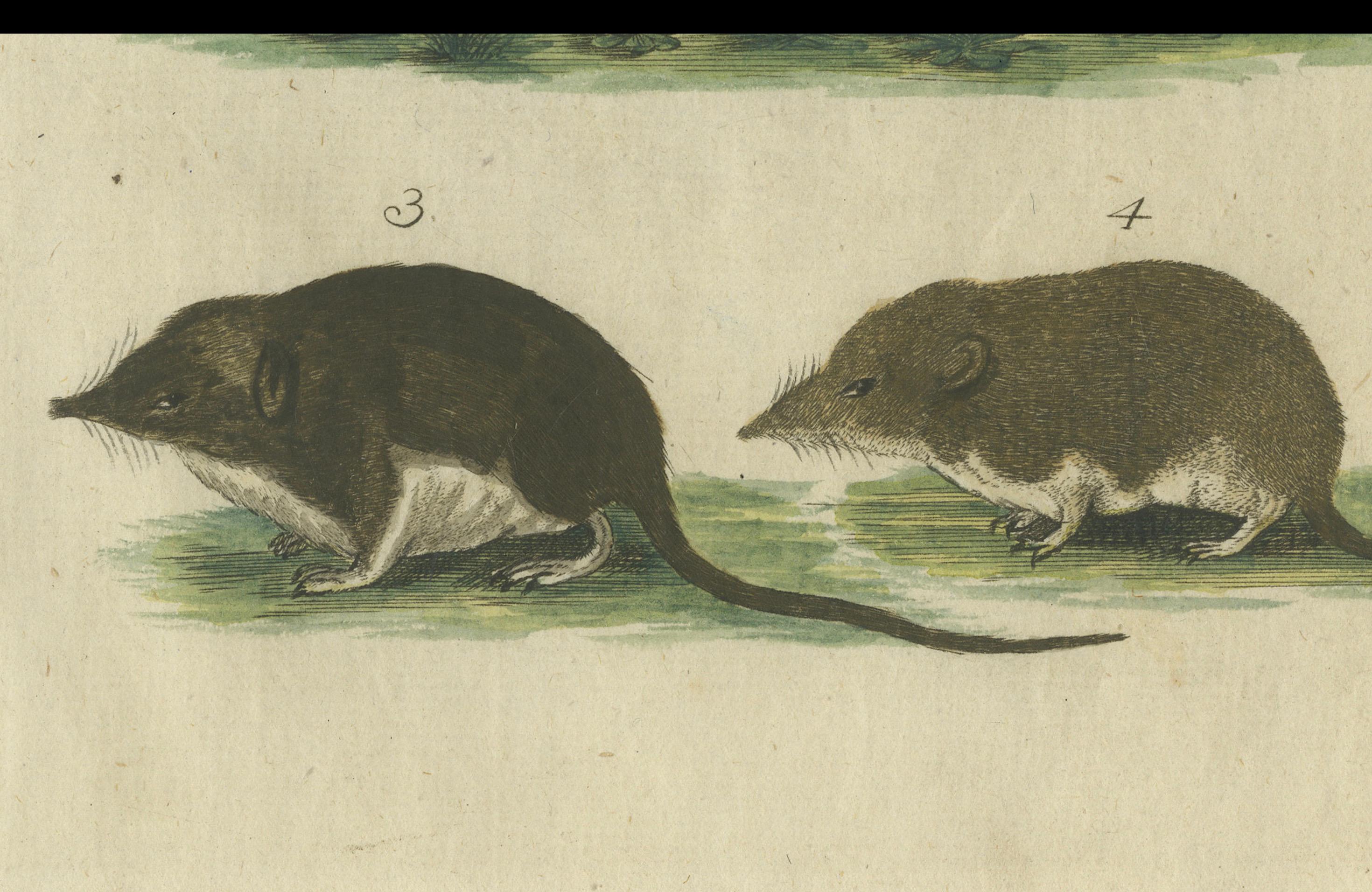
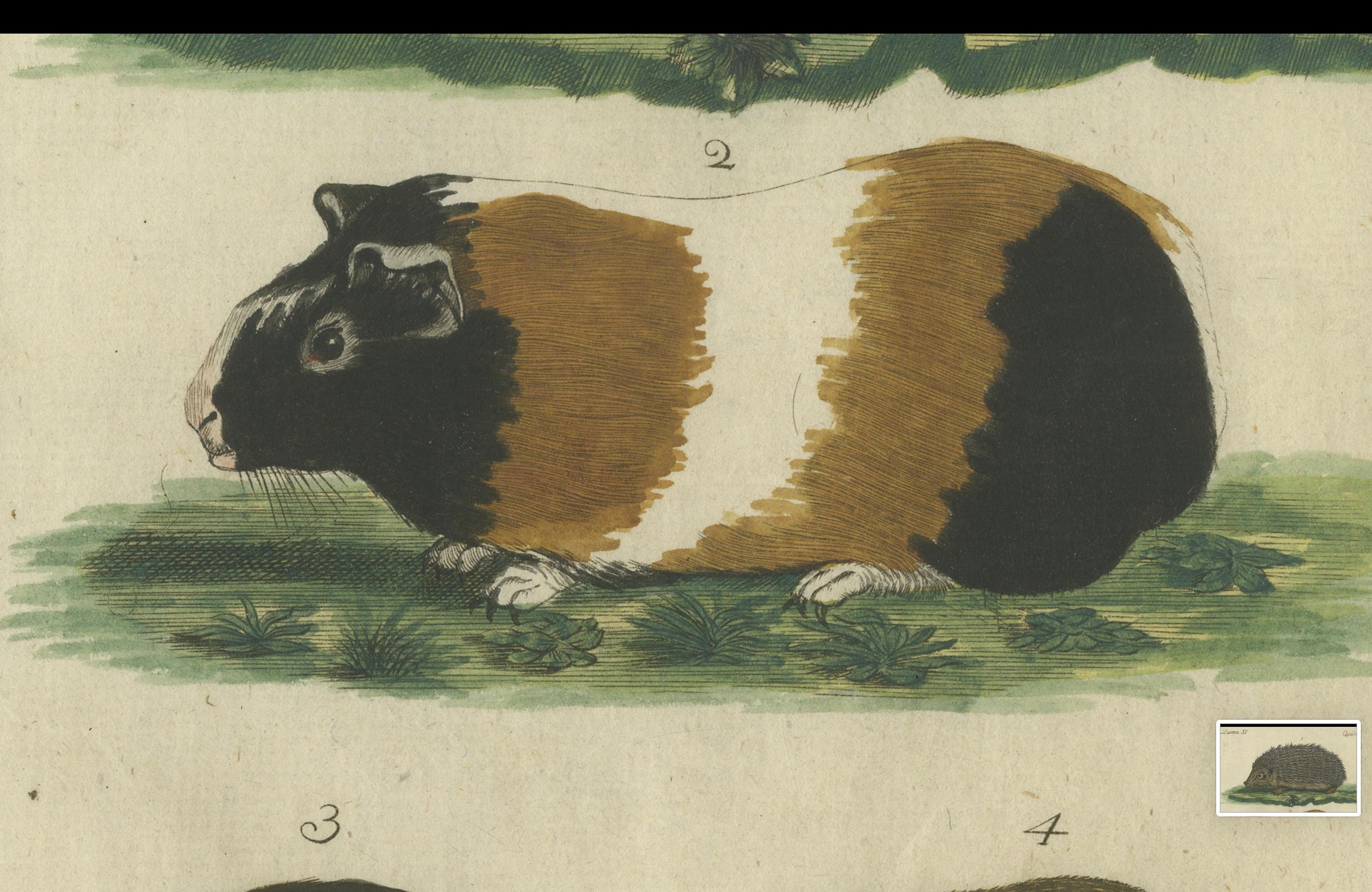
Original antique print of a hedgehog, guinea pig (?) and two mice species. This engraved print originates from a very rare unknown Dutch work. The plates are similar to the plates in the famous German work: ‘Bilderbuch fur Kinder' by F.J. Bertuch, published 1790-1830 in Weimar. This could be Dutch edition of this work (no references found), or a work that used the Bertuch plates. Published circa 1820.
The engraving you've provided features four animals, each depicted with a naturalistic style. The page is labeled "Viverr. Dieren XI" and "Quadrup. XI", suggesting these are part of the eleventh installment in a series of quadruped illustrations.
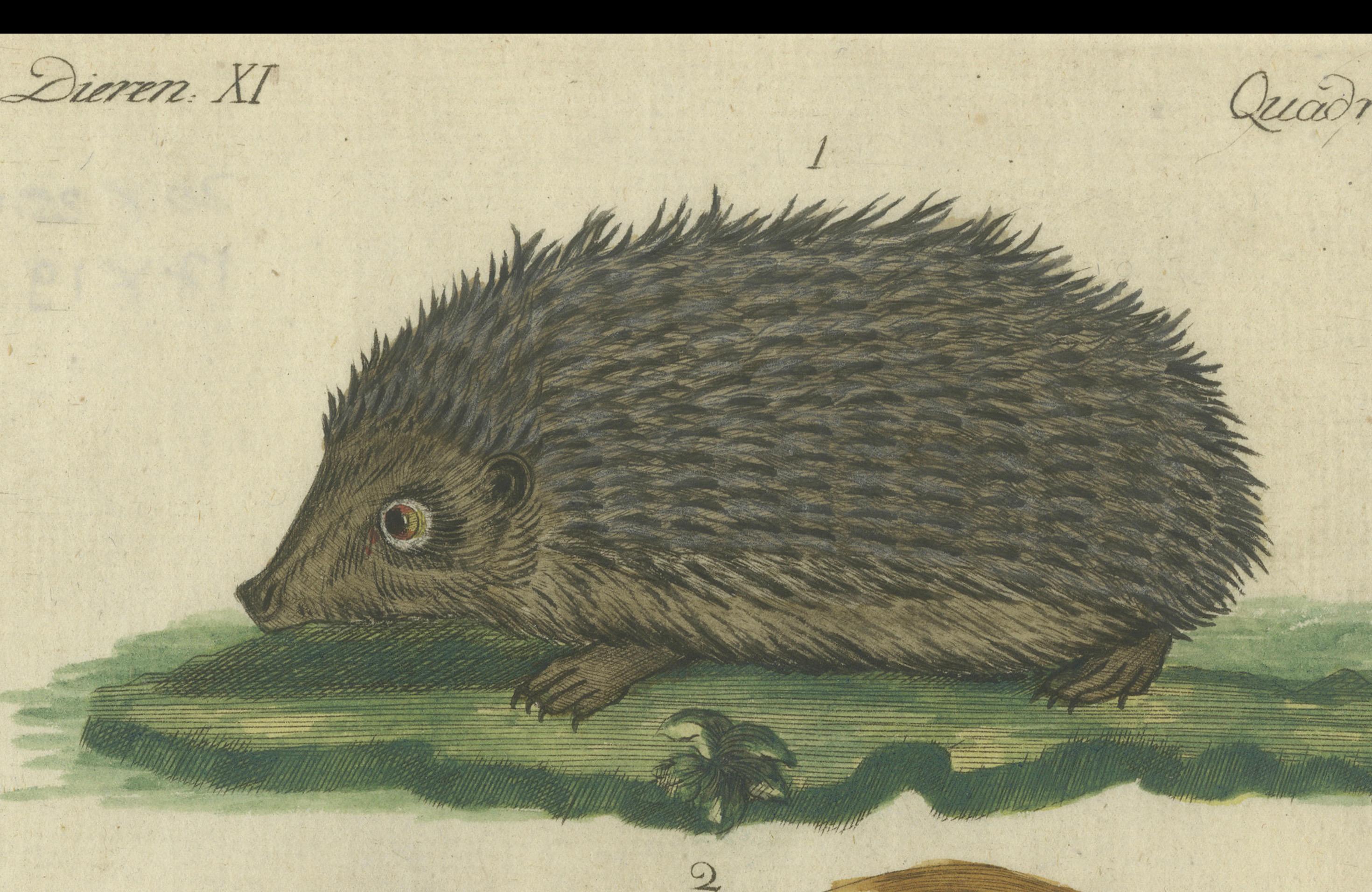
1. **Top (Number 1)**: This is an illustration of a hedgehog, identifiable by its spiny coat, short limbs, and the particular shape of its head and snout. Its posture, with the legs tucked under the body, is typical for a hedgehog trying to appear less conspicuous or when it's at rest.
2. **Middle (Number 2)**: Below the hedgehog is a guinea pig, recognizable by its short ears, stout body, and the pattern of its fur. Guinea pigs are commonly known for their varied fur colors, and this depiction showcases a white and brown bicolor pattern.
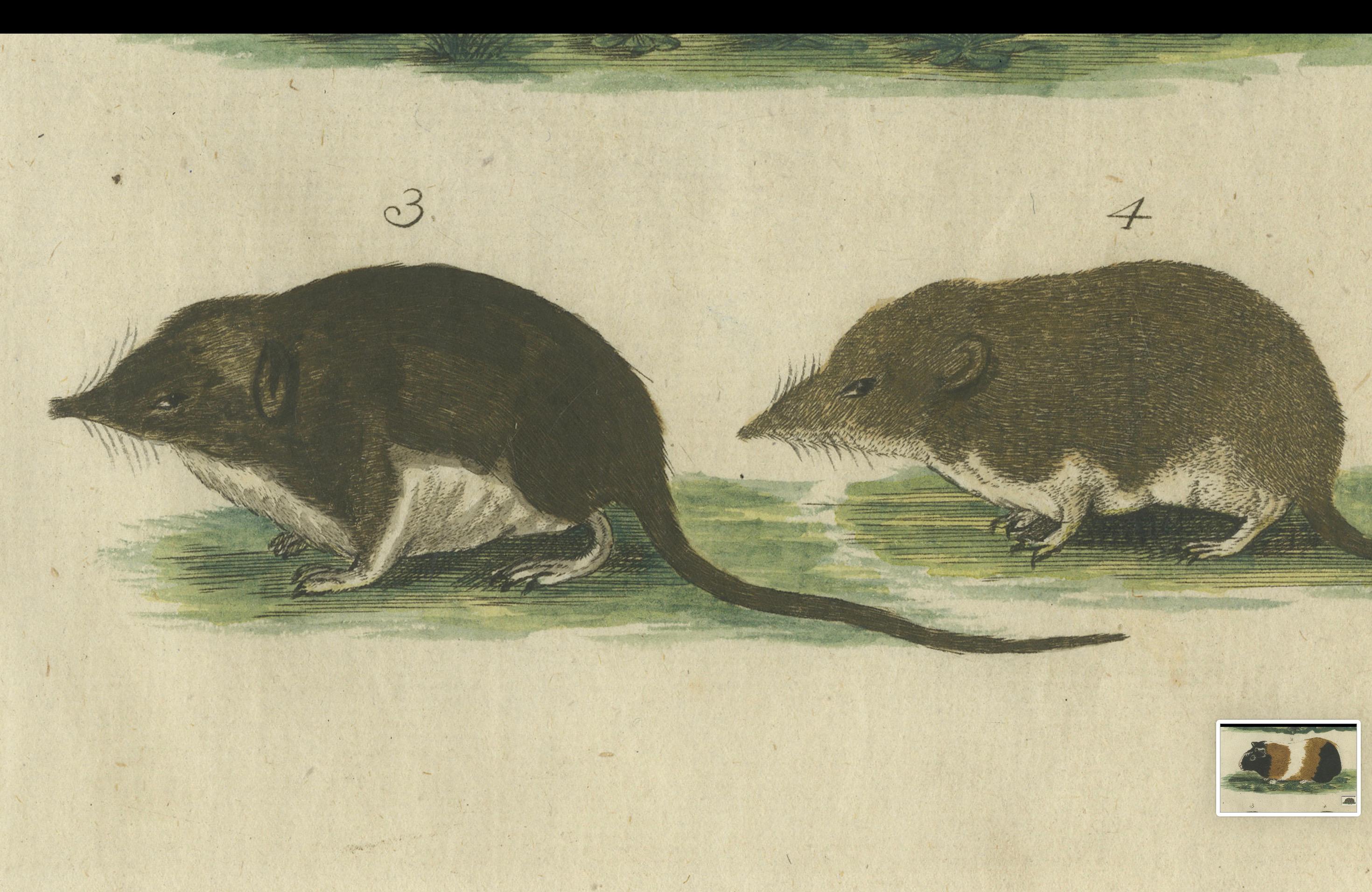
3. **Bottom Left (Number 3)**: This animal appears to be a shrew, as suggested by its pointed snout and long tail. Shrews are small mammals with dense fur, and the illustration captures the sharp features of its face, which are used for foraging insects.
4. **Bottom Right (Number 4)**: Next to the shrew is another small mammal, possibly a different species of shrew or a small rodent, with a similar body shape but a different coloration. It has a more uniform coat and is depicted in a side profile, highlighting its pointed snout and slender tail.
The illustrations are rendered with careful attention to detail, indicating the artists' intent to accurately represent the physical characteristics of each animal. Each creature is shown in a simple setting, with just enough context to suggest a natural environment without distracting from the animals themselves. These images would have been used for educational or scientific purposes, providing viewers with a visual reference to these species.