About this sheet
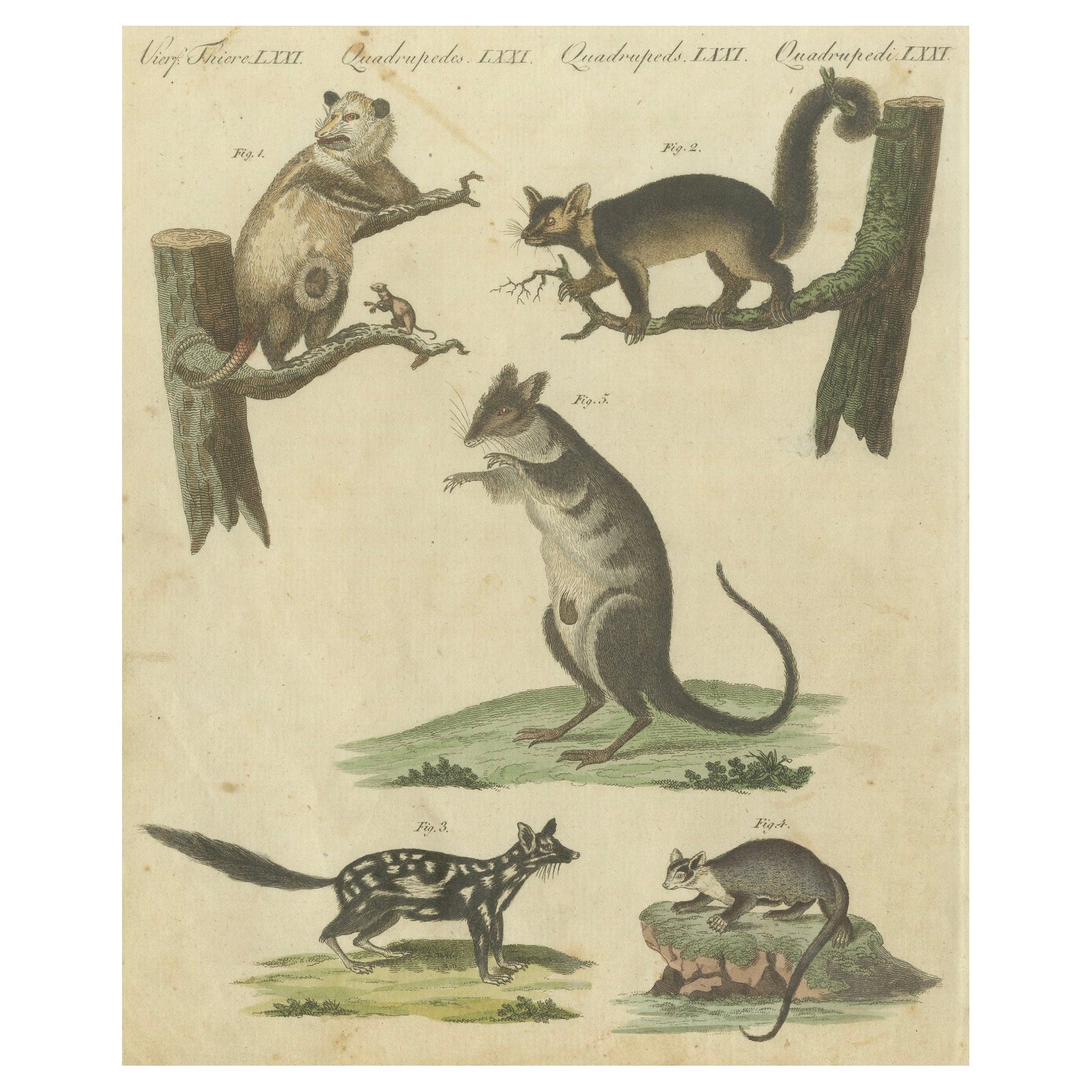
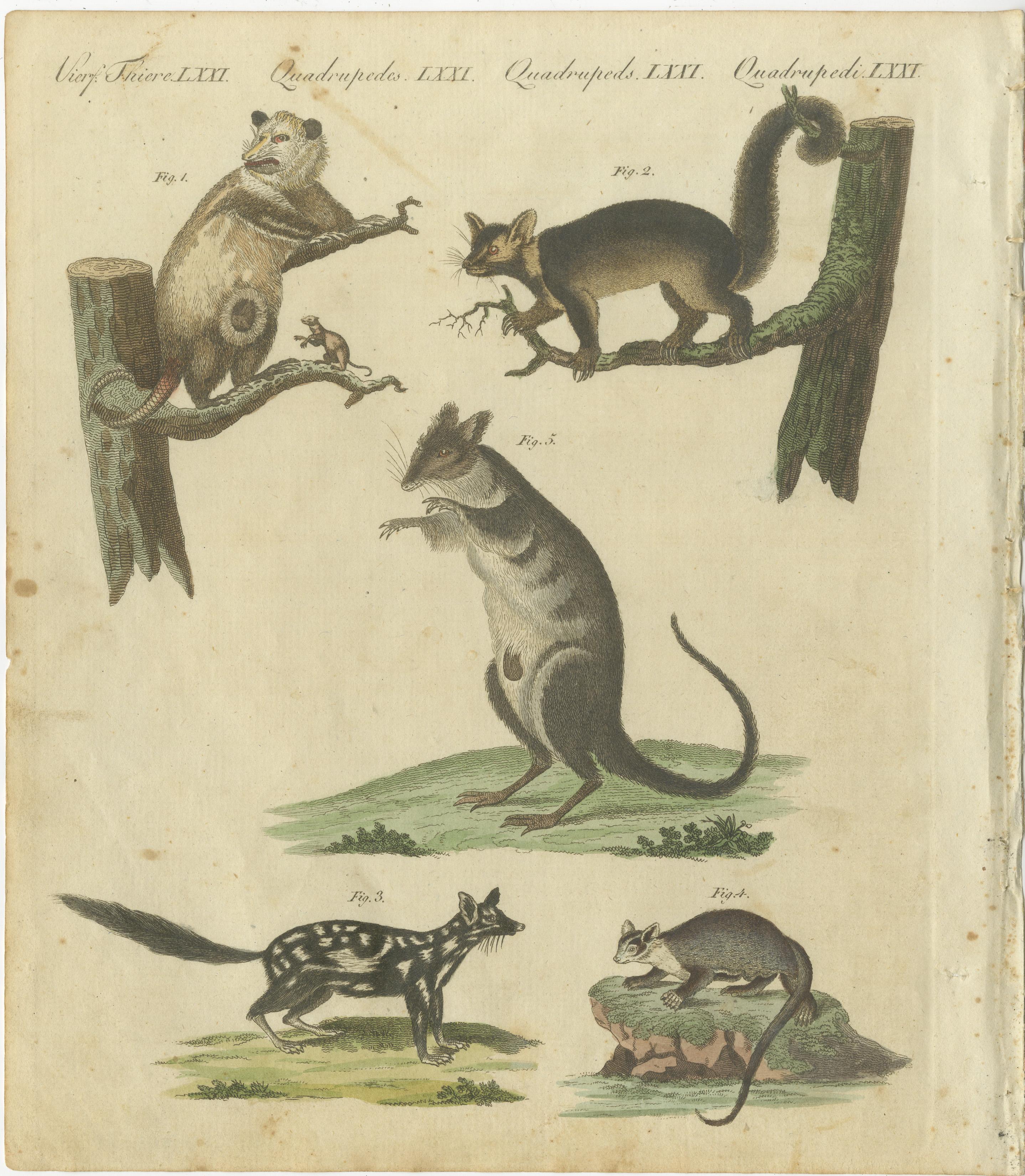
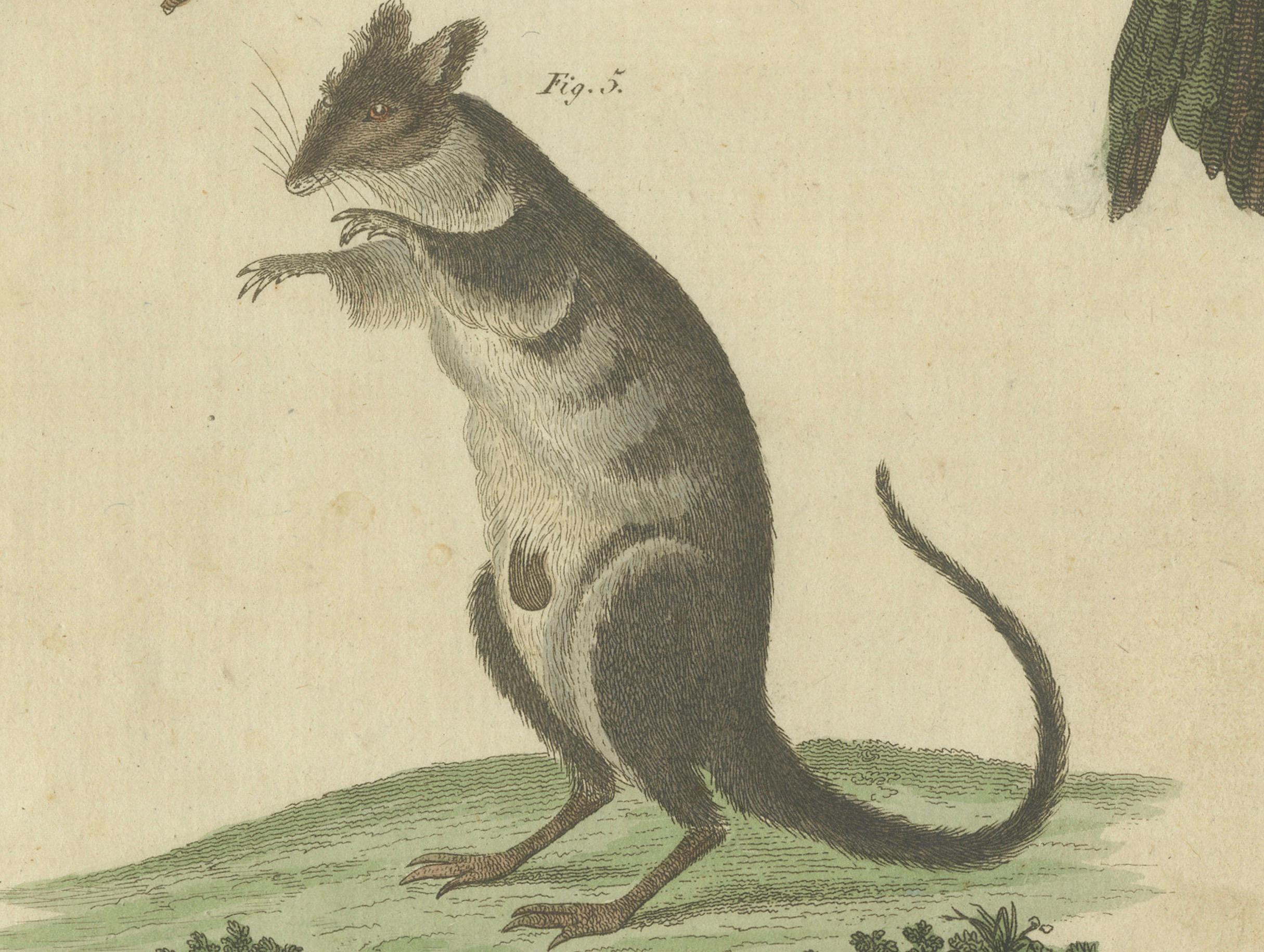
This hand-colored engraving, created in 1805, originates from Friedrich Justin Bertuch’s 'Forte-Feuille des Enfants' (Children's Portfolio), a renowned educational work aimed at introducing young readers to the wonders of the natural world. The print showcases five exotic quadrupeds, each rendered with remarkable attention to detail, capturing both their unique physical traits and natural habitats.
The animals, representing species from Australia and Asia, include a marsupial, a squirrel-like creature, and a civet-like figure, offering an intriguing glimpse into the diversity of wildlife as understood in the early 19th century. Bertuch’s 'Forte-Feuille des Enfants' was highly regarded for combining artistic excellence with scientific knowledge, making it an important reference in the study of zoological and botanical illustrations during the Enlightenment.
The engraving features several exotic animals, likely based on the natural history knowledge of the time. While these depictions are stylized and not fully accurate by modern zoological standards, they appear to represent the following:
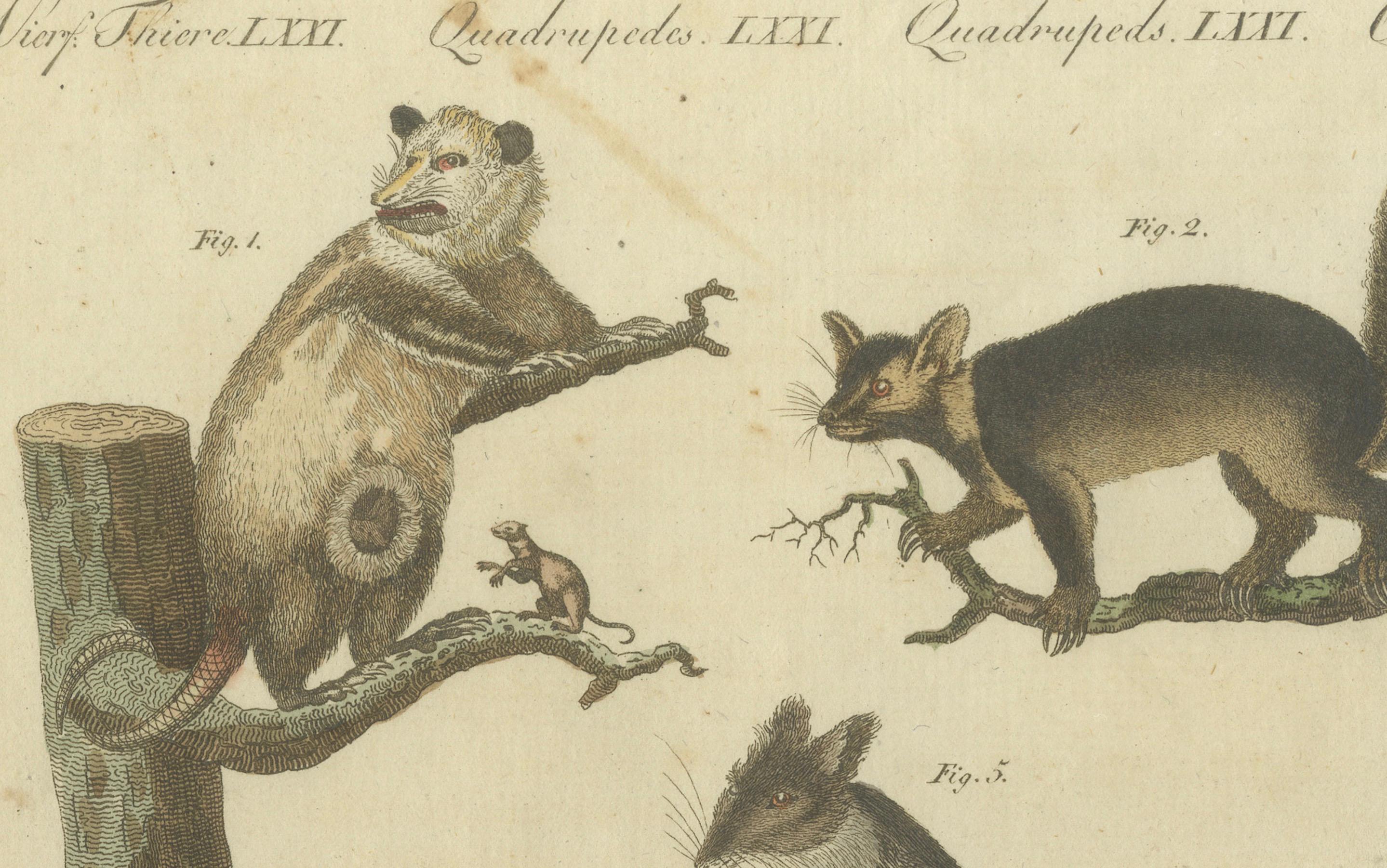
1. Fig. 1: A ringtail possum (likely a stylized representation of Pseudocheirus peregrinus), a marsupial known for its prehensile tail and arboreal lifestyle in Australia.
2. Fig. 2: A sugar glider (Petaurus breviceps), another small marsupial known for its gliding ability, native to Australia and nearby islands.
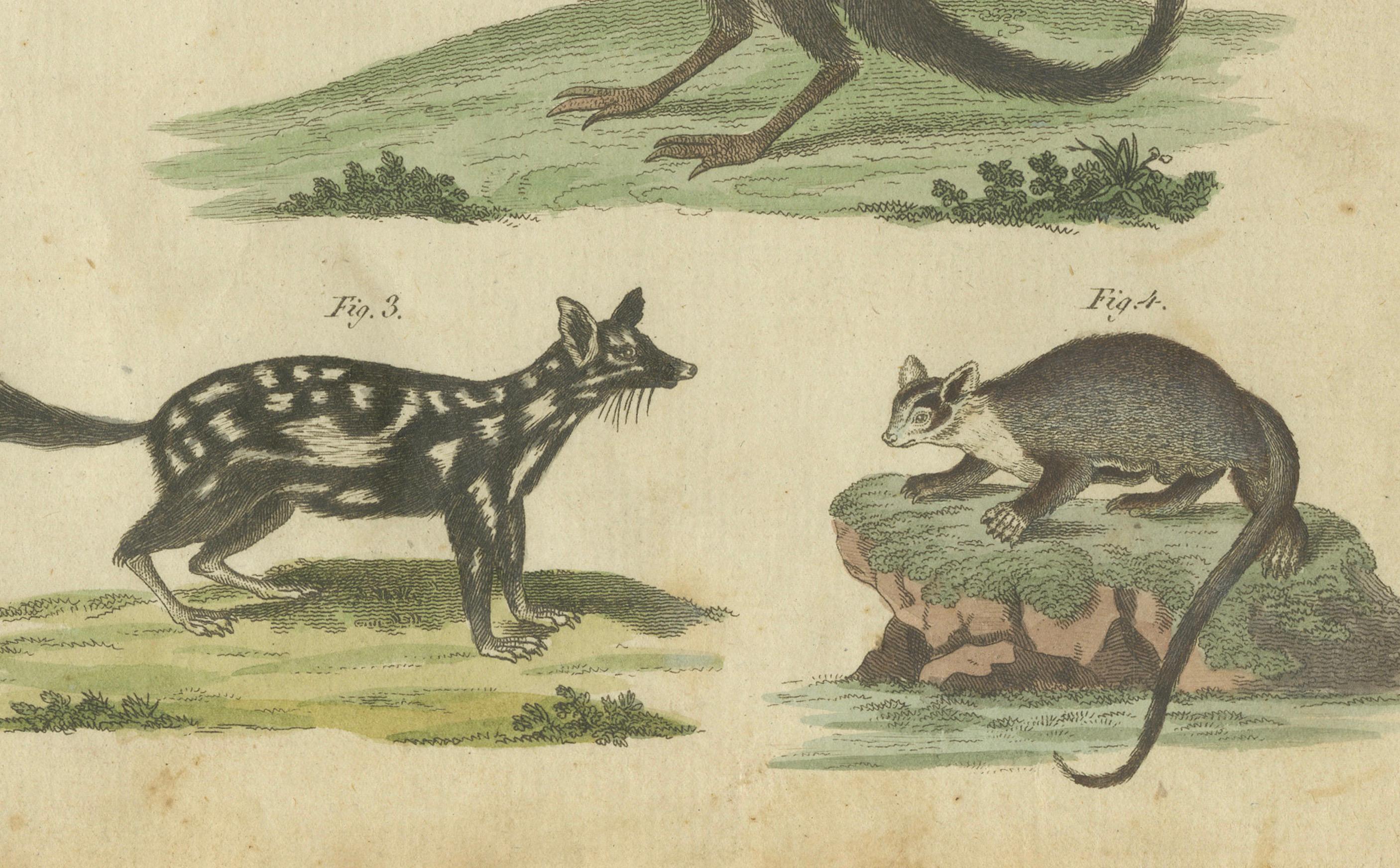
3. Fig. 3: A spotted civet (perhaps modeled after Viverra civettina or a related species), a carnivorous mammal found in Asia and Africa, known for its spotted fur.
4. Fig. 4: A striped possum (Dactylopsila trivirgata), a marsupial resembling a skunk in its black-and-white striped pattern, native to New Guinea and northern Australia.
5. Fig. 5: Likely a European dormouse (Glis glis) or another small rodent-like creature, identifiable by its bushy tail and small size.
These identifications align with the types of animals featured in zoological publications of the era, which often included exotic species from Asia and Oceania, reflecting the fascination with newly discovered wildlife during the Age of Exploration.
Collectors of antique natural history engravings will admire the vibrant hand-coloring, carefully preserved typography, and historical significance of this piece. The engraving is not only an exquisite example of early scientific illustration but also a window into how such works shaped public understanding of exotic species during a time of exploration and discovery.
Condition: Minor edge foxing and light age-related toning; the colors remain vibrant and visually striking.