About this sheet
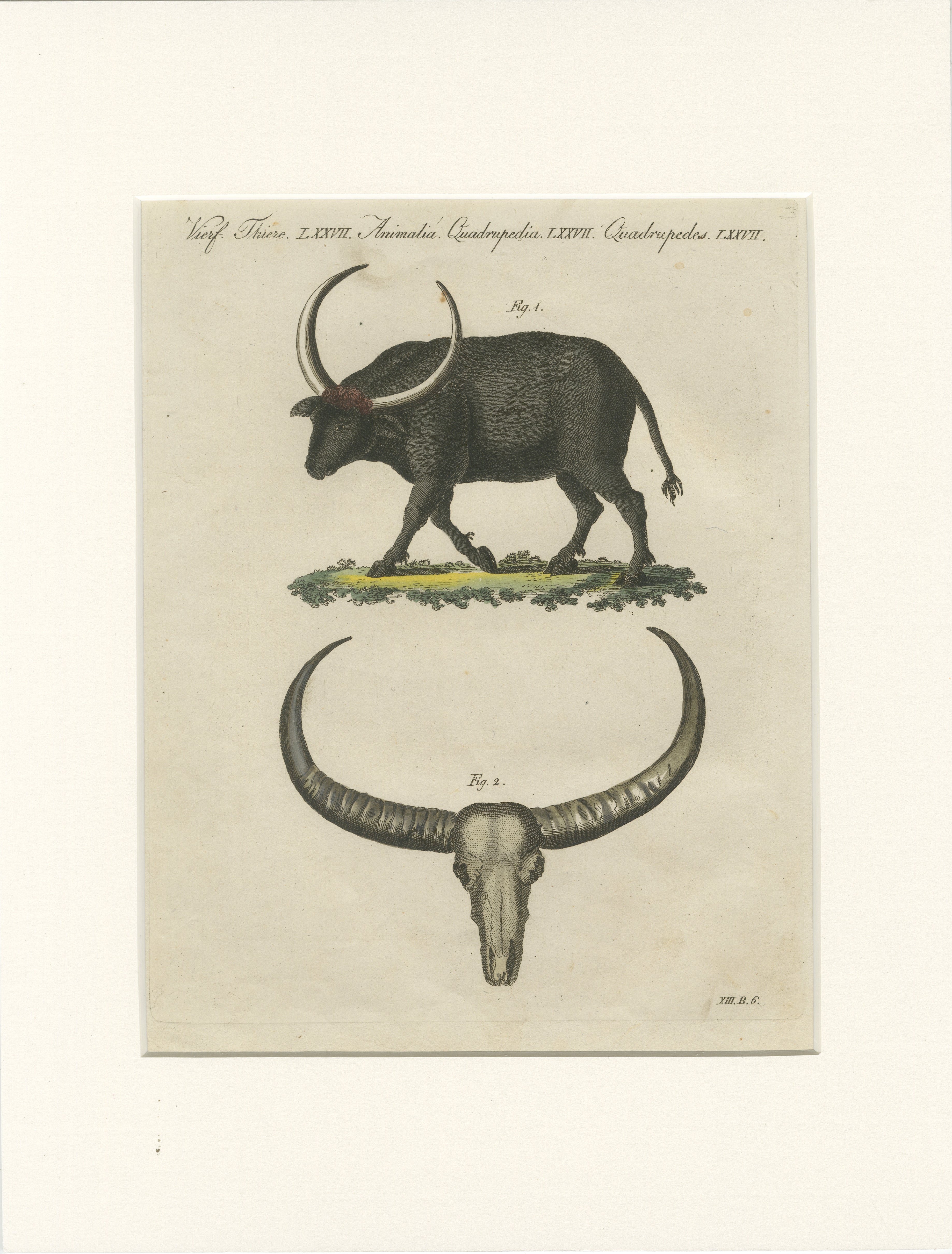
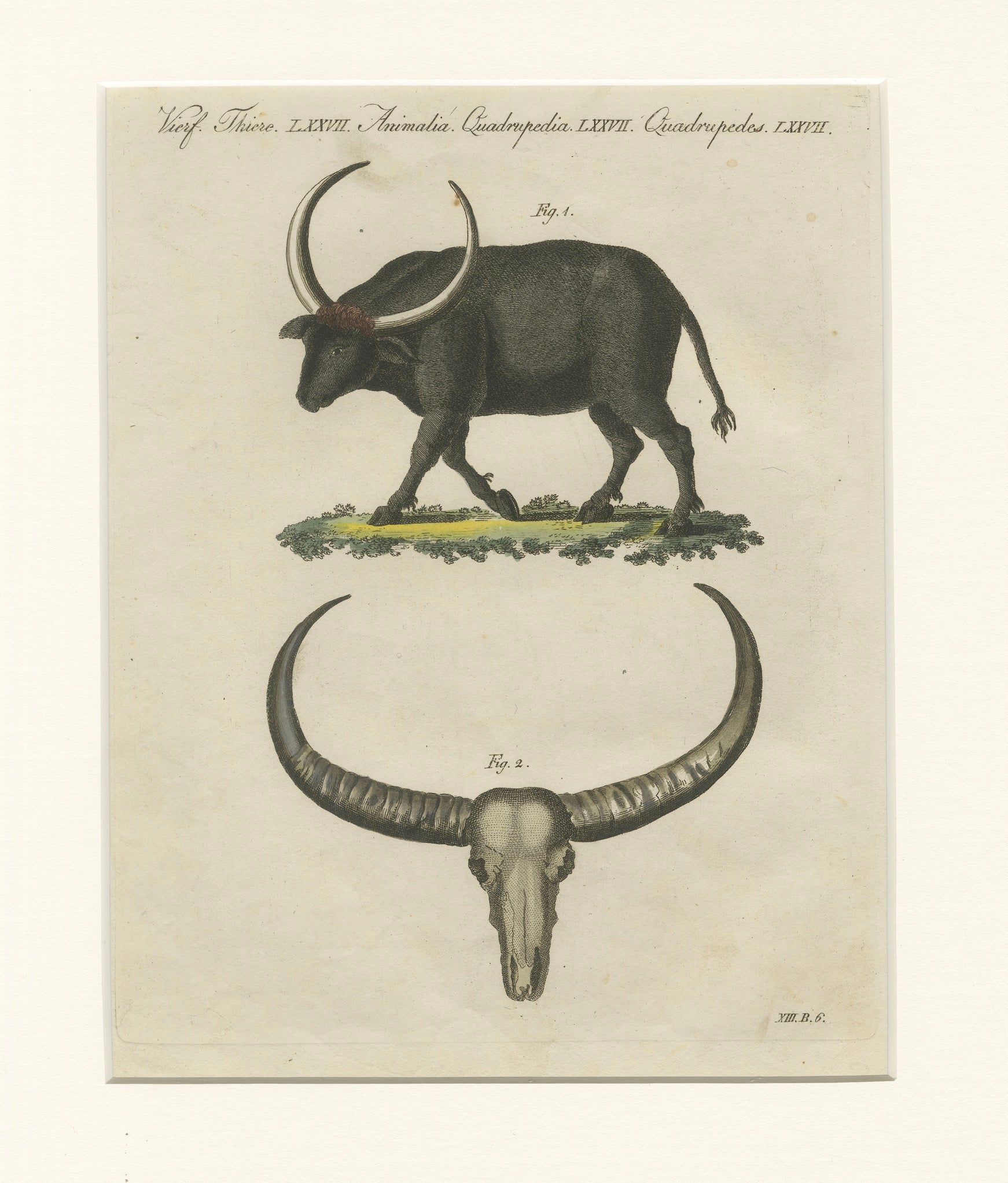
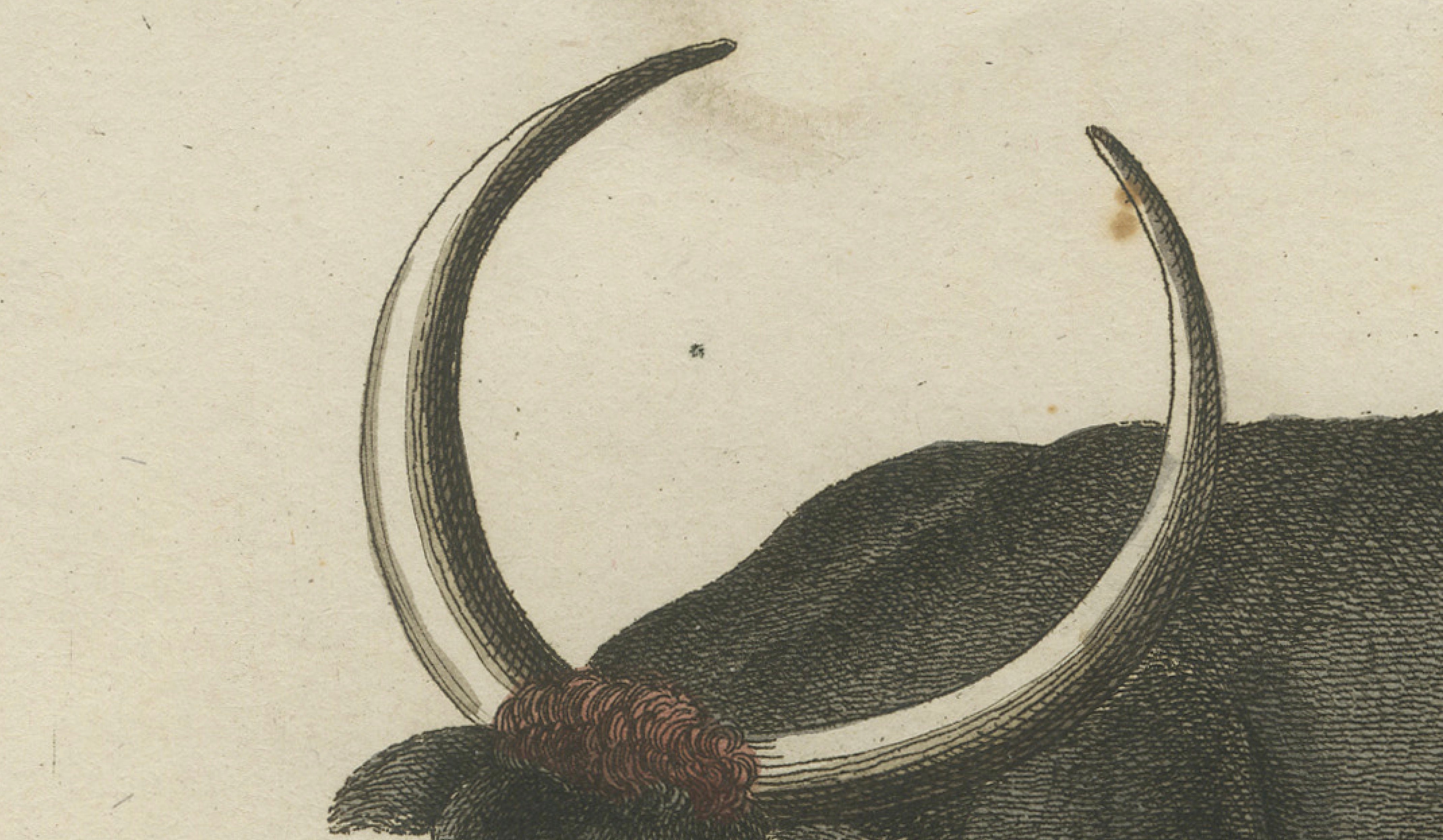
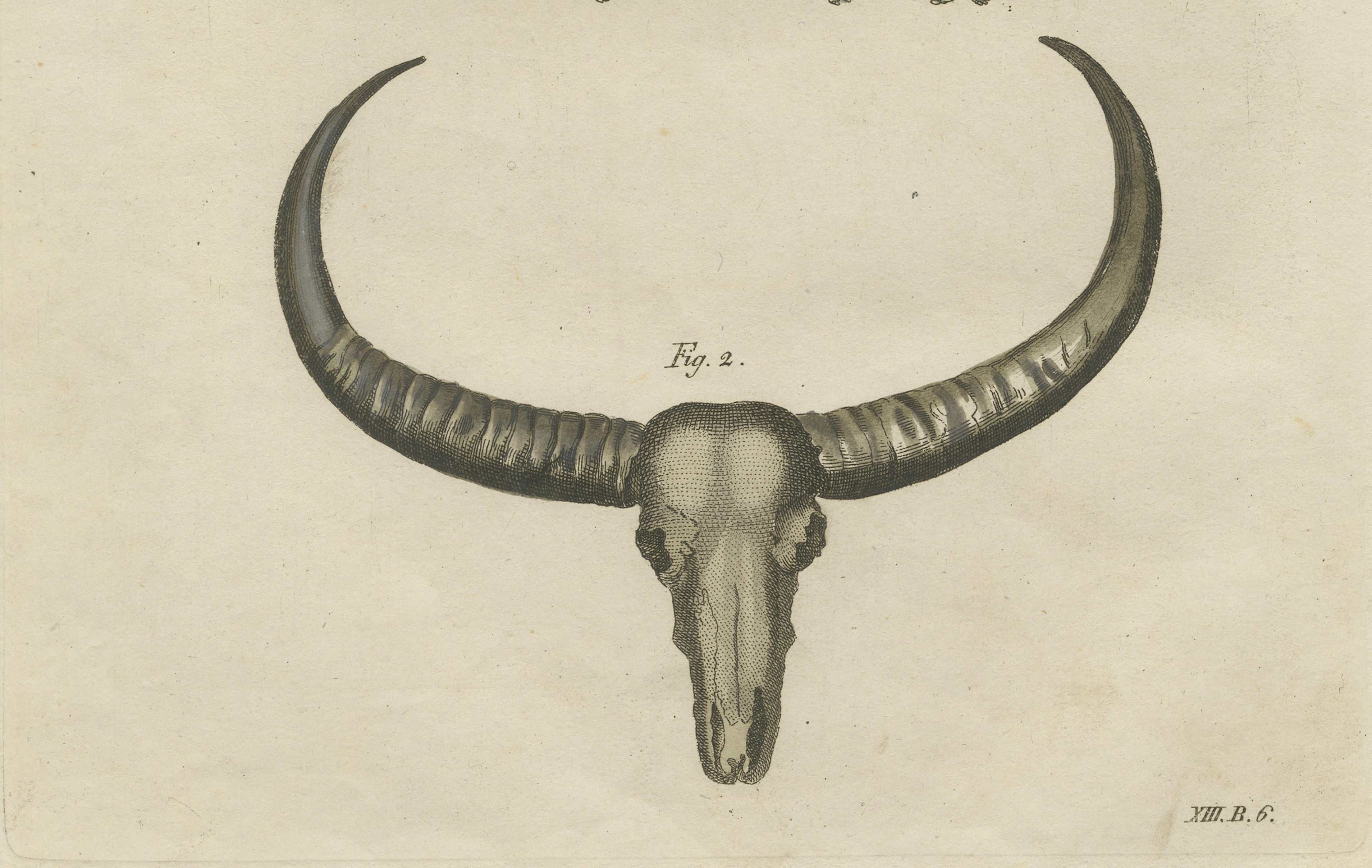
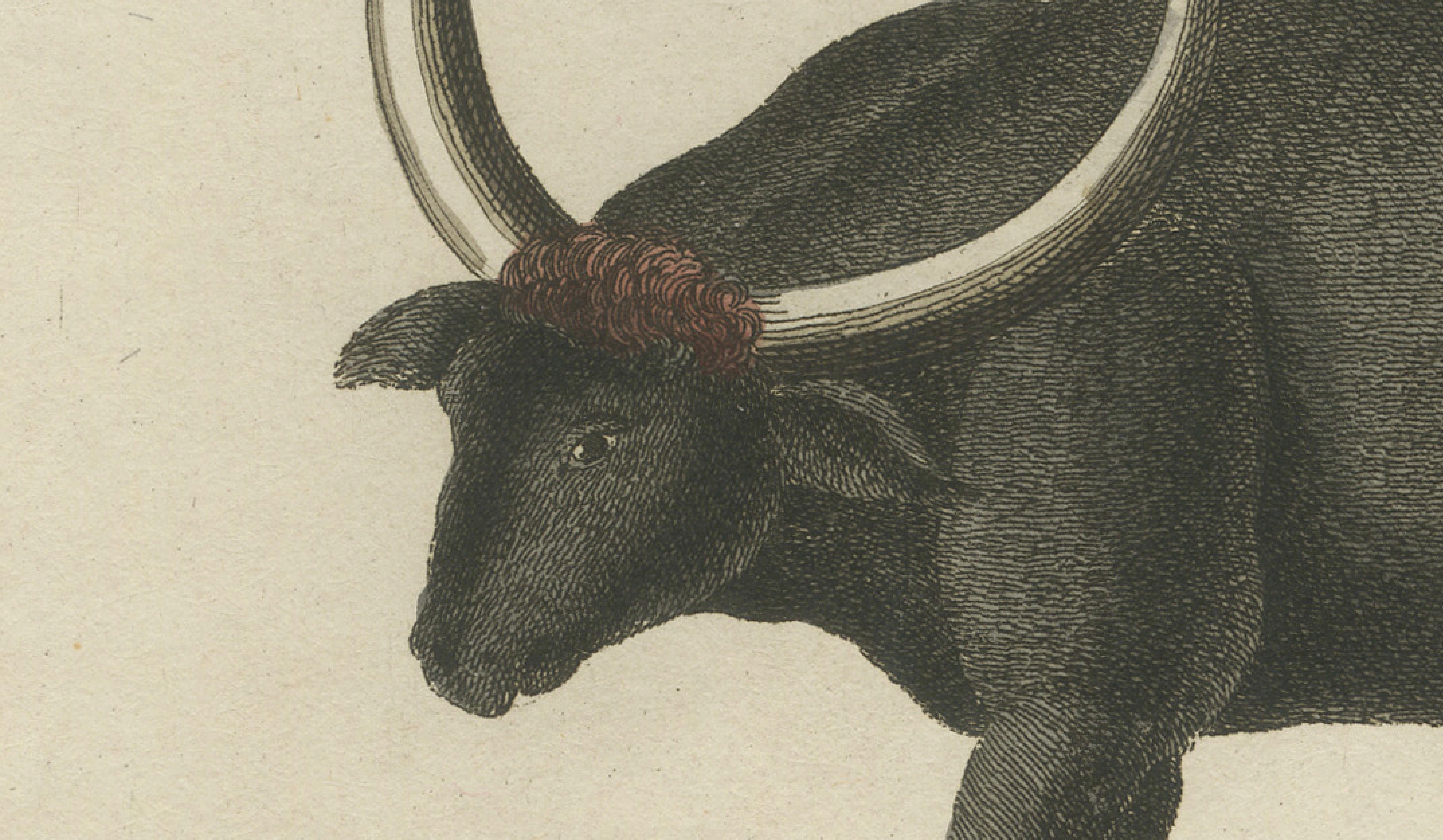
Original antique hand-colored copper engraving depicting an impressive wild buffalo with enormous crescent-shaped horns, accompanied by a separate anatomical study of its skull and horns.
Published in Friedrich Justin Bertuch’s celebrated “Bilderbuch für Kinder” in Weimar in the early 19th century.
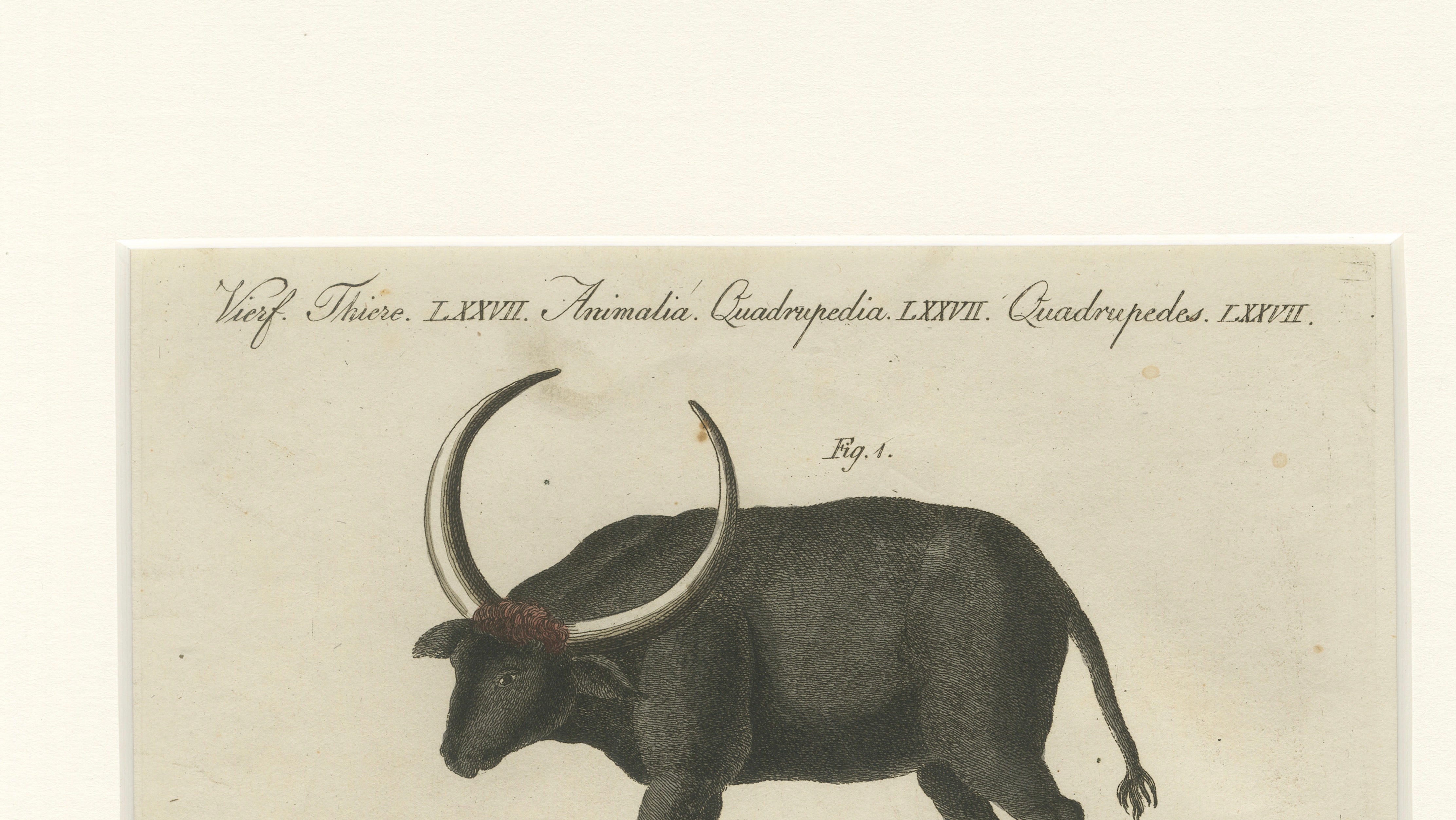
The plate is headed “Vierfüßige Thiere LXXVII / Animalia Quadrupedia LXXVII / Quadrupèdes LXXVII.”
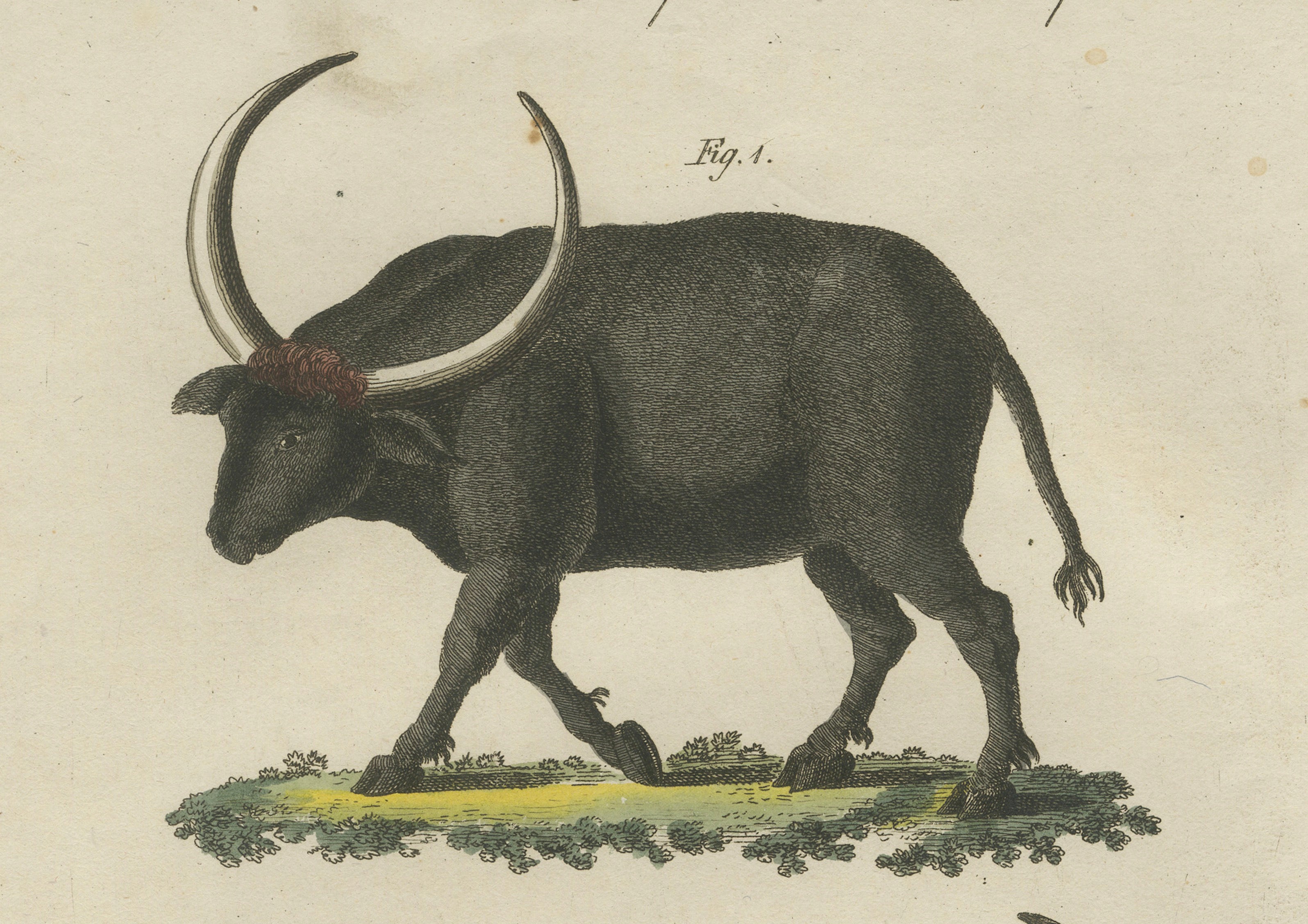
Fig. 1 – Wild Buffalo / Arni Buffalo
The principal figure depicts a massive dark wild buffalo distinguished by its extraordinarily long, sweeping horns.
The animal belongs to the Asian water-buffalo group and is commonly associated with the Wild Water Buffalo or Arni (Bubalus arnee), historically also called the Arnee, Arni Buffalo or Wild Indian Buffalo.
The Arni was particularly celebrated in early European natural-history literature for the extraordinary dimensions of its horns. Their enormous crescent shape made the animal one of the most spectacular bovids encountered by European travellers and naturalists in Asia.
Wild water buffalo are native to South and Southeast Asia and are the wild relatives of the familiar domesticated water buffalo.
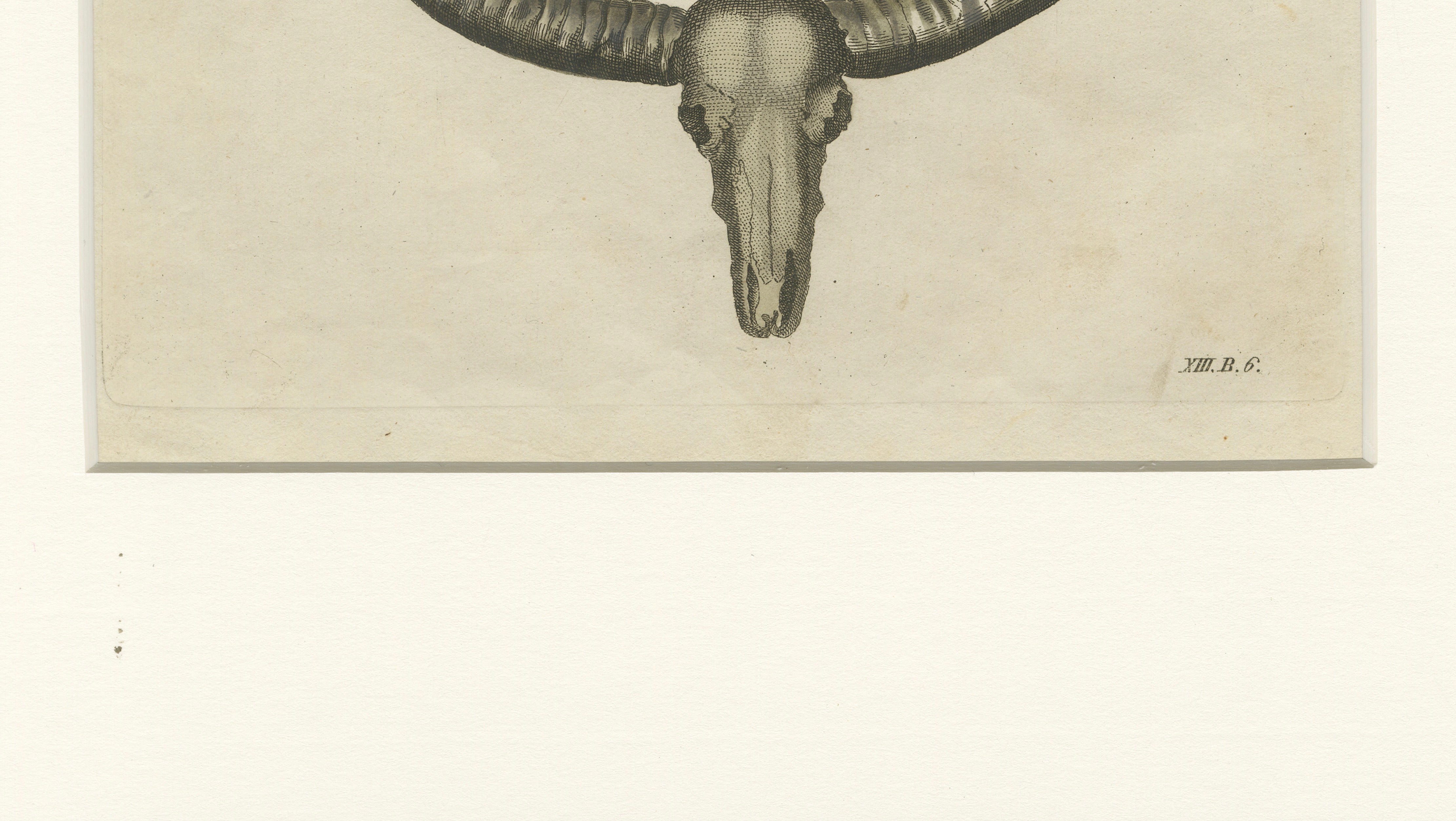
Fig. 2 – Buffalo Skull with Giant Horns
The lower half of the engraving is devoted to a dramatic frontal study of the animal’s skull and horns.
Shown separately from the living animal, the skull emphasizes the exceptional span and curvature of the horns. This anatomical presentation reflects the educational character of Bertuch’s Bilderbuch, in which unusual physical characteristics were frequently illustrated separately to help readers understand the animals being described.
The almost symmetrical skull and enormous crescent horns also give the plate a striking decorative quality reminiscent of the natural-history specimens displayed in European cabinets of curiosities.
Friedrich Justin Bertuch (1747–1822) was a German publisher, writer and patron of the arts. His monumental “Bilderbuch für Kinder” (Picture Book for Children), first published in Weimar in 1790, became one of the great illustrated educational encyclopedias of the late 18th and early 19th centuries.
Its hundreds of engraved and hand-colored plates introduced readers to animals, plants, geography, science, technology, antiquity and cultures from around the world.
This is an especially dramatic natural-history plate. The monumental dark buffalo and its extraordinary sweeping horns dominate the composition, while the separate skull study gives the engraving an appealing scientific and cabinet-of-curiosities character.
Technique: Original hand-colored copper engraving
Publisher: Friedrich Justin Bertuch / Industrie-Comptoir
Publication: Bilderbuch für Kinder
Place: Weimar, Germany
Date: early 19th century, circa 1810
Plate: Vierfüßige Thiere LXXVII / Animalia Quadrupedia LXXVII / Quadrupèdes LXXVII
Subject: Wild Buffalo / Arni Buffalo and Skull
Likely modern identification: Wild Water Buffalo
Scientific name: Bubalus arnee
Also known as: Arni, Arnee, Wild Indian Buffalo, Asian Wild Buffalo
Condition:
Good antique condition with overall age-related toning, scattered small spots and foxing and minor marks and imperfections consistent with its age. Some faint show-through or offsetting from text is visible. The restrained original hand coloring remains attractive. Please study the photographs carefully as they form part of the condition description.
The engraving is loosely inserted in an acid-free matting board.
Please note: This is an original antique hand-colored copper engraving from the early 19th century, not a modern reproduction. The print is sold unframed. Framed images or interior views, if shown, are for presentation and inspiration only.
Other companion animal and natural-history plates from Bertuch’s “Bilderbuch für Kinder” are also available separately.
Keywords: Friedrich Justin Bertuch, Bilderbuch für Kinder, wild buffalo, Arni buffalo, Arnee buffalo, wild water buffalo, Bubalus arnee, Asian buffalo, Indian buffalo, buffalo engraving, antique buffalo print, buffalo skull, buffalo horns, long horned buffalo, horn study, animal anatomy, bovine engraving, Asian wildlife, antique zoology, natural history illustration, cabinet of curiosities, Wunderkammer, hand-colored copper engraving, German engraving, Weimar, early 19th century, original antique print