About this sheet
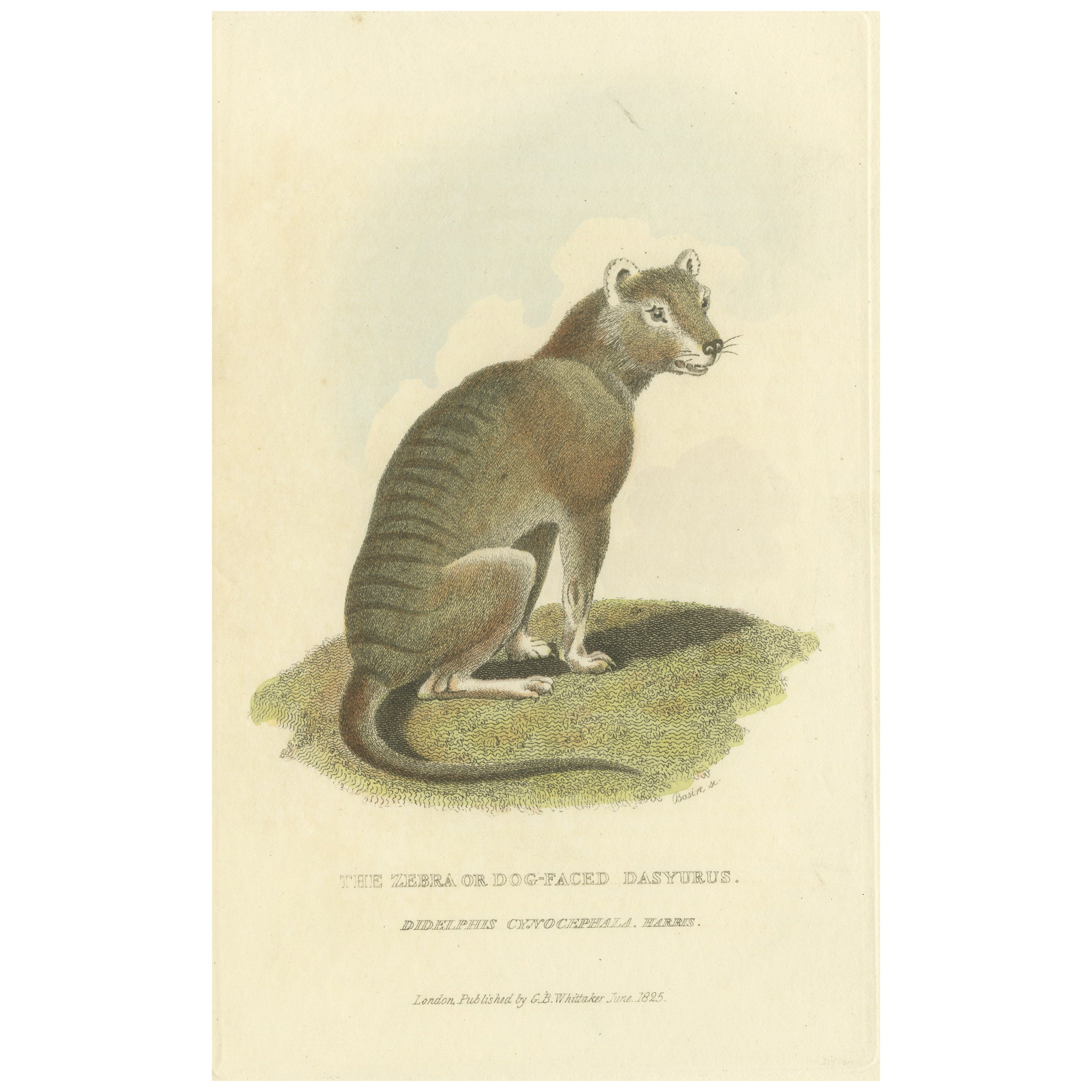
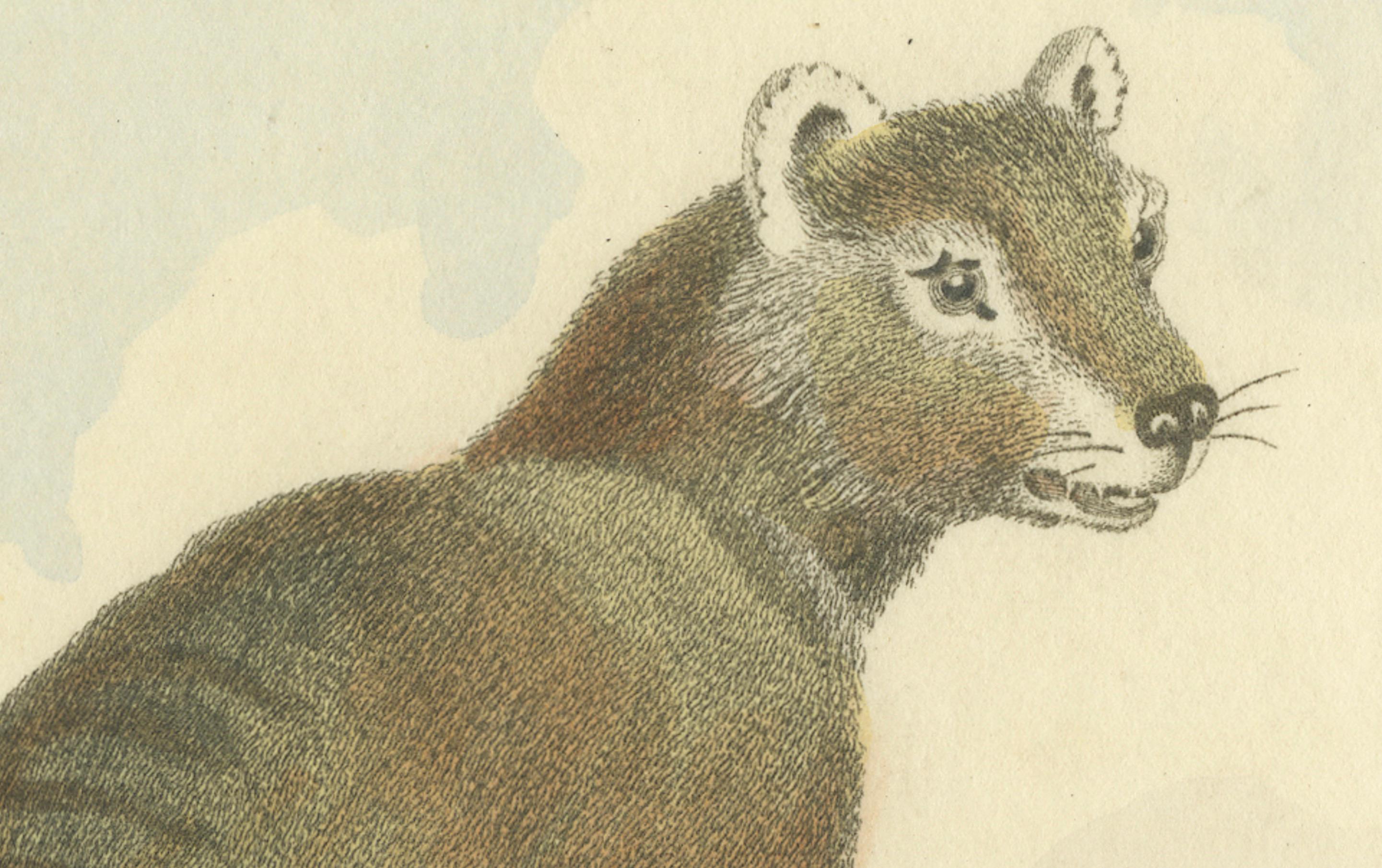
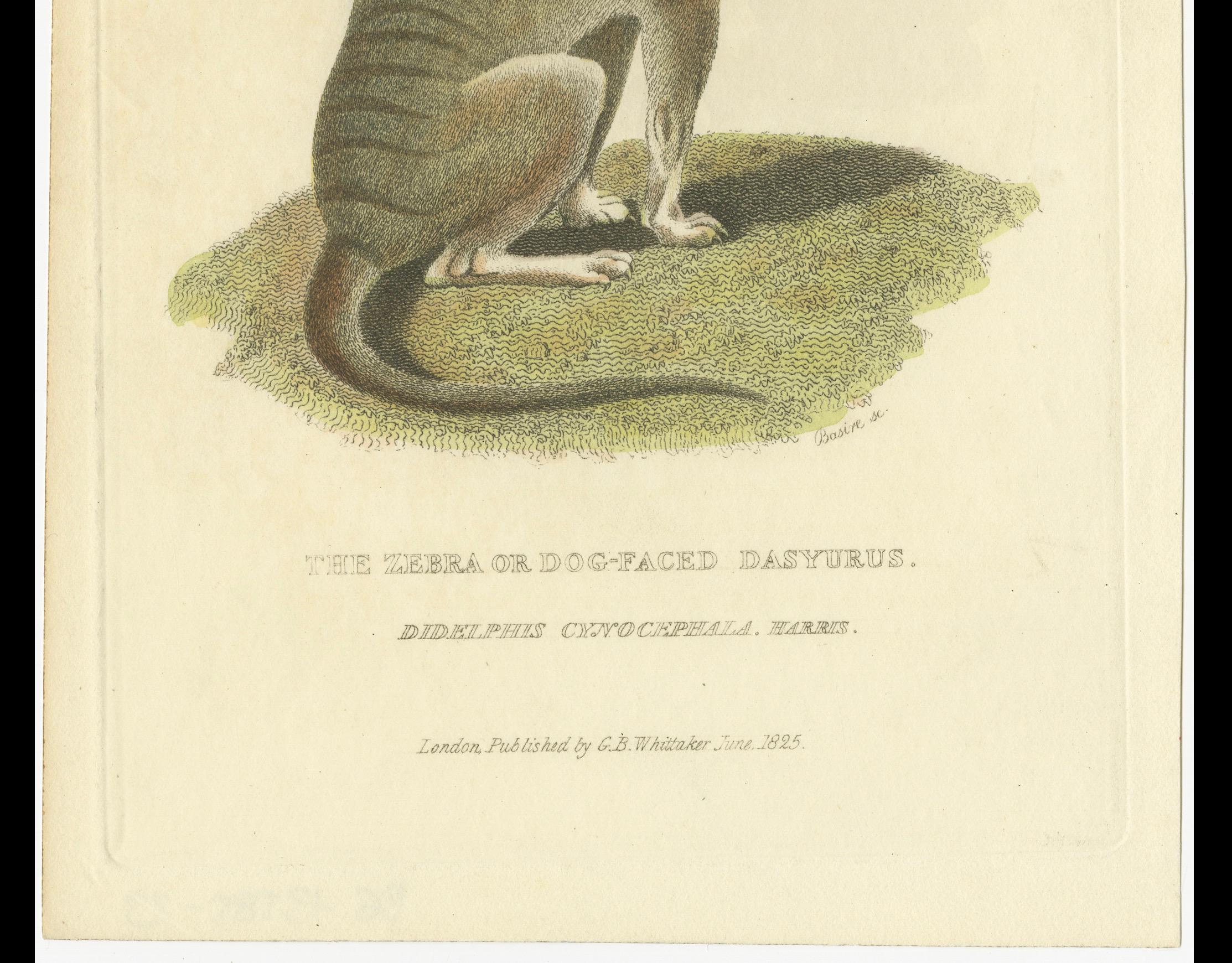
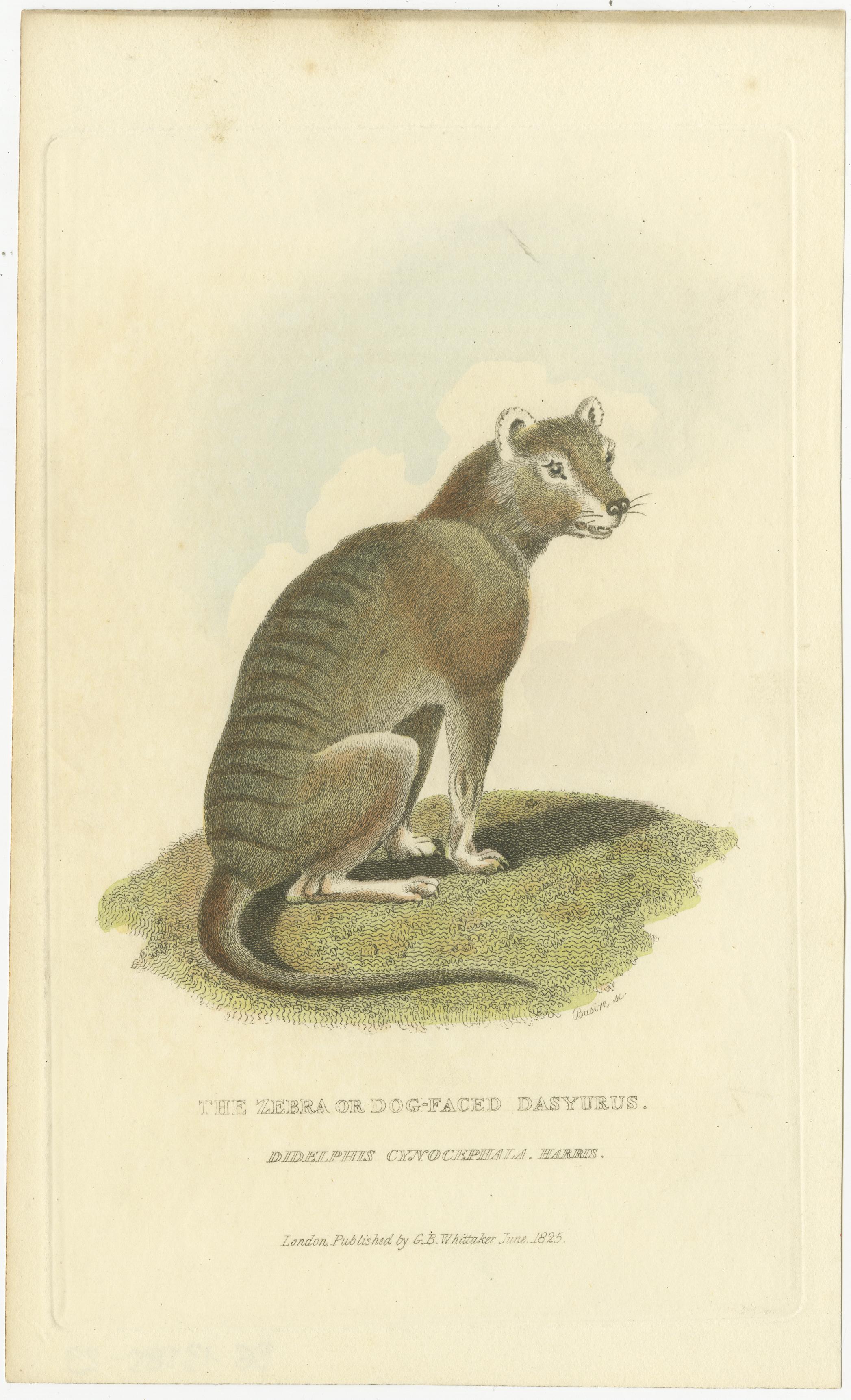
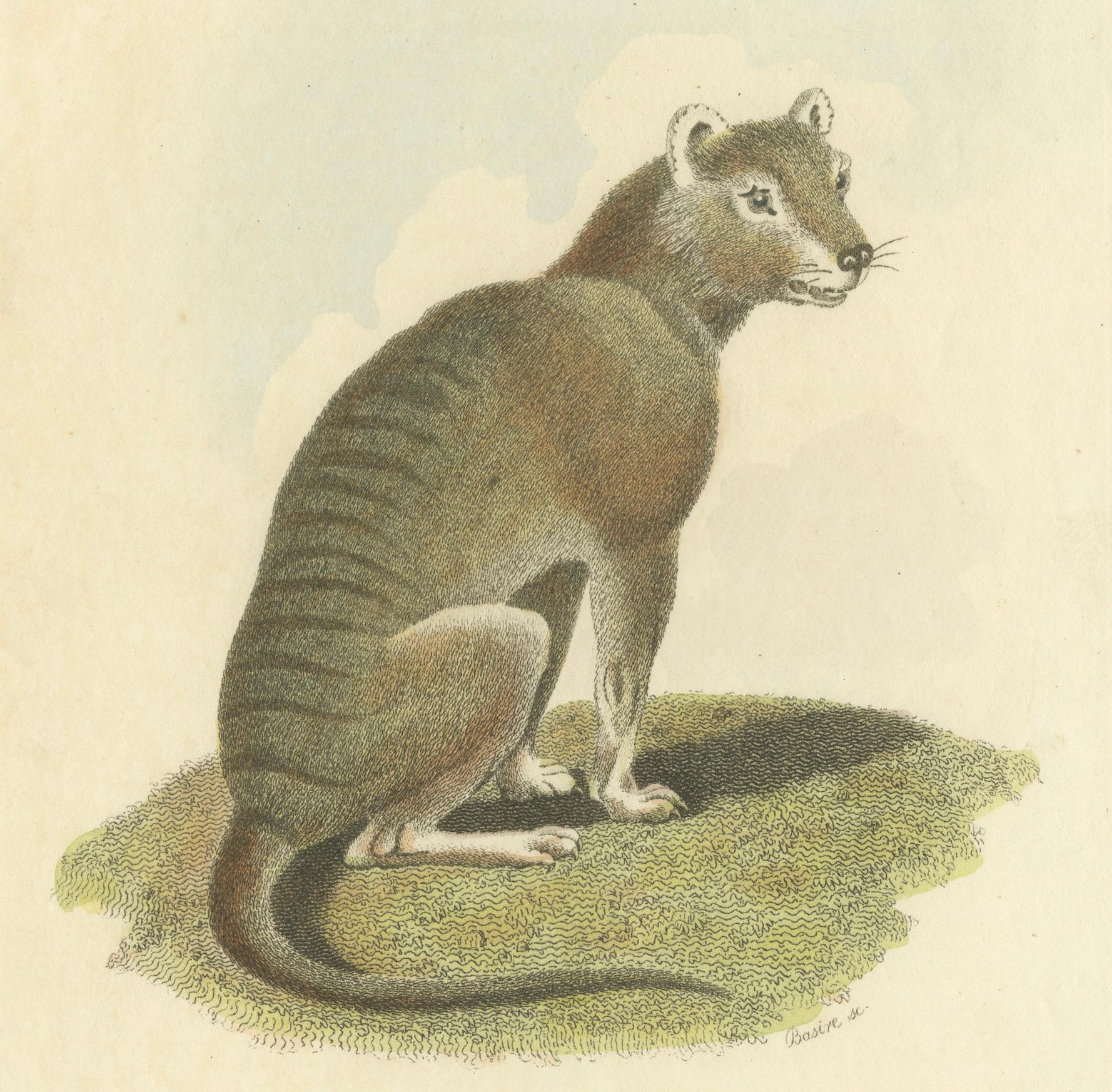
The uploaded image, labeled as 'The Zebra or Dog-Faced Dasyurus', depicts a thylacine, which was also known as the Tasmanian tiger or Tasmanian wolf. This is an interesting historical document since the thylacine is an extinct species. The thylacine was the largest known carnivorous marsupial of modern times, native to Tasmania, Australia, and New Guinea, and is believed to have become extinct in the 20th century.
It's worth noting that "Dasyurus" is actually a genus that includes living species such as the quolls, which are also carnivorous marsupials native to Australia and New Guinea. However, the thylacine belonged to a different genus, Thylacinus, and its scientific name is Thylacinus cynocephalus.
This print was published by G.B. Whittaker after an illustration by Charles Hamilton Smith around 1825. Charles Hamilton Smith was known for his work in documenting animals through illustration, and his works are valuable for historical and educational purposes, offering a glimpse into how these animals were viewed and understood at the time.
The thylacine was characterized by its dog-like appearance with a stiff tail, a somewhat kangaroo-like gait enabled by its strong hind legs, and the distinctive dark stripes across its back and tail, which is likely why it was sometimes referred to as the 'zebra'. The species faced multiple threats, including habitat loss, disease, and extensive hunting, which led to its decline and eventual extinction. The last known thylacine died in captivity in 1936, in the Hobart Zoo in Tasmania.