About this sheet
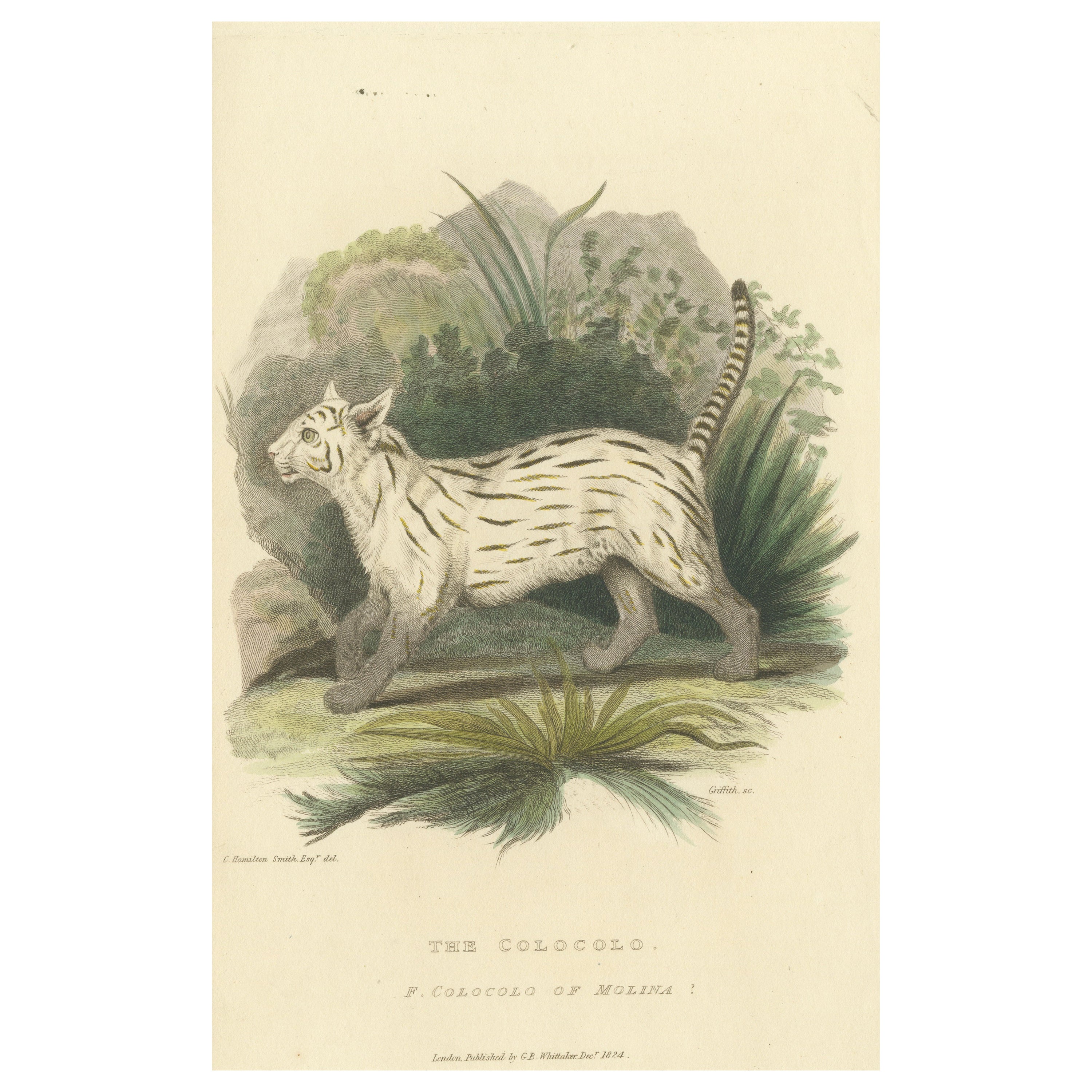
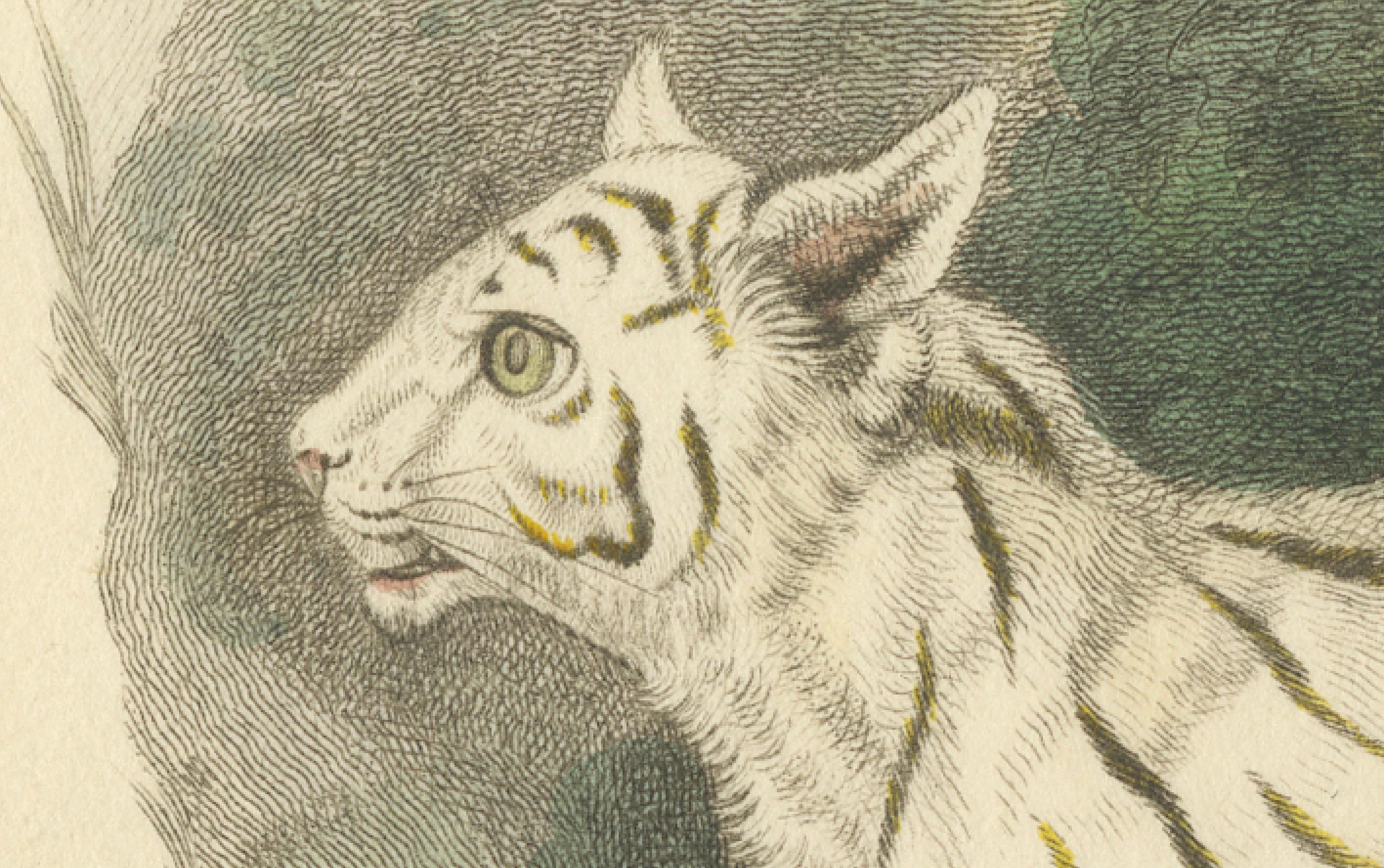
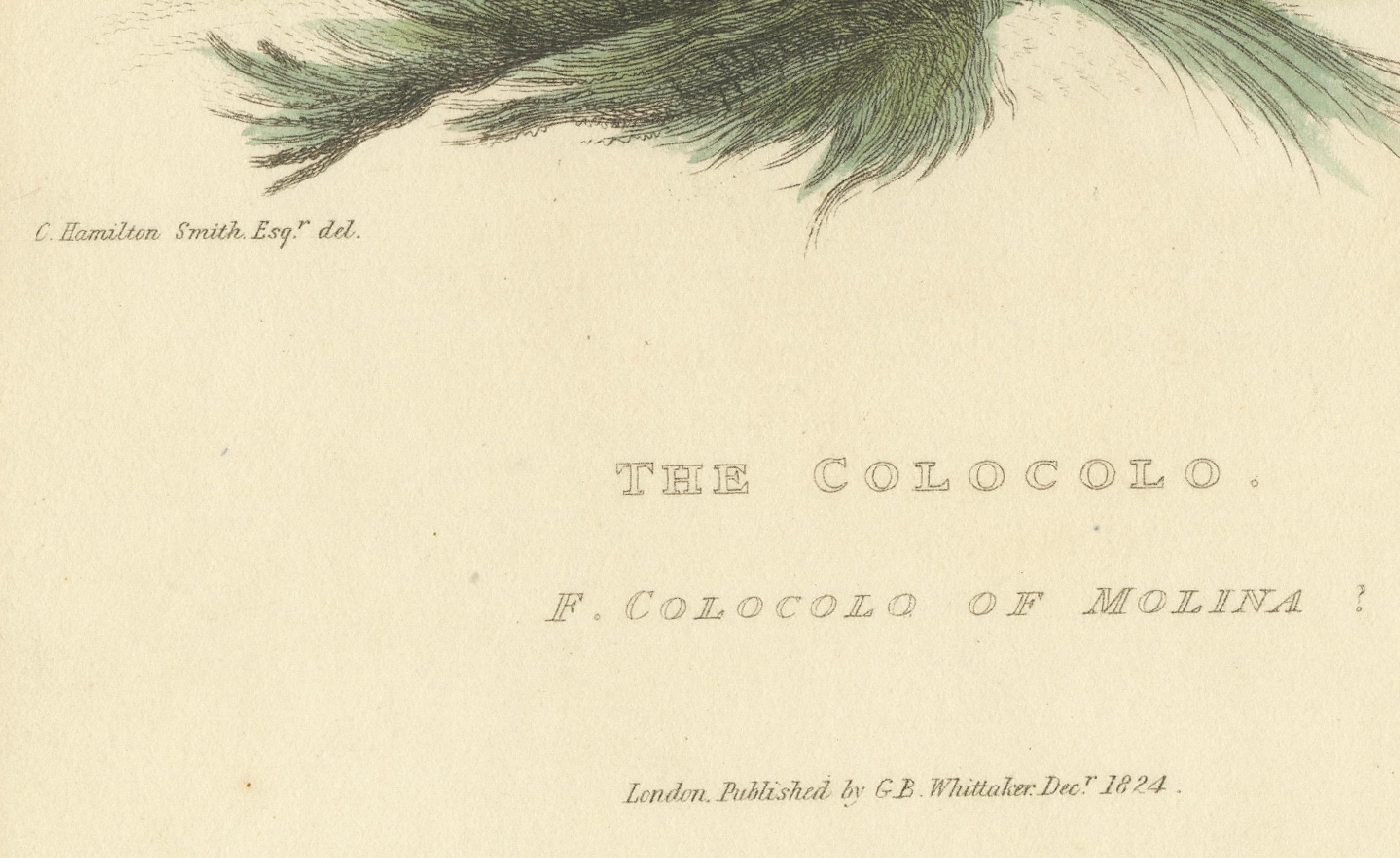
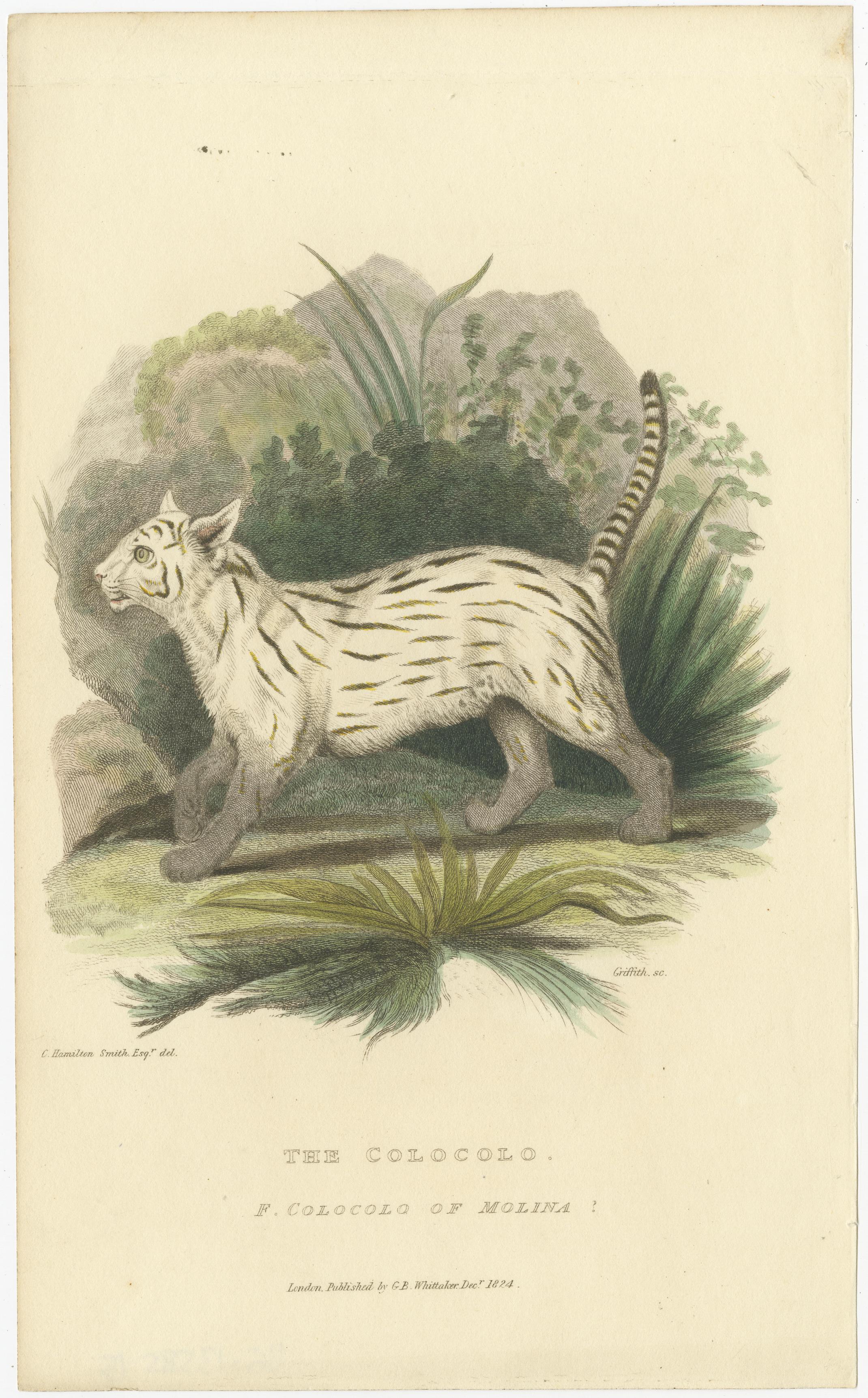
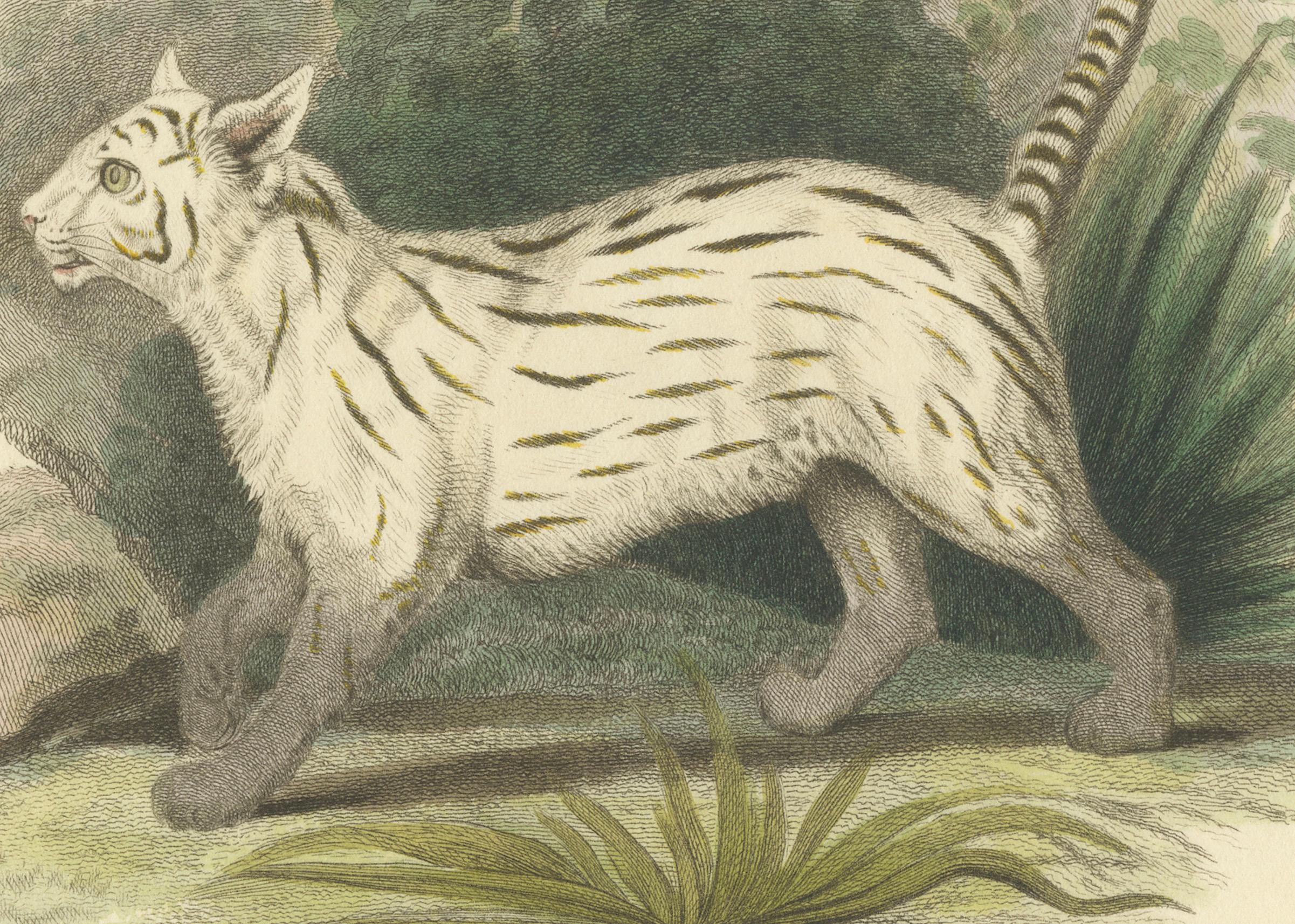
The image is an original antique print titled 'The Colocolo, F. Colocolo of Molina', an original work with hand coloring depicting a Pampas cat. The scientific name provided, F. Colocolo, refers to the colloquial name "Colocolo," derived from the work of Juan Ignacio Molina, an 18th-century Chilean priest and naturalist who was one of the first to describe the South American flora and fauna scientifically. Today, the Pampas cat is known by the scientific name Leopardus colocola.
This print was published by G.B. Whittaker from an illustration by Charles Hamilton Smith around 1824, and it was part of the early 19th-century endeavor to document and share knowledge of the world's wildlife. Charles Hamilton Smith was an esteemed illustrator and naturalist whose detailed artworks provided Europeans with their first glimpses of exotic animals from distant lands.
G.B. Whittaker was a publisher based in London known for producing a range of texts, including natural history publications that featured such illustrations, helping to disseminate knowledge during an era of burgeoning interest in the natural sciences.
The Pampas cat itself is a small wild cat species native to South America. Its habitat ranges from the Pampas lowlands in Argentina to the Andean highlands. It has a variety of fur patterns and colors, depending on the region, from reddish or grayish with dark spots to nearly uniform in color. This adaptability in appearance reflects the cat's ability to inhabit a range of environments, from arid zones to grasslands and even marshy landscapes.
The print is not only a representation of the animal but also an artifact of the scientific and artistic collaboration that was prevalent in the 19th century, capturing the fascination with the natural world that characterized the age of exploration and discovery. The Pampas cat, like many wild cats, is elusive and not well known to the general public, making historical illustrations such as this one valuable for bringing attention to the species and its conservation.