About this sheet
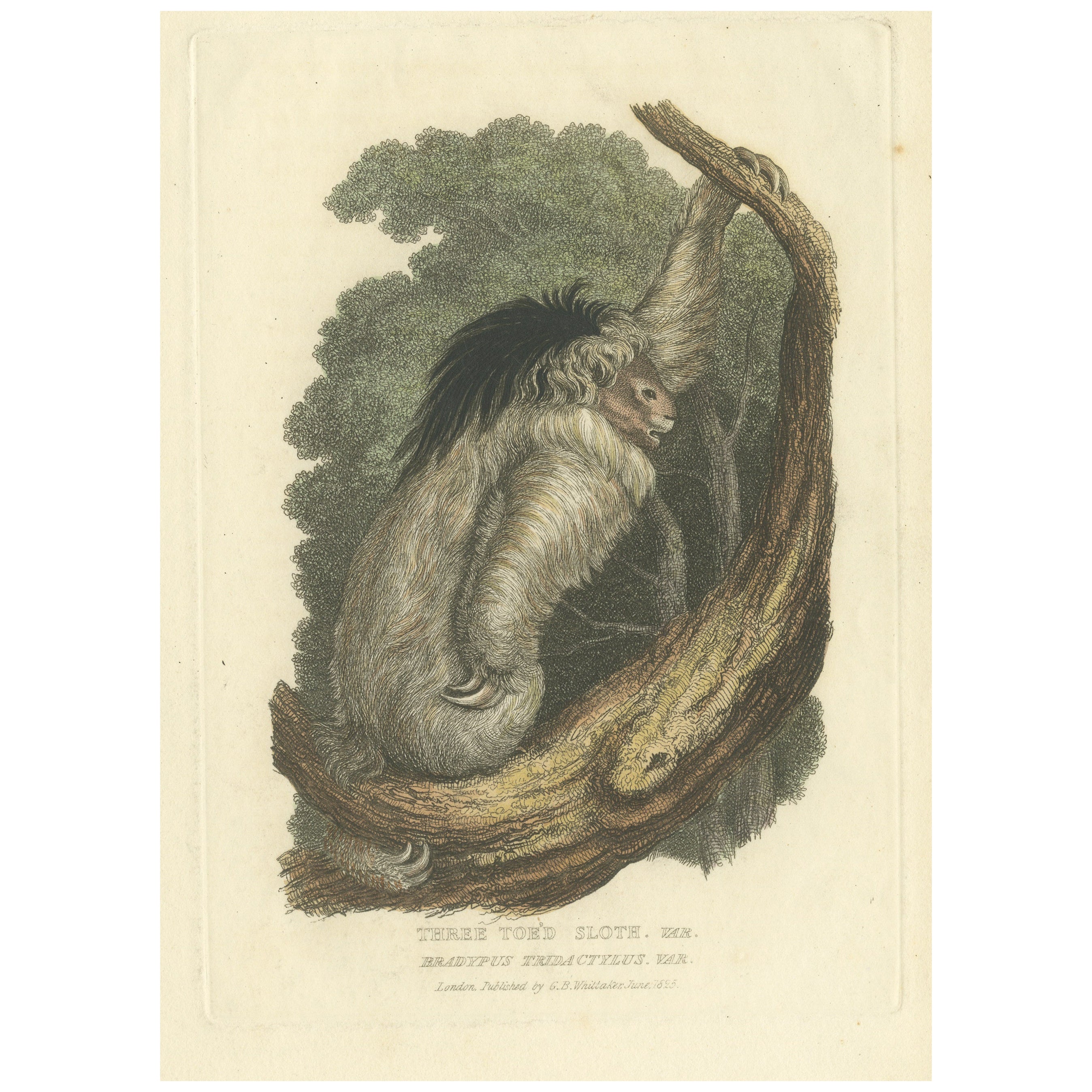
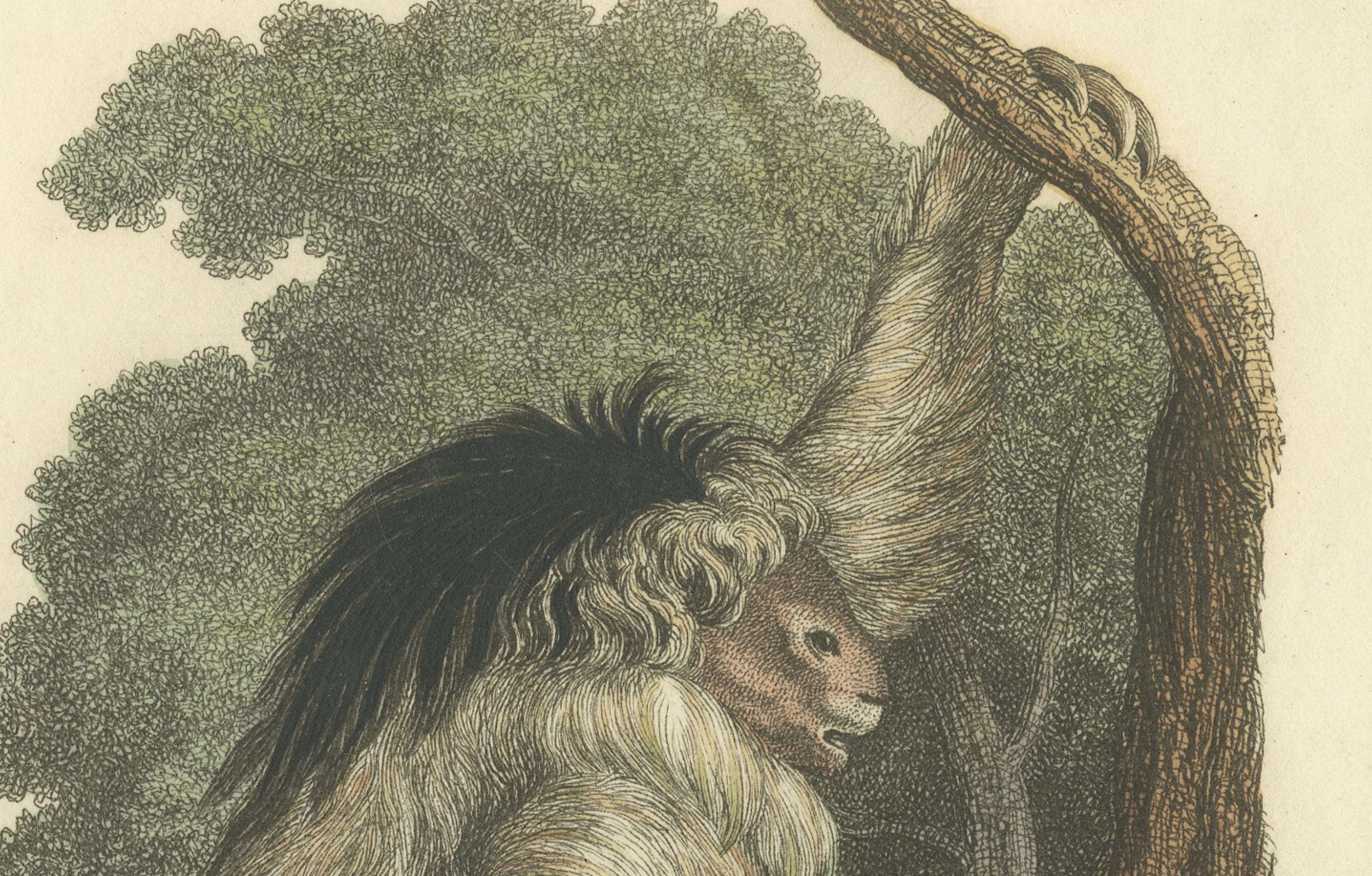
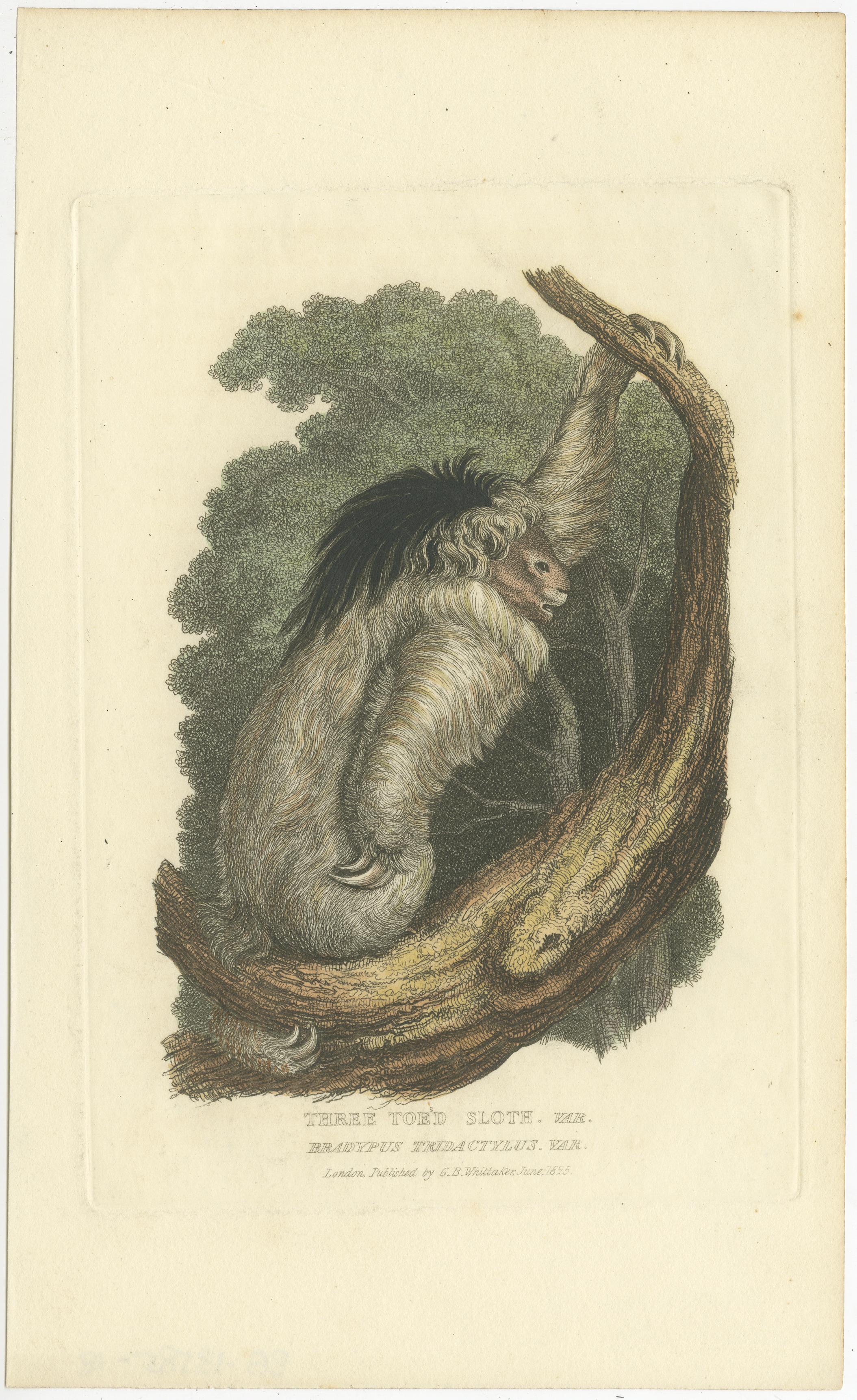
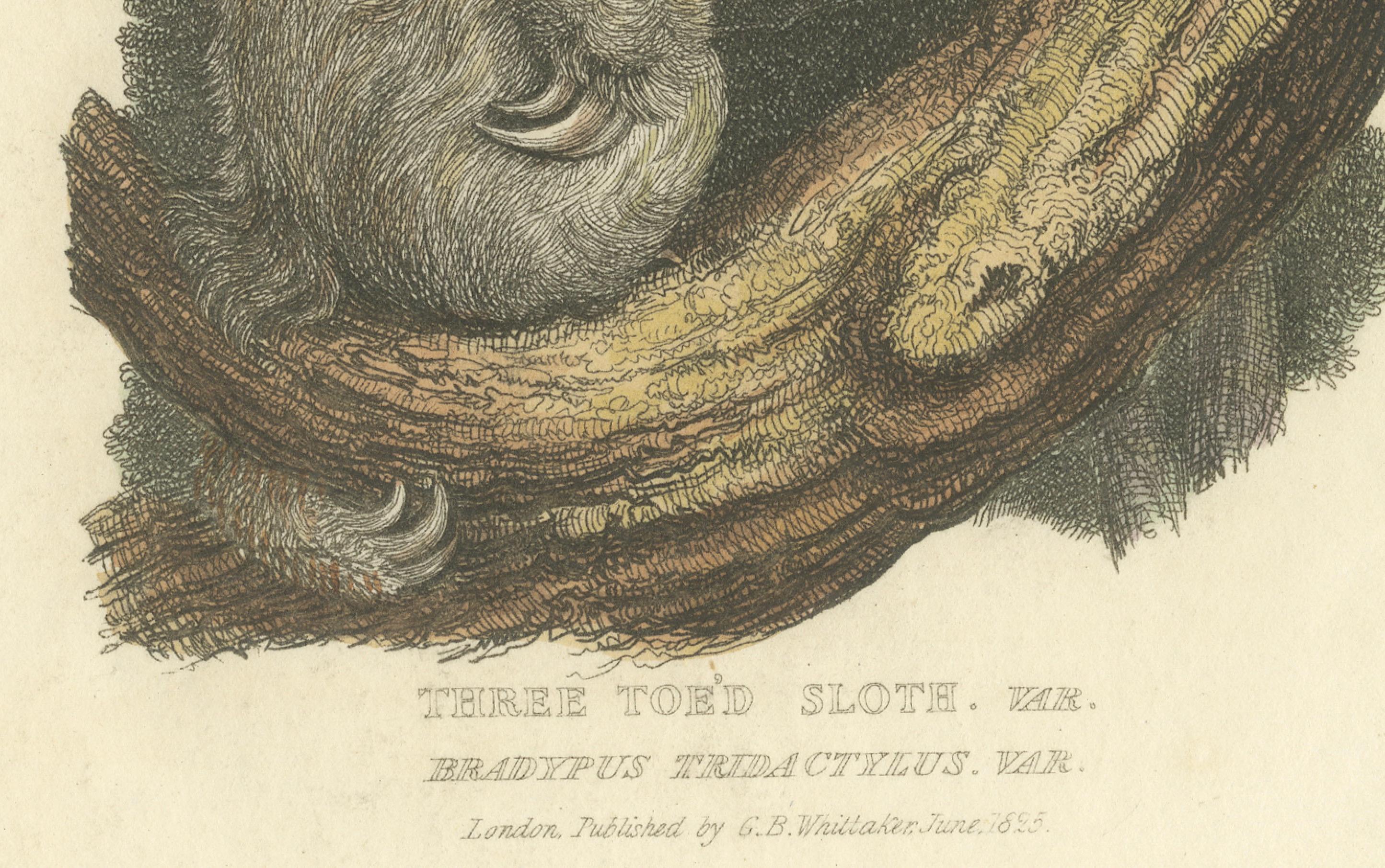
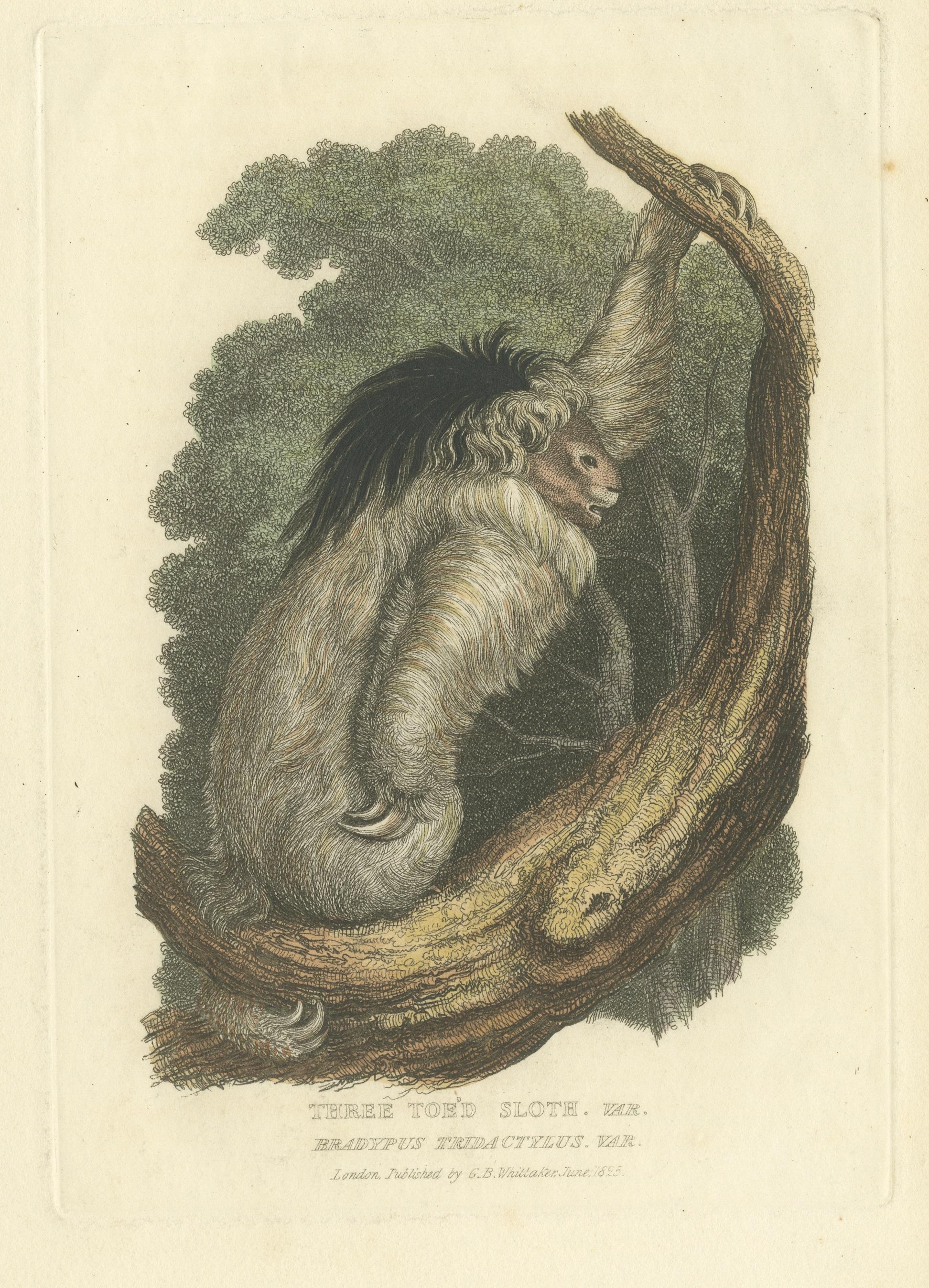
The image is described as an antique print titled 'Three Toe'd Sloth Var., Bradypus Tridactylus'. This print was published by G.B. Whittaker following an illustration by Charles Hamilton Smith around 1825. It depicts the pale-throated sloth, scientifically known as Bradypus tridactylus. These prints are part of a long tradition of natural history illustration, which was crucial for documenting and sharing knowledge about wildlife before the age of photography.
Charles Hamilton Smith (1776-1859) was a distinguished artist and naturalist of his time. He contributed illustrations to a variety of scientific works and was known for his detailed and accurate portrayals of animals.
The pale-throated sloth inhabits the tropical rainforests of northern South America and is known for its leisurely pace of life, spending most of its time hanging upside down from tree branches. It's often confused with the brown-throated sloth due to their similar appearances, but they are separate species. The differentiation between the pale-throated and brown-throated sloths based on genetic evidence suggests a relatively recent divergence in their evolutionary history, with estimates varying from 400,000 to 6 million years ago, highlighting the dynamic and sometimes uncertain nature of species evolution.