About this sheet
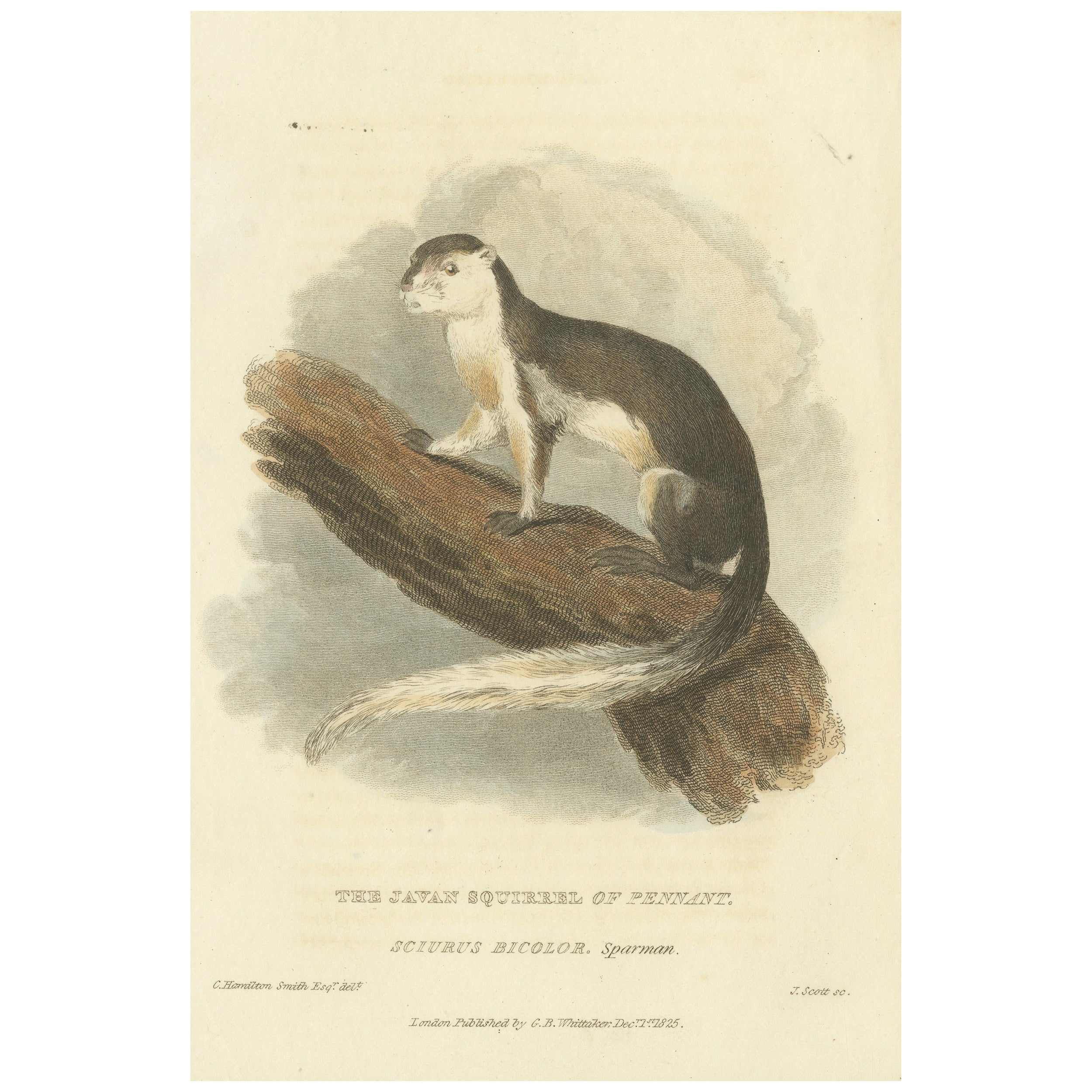
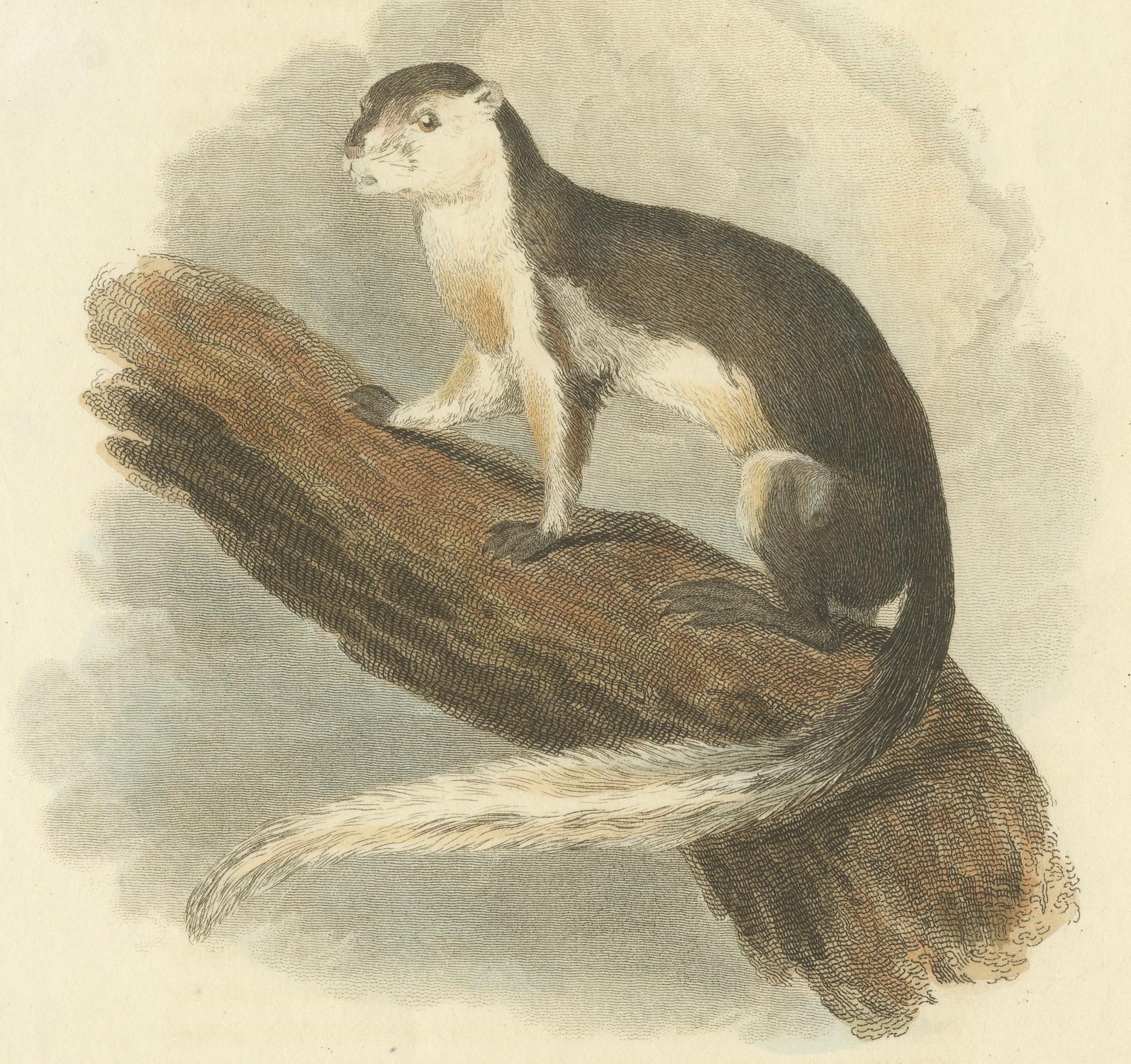
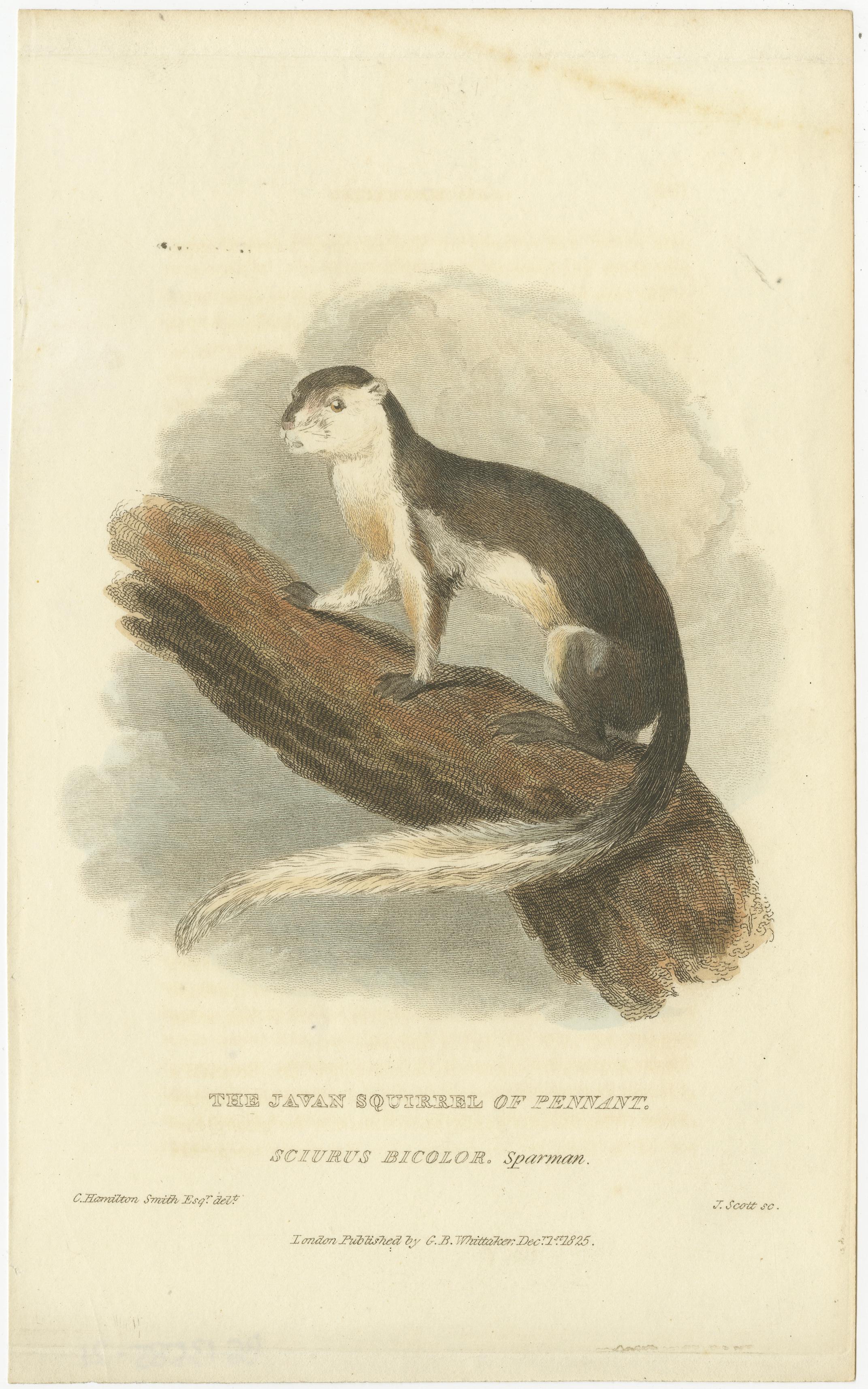
The image depicts an antique print of the black giant squirrel, also known as the Malayan giant squirrel (scientific name: Ratufa bicolor). This print is particularly historical and valuable because it comes from an era when wildlife illustrations were an essential method for sharing knowledge of zoology and natural history among scientists and enthusiasts. These prints were often hand-colored after being printed, adding a layer of artistry and vibrancy to the images.
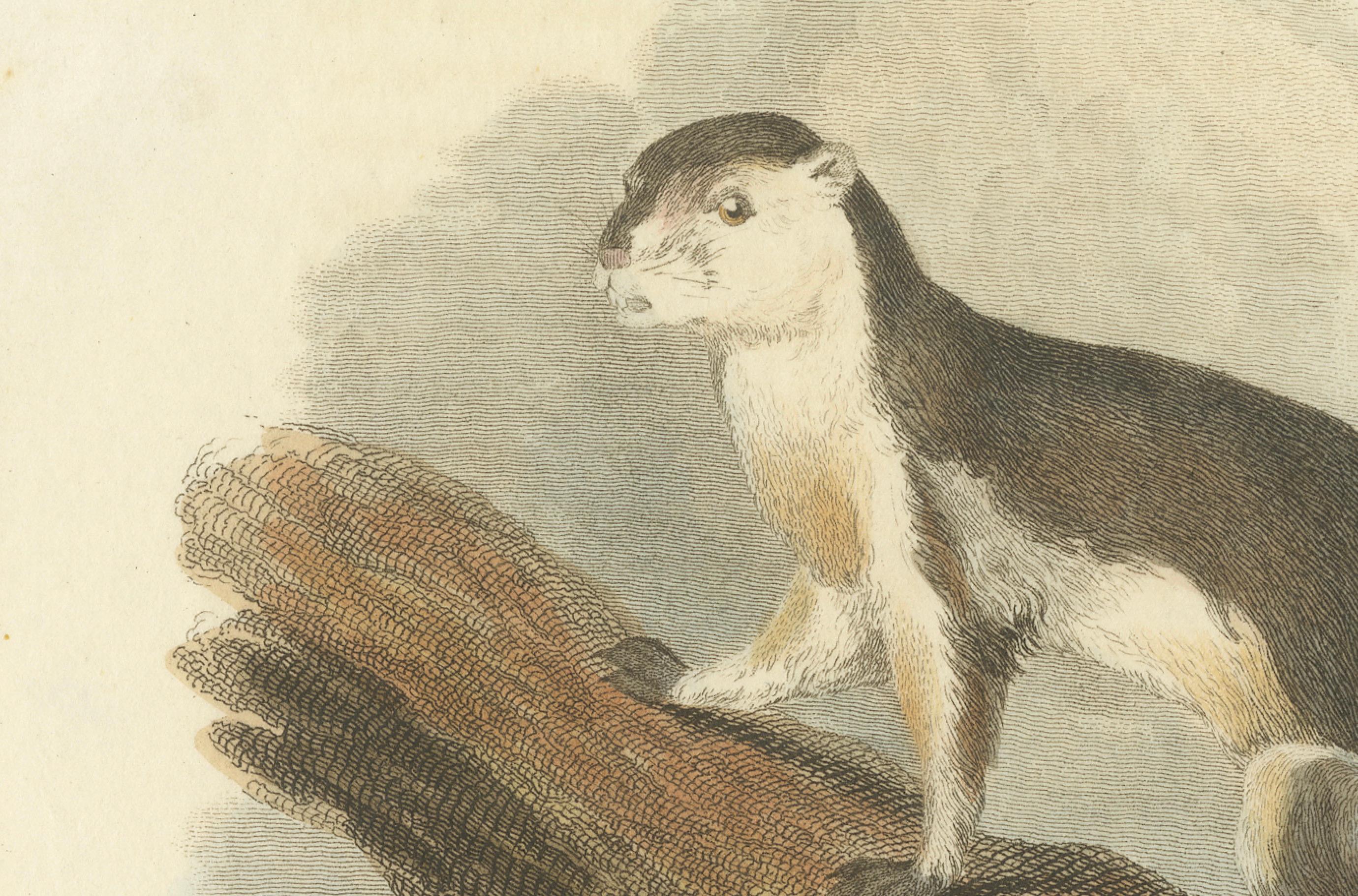
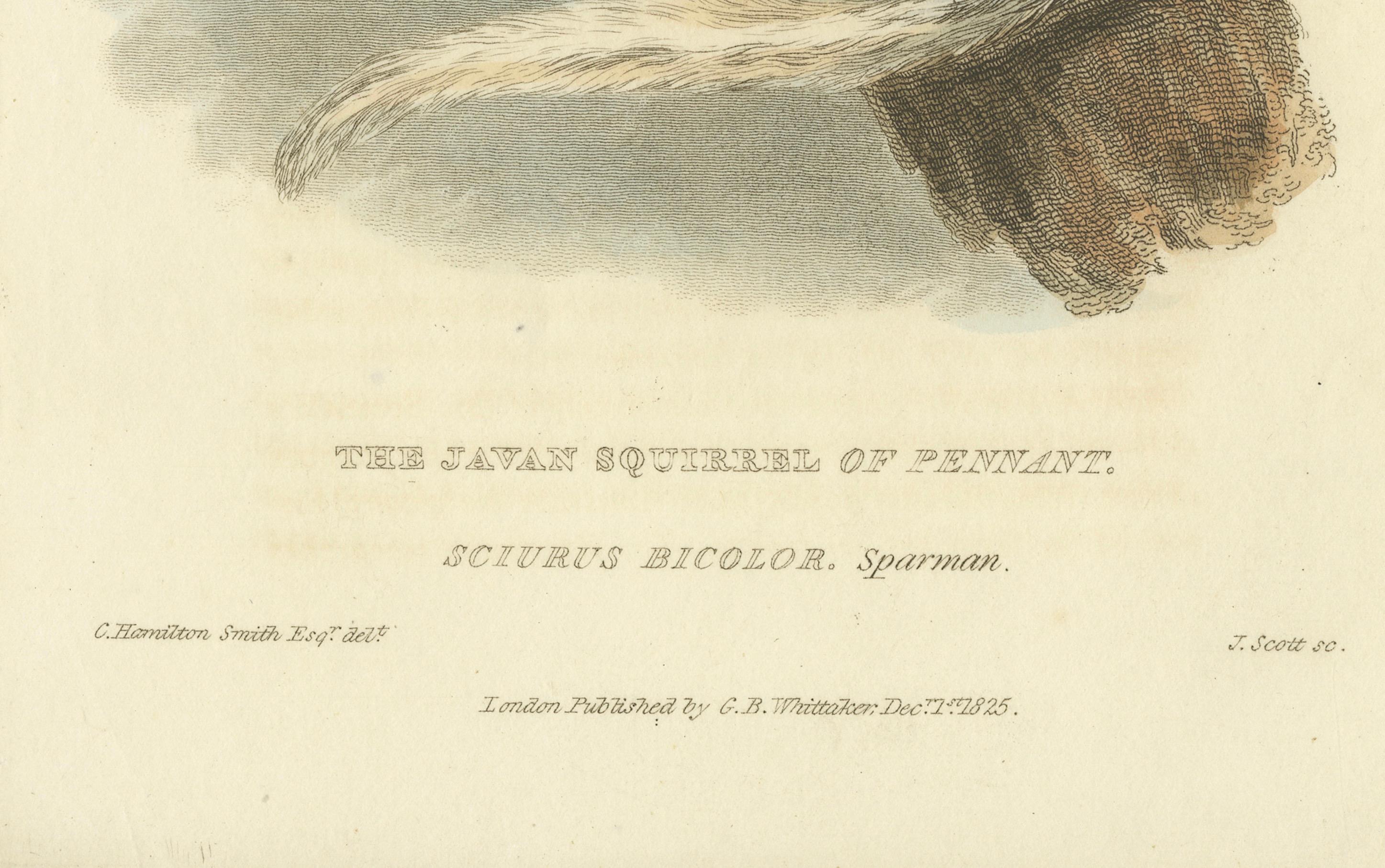
The print is titled 'The Javan Squirrel of Pennant, Sciurus Bicolor' and includes a representation of the species, which is distinguished by its large size and distinctive bi-colored pattern, often with a dark upper body and a lighter colored belly. The image shows the squirrel perched on a branch, rendered with fine detail and soft coloring that suggest its natural habitat.
This particular piece was published by G.B. Whittaker and is based on an illustration by Charles Hamilton Smith, around the year 1825. Hamilton Smith was a respected artist and zoologist of his time, and his work contributed significantly to the study and documentation of wildlife.
The black giant squirrel is native to the Indomalayan zoogeographic region and is found across a range of countries including northern Bangladesh, northeast India, eastern Nepal, Bhutan, southern China, Myanmar, Laos, Thailand, West Malaysia, Cambodia, Vietnam, and western parts of Indonesia like Java, Sumatra, Bali, and nearby small islands. These squirrels are arboreal, living primarily in forested areas where they can glide from tree to tree, and are known for their impressive size compared to other squirrel species.