About this sheet
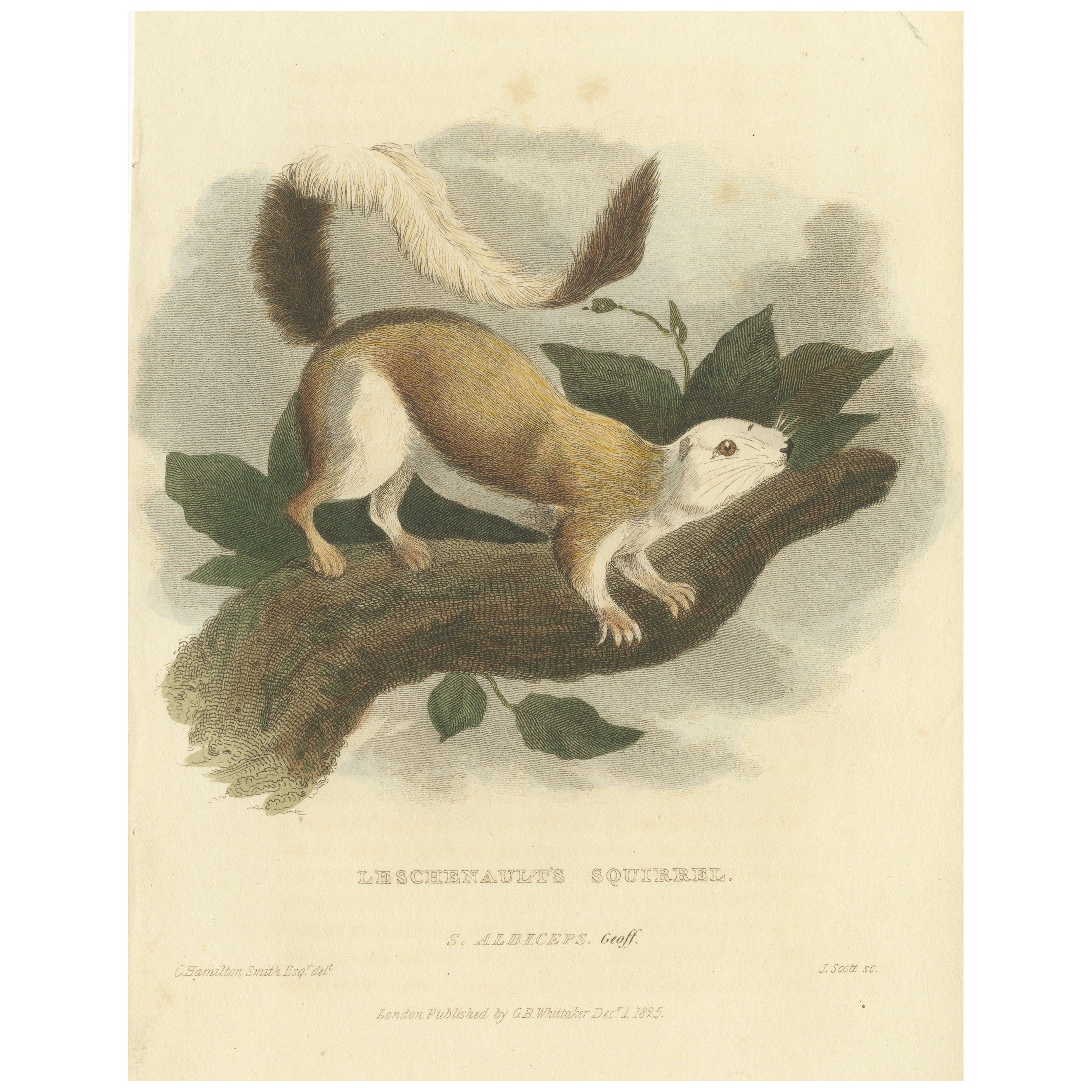
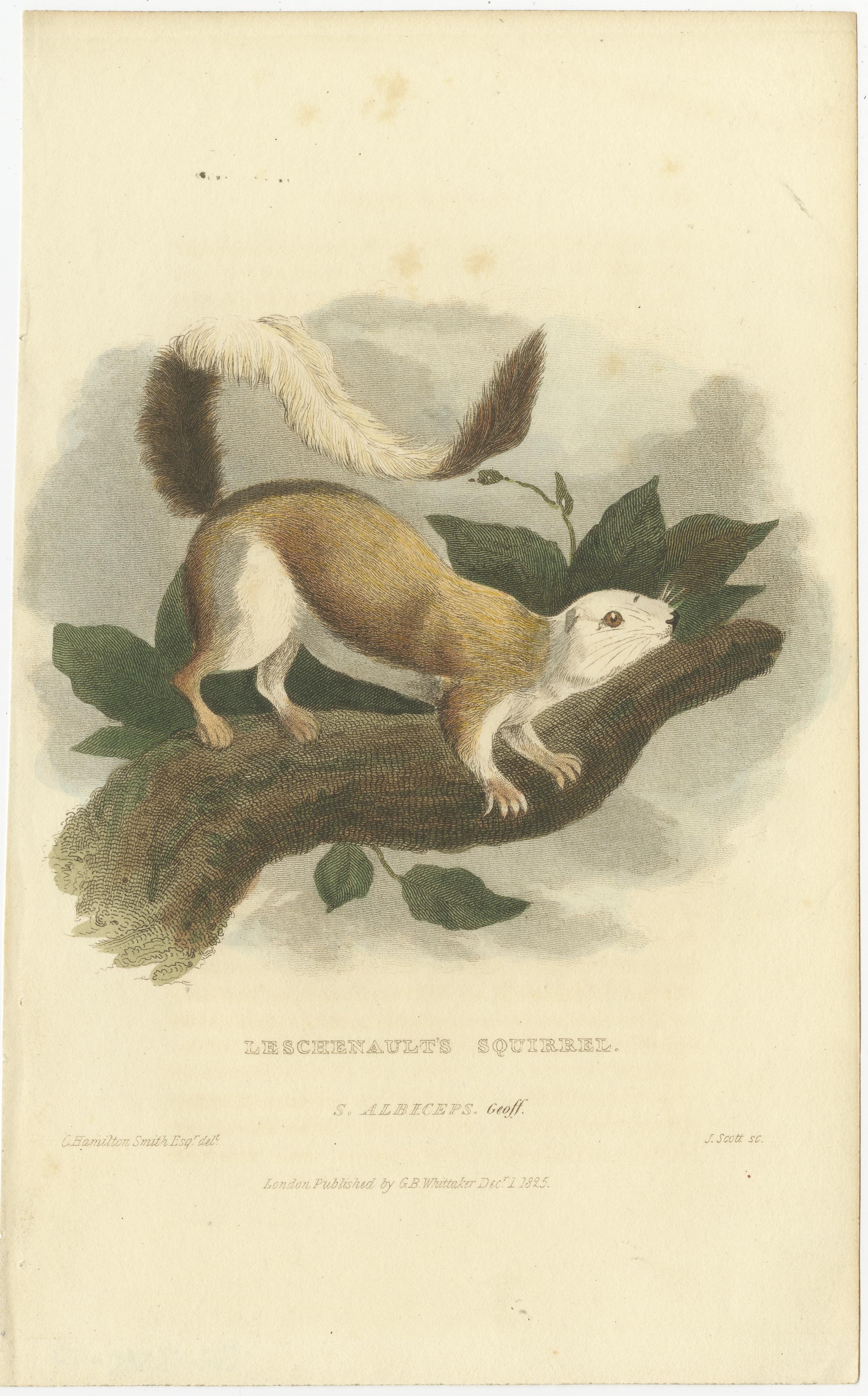
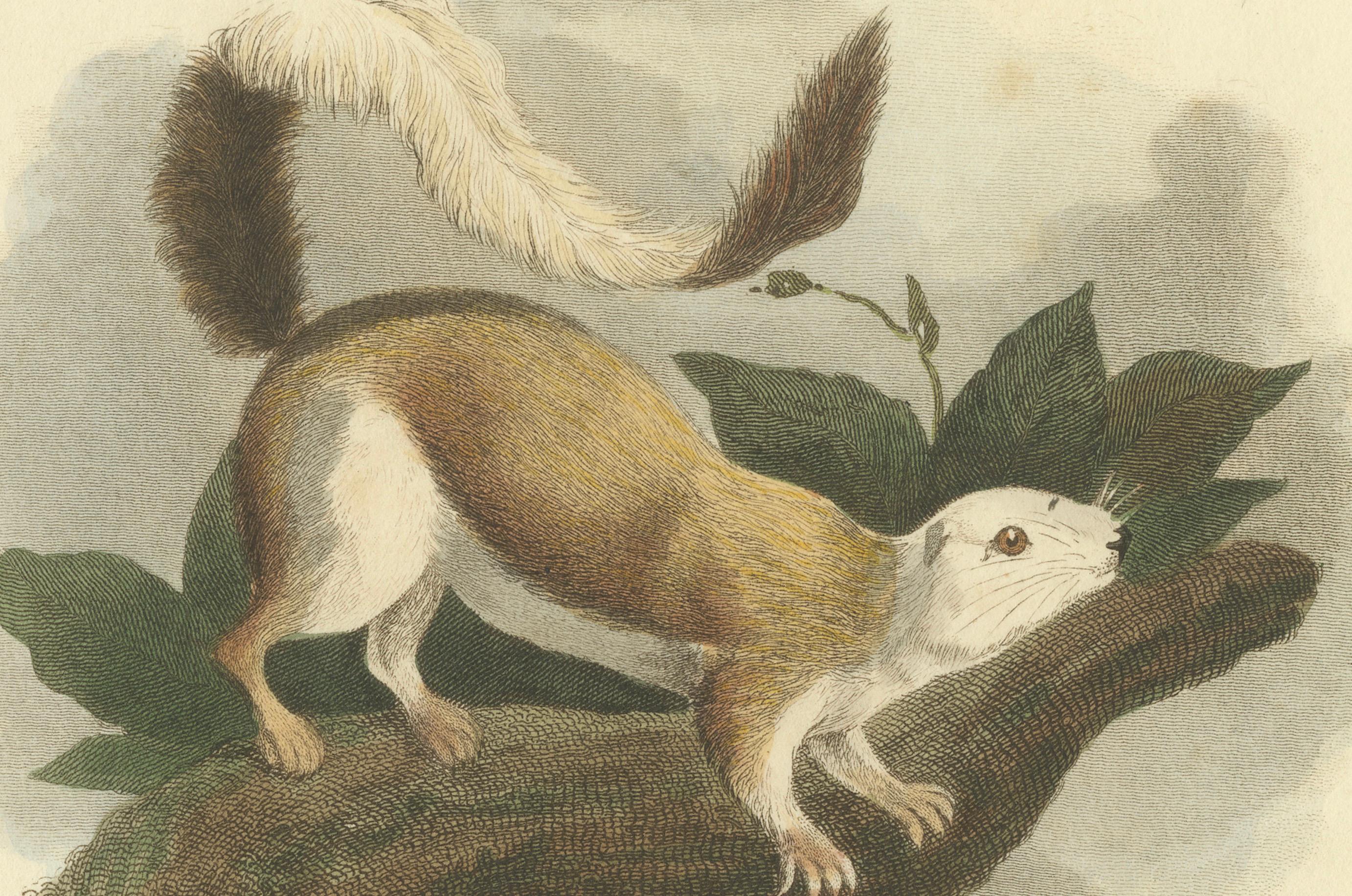
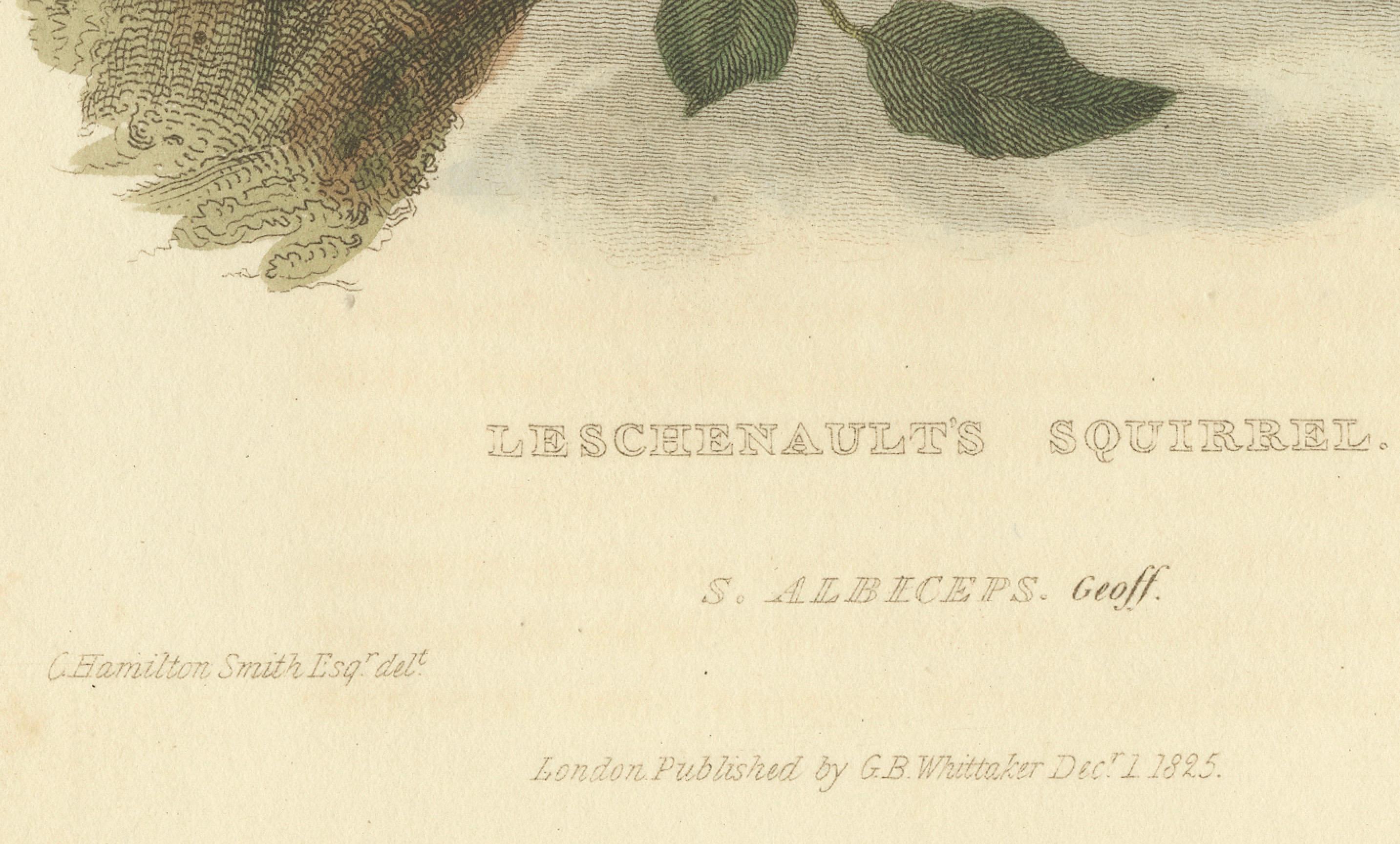
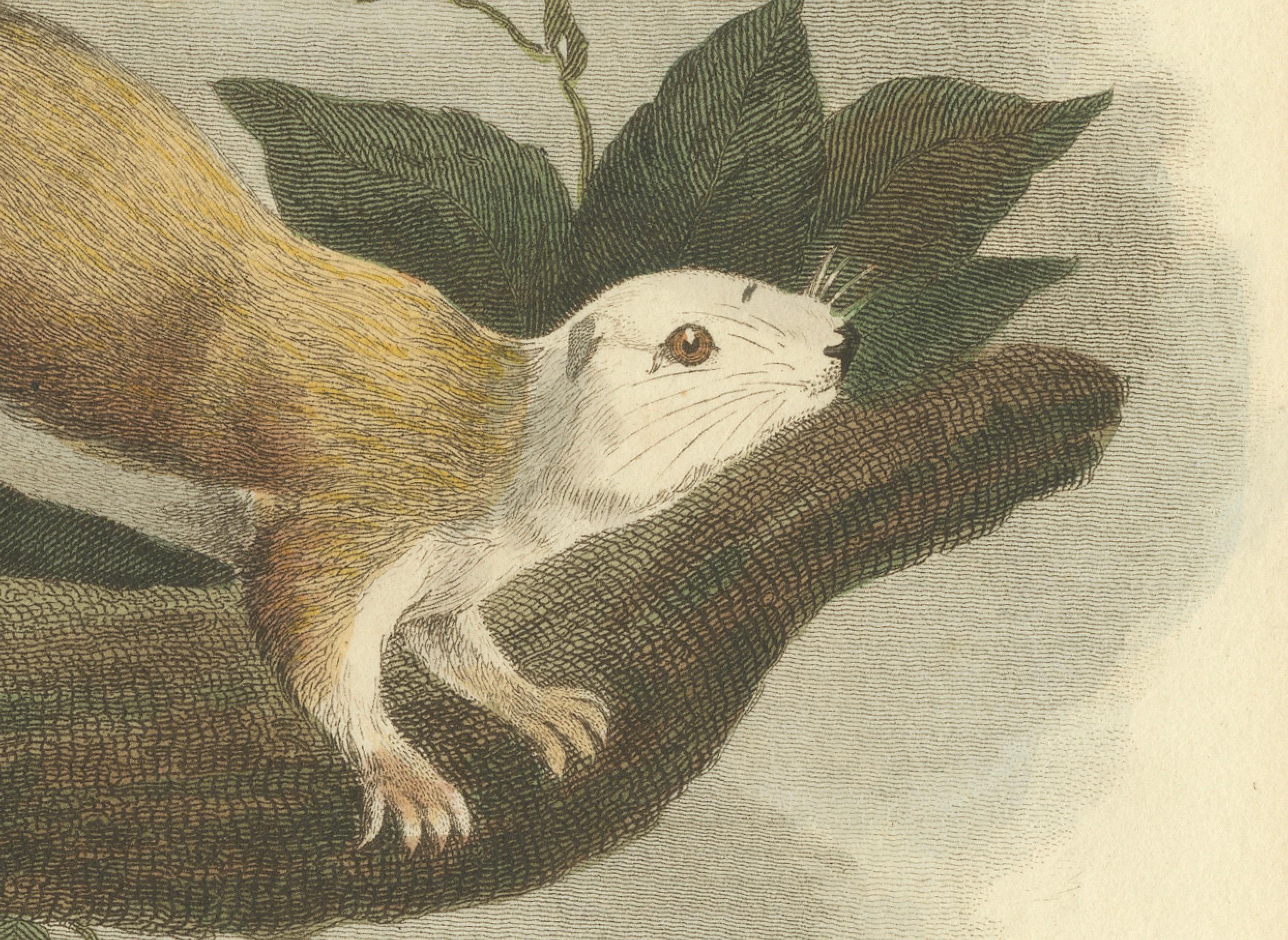
This print depicts "Leschenault's Squirrel," also known as Sciurus albiceps. The animal illustrated is actually not Leschenault's squirrel, but rather the black giant squirrel or Malayan giant squirrel (Ratufa bicolor), which is a different species.
The print is titled after French botanist and explorer Jean Baptiste Louis Claude Théodore Leschenault de la Tour, who is often associated with the discovery of several species in India and Java during his travels. However, there seems to be a mix-up, as the depicted squirrel is identified as Sciurus albiceps, which is not commonly associated with Leschenault but rather it is identified as the Malayan giant squirrel or black giant squirrel.
The Malayan giant squirrel is a large tree squirrel species native to the Indomalayan zootope, and as mentioned, its habitat ranges across many countries in Southeast Asia. These squirrels are known for their sizeable body, large bushy tail, and the ability to leap considerable distances between trees. They are arboreal, living in the upper canopy of tropical and subtropical forests, and their diet consists mainly of seeds, fruits, and leaves.
As for the makers of the print, Charles Hamilton Smith was an artist known for his natural history illustrations, and G.B. Whittaker was the publisher. The print is dated around 1825, which places it in the period where hand-colored prints were common for the reproduction of scientific illustrations. Hand coloring provided a high degree of detail and color accuracy before the advent of color printing technology.
The mix-up of species name and common name in historical prints is not uncommon, as taxonomic classifications have changed over time, and common names vary by region and language.